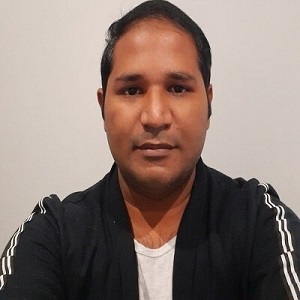
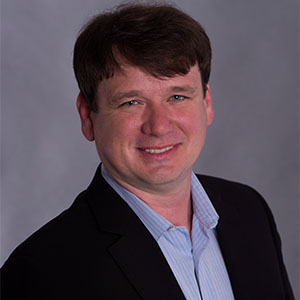
Dr. Krishna Manaswi Digumarti is a Lecturer in Robotics at the School of Electrical Engineering and Robotics, QUT, leading the QUT Centre for Robotics. He holds a PhD in Robotics and Autonomous Systems from the University of Bristol (2019), an M.Sc. in Robotics, Systems, and Controls from ETH Zurich (2014), and a B.Tech. in Mechanical Engineering from IIT Hyderabad (2012). His research focuses on soft robotics, including shape morphing, variable stiffness mechanisms, and bio-inspired designs with applications in healthcare, automation, and haptics. He has pioneered technologies such as electro-adhesive clutches, self-healing robotic materials, and sensory feedback systems for prosthetics. Dr. Digumarti's work has been featured on the BBC, Channel 4, and French media, and he has secured grants including the Advanced Queensland Industry Research Fellowship. He actively engages in STEM outreach, including workshops and collaborations with industry partners like Disney Research and EPFL.
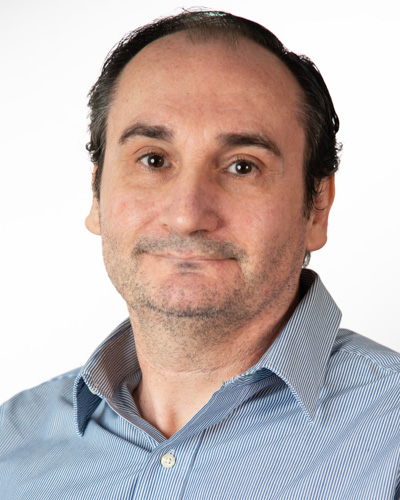
Kelly Stephani is an Associate Professor in the Department of Mechanical Science and Engineering at the University of Illinois Urbana-Champaign (UIUC), and the Associate Director of the Center for Hypersonics and Entry Systems Studies (CHESS). She holds additional roles such as Kritzer Faculty Fellow and Faculty Affiliate in Aerospace Engineering. Her research focuses on hypersonics, high-temperature aerothermodynamics, and surface chemistry interactions with plasma. Stephani has contributed to advancements in kinetic methods for non-equilibrium flows and the development of oxidation models for carbon-based materials. Education: Ph.D. Aerospace Engineering, University of Texas at Austin (2012) M.S. Aerospace Engineering, University of Texas at Austin (2006) B.S. Aerospace Engineering and Mechanics, University of Minnesota (2005) Research Interests: Gas-surface interactions in porous materials Plasma-surface dynamics Thermal protection systems for aerospace vehicles Computational modeling of hypersonic flows Her work bridges experimental and computational approaches, with notable contributions to understanding oxidation mechanisms in carbon-fiber composites and the design of light-weight thermal protection systems. Awards and Honors: PECASE Award (2019) AFOSR YIP Award (2017) NASA Early Career Faculty Award (2015) Recipient of multiple fellowships including AFOSR Summer Faculty Fellow (2015) Teaching and Service: Teaches courses in gas dynamics and fluid mechanics (e.g., AE 312, ME 510). Serves as Co-director of the University Consortium for Applied Hypersonics and leads service roles in professional societies like AIAA. Key Projects: Leads research on hypersonic aerothermodynamics, including modeling surface reactions in carbon-based materials and advancing DSMC techniques for plasma interactions.
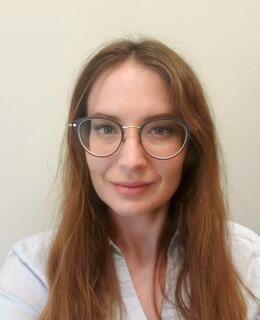
Dr. Siva Marimuthu is a Senior Lecturer in Aeronautical Engineering at Staffordshire University's School of Digital, Technologies and Arts. Previously, he held positions at Nilai University (Malaysia) and institutions in India. He earned his PhD, MEng, and BEng in Aeronautical Engineering from Anna University, Chennai, India. His expertise spans computational and experimental aerodynamics, fluid mechanics, and biomimetic design. Education: PhD in Aeronautical Engineering, Anna University (Chennai, India) MEng in Aeronautical Engineering, Anna University BEng in Aeronautical Engineering, Anna University Research Interests: Aerodynamics, aircraft design, biomimetics, composites, computational fluid dynamics (CFD), and fluid mechanics. His work focuses on optimizing aircraft performance through biomimetic strategies and advanced materials. Notable projects include the CANDID (Computational Aerodynamic Novel Design Inspired by Dogfish) initiative funded by STARS research grants. Publications Trends: Recent works emphasize drag reduction, biomimetic aerofoil designs, and fuel efficiency innovations. Key themes include transonic flow analysis, 3D modeling for aviation, and sustainable aviation practices. Awards: Indian Faculty Leader award (2018) for contributions to aeronautical education Kajal Mallick Memorial award (2021) for research excellence Advising & Grants: Supervises PhD students in aerodynamics and CFD. Led the STARS-funded CANDID project (2022) exploring dogfish-inspired aircraft designs. Teaches modules like aerodynamics, aircraft propulsion, and computational fluid dynamics at both undergraduate and postgraduate levels. Contributions: Pioneered Malaysia's first Bachelor of Aeronautical Engineering Technology (Aircraft) program. Organized events like the International Conference on Aeronautics and the National Level Bottle Rocket Competition (India Book of Records).
Guillermo Araya is the Wayne and Julie Fagan Endowed Professor and Associate Professor in the Mechanical Engineering Department at the University of Texas at San Antonio (UTSA). He leads the Computational Turbulence and Visualization Lab (CTV Lab) , focusing on high-fidelity numerical simulations of turbulent flows, scientific visualization, and HPC applications. His research bridges fluid dynamics, aerospace engineering, and immersive technologies like VR/AR for education and research. Affiliations : Klesse College of Engineering, CTV Lab Director Education : Ph.D. in Mechanical Engineering, Rensselaer Polytechnic Institute (RPI), 2008 Research Interests : Turbulent boundary layers, hypersonic flows, DNS/LES, VR/AR visualization, flow separation mechanisms, and HPC infrastructure. He emphasizes translating complex fluid dynamics phenomena into educational tools for K-12 and university students. Recent Technical Contributions : Development of the Narwhalito GPU cluster (2025) for large-scale DNS simulations. Recent work includes studies on wall-curvature effects in supersonic flows (APS 2024), periodicity detection in turbulent boundary layers (AIAA 2024), and coherent structure analysis in crossflow jets (AFOSR-funded). Awards : PECASE (2023), NSF CAREER (2019), AIAA Associate Fellow (2021) Grants & Collaborations : PI or Co-PI on $2.8M+ in grants (AFOSR, DoD, NSF). Collaborates with institutions like Los Alamos National Lab and the University of Colorado. Supervises a diverse team of graduate/undergraduate researchers and postdocs. Labs/Teams : CTV Lab (founded 2023) specializes in HPC, DNS, and immersive visualization tools. Hosts workshops and training programs for students in supercomputing and fluid dynamics.
Dr. Kelsey Lucas is an Assistant Professor in the Department of Biological Sciences at the University of Calgary's Faculty of Science. Her research program in ecological biomechanics investigates how fish swimming mechanics influence behavior, energetics, and habitat selection. She examines how body morphology and movement dynamics determine swimming performance across species and environments. Her work integrates biomechanical measurements with ecological context to understand habitat occupancy patterns in freshwater systems. This research provides biomimetic insights for underwater vehicle design while assessing environmental impacts on fish populations. Dr. Lucas teaches courses including Vertebrate Zoology, Animal Physiology, and Comparative Vertebrate Anatomy. Her lab website provides additional information about ongoing research projects and publications.
Dr. Abdulghani Mohamed is a Senior Lecturer in the School of Engineering at RMIT University, specializing in aerospace engineering with a focus on unmanned aerial systems, turbulence research, and biomimetic flight technologies. His research integrates principles from biology with engineering applications to advance drone technology and flight control systems. His research interests span Turbulence , Unmanned Systems , Sensors , Biomimetics , Aerodynamics , Experimental fluid dynamics , Computational fluid dynamics , and Energy harvesting systems . Dr. Mohamed's work demonstrates a strong connection between natural flight mechanisms observed in birds and engineered solutions for drone technology. His recent publications (2018-2024) reveal consistent research productivity with a clear trajectory toward increasingly sophisticated drone control systems, turbulence adaptation mechanisms, and biomimetic applications. The research shows a progression from fundamental aerodynamic studies toward practical implementations in urban air mobility and advanced drone systems. Open to Masters Research or PhD student supervision Active research projects in drone propeller optimization, turbulence mitigation, and biomimetic flight Dr. Mohamed maintains an active research program with numerous projects related to unmanned aerial systems and their applications in complex environments. His work bridges theoretical aerodynamics with practical engineering solutions for next-generation flight systems.
Dr. Jun Yao serves as a Senior Lecturer in Aerospace Engineering at the School of Engineering, University of the West of England (UWE Bristol), within the Department of Engineering, Design and Mathematics. His research leverages computational fluid dynamics to address industrial flow challenges across renewable energy systems, turbomachinery, and aerospace applications, with significant contributions to REF2021 impact case studies. Education: PhD MPhil MSc BEng Dr. Yao specializes in multiphase flow dynamics, heat transfer phenomena, and aerodynamic optimization. His work pioneers flow control techniques for vertical axis wind turbines (VAWTs) using Gurney flaps, investigates hydrogen combustion and fuel cell electrocatalysts, and models thermal systems for building ventilation and turbine blade cooling. Recent publications demonstrate strong interdisciplinary focus on sustainable energy solutions through advanced CFD methodologies and experimental validation. Analysis of Dr. Yao's 2020-2025 publications reveals three dominant research thrusts: (1) VAWT performance enhancement via passive flow control devices across operational regimes, (2) multiphase flow modeling in industrial processes (laser cladding, sludge discharge, heat exchangers), and (3) turbulence simulation techniques for aerodynamic prediction. His work consistently bridges fundamental fluid dynamics with practical energy applications. Scientific Awards: Fellow of the Higher Education Academy (FHEA) Dr. Yao leads collaborations with Mitsubishi Electric R&D Centre (MERCE-UK) on hydrogen combustion and turbomachinery projects. His teaching portfolio spans Thermofluids, Fluid Mechanics, CFD, Sustainable Energy, Aerodynamics, and Aero-propulsion courses, integrating cutting-edge research into curriculum development for aerospace engineering students. His research group maintains experimental facilities for laser diagnostics in multiphase flows and computational resources for high-fidelity CFD simulations, supporting innovations in wind energy harvesting, thermal management systems, and clean combustion technologies through industry-academia partnerships.
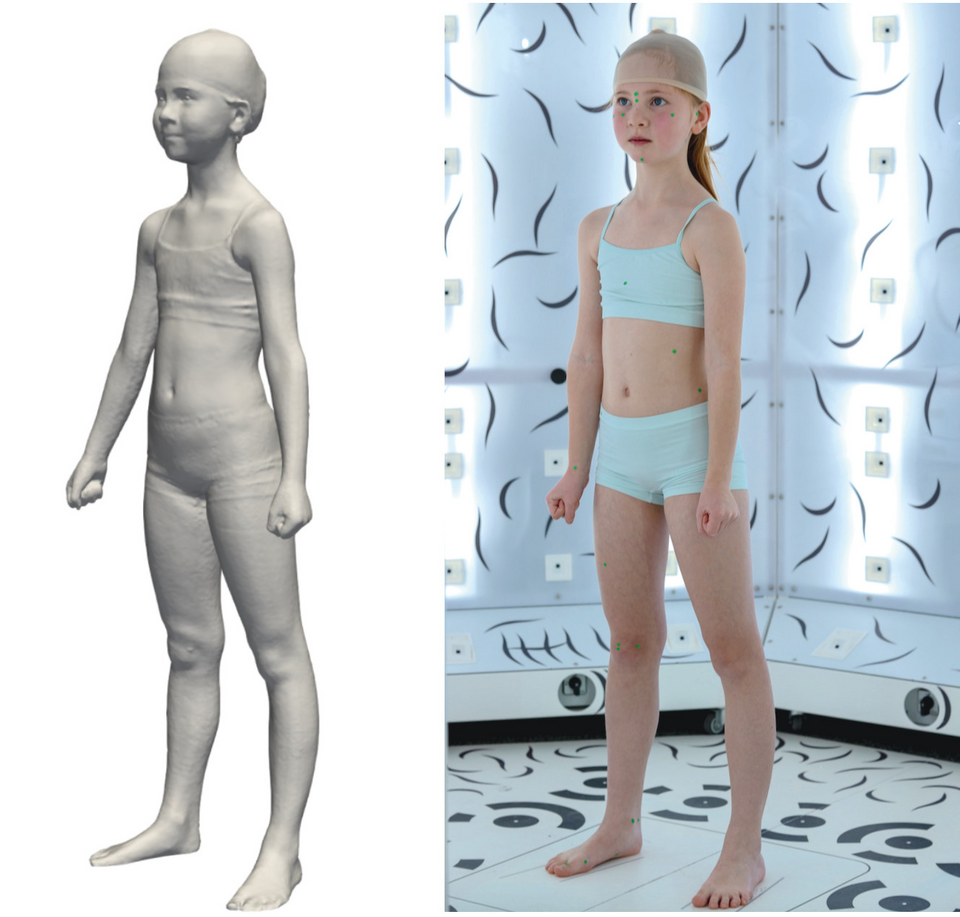
Dr. Toon Huysmans is an Assistant Professor at the Department of Industrial Design, Faculty of Industrial Design Engineering, Delft University of Technology. He specializes in digital human modeling, ergonomics, and 3D anthropometry, applying these to product design, healthcare, and sports equipment. His research focuses on creating personalized solutions through advanced technologies like 3D scanning, AI, and statistical shape modeling. Education: PhD in Sciences (2009), University of Antwerp Master and Bachelor in Computer Science (2003/2001), University of Antwerp Research Interests: His work bridges engineering and design, emphasizing human-centric approaches. Key areas include ergonomic product development, PPE design, and biometric data analysis for safety and comfort. Recent projects involve 3D facial anthropometry for protective gear and dynamic foot modeling for orthotics. Media & Outreach: Featured in NOS, BNR, and other outlets for studies on children’s anthropometry and helmet design. Leads initiatives to improve EU safety standards through 3D body scanning projects. Collaborations: Involved in labs such as the Center of Design for Advanced Manufacturing (CDAM) and the Physical and Ergonomics Lab. Teaches courses on Biomechanics and Human Factors.
Daniel Tudball-Smith is a Lecturer in the Department of Mechanical & Aerospace Engineering at Monash University, Faculty of Engineering. His research focuses on fluid dynamics and aerodynamics, particularly in wind engineering and sports applications such as cycling. His research interests include fluid dynamics, aerodynamics, bluff body flows, post-critical flow regimes, surface roughness effects, and cycling aerodynamics. He employs both experimental and computational methods to study complex flow behaviors around cylindrical structures and human postures. The recent publications show a strong trend in investigating the aerodynamic behavior of rough circular cylinders in various configurations (side-by-side, inline, multiple arrangements) under postcritical flow conditions. Additional work explores the impact of rider posture and leg positioning on cycling aerodynamics, indicating interdisciplinary applications in sports engineering. No scientific awards were mentioned in the provided text. Daniel Tudball-Smith has served as a Chief Investigator on research projects, such as the 'Wind Comfort Simulation and New Engineering Design Process' project (2022–2023), indicating active involvement in grant-funded research and likely supervision of students or research staff. While no direct list of advisees is provided, his role in collaborative research outputs suggests mentoring and team leadership. He collaborates extensively with researchers including David Burton, Mark Thompson, and Shane Wang, forming part of a strong research network in experimental and computational fluid dynamics at Monash University. The work contributes to broader applications in urban wind comfort, structural design, and sports performance optimization.
Blake Everett Johnson is a Teaching Associate Professor and Director of Undergraduate Instructional Laboratories in Mechanical Science & Engineering at the University of Illinois Urbana-Champaign. He holds a PhD (2012), MS (2007), and BS (2005) in Theoretical and Applied Mechanics from UIUC. His career includes roles as Teaching Assistant Professor (2019–2022), Lecturer (2015–2019), and Visiting Lecturer (2014–2015). Johnson specializes in engineering education innovation, including: Developing hands-on design curricula across four years of undergraduate programs Leading service-learning initiatives with K-12 schools Pioneering the Entrepreneurial Mindset Fellowship to enhance teaching and leadership Revamping laboratory exercises in fluid mechanics and heat transfer Building presentation skills programs for capstone teams His research focuses on: Entrepreneurial mindset development Service learning ecosystems Fluid mechanics applications Professional identity formation Notable recognitions include multiple Engineering Council Outstanding Adviser Awards (2021–2023), Collins Scholar (2014), and excellence in teaching rankings. His work spans over 30 peer-reviewed articles, including groundbreaking ventilator design during the pandemic and innovative educational frameworks. Service contributions include leadership roles in: Teaching Innovations Seminar Committee Specialized Faculty Recruiting ABET curriculum evaluations College-wide initiatives like the Engineers SPEAK program Current projects include expanding a university-wide service-learning ecosystem and advancing interdisciplinary research training for undergraduates.
O.R. Tutunea-Fatan is a Professor in the Department of Mechanical and Materials Engineering at Western University, Canada. His academic roles include serving as Associate Chair for Graduate Research Programs (2025-2027) and Acting Associate Dean for Undergraduate Studies (2023-2024). He holds a Ph.D. from Western University and degrees from Transilvania University, Romania. Tutunea-Fatan’s research focuses on precision manufacturing, CAD/CAM integration, laser-based surface engineering, and biomedical applications such as computer-aided orthopaedic surgery. He has supervised over 40 graduate students and holds multiple teaching awards including the Edward G. Pleva Award (2023), Western’s highest teaching honor. Key Research: Laser polishing, ultraprecise cutting, composite materials, functional surface design Industry Collaborations: General Motors, DuPont, Dieffenbacher, Scisense Inc. His work bridges advanced manufacturing with biomedical innovation, emphasizing real-world applications in aerospace, automotive, and medical sectors. Recent projects include drag-reduction riblet surfaces and AI-driven process monitoring.
Professor Gustaaf Jacobs is a Full Professor in the Department of Aerospace Engineering at San Diego State University (SDSU), within the College of Engineering. He holds a M.Sc. in Aerospace Engineering from Delft University of Technology (1998) and a Ph.D. in Mechanical Engineering from the University of Illinois at Chicago (2003). His research focuses on computational multiphase and multi-scale flow physics, particularly in particle-laden flows, flow separation in complex geometries, and plasma-based flow control for applications in combustion optimization and drag reduction. Jacobs has received the AFOSR Young Investigator Award (2009) and became an Associate Fellow of AIAA (2013). His academic journey includes roles as a Visiting Assistant Professor at Brown University (2003–2006) and Postdoctoral Fellow at MIT (2003–2006). At SDSU, he advanced from Assistant Professor (2006) to Associate Professor (2010) before becoming Full Professor in 2013. Research interests span high-order numerical methods, shock wave interactions, and aerodynamic design, with a strong emphasis on experimental validation and computational modeling. Jacobs’ recent work includes studies on synthetic surface generation for additive manufacturing, turbulence transition on airfoils, and stochastic modeling of particle dynamics. His contributions address challenges in fluid-structure interactions, flow control, and predictive simulation techniques for aerospace systems. He collaborates on projects involving high-fidelity CFD, experimental aerodynamics, and data-driven modeling to advance engineering applications.
Prof. Dr. İbrahim ÇAYIROĞLU currently holds a full-time Professor position at Karabük University's Faculty of Engineering and Natural Sciences, Department of Mechatronics Engineering. He has served as Department Chair since 2024 and previously held administrative roles including Dean Assistant and Department Chair between 2003-2021. Education: PhD in Mechanical Engineering (2002), Kırıkkale University MSc in Mechanical Engineering (1996), Kırıkkale University BSc in Mechanical Engineering (1991), Istanbul Technical University Research Focus: Specializes in Computer-Aided Design/Manufacturing, Finite Element Analysis, and Machine Dynamics. His work spans robotics, 3D printing optimization, welding technology, and mechanical system simulation. Recent Trends: 2024 publications highlight autonomous robotics, AI-integrated quality control in manufacturing, and advanced finite element analysis. Earlier works focused on SIFT-based object tracking, 3D printing reinforcement, and welding process evaluation. Advising Record: Supervised 11 graduate theses across diverse topics including autonomous robots, composite materials, and 3D printer design. Technical Projects: Led 12 projects between 2007-2023, including TÜBİTAK-funded excavator simulators, composite 3D printers, and automated glass mosaic tiling systems.
Dr. hab. inż. Sylwia RÓŻAŃSKA is an Associate Professor at the Poznań University of Technology, Faculty of Chemical Technology, Institute of Chemical Technology and Engineering, Department of Chemical Engineering and Equipment. She holds a Doctor of Technical Sciences degree (2004) and a Habilitation degree (2019) in chemical engineering. Her educational background includes: Master of Science in Chemical Technology (2000), Poznań University of Technology, Faculty of Chemical Technology Doctor of Technical Sciences in Chemical Technology (2004), Poznań University of Technology, Faculty of Chemical Technology Habilitation degree in Technical Sciences, discipline: chemical engineering (2019), West Pomeranian University of Technology in Szczecin Dr. RÓŻAŃSKA's research focuses on the rheology of non-Newtonian fluids , particularly in longitudinal and shear flow. Her work extensively covers emulsions, polymer solutions, and surfactant systems , with special emphasis on their behavior in porous media. She has made significant contributions to understanding extensional rheology, which has applications in food processing, pharmaceuticals, and chemical engineering processes. Her recent publications demonstrate a strong focus on the rheological properties of complex fluid systems, particularly examining how additives like cellulose derivatives, surfactants, and salts affect fluid behavior. A significant portion of her work investigates the relationship between microstructure and rheological properties, with growing interest in applications for biomedical and pharmaceutical systems as evidenced by her 2024 publication on thermosensitive hydrogels for dental applications. She is actively involved in scientific cooperation with the Department of Chemical Engineering, Division of Soft Matter Rheology and Technology at KU Leuven, Belgium. Dr. RÓŻAŃSKA teaches courses in Chemical Engineering, Engineering of selected processing processes, Technical rheology, Process kinetics, and Chemical engineering and mixture separation processes. She serves on the Faculty Examination Committee for second-cycle studies in chemical and process engineering and is a member of the team for the quality of education.
Abdul Waheed Awan is a Senior Lecturer in Mechanical & Automotive Engineering and Award Leader for MSc Automotive Engineering at Staffordshire University's School of Creative Arts and Engineering. He has served as Course Leader for BEng (Hons) with a Foundation Year and teaches across undergraduate and postgraduate modules in Mechanical and Automotive Engineering since 2015. His academic journey includes a PhD in Tribology (Mechanical Engineering) from Bournemouth University, supported by a prestigious BU PhD Scholarship and a JNU South Korea Scholarship. Prior to this, he worked as a Research Fellow at the University of Birmingham on an Innovate UK-funded £1M Low Rolling Resistance Tyre Project, and as a visiting researcher at SKF Engineering & Research Centre in the Netherlands. Earlier roles include Manager (Technical) at the Centre for Fluid and Structure Mechanics in Pakistan, leading CFD and structural analysis projects. Research interests focus on Tyre Dynamics (modelling, testing, and analysis), Structural Integrity , Contact Mechanics , and FE-based simulation . His work spans tribology, suspension design, and wear analysis. Recent publications address advanced suspension systems, additive manufacturing for gas turbines, and tire performance under varying conditions. Professional credentials include Chartered Engineer (CEng, UK), Fellow of HEA (FHEA), and membership in IMechE and Pakistan Engineering Council. Awards include travel grants enabling global conference participation and technical course attendance. Teaching responsibilities include leading Level 7 postgraduate modules like Advanced Vehicle Dynamics and Technical Paper Authoring, alongside undergraduate courses in mechanics, vibration analysis, and engineering science. His research has been published in venues like Tire Technology Conferences, STLE Conferences, and journals such as the Journal of the Brazilian Society of Mechanical Sciences.