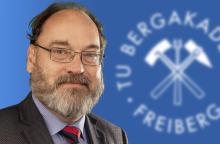
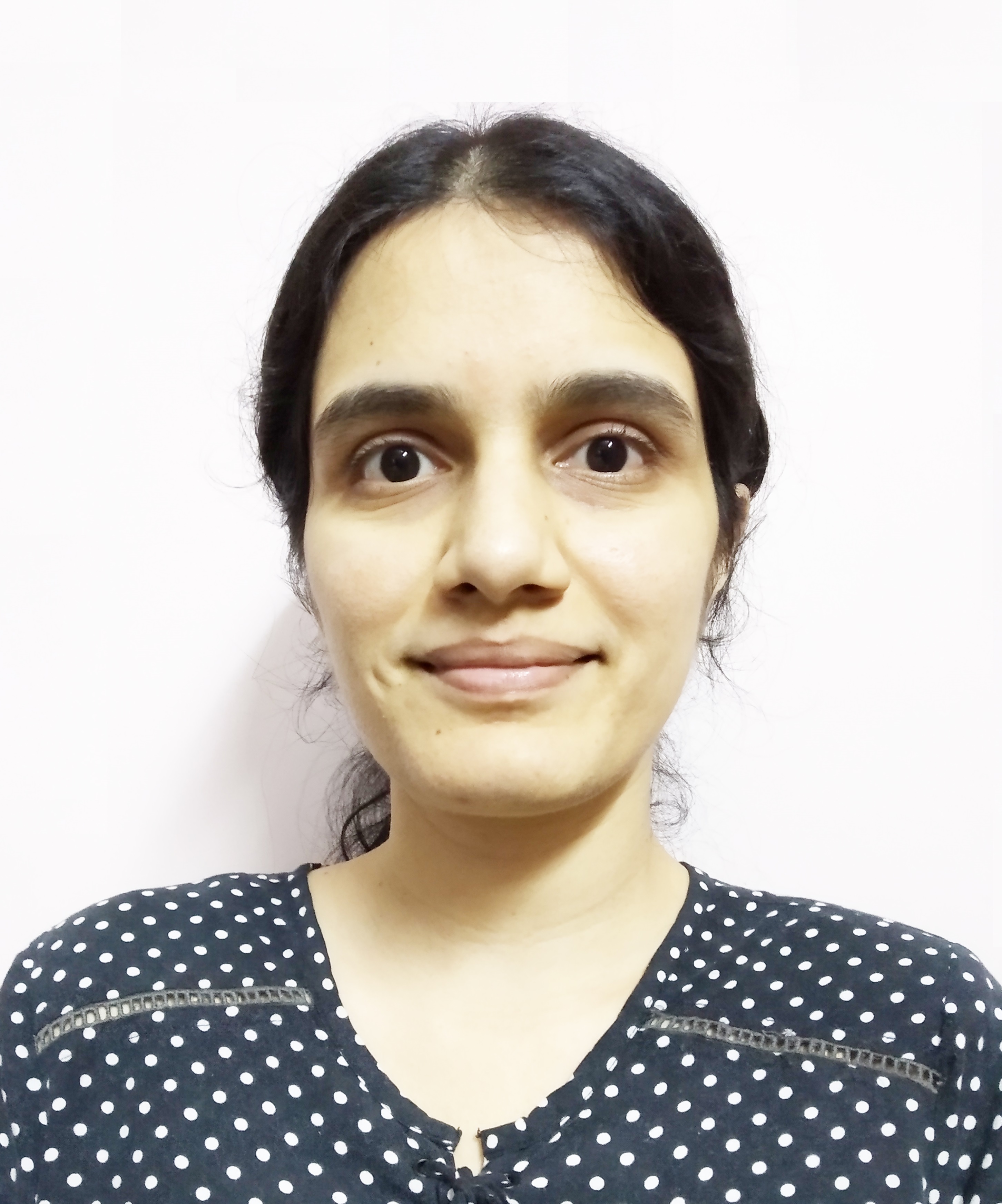
Prof. Dr. Daniel Wentzel holds the Chair of Marketing at the School of Business and Economics, RWTH Aachen University since 2011. A graduate of the University of Cologne and University of Auckland, he earned his PhD and Habilitation from the University of St. Gallen. Research focuses on Consumer Behavior , Smart Product Design , and Innovation Management across industries like automotive, retail, and finance. His work bridges IoT , Design Thinking , and AI-based Service Tools , emphasizing psychological mechanisms in marketing. Collaborations include the Ford Research and Innovation Center , where he applies empirical methods to B2B innovation projects. Recent publications analyze Smart Products , CEO Appearance Effects , and Privacy Calculus . While no awards are listed, his work on product aesthetics and referral programs has appeared in top journals like the Journal of Marketing and Journal of Service Research .
Dr Tanvir Ahmed is a post-doctoral researcher at the Institute of Meteorology and Climate Research – Troposphere Research Division (IMKTRO) , Karlsruhe Institute of Technology (KIT), Germany. He previously served on the faculty of the Department of Physics, Shahjalal University of Science and Technology (SUST) , Bangladesh, and completed his PhD at Seoul National University , South Korea. Education PhD, Atmospheric Sciences – Seoul National University, South Korea (2017–2021) M.Sc., Physics – Shahjalal University of Science and Technology (2007–2008) Post-Graduate Diploma, Physics – The Abdus Salam ICTP, Trieste, Italy (2008–2010) B.Sc., Physics – Shahjalal University of Science and Technology (2001–2007) Research Focus Dr Ahmed’s work centres on high-resolution regional climate modelling of extreme weather events, particularly European summer storms and mesoscale convective systems . He employs the ICON modelling framework to investigate how such extremes may evolve under recent and near-future climate conditions, in collaboration with Aon Impact Forecasting . Additional interests include the physical parameterization of cloud microphysical processes (e.g., warm-cloud collection and breakup schemes, raindrop–cloud droplet accretion), satellite-precipitation evaluation (GPM IMERG over Bangladesh and surrounding regions), and the influence of Indian Ocean warming and soil-moisture feedback on the Asian summer monsoon. Publication Landscape Across seven peer-reviewed articles (2012-2022), Ahmed has advanced understanding of extreme precipitation mechanisms over the Meghalaya Plateau, monsoon rainfall variability across Bangladesh and Northeast India, and the development of process-oriented microphysical parameterizations for weather and climate models. Scientific Awards No specific awards are listed in the provided material. Advising & Funding Current post-doctoral funding is provided through the Aon Impact Forecasting project on extreme weather events. While no PhD or Masters students are explicitly named, his previous faculty roles at SUST imply prior teaching and mentoring responsibilities. Laboratory & Teams At KIT he belongs to the Regional Climate Modelling Group within IMKTRO, working closely with colleagues on high-resolution modelling of extreme events using the ICON model.
Dr. Klaus Achterhold is a Lecturer in Biophysics at the Technical University of Munich (TUM), affiliated with the Chair of Biomedical Physics under Prof. Franz Pfeiffer. He has been a scientific researcher at TUM since 1995 and holds a lectureship position since 2007. His office is located at James-Franck-Str. 1 in Garching bei München, where he conducts research in advanced X-ray physics and biomedical applications. Education: Ph.D. in Physics (1995) from Technical University Munich Diploma thesis at WWU Münster, Institute of Physical Chemistry Physics studies at Westfälische Wilhelms Universität Münster (1981-1985) Research Focus: His primary interests span solid state physics, biophysics, and computational physics with specialized expertise in X-ray imaging techniques. Key research areas include grating-based X-ray phase contrast imaging, X-ray tomography, inelastic scattering of X-rays/neutrons, Mössbauer spectroscopy, and protein structure determination. His work bridges fundamental physics with biomedical applications, particularly in developing compact synchrotron sources for medical imaging. Publication Trends: Recent research (2021-2025) demonstrates strong focus on inverse Compton X-ray sources for advanced imaging applications. Major themes include phase-contrast CT for medical diagnostics (mammography, fracture detection), materials characterization (catalysts, composites), and novel X-ray methodologies. Collaborative interdisciplinary work features prominently, with applications spanning biomedicine, materials science, and chemical engineering. Laboratories & Facilities: Works within TUM's advanced X-ray research infrastructure, including the Munich Compact Light Source - a laboratory-scale inverse Compton source enabling innovative experiments in biomedical physics and materials characterization without requiring large-scale synchrotron facilities.
Julian Brotz serves as a Research Associate at the Professorship of Simulation for Additive Manufacturing, Technical University of Munich (TUM), Germany. His dual Master of Science degrees in Computational Science and Engineering and Aerospace Engineering were both completed at TUM in 2024, following a Bachelor of Science in Aerospace Engineering from the University of Stuttgart in 2021. His educational qualifications include: 2024: Master of Science (M.Sc.), Computational Science and Engineering, Technical University of Munich 2024: Master of Science (M.Sc.), Aerospace Engineering, Technical University of Munich 2021: Bachelor of Science (B.Sc.), Aerospace Engineering, University of Stuttgart Brotz specializes in computational methodologies for metal additive manufacturing processes, with core expertise in computational fluid dynamics and immersed boundary methods. His research addresses fluid-particle interactions in laser powder bed fusion (LPBFAM), high-performance computing infrastructure development, and multi-physics simulations of cohesive metal powders. He investigates thermo-solid-mechanics phenomena and microstructure evolution during additive manufacturing, integrating complex multiphase flow modeling with materials science principles to advance process predictability and quality control. His 2024 publication in Additive Manufacturing demonstrates a computationally efficient framework for predicting microstructure evolution in Ti-6Al-4V components at part-scale, reflecting his focus on bridging high-fidelity physics with practical manufacturing constraints. The work emphasizes thermo-mechanical modeling and computational optimization for industrial-scale additive manufacturing applications. No scientific awards or major grants are documented for Brotz in the available records. He has no listed advisees or student supervision activities. As part of Prof. Christoph Meier's research team at TUM, Brotz contributes to the ERC-funded research group focused on simulation-driven additive manufacturing, developing specialized software for multi-physics problems in powder bed fusion processes through high-performance computing solutions.
Ian Störmer is a researcher in the Multiscale Modeling of Fluid Materials group at the Department of Mechanical Engineering , Technical University of Munich (TUM). His work focuses on computational materials science, with an emphasis on molecular dynamics simulations, machine learning potentials, and additive manufacturing of metals. Education: B.Sc. in Engineering Science (2023), TUM M.Sc. in Materials Science and Engineering (2024), TUM Research Interests: Development and application of machine learning potentials for materials modeling Multiscale simulation techniques in fluid materials research Microalloying effects on crystal structure and mechanical properties Additive manufacturing processes for metallic materials Affiliations: Atomistic Modeling Center (AMC) Munich Data Science Institute (MDSI) Munich Institute of Integrated Materials, Energy and Process Engineering (MEP) Contact: Office: Building 1, 2nd Floor, Room 5501.02.129, Boltzmannstr. 15, 85748 Garching bei München, Germany Phone: +49 (89) 289-55301 Email: ian.stoermer@tum.de
Frank Bekes is a Technical Staff Member and Chair of Mechatronics at the University of Duisburg-Essen, College of Engineering. His work focuses on automotive mechatronics and robotics, integrating real-time simulation and embedded systems. Research Profile: Hardware-in-the-Loop Real-Time Simulation, Electrical Controls, Biometric Systems Teaching & Projects: Involved in Hexapod, Telescope, HPT SEGESTA Rug Warrior, Large Manipulator Model Contact: Room MD 223c, Phone +49 (0)203 379-2579, Email frank.bekes@uni-due.de Research Interests span automotive mechatronics, mobile robotics, sensor networks, and embedded computing. His work emphasizes real-time simulation, circuit design, and biometric system integration in vehicles. Publications highlight trends in mechatronic design, motion control, and distributed automotive systems. Key subfields include optimal tension distribution in robotic manipulators, sensor signal reuse, and multibody dynamics in vehicle systems. Additional Roles include IT Administration, Technology Working Safety, and contributions to large-scale robotics models.
Susanne von Münchhausen serves as a Researcher at the Department of Politics and Markets in Agricultural and Food Economics within the Faculty of Landscape Utilization and Nature Conservation at Eberswalde University of Sustainable Development. Her work focuses on bridging research and practice in agricultural innovation systems, with particular emphasis on European policy frameworks and sustainable food systems. Her research interests span agricultural economics, sustainable food systems, rural development, and innovation in agriculture. She specializes in analyzing value chain dynamics, organic farming systems, and resilience strategies for agricultural businesses. Her work examines how horizontal and vertical integration of conventional value chains can enhance transparency and trust in food systems from field to table. Dr. von Münchhausen actively contributes to European innovation partnerships including EIP-Agri and coordinates multiple EU-funded research projects such as LIAISON and Schäfer Schützen. Her recent work analyzes multi-actor co-innovation partnerships, vertical integration strategies, and resilience-building approaches in medium-sized organic businesses across Europe. She has extensive experience in project coordination, workshop facilitation, and stakeholder engagement, having organized numerous seminars and moderated expert discussions connecting practitioners and researchers. Her methodological approach emphasizes practical implementation of research findings through targeted communication strategies and context-specific knowledge dissemination.
Avinash Hariharan is a researcher at the Chair of Metal Materials Science and Institute of Ferrous Metallurgy at RWTH Aachen University . His work focuses on additive manufacturing, alloy development, and surface engineering of metallic materials. Education: Dr.-Ing. (Doctor of Engineering) Research Interests include: Designing precipitation-strengthened alloys via additive manufacturing Laser processing for biomedical implants and surface functionalization Microstructural analysis of superalloys and metallic glasses Machine learning integration in alloy development Corrosion resistance and biocompatibility optimization Recent Publications highlight advancements in: High-speed 3D printing with AI-driven alloy design Nanoparticle-enhanced oxide dispersion-strengthened steels Laser interference patterning for hierarchical surface structures Thermal cycling effects on metallic glass rejuvenation Labs & Collaborations: Works within the Institute of Ferrous Metallurgy, part of RWTH Aachen University's materials science ecosystem.
Steffen Riedl is a Professor of Road Construction at the University of Applied Sciences Erfurt , specializing in civil engineering and transport infrastructure. He serves as Vice-President for Academic Affairs and a member of FH Erfurt's Senate. Research focuses on asphalt maintenance, cold recycling, and pavement diagnostics Teaches bachelor’s courses on road engineering fundamentals Active in standardization committees including FGSV Education: Diplom degree in Civil Engineering (2000, TU Darmstadt) Doctorate in Engineering (Dr.-Ing., 2006) His work emphasizes load-bearing capacity analysis using Falling Weight Deflectometer (FWD) technology and thin-layer asphalt construction for sustainable infrastructure. Recent publications examine cold recycling techniques and pavement preservation. Professional Affiliations: Chair of Gütegemeinschaft AKB (Cold-Mix Asphalt Quality Association) Member of Forschungsgesellschaft für Straßen- und Verkehrswesen (FGSV) Active in Thuringian and Hessian road engineering associations As a certified expert for asphalt construction methods, he contributes to technical standards and has led multiple research projects on pavement longevity and maintenance technologies.
Professor Florian Mertens serves as Director of the Institute of Physical Chemistry at Freiberg University of Mining and Technology within the Faculty of Chemistry, Physics and Biosciences. His research group focuses on materials-related issues related to energy storage and conversion, with particular emphasis on hydrogen storage, catalytic hydrogenation for energy storage, and porous media. His laboratory investigates metal hydrides, transition metal catalysts, and metal-organic frameworks (MOFs) as key material systems. Prof. Mertens' research interests span adsorption phenomena on surfaces, adsorption in microporous structures, calorimetry of chemical and biological systems, heterogeneous catalysis, hydrogen storage, catalytic surface reactions, reaction-diffusion systems, structure, kinetics and thermodynamics of complex metal hydrides, synthesis and analysis of highly porous media (metal organic frameworks), modeling of defect structures, and ab initio simulations. His work bridges fundamental physical chemistry with practical applications in energy storage and conversion technologies. His recent publications demonstrate a strong focus on thermodynamic characterization of complex hydrides, development of catalysts for CO 2 hydrogenation, and investigation of metal-organic frameworks for separation and storage applications. The research shows a consistent pattern of combining experimental calorimetry with materials synthesis and characterization to address challenges in hydrogen storage and carbon-neutral fuel production. General Motors R&D Appreciation Award Alexander von Humboldt Foundation – Feodor Lynen Fellowship Prof. Mertens leads a vibrant research group with numerous doctoral students and postdoctoral researchers working on various aspects of energy materials. His team has developed specialized equipment for calorimetric measurements and gas-solid reaction studies. The group collaborates extensively with industrial partners in the automotive and energy sectors, particularly on hydrogen storage technologies and power-to-gas conversion systems. Current projects focus on developing catalysts for CO 2 methanation within the power-to-gas concept, investigating complex hydrides for hydrogen storage, and exploring metal-organic frameworks for separation applications. The research group maintains specialized laboratories for materials synthesis, characterization, and testing, including facilities for high-precision calorimetry, gas adsorption measurements, and catalytic testing under controlled conditions. The team has developed innovative approaches to studying hydrogen storage materials and catalytic processes relevant to renewable energy integration.
Professor Thorsten M. Buzug is a leading academic in Medical Engineering and Physics at the University of Lübeck, serving as Director of the Institute of Medical Engineering since 2006 and Executive Director of Fraunhofer IMTE since 2020. He is actively involved in scientific conferences and editorial work, particularly in imaging sciences and biomedical engineering. Education : PhD in Applied Physics, Christian-Albrechts-University of Kiel (1993) Research Interests span multiple imaging modalities, including Magnetic Particle Imaging (MPI) , Computed Tomography (CT) , Magnetic Resonance Imaging (MRI) , and image computing , with a focus on technical innovation and clinical applications. His work integrates additive manufacturing and physiological process modeling . Scientific Leadership includes organizing conferences like the International Workshop on Magnetic Particle Imaging (IWMPI) and editing key publications such as Magnetic Particle Imaging: An Introduction (Springer, 2012). He has advised over 20 PhD students in specialized imaging techniques.
Dr. Nagamani Jaya Balila is an Associate Professor at the Department of Metallurgical Engineering and Materials Science, Indian Institute of Technology Bombay (IIT-Bombay), specializing in micro- and nano-scale mechanical behavior of materials. She has held positions at IIT-Bombay since October 2016, including Assistant Professor (2016-2021) and Associate Professor (2021-present). Education: B.Tech in Metallurgical and Materials Engineering (NITK, 2007), Ph.D. in Materials Engineering (IISc, 2013) Research Focus: Deformation and fracture mechanisms at micro/nano interfaces, in-situ micro-mechanical testing in SEM/synchrotron, and finite element modeling of material behavior Her work explores how miniaturization affects mechanical properties, including "smaller is stronger" phenomena, inverse Hall-Petch effects, and transitions from ductile to brittle behavior. She develops novel in-situ micromechanics tools and designs interface architectures for damage-tolerant systems like thin films, MEMS, and additive-manufactured composites. Key research projects include "Designing damage tolerant functional oxide nanostructures" (Max-Planck India Partner Group Project, 2016-2019), "Tailoring damage tolerance in brittle systems" (DST-Ramanujan Fellowship), and collaborations with Tata Steel on pearlitic wires and dual-phase steels. Scientific Awards: Young Faculty Award (IIT-Bombay), Acta Materialia Certificate of Excellence in Reviewing, MPI Postdoctoral Fellowship, multiple best poster/presentation awards Grants: DST-International Travel Support, CSIR Travel Grant, IIM-SJEF funding She leads the Micro-Mechanics of Materials Group at IIT-Bombay, focusing on cross-over regimes in material behavior and enhancing damage tolerance through interface engineering.
Dmitry Aksenov serves as an Assistant Professor at Skolkovo Institute of Science and Technology (Skoltech), leading the computational materials group within the Center for Energy Science and Technology. His research focuses on computational studies of next-generation metal-ion batteries, with emphasis on electrode/electrolyte interfaces and high-throughput materials modeling. He develops specialized software (SIMAN) for automating quantum-mechanical calculations and maintains close collaboration with experimental research teams. His educational background includes: 2006–2011: Specialist in Physics and Engineering from Belgorod State University 2011–2014: Candidate of Sciences in Condensed Matter Physics from Belgorod State University Aksenov's research spans computational materials science with specialization in density functional theory (DFT) and high-throughput screening of battery materials. His work targets fundamental mechanisms at electrode/electrolyte interfaces in Li-ion, Na-ion, K-ion, and Li-air systems, aiming to design stable interfaces with low ionic resistivity. He investigates structure-property relationships to enhance battery safety, lifespan, and energy density through atomic-level simulations of cathode/anode materials, defect chemistry, and ion transport phenomena. His methodology combines DFT calculations with machine learning to accelerate materials discovery. Analysis of his 15 most recent publications (2022–2024) reveals dominant themes in sodium-ion battery cathodes (NaVOPO 4 , NaGaPO 4 F), lithium-ion electrode modifications (NMC, Li-rich systems), and computational reviews of ionic conductivity mechanisms. Key trends include high-throughput screening of NH 4 + -based frameworks, defect engineering in olivine structures, and interfacial phenomena in solid-state batteries. His work consistently bridges computational predictions with experimental validation through extensive collaborations. No scientific awards were documented in the provided materials. Aksenov leads the computational materials group at Skoltech's Center for Energy Science and Technology, directing the SIMAN software development for automated materials calculations. His research is funded through institutional support at Skoltech with strong industry-academia partnerships focused on commercializing battery materials. The group maintains tight integration with experimental teams at Skoltech and international collaborators including Max Planck Institutes. The computational materials group operates within Skoltech's Center for Energy Science and Technology, utilizing high-performance computing resources for large-scale DFT simulations. They specialize in simulating metal-ion battery interfaces and developing machine learning workflows through the SIMAN platform. Current projects focus on designing stable electrolyte formulations and high-capacity electrode materials for next-generation batteries.
Kai Olaf Martin Hinrichsen is a Professor at the Technical University of Munich in the TUM School of Natural Sciences , heading the Department of Technical Chemistry I . His research bridges industrial catalysis and chemical reaction engineering across scales from particle design to reactor and process modeling . Education: Diplomingenieur (Energy and Process Engineering), Technical University of Berlin (1993) Master of Chemical Engineering (M.Ch.E.), University of Delaware (1993) Doctorate, Fritz Haber Institute of the Max Planck Society (1996) Habilitation, Ruhr University Bochum (2002) Research Interests: Prof. Hinrichsen focuses on CO2 methanation , olefins production (MTO, ODH), additive manufacturing of catalysts , and reactor technologies (fixed bed, fluidized bed, spinning disc). His work integrates kinetic modeling , transport phenomena , and computational fluid dynamics (CFD) for process intensification. Article Trends: His recent publications emphasize CO2 conversion to fuels and chemicals, 3D printing of catalyst supports , CFD simulations for reactor optimization , and thermal management in energy systems . Key disciplines include catalysis , chemical engineering , and sustainable process design . Scientific Awards: Young Scientist Prize, International Association of Catalysis Societies (2000) Jochen Block Prize, German Society for Catalysis (2003) Lecturer scholarship, Chemical Industry Fund (2004) Grants and Collaborations: Recipient of Fulbright scholarship , Erwin Stephan Prize , and Kekulé scholarship . His work aligns with UN Sustainable Development Goals (SDGs), particularly affordable and clean energy and climate action . Labs and Teams: Leads the Technical Chemistry I chair, collaborating with institutions like Ruhr University Bochum and University of Leipzig . Research groups focus on catalyst synthesis , reactive flow simulations , and energy system modeling .
Professor Stefan M. Pfister serves as Director of Preclinical Pediatric Oncology at the Hopp Children's Tumor Center (KiTZ) Heidelberg and Head of the Department of Pediatric Neuro-Oncology at the German Cancer Research Center (DKFZ). He is also a Senior Physician at the Department of Pediatrics III, Oncology, Hematology, Immunology and Pulmonology at Heidelberg University Hospital, where he serves as Deputy Head of the Section "Center for Individualized Pediatric Oncology (ZIPO) and Brain Tumors". His research focuses on pediatric neuro-oncology, particularly molecular genetics of childhood brain tumors. He leads the research group "Molecular Genetics of Childhood Brain Tumors" at DKFZ and Heidelberg University Hospital. His work prominently features DNA methylation-based tumor classification, medulloblastoma genomics, and translational research in pediatric brain cancers. His extensive publication record shows significant contributions to the 2021 WHO Classification of Central Nervous System Tumors, DNA methylation profiling for tumor classification, and comprehensive genomic analyses of childhood cancers. His research bridges molecular diagnostics with clinical applications, aiming to improve classification systems and treatment approaches for pediatric brain tumors. Director of Preclinical Pediatric Oncology, Hopp Children's Tumor Center Heidelberg Head of Department of Pediatric Neuro-Oncology, German Cancer Research Center (DKFZ) Senior Physician, Department of Pediatrics III, Heidelberg University Hospital Deputy Head, Center for Individualized Pediatric Oncology (ZIPO) and Brain Tumors Director of Children's Tumor Center (KiTZ) Heidelberg since 2016 Professor Pfister has received recognition through his extensive publication record in top-tier journals including Nature, Nature Genetics, and Neuro-Oncology. His leadership in international consortia has advanced the field of pediatric neuro-oncology through collaborative research efforts spanning multiple continents. His academic journey began with medical studies at Hamburg and Tübingen universities (1994-2002), followed by postdoctoral work at Dana-Farber Cancer Institute and DKFZ. He completed his habilitation and Venia Legendi for pediatrics at Heidelberg University in 2010 and has led his research group since 2006. His additional Master's degree in Management (2015) complements his scientific leadership roles.