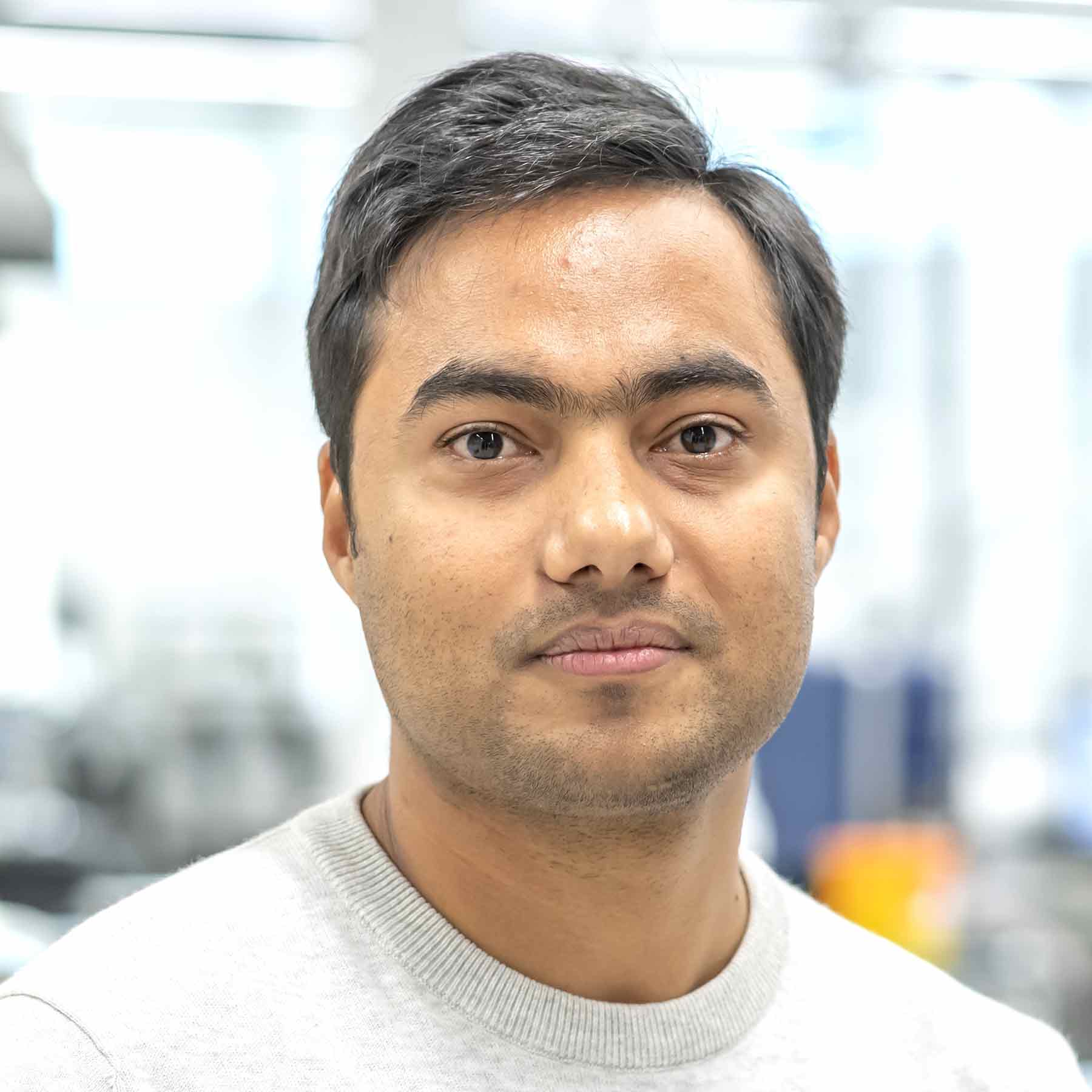
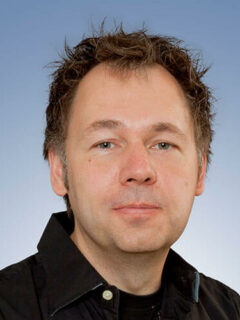
Chris Connor is an Assistant Professor at Northumbria University in the Department of Mechanical and Construction Engineering. He is an experienced mechanical engineer with a focus on applied research and industrial impact. PhD in Mechanical Engineering (2009) MSc in Manufacturing Systems (1995) His research interests include additive manufacturing, engineering design, manufacturing management (e.g., Six Sigma), and renewable energy. He has contributed to the UN Sustainable Development Goals through his work. His recent publications span topics in additive manufacturing, renewable energy policies, biomedical engineering, and design education. These works reflect interdisciplinary research bridging materials science, industrial practices, and educational pedagogy. Chris has supervised PhD and MSc students, though individual names are not listed. His work has been cited 135 times, indicating a growing academic network and influence in engineering and sustainable practices.
Manuel Francisco Costa Pereira is an Associate Professor at the University of Lisbon's Faculty of Sciences and Technology, specializing in the Department of Mineral and Energy Resources Engineering. His research focuses on geological resources, mineralogical analysis, and advanced imaging techniques like X-ray micro-CT, with applications in cultural heritage preservation and material science. Education: Advanced academic qualifications in geology, materials science, and engineering are implied by his academic position, though specific details are not explicitly provided. Research Interests: Dr. Pereira's work bridges geoscience and engineering, emphasizing: Archaeological materials analysis Environmental remediation via biochar and recycled materials Non-destructive testing of construction materials Cultural heritage preservation through advanced imaging Metallogeny and historical mining studies Publications: His recent work spans archaeological metallurgy, eco-friendly construction materials, and microstructural analysis of mortars. Key themes include: Historical tin/bronze production in Iberia Recycled cement composites for sustainable construction Micro-CT applications in material characterization Environmental impacts on speleothems Grants & Advising: No explicit mentions of current grants or advisee students are provided in the text. Labs/Teams: Collaborations involve CERENA (Center for Renewable Energies, Environment and Materials), Instituto Superior Técnico's geology laboratories, and multidisciplinary teams in materials science and heritage preservation.
Alaeddin Burak İrez is an Assistant Professor in the Department of Mechanical Engineering at Istanbul Technical University (ITU), specializing in composite materials, structural optimization, and advanced manufacturing. His research focuses on developing novel composites for applications in aerospace, automotive, biomedical, and renewable energy sectors. He leads multiple projects funded by BAP (Scientific and Technological Research Council of Turkey) and has authored over 44 research outputs, including articles in prestigious journals like Defense Technology , Journal of Power Sources , and Polymers . Research Interests: Composite materials design and characterization Thermal and mechanical performance optimization Additive manufacturing of biomedical implants Self-healing materials for wind turbine applications Battery case structural integrity analysis Recent Research Trends: His 2024-2025 work emphasizes hybrid composites for electric vehicle batteries, biohybrid actuators, and tribologically enhanced wind turbine laminates. He has pioneered methods for hierarchical composite design using pellet extrusion additive manufacturing and numerical optimization frameworks for UAV wings. Awards: Best Presentation Award at an international conference (June 2022) Grants & Projects (as PI): Machine Learning for Wind Turbine Blade Damage Analysis (2023-2025) Thermal Conductive Hexagonal Boron Nitride Composites for EV Batteries (2022-2023) Self-Healing Multifunctional Composites for Offshore Wind Turbines (2022-2023) PEEK-based Spinal Implant Additive Manufacturing (2022-2023) Labs/Teams: Leads ITU's Composite Materials & Structural Optimization Lab, collaborating with industry partners on automotive and aerospace projects.
Meltem Tekçin is a Researcher at the Department of Textile Engineering, Istanbul Technical University. Her work focuses on wearable technologies, smart sensors, and e-textiles with applications in healthcare, agriculture, and robotics. She has contributed to UN Sustainable Development Goals through innovations in smart systems and sensor technologies. Key research areas include textile-based humidity sensors, RFID-enabled wearables, and flexible sensor integration. Her recent work involves developing moisture sensors for smart diapers, humidity sensors for agriculture, and pressure sensors for robotic grippers. Collaborations span material science, electronics, and biomedical engineering. She has published extensively on topics like wearable UHF-RFID sensors and e-textiles, with a focus on practical applications in healthcare and smart systems.
Erkka Frankberg is an Academy Research Fellow specializing in Materials Science and Environmental Engineering. His research focuses on ceramic additive manufacturing, amorphous oxide plasticity, and advanced materials processing. He has contributed to over 27 peer-reviewed publications since 2012, with notable work on vat photopolymerization, supercritical CO₂ extraction for ceramic prints, and computational studies of amorphous oxide behavior. Education includes a Master of Science (Technology) in Materials Technology (Rock Engineering, 2013) and Lower-Degree Level Tertiary Education in Technology (2011). He is a co-founder and executive committee member of the Young Ceramists Network since 2016. Awards include the Young Researcher award (2021), the 2012 Best Diploma Work Recognition, and recognition as Finnish representative in a student speech contest (2015). His research explores cutting-edge topics like room-temperature plasticity in amorphous Al₂O₃ and SiO₂, novel ceramic binder systems, and biomedical applications of 3D-printed scaffolds. He has presented at international conferences, including invited lectures on glass plasticity and participated in media engagements such as radio shows discussing materials innovation.
Setareh Zakeri is a Doctoral Researcher in Materials Science and Environmental Engineering within the Doctoral Programme in Engineering Sciences. Her research focuses on advanced material fabrication techniques including ceramic vat photopolymerization and stereolithography, with applications in biomedical engineering and environmental sustainability. She has contributed to studies on ceramic resin formulations, antibacterial hydroxyapatite composites, and 3D printing process optimization. Education: Master of Science (Technology) in Science and Engineering (2016). Research Interests: Development of ceramic materials for additive manufacturing, optimization of photopolymerization processes, and characterization of material properties under various processing conditions. Her work intersects material science, chemical engineering, and biomedical applications. Grants: Recipient of the Suomen Kulttuurirahasto grant (2017-2018) supporting her research activities. Collaborations include interdisciplinary projects with experts in material characterization and manufacturing technologies. Labs/Teams: Active in research groups focusing on advanced ceramic processing and 3D printing innovation, particularly in芬兰-based academic collaborations.
Prof. Jinsong Leng is a Member of the Chinese Academy of Sciences (2021), Dean of the School of Future Technology, Director of the Center for Smart Materials and Structures (CSMS), and Director of the International Center for Applied Mechanics at Harbin Institute of Technology (HIT), China. He has held these roles since 2004, 2007, and 2022 respectively. Research focuses on smart materials and structures, stimulus-responsive polymers, 4D printing, and multifunctional nanocomposites. Recent work involves biodegradable occlusion devices, shape-memory solar arrays, and programmable metamaterials. His publications emphasize programmable mechanics, aerospace applications, and biomedical innovation. Awards include AAAS Fellowship (2018), European Academy of Sciences and Arts membership (2017), and Fellowships in RAeS, SPIE, IOP, and IMMM. He has authored 390+ peer-reviewed papers and holds 140+ patents. Leadership roles include Vice Presidency in ICCM, CSCM, and CSAA. Editor-in-Chief of the International Journal of Smart and Nano Materials.
Reza Rashidi is an Associate Professor of Practice in the Department of Mechanical and Aerospace Engineering at the University at Buffalo's School of Engineering and Applied Sciences. His research focuses on energy harvesting, microfabrication, medical devices, and sensor technologies. He holds a PhD in Mechanical Engineering from the University of British Columbia (2010), an MSc in Materials Engineering from the University of Tehran (1995), and a BSc in Materials Engineering from Sharif University of Technology (1993). Rashidi's research interests span design processes, MEMS, finite element analysis, and materials selection. Notable achievements include winning the 2022 Allegany County Startup Collegiate Competition (Grand Prize) and the 2011 BC Innovation Council Award. His work emphasizes practical applications, such as triboelectric energy harvesters, magnetic fluid-based sensors, and 3D-printed biomedical devices. He actively collaborates with industry through sponsored projects and has pioneered hands-on educational approaches to microfabrication. His lab develops sensors for biomedical monitoring, energy-efficient systems, and smart materials. Rashidi’s publications bridge theoretical and applied engineering, addressing challenges in energy conversion, wearable technology, and sustainable manufacturing.
Dr. Ricardo Martinez Hincapie is a Researcher at the ISC Department of the Fritz Haber Institute of the Max Planck Society , Berlin, Germany. His research focuses on electrocatalysis, energy materials, and surface science, particularly in the design and characterization of advanced electrocatalysts for energy conversion systems such as fuel cells and electrochemical synthesis. He leads studies on the structural and chemical properties of catalysts, including additive-manufactured electrodes, platinum alloys, and carbon-based materials. His work spans topics like oxygen evolution reaction (OER) optimization, hydrogen peroxide generation via carbon electrodes, and the interfacial chemistry of platinum surfaces. He has contributed to understanding surface segregation in nanoparticles and the mechanical stability of biomedical electrode coatings. Dr. Martinez Hincapie collaborates on projects involving material synthesis, electrochemical analysis, and applications in sustainable energy technologies. His research outcomes are disseminated through high-impact articles in electrochemistry and materials science. He actively participates in funding initiatives and maintains a strong publication record, reflecting his expertise in bridging fundamental surface science with applied catalysis for real-world energy challenges.
Dr. Anil Bastola is a Lecturer in Mechanical Engineering at Swansea University, specializing in Additive Manufacturing (3D Printing) and smart materials. His research focuses on developing innovative solutions for soft robotics, sensors/actuators, energy harvesting, and acoustic/vibration control using stimuli-responsive materials. He holds a PhD from Nanyang Technological University (Singapore) and has held postdoctoral roles at institutions like Helmholtz-Zentrum Hereon (Germany) and the University of Nottingham (UK). His expertise includes multi-functional materials, metamaterial systems, and ink formulation for additive manufacturing. Education: PhD in Additive Manufacturing, Singapore Centre for 3D Printing, Nanyang Technological University (2019) Global Intern Fellow, Gwangju Institute of Science and Technology (2015–2019) Research Interests: Dr. Bastola’s work integrates materials science and engineering to create responsive materials for environmental and technological challenges. Key areas include magnetic-field-responsive materials, shape-memory polymers, and 3D-printed metamaterials for acoustic applications. His research has been published in top-tier journals like Advanced Materials and focuses on both fundamental and translational research. Grants and Funding: Morphing Magnetic Materials for Defence by Additive Manufacturing (2023–2024), £247,000 with Prof. Chris Tuck (University of Nottingham). Labs/Teams: Active in Swansea’s Additive Manufacturing and Materials Research groups, collaborating on projects involving metamaterials and smart systems. He supervises postgraduate research and teaches modules like EG-M36 (Reliability and Maintenance Engineering).
Natalie Haskell is a design researcher at Queensland University of Technology , affiliated with the School of Design under the Faculty of Creative Industries, Education & Social Justice. Her work bridges design thinking, digital fabrication, and healthcare innovation. Her research explores human-centered design principles in medical contexts, focusing on technologies like 3D printing and digital prototyping to address regional healthcare challenges and improve patient outcomes. She contributes to interdisciplinary projects integrating advanced manufacturing and healthcare systems . Recent publications highlight collaborations in orthotic design , neurosurgical training models , and technology-enhanced aged care . Themes across her work include digital innovation , sociocultural sustainability , and responsive architectural systems . While no formal awards are documented in the provided text, Haskell's research has shaped discussions on Health 4.0 and design thinking in clinical settings. She has co-authored with experts in biomedical engineering and public health , though specific student supervision details are not listed here.
Professor Michael Schmidt serves as the head of the Institute of Photonic Technologies (LPT) within the Department of Mechanical Engineering at Friedrich-Alexander-Universität Erlangen-Nürnberg (FAU). His research focuses on advanced laser-based manufacturing technologies with particular emphasis on additive manufacturing processes and laser materials processing. The institute maintains state-of-the-art facilities for laser processing research and collaborates extensively with industrial partners in the automotive, medical device, and manufacturing sectors. Professor Schmidt's research interests span laser-based additive manufacturing of metals and polymers, with particular expertise in powder bed fusion (PBF-LB/M), directed energy deposition (DED-LB/M), laser beam shaping, and laser welding technologies. His work addresses fundamental challenges in process optimization, material-property relationships, and quality assurance in additive manufacturing. Recent research has focused on improving process stability for challenging materials like copper, developing novel beam shaping techniques, and advancing in-situ monitoring capabilities for industrial applications. His group maintains strong expertise in both experimental and computational approaches to laser materials processing. Analysis of Professor Schmidt's recent publications reveals a strong focus on advancing the scientific understanding of laser powder bed fusion processes, particularly regarding melt pool dynamics, scan strategy optimization, and material-property relationships. His work spans both metallic and polymer materials systems, with significant contributions to understanding the effects of laser wavelength, beam shaping, and process parameters on final part quality. The research demonstrates strong interdisciplinary connections between mechanical engineering, materials science, and photonics. Professor Schmidt leads a substantial research group comprising numerous doctoral students and postdoctoral researchers who contribute to his extensive publication record. His team collaborates with multiple industrial partners on applied research projects focused on implementing advanced laser processing technologies in industrial manufacturing environments. The research group benefits from state-of-the-art laser processing equipment and characterization facilities at FAU. The Institute of Photonic Technologies under Professor Schmidt's leadership maintains specialized laboratories for laser materials processing, including facilities for metal and polymer additive manufacturing, laser welding, and advanced optical diagnostics. The institute houses multiple laser systems with varying wavelengths and power capabilities, enabling comprehensive research across different material systems and process conditions. The research environment emphasizes both fundamental scientific investigation and practical industrial implementation of laser processing technologies.
Distinguished Professor Dietmar W Hutmacher is a leading academic at Queensland University of Technology, specializing in regenerative medicine, tissue engineering, and advanced additive biomanufacturing. His research integrates soft robotics principles with biomedical applications, focusing on patient-specific 3D-printed scaffolds for bone and soft tissue repair. As director of the Australian Research Council Industrial Transformation Training Centre in Additive Biomanufacturing, he bridges academia and industry to accelerate clinical translation. His research interests emphasize biomimetic strategies, bioinspired design, and the convergence of engineering with biological systems. Notable contributions include pioneering scaffold-guided bone regeneration techniques and developing biodegradable materials for medical applications. He has been recognized with prestigious awards such as the Ramaciotti Medal and Alexander von Humboldt Award. Professor Hutmacher prioritizes diversity in his labs, maintaining gender parity and cultural representation among his team members. His work addresses critical challenges in manufacturing, healthcare, and robotics, with applications spanning surgery, drug delivery, and sustainable industry creation. Key collaborations include Osteopore, University of Texas MD Anderson Cancer Centre, and BellaSeno GmbH. Awards: Ramaciotti Medal (2019), Alexander von Humboldt Award (2019), Top Biofabrication Pioneer (2019) Labs/Teams: Additive Biomanufacturing Research Group, Scaffold-Guided Regeneration Lab Grants: ARC Training Centre in Additive Biomanufacturing, Industry-funded translational projects
Rahul Cherukuri is a Doctoral Researcher at the Department of Materials Science and Environmental Engineering, Faculty of Engineering and Natural Sciences, Tampere University. His research focuses on advanced materials science, with an emphasis on biomedical applications, additive manufacturing processes, and mechanical property characterization of materials such as stainless steels, polymers, and superalloys. His work involves interdisciplinary exploration of tribology (friction and wear), biocompatibility of materials, and high-throughput microstructural analysis using techniques like in-situ SEM micropillar compression and nanoindentation. Key areas of study include laser powder bed fusion for biomedical implants, wire and arc additive manufacturing of duplex stainless steels, and high-strain-rate behavior of SU-8 polymers. Rahul has contributed to peer-reviewed articles published between 2018 and 2025, with a recent focus on nickel-free stainless steel for biomedical use and polymer mechanics under extreme conditions. His research bridges fundamental material science with applied engineering solutions for medical and aerospace applications. No scientific awards or grants are explicitly mentioned in the provided text, but his OrcID (https://orcid.org/0000-0001-8888-3618) indicates ongoing academic activity. Contact details include +358504641633 and rahul.cherukuri@tuni.fi.
Giuseppe Andrea Ferro is a Full Professor at the Department of Structural, Geotechnical and Building Engineering (DISEG) at Politecnico di Torino, where he also serves as Vice-Rector for Student Recruitment and Job Placement. He is a member of the Interdepartmental Center SISCON - Safety of Infrastructures and Constructions, and leads a research group focused on structural mechanics, fracture behavior, and sustainable construction materials. His academic leadership extends to supervising PhD programs in Civil and Environmental Engineering and Biomedical Engineering, and serving on multiple doctoral school committees. Education: Ph.D. in Structural Engineering, Politecnico di Torino (1994) Master's in Civil Engineering, University of Catania (1988) His research spans structural mechanics , fracture mechanics of concrete , seismic risk , and high-performance eco-friendly materials , with a focus on 3D printing, exoskeletons, and satellite-based monitoring. Recent publications highlight innovations in foamed concrete , fiber-reinforced composites , and performance-based structural optimization . His work integrates experimental, numerical, and sustainability-driven approaches to address modern infrastructure challenges. The trend in his recent publications demonstrates a strong shift toward sustainable construction , digital fabrication , and resilience-based design . Key themes include the use of recycled and bio-based materials, advanced monitoring via satellite data, and computational optimization of structural systems. His research bridges theoretical mechanics with practical applications in seismic zones and infrastructure rehabilitation. Scientific Awards and Honors: Fellow, European Structural Integrity Society (ESIS), 2010–present President, ESIS, 2002–2010 Secretary, ESIS, 2002–present Fellow, Italian Fracture Group, 2005–2011 Treasurer, Italian Fracture Group (IGF), 1998–2005 President, Italian Group of Fracture, 2004–present Ferro has advised numerous PhD students in earthquake engineering , structural monitoring , and sustainable materials . He leads multiple EU and nationally funded projects, including DiPreTreat, FORSEES, 3DP_Future, and RECODE, with total funding spanning competitive grants and industrial collaborations. His editorial roles include serving on the boards of Theoretical and Applied Fracture Mechanics , Procedia Structural Integrity , and guest editing for Fatigue & Fracture of Engineering Materials & Structures . He is actively involved in structural consultancy for public and private entities, including seismic assessments for hospitals, bridges, and public housing. His lab and research team focus on material testing , structural simulation , and innovative construction technologies , contributing to national safety standards and infrastructure resilience.