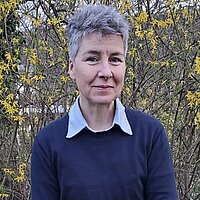
Michelle Bissett is an Associate Professor in Occupational Therapy at Southern Cross University's Faculty of Health, based at the Gold Coast Campus. As a registered occupational therapist, her work bridges clinical practice and academic research, with a focus on older adults' occupational engagement and educational innovation. Education: PhD (University of Western Sydney) Her research centers on enhancing the lives of older adults through community and residential care interventions, emphasizing aging well and maintaining social connections. Additional work explores university teaching methodologies to improve health profession education, including technology integration and student clinical competency development. Recent publications highlight assistive technology co-design in Queensland, interprofessional collaboration in allied health, social prescribing for health equity, and innovative teaching models. Other studies address pulmonary rehabilitation, cognitive impairment care, and tactile interventions for dementia.
Professor Garritt J. Tucker is the inaugural Eula Mae and John Baugh Chair in Physics and Chair of the Materials Science and Engineering Program at Baylor University (2023–present). He also serves as Associate Director of the Point-Of-Need Innovation Center. Prior roles include Associate Professor (2019–2023) and Director of Graduate Studies (2021–2023) at Colorado School of Mines, Assistant Professor at Drexel University (2013–2017), and postdoctoral work at Sandia National Laboratories (2011–2013). Ph.D., Materials Science and Engineering, Georgia Institute of Technology (2011) B.S., Physics and Mathematics, Westminster College (2004) His research integrates high-performance computing and theory to uncover fundamental structure-property relationships in materials, focusing on nanostructured alloys , 2D materials , and energy storage materials . He develops informatics techniques for predictive design and collaborates with experimentalists to tailor functional materials. Scientific awards include the Outstanding Teacher Award (2015), TMS Young Leader Professional Development Award (2016), and recognition as an Academic All-American (Soccer). His research funding spans NNSA, NSF, ONR, and industry partnerships, supporting projects on deformation twinning , quantum computing-aided materials research , and data-driven qualification frameworks for additive manufacturing. Research Advisees : 10+ alumni/postdocs (2016–2022) + 5 current PhD students Labs/Programs : Computational Materials Science and Design (CMSD) Group, Point-of-Need Innovation (PONI) Center
Tony McGinn is a Senior Lecturer in Social Work at Ulster University's School of Applied Social and Policy Sciences within the Faculty of Arts, Humanities & Social Sciences. He joined Ulster University in 2017 and teaches across undergraduate and postgraduate social work programs while maintaining an active research profile focused on domestic violence, social inclusion, and evidence-based social work practice. His academic qualifications include: PhD in Partner-violence perpetrator programmes: Exploring the change process with partner-violent men and survivors (awarded 2014) Bachelor in Psychology from the Open University (awarded 2015) Bachelor in Social Work (awarded 2011) Additional Bachelor's degree (awarded 1995) McGinn's research focuses on adapting social work practice to evolving service user needs, with particular emphasis on domestic violence interventions, judicial responses to domestic violence, Family Group Conferencing efficacy, social inclusion for children transitioning to secondary education, and interventions for anxiety-driven behaviors in people with learning disabilities. His work bridges the gap between social work practice and evidence-based approaches, examining how technology can enhance client contact times and improve social work decision-making processes. His research output demonstrates a strong trend toward systematic reviews and qualitative studies examining social work practice, particularly in domestic violence contexts and service user coproduction. His work shows increasing focus on evidence synthesis methods and their application to social work practice challenges. His notable scientific achievements include: Practitioners in Practice: Advanced Scholarship Award (2021) The Leonard E. Gibbs Award McGinn serves as chief investigator for the Atlantic Philanthropies/HSC sponsored Learning Disability and Dementia Data Analytics project, collaborating with Northern Ireland's five Health and Social Care Trusts. He has secured funding for two PhD studentships through the NI Department for Economy and the UK Doctoral Training Alliance, focusing on the bureaucratisation of social work practice. He currently supervises PhD projects on judicial responses to domestic violence in Ireland and the UK, as well as interventions for anxiety-driven behaviors in people with learning disabilities. As part of Ulster University's social work research team, McGinn contributes to understanding and improving social work decision-making processes, with particular emphasis on evidence-based practice and the integration of technology in social work education and practice.
Fredrik Nordin is a Professor and Head of Stockholm Business School at Stockholm University. He holds a Ph.D. in Business Administration from the Stockholm School of Economics (2005), an M.Sc. in Vehicle Engineering from KTH Royal Institute of Technology (1991), and additional studies in Business Administration and Spanish at Stockholm University. Research Focus : Marketing in innovative/high-tech firms, digitalization, servitization, business networks, purchasing/outsourcing, and managerial decision-making. Editorial Roles : Member of editorial boards for Industrial Marketing Management and Journal of Business Research . Service : Co-organized NFF (2011) and CBIM (2017) conferences; evaluated research proposals for the Academy of Finland . Publication Trends : His work emphasizes qualitative, phenomenon-driven studies in high-tech and B2B contexts, with a focus on value creation, digital transformation, and network dynamics. Collaborative research with industry partners is a recurring theme. Teaching : Has taught service marketing, technology marketing, digital marketing, research methods, and organization theory. Directed master's and doctoral programs (2009-2014).
Associate Professor Jasneek Chawla is a Paediatric Respiratory and Sleep Medicine Specialist at Queensland Children's Hospital and Associate Professor at the Child Health Research Centre, University of Queensland. She leads the Kids Sleep Research group and serves as a Senior Principal Research Fellow (Secondment) at the Child Health Research Centre. Additionally, she is an Affiliate of the ARC Centre of Excellence for the Digital Child (UQ Node) and holds leadership positions including being the incoming president elect of the Australasian Sleep Association (commencing October 2024). Dr. Chawla completed her specialist training in Edinburgh, UK, followed by a Paediatric Sleep Medicine Fellowship at the Mater Children's Hospital in Brisbane. She earned her Doctoral (Research) of Medicine from The University of Queensland, with her PhD evaluating the impact of sleep interventions on outcomes in children with Down syndrome, completed in May 2023. Dr. Chawla's research focuses on pediatric sleep medicine with particular expertise in sleep issues affecting children with disabilities. Her work examines the relationship between sleep and long-term cognitive and behavioral outcomes in children, with special emphasis on children with neurodisability including Down syndrome. She has developed innovative approaches to sleep monitoring and evaluation for high-risk pediatric populations and has led the revision of important clinical guidelines including the TSANZ/ASA pediatric home ventilation guidelines and national consensus documents on oximetry use for pediatric sleep-disordered breathing. Her recent publications demonstrate a strong focus on translational sleep research, with particular attention to children with neurodevelopmental disorders, Down syndrome, and craniofacial abnormalities. Her work spans clinical studies, technological innovations in sleep monitoring, and investigations into the impact of sleep disorders on quality of life for both children and their caregivers. She has been instrumental in developing novel approaches to sleep assessment that are less invasive for children with special needs. Board Director and Education Chair for the Australasian Sleep Association Senior Editor for the Journal of Paediatrics and Child Health Associate Investigator on two ARC Centres for Research Excellence (Life Course Centre and Digital Child) Recipient of three fellowships during her PhD studies Dr. Chawla is actively involved in mentoring through the UQ Faculty of Medicine Women in Leadership Program, the Child Unlimited Youth Mentorship Program, and the UQ Clinician Researcher Development Program. She currently serves as Principal Advisor for PhD research on 'Early Sleep Interventions to Improve Outcomes in Children with Neurodisability' with Dr. Laetitia Coles and Professor Karen Thorpe as additional advisors. Her research has been supported by MRFF, NHMRC, philanthropic organizations including Down Syndrome Queensland and Down Syndrome Australia, and industry partners such as Fisher and Paykel and Sonomedical. She leads the Kids Sleep Research group at Child Health Research Centre, which conducts large-scale multi-centre research addressing sleep in children with neurodisability. Her team collaborates internationally and nationally to develop improved services for children with sleep disorders, particularly those with disabilities. The group has developed strong partnerships with community organizations to ensure research addresses real-world clinical needs.
Iryna Viktorivna Pushchyna serves as an Associate Professor at the Department of Special Education within the Faculty of Social Sciences at Zaporizhzhia Polytechnic National University. Holding the academic title of Candidate of Pedagogical Sciences, she has established herself as a dedicated educator and researcher in the fields of special education and inclusive pedagogy. Position: Associate Professor Academic Title: Candidate of Pedagogical Sciences ORCID: 0000-0002-8070-8863 Scopus ID: 57279658600 Google Scholar: dnv2vCcAAAAJ Dr. Pushchyna's research focuses on training specialists in special and inclusive education, with particular emphasis on modern technologies for correctional and developmental work with children who have psychophysical disorders. Her work spans multiple disciplines including pedagogy, psychology, and speech therapy, with a strong practical orientation toward classroom applications. Analysis of her recent publications reveals a consistent focus on educational challenges faced by children with disabilities. Her research spans attention development in children with intellectual disabilities, communication competence in professional settings, psychological conflicts in rehabilitation institutions, speech disorders post-stroke, psychomotor development in deaf children, and speech therapy techniques for children with dysarthria. This demonstrates her comprehensive approach to understanding and addressing the multifaceted needs of children with various disabilities. Dr. Pushchyna teaches courses including Foundations of Inclusive Education, Admission to the Specialty, Basics of Psycholinguistics, and Management in the Field of Special and Inclusive Education, preparing future educators to work effectively in inclusive environments. Her academic journey includes higher education from Zaporizhia State University (2003) in Physical Culture and Sports, followed by additional studies at Zaporizhzhia Polytechnic National University (2020) in Special Education. Her candidate's thesis, defended in 1997 at South Ukrainian State Pedagogical University, focused on respiratory gymnastics for children with hearing impairment.
İSLİM DERYA YILMAZ serves as an Assistant Professor in the Department of Educational Sciences at Gaziantep University's Faculty of Education. She holds a Doctorate in Educational Sciences (2024) and has been actively contributing to academic research since her appointment as Doctor Lecturer in 2024, following prior service as a Research Assistant since 2013. Education: Doctorate (2016-2024): Gaziantep University, Faculty of Education, Department of Educational Sciences (Curriculum and Instruction) Master's (2013-2016): Gaziantep University, Faculty of Education, Department of Curriculum and Instruction Bachelor's (2007-2011): Pamukkale University, Faculty of Education, Department of Foreign Language Education (English Teaching) Research Focus: Dr. Yilmaz's scholarly work centers on human rights integration in educational frameworks , particularly examining children's rights through primary school curricula, textbooks, and literature. Her methodology combines qualitative content analysis with mixed-methods approaches to evaluate teacher perspectives on remedial education programs and professional development. She actively investigates educational technology applications , including flipped learning models for science education during the pandemic and social media's role in teacher training. Additional expertise spans language education needs analysis for engineering students and creative thinking in Turkish language instruction. Publication Trends: Recent publications (2019-2025) reveal consistent thematic concentration on children's rights implementation in Turkish education systems, with growing emphasis on digital pedagogy solutions. Her work bridges theoretical curriculum studies with practical classroom applications, demonstrated through 3 book chapters, 6 journal articles, and 15 conference presentations addressing systemic educational challenges in Turkey. Professional Development: Dr. Yilmaz participated in the U.S.-based Teaching Excellence and Achievement Program (2017) and completed TÜBİTAK's Systematic Literature Review Course (2023), enhancing her methodological rigor in educational research. She has taught university courses including Community Service Practices and Participation in Events (2017-2018).
David Asch is the Senior Vice President for Strategic Initiatives at the University of Pennsylvania and holds the John Morgan Professorship at both the Perelman School of Medicine and the Wharton School. His academic roles span multiple disciplines, including Medicine , Medical Ethics and Health Policy , Health Care Management , and Operations, Information, and Decisions . Education : MD from Cornell University (1984), MBA from the Wharton School (1989), AB from Harvard University (1980) Dr. Asch’s research focuses on behavioral economics , exploring how clinicians and patients make medical choices , with implications for health care management and policy innovation . His work integrates technology assessment and decision support systems to improve health outcomes. His recent publications emphasize privacy in digital health , remote monitoring , machine learning applications , and equity in health care delivery , reflecting his commitment to translating evidence into practice through design thinking and innovation methodologies . Scientific Awards : Ken Shine Prize in Health Leadership (2022), Distinguished Investigator Award (2019), Elected Member, Institute of Medicine (2007), RWJF David E. Rogers Award (2018), and over 20 additional honors for teaching, research, and mentorship. Dr. Asch leads the Center for Health Care Innovation and has directed programs like the Leonard Davis Institute of Health Economics (1998-2012) and the Robert Wood Johnson Foundation Clinical Scholars Program (2013-2017). His teaching includes courses on health care innovation and thesis mentorship in health policy research.
Alejandro Prieto Ayuso is a Lecturer in the Department of Physical Education, Arts Education and Music at the University of Castilla-La Mancha, Spain. His academic work focuses on talent identification and development within Physical Education contexts, with particular emphasis on motor competence, social skills in sports, health habits, and the relative age effect (RAE). He is actively involved in research and teaching within the Faculty of Education, contributing to both undergraduate and graduate programs. Alejandro completed his PhD in Physical Education, specializing in Sport Talent, at the University of Castilla-La Mancha (2014-2017). Prior to this, he earned additional qualifications in Physical Education from the Autonomous University of Madrid (2013-2014) and completed his undergraduate studies in Physical Education at the University of Castilla-La Mancha (2009-2013). Prieto Ayuso's research primarily centers on talent identification and development in Physical Education settings. His work explores how schools can effectively identify and nurture athletic talent among students, while also examining the impact of relative age on sports performance and development. He investigates motor competence assessment methods, social skills development through sports participation, and health habit formation in educational contexts. His research bridges theoretical frameworks with practical applications for Physical Education teachers, providing evidence-based approaches to talent development that can be implemented in regular classroom settings. His extensive publication record demonstrates a consistent focus on talent identification tools, assessment methodologies, and the application of educational models to sports pedagogy. Recent work shows increasing attention to sustainable development goals within Physical Education, gifted students in physical contexts, and innovative teaching methodologies like flipped classroom approaches. His research spans both theoretical frameworks and practical interventions, with strong emphasis on validation studies and assessment tools that can be directly applied in educational settings. Alejandro Prieto Ayuso has received recognition for his scholarly contributions: Premio al mejor póster en la rama de artes y humanidades (VI Jornadas Doctorales UCLM, 2016) Contratos predoctorales para la formación de personal investigador en el marco del Plan Propio de I+D+i cofinanciados por el Fondo Social Europeo (2014) As a researcher and educator, Prieto Ayuso has secured predoctoral research contracts and actively contributes to academic discourse through his extensive publication record. His work often involves collaborative research with colleagues across various institutions, demonstrating strong networking within the academic community. He has contributed to innovative teaching proposals that integrate technology and new pedagogical approaches into Physical Education curriculum. Prieto Ayuso is involved in research groups focused on Physical Education and Sports Pedagogy, contributing to projects that develop and validate assessment tools for talent identification and sustainable development in educational contexts. His work with the PEToolFinder project demonstrates his commitment to providing practical resources for Physical Education teachers to enhance their assessment practices.
Kana Shimizu is a Professor at Waseda University’s Faculty of Science and Engineering, School of Fundamental Science and Engineering, and a leading authority on privacy-preserving algorithms for genome and biomedical data. Since obtaining her Dr.Eng. from Waseda, she has held positions at AIST and a visiting investigator role at Memorial Sloan-Kettering Cancer Center, advancing to full Professor at Waseda in 2018. Education: Dr.Eng., Waseda University M.Eng., Waseda University (Dept. of Information Science) B.Eng., Waseda University (School of Science and Engineering) Research Interests: Prof. Shimizu integrates cryptography with life-science data analytics, developing homomorphic encryption and secret-sharing protocols that enable secure genome search, private chemical database queries, and privacy-preserving machine learning. She also contributes to computational biology through algorithms for next-generation sequencing, structural bioinformatics, and prediction of intrinsically disordered proteins. Publication Trends: Her recent works (2022-2024) emphasize practical privacy technologies—secure range queries, function secret sharing, and gradient-clipping for synthetic genomes—while earlier high-impact papers established fast similarity search (SlideSort), binding-site databases (PoSSuM), and encrypted genomic search using the Burrows-Wheeler transform, collectively bridging algorithmic innovation and real-world biomedical privacy needs. Scientific Awards: KDDI Foundation Achievement Award 2022 MEXT Commendation for Science and Technology (Research) 2018 Multiple best-paper/demo awards at CSS, IIBMP, and domestic bioinformatics meetings Grants & Advising: She currently leads JSPS KAKENHI (S) on “Compressed Secure Computation for Large-Scale Data” and an AMED project on precise cancer-genome graphs. She serves as advisor/evaluator for JST PRESTO, AMED, NBDC, and the Tokyo High Court, and has supervised numerous bachelor theses at Waseda. Labs & Teams: Prof. Shimizu heads a laboratory within the School of Fundamental Science and Engineering at Waseda, collaborating with national centers (AIST, RIKEN) and international partners (MSKCC, Finland Tekes/AF), focusing on encrypted bioinformatics platforms and high-performance genomic algorithms.
Prof. Dr. Vanessa Völlinger is a full professor (W3) in Educational Psychology with specialization in Diagnostics, Support, and Clinical Psychology at the University of Education, Freiburg, where she serves as Deputy Head of the Institute of Psychology. She holds additional leadership positions including Senate membership and coordination of the Bachelor's program in Special Education. Her academic journey includes prior roles at Justus-Liebig-Universität Gießen and TU Dortmund. Her research centers on three interconnected domains: Reading Competency Development : Designing peer-assisted strategy interventions for elementary/middle schools Cooperative Learning : Video-analytical studies on group dynamics and teacher implementation School Interventions : Evidence-based training frameworks for diverse classrooms She currently leads projects KLUG (cooperative learning in elementary schools) and Ko-divers (diversity-sensitive cooperative learning). She has received the Förderpreis 2008/2009 from LOS for her doctoral work on reading comprehension. Her publication record demonstrates consistent focus on peer-learning efficacy, with recent work examining implementation challenges of evidence-based reading interventions. She actively supervises student theses on cooperative learning and reading interventions, emphasizing practical classroom applications. No dedicated lab is mentioned, but her work involves cross-institutional collaborations.
Prof. Dr. Uta Häsel-Weide is a full Professor for Special Educational Needs in Mathematics at Paderborn University's Faculty of Computer Science, Electrical Engineering and Mathematics, where she leads the Mathematics Education department and the AG Häsel-Weide research group. She holds additional leadership roles as Director at PLAZ Professional School and subject specialist for the Primary School Association. Her research focuses on: Mathematics education in inclusive classrooms Diagnosis and support for learning difficulties Classroom interaction and cooperation Teacher professional development Teaching-learning laboratories as professionalization spaces She has received significant recognition including: Tandem-Fellowship for Innovation in University Teaching (2017) Polytechnik Prize nomination (2019) She currently advises doctoral candidates and teaches courses on inclusive mathematics education, arithmetic didactics, and diversity in mathematics classrooms. Her pedagogical innovation includes developing the Lehr-Lern-Labor ZahlenRaum to bridge theory and practice in teacher education.
Petra Gretsch is a Professor of Linguistics and Language Didactics at the Institute for German Language and Literature at Pädagogische Hochschule Freiburg, where she has held a professorship since 2010. Her academic career spans over 25 years, including positions as Junior Professor (2009-2010), Academic Staff Member (2008-2009), and research roles at the Max Planck Institute for Psycholinguistics in Nijmegen (1998-2005). She completed her PhD with distinction in 2000 at the University of Tübingen. Her educational background includes a Master's degree from the University of Tübingen (1994) with top grades in all subjects, where she studied General Linguistics (major), Psychology and Computer Science (minors), with additional studies at the University of Edinburgh. Her academic journey began with research assistant work within the DFG project on complex syntax acquisition at the University of Tübingen (1990-1993). Professor Gretsch's research focuses on linguistics and language didactics, particularly continuous language education across educational transitions. Her work examines three dimensions: vertical (educational biography transitions), horizontal (institutional cooperation), and diagonal (multilingualism as a resource). She investigates language acquisition from early childhood through school transitions, with special attention to visual literacy in language learning and language-sensitive teaching across subject areas. Her recent publications (2023-2025) show consistent output in language education, with a focus on language assessment, inclusive education, and digital learning tools. These works demonstrate her commitment to practical applications of linguistic research in educational settings, particularly regarding language support for diverse learners and subject-specific language development. PhD with distinction (s.c.l.) in 2000 Scientific Advisory Board Member of Goethe Institute (since 2024, elected deputy chairperson 2024-2027) Scientific Advisory Board Member of Central Office for Foreign Schools (since 2020) Scientific Advisory Board Member of Daimler and Benz Foundation (2015-2021) Professor Gretsch leads the 'Durchgängige Sprachbildung Freiburg' project (since 2012), which has developed a comprehensive framework for continuous language education across institutional transitions. She also co-leads the Erasmus+ IDE project (2024-2027) on interpreter-mediated deaf education and participates in the STELT project strengthening German language teacher education in Norway. Her international collaborations include work with institutions across Europe, Asia, and South America through the Goethe Institute and ZfA. She directs research on practical applications of language education theory, with particular focus on developing accessible language learning materials like the 'Boto' framework for children aged 3-11, and creating tools for language assessment and support in inclusive educational settings.
Dr. Qunfen Qi is a Senior Lecturer at the University of Bristol's School of Electrical, Electronic and Mechanical Engineering, where she leads groundbreaking research at the intersection of mathematics, informatics, and manufacturing. With over 13 years of experience, she specializes in developing smart decision-making tools for product design and inspection using category theory as a foundational mathematical language. Her work bridges multiple disciplines to create more intelligent and transparent manufacturing systems that can 'think' like human experts. Dr. Qi's research focuses on knowledge modeling for manufacturing, with particular emphasis on smart information systems, abstract mathematical theory (category theory), Geometrical Product Specifications and Verification (GPS), Additive Manufacturing, surface design, and metrology. Her unique approach applies category theory to simplify complex relationships in manufacturing data, enabling better decision-making in digital manufacturing environments. This work has become increasingly relevant as manufacturing embraces advanced digital technologies like cyber-physical systems, IoT, and AI, where managing multiple levels of abstraction is critical. Her publication record shows a clear trajectory toward more sophisticated applications of mathematical frameworks in manufacturing, with growing integration of category theory with AI approaches, particularly in explainable AI for manufacturing contexts. Recent work demonstrates increasing practical applications in additive manufacturing, quality control, and digital twin development, with strong emphasis on how these systems can explain their decisions at multiple levels of detail. Scientific Awards and Recognition UKRI EPSRC Innovation Fellow (2018-2022) EPSRC Peer Review College Member (ranked top 4% for participation in 2020/21) Project lead for ISO/TR 24331-2 Geometrical Product Specification development ISO Technical Committee Expert (TC 213, TC 184 WG26, JWG 21) BSI Technical Committee Member (AMT_4, TPR1/1, TPR1/8, TPR1/9) Co-Chair of CIRP CAT 2024 (18th International Conference on Computer-Aided Tolerancing) Dr. Qi actively recruits PhD students interested in explainable machine learning, mathematical AI foundations, and smart manufacturing applications. Her research portfolio includes four major projects totaling significant funding, including an EPSRC Innovation Fellowship for 'A semantic infrastructure for advanced manufacturing' and a Royal Society International Exchanges project on mathematical foundations for digital manufacturing systems. She maintains strong international collaborations, particularly with Italian institutions like Politecnico di Milano and CNR-STIIMA, reflecting her global impact in advancing the mathematical foundations needed for next-generation intelligent manufacturing systems.
Prof. Dr. Olaf Neumann is a Professor for Methodical Action in Social Work at the Alice Salomon University of Applied Sciences Berlin (ASH Berlin) since 2015. Previously, he served as Visiting Professor for social medicine and health-oriented social work at the Catholic University of Applied Sciences for Social Work Berlin (2013-2015). His academic career is complemented by extensive practical experience in crisis intervention and psychosocial support services, including establishing and managing the Eastern Region of the Berlin Crisis Service (1999-2011) and the outpatient crisis service Berlin-Hohenschönhausen (1996-1999). Dr. Neumann's educational background includes: Doctorate at the Free University of Berlin, Department of Psychology (2008) PSU management function (additional qualification at the Federal Office for Civil Protection and Disaster Assistance (2007)) Licensed as a child and adolescent psychotherapist (1999) Permission to practice medicine in the field of psychotherapy (1998) Play and Theatre Pedagogue (additional studies at the Berlin University of the Arts) (1997) Graduate social worker (FH) (1994) Professor Neumann's research focuses on connecting theory and practice in methodological action, with practice understood as the site of theory creation and development. His primary research interests include Intervention Research, Social Psychiatry, Community Psychology, Organizational Development, Quality Management, and Personnel Development. He approaches these areas through the lens of psychosocial crisis management, resilience building, and community-oriented interventions. His work emphasizes the importance of time in therapeutic processes, network collaboration in emergency situations, and the integration of theory and practice in social work education. His recent publications reveal a strong focus on post-pandemic educational adaptation, psychosocial emergency response systems, and community resilience. Particularly notable is his research on network functionality in psychosocial emergency services following the 2016 Berlin Christmas Market attack. His work bridges academic theory with practical applications in crisis intervention, demonstrating how community psychology principles can be operationalized in real-world emergency contexts. He has also made significant contributions to understanding quality management in psychosocial organizations and the temporal dimensions of crisis intervention. Professor Neumann has received recognition through his leadership roles including: Member of the working group "Fachberater PSU" in Berlin (2006-2012) Member of the Network for Participatory Health Research (since 2007) Member of the board of the Gesellschaft für gemeindepsychologische Forschung und Praxis (since 2009) Member of the board of St. Hedwig-Krankenhauses Berlin (since 2010) Chair of the Budget Committee (2017-2018) Member of the University Leadership as Vice President for Research, Cooperation, and Digitalization (2018-2023) Currently, Professor Neumann leads significant research initiatives including the Transfer_Hub project (2023-2027), which aims to connect university organizational development with local community needs, and the EQuiP project (2024-2027) on network-oriented quality in psychosocial crisis management. He also serves as scientific lead for the KliBUp project (2025-2028) focusing on climate health resilience strategies. These projects demonstrate his commitment to bridging academic research with practical community applications, particularly in crisis situations and community development contexts. Professor Neumann is actively involved in the Transfer_Hub project, which is part of the CampusTransferale initiative aimed at transforming ASH Berlin into a transfer campus. This work involves creating connections between the university's organizational development and local community development needs, particularly in the areas of urban development and the creation of public spaces around the Alice-Salomon-Platz. The project includes dialogical workshops with practitioners, students, and transfer-strong faculty members to facilitate knowledge exchange between the university and the broader community.