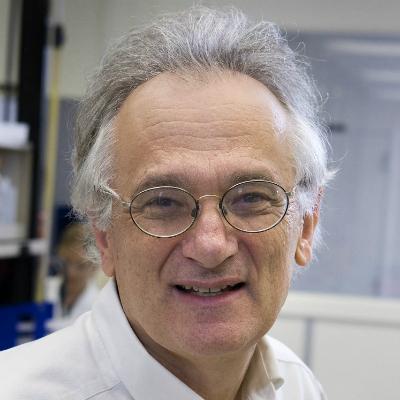
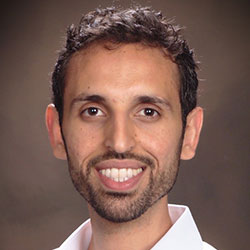
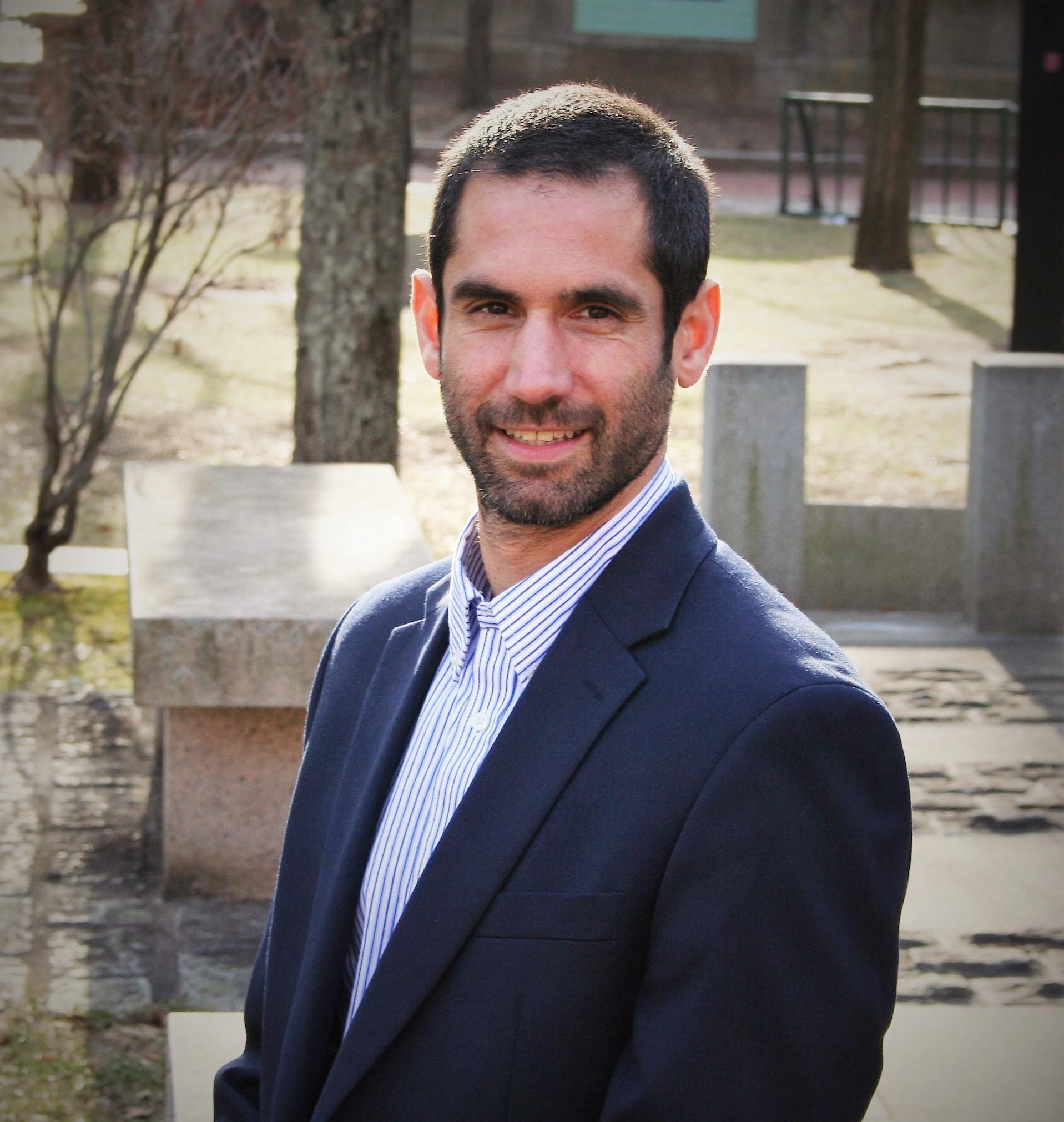
John P. O'Doherty serves as the Fletcher Jones Professor of Decision Neuroscience within Caltech's Division of Humanities and Social Sciences, holding continuous faculty appointments since 2004 (Assistant Professor 2004-07, Associate Professor 2007-09, Professor 2009-present, Fletcher Jones Professor 2021-present). He previously directed the Caltech Brain Imaging Center (2013-17) and maintains affiliations with the T&C Chen Center for Social and Decision Neuroscience. His educational background includes a B.A. from University of Dublin, Trinity College (1996) and D.Phil. from University of Oxford (2000). His research focuses on computational and neural mechanisms of reward-based learning and decision-making , employing fMRI, intracranial recordings, and mathematical modeling to investigate how the brain solves complex decision problems through evolutionarily conserved algorithms. Key areas include Reinforcement learning systems (model-based/model-free arbitration) Observational and social learning mechanisms Neural representation of value, risk, and uncertainty Computational phenotyping of mental disorders Temporal dynamics of goal persistence Analysis of his 2023-2025 publications reveals dominant trends in computational psychiatry (problem gambling, autism traits), hierarchical decision-making, and neuroeconomic modeling of social behavior. His work consistently integrates cross-species computational frameworks with human neuroimaging to identify transdiagnostic mechanisms. While specific awards beyond his endowed professorship aren't detailed, his leadership as Brain Imaging Center Director and prolific high-impact publications demonstrate significant recognition. Current advising includes graduate researcher Sneha Aenugu on goal-persistence projects, with administrative support from Mary A. Martin (mmartin@caltech.edu). His active research program continues to pioneer computational approaches to understanding decision pathologies.
Dr. Steven G. Clarke is a Distinguished Professor at UCLA Department of Chemistry & Biochemistry and director of research at the Molecular Biology Institute . His work bridges protein chemistry , methylation biology , and aging research through studies of spontaneous protein damage and its repair mechanisms. Education: BA in Chemistry and Zoology, Pomona College (magna cum laude, Phi Beta Kappa) PhD in Biochemistry and Molecular Biology, Harvard University (NSF Fellow) Postdoctoral Fellowship at UC Berkeley (Miller Fellow) Dr. Clarke's research focuses on protein isoaspartyl repair via PCMT1/PIMT enzymes , ribosomal protein methylation in Saccharomyces cerevisiae , and PRMT family characterization including PRMT7 and PRMT9. His lab combines biochemical assays , genetic models , and structural analysis to investigate aging mechanisms and disease implications. Recent publications highlight: COQ5 structure-function analysis in coenzyme Q biosynthesis PCMTD1 ubiquitin ligase interactions PRMT7 substrate specificity in histone H2B Protein isoaspartyl impacts on T cell function in lupus Novel PRMT inhibitors for cancer therapy Methionine addiction in osteosarcoma malignancy Major scientific awards: American Chemical Society Ralph F. Hirschmann Award in Peptide Chemistry NIH MERIT Award Ellison Medical Foundation Senior Scholar Award William C. Rose Award, ASBMB UCLA Distinguished Teaching Award (Eby Award winner) Current lab members include PhD candidates Eric Pang (UCSB) and Sining "Cindy" Wang (UCLA), while undergraduates Celeste Medina-Seymoure , Elizabeth Oroudjeva , Olivia Pacheco , and Jasmine Winter contribute to ongoing proteostasis studies. Collaborations with Profs. Jose Rodriguez and Catherine Clarke demonstrate interdisciplinary research approaches.
Nabil Alshurafa is an Associate Professor at Northwestern University, holding joint appointments in the McCormick School of Engineering (Computer Science and Electrical and Computer Engineering) and the Feinberg School of Medicine (Preventive Medicine). He directs the HABits Lab, which focuses on developing mHealth systems to address health behaviors such as overeating, stress, and UV exposure. His work integrates wearable sensors, machine learning, and behavioral science to create passive sensing solutions. Education: PhD in Computer Science and Wireless Health (UCLA), MS and BS in Computer Science (UCLA). Research Interests: Body sensor networks, activity recognition, embedded systems, and health informatics. His lab designs wearable devices (e.g., neck-worn sensors, UV patches) and AI frameworks to detect behaviors like eating patterns and stress levels. Collaborations include domain experts in medicine and engineering to translate technical innovations into clinical interventions. Recent Projects: Developing systems for stress monitoring via ECG-PPG patches, UV exposure tracking, and just-in-time interventions for overeating. The lab emphasizes ethical design, privacy preservation, and user-centered technology. Students and Lab Team: Supervises PhD, MS, and undergraduate researchers in areas like machine learning, embedded systems, and health data analytics. Notable advisees include Rawan Alharbi (PhD candidate), Shibo Zhang (PhD student), and Wilson Wang (MS student). Labs/Teams: HABits Lab collaborates with experts in Preventive Medicine, Psychiatry, and Dermatology to advance interdisciplinary health research. Current projects include predictive analytics for weight loss and interventions targeting maternal stress during pregnancy.
Professor Guy Williams is a leading academic at the University of Cambridge with a focus on imaging science and clinical neurosciences, affiliated with Downing College and the Wolfson Brain Imaging Centre . Holding a PhD in Physics from his initial Natural Sciences degree, he specializes in nuclear magnetic resonance (NMR) and MRI techniques for brain imaging. Education: BA, PhD in Physics His research centers on non-invasive imaging of brain structure and function, particularly in traumatic brain injury (TBI) and dementia. His work involves developing novel MRI pulse sequences and advanced data analysis algorithms, including AI-based diagnostic tools. He leads studies on white matter integrity post-trauma, longitudinal dementia assessment, and applications of MRI in disorders of consciousness and addiction. Recent publications highlight collaborations in traumatic brain injury outcomes, AI-guided dementia prediction, and neuroimaging of post-COVID cognitive deficits. His team's work on ultra-high field laminar fMRI and distortion correction methods has advanced clinical neuroscience applications. Key techniques include diffusion tensor imaging (DTI), 7 Tesla MRI, and positron emission tomography (PET/MR). His research spans from basic NMR physics to clinical translation, with a strong emphasis on multi-site studies and real-world diagnostic implementation.
Dr. Vasileios Stavropoulos is the Associate Dean, Higher Degree Research at RMIT University's Department of Health and Biomedical Sciences. His research focuses on behavioral addictions, digital phenotyping, and the psychological impacts of digital media, particularly in gaming and social media contexts. He supervises numerous research projects addressing topics like cyber-phenotyping via text mining, disordered gaming, and the interplay between digital media and mental health. Key research interests include the psychological mechanisms underlying problematic gaming and social media use, network analysis of addiction symptomologies, and the role of user-avatar bonds in behavioral disorders. His work integrates machine learning and behavioral science to predict and analyze addictive behaviors. Dr. Stavropoulos has published extensively on gaming disorder, social media addiction, and the mental health implications of digital media use. His collaborations span clinical psychology, public health, and computational methods, reflecting his interdisciplinary approach to addressing modern behavioral challenges. He is actively engaged in higher degree research governance at RMIT, overseeing doctoral programs and fostering innovation in research methodologies. His contributions include developing scales for measuring addiction behaviors and advancing longitudinal studies on mental health correlations with digital engagement.
Professor Gavan McNally is a distinguished behavioral neuroscientist at the University of New South Wales, where he serves as a Professor in the School of Psychology. He is actively engaged in research on the fundamental behavioral and brain mechanisms for learning and motivation, with applications to clinical conditions such as addictions, anxiety disorders, and mood disorders. McNally holds several prestigious editorial positions, including Editor-in-Chief of Neurobiology of Learning & Memory and Senior Editor of The Journal of Neuroscience. He also serves as President-Elect of the European Behavioral Pharmacology Society and is a Member of the Australian Research Council College of Experts. McNally's research interests span behavioral neuroscience, focusing on how fundamental brain mechanisms apply to clinical conditions. He employs a systems neuroscience approach, combining well-controlled behavioral approaches with optogenetics, chemogenetics, in vivo calcium imaging, and whole brain circuit mapping in both normal and transgenic animals. His work bridges basic science with clinical applications through collaborations with colleagues at University of Sydney, Sydney Local Health District, Monash University, and Turning Point. McNally's research particularly examines the cellular, circuit, and systems level mechanisms underlying learning, motivation, and their dysregulation in disorders like addiction. His laboratory investigates how these mechanisms translate to human conditions, with a strong emphasis on developing new treatments for psychological disorders. His extensive publication record demonstrates a clear trajectory in understanding punishment learning, addiction mechanisms, and the neural circuits underlying motivated behavior. Recent work has increasingly focused on the cognitive pathways to punishment insensitivity, the role of specific neural circuits in addiction, and translational approaches to understanding maladaptive behaviors. McNally's research bridges animal models with human studies, creating a comprehensive understanding of the neural mechanisms that govern learning and motivation, with particular attention to how these processes go awry in addiction and other psychological disorders. 2008 QEII Fellow, Australian Research Council 2009 Association for Psychological Science, International Rising Star 2010 Fellow, Association for Psychological Science 2010 UNSW Faculty of Science Staff Excellence Award for Research and Training 2011 Pavlovian Research Award, The Pavlovian Society 2012 Future Fellow (Level 3), Australian Research Council 2016 D.G. Marquis Behavioral Neuroscience Award, American Psychological Association 2017 Fellow, American Psychological Association 2019 Fellow of the Academy of Social Sciences in Australia 2021 D.G. Marquis Behavioral Neuroscience Award, American Psychological Association 2022 Ross Day Plenary Lecturer, Australasian Brain and Psychological Sciences 2023 European Behavioural Pharmacology Society Plenary Lecturer 2024 Elspeth McLachlan Plenary Lecturer, Australasian Neuroscience Society 2024 D.G. Marquis Behavioral Neuroscience Award, American Psychological Association Professor McNally actively supervises several students including Bixuan Lin, Si Yin Lui, Hannah Machet, Bart Cooley, Kelly Zhuang, and Alexandra Gregory. His current research is supported by significant funding including an Australian Research Council Discovery Project (2024-2026) on "Risky choices: From cells and circuits to computations and behaviour," another Discovery Project (2025-2028) on "Multimodal mapping of punishment learning," and NHMRC grants including a Synergy Grant on "Linking clinical and basic science discovery to find new treatments for alcohol-use disorder" and an Ideas Grant on "Novel pathways to abstinence from alcohol seeking." These projects reflect his commitment to both fundamental neuroscience and translational applications for treating psychological conditions. His teaching responsibilities include PSYC2081 Learning & Physiological Psychology and PSYC3051 Physiological Psychology. McNally's laboratory employs advanced techniques including optogenetics, chemogenetics, in vivo calcium imaging, and whole brain circuit mapping to investigate the neural mechanisms underlying learning, motivation, and their dysregulation in disorders. His team works at the intersection of basic neuroscience and clinical applications, with strong collaborations across multiple institutions to translate fundamental findings into potential treatments for addiction and other psychological disorders. The lab has made significant contributions to understanding the role of brain regions like the ventral pallidum, paraventricular thalamus, and nucleus accumbens in addiction, fear learning, and punishment sensitivity.
Dr. Eiko Fried is an Associate Professor at Leiden University's Faculty of Social and Behavioural Sciences, where he works at the intersection of clinical psychology, psychiatry, epidemiology, methodology, and complexity science. His research focuses on improving psychological science through open science practices and innovative measurement approaches. PhD in clinical psychology, Free University of Berlin Postdoctoral training at KU Leuven and University of Amsterdam Promoted to Associate Professor at Leiden University in 2021 Key research areas include: Psychopathology measurement and classification Network analysis in mental health research Ecological momentary assessment (EMA) methodology Open science advocacy and implementation Dynamic systems modeling in psychology Transdiagnostic approaches to mental disorders Recent publications demonstrate expertise in: Symptom network analysis across disorders Improving depression measurement standards Transdiagnostic assessment protocols Mental health data integration challenges Psychological theory construction Methodological innovations in clinical research
Emily Falk is a Professor of Communication, Psychology, Marketing, and Operations, Information, and Decisions at the University of Pennsylvania, where she serves as Vice Dean of the Annenberg School for Communication, Director of the Communication Neuroscience Lab, and Director of the Climate Communication Division of the Annenberg Public Policy Center. Her interdisciplinary work bridges communication science, psychology, and neuroscience to understand behavior change and message effectiveness. Dr. Falk received her B.A. in Neuroscience from Brown University and her Ph.D. in Psychology from the University of California, Los Angeles. Her educational background reflects the interdisciplinary approach that characterizes her research program. Dr. Falk's research focuses on the science of behavior change, examining what makes messages persuasive, why and how ideas spread, and what makes people effective communicators. Her work employs tools from psychology, neuroscience, and communication to investigate neural predictors of message effectiveness, social influence, and the spread of ideas through networks. Key research areas include health communication (particularly tobacco use), climate communication, political communication, and the neuroscience of choice and decision-making. Her groundbreaking work has demonstrated how fMRI brain imaging in small groups can predict large-scale public health campaign success. Dr. Falk's research has been recognized with numerous prestigious awards, including early career awards from the International Communication Association and the Society for Personality and Social Psychology Attitudes Division, a Fulbright grant, Social and Affective Neuroscience Society award, DARPA Young Faculty Award, and the NIH Director's New Innovator Award. She was also named a Rising Star by the Association for Psychological Science. As an advisor, Dr. Falk has mentored numerous graduate students who have gone on to successful careers in academia, government, non-profit, and business sectors. Her lab, the Communication Neuroscience Lab, is funded by major organizations including DARPA, NIH, Google, and the Mind & Life Institute. The lab operates with a mission to increase health and happiness for people and the planet through communication science. The Communication Neuroscience Lab is an interdisciplinary research group that uses tools from biological, social, and network sciences to motivate choices that benefit individuals, communities, and the planet. Current major research projects include BB-PRIME (Brain-based Prediction of Message Effectiveness), BB-PRIME Phase II focusing on climate change interventions, and the GeoScan Smoking Study examining tobacco marketing effects.
Brian M. Barnes is a Professor of Zoophysiology at the University of Alaska Fairbanks (UAF), affiliated with the Institute of Arctic Biology and the Department of Biology and Wildlife. He has held roles including INBRE Director, Toolik Field Station Co-PI, and Interim Director of the Institute of Arctic Biology. His research focuses on physiological ecology, endocrinology of hibernation, and biological rhythms in Arctic animals. Education: BS in Biology (UC Riverside, 1977); PhD in Zoology (University of Washington, 1983). Postdoctoral training at UC Berkeley and international collaborations in Norway and the Netherlands. Awards include NSF grants and leadership in Arctic research networks. Research Interests: Hibernation physiology and mechanisms Circadian rhythms in polar vertebrates Overwintering strategies of Arctic mammals and insects Climate change impacts on animal phenology Notable Contributions: Discovered freeze-avoidance mechanisms in Arctic ground squirrels Pioneered studies on hibernation energy conservation and metabolic suppression Co-developed tools for field studies at the Toolik Field Station Lab/Teams: Leads research groups studying Arctic hibernators, including collaborations on black bear hibernation genomics and insect antifreeze proteins. Advises students in physiology, ecology, and comparative biology.
Associate Professor Bruno Schivinski is affiliated with RMIT University's School of Media & Communication. He specializes in online consumer behavior, quantitative research methods, and multivariate data analysis. His work bridges digital media impact, consumer psychology, and health behavior, with a focus on gaming disorder, social media engagement, and brand equity. Education and professional background include roles at Gdansk University of Technology and consulting for institutions like the Polish Ministry of Science. He serves as Associate Editor for the Journal of Management and Business Administration–Central Europe . Research interests span digital phenotyping, behavioral addictions, and sustainable consumption. Notable contributions include studies on gaming disorder measurement, food waste reduction, and influencer marketing effectiveness. His work is published in top-tier journals like Journal of Business Research and Journal of Clinical Medicine . Recognition includes the Vice-Chancellor’s Award for Research Impact (2020), Emerald Literati Outstanding Reviewer (2022), and multiple best paper awards. He supervises research projects on digital behavior, food waste, and social media's role in health. Professional memberships include the Royal Statistical Society, Higher Education Academy, and American Marketing Association. His interdisciplinary approach addresses real-world challenges in digital health, consumer behavior, and sustainability.
David M Williams is a Professor of Behavioral and Social Sciences and Psychiatry and Human Behavior at Brown University's School of Public Health , where he also serves as Associate Dean . His work bridges affective science and health behavior, focusing on exercise promotion and smoking cessation.
Danilo Bzdok is an Associate Professor in the Department of Biomedical Engineering at McGill University’s Faculty of Medicine and a Canada CIFAR AI Chair at Mila – Quebec Artificial Intelligence Institute. He holds dual expertise in systems neuroscience and machine learning, with two doctoral degrees: one in neuroscience from Forschungszentrum Jülich (Germany) and another in computer science (machine learning statistics) from INRIA–Saclay and Neurospin (France). His research bridges computational neuroscience and AI, focusing on understanding human intelligence through neuroimaging and biomedical data. Education: PhDs in Neuroscience (Jülich) and Computer Science (INRIA/Neurospin). Postdoctoral training at Harvard Medical School. Current affiliations include McGill University and Mila. Research interests span computational biology, deep learning, LLMs, and their applications in neuroimaging, precision medicine, and neurodegenerative diseases. Over 150+ peer-reviewed publications, with recent work on LLMs in autism diagnostics, brain network modeling, and social neuroscience. Key Awards: Canada CIFAR AI Chair. Lab focuses on interdisciplinary projects like AI4Science, neuroimaging analysis, and AI ethics. Supervises a dynamic team of PhD/Master’s students and postdocs. Collaborations include clinical institutions and industry partners through Mila’s Applied Research programs.
Professor Ahmad Hariri is a faculty member in the Department of Psychology & Neuroscience at Duke University, part of the Trinity College of Arts & Sciences. He holds affiliations with the Duke-UNC Brain Imaging and Analysis Center, the Duke Institute for Brain Sciences, and the Duke Initiative for Science & Society. His research integrates neuroimaging, pharmacology, and molecular genetics to study biological pathways underlying individual differences in behavior and psychopathology risk. Education: Ph.D. in Psychology from UCLA (2000), M.S. and B.S. in Psychology from the University of Maryland, College Park (1997, 1994). Research interests include understanding how genetic and environmental factors influence brain function and behavior, with a focus on psychopathology, stress, and resilience. His work explores neural correlates of traits like psychopathy, childhood adversity effects on brain structure, and biomarkers of aging. Recent studies highlight links between lead exposure and neurodegeneration, neighborhood disadvantage and dementia risk, and the role of brain connectivity in self-regulation. Key achievements include over 200 publications, including high-impact papers in Nature Aging , Neuron , and Biological Psychiatry . Honors include the APA Distinguished Scientific Award for Early Career Contribution (2009) and being named a Highly Cited Researcher (2014). Grants include leadership roles in the Duke-NCCU Postdoctoral Training Program in Child Psychiatric Conditions and the Duke Psychiatry Physician-Scientist Residency Program. He has contributed to editorial boards of journals like Cortex and Biology of Mood and Anxiety Disorders . Professional activities include mentoring in the Summer Neuroscience Program and serving as a Bass Connections Faculty Team Leader.
Yaira Zoé Núñez is a Researcher in the Division of Human Genetics at the Yale School of Medicine. Her work focuses on genetic and epidemiological factors underlying substance use disorders, including cannabis, opioid, alcohol, and methamphetamine addictions. She collaborates extensively with the Gelernter Lab and other institutions on large-scale genomic studies. Research Interests: Genetic basis of addictive disorders Multi-ancestry genome-wide association studies (GWAS) Epidemiology of polysubstance use Clinical correlates of substance use disorders Key Collaborations: Works with Prof. Joel Gelernter, Renato Polimanti, and international teams. Recent studies include: Multicenter analysis of gambling disorder in methamphetamine users (2025) Multi-ancestry cannabis use disorder GWAS (2023) Genetic risk loci for opioid use disorder (2022) Labs/Teams: Core member of the Gelernter Lab, contributing to translational research bridging genetics and clinical addiction medicine. Active in collaborative networks analyzing large-scale biomedical data.
Jiangwen Sun is an Assistant Professor in the Department of Computer Science at Old Dominion University (ODU), within the College of Science. He directs the ODU Computational Systems Medicine Lab and focuses on machine learning approaches for analyzing multi-dimensional biological data (phenome, genome, transcriptome, etc.) to advance precision medicine and its automation. His research is supported by ODU and federal agencies like NIH and NSF. Education: Ph.D., University of Connecticut M.E., Nanjing University, China B.M., Secondary Military Medical University, China Research Interests: Machine learning/data mining for medicine, health, drug discovery, and bioinformatics Multi-view bi-clustering and integrative analysis of genomic/phenotypic data Phenotype refinement and genetic association studies for complex diseases Applications in addiction medicine, cardiovascular biology, and bovine development Publications: Over 40 peer-reviewed articles in top venues like NIPS, ICML, Bioinformatics, and BMC Genomics. Recent work focuses on cryo-EM protein structure analysis, single-cell multiomics, and epigenetic modeling. Awards/Grants: NIH/NSF funding pending; previously supported by UConn's Health Informatics Lab and collaborations with University of Pennsylvania. Teaching: Courses include Machine Learning (CS722/822), Data Structures (CS361), and Deep Learning in Medicine (CS795/895). Labs/Teams: Leads the ODU Computational Systems Medicine Lab and collaborates with UConn Health Informatics Lab, Penn Medicine, and others.