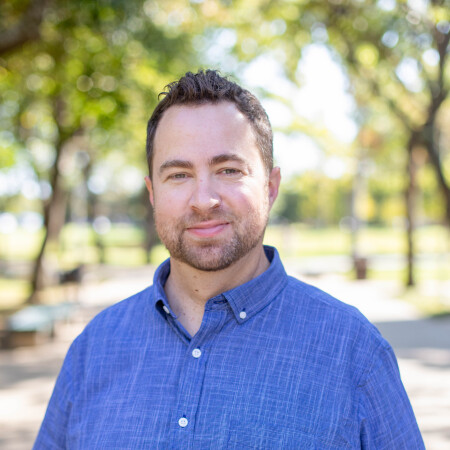
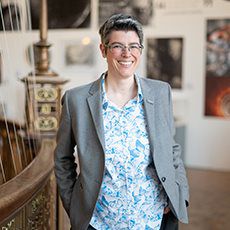
Dr. Silas Kalmbach is a Researcher at the Institute for Lightweight Structures and Conceptual Design (ILEK) within the University of Stuttgart's Cluster of Excellence IntCDC. His work focuses on digital design methodologies and adaptive structural systems , particularly in the context of sustainable high-rise buildings and kinetic facades. Active participant in interdisciplinary teaching programs Contributor to research on gradient material systems and ultra-lightweight construction Collaborator on projects exploring computational workflows for structural optimization Involved in industry partnerships for innovative fabrication technologies
Benedikt Strahm is a doctoral researcher at the Institute for Lightweight Structures and Conceptual Design (ILEK) within the Cluster of Excellence IntCDC at the University of Stuttgart . His work focuses on interdisciplinary research combining architectural design, structural analysis, and digital fabrication technologies. Key research areas: Lightweight Construction, Adaptive Systems, Digital Production, and Material Science. The Institute’s work spans from conceptual design to cross-material construction methods, emphasizing sustainability, energy efficiency, and environmental compatibility in building systems.
Professor Paul Ruyssevelt serves as Chair of Energy & Building Performance at University College London's Bartlett School of Environment, Energy & Resources, where he leads the Building Stock Lab. With over 40 years' experience spanning academia and industry, he specializes in energy performance of non-domestic buildings, urban-scale energy modeling, and addressing the energy performance gap. His work bridges practical building science with policy development through major initiatives like the National Building Database and IEA Energy in Buildings and Communities. His research focuses on building stock modeling at city and national scales, particularly for non-domestic buildings and informal settlements in the Global South. Key projects include the £2.7m National Building Database (NBD) for UK building energy analysis, GEMDev for equitable energy planning in off-grid communities, and Data-Smart Building Case Studies for operational efficiency. His publication trends reveal increasing emphasis on informal settlement energy modeling , stock-level retrofit optimization , and thermal performance in extreme climates , with recent work integrating participatory methods and geospatial data. As UK alternate delegate and Vice Chair for the IEA EBC Technology Collaboration Programme, he leads Annex 70 on Building Energy Epidemiology. His teaching includes dissertation supervision for Smart Energy and the Built Environment MSc and lectures for Sustainable Energy BASC, Energy Systems and Data Analytics MSc, and Health, Wellbeing and Sustainable Buildings MSc programs. His educational background includes a PhD in Superinsulated Homes from University of Westminster (1987), RIBA Part III Professional Practice, and BArch (2.1) from Newcastle University. Prior to UCL, he held academic positions at Oxford Brookes University and Architectural Association School of Architecture, alongside extensive industry experience including director roles at Ruyssevelt Consulting Limited and Camco International Limited.
Julia Luo is a Lecturer in Business Management at York St John University , where she focuses on the intersection of supply chain resilience and sustainability . Holding a PhD in Management from the University of York, her work employs methodologies like regression analysis , digital twin technology , and social network theory to address disruptions in operations and promote sustainable practices. Education: PhD in Management, University of York Research Interests: Supply chain resilience and sustainability co-design Digital twin applications in manufacturing systems Complex adaptive systems in operations management Social network theory for logistics networks Multi-methodological approaches (DEA, simulation, optimization) Her article trends emphasize systemic risk management through digital twins and leadership dynamics affecting supply chain performance, with recent work exploring urban food production and energy-efficient transit . While no specific awards are documented, her teaching portfolio spans Management Information Systems , Research Methods , and Sustainability in Business . Julia actively collaborates with industry partners and academic researchers on projects involving digital twin implementation and sustainable performance evaluation .
Maria Kalamvokis, PhD is an Associate Professor in the Department of Microbiology, Molecular Genetics and Immunology at the University of Kansas School of Medicine. Her research focuses on understanding how herpes simplex virus (HSV) counteracts host antiviral responses, particularly innate immunity, which plays a critical role in controlling HSV replication, spread, latency, and disease severity. She leads a laboratory investigating viral mechanisms of immune evasion and pathogenesis. Dr. Kalamvokis received her educational training through the following path: BSc from National and Kapodistrian University of Athens, Greece PhD in Virology from National and Kapodistrian University of Athens, Greece & Hellenic Pasteur Institute Post Doctoral Fellowship at the University of Chicago Dr. Kalamvokis's research program emphasizes three main directions: 1) The impact of HSV-1 infection on intercellular communication mediated by extracellular vesicles (EVs), hypothesizing that HSV-1 alters EV properties and functions with consequences for viral infection and pathogenesis; 2) The mechanism by which HSV-1 counteracts pattern recognition receptors (PRRs), with significance stemming from links between PRR mutations and severe HSV diseases; 3) The functions of the immediate-early protein ICP0, particularly its role as an E3 ubiquitin ligase with essential functions in early infection stages, including activating viral gene transcription and counteracting host antiviral responses. Her laboratory has discovered novel ICP0 functions related to endocytosis of cell surface receptors and down-regulation of autophagy adaptors. Analysis of Dr. Kalamvokis's recent publications reveals a strong focus on HSV-1 mechanisms of immune evasion, particularly through manipulation of the STING pathway, extracellular vesicle communication, and autophagy. Her work spans from basic molecular mechanisms to implications for viral pathogenesis and disease severity. A notable expansion in her research portfolio includes investigations into coronavirus biology, particularly SARS-CoV-2, examining how viral proteins affect host cellular processes like intracellular trafficking, autophagy, and interactions with other viruses like HIV-1. This cross-viral research demonstrates the interdisciplinary nature of her laboratory's approach to understanding viral pathogenesis. Dr. Kalamvokis is an active member of several professional organizations: American Society of Microbiology (Member, 2016-Present) American Society of Virology (Member, 2016-Present) Center for Viral Pathogenesis - KUMC (Member, 2016-Present) While specific grant information is not detailed in the provided text, Dr. Kalamvokis's extensive publication record spanning multiple high-impact journals suggests successful grant funding to support her research program. Her laboratory appears to maintain collaborations across multiple institutions, as evidenced by co-authorship patterns in her publications. She has mentored numerous researchers who have contributed to her laboratory's output, though specific student names are not provided in the available information. Dr. Kalamvokis leads a research laboratory focused on viral pathogenesis, with particular expertise in herpes simplex virus mechanisms. Her lab investigates how HSV-1 manipulates host cellular processes including extracellular vesicle communication, innate immune signaling (particularly the STING pathway), and autophagy. The laboratory employs a range of molecular virology, cell biology, and immunology techniques to elucidate viral mechanisms of immune evasion. Her team's recent expansion into coronavirus research demonstrates the lab's adaptability to emerging viral threats while maintaining its core focus on viral pathogenesis mechanisms.
Jason Peters is an Assistant Professor in the Pharmaceutical Sciences Division at the School of Pharmacy, University of Wisconsin-Madison. His research focuses on applying bacterial genetics to address critical issues in the bioeconomy and antimicrobial resistance through innovative CRISPR-based functional genomics approaches. Dr. Peters' research interests encompass bacterial genetics, CRISPR technology development, antimicrobial resistance mechanisms, bioeconomy applications, microbial biofuels production, and genetic engineering. His lab specializes in developing CRISPR tools for exploration of gene function in bioenergy-relevant alpha-Proteobacteria (such as Zymomonas mobilis ) and antibiotic resistant ESKAPE pathogens (particularly Acinetobacter baumannii ). His recent publication record demonstrates significant productivity with numerous high-impact articles in 2024 and 2025, primarily focused on CRISPR-based technologies, bacterial functional genomics, antimicrobial resistance mechanisms, and applications in both medical and industrial contexts. His work spans fundamental molecular mechanisms to practical applications in biofuel production and antibiotic development. Dr. Peters maintains an active research program with significant contributions to the development of genetic tools for diverse bacterial species, particularly focusing on CRISPR interference (CRISPRi) systems and their optimization for various bacterial hosts including Proteobacteria and other pathogens. His laboratory work bridges fundamental bacterial genetics with practical applications in bioenergy and antimicrobial resistance, positioning his research at the intersection of basic science and translational applications that address critical global challenges in sustainable energy and infectious disease.
Joseph J. Gillespie is an Assistant Professor at the University of Maryland School of Medicine in the Department of Microbiology and Immunology . His research focuses on the evolutionary biology of obligate intracellular pathogens, particularly Rickettsia and Orientia species, and their interactions with arthropod vectors. Education : BS in Biology (Widener University, 1998), MS in Entomology/Applied Ecology (University of Delaware, 2001), PhD in Entomology (Texas A&M University, 2005), Postdoc & Senior Research Associate (Virginia Bioinformatics Institute, 2006-2013) Dr. Gillespie employs phylogenetics, comparative genomics, and bioinformatics to investigate three core research areas: 1) Virulence Factors (e.g., RalF, RARP-2, Risk1 effectors), 2) Host-Dependent Metabolism (amino sugar scavenging, metabolic network reconstruction), and 3) Reproductive Parasitism (Wolbachia-like toxin-antidote systems in Rickettsiales). His work is NIH-funded with grants exploring lipid A variation, RAGE-mediated gene transfer, and rickettsial secretome dynamics. He serves on multiple committees at UMB, including the Awards Committee and Curriculum Committee . Dr. Gillespie also contributes to science communication, appearing in the Netflix series '72 Dangerous Animals: Latin America' and maintaining active roles in editorial boards ( PeerJ , PLoS NTD ). Scientific Awards & Service : Editorial Board, PeerJ (2017-present) Editorial Board, PLoS Neglected Tropical Diseases (2020-present) Research Advisory Board, Johns Hopkins Temporal Bone Histopathology (2024) NIH Study Section Reviewer (Bacterial Pathogenesis, Prokaryotic Cell Biology) Collaborations : University of Cambridge (Dr. Jeanne Salje) Auburn University (Dr. John Beckmann) University of Maryland Dental School (Dr. Bob Ernst) University of Maryland (Dr. Alan Cross) University of Victoria (Dr. Dave Goodlett) Washington State University (Dr. Viveka Vadyvaloo, Dr. Anders Omsland)
Şule YILMAZ ERTEN is an Associate Professor at Trakya University Faculty of Architecture, Department of Architecture , where she has held academic and administrative roles since 2012. She earned her PhD in 2019 with a thesis on earthquake-resistant construction systems in healthcare buildings, following her Master's (2014) on energy-efficient lighting in industrial buildings and Bachelor's (2011) in Architecture. Key research areas include earthquake-resilient systems, energy efficiency, thermal comfort, daylighting, and structural analysis of historical buildings. Her academic leadership includes Deputy Head of Department (2023–) , Accreditation Commission Member (2018–) , and previous roles as Internship Commission President (2013–2015). Projects led or researched include the "TIME" EU-funded cross-border collaboration , and studies on educational/daycare facility comfort standards. She has contributed to exhibitions on Ottoman mosques (2017) and contemporary structures (2016), with peer-reviewed publications in journals like Open House International and Journal of Structural Engineering & Applied Mechanics .
Dr. Dinçer Aydın is an Assistant Professor at the Department of Architecture , Trakya University 's Faculty of Architecture . With a career spanning from 2013, his work focuses on energy-efficient architecture , sustainable building systems , and project delivery methodologies . He serves on multiple commissions including the Construction and Environment Commission and Competition Commission since 2024, and contributes to KAPU/Thrace Architecture and Design Magazine as an editorial board member. His educational background includes a PhD in Architecture (2022) from Trakya University, where his dissertation proposed a sustainable project delivery system model for Türkiye. He holds a Master's in Architecture (2017) from the same institution, focusing on indoor environmental quality in high-rise residential buildings, and a Bachelor's in Architecture (2013) from Yeditepe University. Research Interests Dr. Aydın's scholarly work centers on Improving energy efficiency through building envelope optimization Adaptive reuse of historic structures with sustainability protocols Urban renewal dynamics, particularly in Fikirtepe projects Thermal comfort analysis in educational and residential buildings Project delay mitigation in construction management Integration of BIM and AI for sustainable retrofitting Publication Trends reveal a focus on energy performance (25% of output), adaptive reuse (20%), and project management (18%). His work appears in journals like Energy and Buildings , Buildings , and Sustainability , with increasing emphasis on circular economy principles since 2023. Scientific Recognition He has received: Prosteel 2012 Third Place Prize for 'Modular Bus Terminal Design' Akçansa Betonik Ideas Competition 2011 Shortlist for 'Green Module Design' Repeated peer-review invitations for Journal of Building Engineering (Q1) and others Administrative Contributions Currently serves on: Faculty of Architecture Construction and Environment Commission (2024-) Faculty of Architecture Competition Commission (2024-) Department of Architecture Internship Commission (2023-2024) Accreditation Commission membership (2018-2024)
Tore Kvande is a Professor and Head of Master Programs in Civil Engineering at the Department of Civil and Environmental Engineering, Norwegian University of Science and Technology (NTNU). He is affiliated with the ZEB-laboratoriet (Zero Emission Buildings laboratory) and the SFI Klima 2050 research center, focusing on climate-resilient construction and sustainable building practices in Nordic climates. His research centers on building physics and technology with emphasis on moisture safety, climate change adaptation, and energy efficiency. Key specialties include masonry design, timber frame construction, and zero emission buildings (ZEB). He investigates practical challenges such as rain penetration in building envelopes, retrofitting heritage structures, and developing climate-adaptive solutions for cold environments through experimental testing and field measurements. Recent publications (2024-2025) reveal strong thematic focus on climate adaptation metrics, carbon footprint analysis of building defects, and optimization of net-zero emission designs. His work bridges academic research and industry practice, addressing moisture safety in retrofits, window performance standards, and flood resilience in Norwegian housing through collaborations with construction stakeholders. No scientific awards were mentioned in the provided text. Professor Kvande actively supervises master's students on climate adaptation topics including compact roof systems, moisture monitoring, and timber construction. His research is supported through the ZEB-laboratoriet facility and SFI Klima 2050 center, which develop practical tools for climate-resilient building design and moisture risk management. He leads research initiatives at the ZEB-laboratoriet, a full-scale experimental facility for zero emission buildings, and contributes to SFI Klima 2050's development of climate adaptation frameworks. His team focuses on translating climate projections into building standards, moisture safety protocols, and retrofit solutions for Norway's construction industry.
Santeri Schroderus , a doctoral researcher at the Unit of Civil Engineering within the Faculty of Technology at the University of Oulu , focuses on the intersection of building physics, climate change adaptation, and indoor environmental quality. His research specifically examines hygrothermal performance and mold growth in structures under future climate conditions. Key areas of exploration include: Building Physics Heat and Moisture Transport Climate Change Impact Assessment Moisture Damage Prevention Energy-Efficient Retrofits Future Building Design The nine articles listed (2020-2025) reflect a consistent focus on hygrothermal modeling, climate-resilient construction materials, and occupant behavior in retrofitted buildings. These works span disciplines including civil engineering, environmental science, and computational modeling. Santeri contributes to the Centre of Expertise in Building Health and participates in the BALANCE project, which investigates sustainable and healthy buildings in changing climates. His work integrates experimental validation with predictive simulations to address critical challenges in building performance.
Nicholas Dillon is an Assistant Professor in the Department of Biological Sciences at the University of Texas at Dallas, affiliated with the School of Natural Sciences and Mathematics. His research focuses on combating antibiotic resistance through mechanistic studies of host-pathogen interactions, bacterial evolution, and novel therapeutic regimens. Ph.D. in Microbiology (2017), University of Minnesota - Twin Cities Postdoctoral training in Host-Pathogen Interactions (2021), University of California, San Diego The Dillon Lab investigates three core aspects of antibiotic resistance: evolutionary mechanisms, treatment strategies for resistant infections, and methods to prevent resistance emergence. Their interdisciplinary approach integrates microbiology, immunology, pharmacology, and systems biology, utilizing in vitro, ex vivo, and in vivo infection models. Recent research trends highlight studies on Mycobacterium tuberculosis drug mechanisms, transcriptional responses in multidrug-resistant pathogens, and synergistic antibiotic combinations. Publications emphasize computational modeling of gene regulation, environmental influences on resistance, and host immune modulation. 2021 Royal Society of Chemistry's Organic Division Horizon Prize: Robert Robinson Award in Synthetic Organic Chemistry 2020 NIH Ruth L. Kirschstein Postdoctoral Fellowship for advancing pediatric clinical pharmacology The lab develops high-throughput screening platforms for drug discovery and explores sulfur-based chemistry for rapid medicinal compound testing. They maintain active collaborations with clinical and computational teams to bridge basic research with translational applications.
Sabine Ehrt is Chair of Microbiology and Immunology and Professor of Microbiology and Immunology at Weill Cornell Medical College, positions she has held since 2025 and 2010 respectively. Her leadership in the department reflects her significant contributions to the field of tuberculosis research. Dr. Ehrt's research focuses on Mycobacterium tuberculosis pathogenesis, with particular emphasis on bacterial metabolism, stress responses, and host-pathogen interactions. Her laboratory employs advanced techniques including transposon mutagenesis, next-generation sequencing, and genetic engineering to uncover vulnerabilities in M. tuberculosis. Recent work has centered on developing engineered bacterial strains with 'kill switches' for controlled infection models, which maintain immunogenicity while improving safety for vaccine development. Analysis of her recent publications reveals a strong focus on M. tuberculosis metabolism under stress conditions, iron acquisition systems, redox homeostasis, and mechanisms of antibiotic resistance. Her work bridges fundamental bacterial physiology with translational applications for tuberculosis treatment and prevention. Dr. Ehrt has received substantial funding from the National Institute of Allergy & Infectious Diseases, National Cancer Institute, and Bill & Melinda Gates Foundation to support her research on tuberculosis drug discovery, bacterial metabolism during infection, and development of new models for studying TB pathogenesis. She serves on the Scientific Advisory Board for the Heiser Program for Research in Leprosy & Tuberculosis, demonstrating her leadership and commitment to advancing tuberculosis research globally.
Jennifer Marshall is a Lecturer in the Department of Biomedical Sciences at the University of Birmingham, with a dual affiliation in Liberal Arts and Natural Sciences. She holds a PhD in Immunology (University of Birmingham, 2009) and a BA (Hons) in Natural Sciences (Genetics, University of Cambridge, 2001). Her academic roles include module leadership in immunology and infection, program leadership in Medical Humanities intercalated years, and coordination of interdisciplinary education. Education: PhD in Immunology, University of Birmingham (2009); BA (Hons) in Natural Sciences (Genetics), University of Cambridge (2001) Marshall’s research focuses on immunology and inflammatory diseases, particularly rheumatoid arthritis. Her work spans fibroblast biology, stromal cell interactions, and immune dysregulation in chronic conditions. Recent studies explore Notch signaling in synovial fibroblasts, metabolic agility in resolving inflammation, and cross-tissue fibroblast phenotypes in inflammatory diseases. Her publications in journals like Nature and Nature Communications emphasize fibroblast heterogeneity, germinal center B cell regulation, and synovial microenvironment changes in arthritis. Research collaborations include institutions such as Brigham and Women’s Hospital, Harvard Medical School, and the Accelerating Medicines Partnership (AMP) consortium. Jennifer serves as Academic Support Tutor for Biomedical Sciences and contributes to curriculum design in interdisciplinary education.
Prof. Dr. Fethiye Ecem Edis , a faculty member at the Department of Architecture in Istanbul Technical University , specializes in Building and Construction Technologies/Systems . With a PhD in Building Science from the same institution, her career spans over 25 years, including roles from Research Assistant (1998-2015) to Associate Professor (2015-2024) and Professor (2024-present). She also served as Deputy Head of Department (2022-2023). Education : PhD in Building Science (2002-2006), MSc in Building Information with Thesis (1995-1997), BArch (1990-1995) – all from Istanbul Technical University. Edis' research focuses on building envelope performance , climate change adaptation , life cycle assessment , and machine learning applications in architectural design. Her work addresses thermal behavior of materials , façade durability , and energy-efficient systems , particularly in Mediterranean and hot-humid climates. Recent publications highlight trends in automated defect detection using thermal imaging, multi-objective optimization for retrofits, and LCIA-based material selection . These align with her projects on shape memory alloys in shading systems and thermal comfort indicators with machine learning integration. Notable Projects : 2025: Thermal Comfort Metrics with Machine Learning 2024: Low-Cost Infrared Moisture Detection 2022: Shape Memory Alloys in Shading Components



/prod01/yorksjacuk/media/content-assets/staff-profile-images/staff_profiles_march_2025-100.jpg)