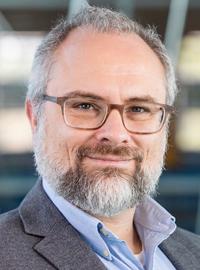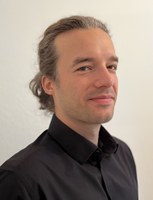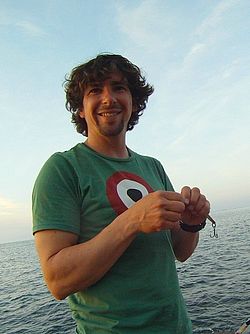
Philipp Schubert is a Researcher at the Helmholtz Centre for Ocean Research (GEOMAR) in Kiel, Germany, where he has worked since May 2009. He is part of Research Area 3: Marine Ecology and the Research Unit: Marine Evolutionary Ecology. Schubert is also the co-founder (2013) of the research diving group submaris and serves as a member of the specialist working group "Benthos" of the Federal/State Committee for the North and Baltic Seas (BLANO), contributing to the implementation of the Marine Strategy Framework Directive (MSFD). Additionally, he is a member of the Nordic Seagrass Network (NSN) and serves as a reviewer for several prominent marine science journals including Marine Ecology Progress Series, AMBIO, Marine Biology, Science of the Total Environment, and Helgoland Marine Research. Dr. Schubert completed his Biology studies at the University of Kiel (1997-2003) with majors in Biological Oceanography and Zoology, and a minor in Physical Oceanography. He graduated with distinction in 2003, having completed his diploma thesis at the Biological Institute of Heligoland on "Interactions between opisthobranchs and their prey organisms." Prior to this, he studied Physical Oceanography at the University of Kiel during 1996-1997. Dr. Schubert's research focuses on marine ecology with particular emphasis on seagrass ecosystems in the Baltic Sea. His work spans multiple disciplines including population genetics of seagrass, the use of stable isotopes to measure water quality, artificial reefs in the Baltic Sea, sublittoral mapping techniques, the importance of seagrass meadows for fish diversity, and the seasonality of coastal small fish. He has extensive field experience as a research diver, having led or participated in numerous expeditions including work in Bocas del Toro, Panama; University of Hawaii; Koldewey Station Ny Alesund in Spitsbergen; Universidad de Antofagasta in Chile; and the UN Decade Project "Sinking Paradise" in Belize. Between 2009-2011, he served as cruise leader on seven LITTORINA expeditions in the Baltic Sea. Analysis of Dr. Schubert's publication record reveals a consistent focus on seagrass (particularly Zostera marina) ecology in the Baltic Sea region. His research spans multiple dimensions including habitat mapping, population genetics, responses to environmental stressors, carbon sequestration potential, and ecosystem services. A notable trend is the integration of traditional ecological methods with advanced technologies like satellite remote sensing (Sentinel-2) for habitat monitoring. His work demonstrates increasing attention to climate change impacts on marine ecosystems and the role of seagrass in climate mitigation (blue carbon). Recent publications also show expansion into fisheries science, particularly regarding illegal discards in coastal waters. Dr. Schubert has made significant contributions to science communication and public outreach. In 2024, he secured funding for a haptic seagrass model and interactive simulations through GEOMAR's EngageComm Call. He has been featured in numerous media outlets including Greenpeace's investigative podcast (2023), BUND Campus lecture series (2023), Panorama 3 broadcast on the Baltic Sea National Park (2023), and multiple documentaries and podcasts focused on marine conservation. His outreach efforts demonstrate a strong commitment to translating scientific findings into public understanding of marine ecosystem importance, particularly regarding seagrass as a "climate savior" and "true lungs of our Earth." Dr. Schubert's laboratory and field work is centered at GEOMAR's facilities in Kiel, with extensive field operations in the Baltic Sea region. His research involves collaboration with multiple institutions including the State Office for Agriculture, Environment and Rural Areas of Schleswig-Holstein (LLUR), Alfred Wegener Institute for Polar and Marine Research, and various international partners. His work with the research diving group submaris supports underwater field studies, while his membership in the Nordic Seagrass Network facilitates international collaboration on seagrass research. The integration of stable isotope analysis, genetic techniques, and remote sensing technologies demonstrates a multidisciplinary approach to marine ecological research.