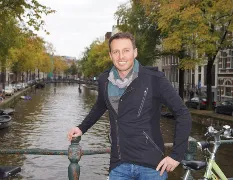
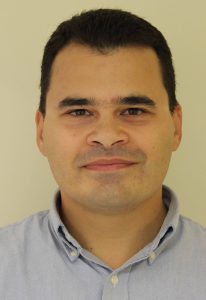
Juan Manuel Domingo Santos is a Professor at the Department of Agroforestry Sciences within the Higher Technical School of Engineering at the University of Huelva. His work spans sustainable forest management, climate change adaptation, and soil conservation, with leadership in projects tackling forest fire prevention and international cooperation in applied research. Education: PhD in Environmental Technologies (2002) from the Polytechnic University of Madrid. His research focuses on integrating climate variables into forest planning, including solar radiation parameters, moisture indices, and soil erodibility. He has led or participated in national and Interreg-POCTEP projects to develop resilient forest plantations and fire restoration strategies. Recent publications highlight GIS/LiDAR tools for sustainable forestry, ecological growth models for Eucalyptus, and soil erosion studies. He directed the Master's Degree in Forestry Engineering (2014-2022) and collaborated in Andalusian fire restoration working groups.
Richard M. Voyles is the Daniel C. Lewis Professor of Engineering Technology at Purdue University's Polytechnic Institute with a courtesy appointment in the Department of Computer and Information Technology. He serves as Director of the Robotics Accelerator and Head of the Collaborative Robotics Lab. Prior to his full-time return to Purdue, he served as Assistant Director of Robotics and Cyber-Physical Systems at the White House Office of Science and Technology Policy and previously led the National Robotics Initiative at the National Science Foundation. Dr. Voyles holds a B.S. in Electrical Engineering from Purdue (1983), an M.S. in Manufacturing Systems Engineering from Stanford (1989), and a Ph.D. in Robotics from Carnegie Mellon (1997). His research spans multiple domains of robotics including rescue robotics, UAV development, gesture-based programming, cyber-animal systems, and self-adaptive robotic systems. He has received numerous honors including being named an IEEE Fellow and receiving Purdue's 'Seeds for Success' Award. His research output demonstrates significant contributions across robotics theory and application, with particular emphasis on novel robot designs like the MOTHERSHIP robot for urban search and rescue, the Dexterous Hexrotor for physical interaction with environments, and the development of the ReFrESH architecture for self-adaptive robotic systems. His work has been supported by NSF through multiple grants including the NSF Center for Robots and Sensors for the Human Well-Being (RoSe-HUB). Dr. Voyles has advised numerous graduate students who have gone on to academic and industry positions, including several who have become professors at other institutions. His research has resulted in significant publications across major robotics conferences and journals, with recent work focusing on nuclear decommissioning applications, neuromorphic computing for robotics, and advanced UAV capabilities. Daniel C. Lewis Professor IEEE Fellow Purdue 'Seeds for Success' Award As an educator, Dr. Voyles teaches courses in robotics, real-time computer vision, and cyber-animal systems. He has been instrumental in developing new MS and PhD degrees in Robotics Technology at Purdue, set to launch in Fall 2024. His lab, the Collaborative Robotics Lab, maintains strong industry partnerships through the RoSe-HUB center, working with numerous companies on applied robotics research.
Rachael Isphording is a Research Fellow at Monash University specializing in climate science with a focus on benchmarking weather resources in climate models for renewable energy applications. Her work emphasizes stakeholder-informed science to support climate adaptation through robust, actionable climate information. Education: PhD from the University of New South Wales (UNSW), where she designed a framework to benchmark high-resolution rainfall simulations and tested its efficacy in improving stakeholder use of downscaled hydroclimate projections. Her research spans climate modeling , downscaling techniques , and benchmarking frameworks for regional climate projections. She is particularly invested in wind characteristics for renewable energy and high-resolution precipitation analysis , integrating science communication and co-design methodologies to translate complex climate data into practical adaptation tools for stakeholders. Analysis of her publication record reveals consistent development of standardized benchmarking protocols for climate model downscaling, primarily through the CORDEX framework across Australasia and Southeast Asia. Her work demonstrates increasing integration of machine learning for climate data management while maintaining core focus on precipitation and wind resource assessment for renewable energy planning. Rachael's research leverages international climate data initiatives including the Atmospheric Radiation Measurement (ARM) program and Coordinated Regional Climate Downscaling Experiment (CORDEX), reflecting active participation in global climate modeling communities. Her stakeholder-centered approach emphasizes practical application of climate projections for resilience planning against extreme weather events.
Sergey Savenkov serves as Professor and Head of the Electrophysics Department at Taras Shevchenko National University of Kyiv, a position he has held since 2008. He earned his Ph.D. in 1996 and Sc.D. in Radio Physics in 2013 from the same institution, progressing from Engineer (1992-1996) to Assistant (1996-2000), Associate Professor (2000-2008), and Professor (2016-present). Education: Sc.D., Faculty of Radio Physics, Taras Shevchenko National University of Kyiv (2013) Ph.D., Taras Shevchenko National University of Kyiv (1996) His research centers on optical physics and polarimetry, specializing in polarized light interactions with anisotropic media. Key contributions include vector inverse scattering problems, Jones-Mueller matrix modeling, Stokes-Mueller polarimeter optimization, and imaging Mueller-polarimetry. He pioneered adaptive Mueller-polarimetry for dynamic measurement optimization based on object characteristics. His 15 publications (2006-2016) reveal strong trends in optical physics and biomedical applications, with 60% focusing on Mueller matrix theory and 40% on biomedical/material implementations. Major subfields span dichroism/birefringence modeling, depolarization metrics, scattering theory, and polarimetric instrumentation. Advising & Expertise: He leads a research group of 4 senior scientists (including 1 Doctor and 3 PhDs) mentoring bachelor's and master's students. The team specializes in automated Stokes-Mueller polarimeters, experimental measurements across transmission/reflection/scattering modes, and generalized matrix models for media characterization. Laboratory: At the University's Laser Polarimetry Laboratory, his team develops non-destructive polarimetric techniques for anisotropic media using Mueller-Jones formalisms, with emphasis on adaptive measurement systems and inverse problem solutions.
Gilles Guy Roger Cuny is an Associate Professor at the University of Copenhagen , specializing in the evolutionary biology of sharks and Mesozoic vertebrates. His research integrates morphological and histological analyses, particularly focusing on enameloid microstructure to elucidate phylogenetic relationships and dietary adaptations in ancient sharks. Key Research Areas: Origin and early radiation of neoselachian sharks Hybodont shark adaptations to freshwater environments Mesozoic vertebrate microremains (fishes to mammals) Methodologies: Morphological analysis of shark teeth Enameloid microstructure studies He teaches courses such as "Origins - Formation of the Universe, Solar System, Earth and Life," reflecting interdisciplinary interests in evolutionary processes.
James Dignam is a Professor at the University of Chicago in the Department of Public Health Sciences. He serves as the Executive Director of the Statistics and Data Management Center for NRG Oncology, a National Cancer Institute-sponsored clinical trials group. His research focuses on the design, monitoring, and analysis of cancer clinical trials, statistical methodology for competing risks and hazard function estimation, and sociodemographic influences on cancer prognosis. Education: PhD in Biostatistics (University of Pittsburgh, 1994), BA in Mathematics (Saint Xavier College, 1986) Dr. Dignam's expertise spans biostatistics , clinical trials , and health disparities in cancer . He has developed advanced models for competing risks and prognostic analysis , particularly in prostate and breast cancer. His work addresses obesity and race/ethnicity as factors in treatment outcomes. Recent publications highlight his leadership in clinical trial methodology , including external control data integration, subgroup analysis techniques, and long-term follow-up studies in prostate cancer. His 2025 work with NRG Oncology emphasizes adaptive trial designs and surrogate endpoints . Scientific Awards: 2021 SPAIG Award (ASA), 2019 Society for Clinical Trials Fellow, 1991 Delta Omega Honor Society Dr. Dignam teaches introductory biostatistics , clinical trials , and survival analysis . He leads major NIH-funded projects like NRG Oncology - Statistical and Data Management Center (U10CA180822) and previously directed studies on obesity in breast cancer (R03CA099508).
Steven Sebastian Seeger is a researcher and Deputy Head of the Isotope Laboratory at the University of Lübeck. He holds a Dr.-Ing. (Doctor of Engineering) degree and specializes in medical imaging, biophysics, and 3D printing technologies. Deputy Head, Isotope Laboratory (2024–present) Research Associate, Institute of Medical Engineering (2019–2024) Education: M.Sc. in Medical Engineering, University of Lübeck (2019) Dissertation: "Development and Characterization of a Dedicated PET Prototype for In-Vivo Imaging of Adult Zebrafish and Small Aquatic Animals" (2024) Research Interests: Steven's work focuses on medical imaging technologies, particularly the development of PET prototypes for preclinical and small animal imaging . His innovative use of 3D printing enables the creation of radioactive phantoms , enhancing precision in emission tomography and radiation protection . His research also explores cellular processes through radioactive labeling , with applications in biophysics and neuroscience . Recent Publications: Steven has published extensively on PET imaging , 3D-printed phantoms , and radiation safety , with key contributions in 2024 (5 publications) and 2023 (3 publications). His work bridges medical engineering and radiation physics , emphasizing preclinical applications in aquatic animal models . Collaborations: Steven collaborates with experts in radiation safety , biomedical engineering , and medical imaging , contributing to the MERMAID and SAIL projects.
Dr. Shahram Dehdashti is a researcher at the Chair of Theoretical Information Technology (Lehrstuhl für Theoretische Informationstechnik) at the Technical University of Munich (TUM), working under Prof. Boche. His research spans quantum information science, quantum communication, and quantum machine learning, with significant contributions to theoretical frameworks for future quantum networks and practical implementations in optical systems. His primary research domains include: Quantum Information and Communication Quantum Computing Algorithms Quantum Machine Learning Quantum Optics and Photonics Metamaterials and Transformation Optics Quantum Cognition He investigates quantum channel capacities, quantum-classical signal co-propagation, and quantum-enhanced feature spaces, while uniquely applying quantum probability models to cognitive decision-making processes. Analysis of his 2020-2025 publications reveals accelerating convergence between quantum computing and artificial intelligence, particularly in quantum federated learning for edge devices and quantum-inspired sentiment analysis. His work consistently bridges theoretical quantum information with practical optical implementations, while maintaining distinctive contributions to quantum cognition through experimental protocols for decision modeling. No scientific awards were documented in the source material. There is no evidence of student supervision or grant funding in the available information. Dr. Dehdashti operates within TUM's Chair of Theoretical Information Technology, which focuses on fundamental quantum information processing and theoretical aspects of next-generation communication systems.
Prof. M.S. (Mischa) Hoogeman is a licensed medical physicist and Head of Medical Physics at the ErasmusMC Radiotherapy Department and Holland Proton Therapy Center (HollandPTC). He has been a Professor at Erasmus University Rotterdam since 2017 and holds a part-time professor appointment at TU Delft (Department of Radiation Science & Technology) since 2019. His research focuses on high-precision and adaptive radiotherapy techniques to improve therapeutic outcomes. Ph.D. in Experimental Physics (Leiden University, 1998, Cum Laude) Medical physicist training at NKI-AVL and Erasmus MC Education in Experimental Physics at University of Amsterdam His research spans high-precision adaptive radiotherapy , proton therapy , and robust optimization for treatment planning. Key subfields include online-adaptive re-optimization, deformable image registration, and normal tissue complication modeling. Current projects aim to translate cervical cancer plan-of-the-day techniques to stereotactic body radiotherapy and quantify proton therapy uncertainties. Research Publications focus on clinical translation of deformable target irradiation, stereotactic radiotherapy, and proton therapy advancements. Trends include adaptive planning, robustness analysis, and quality-of-life improvements for cervical cancer patients. Nottingham Prize (Penn State University, USA) Ph.D. Cum Laude (Leiden University) Grants from Dutch Cancer Society, ZonMw, HTSM, Erasmus Mrace, and medical device companies Mischa Hoogeman supervises MSc and PhD students in radiotherapy and proton therapy. He co-coordinates the Complex Diagnosis-Treatment Combinations module in the Bachelor Clinical Technology program and teaches Radiation Therapy in the Master Technical Medicine program. He is a faculty member for ESTRO international courses and directs the IMRT, VMAT and Other Highly Conformal Techniques in Practice course.
Dr. Marcus Mäder is a Researcher at the Chair of Vibroacoustics of Vehicles and Machines within the Department of Engineering Physics and Computation at the Technical University of Munich . He specializes in aeroacoustics, numerical mechanics, and machine learning applications in acoustics, with a focus on source identification, acoustic metamaterials, and uncertainty quantification. His work bridges experimental and computational approaches in vibroacoustics. Research Topics: Aeroacoustics Acoustic Metamaterials Machine Learning in Engineering Experimental Vibroacoustics Uncertainty Quantification Fluid-Structure Interaction Recent Publications highlight advancements in neural network-driven object classification, energy harvesting from coupled systems, and physics-informed modeling for acoustic boundary conditions. His collaborations span interdisciplinary projects in automotive noise reduction, structural dynamics, and metamaterial design. Teaching Contributions: Experimental Vibroacoustics Machine Learning in Computational Engineering Mechanics Industrial Applications of Vibroacoustics
Jesus Rojo Santiago is a Researcher in the Radiotherapy department at Erasmus MC, Erasmus University Rotterdam, specializing in advanced radiation oncology techniques with a focus on proton therapy applications for head and neck cancer treatment. Research Interests: His primary investigations include: Proton Therapy Optimization : Developing robust intensity modulated proton therapy (IMPT) protocols to minimize therapeutic errors under realistic uncertainties Critical Structure Preservation : Innovating neurovascular bundle sparing techniques in hypofractionated regimens for reduced side effects Clinical Protocol Validation : Evaluating Dutch national robustness standards through multi-institutional probabilistic analyses Treatment Uncertainty Modeling : Quantifying dosimetric impacts of anatomical variations in head and neck cancer radiotherapy Publication Trends: Analysis of his 2023-2025 publications reveals concentrated expertise in computational radiotherapy optimization, with 83% of works addressing head and neck cancer protocols. His research consistently bridges medical physics (67% of publications), clinical oncology (100% coverage), and probabilistic modeling (50% focus), demonstrating strong alignment with Dutch national proton therapy implementation frameworks. Scientific Awards: No awards, fellowships, or medals were documented in the source material. Advising and Grants: While no formal student advisees are listed, his collaborative publication pattern (average 7.2 co-authors per paper) indicates active research team participation. Grant funding specifics are absent, though multi-institutional authorship across 4 Dutch medical centers suggests involvement in nationally coordinated research initiatives. Labs and Teams: Dr. Rojo Santiago operates within Erasmus MC's Radiation Oncology research ecosystem, contributing to the Dutch Proton Therapy Working Group. His work integrates with clinical implementation teams at the Erasmus MC Radiotherapy department, focusing on translating robustness protocols into practice through collaborative studies with national proton therapy centers.
Georgios Petropoulos is an Assistant Professor of Geoinformatics at the Department of Geography, Harokopio University of Athens, Greece, where he has been teaching since 2020. His expertise spans Earth Observation technology, Geographic Information Systems, and remote sensing applications for environmental monitoring and geohazard assessment. He has previously held academic positions at Aberystwyth University in the UK and has been involved in numerous research projects related to land surface process modeling and remote sensing. His educational background includes: PhD in Earth Observation Modelling from King's College London, University of London (2008) MSc in Remote Sensing from the intercollegiate program between University College London, King's College London, and Imperial College (2002) BSc in Natural Resources Development & Agricultural Engineering from the Agricultural University of Athens (1999) Dr. Petropoulos specializes in the application of Earth Observation technology for understanding land surface interactions and feedback processes. His research focuses on utilizing remote sensing synergistically with land surface process models to derive key state variables of the Earth's energy balance and water budget. He has extensive experience in using advanced remote sensing technology for land use/cover mapping, vegetation properties retrieval, and geohazard assessment including floods, wildfires, and frost events. His work also involves developing open-source software tools for Earth Observation and implementing comprehensive benchmarking approaches for remote sensing algorithms. Dr. Petropoulos has received numerous prestigious awards and fellowships throughout his career, including: Marie Curie Individual Fellowship (2017) Senior Fellow of the UK Higher Education Academy (2015) Marie Curie Reintegration Grant (2013) European Space Agency fellowship (2010) Excellent Associate Editor Award for journal Environmental Modelling & Software (2021) Best conference poster award at the Asian Conference on Remote Sensing (2018) As an educator, Dr. Petropoulos has taught undergraduate and postgraduate courses in cartography, geoinformatics, remote sensing, and GIS at multiple institutions including Harokopio University, Aberystwyth University, and the Agricultural University of Athens. He has secured competitive research funding from various sources including the European Commission, ESA, and national research councils. His editorial work includes serving as an editor for Elsevier's Book series in "Earth Observation" and as an editorial board member for several international journals. Dr. Petropoulos is actively involved in international research collaborations and has contributed to numerous scientific committees and working groups related to Earth Observation standards and validation approaches. His current research continues to advance methodologies for soil moisture retrieval, land surface temperature estimation, and environmental monitoring using multi-sensor remote sensing approaches.
Susanne Müller is a Lecturer at the University of Lorraine , affiliated with the Centre de recherche sur les médiations (CREM) . Her research focuses on the Unheimlich (the uncanny) in contemporary art, traces of World War II in artistic practices, and artistic writing/translation . She co-leads the Praxiteles research team since 2025. Research Themes: Exploration of the uncanny in contemporary visual culture Artistic responses to war heritage and historical trauma Interdisciplinary approaches to image education and media didactics Collaborations bridging art, cultural studies, and science communication Recent Articles (2024-2019) examine: Cultural heritage preservation in crisis contexts Art education frameworks in digital and post-crisis environments Geochemical implications for deep mantle processes Visual semiotics in media crisis narratives Artistic interpretations of war landscapes Interdisciplinary studies on hybrid artistic forms Projects include research contracts with the Ministry of Culture (France) , Lorraine Region , and Maison des Sciences de l'Homme Lorraine . She contributes to the Ciera (Interdisciplinary Center for Studies and Research on Germany) and integrates artistic practices into educational initiatives, particularly through the LéA PRO vocational high school research action.
Chris Richards is a Professor in the Department of Animal & Food Sciences at Oklahoma State University since 2017. He holds a PhD in Animal Sciences from the University of Kentucky (1999), an MS in Animal Sciences from the University of Nebraska–Lincoln (1996), and a BS in Animal Sciences from Texas A&M University (1992). His research focuses on beef cattle genetics, feed/water efficiency, methane emissions, and health management , with significant contributions to climate adaptation strategies and sustainable livestock production. Education: PhD, Animal Sciences, University of Kentucky (1999) MS, Animal Sciences, University of Nebraska–Lincoln (1996) BS, Animal Sciences, Texas A&M University (1992) His work on genetic heritability of water intake behaviors, methane prediction models , and feedlot health protocols has been published in journals like the Journal of Animal Science and Translational Animal Science . He has secured continuous funding from the U.S. Geological Survey (2017–2025), U.S. Department of Agriculture (2014–2021), Novus International (2012–2029), and Lallemand Animal Nutrition (2007–2015). Richards teaches graduate-level courses including Doctoral Research and Dissertation and Master's Thesis in International Agriculture , emphasizing independent research in beef cattle systems. His extension publications on topics like water requirements and PI-BVDV management provide practical guidance for producers. Collaborations span institutions such as the University of Nebraska, Texas A&M, and industry partners like Kemin Industries and ABS Global.
Professor Owen J Sansom serves as the Director of the Institute of Cancer Sciences at the CRUK Scotland Institute, affiliated with the University of Glasgow. His research primarily focuses on colorectal cancer, particularly the role of the Apc gene and Wnt signalling in intestinal tumorigenesis. He employs inducible mouse models to study early neoplastic changes, aiming to identify novel therapeutic targets and biomarkers. Key research interests include: colorectal cancer mechanisms, Wnt pathway dysregulation, tumor suppressor functions, pancreatic and liver malignancies, cancer metabolism, and the tumor microenvironment. His work integrates molecular biology, genetics, and preclinical modeling to address therapy resistance and metastasis. Professor Sansom leads several research groups at the Beatson Institute, specializing in Pancreatic, Colorectal/Lower GI/Intestinal/Gut Microbiome, and Liver cancers. His team collaborates extensively on projects involving cancer heterogeneity, immune modulation, and precision oncology.