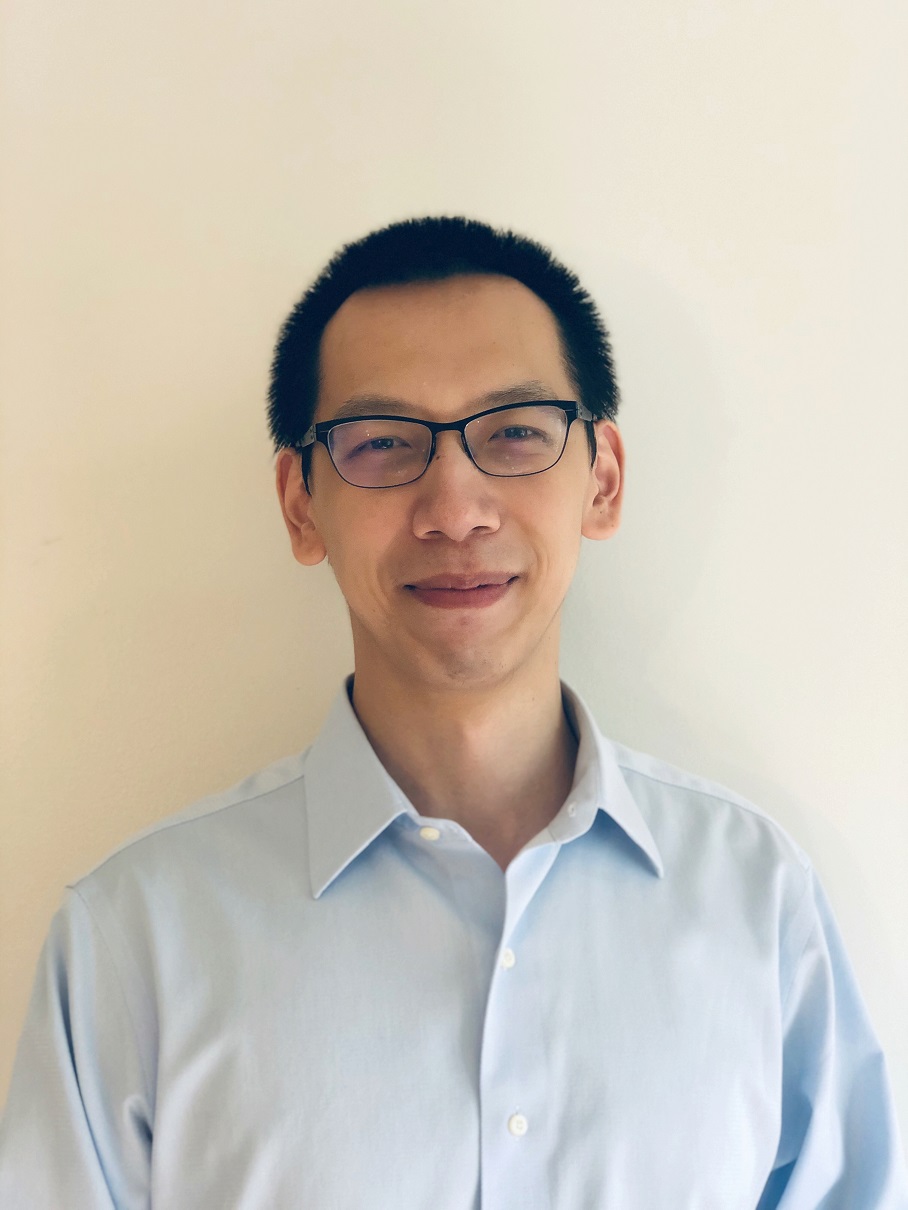
Xiaowei Jia is an Assistant Professor in the Department of Computer Science at the University of Pittsburgh. He holds a Ph.D. from the University of Minnesota (supervised by Prof. Vipin Kumar) and B.S./M.S. degrees from the University of Science and Technology of China (USTC) and SUNY Buffalo. His research focuses on integrating scientific theory with machine learning to address societal and environmental challenges, such as climate modeling, hydrology, and fairness in AI. Education: Ph.D., University of Minnesota (2020) M.S., State University of New York at Buffalo B.S., University of Science and Technology of China (USTC) Research Interests: Knowledge-Guided Machine Learning Spatiotemporal Data Mining Fairness in AI for Social Good Applications in Environmental Science and Healthcare Publications showcase his work on physics-integrated neural networks, spatiotemporal modeling (e.g., water temperature prediction), and fairness-aware algorithms. His work has been recognized with Best Paper awards at SIAM SDM (2022, 2023). Awards include the Best Applied Data Science Paper Award at SIAM SDM in 2022 and 2023. He teaches advanced machine learning courses, emphasizing theory integration with real-world applications.
Amadeus Gebauer is a Researcher at the Chair of Computational Mechanics within the Institute for Computational Mechanics at the Technical University of Munich (TUM), serving as a Research Associate since 2019. His work specializes in computational biomechanics with emphasis on cardiac mechanics modeling, growth and remodeling processes, and multi-physics simulation frameworks. Education: Master of Science (M.Sc.) in Mechanical Engineering, Technical University of Munich, 2019 Research Interests: Gebauer's research centers on cardiac mechanics modeling, including growth and remodeling of cardiac tissue, cardiac active tissue mechanics, and medical image processing. He develops advanced computational methods for parallel and high performance computing, particularly through the 4C multi-physics simulation framework. His work integrates constrained mixture models to simulate organ-scale biological processes, bridging computational mechanics with clinical cardiology applications and focusing on mechanobiological stability in cardiac systems. Publication Trends: Gebauer's publications (2018-2025) demonstrate consistent innovation in computational cardiology, primarily using constrained mixture models to address cardiac growth and remodeling. His recent work introduces adaptive integration techniques for history variables and homogenized modeling approaches, while expanding into software benchmarking for cardiac elastodynamics and gastric motility simulations. These contributions highlight his expertise in developing robust numerical methods for multi-physics biomedical problems, with increasing focus on patient-specific applications and high-performance computing solutions. Teaching and Advising: Gebauer teaches core computational mechanics courses including Finite Elemente and Numerische Festkörpermechanik across multiple semesters. He has supervised diverse student projects ranging from term papers to Master's theses, with notable collaborations including Maximilian Grill's shoulder biomechanics research (2020) and Janina Datz's artery geometry framework development (2021). His advising consistently focuses on cardiac mechanics, computational modeling, and medical device simulation. Research Environment: As part of Professor Wolfgang A. Wall's Institute for Computational Mechanics (LNM) at TUM, Gebauer contributes to a leading research group in computational solid/fluid mechanics. The LNM develops the 4C simulation framework for complex engineering and biomedical challenges, with current emphasis on cardiac growth modeling, multi-physics integration, and high-performance computing applications in personalized medicine.
Prof. Dr. Sebastian Steinhorst is an Associate Professor (W3-level with tenure) at the Technical University of Munich (TUM) within the Embedded Systems and Internet of Things group at the TUM School of Computation, Information and Technology . His research focuses on advancing the security, predictability, reliability, and interoperability of smart connected and autonomous systems, particularly for applications in Internet of Things (IoT) , Industry 4.0 , and automotive systems . PhD in Computer Science (2011) from Goethe University Frankfurt Postdoctoral roles at TUMCREATE Singapore (2011-2016) and Aarhus University (2016) Joined TUM in 2016 as Rudolf Moessbauer Tenure Track Professor His research areas include decentralized embedded systems, hardware/software co-design, modeling and verification of cyber-physical systems, security protocols for automotive networks, and time-sensitive networking (TSN) for industrial applications. Recent work explores blockchain-based data sovereignty, zero-knowledge proofs for vehicle authentication, and resilient architectures for autonomous systems. Key scientific contributions include the 2019 ACM TODAES Best Paper Award and pioneering work on CyberSecDome , LeapChain , and Simutack frameworks. He serves on editorial boards and conference committees, including co-organizing the Autonomous Systems Design initiative at DATE. His teaching portfolio spans lectures on System Design for IoT , Software Architecture for Distributed Systems , and IoT Security across multiple semesters. He also leads advanced seminars on embedded systems and IoT.
Prof. Dr. Andrea Stocco is a Professor at the Technische Universität München (TUM), affiliated with the TUM School of Computation, Information and Technology. His research focuses on the intersection of software engineering and deep learning, particularly addressing the robustness and reliability of data-intensive systems. Key areas include autonomous vehicles, web application testing, and automated functional oracles for deep learning systems. He leads initiatives such as the Lehrstuhl für Software und Systems Engineering , collaborating on projects like CrESt and SUPPRA – Algorand Center of Excellence . Research interests encompass monitoring techniques for AI-driven systems, test suite maintainability, and scenario-based testing of cyber-physical systems (CPS). His work emphasizes practical applications, such as improving testing frameworks for evolving web applications and enhancing interoperability in autonomous driving systems (ADS). Recent efforts include leveraging large language models (LLMs) for secure code assessment and benchmarking generative AI for test input generation. No scientific awards are explicitly mentioned in the provided texts. His publications reflect a strong focus on testing methodologies, with over 40 articles since 2013, covering domains like web test automation, dependency-aware testing, and safety-critical failure prediction in autonomous systems. Advising and grants details are not detailed in the current data, but his lab contributes to TUM's broader efforts in software engineering and systems reliability.
Max Planck Institute for Intelligent SystemsGermany
Achim Menges is a Research Professor and Max Planck Fellow at the University of Stuttgart, where he directs the Institute for Computational Design and Construction (ICD). His work bridges architecture, engineering, and computational design, with a focus on developing innovative construction methods and materials. Menges leads the Cluster of Excellence IntCDC: Integrative Computational Design and Construction for Architecture, a major research initiative funded by the German Research Foundation. Menges' research centers on computational design, robotic construction, and biomimetic architecture, with particular emphasis on timber construction, adaptive building systems, and digital fabrication. His work integrates principles from bionics to create responsive, sustainable building systems that adapt to environmental conditions. Notable projects include the BUGA Wood Pavilion (2019), Urbach Tower, BUGA Fibre Pavilion, and the livMatS Biomimetic Shell, all demonstrating his commitment to material innovation and sustainable construction practices. His recent publications reveal a consistent focus on advancing timber construction techniques, developing bio-inspired responsive systems, and implementing robotic fabrication processes. The research shows a clear trajectory toward more sustainable, resource-efficient building methods that integrate digital design with physical construction processes. Menges' work increasingly addresses multi-story timber systems and circular construction principles. Bauwende Prize der Universität Stuttgart 2025 Menges leads numerous research initiatives through the Cluster of Excellence IntCDC, securing significant funding for projects exploring computational design and robotic construction. His work involves extensive collaboration with industry partners and interdisciplinary research teams. Menges directs the ICD research laboratory, which focuses on developing novel computational design methods, robotic fabrication processes, and innovative material systems for architecture. The institute maintains strong partnerships with industry leaders in construction technology and materials science, facilitating the translation of research into practical applications.
Georg Martius is a Full Professor in the Department of Computer Science at the University of Tübingen's Faculty of Science and a Max Planck Research Group Leader at the MPI for Intelligent Systems. Since April 2023, he has been a core member of the DFG-funded Cluster of Excellence 'Machine Learning: New Perspectives for Science,' which received extended funding through 2032 for its mission to integrate machine learning into fundamental scientific discovery processes. His academic foundation includes a PhD from the University of Göttingen and Bernstein Center for Computational Neuroscience (2005), a Diploma in Computer Science from the University of Leipzig (2003), and a visiting research period at the University of Edinburgh's Division of Informatics. Postdoctoral positions followed at the Max Planck Institutes for Dynamics and Self-Organization (Göttingen, 2009), Mathematics in the Sciences (Leipzig, 2010), and IST Austria (2015). Professor Martius's research pioneers the intersection of reinforcement learning, robotics, and tactile sensing, with emphasis on developing autonomous systems capable of natural locomotion, dexterous manipulation, and physical-world understanding. His work bridges theoretical machine learning with practical hardware applications, particularly in creating differentiable simulators, superresolution tactile sensors, and biologically plausible learning frameworks for robotic control. Analysis of his 2024-2025 publications reveals dominant trends in offline reinforcement learning (especially goal-conditioned and diversity-maximization techniques), object-centric representation learning for video understanding, and tactile sensing innovations. A strong thread connects foundation models to world model construction, while his work on differentiable physics engines enables precise collision handling and contact dynamics for real-world robotic control. His leadership roles include directing the Distributed Intelligence research team at Tübingen and contributing to major collaborative initiatives like the Real Robot Challenge and Myochallenge 2022. The Cluster of Excellence appointment represents recognition of his contributions to transforming scientific methodology through machine learning, particularly in automating hypothesis generation and experimental design. Current projects focus on integrating large-scale machine learning with embodied intelligence, advancing tactile perception systems like the Minsight vision-based sensor, and developing neuroplasticity-inspired approaches for robust out-of-distribution detection. His work directly impacts fields requiring physical interaction intelligence, from autonomous navigation to medical robotics, with emphasis on sample-efficient learning from limited real-world data.
Prof. Dr. Patrick Huber is a leading physicist and Institute Director at the Hamburg University of Technology (TUHH) , heading the Institute for Materials and X-Ray Physics (M-2) . He also leads the High-Resolution X-Ray Analytics of Materials group at DESY through a cooperative professorship. His research spans condensed matter physics , nanoporous materials , and X-ray analytics , with significant contributions to molecular water science and soft matter in confinement . Education: PhD in Physics (1999, Saarland University), Diploma in Physics (1995, Saarland University) Professional Career: Full Professor at TUHH (2020-present), Member of CRC 1615 (2023-present), Spokesperson for CMWS (2024-present), Cluster of Excellence BlueMat (2025) Research Interests focus on multi-scale material behavior under extreme confinement, particularly hierarchical porous silicon and silica systems . His work examines adsorption-induced deformation , elastocapillarity , fluid transport in nanopores, and metamaterial design principles using electrolytes , polymers , and liquid crystals . Fundamental studies include fluid interface thermodynamics and microscopic hydrodynamics . Scientific Awards include the Top Reviewer Award (2018) from Applied Physics Letters and the Dr.-Eduard-Martin Award (2000) for his dissertation. He contributes to 130+ publications with an h-index of 36 (2021). Advising and Grants involve supervising 18 doctoral and master's students , including Manuel Brinker , Marc Thelen , and Stella Gries . He participates in Collaborative Research Centre CRC 1615 , Cluster of Excellence EXC 3120 BlueMat , and the United Nations University Hub on Climate Engineering . Laboratory and Teams include the Institute for Materials and X-Ray Physics (M-2) at TUHH, the High-Resolution X-Ray Analytics group at DESY, and contributions to the Centre for Hybrid Nanostructures (CHyN) .
Prof. Dr.-Ing. Eric Sax is a Professor of Electronic Systems Engineering and Management at the Karlsruhe Institute of Technology (KIT), serving as Dean of the Department of Electrical Engineering and Information Technology (ETIT). He leads the Institut für Technik der Informationsverarbeitung (ITIV) and directs the Forschungszentrum Informatik ESS division . As Program Director of the Electronic Systems Engineering & Management (ESEM) master's program at the HECTOR School, he focuses on integrating academic and professional education. His research spans automotive systems engineering , self-learning functions , cybersecurity , and data-driven validation . Key themes include over-the-air updates, scenario-based testing, and the synergy between machine learning and automotive systems. His work addresses challenges in autonomous driving validation, software-defined mobility, and cyber-physical system security. Prof. Sax's contributions include frameworks for automotive software partitioning, cloud-enabled vehicle architectures, and methodologies for quantifying data quality impacts on perception systems. He actively collaborates with industry partners to bridge academic research with industrial application. His recent projects include OptiCAM (cloud/edge function offloading), Drive4C (autonomous driving benchmarking), and UNCOVER (data-driven security monitoring). He holds leadership roles in both KIT and the HECTOR School's technology business programs.
Saleh A. Alshebeili is a Professor in the Department of Electrical Engineering at King Saud University's College of Engineering, Riyadh, Saudi Arabia. With over 139 publications spanning from 1991 to 2024, his research demonstrates significant contributions across multiple engineering disciplines. His academic profile shows consistent collaboration with Saudi research institutions and international partners, particularly in communications and signal processing fields. Dr. Alshebeili's research interests span wireless communications, optical networks, radar systems, and biomedical signal processing. His work bridges theoretical signal processing with practical applications in 5G/6G communications, IoT security systems, and healthcare monitoring. The interdisciplinary nature of his research connects electrical engineering with computer science, particularly through machine learning applications for signal analysis and system optimization. His publications demonstrate expertise in both traditional signal processing techniques and emerging AI-driven approaches to engineering problems. Analysis of his recent publications (2021-2024) reveals a strong focus on next-generation communication technologies including 6G systems, optical wavelength conversion, and OAM-SDM communication. Simultaneously, he maintains active research in biomedical applications, particularly EEG signal processing for seizure detection and biometric authentication using physiological signals. His work consistently appears in top IEEE journals including IEEE Access, IEEE Transactions on Wireless Communications, and IEEE Journal of Biomedical and Health Informatics, reflecting the high quality and relevance of his research. Dr. Alshebeili has established extensive collaborations with researchers across King Saud University, particularly with Fathi E. Abd El-Samie (29 co-authored papers), Turky N. Alotaiby (22 papers), and Amr Ragheb (21 papers). These long-term collaborations suggest leadership in research groups focusing on communications systems and biomedical signal processing. His work spans theoretical development, simulation, and experimental validation, as evidenced by publications with 'Experimental Investigation' and 'Experimental Demonstration' in their titles.
Prof. Dr. Estela Suarez is a Professor of High Performance Computing at the Institute for Computer Science, University of Bonn (W2 in the Jülich Model) and Joint Lead of the Division "Novel System Architecture Design" at the Jülich Supercomputing Centre (JSC), Forschungszentrum Jülich GmbH. She also leads the Research Group "Next Generation Architectures and Prototypes" at JSC and serves as Spokesperson of Helmholtz Information Program 1, Topic 2. Currently on sabbatical during the 2024/2025 and 2025 academic years, she remains active in research leadership roles. 2010: PhD in Physics from University of Geneva, Switzerland 2004: Master in Physics, Specialization in Astrophysics, University Complutense of Madrid, Spain Professor Suarez specializes in high performance computing with particular expertise in heterogeneous HPC system architectures and modular supercomputing architecture (MSA). Her research spans hardware prototyping and evaluation, system software development, operational data analysis, and co-design methodologies. She has pioneered approaches to address hardware heterogeneity through system-wide orchestration of diverse computing resources, enabling more efficient scientific computing across multiple domains. Her work bridges theoretical computer architecture with practical implementation challenges in exascale computing environments, focusing on real-world applications that require specialized hardware configurations. Professor Suarez's publication record shows a clear evolution from foundational work on the DEEP project (2016) through the development of modular supercomputing concepts (2019-2021) to current applications across diverse scientific domains (2022-2024). Her recent publications demonstrate how modular architectures can be effectively applied to climate modeling, neuroscience simulations, quantum chemistry calculations, and other computationally intensive fields. This trend highlights her focus on practical implementation challenges and the growing importance of adaptable computing architectures in modern scientific research. 2023/2024 Lehrpreis der Universität Bonn: UniBonn teaching award Professor Suarez has secured significant research funding through major projects including NUMERIQS (Projects A05, B02, and Z02), European Processor Initiative (EPI), DEEP-SEA (Software for Exascale Architectures), IFCES2 (optimization of simulation algorithms for exascale supercomputers), and AIDAS (virtual laboratory between Forschungszentrum Jülich and CEA on AI and data analytics). While currently not accepting new students due to sabbatical, she has previously mentored graduate students in high performance computing techniques and has delivered numerous invited lectures at international conferences. Professor Suarez leads the "Next Generation Architectures and Prototypes" research group at JSC and serves as Joint Lead of the "Novel System Architecture Design" division. She chairs the Research and Innovation Advisory Group (RIAG) from EuroHPC Joint Undertaking since 2024. Her work involves close collaboration with international research teams on advancing supercomputing architectures, including contributions to the University of Bonn's new HPC system "Marvin" which ranks on both the TOP500 and GREEN500 lists.
Prof. Felix Motzoi is an Associate Professor at the University of Cologne and Division Leader & Head of the 'Automatic Optimization, Control and Design' group at the Peter Grünberg Institute (PGI-8) in Jülich. His research focuses on advancing quantum technologies, including superconducting and semiconducting architectures, trapped cold atoms/ions, Rydberg qubits, and long-range entanglement. He leads theoretical efforts in quantum control theory, machine learning applications, hardware co-design, and error mitigation strategies. Key research areas include developing optimal control methodologies (e.g., DRAG, STA), numerical optimization, and dynamics modeling for quantum systems. His work bridges theoretical frameworks with experimental implementations, emphasizing practical solutions for scalable quantum computing. Recent publications highlight innovations in quantum gate design, error suppression via pulse shaping, and hybrid optimization techniques combining machine learning with physics-driven approaches. His team collaborates across disciplines to address challenges in qubit coherence, entanglement stabilization, and robust quantum processing.
Dr. Lucie Kruse is a researcher at the Department of Informatics, University of Hamburg, specializing in Human-Computer Interaction (HCI) and Virtual Reality (VR). Her work focuses on immersive user interfaces for cognitive and physical training, particularly for older adults and those with dementia. She has been an active member of the University of Hamburg's HCI group since 2018 and served on the Ethics Commission since 2023. Her research interests include: Virtual Reality Exergames Serious Games Assistive Technologies Accessibility in VR Mental Health Applications Her publications from 2021-2025 demonstrate expertise in designing VR systems for healthcare, analyzing age-related interaction patterns, and developing inclusive interfaces. She has received multiple awards including the 2024 Honorable Mention for Best Poster at ACM SUI and the 2023 Honorable Mention at ACM CHI. Scientific Awards: Honorable Mention for Best Poster Award at ACM SUI (2024) Runner-Up Prize at Metaverse for the Good (2024) Honorable Mention at ACM CHI'23 Interactive Demo (2023) Honorable Mention at ACM VRST (2021) She has supervised multiple theses on topics like AI agents for mental health, accessibility of chatbots for seniors, and VR exergame design. Her work spans collaborations with institutions like HITLab NZ and Western Sydney University's MARCS Institute.
Samuel Leder is a doctoral researcher at the Institute of Computational Design and Construction (ICD) under the Cluster of Excellence IntCDC at the University of Stuttgart. His work focuses on the integration of robotics and architectural design, particularly in developing distributed robotic systems for timber construction. He has been actively involved in research projects such as RP 19-1 – Robotic Kinematic System for Parallel Construction and RP 19-2 – Co-Design for Distributed Cooperative Multi-Robot Systems . Additionally, he serves on the Equal Opportunity Commission at ICD. Bachelor of Design in Architecture (summa cum laude), Washington University in St. Louis Bachelor of Applied Science in Systems Science and Engineering (magna cum laude), Washington University in St. Louis MSc in Architecture via the Integrative Technologies and Architectural Design Research (ITECH) program, University of Stuttgart Samuel’s research explores the synergies between agent-based modeling , robotic systems , and architectural design . His work aims to create minimal robotic machines capable of constructing complex spatial assemblies, particularly with timber structures . He investigates the co-design of robots and the structures they build, emphasizing modular systems and kinematic behaviors . Recent publications highlight advancements in digital twins , adaptive assembly , and human-robot collaboration for timber construction. The 15 most recent articles reveal trends in collective robotic construction , agent-based modeling , and material-robot interaction . These works emphasize timber fabrication , modular systems , and interactive simulation for large-scale construction tasks. Key sub-fields include adaptive assembly , cyber-physical systems , kinematic control , and human-guided robotics . Scientific Awards: German Academic Exchange Service (DAAD) Award for Outstanding Achievement Deutschlandstipendium Samuel’s research is conducted within the ICD at University of Stuttgart , where he collaborates on the Wood Building Systems for Distributed Robotics associated project. His work bridges architecture , robotics , and computational design , aiming to redefine on-site construction methodologies through innovative robotic systems.
Dr. Gaël Kermarrec is a researcher at the Boundary Layer Meteorology Group , part of the Institute of Meteorology and Climatology within the Faculty of Mathematics and Physics at Leibniz University Hannover . His work focuses on atmospheric turbulence, GNSS applications, and remote sensing for environmental monitoring. Boundary layer meteorology Turbulence theory GNSS signal processing Terrestrial laser scanning Climate change impacts Geodetic time series analysis His research integrates advanced mathematical models like LR B-splines and Matérn covariance with large eddy simulations to study: Atmospheric turbulence effects on optical/GNSS signals Hydrospheric mass loading Deformation analysis of terrain/port infrastructure Climatic sea-level changes Machine learning for remote sensing The 15 most recent articles (2025-2023) demonstrate his focus on: GNSS-based turbulence detection AI-enhanced climate mapping Advanced surface approximation techniques Multi-sensor data fusion Stochastic modeling of geodetic observations Environmental impacts on optical measurements He has developed tools like the Klimascanner QGIS plugin for urban climate resilience and contributes to: Understanding atmospheric scale lengths Improving TLS/GNSS deformation monitoring Analyzing hydrospheric changes Wavefront modeling Ionospheric corrections
Prof. Dr. Christian Plessl is a W3 Professor of High-Performance Computing at the Institute of Computer Science, University of Paderborn. He leads the Paderborn Center for Parallel Computing (PC²), a national HPC center within the NHR alliance. His roles include Director of PC², Board Member of the NHR association, and member of the Sonderforschungsbereich 901. Education: PhD (Dr. sc. ETH) in Computer Engineering, ETH Zürich (2006) MSc in Electrical Engineering, ETH Zürich (2001) Postdoc at ETH Zürich (2007–2011) Research Interests: Architecture and tools for high-performance parallel and reconfigurable computing, FPGA acceleration, quantum chemistry, scientific computing, adaptive systems, and energy-efficient HPC solutions. Key projects include EKI-App (FPGA-based neural networks), FPGA4XPCS (X-ray spectroscopy), and HighPerMeshes (unstructured grid frameworks). Publications: Over 100 peer-reviewed works, focusing on FPGA acceleration, HPC frameworks, and quantum computing. Recent trends emphasize energy-efficient neural networks, FPGA-based quantum computing, and scalable HPC algorithms. Awards: Best Paper Awards at HEART 2023, ReConFig 2012/2014 Paderborn University Research Awards (2018, 2009) SEW-EURODRIVE Student Award (2001) Grants & Projects: Principal investigator in DFG, BMBF, and EU-funded projects. Collaborates with AMD/Xilinx, Intel/Altera, and Fujitsu. Leads initiatives like PerficienCC (custom computing) and HighPerMeshes. Labs/Teams: Directs the High-Performance Computing group at PC², focusing on FPGA supercomputing and HPC infrastructure. Active in the NHR alliance for national HPC coordination.