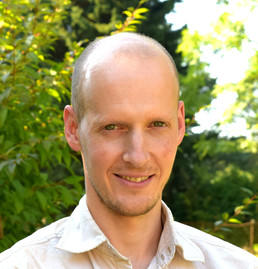
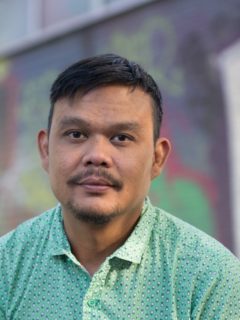
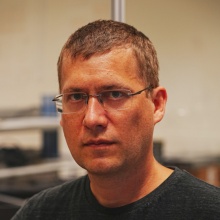
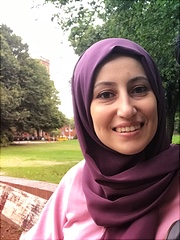
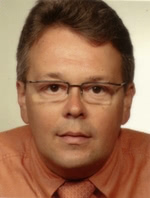
Xiangyang Li is a Professor at the University of Science and Technology of China, School of Computer Science and Technology. His work spans interdisciplinary domains including computer science, machine learning, and geoscience. Research Focus: Machine Learning, Recommender Systems, Blockchain, and Computer Vision. Key Contributions: Development of novel algorithms for UWB positioning, code information retrieval benchmarks, and vision-language models. Recent publications highlight trends in large language model (LLM) integration for recommendation systems, quantum-inspired optimization, and cross-chain consensus models. His 2025 work includes collaborations on semantic-driven inference, prompt tuning, and hybrid BFT consensus for blockchain scalability.
Ujjwal Bhattacharya is affiliated with the Indian Statistical Institute, India. His primary research focuses on computer vision, machine learning, and document analysis with a strong emphasis on multimodal perception systems and deep learning applications. He has published extensively in top-tier venues like ICPR, ICDAR, CVPR, and BMVC, contributing to advancements in autonomous driving, image processing, and privacy-aware machine learning. His work spans from developing robust pedestrian detection systems using multimodal sensors to enhancing degraded document image processing through domain adaptation and advanced neural architectures. Recent contributions include semi-supervised 3D object detection frameworks and privacy-preserving clustering techniques. Key research areas include: Multimodal sensor fusion for autonomous systems Deep learning for document analysis and OCR Privacy-aware metric learning Efficient neural network compression techniques Image enhancement and restoration His publication trends reflect a focus on solving real-world challenges in autonomous driving, degraded document processing, and privacy-sensitive machine learning applications.
Michael A. Goodrich is a Professor in the Department of Computer Science at Brigham Young University, with an extensive research career spanning over two decades in robotics, human-robot interaction, and swarm intelligence. His work bridges theoretical foundations with practical applications, particularly in autonomous systems and multi-agent coordination. His research interests focus on Robotics , Human-Robot Interaction , Swarm Robotics , Artificial Intelligence , and Autonomous Systems . Goodrich's work explores how humans and robots can effectively collaborate, with particular emphasis on proficiency assessment, resilience, and communication in human-robot teams. His research has significant applications in search and rescue operations, swarm robotics, and autism therapy. Analysis of his recent publications reveals a strong focus on robot self-assessment capabilities, swarm behavior optimization, and resilience in multi-agent systems. His work increasingly integrates formal methods with practical robotics applications, creating frameworks for robots that can assess their own capabilities and communicate this information effectively to human teammates. Among his notable contributions are frameworks for robot proficiency self-assessment using assumption-alignment tracking, methods for designing resilient swarm behaviors, and formalizations of resilience for goal-oriented agents. His work has been published consistently in top venues including IEEE Transactions on Robotics, ACM Transactions on Human-Robot Interaction, and International Journal of Robotics Research. Dr. Goodrich has advised numerous students who have become active researchers in the field, including Aadesh Neupane, Daqing Yi, Xuan Cao, and Puneet Jain. His collaborative work spans multiple institutions and has practical applications in wilderness search and rescue, autism therapy, and multi-robot coordination systems.
João Paulo Papa is a Professor at the Department of Computing within the Institute of Biosciences, Humanities and Exact Sciences at São Paulo State University (UNESP), Brazil. His research spans machine learning, computer vision, and quantum computing with significant applications in medical diagnostics and environmental monitoring. Over the past three years, he has published extensively in top-tier journals including IEEE Access, ACM Computing Surveys, and Neural Computing and Applications. His research interests focus on developing innovative machine learning approaches for healthcare applications, particularly in Parkinson's disease detection through speech and facial analysis, medical image processing for cancer detection, and quantum-classical hybrid models. His work demonstrates strong integration of theoretical machine learning advancements with practical medical and environmental applications. Papa has established a productive research group that has produced numerous publications in computer vision conferences and medical informatics venues. Analysis of his recent publications reveals a strong emphasis on medical applications of AI, with approximately 60% of his work focused on healthcare diagnostics, 25% on fundamental machine learning advancements, and 15% on environmental and remote sensing applications. His research shows increasing collaboration with international partners while maintaining strong roots in Brazilian academic networks. Among his notable contributions is the development of specialized machine learning architectures for medical image analysis, including TransConv for esophageal cancer detection and quantum-classical hybrid models for breast cancer diagnosis. He has also made significant contributions to the Portuguese language processing community through adaptations of large language models for Brazilian Portuguese medical applications. Prof. Papa actively supervises graduate students and collaborates with medical professionals across Brazil, translating AI research into practical clinical tools. His research group maintains strong connections with hospitals and medical research centers to ensure clinical relevance of their technical developments.
Christina Schwalbe serves as Head of the Office for Digital Teaching (formerly eLearning Office) at the University of Hamburg's Faculty of Education since 2007. She oversees the digital transformation of teaching and learning processes, coordinating with university units like the Digital Office and RRZ. Her role includes developing support services for digital teaching and fostering institutional communication on educational technology. Her teaching focuses on data literacy, media education, and educational media theory. Research interests span digital transformation in education, educational media culture, and university development. She has authored/co-authored publications addressing eLearning challenges, digital media adoption, and educational technology integration since 2007. Key contributions include studies on E-Portfolios in education (2011), mobile learning (2012), and the cultural impact of digital media in educational spaces (2008-2009). Her work emphasizes bridging technological innovation with pedagogical practice in higher education contexts.
Dr. Mia Viermann is a Researcher at the University of Hamburg's Faculty of Education, Department of Didactics of Social Sciences and Mathematics-Natural Science. Her work focuses on inclusion-oriented teacher education, difference practices in educational contexts, and mathematics learning in inclusive settings. She holds a M. Ed. and B.A. in Special Education from Leibniz University Hannover, with a focus on mathematics and child development. Educational Background: B.A. Sonderpädagogik mit Zweitfach Mathematik (2011-2014), Leibniz Universität Hannover M. Ed. Lehramt für Sonderpädagogik (2014-2016), Leibniz Universität Hannover PhD Defense 2022: 'Konjunktives Erfahrungswissen Lehramtsstudierender zu Inklusion' (Leibniz Universität Hannover) Research Interests: Explores intersections of inclusion, digitalization, and mathematics education through reconstructive social research methodologies. Current projects examine teacher orientations toward disability, inclusive pedagogy in digital environments, and community-oriented educational frameworks. Awards: 2023 DGfE Poster Prize (3rd place) 2016 Excellence in Teaching Award (Leibniz University Hannover) Professional Activities: Co-edited the journal 'Gemeinsam Leben' (2021), presented at international conferences including CERME12, and actively contributes to interdisciplinary research networks like the Erfurter Nachwuchsnetzwerk Dokumentarische Methode. Labs/Teams: Collaborates with the Graduiertenschule Martha-Muchow-Bibliothek and participates in university-wide Wissenstransfer initiatives focusing on educational policy and practice.
Prof. Daniel Göhring is a professor in the Department of Computer Science at the Free University of Berlin, leading the Autonomous Cars Lab and part of the Dahlem Center for Machine Learning and Robotics. His research emphasizes robotic perception, object tracking, and real-time planning under computational constraints, with a focus on autonomous vehicles and cooperative systems. Education: Bachelor's/Master's in Robotics (exact program unspecified) PhD in Computer Science at Humboldt University Berlin Postdoctoral Research at International Computer Science Institute (ICSI), Berkeley, CA Research Interests: Daniel's work integrates machine learning and sensor technologies like LiDAR and cameras to address challenges in autonomous driving. Key areas include SLAM algorithms, trajectory prediction, cooperative perception, and real-time systems. He explores how limited sensor data and computational resources can be optimized for dynamic traffic environments. Grants and Projects: Leader of the Autonomous Cars Lab Involved in EU-funded projects such as H2020 HIVEOPOLIS and KIS-M (AI-based mobility systems) Past projects include CRTX (recycling optimization), Open.Make (open hardware), RoboFish (biological swarm analysis), and SAFARI Awards: Best Poster Award at IAAS Workshop 2024 Best Paper Award at ICAIR-CACRE 2019 Teaching: He has taught courses such as Image Processing, Robotics, and Advanced Robotics. Recent semesters include modules on self-supervised learning, autonomous vehicle research, and continuous learning software projects. Labs and Teams: Daniel heads the Autonomous Cars Lab and collaborates with the BioRobotics Lab, focusing on interdisciplinary projects like 'Robots Communicating with Fish' and 'Open Hardware for FAIR Robotics.'
Dr. Ferdiansyah Thajib is a Senior Lecturer at the Institute for Near Eastern and East Asian Languages and Civilizations, Friedrich-Alexander-Universität Erlangen-Nürnberg, Germany. He is affiliated with the Elite Master Program 'Standards of Decision-Making Across Cultures.' His doctoral work (2020) was completed at Freie Universität Berlin's Institute of Social and Cultural Anthropology. Thajib's research focuses on psychological anthropology, gender and sexuality studies, queer religiosity, and alternative pedagogy. His activism with KUNCI, a transdisciplinary collective in Yogyakarta, Indonesia, emphasizes self-organization and alternative education. He explores transformative practices in knowledge production, particularly in Southeast Asia and Indonesia. Key research interests include the intersection of queer identities and religious practices, affective ethnography, and institutional critiques. His work often addresses vulnerable communities, such as Indonesia's waria (transgender women) in HIV/AIDS research and anti-LGBTQ+ campaigns. He co-edits volumes on queer theology, public pedagogy, and interdisciplinary research methodologies. Thajib has published widely in journals like Medical Anthropology , Indonesia and the Malay World , and ARTMargins . He collaborates on projects analyzing global health crises, institutional dynamics, and cultural solidarity. His activism and academic work intersect in promoting decolonial methodologies and community-driven knowledge systems. Current projects include editing volumes on queer-feminist engagements with religion and curating artist-led pedagogical frameworks in Asia-Pacific contexts. His research bridges anthropology, gender studies, and cultural activism, emphasizing interdisciplinary and participatory approaches.
Lakhmi C. Jain is a distinguished academic affiliated with the University of South Australia. They specialize in Artificial Intelligence, Neural Networks, Fuzzy Logic, and Intelligent Systems, with a focus on applications in robotics, data mining, and biomedical engineering. Their work often bridges theoretical advancements and practical implementations, contributing to fields like computational intelligence, decision-making systems, and multi-agent frameworks. As an editor for multiple journals, including the International Journal of Intelligent Decision Technologies, Jain has significantly shaped academic discourse in AI and related domains. Roles: Editor-in-Chief for several journals, researcher in AI and computational intelligence. Affiliations: University of South Australia. Research interests include neural networks, fuzzy logic systems, and their applications in robotics, biomedical signal processing, and smart technologies. Their publications emphasize interdisciplinary approaches to solving complex problems in engineering and computer science. Articles highlight contributions to multi-agent systems, decision support systems, and risk assessment models, reflecting a commitment to both theoretical rigor and practical relevance. Despite extensive contributions, no specific awards or student advisees are explicitly documented in the provided data.
Dr. Manuel Dahmen serves as Head of Department at the Institute of Climate and Energy Systems (ICE-1) within the Research Center Jülich. His research focuses on designing sustainable and cost-efficient energy systems through numerical optimization and deep learning techniques. He leads efforts in advancing energy system technology, particularly in optimizing renewable energy integration, process network analysis, and the co-design of fuels and engines. His work emphasizes innovative applications of machine learning, such as physics-informed neural networks and reinforcement learning, to address challenges in energy system design and operation. Key areas include reducing greenhouse gas emissions in industrial processes, optimizing energy networks, and developing data-driven models for dynamic process control. Dr. Dahmen’s contributions span algorithm development (e.g., MUSE-BB decomposition algorithms), energy system scenario generation, and robust design methodologies under uncertainty. His research bridges computational methods with practical energy solutions, aiming to achieve decarbonization in industries like copper production and transportation. Publications highlight advancements in renewable energy integration, fuel design for spark-ignition engines, and the application of graph neural networks for molecular property prediction. His interdisciplinary approach fosters collaboration across chemical engineering, computer science, and energy economics to tackle global sustainability challenges.
Ann-Kathrin Briem is a Researcher at the Department of Life Cycle Engineering, University of Stuttgart. Her work focuses on sustainability assessment, particularly in the context of mass personalization, renewable energy systems, and biotechnology. She specializes in Life Cycle Assessment (LCA) methodologies to evaluate environmental impacts across diverse sectors including automotive, construction, and bio-based processes. Her research integrates individual user behavior and industrial processes to inform sustainable decision-making. Key research areas include personalized LCA frameworks, ecological optimization of photovoltaic modules, and bioeconomic systems leveraging microbial biosurfactants. She collaborates with initiatives like the High-Performance Center for Mass Personalization and the Allianz-Biotenside network, advancing interdisciplinary sustainability solutions. Her teaching contributions include GaBi software tutorials and project-based learning modules on LCA and sustainability. While her publications span LCA applications from insect farming to fuel cell taxis, her work consistently bridges theoretical analysis with practical industrial challenges.
Björn Annighöfer is a Professor at the Institute of Aviation Systems (ILS) at the University of Stuttgart, where he serves as Managing Director. His work focuses on complex, digital, and safety-critical avionics systems, including self-adaptive platforms, cybersecurity, and AI-supported aerospace systems. Research interests include: Self-adaptive avionics platforms Model-based cybersecurity frameworks Integrated Modular Avionics (IMA) development Virtualization and middleware for safety-critical systems AI applications in aerospace Automated development and certification processes Recent publications highlight advancements in PLUG-AND-FLY avionics, security assessment using large language models, and domain-specific modeling tools. He leads a team of ~25 scientists at ILS, which operates modern labs, flight simulators, and research aircraft for testing.
Dr. Nurefşan Sertbaş Bülbül is a Research Associate/Postdoc at the University of Hamburg's Department of Informatics, part of the Faculty of Mathematics, Informatics and Natural Sciences. She completed her PhD at the University of Hamburg in 2023 under Prof. Mathias Fischer, following two Bachelor's degrees (Electronics and Communication Engineering, Computer Engineering) from Istanbul Technical University and a Master's from Boğaziçi University. Her research focuses on programmable networks, TSN (Time Sensitive Networks), and network security. Key areas include SDN (Software Defined Networking), attack detection, and reinforcement learning applications in networking. Her work addresses critical challenges like DoS attack mitigation in TSN, dynamic path reconfiguration, and P4-based solutions for network security. She has contributed to publications at IEEE GLOBECOM, IFIP Networking, and other conferences. Her research emphasizes practical implementations and resilient network designs, particularly for mission-critical systems. She is part of the Computer Networks research group, previously known as the IT-Security and Security Management group. Dr. Bülbül's recent projects include developing TSN Gatekeeper mechanisms and Transparent TSN solutions for agnostic end-hosts, leveraging SDN and reinforcement learning. Her work bridges theoretical advancements and real-world network challenges, ensuring robust and adaptable network infrastructures.
Prof. Dr. Frauke Liers holds the Professorship of Optimization under Uncertainty & Data Analysis at the Department of Data Science (DDS), Friedrich-Alexander-University Erlangen-Nürnberg. Her research focuses on robust and distributionally robust optimization, mathematical programming, and applications in energy systems, healthcare logistics, and quantum computing. Email: frauke.liers@fau.de ResearchGate: Frauke Liers Research Interests span optimization under uncertainty, data-driven mathematical programming, and interdisciplinary applications. Key areas include: Distributionally robust optimization with scenario reduction and chance constraints Quantum computing optimization for gate routing and noise suppression Energy system modeling (photovoltaics, gas networks, electricity networks) Healthcare logistics (patient transport scheduling under uncertainty) Nanoparticle technology and chemical process optimization Recent Publications emphasize: Advancements in quantum circuit optimization (2025) Explainable optimization methods (2024) Robust approaches for particle precipitation control (2024) Dynamic trajectory optimization (2023) Time-expanded models for network flows (2022)
Jürgen Brehm is an Adjunct Professor at the Faculty of Electrical Engineering and Computer Science of Leibniz University Hannover . He holds a venia legendi in Computer Engineering after completing his habilitation in 2000. Education: Diploma in Computer Science (1986), Doctorate in Engineering (1991), Habilitation (2000) Research interests span computer architecture , parallel processing , performance analysis , and e-learning . His work explores ubiquitous computing , communication architectures , and optimization algorithms . Recent publications highlight trends in parallel computing , optimization , and interactive systems , including works on swarm intelligence , particle swarm optimization , and open content integration. Scientific award : Feodor Lynen Fellowship (1994) Teaching includes core courses like Basics of Computer Architecture , Operating Systems , and Parallel Processing . He also designed two multimedia-equipped computer science lecture halls and managed large-scale DFG projects for e-learning and HPC computing.