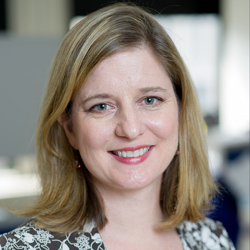
Wendy M. Murray is a Professor of Biomedical Engineering and Physical Medicine and Rehabilitation at Northwestern University's McCormick School of Engineering. She leads the ARMS Lab, focusing on biomechanical models of upper limb muscles to improve rehabilitation and prosthetic design. Her work addresses spinal cord injury, stroke, and orthopedic interventions. Education: Ph.D. and M.S. in Biomedical Engineering from Northwestern University, B.S. in Mathematics (summa cum laude) from University of Notre Dame. Research interests include musculoskeletal modeling, prosthetics control, and surgical simulations. Key contributions include widely cited anatomical databases and models for hand/wrist function. Current projects explore neuromuscular control, exoskeletons, and injury prevention in sports like baseball. Publications (selected 2024-2017) highlight advancements in motion capture, ultrasound imaging, and computational models for clinical applications. Her work bridges bioengineering with clinical practice to enhance functional recovery. Labs/Teams: Directs the ARMS Lab, collaborating with clinicians and engineers to translate biomechanical insights into real-world medical solutions.
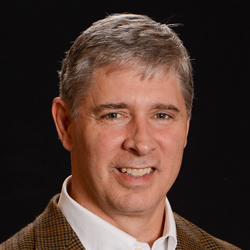
Kevin Lynch is a Professor of Mechanical Engineering and Director of the Center for Robotics and Biosystems at Northwestern University. He holds a Ph.D. in Robotics from Carnegie Mellon University and a B.S.E. in Electrical Engineering (with honors) from Princeton University. His research focuses on robotic manipulation, robot locomotion, physical human-robot interaction, and distributed control of robot swarms. He has pioneered advancements in exoskeleton control, swarm formation algorithms, and haptic interaction frameworks. Professor Lynch has received significant recognition, including the IEEE Fellow distinction (2010), the Harashima Award (2017), and the Charles Deering McCormick Professor of Teaching Excellence award (2007–2010). He serves as Editor-in-Chief of the IEEE Transactions on Robotics and has authored over 150 peer-reviewed publications. Key contributions include the development of safety-aware human-robot collaboration systems and self-healing swarm control algorithms. He created the ME 333 Introduction to Mechatronics course and the Mechatronics Design Laboratory, fostering interdisciplinary robotics education. His lab, the Center for Robotics and Biosystems, integrates biomechanics with advanced robotics to address challenges in rehabilitation and autonomous systems.
Prof Barbara Lipietz is a Professor of Urban Development Planning at the Development Planning Unit, University College London (UCL), and serves as Vice Dean International of The Bartlett Faculty of the Built Environment. Her roles include leading the MSc Urban Development Planning program and directing academic internationalization efforts at The Bartlett. Her research focuses on urban equity, trans-local solidarity networks, and participatory urban planning practices, with a strong emphasis on the Global South. Key areas include housing rights, displacement dynamics in Nigeria, climate resilience, and co-production of knowledge for just urban futures. She critiques neoliberal urban development models and advocates for marginalized communities' inclusion in decision-making processes. Her work spans multiple continents, engaging with organizations like the Asian Coalition for Housing Rights and contributing to international frameworks such as the Sendai Guidelines for Disaster Resilient Urban Planning. She frequently publishes in peer-reviewed journals and policy platforms, emphasizing actionable research to bridge academic and activist agendas. Notable contributions include theoretical explorations of 'just cities,' critiques of 'world-class city' narratives, and analyses of urban transformations post-Arab Spring. Her pedagogical approach emphasizes experiential learning and partnerships with grassroots organizations.
Professor Muttucumaru Sivakumar is a faculty member at the University of Wollongong (UOW), holding the rank of Professor and serving as Academic Program Director for Environmental Engineering (ENVE) within the School of Civil, Mining, Environmental and Architectural Engineering. He has been with UOW since 1984, progressing through roles such as Lecturer, Senior Lecturer, and Associate Professor before becoming a full Professor in 2025. His academic career includes visiting positions at institutions worldwide, including the University of Minnesota, University of Heidelberg, and Indian Institutes of Technology. Education: He earned a BSc Eng from the University of Peradeniya (Sri Lanka, 1970–1974), an MEng from the Asian Institute of Technology (Thailand, 1976), and a PhD from the University of Newcastle (Australia, 1977–1981). Research Interests: His work focuses on water quality modeling of coastal reservoirs, sediment transport, membrane distillation for wastewater treatment, and environmental hydraulics. Current projects include coastal reservoir development for Jakarta, solar-powered desalination, and wastewater-based epidemiology for pathogen monitoring. Grants: Key funding includes the KONEKSI grant for Jakarta’s coastal reservoir development (2023–2024) and internal grants for geopolymer research and anaerobic co-digestion. He also secured equipment grants for nanopore sequencing platforms and low-vacuum electron microscopy. Advising & Students: He has supervised over 15 HDR completions since 1990, including notable PhD graduates such as San Rathviboon (2011) and Debashis Raha (2006). Current students focus on topics like methane control in wastewater systems and coastal reservoir sediment transport. Labs & Teams: His research groups collaborate on interdisciplinary projects involving water resource management, environmental engineering, and sustainable infrastructure development. He leads initiatives in the International Association for Coastal Reservoir Research (IACRR).
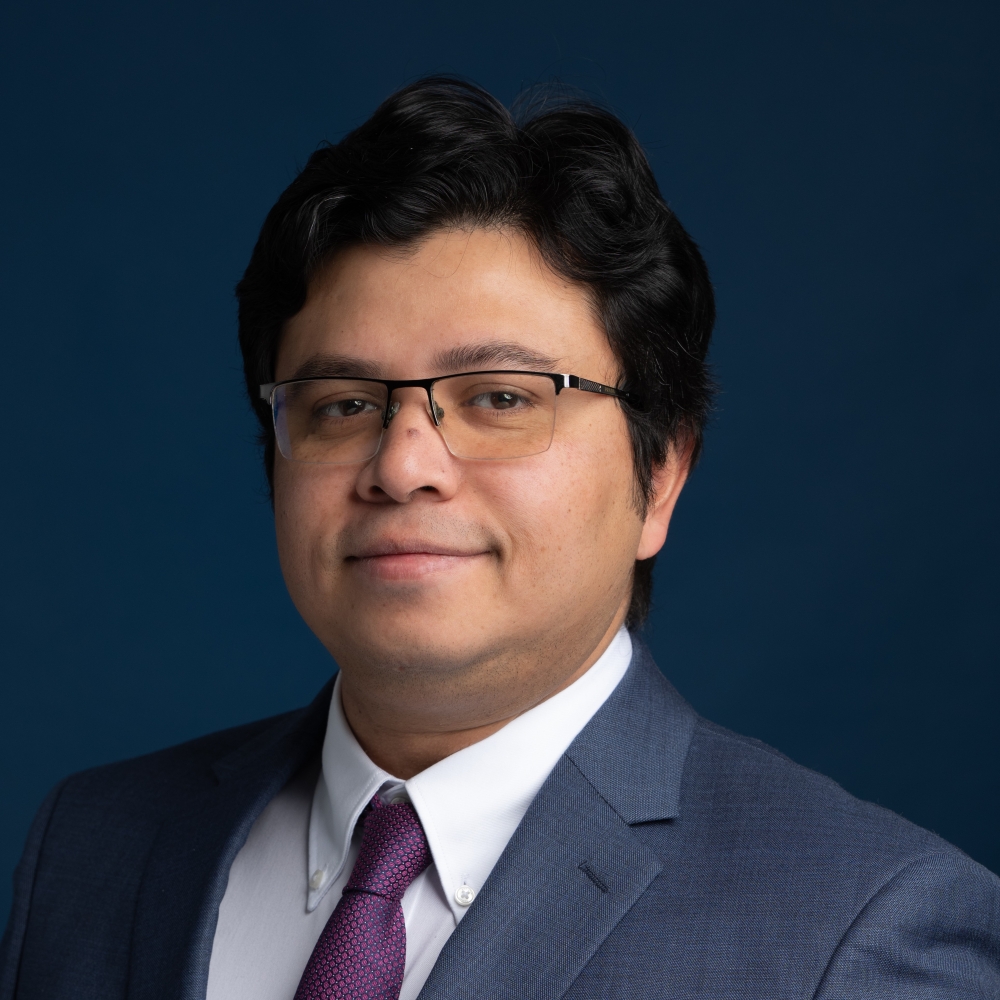
Dr. Md. Tahmidul Islam Molla is an Assistant Professor of Practice and Director of Undergraduate Studies in the Department of Computer Science at Marquette University. He specializes in wearable technology, pervasive computing, human-computer interaction, and data science. Previously, he held a Postdoctoral Researcher position at Cornell University and earned his Ph.D. from the University of Minnesota in 2020. His teaching roles include instructing core and advanced courses in computer science, data science, and embedded systems. He leads the NSF S-STEM project at Marquette, providing scholarships for low-income graduate students transitioning into computing careers. Courses taught include COSC 1000, COSC 2100, COSC 4290/5290, COSC 5500, COSC 6500, and COSC 6510. Research interests focus on wearable systems, soft/flexible electronics, and on-skin interfaces. His work explores manufacturing techniques for e-textiles and user experience in thermal microclimate control. Collaborative projects include the development of SkinKit and WovenProbe for prototyping on-skin interfaces. Dr. Islam’s research has led to innovations in e-textile fabrication, including surface-mount methods and laundering-resistant designs. He actively contributes to conferences like ACM International Symposium on Wearable Computers and ACM Designing Interactive Systems.
Federica Burini is a Full Professor of Geography at the Department of Foreign Languages, Literatures and Cultures of the University of Bergamo . She serves as Scientific Coordinator of the Imago Mundi Lab, member of the Center for Territorial Studies, and Scientific Director of OrobieLab. Her academic career spans participatory processes, collaborative mapping, and sustainable territorial regeneration. Full Professor of Geography Imago Mundi Lab Coordinator Center for Territorial Studies member OrobieLab Scientific Director Research Focus : Federica specializes in participatory geography through collaborative mapping techniques for environmental governance in both rural and urban contexts. Her work emphasizes sustainable development in Sub-Saharan Africa and European mountainous regions, with particular attention to landscape valorization via participatory processes and responsible tourism. Key projects include digital co-mapping initiatives for community engagement and territorial regeneration. Participatory mapping tools Sustainable tourism frameworks Mountainous area development Rural community empowerment Digital geospatial applications Landscape perception studies Publications : Recent works explore digital collaborative mapping tools (2024), industrial heritage interpretation for slow tourism (2024), and water resource-driven community regeneration (2024). Earlier contributions examine pandemic impacts on tourism (2020) and participatory cartography methodologies (2016). Her research consistently bridges geographical theory with practical territorial governance solutions.
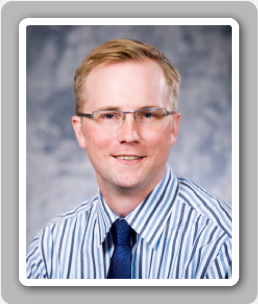
Kyle B. Reed serves as an Associate Professor in the Department of Mechanical Engineering at the University of South Florida's College of Engineering. His academic career at USF has progressed from Assistant Professor (2009-2016) to his current position as Associate Professor (2016-present), following postdoctoral research at Johns Hopkins University. He teaches specialized courses including Haptics (EML 4593/6594), Mechanical Controls, and Advanced Engineering Mathematics. Dr. Reed earned his Ph.D. (2007) and M.S. (2004) in Mechanical Engineering from Northwestern University, and his B.S. in Mechanical Engineering from the University of Tennessee-Knoxville (2001). Prior to his faculty position, he completed postdoctoral research at Johns Hopkins University's Laboratory for Computational Sensing and Robotics (2007-2009) and worked as a researcher at Los Alamos National Laboratory (1998-2001). His research focuses on rehabilitation engineering, haptics, human-robot interaction, and medical robotics, with applications in medical devices and rehabilitation technologies. The REED Lab (Rehabilitation Engineering and Electromechanical Design Lab), which he directs, develops innovative solutions for human motion analysis and assistive technologies. His work bridges fundamental engineering principles with clinical applications, particularly in stroke rehabilitation and assistive device development. Analysis of his publication record shows consistent contributions to haptics research, human-robot interaction, and rehabilitation engineering. His work spans theoretical investigations of human motor control to practical applications in medical devices, with publications appearing in venues like IEEE Transactions on Haptics, EMBC, and Haptics Symposium. Recent work emphasizes wearable haptic devices, rehabilitation robotics, and human factors in medical technology. Developed the Gait Enhancing Mobile Shoe (GEMS) prototype during postdoctoral work Created minimally invasive steerable needle system for biopsies at Johns Hopkins Established REED Lab focusing on rehabilitation engineering and haptic technologies Developed innovative haptic devices for communication, rehabilitation, and education Dr. Reed actively mentors students through the REED Lab, supervising both graduate and undergraduate researchers. His teaching philosophy emphasizes building intuition while providing frameworks for logical problem-solving. He incorporates substantial project components into his courses, with students regularly developing haptic devices and robotics applications that sometimes lead to publications. The lab maintains strong outreach connections, working with K-12 students to promote engineering education. The REED Lab, located in the Interdisciplinary Research Building Room 114 on USF's Tampa campus, serves as the hub for his research activities. Current projects include wearable haptic devices for communication, diagnostic tools for Parkinson's disease, and rehabilitation technologies for gait analysis. The lab maintains strong connections with both clinical partners and industry, facilitating translational research from concept to application.
Professor Lloyd Strickland is a Professor of Philosophy and Intellectual History at Manchester Metropolitan University. He holds a B.A. (Hons.) from Lancaster University, an M.A. from the University of Sheffield, and a Ph.D. from Lancaster University. His research focuses on Early Modern Philosophy (particularly Leibniz), Philosophy of Religion, and African Philosophy, including Ubuntu. He co-authored Leibniz on Binary: The Invention of Computer Arithmetic (MIT Press, 2022) and maintains Leibniz Translations . Leading the History of Philosophy research group Faculty coordinator for distance learning PhDs External examiner at Oxford University's Department for Continuing Education His media contributions include articles in The Conversation , Church Times , and Military History Now , as well as radio interviews on topics ranging from Leibnizian optimism to Shona philosophy. He advises five PhD students and has reviewed for over 30 journals and presses including Journal of the History of Philosophy and British Journal for the History of Philosophy .
Susan E. Brennan is a Distinguished Professor in the Department of Psychology at Stony Brook University, with joint appointments in Computer Science and an affiliation in Linguistics. She holds a Ph.D. from Stanford University (1990) and has been a faculty member since 1990. Her research focuses on the cognitive science of language use, particularly interactive spoken dialogue, eye-tracking as a communication tool, and human-AI interaction. She is also involved in projects exploring how technology interfaces with communication, including speech and language systems. Her academic roles include serving as Director of Graduate Studies and Associate Chair in Psychology. Brennan’s work has been continuously supported by the NSF, totaling over $3.5M in grants. Notable awards include the Chancellor’s Award for Excellence in Scholarship (2003) and the Dean’s Award for Excellence in Service (2012). Research interests span the psychology of language, multimodal communication, and the neural basis of dialogue. She has published extensively on topics like common ground in conversation, coordination signals, and the role of gaze in collaborative tasks. Her lab integrates behavioral experiments, eye-tracking, and computational models to study real-world communication dynamics.
Professor Katja Grötzner Neves of Concordia University is a leading scholar in socio-environmental governance and decolonization studies. Her work bridges political ecology, transdisciplinary research, and biodiversity conservation frameworks through institutional analysis of botanic gardens and marine environments. Full Professor, Sociology and Anthropology SSHRC-funded research on postnormal conservation Decolonial pedagogy innovator Co-PI for FRQNT/FRQSC network initiatives Key research areas include: Botanic gardens as conservation governance actors Neoliberalism's impact on environmental practices Transdisciplinary approaches to socio-ecological challenges Historical analysis of technological and environmental intersections Publication trends show: 2013-2024 focus on biodiversity governance 2004-2015 marine conservation studies 2011-2014 institutional transformation analysis 2007-2011 environmental knowledge production Scientific recognition includes: Outstanding Service Award (2013, Canadian Sociological Association) SSHRC/FRQ competitive grants exceeding $3.5M Notable media engagements: The Guardian feature by Naomi Klein (2010), expert testimony on Azorean heritage (2011), and international documentary participation (2011).
Julian Guttman is a Professor in the Department of Biological Sciences at Simon Fraser University (SFU), specializing in Cellular Microbiology. He serves as Editor-in-Chief of the journal Cytoskeleton . His research focuses on bacterial infections' molecular mechanisms, particularly how pathogens like Listeria monocytogenes , E. coli , and Salmonella manipulate host cell cytoskeletons (actin, microtubules) to invade, spread, and cause disease. Key areas include actin-based motility, pathogen-induced membrane protrusions, and therapeutic development. His lab actively recruits undergraduate, graduate students, and postdoctoral fellows. Education: BSc (University of Western Ontario), MSc and PhD (University of British Columbia). He has published extensively on host-pathogen interactions, with recent work on Listeria's caveolin-mediated spreading, KATNAL1-driven microtubule disassembly by Klebsiella, and cyclophilin A's role in Salmonella invasion. His work bridges microbiology, cell biology, and structural biology to combat infectious diseases.
Eiling Yee is an Associate Professor in the Department of Psychological Sciences at the University of Connecticut. She holds a Ph.D. from Brown University (2005) and leads the Yee Lab, focusing on cognitive and neural representations of concepts. Her research explores semantic memory, spoken word recognition, and how perceptual experiences shape language processing. Research areas include the relationship between sensory input and conceptual processing, with emphasis on the anterior temporal lobe and angular gyrus roles in semantic networks. She employs neuroimaging and eyetracking methods to study abstract vs. concrete concepts, embodiment of knowledge, and lexical-semantic activation in aphasia. Her work bridges cognitive neuroscience, linguistics, and developmental psychology. Notable contributions include studies on manual experience shaping object representations, distributional semantics models, and autism-spectrum traits influencing embodied cognition. The lab's interdisciplinary approach addresses questions about how context and sensory experience shape meaning representation.
Noah Weeth Feinstein is an Associate Professor in the Department of Curriculum & Instruction and the Department of Community & Environmental Sociology at the University of Wisconsin–Madison's School of Education. He also serves as Director of the Robert E. and Jean F. Holtz Center for Science and Technology Studies. His research explores how people engage with science in personal, social, and political contexts, with a focus on educational platforms like museums and schools. Feinstein holds a PhD in Science Education from Stanford University (2008) and an MS in Biological Sciences (2006). His work bridges Science and Technology Studies (STS) with education, examining issues such as environmental sociology, equity in science museums, climate change adaptation, and responses to the 'post-truth' era. He contributed to a National Academies report on science literacy and has studied how museums can become more equitable institutions. His recent publications emphasize equity in science education, climate adaptation strategies, and public engagement frameworks. Notable works include discussions on community-level environmental literacy, the paradox of public knowledge in sociology, and the role of education in addressing climate change. Feinstein frequently presents at conferences like the American Educational Research Association, focusing on topics such as racial equity in museums and structural racism in science centers. Feinstein’s research integrates theoretical frameworks from sociology, education, and STS to address practical challenges in science communication and institutional change. His work highlights the need for education systems to foster collective sensemaking rather than individual truth-seeking in a polarized society.
Nathan Young is an Assistant Professor in the Department of Sustainable Resources Management at SUNY College of Environmental Science and Forestry (ESF). His research focuses on physical hydrology and environmental science, with a particular emphasis on understanding how heat, water, and solutes move through the environment in response to climate change and landscape alterations such as permafrost thaw, sea-level rise, and environmental hazards like wildfires and landslides. He integrates fieldwork, numerical modeling, and quantitative analysis to improve predictive models for sustainable water management. Education includes a Ph.D. in Geology and Environmental Science (2019, Iowa State University), an M.S. in Earth and Environmental Science (2014, Wright State University), and a B.A. in Geology and Sociology/Anthropology (2012, Earlham College). Research interests span hydrogeology, climate change impacts, permafrost dynamics, and groundwater flow modeling. His work often involves advanced tools like MATLAB, R, Python, and numerical models such as MODFLOW and HydroGeoSphere. He emphasizes fieldwork in student mentorship, valuing hands-on experience and quantitative skills. Teaching includes courses like Watershed Hydrology (FOR 340) and Watershed Ecology and Management (FOR 442). Current advisee Ford Ford is pursuing an MS in Environmental Science. Awarded funded graduate assistantships and undergraduate research positions are available to qualified candidates with academic excellence, research experience, and enthusiasm for hydrological studies. His lab focuses on cryohydrogeological systems, particularly in Arctic regions like Nunavik, Québec, and investigates the interplay between thermal regimes, permafrost degradation, and subsurface hydrology.
David R. Kauchak is a Professor of Computer Science at Pomona College, part of The Claremont Colleges. He has been affiliated with the institution since 2014. His academic background includes a Ph.D. (2006) and M.A. (2006) in Computer Science from the University of California, San Diego, and a B.S. (2005) in Computer Science from the University of Utah. His research focuses on Natural Language Processing (NLP) , particularly text simplification , aiming to reduce text complexity while preserving content. Applications include improving health literacy through simplified medical text and enhancing accessibility of technical documents. He has also contributed to machine learning methodologies and information retrieval systems. Key awards include the Distinguished Poster Award at AMIA 2016 and the Best Undergraduate Paper Award at SocalNLP 2018. His work frequently addresses interdisciplinary challenges in healthcare communication, education technology, and software tool development. Teaching highlights include courses in Artificial Intelligence , Algorithms , Natural Language Processing , and foundational computer science modules. He has advised numerous projects in computational linguistics and health informatics, though specific student names are not explicitly listed in the provided materials. His collaborations span academic and medical domains, including joint research with institutions like the University of Utah and projects funded through initiatives like the German Climate Modeling Initiative (though this appears unrelated to his primary work). He maintains an active presence in academic conferences, publishing in venues such as ACL, AMIA, and IEEE journals.