Prof. Dr. Mehmet Reşit Tolun is a full-time Professor in the Department of Software Engineering at Çankaya University (Turkey) since 2022. Previously held full-time professor positions at Konya Food and Agriculture University (2020-2022), Aksaray University (2013-2017), and TED University (2011-2013), along with a part-time professorship at Başkent University (2017-2020). Specializes in Artificial Intelligence , Machine Learning , and Data Mining , with a focus on deep learning applications in aerospace, biomedical data analysis, and software process improvement. PhD in Computer Science (University of Kent, 1985) MSc in Computer Science (University of Kent, 1982) BSc in Physics and Computer Science (University of Kent, 1981) Research Interests span deep learning frameworks, hybrid expert systems, software engineering methodologies, and biomedical signal processing. Publications emphasize practical implementations in medical diagnostics, robotics, and agricultural pest detection. Scientific Awards include the IEEE Third Millenium Medal (2000). Supervised over 55 graduate students, including Burak Çetin, Uğur Özotuk, and Mahinur Doğan. Collaborated with researchers from Orta Doğu Teknik Üniversitesi , Çankaya University , and Aksaray University .
George Hripcsak is the Vivian Beaumont Allen Professor of Biomedical Informatics and Director of Medical Informatics Services at New York-Presbyterian Hospital, Columbia University. He holds affiliations with the Vagelos College of Physicians and Surgeons and the Data Science Institute (DSI). His expertise spans clinical informatics, electronic health records (EHRs), and medical knowledge representation standards. Hripcsak earned degrees in chemistry, medicine, and biostatistics, and is a board-certified internist. Research focuses on leveraging EHR data for clinical research and patient safety through data mining and causal inference techniques. Notable contributions include the Arden Syntax (a national standard for medical knowledge representation) and leadership in the Observational Health Data Sciences and Informatics (OHDSI) network. He chairs the AMIA Standards Committee and has advised federal health informatics policies under HIPAA. His academic awards include Fellowships in the American College of Medical Informatics (1995) and New York Academy of Medicine. Current projects emphasize federated learning, genomic risk prediction, and large-scale real-world evidence analysis through initiatives like LEGEND-T2DM and All of Us Research Program. Educations: MD, Biostatistics, Chemistry Labs/Teams: OHDSI, DSI, Medical Informatics Services Grants & Funding: Not explicitly listed in provided texts
Xiaobo Li is a Professor in the Department of Bio-Medical Engineering at New Jersey Institute of Technology. Holding a Ph.D. in Computer Aided Geometric Design from the University of Birmingham and a B.S. in Automation from Nanjing University of Aeronautics, their research bridges computational methods with neuroimaging and psychiatric disorder analysis. Ph.D., University of Birmingham (Computer Aided Geometric Design, 2004) B.S., Nanjing University of Aeronautics (Automation, 1999) Dr. Li’s work focuses on applying machine learning and graph theory to understand brain network abnormalities in conditions like ADHD , schizophrenia , and traumatic brain injury . Their studies analyze structural-functional connectivity , reward processing , and gut-brain axis interactions using fMRI , fNIRS , and diffusion tensor imaging . Recent publications highlight their development of tools like the GAT-FD MATLAB toolbox for brain network analysis and their exploration of multimodal MRI in schizophrenia diagnosis. They also investigate the neurobiological effects of photobiomodulation and vision therapy interventions.
Ian Pitt is a Lecturer in Usability Engineering and Interactive Media at University College Cork (UCC). He leads the Interaction Design, E-Learning and Speech (IDEAS) Research Group, focusing on multimodal human-computer interaction, auditory interfaces, and accessibility solutions for visually impaired users. Pitt holds a D.Phil from the University of York, followed by research fellowships at Otto-von-Guericke University in Germany before joining UCC in 1997. His research interests include speech-based interfaces, e-learning systems, and accessibility technologies for blind users. Key projects include the EU-funded ENABLE Network (2011–2014) and prototype development for UniWink. He has secured significant grants, including €72,009 from IRCSET for voice analysis research and €19,478 from the EU for ICT-supported learning initiatives. Pitt has advised numerous PhD students, including Flaithri Neff (2011), Emma-Kate Crowley (2014), and current candidates Aine Kearns and Patrick Egan. His publications span journals like International Journal of Game-Based Learning and conferences such as ICCHP and ACM SIGACCESS. He has contributed to committees for conferences like CHI and the Irish HCI conference. Teaching modules include Usability Engineering, Human-Computer Interaction, and Digital Media Development. His work emphasizes inclusive design principles, with projects addressing navigation systems for blind students and adaptive e-learning frameworks. Recent research trends focus on ICT-delivered aphasia rehabilitation, emotional BCI interfaces, and multimodal learning systems. Collaborations include international partners through EU grants, reflecting his global impact in accessibility and educational technology.
Steven Laureys, MD, PhD, is a Professor at the University of Liège where he leads the Coma Science Group within GIGA Consciousness. He holds dual prestigious appointments as Canada Excellence Research Chair in Integrative Neuroscience for Sustainable Mental Health and Canada Excellence Research Chair in Neuroplasticity. His clinical roles include neurologist and clinical professor at the Centre du Cerveau of the CHU of Liège, and Director of Research at the FNRS. Laureys' research focuses on alterations in consciousness across multiple states including coma, vegetative state, minimally conscious state, locked-in syndrome, anesthesia, sleep, meditation, and hypnosis. His work integrates multimodal neuroimaging (fMRI, PET, EEG), electrophysiology, and behavioral assessments to develop diagnostic and prognostic tools for disorders of consciousness (DOC). Key methodological approaches include brain connectivity mapping, metabolic analysis, and AI-driven modeling of neural dynamics. His publication portfolio reveals a strong emphasis on brain connectivity dynamics (42% of recent articles), AI applications in consciousness assessment (23%), and translational neurorehabilitation (18%). The work consistently bridges fundamental neuroscience with clinical applications, particularly in developing individualized diagnostic frameworks and neuromodulation therapies for DOC patients. Major scientific recognition includes: Francqui Prize (2017), Belgium's highest scientific honor Generet Prize (2019) Appointment as Editor-in-Chief of Brain Connectivity journal (2024) Two Canada Excellence Research Chairs (2023-2024) Laureys directs the internationally recognized Coma Science Group, which operates within the GIGA Consciousness research center. The group maintains extensive international collaborations across Europe, North America, and Asia, with particular focus on developing standardized assessment protocols and innovative neuromodulation approaches for disorders of consciousness. Current research directions emphasize neuroplasticity mechanisms, meditation's impact on brain health, and sustainable mental health frameworks through integrative neuroscience approaches.
Qian Li is a Lecturer in Computing at the School of Electrical Engineering, Computing and Mathematical Sciences (EECMS) at Curtin University, Australia. She holds a Ph.D. from the Chinese Academy of Sciences and M.Sc. degrees from Shandong University and the University of Luxembourg. Her research focuses on causal machine learning, topological data analysis, and optimal transport, with applications in computer vision, data science, and recommendation systems. She has published over 50 articles in top-tier venues like IEEE Transactions and ACM conferences. Education Ph.D., Chinese Academy of Science (CAS) MSc (Research), Shandong University MSc (Research), University of Luxembourg Research Interests Dr. Li explores causal reasoning for machine learning, leveraging mathematical tools like Riemannian geometry and optimal transport to address challenges in robustness and interpretability. Her work spans causal inference, counterfactual fairness, and explainable AI, with applications in healthcare, energy, and commerce. Recent projects include causal-based recommendation systems and topological data analysis techniques. Key Achievements Secured a $120k grant from China's National Natural Science Foundation (2020-2024). Lead researcher on AI-driven solar energy storage projects with UNSW and Providence Asset Group. Recipient of prestigious scholarships including Chinese National Graduate Scholarship (2016, top 1%). Grants & Students Current Ph.D. students include Xiangmeng Wang and Tri Dung Duong. She has supervised graduates like Yangyang Shu (Adelaide University Research Associate) and Jun Yin (UTS). Labs & Teams Leads research in causal AI and topological data analysis, collaborating with institutions like UTS and the University of Melbourne.
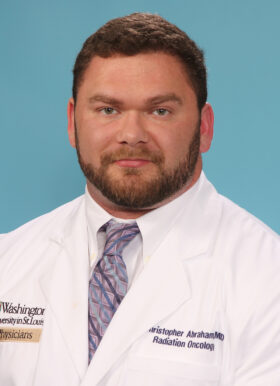
Christopher D. Abraham, MD is an Associate Professor of Radiation Oncology and Associate Professor of Medicine at Washington University School of Medicine in St. Louis. He is affiliated with the Siteman Cancer Center, Brain Tumor Center, and Institute of Clinical and Translational Sciences (ICTS). Dr. Abraham practices at multiple locations including the Center for Advanced Medicine Radiation Oncology Center, Barnes-Jewish West County Hospital, and Siteman Cancer Center – North County. His clinical work focuses on radiation oncology with expertise in treating brain tumors and other cancers. Dr. Abraham completed his Medical Degree at Saint Louis University School of Medicine in 2011 and his Residency in Radiation Oncology at Barnes-Jewish Hospital and Washington University School of Medicine in 2016. He earned his BS in Radiologic Science from the Medical College of Georgia in 2004. Dr. Abraham's research focuses on advancing radiation therapy techniques, particularly in stereotactic radiosurgery for brain metastases, hippocampal-avoidance whole brain radiation therapy, and innovative approaches for glioblastoma treatment. His work demonstrates a strong emphasis on optimizing radiation delivery while minimizing neurocognitive side effects. He has pioneered simulation-free radiation therapy techniques that expedite treatment planning, particularly for palliative care patients. His research also explores the integration of AI and large language models in radiation oncology workflows and insurance appeals processes. Analysis of Dr. Abraham's recent publications reveals a clear research trajectory focused on improving precision in radiation therapy for brain tumors, with particular attention to hippocampal protection, adaptive planning techniques, and combined modality approaches. His work spans clinical trials, technical innovations in treatment planning, and translational research connecting imaging with treatment outcomes. The increasing citation counts of his work, particularly his 2023 paper on simulation-free radiation therapy which has 34 citations, demonstrates growing impact in the field. While specific awards are not listed in the provided information, Dr. Abraham's work has accumulated 536 citations according to Scopus metrics, indicating significant scholarly impact. His research has been referenced in clinical guidelines and policy sources, demonstrating translational relevance to clinical practice. Dr. Abraham actively collaborates with multidisciplinary teams including neurosurgeons, medical oncologists, and physicists. His work on the NRG Oncology/RTOG 0631 trial demonstrates involvement in large cooperative group studies. He has contributed to efforts examining insurance policy adherence to radiation oncology guidelines, showing engagement with healthcare systems issues. As a key member of the Brain Tumor Center at Siteman Cancer Center, Dr. Abraham participates in comprehensive brain tumor care teams that integrate surgical, medical, and radiation oncology approaches. His work with the Institute of Clinical and Translational Sciences highlights his commitment to translating research findings into clinical practice. Current research directions include exploring simulation-free radiation therapy techniques, optimizing hippocampal-sparing approaches, and investigating novel combinations of radiation with immunotherapies.
Dr. Hong Ming Tan is a Senior Lecturer at the Department of Analytics and Operations, NUS Business School, and a Research Fellow at the Institute of Operations Research and Analytics (IORA) at National University of Singapore. He holds a PhD in Operations Research and Analytics (2021), MSc in Mathematics (2017), and BSc (Hons) in Applied Mathematics and Economics (2013) from NUS. Doctor of Philosophy, Operations Research and Analytics (2021) Master of Science, Mathematics (2017) Bachelor of Science (Hons), Applied Mathematics and Economics (2013) His research spans Business Analytics , Machine Learning , Operations Research , and Pharmacogenetics . Recent work includes: EcoVal Framework for efficient data valuation in ML Personalized Mental Health through adaptive testing and clustering Antibiotic Resistance modeling using antiresistic strategies CYP2D6 Methylation prediction for precision medicine His publications demonstrate expertise in ML optimization , healthcare informatics , behavioral analytics , and decision science . Current projects include AI-led Smart Data Centre Management and SIA Corp Lab research. He serves as Chair of the Department Finance Committee and advisor to student clubs like Business Analytics Consulting Team. His work addresses real-world challenges in industrial operations, healthcare diagnostics, and educational innovation.
Denny Yu is an Associate Professor at the Edwardson School of Industrial Engineering, Purdue University. His work bridges human factors, neuroergonomics, and healthcare safety through advanced sensor systems and AI. Primary Affiliation : Edwardson School of Industrial Engineering, Purdue University Research Themes : Surgical ergonomics, autonomous vehicle human factors, cognitive workload assessment, multimodal physiological sensing Dr. Yu's research focuses on neuroergonomics and human-robot interaction , particularly in surgical and transportation contexts. His team develops sensor-based systems for workload monitoring, including: EEG-eye tracking fusion for situation awareness Wearable exoskeletons for surgical posture support Computer vision tools for lifting task risk analysis Smart infusion pump usability frameworks AI-driven surgical coaching systems Recent publications emphasize deep learning applications in soft tissue deformation estimation and real-time adaptive systems for robotic surgery augmentation. His work spans both occupational health (veterinary surgeons, airport workers) and medical device innovation domains.
Steven C. Grambow is an Associate Professor and Associate Chair of Education in the Department of Biostatistics & Bioinformatics at Duke University School of Medicine. He serves as Director of Duke’s Clinical Research Training Program (CRTP) and Co-Director of the Duke Clinical and Translational Science Institute (CTSI) Workforce Development Pillar. With over two decades of experience in graduate education, he has trained more than 1,000 physician-scientists in statistical methods while developing innovative programs for clinical research education across various delivery formats. His work focuses on creating pathways into clinical and translational research through partnerships with institutions like North Carolina Central University and Durham Technical Community College. Grambow actively explores AI integration into biostatistical workflows and leads initiatives in faculty development, active learning models, and cross-disciplinary collaboration frameworks. As a collaborative statistical scientist, his research spans observational studies, randomized trials, and epidemiologic investigations addressing public health challenges including amyotrophic lateral sclerosis (ALS), post-traumatic stress disorder (PTSD), and cardiovascular risk reduction. His recent publications highlight innovations in biostatistical education, AI applications, and community-engaged research models. Scientific Awards: American Statistical Association teaching honors Duke University teaching honors Grambow has secured significant grants from NIH, Department of Defense, and University of Colorado-Denver for projects spanning statistical methods in cardiovascular disease research, patient-focused drug development resources, and multi-component lifestyle interventions. He actively mentors through Duke’s educational programs and leads quantitative collaboration units in academic healthcare settings.
Prof. Venkat N. Krovi serves as the Michelin Endowed Chair Professor of Vehicle Automation in the Departments of Automotive Engineering and Mechanical Engineering at Clemson University's College of Engineering, Computing and Applied Sciences (CECAS). He directs the Automation, Robotics and Mechatronics Laboratory (ARMLab) at the International Center for Automotive Research (CU-ICAR), focusing on smart embedded systems for autonomy in challenging environments. He earned his Ph.D. in Mechanical Engineering and Applied Mechanics from the University of Pennsylvania in 1998. His research leverages distributed autonomy and human-robot synergy to extend human capabilities, with applications spanning plant automation, consumer electronics, automobile, defense, and healthcare. The work emphasizes lifecycle treatment (design through verification) of robotic systems under uncertainty. Recent publications (2024-2025) demonstrate strong trends in digital twin frameworks for autonomous vehicle validation, sim2real transfer via reinforcement learning, and integration of large language models for editable simulations. Key themes include scalable cloud-based architectures, Koopman operator theory for robustness, and containerization for reproducible robotics development. His accolades include: National Science Foundation (NSF) CAREER Award Petro-Canada Young Innovator Award Multiple best paper awards at conferences and journals ASME Dedicated Service Award (2024) Prof. Krovi has advised doctoral students including Dr. Srivatsan Srinivasan (2024). His research receives substantial funding from NSF, DARPA, ARO, and industrial partners like Michelin. He leads the NSF I/UCRC RoSeHuB center and the AutoDRIVE ecosystem for autonomous driving education. As ARMLab director, he oversees projects including OpenCAV, the Robotics for AV Systems Bootcamp, and containerized terramechanics simulations. The lab specializes in mechatronic design, verification/validation frameworks, and human-autonomy coexistence studies for next-generation mobility solutions.
Dr. Weiwei Ai is a Research Fellow at the Auckland Bioengineering Institute , University of Auckland, New Zealand. With a multidisciplinary background in biomedical engineering and computational modeling, he focuses on developing energy-consistent physiological models and closed-loop validation frameworks for implantable medical devices. Education PhD in Bioengineering, University of Auckland (2019) Master of Engineering (ME) in Electrical Engineering, Beijing University of Technology (2005) BSc in Electronic Engineering, Qingdao University (2002) Dr. Ai's research centers on computational physiology and medical device validation , utilizing bond graph formalisms and hybrid automata to create thermodynamically consistent models for glucose transport, cardiac pacemakers, and gastrointestinal systems. His work bridges mathematical modeling with clinical applications through formal verification techniques. His recent publications highlight trends in closed-loop biomedical device design and energy-based physiological modeling , including: (1) bond graph models for SLC transporter dynamics, (2) adaptive respiratory pacemaker frameworks with biofeedback, (3) formal verification of cardiac devices using timed automata, and (4) compositional cyber-physical epidemiology models. He also explores AI-driven integration of digital twins in healthcare through FAIR data principles. Supervision Opportunities : Dr. Ai is an accredited PhD supervisor at the University of Auckland, offering projects on AI-driven energy-based platforms for credible digital twins in healthcare. Labs : Affiliated with the Auckland Bioengineering Institute, focusing on computational models and in-silico validation systems.
Sue Widdicombe is a Senior Lecturer in the Department of Psychology within the School of Philosophy, Psychology and Language Sciences at the University of Edinburgh. She teaches Social Psychology at second-year undergraduate level, Qualitative Methods in Psychology at third-year level, and supervises final honours projects. At postgraduate level, she instructs Qualitative Methodologies in Psychological Research and Problem-based Social Psychological Research while supervising MSc projects. Her academic profile combines rigorous teaching with active research supervision and methodological innovation. Her research program centers on discursive psychology and conversation analysis as frameworks for examining language in social interaction. Key foci include identity construction in everyday talk, the delicate management of self-praise and authenticity claims, resistance to identity ascriptions, and negotiation of agency. She investigates these processes across diverse contexts including youth subcultures, cross-cultural interactions, religious identity, health communication, and climate activism. Her methodological approach emphasizes how psychological phenomena emerge through interactional practices rather than pre-existing mental states. Analysis of her fifteen most recent publications reveals consistent application of discursive and conversation analytic methods to examine identity work across social domains. Her work demonstrates increasing engagement with contemporary societal issues, particularly climate activism in media contexts, while maintaining theoretical rigor in identity research. The publications span clinical health settings (ART adherence), digital communities (online emo groups), cross-cultural fieldwork (Syria), and broadcast media (climate interviews), showcasing methodological adaptability. Widdicombe currently supervises four PhD students: Paula Greenlees, Lasse Schaefer, Kayleigh Smith, and Miranda Heath. Her supervision focuses on discursive psychological approaches to self and identity, climate activism, and psychology in social interaction. She has established collaborative networks with scholars including Cristina Marinho, Rahul Sambaraju, and Eric Laurier, leading to interdisciplinary projects that bridge academic research and practical applications in healthcare, media, and social justice contexts. Her research group engages with real-world interactional data through workshops on telephone helplines, HIV medication adherence, and racism reporting. Current initiatives include a four-country feasibility study on public engagement with climate news (UK, India, Portugal, Brazil) and investigations into 'trial by social media' regarding domestic violence allegations. These projects emphasize the practical utility of conversation analysis in addressing pressing social phenomena while advancing theoretical understanding of identity construction.
Rüdiger Lunde is a Professor at Technische Hochschule Ulm , currently serving as Dean of Studies for Information Systems since September 2019. He previously chaired the Examination Board for programs including INF, CTS, TI, ICS, DSM, MD, and IS from 2014 to 2019. His primary research areas include Software Engineering , Intelligent Systems , and Model-Based Systems Engineering , with a focus on automated safety analysis and technical system simulation. Current Role: Dean of Studies for Information Systems Prior Role: Chair of Examination Board (2014–2019) His research leverages the smartIflow framework for safety tasks such as Failure Mode and Effects Analysis (FMEA) and Fault Tree Analysis (FTA). He has contributed to formal verification methods using Computation Tree Logic (CTL) and explored temporal reasoning across varying time scales. Recent trends in his work include: Automated safety analysis in technical systems Integration of SysML for artifact generation Model decomposition techniques for complex systems Scientific awards: Best Paper Award at International Workshop on Applications in Information Technology (IWAIT-2015) Contact: Ruediger.Lunde@thu.de | Room: A306a | Consultation hours: By appointment via email.
Tara Johnson, M.D., is an Assistant Professor in Pediatric Neurology at the University of Arkansas for Medical Sciences College of Medicine. She serves as Founding Director of the Arkansas Children’s Biomedical Innovations Program. Her research focuses on early identification of neurodevelopmental disabilities in infants, particularly cerebral palsy prediction using movement assessment tools. She specializes in translating diagnostic methods like the General Movement Assessment into clinical practice. Publications (2013-2025) concentrate on: Movement analysis and cerebral palsy prediction in high-risk infants Innovative diagnostic tools including AI-based movement quantification Neurodevelopmental outcomes in congenital heart disease patients Assistive technologies for motor impairments Clinical management of Tourette syndrome She leads implementation of novel clinical protocols for early diagnosis at Arkansas Children's Hospital. Mentors include Alan Tackett, Ph.D. and Kenneth Knecht, M.D.