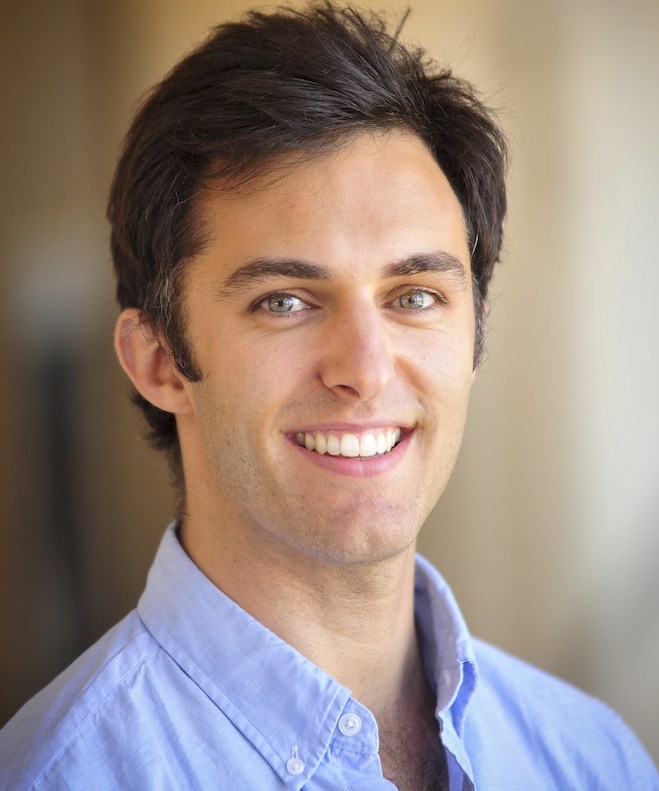
Daniel M. Roy is a Full Professor at the University of Toronto, with cross-appointments in the Department of Computer Science, Department of Statistical Sciences, and Department of Electrical and Computer Engineering. He serves as Research Director at the Vector Institute and holds the CIFAR Canada AI Chair. Research Focus: Foundational principles of prediction, inference, and decision-making under uncertainty across machine learning, statistics, mathematical logic, applied probability, and computer science. Scientific Contributions: Key work in learning theory, statistical network analysis, probabilistic programming, and information-theoretic frameworks for generalization. Awards: ICML 2024 Best Paper Award for "Information Complexity of Stochastic Convex Optimization" and promotion to Full Professor in 2024. Student Advising: Actively mentors Ph.D. candidates and postdoctoral researchers with strong quantitative backgrounds, particularly at the intersection of machine learning, statistics, and computer science. Email: daniel.roy@utoronto.ca
Norwegian University of Science and TechnologyNorway
Helge Langseth is a Professor at the Department of Computer Technology and Informatics , within the Faculty of Information Technology and Electrical Engineering at the Norwegian University of Science and Technology (NTNU). His research focuses on Artificial Intelligence , Machine Learning , and Probabilistic Graphical Models , particularly Bayesian Networks and their applications in Decision Support Systems . Langseth's work addresses Explainable AI (XAI) , Reinforcement Learning , and Recommender Systems . He has contributed to Bayesian Optimization , Probabilistic Modeling , and Robotic Control in oceanic environments. His recent publications emphasize transparency , fairness , and scalability in AI systems, with applications spanning maritime trade, migraine diagnosis, and power grid management. He is affiliated with the Intelligent Systems Research Group at NTNU and actively mentors doctoral and master's students. Co-authored works with Yanzhe Bekkemoen , Sverre Herland , and Jørgen Hanssen reflect his role in advising the next generation of AI researchers.
Dr. Danesh Tarapore is an Associate Professor at the University of Southampton specializing in robotics and AI. He focuses on human-robot interaction, swarm intelligence, and autonomous systems. His current research involves developing resilient robotic teams and optimizing learning algorithms for constrained environments. He supervises 6 PhD students in the iPhD MINDS and Computer Science programs. Dr. Tarapore's work bridges theoretical advancements with practical applications in autonomous navigation, multimodal dataset creation, and quality-diversity optimization. His publications span conferences like HRI and journals in robotics and AI. He collaborates with institutions like the University Hospital Southampton and the Boldrewood Innovation Campus. Research Interests: Human-robot collaboration, swarm systems, machine learning, and adaptive control Key Contributions: HRI-SENSE dataset, evolutionary subset selection algorithms, forest navigation frameworks Grants and Funding: Active projects in multi-agent systems and resilient robotics Dr. Tarapore maintains active roles in the robotics community through conference participation and interdisciplinary collaborations.
Alexander Refsum Jensenius is a Professor of Music Technology and Director of the RITMO Centre for Interdisciplinary Studies in Rhythm, Time and Motion at the University of Oslo. He also leads the fourMs Lab and co-founded the MishMash Centre for AI and Creativity. His work bridges musicology, psychology, and technology, focusing on embodied music cognition, human motion analysis, and creative applications of AI. Notably, he pioneered research on air guitar motion and human micromotion through projects like the Oslo Standstill Database . Educated at the University of Oslo (BA in Music and Mathematics, MA in Musicology) and Chalmers University of Technology (MSc in Applied IT), Jensenius holds a PhD in Music Technology from UiO. He has held visiting researcher roles at UC Berkeley, McGill University, and KTH. Leadership roles include Department of Musicology Head (2013–2016) and Steering Committee Chair for the International Conference on New Interfaces for Musical Expression (NIME, 2011–2022). Research interests span music-related body motion, AI in creative contexts, and open research practices. Key contributions include the Music Moves and Motion Capture MOOCs, the Musical Gestures Toolbox software, and monographs like Sound Actions and Sonic Design . His work emphasizes interdisciplinary collaboration, with projects addressing ventilation systems' acoustic properties and cell culture vibrational effects. Awards include the European Open Data Champion recognition. He advocates for open science and maintains extensive digital archives of research materials, emphasizing institutional web pages as critical research infrastructure.
Professor Ole-Christoffer Granmo is a distinguished academic at the University of Agder, Norway, where he serves as Professor in the Department of Information and Communication Technology. He is the Founding Director of the Centre for Artificial Intelligence Research (CAIR) at the University of Agder, leading cutting-edge research in artificial intelligence and machine learning. Dr. Granmo obtained his master's degree in 1999 and his PhD in 2004, both from the University of Oslo. His academic journey has been marked by significant contributions to the field of AI, most notably the creation of the Tsetlin machine in 2018, for which he received the AI research paper of the decade award from the Norwegian Artificial Intelligence Consortium (NORA) in 2022. Professor Granmo's research primarily focuses on logical and causal world modeling across multiple modalities including images, sound, and natural language. His work spans logical auto-encoding, convolution, regression, transformer architectures, and reinforcement learning, all with the overarching goal of creating ultra-low-power artificial general intelligence through transparent logical learning and reasoning. His publications reveal a strong emphasis on interpretable AI systems, hardware implementations, and applications across diverse domains including cybersecurity, healthcare, social media analysis, and bioinformatics. AI Research Paper of the Decade (2022) - Norwegian Artificial Intelligence Consortium (NORA) Eight paper awards in machine learning Professor Granmo has coordinated over seven research projects and mentored 55+ master's students and nine PhD students. His leadership extends to co-founding the Norwegian Artificial Intelligence Consortium (NORA) and establishing two companies: Anzyz Technologies AS and Tsense Intelligent Healthcare AS. As an advisor at Literal Labs, he actively bridges academic research with practical industry applications, demonstrating his commitment to translating theoretical innovations into real-world solutions that address complex challenges across multiple sectors.
Jim Tørresen is a Professor of Computer Science at the Department of Informatics, University of Oslo, where he has been employed since 1999 (Associate Professor 1999-2005, Professor since 2006). He serves as group leader for the Robotics and Intelligent Systems (ROBIN) research group and is also a Principal Investigator at the Centre for Interdisciplinary Studies in Rhythm, Time and Motion (RITMO). His academic career includes visiting positions at Cornell University's Creative Machines Lab (2010-2011) and Kyoto University in Japan (1993-1994). His educational background includes a Dr.ing. (Ph.D.) in Computer Architecture from the Norwegian University of Science and Technology (1996) and an M.Sc. in Computer Architecture from the same institution (1991). Before his academic career, he worked in industry at Navia Aviation (1998-1999) and NERA Telecommunications (1996-1998). Tørresen's research spans artificial intelligence, robotics, and bio-inspired computing. His work focuses on biology-inspired algorithms, programmable logic (FPGA), robotics (simulation, prototyping, control), and human-robot interaction. He has made significant contributions to areas including evolutionary computing, reconfigurable hardware, and adaptive systems. His research often bridges theoretical computer science with practical applications in healthcare, music, and industrial settings. His recent publications demonstrate a strong focus on human-robot interaction, particularly in healthcare contexts for elderly care, as well as applications in sports science, musical robotics, and geological engineering. His work shows a consistent pattern of interdisciplinary research that combines machine learning techniques with domain-specific challenges. Tørresen has also authored a popular science book on artificial intelligence in the "what is" series by Universitetsforlaget, which discusses fundamental concepts, methods, future perspectives, and ethical aspects of AI. He has been active in academic leadership, serving as General Chair for the 22nd International Conference on Field Programmable Logic and Applications (FPL) in 2012 and the 9th Joint IEEE International Conference of Developmental Learning and Epigenetic Robotics in 2019. As group leader of ROBIN, he oversees research on intelligent systems that operate in dynamic environments requiring runtime adaptation. The group works at both fundamental and applied levels, using evolutionary algorithms for robot learning and machine learning techniques for classification and recognition tasks in various application domains.
Norwegian University of Science And TechnologyNorway
Raghavendra Ramachandra is a Professor at the Department of Information Security and Communication Technology (IIK) , within the Faculty of Information Technology and Electrical Engineering at the Norwegian University of Science and Technology (NTNU) in Gjøvik. His research focuses on biometric systems, particularly in face, fingerprint, and finger vein recognition, with emphasis on presentation attack detection, morphing attack detection, and deep learning applications. Current research projects include: SALT (2022-2026) : Developing privacy-preserving facial biometric authentication systems. OffPAD (2022-2025) : Creating cryptographic tools and presentation attack detection for fingerprint biometrics. SWAN (2015-2020) : Developing biometric countermeasures against presentation attacks. His recent publications demonstrate technical expertise in: Face morphing attack detection using vision transformers and point cloud networks Image fusion techniques for multispectral biometrics GAN-based synthetic data generation for security evaluation Explainable AI approaches for biometric verification Professor Ramachandra also supervises PhD and Master’s students, and has extensive experience in leading national and EU research initiatives.
Ørjan Grøttem Martinsen is a Professor of Electronics at the Department of Physics, Faculty of Mathematics and Natural Sciences, University of Oslo. He also holds a temporary research position at the Medical Technology Business Area of Oslo University Hospital. With over three decades of experience, he has established himself as a leading expert in bioimpedance research and applications. Education: High-voltage engineer degree (1983) Cand. scient. in electronics/measurement technology (1990) Dr. scient. with thesis on skin's electrical properties (1995) Professor Martinsen's research centers on bioimpedance—the passive electrical properties of biological tissues that vary with anatomy and physiology. His work spans diverse applications including medical diagnostics (skin cancer detection), food quality assessment (fresh vs. thawed fish), skin condition monitoring (moisture levels), and stress level evaluation. His research bridges physics, engineering, and medical applications, creating practical diagnostic tools from fundamental electrical principles. He has pioneered methods to characterize tissue properties through impedance measurements, with particular focus on electrodermal activity and skin impedance. His recent publications (2022-2025) demonstrate a strong interdisciplinary approach combining bioimpedance with machine learning, robotics, and advanced signal processing. The work spans from fundamental biophysics (GABA detection, tissue characterization) to practical applications (dental anxiety assessment, ADHD treatment evaluation). Key trends include integration of AI with bioimpedance measurements, development of novel sensor systems, and expansion into new application areas like optogenetics and micro-robotics. Awards and Recognition: IEEE Senior Member (2006) CLABIO Award (2012) Fellow at Institute of Physics (FInstP) (2015) Dr. Honoris Causa, Tallinn University of Technology (2018) UiO Innovation Award (2019) Member of Norwegian Academy of Technical Sciences (2021) Professor Martinsen has served as Editor-in-Chief of the Journal of Electrical Bioimpedance since 2010 and was President of the International Society for Electrical Bioimpedance (2010-2016). His research has attracted significant funding, enabling collaborations across engineering, medical, and biological disciplines. He has supervised numerous students and researchers in the Bioimpedance Group at UiO, fostering a strong research environment that bridges theoretical and applied work. His work is conducted primarily through the Oslo Bioimpedance Group and Sensorama SmartSense research teams, which focus on developing innovative measurement techniques and applications of bioimpedance technology. These groups maintain strong collaborations with medical institutions and industry partners to translate research findings into practical healthcare solutions.
Norwegian University of Science and TechnologyNorway
Professor Adil Rasheed is affiliated with the Department of Engineering Cybernetics at the Faculty of Information Technology and Electrical Engineering , Norwegian University of Science and Technology (NTNU). His work focuses on integrating data-driven methods with physics-based modeling to create reliable hybrid systems for high-stakes applications. Research Interests : Bigdata Cybernetics, Hybrid Analytics / Modeling, Artificial Intelligence, Reduced Order Modeling, Computational Fluid Dynamics, Wind Energy, Autonomous Vessels, and Safe Reinforcement Learning. Digital Twin Applications : Professor Rasheed leads projects in Digital Twin technology for wind energy and smart greenhouses. His work includes autonomous marine navigation, federated learning for Industrial IoT, and predictive maintenance in offshore wind turbines using integrated data-driven models. Collaborative Efforts : He collaborates with industry partners on digital twin syncing for autonomous vessels, thermal zoning algorithms for building control, and anomaly detection in multivariate time series. His publications highlight the use of transformers, federated transfer learning, and corrective source terms in hybrid modeling.
Ajit Jha is an Associate Professor at the Department of Engineering Sciences , University of Agder , Norway, with research expertise in photonic sensing, robotics, machine learning, and sensor fusion. His work bridges theoretical advancements with real-world applications in autonomous systems, industrial automation, and biomedical imaging. Research Areas: Photonic sensing, Robotics, Machine Learning, Computer Vision, Sensor Fusion, Mechatronics Recent Publications demonstrate innovative applications of deep learning to thermal imaging (gesture recognition), reinforcement learning for drone landing, and sensor fusion techniques for autonomous navigation. His interdisciplinary approach combines photonics, radar systems, and AI to solve complex engineering problems.
Dag Johansen is a Professor in the Department of Informatics at UiT The Arctic University of Norway, Tromso campus. His work spans multiple research areas at the intersection of computer science, sports science, medicine, health technology, and nutrition science. He leads the interdisciplinary "Corpore Sano" research center and is actively involved in several research groups including the Cyber Security Group (CSG) and Crime Control and Security Law. Professor Johansen's research focuses on developing fundamental software solutions for secure and error-free data processing in heterogeneous distributed systems, ranging from lightweight "Internet of Things" devices and mobile phones to large-scale cloud solutions. His work particularly emphasizes applications in sports technology, edge computing, and compliance technology. His research interests include distributed systems, cybersecurity, sports technology, edge computing, data privacy, AI for sports analytics, multimedia forensics, and compliance technology. His recent publication trends show a strong focus on AI applications for sports video analysis, particularly in soccer and ice hockey, where his team has developed AI-based cropping systems for social media representations. He also has significant work in data privacy and GDPR compliance, especially regarding the "third country problem," as well as applications of AI in sustainable fishing practices. His 2024-2025 publications demonstrate continued work in self-healing microservices, lightweight encryption for video feeds, and virtual reality training environments. Professor Johansen is actively involved in mentoring students and research collaborators, as evidenced by his extensive publication record with numerous co-authors including doctoral students and postdoctoral researchers. His work has received funding through various research projects focused on data analytics, privacy technology, cybersecurity, and sports technology applications. He leads the interdisciplinary "Corpore Sano" center, which brings together researchers from computer science, sports science, medicine, health technology, and nutrition science. His work also involves collaboration with the "Njord" project focused on sustainable fishing through AI applications, and he's involved in developing the "Áika" distributed edge system for AI inference.
Hugo Lewi Hammer er professor ved Oslo Metropolitan University, tilhørende Faculty of Technology, Art and Design og Department of Information Technology – Mathematical Modeling . Hans forskning fokuserer på forbedring av pålitelighet og transparens i maskinlæring, forsterkende læring og dyb læringsmodeller gjennom metodikk innen modelltolkning, usikkerhetskvantifisering, robust statistikk og kausal inferens. Hans nylige arbeid inkluderer: AI-drevet optimering i assistert reproduksjonsteknologi (embryoutvalg og sædcelleanalyse) Medisinsk bildebehandling (polypdeteksjon, meibomkertutgang) Neural nettverkstolkning og usikkerhetsmodellering i EEG-analyse Biomekanisk prediksjon av muskelutmatting Hans publikasjoner viser mangfoldige anvendelser av AI i medisin og teknologi, med spesialvekt på: Explainable AI (XAI) i diagnostikk og behandling Usikkerhetskvantifisering i dyb læring Automatisering av medisinske prosedyrer (ICSI, embryoanalyse) Stokastisk simulering og kausal inferens Hammer er engasjert i forskningsgruppene Applied Artificial Intelligence og Mathematical Modeling og har publisert over 130 vitenskapelige artikler og 7 forskningsrapporter.
Minjeong Son is an Associate Professor at the University of Tromsø - The Arctic University of Norway. Her research focuses on teacher education reform, intercultural communicative competence, and plurilingual pedagogy. She actively collaborates with schools through reinforced school-university partnerships, emphasizing practical integration of theoretical concepts. Key research interests include: Third-space partnerships in teacher education Development of intercultural competence in English classrooms Plurilingual approaches for pre-service teachers Educational systems analysis using activity theory Recent work examines contradictions in creating innovative teacher education models, with notable contributions to Nordic educational journals. She co-leads the Research in Teacher Education Practices (RiTE) group and participates in AcqVA-Nor initiatives. Publications explore topics ranging from motion verb syntax in Austronesian languages (2008) to contemporary Norwegian educational challenges (2025). Her work bridges linguistic theory with practical pedagogical implementation.
Peyman Mirtaheri is a Professor at the Department of Mechanical, Electronics and Chemistry (MEK) under the Faculty of Technology, Art and Design at Oslo Metropolitan University (OsloMet). He also holds an Adjunct Professor position at the Faculty of Biomedical Engineering at Michigan Technological University, USA. His primary role involves teaching courses such as Medical Sensors and Actuators (ACIT4720) and the upcoming BioInspired Systems (fall 2025). Research Interests: Professor Mirtaheri leads the ADEPT lab (ADvanced hEalth intelligence and brain-insPired Technologies) and ADEPT_technology, focusing on: Developing measurement techniques for brain activity detection and analysis Applying fNIRS (functional near-infrared spectroscopy) and EEG (electroencephalography) to study movement, balance, and cerebral cortex activity Advancing bio-inspired systems and health technology Key Projects: His active research includes Use of 3D printers in future rehabilitation (knowledge-based and patient-centered solutions) and completed work on Brain activity during walking and balance . Labs & Collaborations: He integrates his optical/NIRS laboratory into OsloMet's ADEPT lab, collaborating with institutions like Michigan Technological University and contributing to global conferences such as the IEEE International Symposium on Circuits and Systems and the ISPO World Congress .
Merethe Frøyland is a Professor at the Science Center (Naturfagsenteret) within the Faculty of Mathematics and Natural Sciences (MN-fakultetet) at the University of Oslo (UiO). With a background in geology and a PhD in science education, she specializes in science didactics , geodidactics , and informal learning environments . Her work focuses on integrating other learning arenas (e.g., fieldwork, museums) into science teaching and improving teacher education through continuing professional development programs.