Katie Crouch is a Senior Lecturer in Early Childhood Studies at the School of Education, Bath Spa University. She works on UK and China programs, focusing on pedagogical philosophy development, child language acquisition, and inclusive practices in early years education. Her expertise spans equality, equity, phonics instruction, and cross-cultural pedagogy. PhD in progress at University of the West of England MA Education (Early Years), University of the West of England PGCE and BA (Hons) in Early Childhood Studies & Linguistics, University of the West of England Her research examines sound-symbolism in phonics teaching, adult-child interactions, and inclusive education strategies. Recent work includes creating resources for the PMLD (Profound and Multiple Learning Disabilities) community and fostering diverse cognitive approaches in children. She actively presents at conferences like EECERA and iMean7. Katie is a Fellow of the Higher Education Academy and serves as an External Examiner for Early Childhood Studies programs at multiple institutions. Her professional experience includes roles in medical settings, schools, consultancy, and international educational frameworks.
Federico Divina is a Professor in the Department of Sports and Computer Science at Universidad Pablo de Olavide, Spain. His research focuses on evolutionary computation, machine learning, and bioinformatics. PhD in Artificial Intelligence from Vrije Universiteit Amsterdam Former postdoc at University of Tilburg (NEWTIES EU project) Research Interests : Bioinformatics, Evolutionary Computation, Machine Learning, Big Data, and Soft Computing. He specializes in knowledge extraction from massive datasets through genetic algorithms and heuristic optimization. Recent Publications span time series forecasting, feature selection in high-dimensional data, and biomedical image analysis. His work combines evolutionary algorithms with practical applications in energy consumption prediction, ocular disease diagnosis, and genomic data analysis. Labs & Collaborations : Leads the DS&BD Data Science & Big Data Lab and has collaborated with groups like DATAi and DASE. His projects include Differential (multi-university energy analysis), GALICIAME (SMA genetic data analysis), and NEWTIES (artificial society modeling).
Saurabh Gupta is an Associate Professor in the Electrical and Computer Engineering Department at the University of Illinois Urbana-Champaign (UIUC), where he is based at the Coordinated Science Lab (CSL 319). He previously served as a Research Scientist at Facebook AI Research in Pittsburgh working with Prof. Abhinav Gupta. His educational background includes a PhD in Computer Science from UC Berkeley advised by Prof. Jitendra Malik, and an undergraduate degree in Computer Science and Engineering from IIT Delhi, India. Gupta's research focuses on building intelligent agents that can interact with the physical world, with particular emphasis on computer vision, robotics, and machine learning. His work explores representations that enable physical interaction and learning from active engagement with environments. Key research directions include spatio-semantic and topological representations for visual navigation, skill discovery, learning from videos, and active visual learning. His recent publications reveal a strong trend toward practical robotics applications with an emphasis on real-world deployment. The research spans multiple domains including humanoid robotics, egocentric vision, physical reasoning, and wireless sensing. Significant attention is given to bridging the sim-to-real gap and developing systems that work in practical environments rather than controlled laboratory settings. As an educator, Gupta teaches advanced courses including Deep Learning for Computer Vision (CS 444/ECE 494), Computer Vision (ECE 549/CS 543), and Learning-Based Robotics (ECE 598 SG). Gupta advises multiple PhD students including Arjun Gupta, Shaowei Liu, Aditya Prakash, Xiaoyu Zhang, Runpei Dong, and Xialin He, with former student Matthew Chang completing his PhD in 2024 on Robot Learning from Videos. His research group operates within the Coordinated Science Laboratory at UIUC, collaborating with researchers across computer vision, robotics, and machine learning domains. The group maintains strong connections with industry research labs including Meta AI Research, where former students have pursued research scientist positions.
Kerry Bissaker is an Associate Professor at Flinders University's College of Education, Psychology and Social Work, with expertise in inclusive education and teachers' professional learning. Her work focuses on developing schools as dynamic learning organizations through teacher development initiatives. Flinders University Institute for Mental Health and Wellbeing member Active in international education partnerships across Asia Research Interests: Effective teaching and learning processes Inclusive education frameworks Teacher professional learning models Learning environments design Recent publications emphasize pre-service teacher training, classroom management efficacy, and autism education. Her work aligns with UN Sustainable Development Goals for quality education. Awards: 2006 Carrick Institute Citation for student learning contributions 2008 ALTC Citation for offshore educational programs Professional Roles: Consultant for school development plans Tertiary nominee on SA Ministerial Advisory Committee
Wendy MacCaull is an Adjunct Professor in the Department of Computing and Software at McMaster University's Faculty of Engineering. Her scholarly activity focuses on formal methods for healthcare workflow verification, ontology reasoning, and temporal logic applications in process mining. Role: Adjunct Professor Institution: McMaster University Department: Computing and Software Research Interests: Workflow Verification, Ontology Reasoning, Healthcare Process Mining Her work bridges formal logic and healthcare IT , with publications on compensable workflows, timed BDI CTL logic verification, and ontology merging for clinical systems. She has contributed to Journal of Symbolic Logic , Lecture Notes in Computer Science , and IEEE Transactions on Knowledge and Data Engineering . Recent trends include contextual process mining (2024) and multi-context reasoning architectures (2023). Earlier works (2008-2012) explored non-classical logics, residuated logic models, and Kripke semantics.
Petra Magnusson is an Associate Professor at the Faculty of Education , Kristianstad University , specializing in the teaching and learning of Swedish . She is a Merited Teacher and leads projects like SKRUViS and EQUITÉ , focusing on digital technology's impact on education. Research Focus : Digital education, multimodal learning, curriculum development, and fiction's role in schools. Collaboration : Active in networks such as TIMDA (Texts, Information and Multimodality in the Digital Age) and supervises doctoral students Kristian Blomberg Kjellström and Emma Björemark . Awards : Recognized as a Merited Teacher . Teaching : Trains teachers in Swedish language instruction and has extensive experience in secondary and upper secondary schools.
Faruk Polat is a Professor of Computer Science at the Department of Computer Engineering, College of Engineering, Middle East Technical University (METU) in Ankara, Turkey. He has been serving at METU since 1994, progressing from Assistant Professor (1994-1996) to Associate Professor (1996-2002) and then to full Professor (2002-present). He received his B.S. in Computer Engineering from METU in 1987, followed by M.S. and Ph.D. degrees from Bilkent University in 1989 and 1994 respectively, with a visiting scholar period at the University of Minnesota (1992-1993). His primary research interests include Artificial Intelligence, Reinforcement Learning, Multiagent Systems, Markov Decision Processes, and Partially Observable Markov Decision Processes. His work significantly contributes to computational biology applications, particularly in gene regulatory network modeling, and to multiagent path finding in virtual simulations and computer games. He has published extensively in top-tier journals and conferences, with recent publications extending into 2025. Professor Polat has supervised numerous graduate students who have gone on to successful careers in academia and industry, including positions at Meta, Google, Apple, Microsoft, and various universities. His research group continues to be highly active, with current PhD students working on reinforcement learning, multiagent path planning, and gene regulatory networks. His scientific contributions span multiple domains, with a clear trajectory from foundational work in multiagent systems to increasingly sophisticated applications in computational biology and autonomous systems. His recent publications indicate continued innovation in reinforcement learning techniques, particularly in handling partial observability and complex path planning problems. NATO Science Scholar at University of Minnesota (1992-1993) Member and Team Leader/Deputy Team Leader of National Informatics Olympiad Group (1995-2011) Professor Polat has advised numerous PhD and Master's students who have secured positions at leading technology companies and academic institutions worldwide. His research has been supported by grants including Tubitak 1001 Project (Grant No. 115G086). His work bridges theoretical advances in artificial intelligence with practical applications in computational biology and autonomous systems.
Keivan Navaie is a Professor of Intelligent Networks at Lancaster University’s School of Computing and Communications. He serves as a member of the Independent Scientific Advisory Committee at the Alan Turing Institute, overseeing the £100 million BridgeAI programme, and previously as Principal AI Technology Advisor to the UK Information Commissioner’s Office (ICO). He is recognized with Fellowships from the Institution of Engineering and Technology (IET), Chartered Engineer status in the UK, Senior Fellowship of the Higher Education Academy (HEA), and the IEEE Young Investigator Award. Research Focus: Wireless communications, mathematics, artificial intelligence, 6G networks, blockchain technology, edge computing, cognitive radio networks, and non-orthogonal multiple access (NOMA). Supervision: Actively supervises PhD students in areas like wireless communications and mathematical modeling. Projects: Involved in distributed learning, blockchain integration, 6G research, and spectrum sharing systems. Awards: IEEE Young Investigator Award, Fellow of IET, Chartered Engineer, Senior Fellow of HEA.
Annika Käck is Assistant Head of Department and Director of Studies at Stockholm University's Department of Special Education, with over 30 years of experience in education. She teaches special education courses at both undergraduate and postgraduate levels and serves on departmental steering committees. Her educational background includes roles as an upper secondary teacher, special education teacher (grades 6-9), and community college teacher before transitioning to higher education. Her research focuses on two primary domains: Learning environments and didactic knowledge and Migration and education . Current projects examine digital technology in special education settings and migrant teacher professional development through Nordic collaborations. She maintains active membership in the Association for Teacher Education in Europe (ATEE) to foster international research exchange. Käck's scholarly publications demonstrate consistent focus on digital competence development, migrant teacher integration, and inclusive education practices. Recent works (2020-2024) show heightened attention to pandemic-era educational adaptations, teacher identity formation in cross-cultural contexts, and technology-mediated special education solutions. Her research employs diverse methodologies including meta-analyses of student experiences, transnational program evaluations, and competency framework development. Key administrative responsibilities include directing the department's Further Education for Foreign Teachers program, developing open educational resources, and leading pedagogical development initiatives. She previously coordinated Stockholm University's involvement in the six-year LIKA project (2006-2012) that integrated digital literacy across teacher education programs, engaging 600 educators across four Stockholm institutions.
Jennifer C. Richardson serves as the 150th Anniversary Professor in the Department of Curriculum and Instruction within Purdue University's College of Education, where she has held progressive academic appointments since 2002, advancing from Assistant Professor to full Professor and currently holding this distinguished endowed position recognizing sustained high-impact contributions to teaching and student development. Her educational background demonstrates deep specialization in educational research and design, with a Ph.D. in Curriculum and Instruction from University at Albany/SUNY, complemented by multiple master's degrees including Curriculum Design & Instructional Technology, Teaching English to Speakers of Other Languages, and Educational Administration. Her academic journey reflects interdisciplinary preparation spanning political science, language education, and administrative leadership. Richardson's research centers on the social dimensions of online learning environments, particularly through the Community of Inquiry framework. She investigates social presence dynamics, instructor-student interactions, and evidence-based design strategies that enhance both student learning outcomes and instructional efficiency. Her work bridges theoretical frameworks with practical applications for instructional designers and online educators, emphasizing the preparation of future learning technologists. Analysis of her recent publications reveals a strong focus on Community of Inquiry applications across disciplines, with increasing attention to digital repositories for online teaching resources, social learning analytics, and cross-cultural considerations in virtual education. Her scholarship consistently examines how social, cognitive, and teaching presence interact to create effective online learning experiences. AERA SIG Online Teaching and Learning Best Paper Award (2023) Purdue University’s 150th Anniversary Professor designation (2022+) Mildred B. and Charles A. Wedemeyer Award for Distance Education (2022) Purdue University Faculty Scholar (2019-2024) Multiple AECT and OLC awards for research and practice Graduate Faculty Mentor Award recognizing sustained contributions to graduate education As Project Co-Director for significant federally funded initiatives like the FIPSE Comprehensive Program on peer feedback in online discussions, Richardson has secured substantial external funding while mentoring graduate students through research assistantships. Her leadership extends to program development as former Computer Education Program Convener, where she shaped curricula for aspiring instructional designers. The PoRTAL digital repository project exemplifies her team-based approach to creating sustainable resources for online educators across institutional boundaries. Richardson maintains active leadership in professional organizations including AERA, AECT, and the Online Learning Consortium, contributing to the advancement of educational technology scholarship while directing major research initiatives that bridge theory and practice in online learning environments.
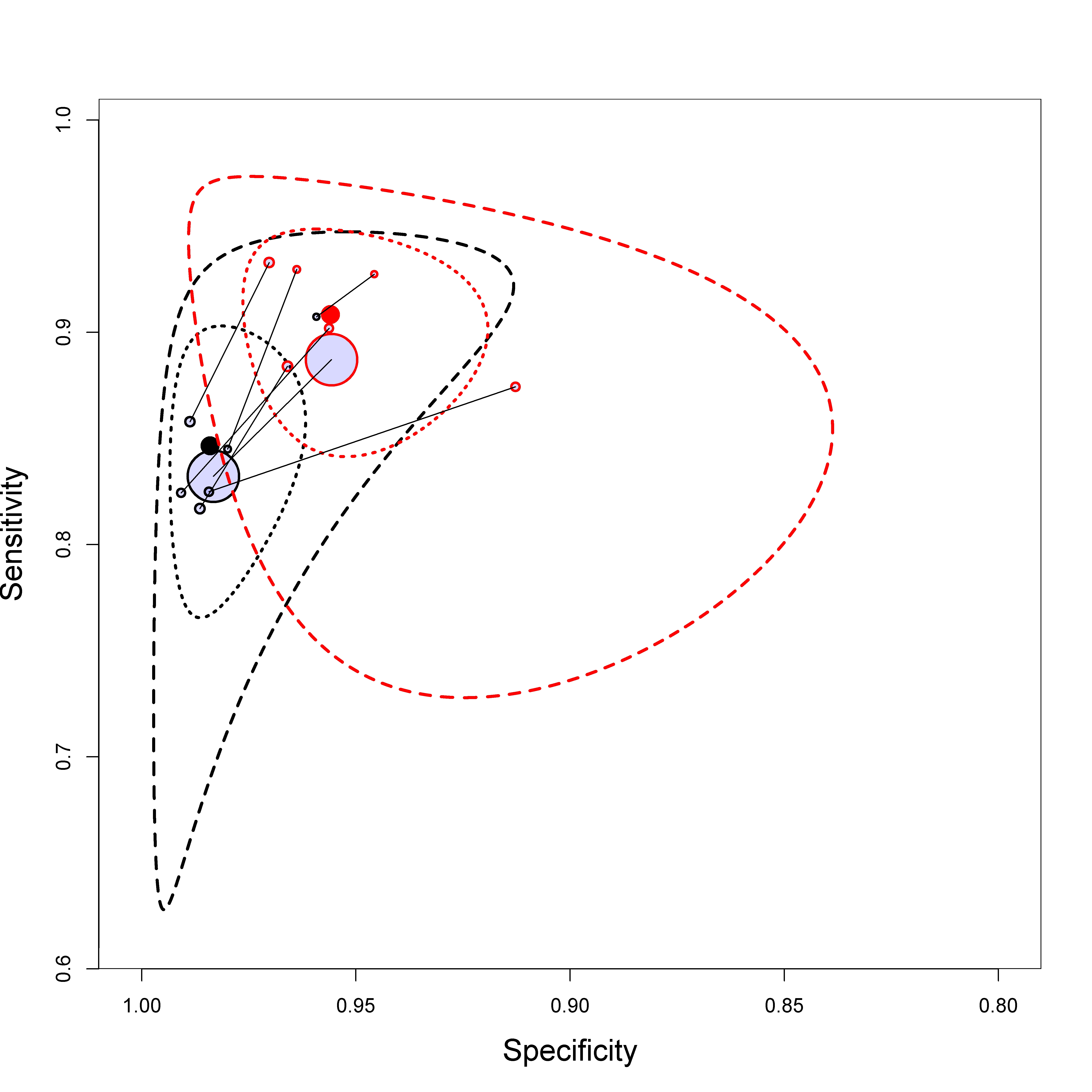
Nandini Dendukuri, PhD is a Scientist at the Research Institute of the McGill University Health Centre (RI-MUHC) at the 5252 de Maisonneuve site. She holds dual affiliations with the Infectious Diseases and Immunity in Global Health Program and the Centre for Outcomes Research and Evaluation (CORE). Academically, she serves as an Associate Professor in the Department of Medicine, Faculty of Medicine and Health Sciences at McGill University, specifically within the Division of Clinical Epidemiology at the MUHC. Dr. Dendukuri's research program centers on the development of advanced statistical methodologies for diagnostic test accuracy evaluation in the absence of perfect reference standards. Her work spans Bayesian inference, latent class modeling, and meta-analysis techniques specifically designed for diagnostic accuracy studies. She has made seminal contributions to addressing methodological challenges such as conditional dependence between diagnostic tests, verification bias, and limitations of composite reference standards. Her research bridges theoretical statistical methodology with practical applications in infectious disease diagnostics, particularly tuberculosis where perfect reference tests are often unavailable. An analysis of Dr. Dendukuri's extensive publication record reveals consistent innovation in diagnostic test methodology with increasing sophistication in statistical modeling approaches. Her recent work (2024-2025) demonstrates expansion into diverse application areas including cardiovascular disease, emerging infectious diseases like COVID-19, and novel diagnostic technologies, while maintaining her core methodological focus. Her publications show particular strength in applying latent class models to complex diagnostic scenarios across multiple disease domains. Dr. Dendukuri actively collaborates with researchers across multiple disciplines, particularly in epidemiology, infectious diseases, and technology assessment. Her work with hospital-based technology assessment units has directly contributed to translating scientific evidence into healthcare policy. She maintains strong connections between statistical theory and practical healthcare applications, frequently developing software implementations (particularly rjags programs) of her methodological innovations to facilitate adoption by the research community.
Marc van Essen serves as Professor of International Business and holds dual administrative appointments as Interim Associate Dean for Undergraduate Programs and Associate Dean of International Programs and Partnerships at the University of South Carolina's Darla Moore School of Business, where he also directs undergraduate and graduate international business programs. Previously, he held a professorship in entrepreneurship and innovation at the University of St. Gallen's School of Management. His academic credentials include: Ph.D. in Management (cum laude), Erasmus University Rotterdam, 2011 M.Sc. in Economics and Law (cum laude), Utrecht University, 2007 B.Sc. in Economics and Law (cum laude), Utrecht University, 2005 Professor van Essen's research program centers on entrepreneurship, comparative corporate governance, international business, and family business dynamics , distinguished by rigorous meta-analytic methodologies that synthesize cross-national empirical evidence. His work systematically examines how institutional contexts—including political ideologies, cultural norms, and regulatory frameworks—shape corporate governance practices, gender diversity outcomes, and business model innovation. This approach has yielded significant insights into the contingency factors affecting board composition, state ownership impacts, and internationalization strategies across diverse markets. Analysis of his recent publications (2022-2025) reveals a dominant focus on meta-analytic investigations of institutional contingencies, with recurring themes including gender diversity in boardrooms, business incubator effectiveness, CEO overconfidence effects, and voluntary environmental program efficacy. His research consistently bridges institutional theory, agency theory, and stakeholder theory to address complex global business challenges, demonstrating exceptional methodological sophistication in synthesizing fragmented empirical findings into coherent theoretical frameworks. His scholarly contributions have been recognized through prestigious awards: Family Firm Institute Best Unpublished Research Award (2017) Coles College of Business Working Paper Series Best Paper Award (2017) OMT Best International Paper Award (2011, 2016) Jürgen Hauschildt Best Paper Award in Innovation Management (VHB, 2015) APJM Best Paper Award (2012) Richard Farmer Best Dissertation Award, Academy of International Business (2012) Erasmus Research Institute of Management Best Dissertation Award (2012) Professor van Essen has received the Delta Zeta student organization's award for best professor of the semester. His teaching portfolio spans continents and degree levels, including Business in Europe (undergraduate and Professional MBA), Comparative Corporate Governance (Master of International Business), Global Management Practices, international entrepreneurship (MBA), and advanced research methods (PhD) at institutions including the University of South Carolina, University of St. Gallen, EDHEC Business School, and HEC Paris. As program director, he oversees strategic development of international business curricula and global partnerships, significantly expanding the Moore School's international engagement through initiatives like the CEMS Program. His leadership extends to directing program teams that coordinate international exchanges, develop global immersion experiences, and manage cross-border academic partnerships, fostering comprehensive international business education that integrates theoretical knowledge with practical global market exposure.
Associate Professor Belinda Parmenter is an adjunct clinical academic and accredited exercise physiologist (AEP) with the UNSW Medicine & Health Lifestyle Clinic, School of Health Sciences, Faculty of Medicine & Health. She serves as a member of the SPHERE Cardiac and Vascular Clinical Theme Leadership Group and is the co-founder and national co-chair of the Australian Cardiovascular Alliance (ACvA) Peripheral Artery Disease (PAD) Working Group. With over 25 years of clinical experience, she specializes in assessing, prescribing, implementing and supervising exercises for people at risk of or with cardiovascular disease. Dr. Parmenter earned her PhD from the University of Sydney in 2012, where her research investigated high-intensity progressive resistance training for patients with intermittent claudication from PAD, earning her the Exercise and Sports Science Australia (ESSA) Medal for the most outstanding thesis. She completed her Bachelor of Health Science (Exercise and Sports Science) at Griffith University in 1996. Her research focuses on the effect of cardiovascular disease on aerobic capacity and muscle strength and endurance, as well as how exercise reduces symptoms in those with and at risk of cardiovascular disease across the lifespan. Current projects include investigating ways to improve regular incidental physical activity, developing eHealth interventions for adolescents to increase physical activity levels, and exploring optimal exercise prescriptions for cardiovascular risk amelioration and peripheral artery disease treatment. Her work often bridges clinical practice with research innovation, particularly in exercise physiology applications. Dr. Parmenter's publication portfolio demonstrates a strong focus on systematic reviews and meta-analyses in exercise physiology, with significant contributions to understanding resistance training for cardiovascular conditions, peripheral artery disease management, and physical activity monitoring technologies. Her research trajectory shows increasing emphasis on digital health interventions and multi-condition approaches addressing comorbidities. 2023 UNSW Sydney School of Health Sciences Researcher of the Year 2022 UNSW Sydney Faculty of Medicine & Health Education Innovation Award 2022 The MHS Learning Network Inc Award in Therapeutic and Clinical Services 2020 UNSW Faculty Heroes Award for improving student experience 2019 UNSW School of Medical Sciences Paper of the Month 2012 ESSA Medal for outstanding PhD thesis As an active grant recipient and chief investigator, Dr. Parmenter has secured over $15 million in research funding since 2010, including significant MRFF grants for cardiovascular health, diabetes management, and mental health interventions. She supervises multiple research projects including the Diabetes Clinic feasibility study, STREss less Exercise for Blood Pressure, and the UPLIFT study on progressive resistance training for alcohol use disorder. Her teaching responsibilities include convening the HESC3504 Physical Activity and Health course for the Bachelor of Exercise Physiology program, focusing on exercise effects across healthy populations and those with cardiovascular risk. Dr. Parmenter leads several major research initiatives including Health4Life, MERIT, SHAPE, and the Meta-Health Clinic, working collaboratively with institutions like the Matilda Centre at Sydney University to develop comprehensive exercise and eHealth interventions for diverse populations from adolescents to older adults with complex health conditions.
Karen Stendal is a Professor at the Department of Economics, Marketing and Law within the USN Business School at the University of South-Eastern Norway. She holds a PhD in Information Systems from the University of Agder (2010–2014), complemented by studies at the University of Nebraska at Omaha and the University of Georgia. Her research focuses on Extended Reality (XR), virtual team collaboration, health technology, and accessibility for individuals with disabilities. Key projects include the I-Merse research group and the Science Center for Health and Technology. Her academic career spans roles from Assistant Professor at the University of Agder (2013) to her current position since 2022. She has contributed to over 50 publications, with recent work emphasizing XR's impact on mental health, environmental engagement, and workplace innovation. Notable projects explore virtual nature interventions, ethical considerations in XR for disabilities, and agile development in virtual settings. Dr. Stendal’s research bridges technology and human-centered applications, addressing challenges in healthcare, education, and disability inclusion. She actively supervises PhD candidates and collaborates with institutions like NHH Norwegian School of Economics and the Science Center for Health and Technology.
Daniel A. Adamo, M.D. is an abdominal radiologist at Mayo Clinic in Rochester, Minnesota, specializing in abdominal imaging and intervention including CT and US guided procedures. He is affiliated with Mayo Clinic College of Medicine and Science as part of the Department of Radiology within the College of Medicine. Dr. Adamo completed his medical education at University of Illinois College of Medicine (MD, 2013), with undergraduate studies in Biology at Vanderbilt University (BS, 2007) and Medical Science at Boston University (MA, 2009). His clinical training includes a fellowship in Cross-Sectional Imaging (2019) and residency in Diagnostic Radiology (2018), both at Mayo Clinic. His research focuses on abdominal imaging, interventional radiology techniques, tumor ablation therapies, and MRI-guided procedures. His work spans applications in prostate cancer, liver tumors, kidney cancer, and other abdominal malignancies, with emphasis on minimally invasive image-guided interventions. Dr. Adamo's publication record shows consistent contributions to radiology literature, with recent work focusing on percutaneous ablation techniques, MRI-guided therapies, and diagnostic imaging methodologies. His research demonstrates expertise in both clinical applications and technical aspects of abdominal imaging. Excellence in Education Society of Abdominal Radiology (2023) Summa Cum Laude Interventional MRI Symposium (2022) Certificate of Merit Radiological Society of North America (2019) Chief Resident Mayo Clinic Department of Radiology (2016) Dr. Adamo is actively involved in professional organizations including the Society of Abdominal Radiology, American Roentgen Ray Society, and Radiological Society of North America. His educational contributions are recognized through his Excellence in Education award and ongoing participation in residency training programs at Mayo Clinic.