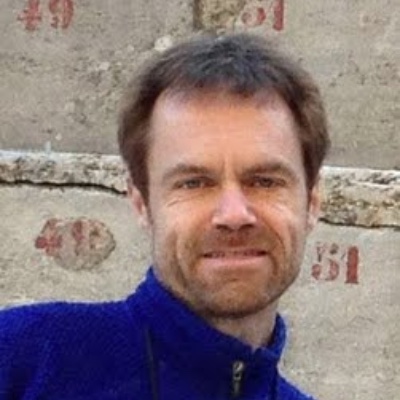
Kartik Sreenivasan is Associate Professor of Psychology and Associate Program Head for Undergraduate Studies in Psychology at New York University Abu Dhabi (NYUAD), with an affiliation in Biology. He is also a Global Network Associate Professor of Psychology, reflecting his role across NYU’s global campuses. His research is centered on the neurobiological basis of working memory and goal-directed cognition. His educational background includes a BA in Psychology from Yale University and a PhD in Neuroscience from the University of Pennsylvania under Dr. Amishi Jha. He completed postdoctoral training at UC Berkeley with Dr. Mark D’Esposito and joined NYUAD in 2014. Sreenivasan’s research focuses on how the brain maintains and manipulates information in working memory. Key interests include dynamic neural coding, feature binding, effective connectivity, and the transformation of memory into action. His lab employs fMRI, MEG, EEG, TMS, and behavioral paradigms to study both healthy and clinical populations. The most recent publications highlight trends in distributed neural systems, phase-coding mechanisms in working memory, and the role of subcortical structures. His work increasingly emphasizes network-level interactions, oscillatory dynamics, and the flexibility of memory representations under interference and attentional demands. Sreenivasan has received no explicitly mentioned scientific awards in the provided text. He actively mentors PhD students (Ying Zhou, Shanshan Li, Hannah Chu) and supervises undergraduate capstone projects. His lab has been supported by institutional funding, though specific grants are not listed. He teaches core courses such as Biopsychology, Cognitive Neuroscience, and Capstone Research in Psychology and Biology. The Sreenivasan Lab at NYUAD is a vibrant research group focused on understanding the neural underpinnings of cognition. It includes postdocs, research assistants, PhD students, and undergraduates, and has produced numerous publications in high-impact journals. The lab investigates topics such as working memory organization, neural connectivity, and the interplay between perception and memory.