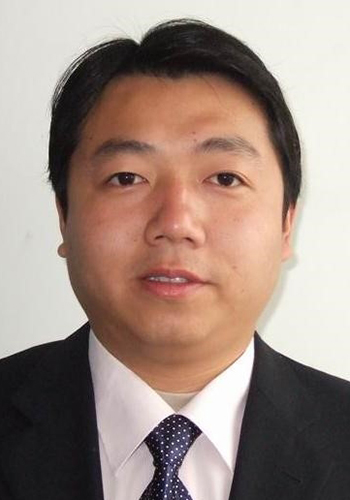
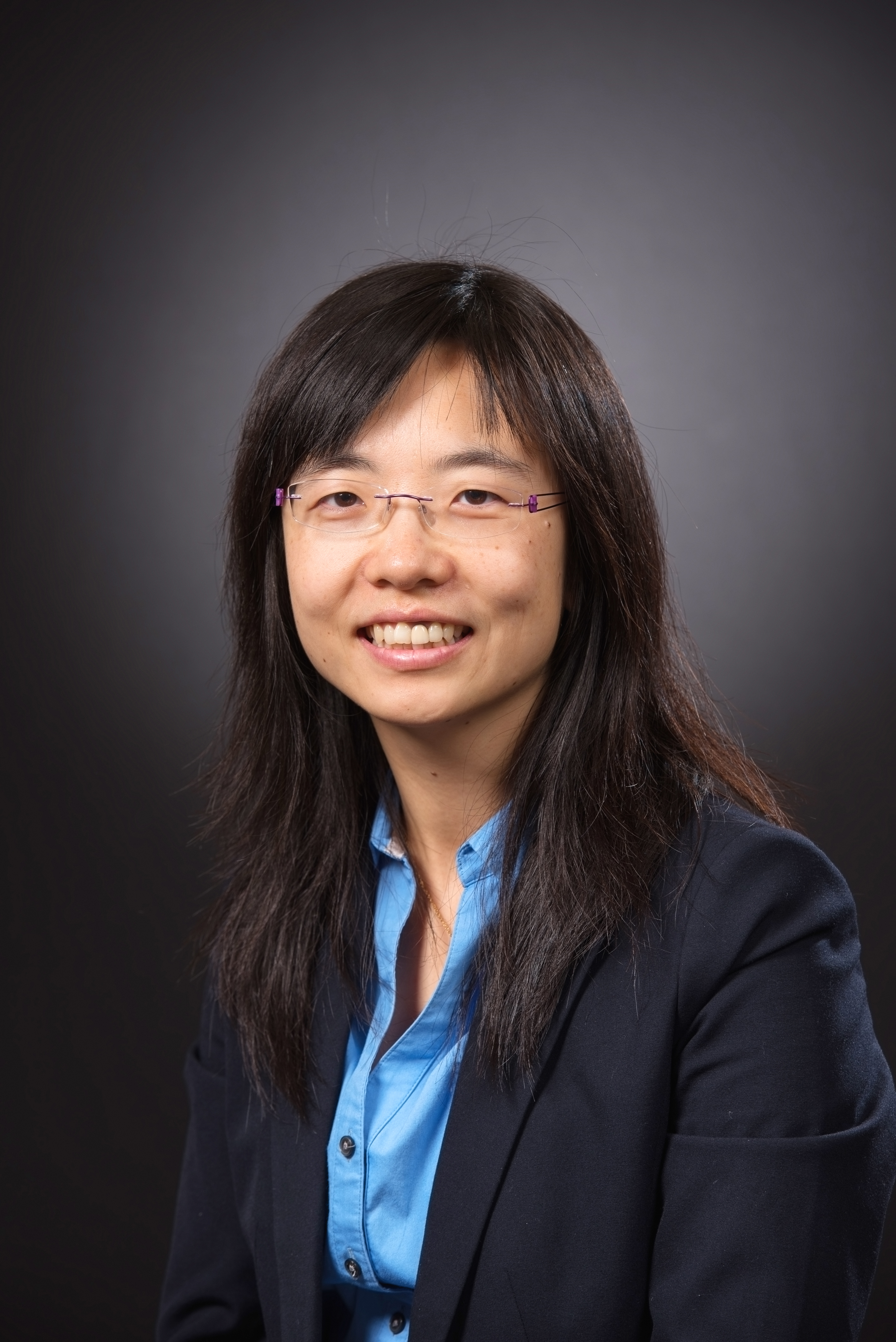
Dr. Shaoquan Jiang is an Assistant Professor at the University of Windsor's School of Computer Science. He holds a Ph.D. in Electrical & Computer Engineering from the University of Waterloo (2005). Research interests: His work spans network security architectures, cryptographic protocol design, blockchain implementations, quantum-resistant cryptography, and security education frameworks. Current projects focus on post-quantum security and authentication systems. Teaching: He instructs courses in cryptography, network security, and cyber security fundamentals at undergraduate and graduate levels.
Dr. Letitia Slabu is a Senior Lecturer in Psychology at Middlesex University, focusing on authenticity, power dynamics, and their psychological implications. Her research explores state vs. trait authenticity, cultural variations in self-perception, and the impact of power on creativity and goal pursuit. She has contributed to understanding how mood influences perceived authenticity and how work placements affect graduate employability. Her work spans experimental psychology, cross-cultural studies, and applied educational research. Notable areas include measuring authenticity across cultures, analyzing latent classes of authenticity experiences, and investigating how power affects cognitive processes like attention and creativity. She has published extensively in journals such as Journal of Personality and Social Psychology , European Journal of Personality , and Frontiers in Psychology . Dr. Slabu’s research highlights the interplay between emotional states, self-concept, and social contexts. Her recent work emphasizes methodological rigor in studying subjective experiences, including longitudinal designs and latent class analysis. While no specific grants or advising roles are noted, her contributions to understanding authenticity and power dynamics position her as a key figure in contemporary social psychology.
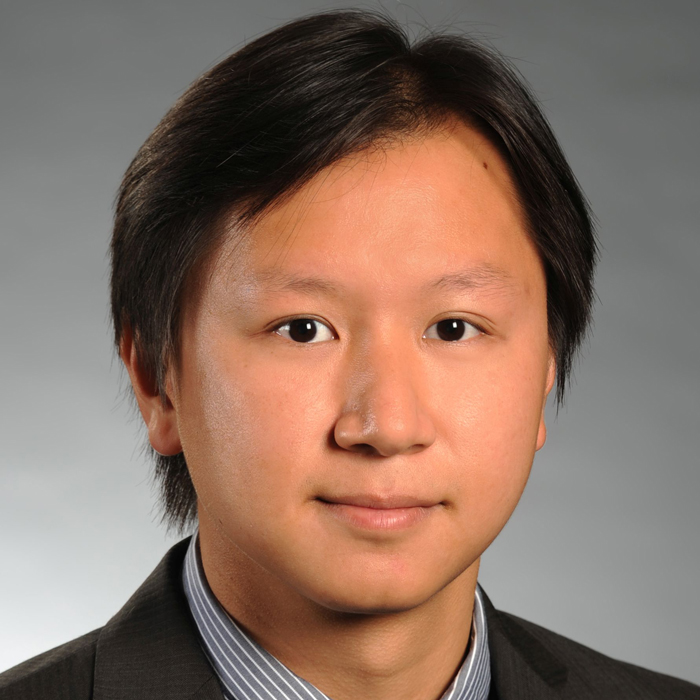
Dr. Yunpeng (Jack) Zhang is an Associate Professor in Information Science Technology at the University of Houston's Cullen College of Engineering. He directs the Network, Software and System Laboratory and serves as Center Director for the USDOT Tier-1 Transportation Cybersecurity Center (CYBER-CARE). His research focuses on cybersecurity foundations for critical infrastructure with emphasis on blockchain, IoT security, and vehicular systems. Zhang has developed novel cryptographic protocols, intrusion detection frameworks, and access control models for transportation networks. Honors: 50-in-5 Major Grant Recipient (2024) IEEE Senior Member Best Paper Finalist (IDSTA2022) New Faculty Award (2015) Education Leadership: Designed courses in Data Science for Cybersecurity, Cryptography, and Intrusion Detection. Supervised 75+ graduate students.
Dr. Kamran Ali is a Senior Lecturer in the Computer Science Department at Middlesex University's Faculty of Science and Technology since 2020. He holds a PhD in Communication Architecture Design, supported by the Newton Fund/British Council Institute. His research spans IoT, wireless networks, D2D communication, cloud computing, cybersecurity, and disaster infrastructure modeling. He actively leads international projects such as the EMERALD initiative for environmental monitoring and the ICRG Pakistan-UK collaboration. Dr. Ali is a Fellow of the Higher Education Academy (UK) and contributes to IEEE conferences as a technical reviewer and committee member. His teaching roles include leading modules like CST4570 Virtualisation and Cloud Computing and CST2590 Internet of Things. Research interests include heterogeneous networks, digital twin technology, energy-efficient systems, and smart city infrastructure. His funded projects address challenges in environmental monitoring, disaster response, and public safety networks. Education: PhD in Communication Architecture Design (Newton Fund/British Council) Grants: ICRG (Pakistan-UK), EMERALD (with VIT India), and UKIERI projects Committees: IEEE Technical Programme Committee member and TPC Chair Key research trends include integrating AI/ML in environmental and disaster management, optimizing vehicular and edge networks, and enhancing cybersecurity for healthcare and financial systems. His work bridges technological innovation with real-world applications like smart cities and sustainable development. Awards: Fellow of the Higher Education Academy (UK) Grants & Collaboration: Oversees multiple international research partnerships and leads innovation in public safety communication systems Dr. Ali collaborates with global institutions on projects like drone-based small cells for emergency networks and energy-efficient architectures for critical infrastructure. His interdisciplinary approach addresses challenges in both technical and societal domains.
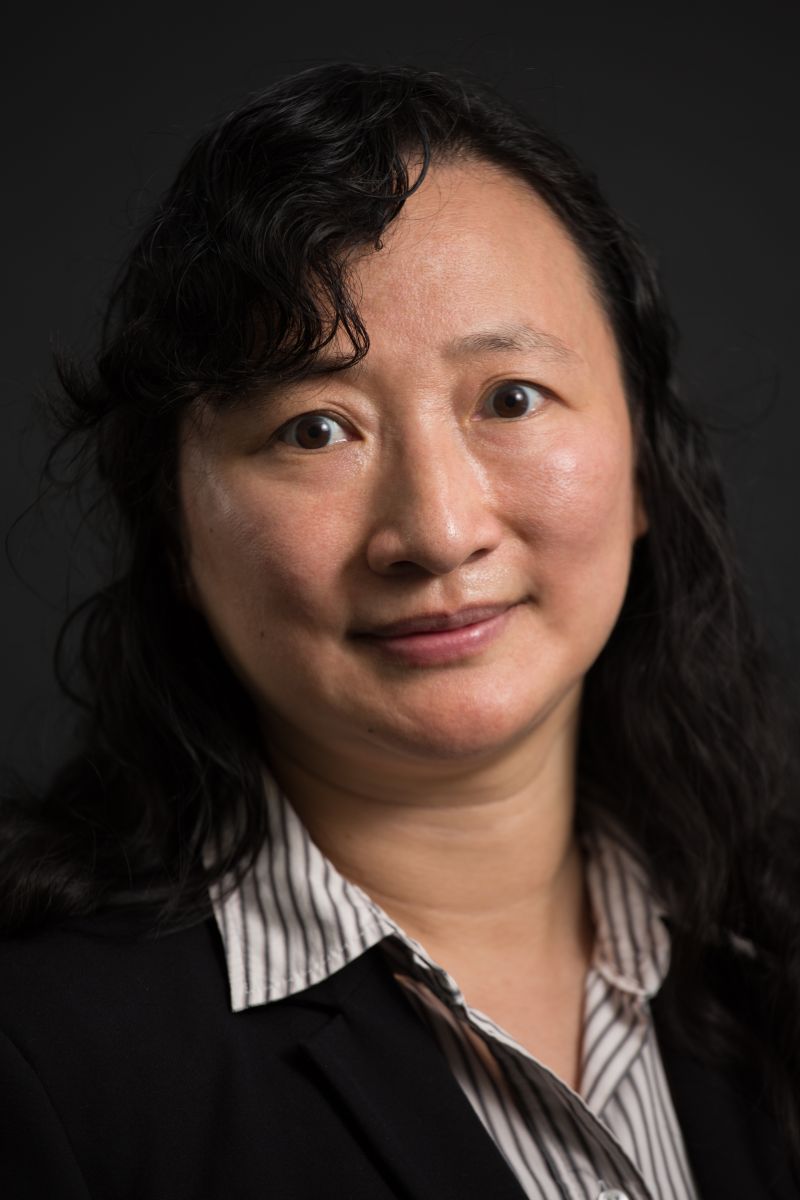
Dr. Yuhua Chen is an Associate Professor in the Department of Electrical and Computer Engineering at the University of Houston, affiliated with the Systems Research Laboratory (SRL). She holds Senior Member statuses with the National Academy of Inventors (NAI) and IEEE. Her research focuses on optical networks, quantum cryptography, FPGA systems, IoT, and high-performance routers, with emphasis on system prototyping for real-world applications. Education: D.Sc., Electrical Engineering, Washington University in St. Louis MS, Electrical Engineering, Washington University in St. Louis MS, Computer Science, Washington University in St. Louis BS, Electrical Engineering, Fudan University, Shanghai, China Research Interests: Dr. Chen’s work bridges theoretical and applied systems engineering. She pioneers quantum cryptography protocols for optical networks, develops FPGA-based hardware solutions for IoT and high-speed routers, and designs multi-mode switching architectures to support mission-critical applications like telesurgery. Her lab emphasizes practical prototyping, with NSF-funded projects creating testbeds for DWDM multi-mode switching and quantum-secure communication systems. Grants & Projects: Co-PI: NSF Grant (2011-2014) exploring quantum cryptography in optical networks PI: NSF MRI Grant (2009-2014) developing reconfigurable DWDM platforms for telemedicine PI: NSF CRI Grant (2007-2011) for optical burst switching testbeds Awards & Recognition: Recipient of multiple NSF grants and patent holder for innovations in network security and quantum communication. Recognized for contributions to engineering education through the Systems Research and Education Consortium (SREC), which promotes gender diversity in engineering. Labs & Initiatives: Director of the Systems Research Laboratory (SRL), advancing networked systems through hardware prototyping. Founder of the SREC consortium, fostering industry-academia collaboration and women in engineering programs.
Svetlana Nikitina is a Teaching Professor in the Humanities and Arts Department at Worcester Polytechnic Institute (WPI), with affiliations to the Integrative & Global Studies - Global School and the Cádiz, Spain IQP Project Center . She holds a PhD in Comparative Literature from Moscow State University (1988) and an M.Ed. in Human Development and Psychology from Harvard University (1999). Her research focuses on interdisciplinary pedagogy, environmental literature, and the societal implications of AI. She co-teaches WPI’s Great Problem Seminar on Sustainable Development and has pioneered project-based learning initiatives. Founded WPI’s Moscow IQP Project Center (later expanded to Spain). Recipient of WPI promotions, including tenure-track appointment (2024) and teaching faculty promotion (2021). Published poetry and scholarly work on Russian, American, and French literature. Member of professional organizations like MLA, AAAS, and the Association for Integrative Studies. Her research explores narrative forms in the digital age, environmental ethics in literature, and the role of humanities in STEM education. Recent work addresses AI’s impact on human identity and democracy.
Christy Chatmon is an Assistant Professor at Florida State University's College of Communication & Information (CCI), within the School of Information. She holds a Ph.D. in Information (2022) from FSU, an M.S. in Software Engineering (2000) from Florida A&M University, and a B.S. in Psychology (1994) from the University of Georgia. Her research focuses on STEM education, information technology, K-12 pathways, and active learning pedagogy. She emphasizes student-centered environments, integrating interactive activities and industry collaboration to enhance workforce readiness. Her teaching spans database management, computer security, and programming (Java, C++, web development). Award-winning educator, Chatmon has received the McKnight Doctoral Fellowship, Transformation Through Teaching Award (2017), and multiple undergraduate teaching accolades. She co-led NSF-funded grants totaling over $2.1M, including initiatives to broaden information assurance awareness and improve STEM education. Her work includes designing digital forensics labs, secure RFID protocols, and active learning frameworks for cybersecurity education. She advocates for diversity in tech, particularly supporting Black women in computing fields through research and mentorship.
Shubham Jain is an Associate Professor in the Department of Computer Science at Stony Brook University (since 2020). Previously, she was an Assistant Professor at Old Dominion University (2017-2020). She holds a PhD in Electrical and Computer Engineering from Rutgers University (2017), where she researched at WINLAB under Dr. Marco Gruteser. Her research spans mobile sensing , wearable health , cyber-physical systems , and smart cities . She develops multimodal data integration frameworks for applications like continuous health monitoring, pedestrian safety, and large-scale video analytics. Key projects include LiftRight (fitness performance tracking), A-spiro (respiration monitoring), and LookUp (pedestrian risk detection). Her publications emphasize edge computing , human-computer interaction , and sensor fusion , with recent work exploring LLM-assisted interfaces, accessibility tech, and video analytics architectures. Awards: Large Organization Recognition Award (AT&T Connected Intersections Challenge) N2Women Rising Star in Networking/Communications (2023) Grants: NSF CAREER Award: 'Closed-loop Health Behavior Interventions' (2023) NSF CPS: 'Performance Monitoring for Fitness Spaces' (LiftRight) NSF CNS: 'Reality-Aware Networks' (multi-institution collaboration) She leads the Reality-Aware Networks Lab at Stony Brook, recruiting PhD students for projects in wearable tech and smart environments. Courses taught include CSE 570: Wireless Networks and CSE 310: Computer Networks .
Miriam Johnson is a Senior Lecturer in Publishing Media at Oxford Brookes University's School of Arts. Her research explores intersections between creative writing and digital publishing, focusing on social media's impact on authorship and publishing dynamics. PhD research at Edinburgh examined poetry and rap music's influence on modern poetic rhythms Subsequent work at Brookes investigates social media's role in reshaping publishing models Key research areas: authorship performance, community dynamics, gender/power relationships Her publications analyze digital publishing's transformational effects through social media marketing , cross-platform engagement , and cultural capital mapping . She contributes to publishing theory and practice through empirical studies of online writing communities (Wattpad, AO3), food writing, and genre fiction dynamics. As part of Oxford International Centre for Publishing (OICP), she advises graduate researchers and teaches Creative Industries Media Marketing , Sales & Marketing Strategies , and Consumer Insight modules. She co-founded the Creative Industries Research Innovation Network (CIRIN) and maintains the Booksaresocial.com research platform.
Fatemeh Rezaeibagha is Senior Lecturer in Cyber Security at Murdoch University's School of Information Technology. Her research develops cryptographic solutions for blockchain systems, IoT security, and privacy-preserving protocols. Awards include the Associate Fellow teaching certificate (2019) and Murdoch Fellowship (2023). Recent publications focus on: privacy-enhanced data sharing for medical IoT; redactable blockchain architectures; attribute-based access control; and lattice-based cryptography. Applied contributions include traceability-revocation schemes for industrial IoT and accountable systems for vehicular networks. Research emphasizes efficiency and post-quantum security in distributed environments.
Biodun Awojobi, PhD, CISSP, is an Adjunct Professor of Cybersecurity at the University of Dallas' Gupta College of Business. He holds a PhD in Information Science from the University of North Texas with a focus on Cybersecurity, complemented by an MBA and Master of Science in Cybersecurity from the University of Dallas. His professional background spans over 15 years in IT, including roles at Microsoft (Senior Technical Specialist for Security and Compliance in Financial Services) and currently leading a team at Google Cloud focused on Infrastructure, Application Modernization, Data Analytics, AI/ML, and Security. His research interests center on Privacy and Security within the Internet of Things (IoT), exploring user privacy perceptions with smart devices and voice assistants, regulatory compliance frameworks, and enterprise-wide cybersecurity strategies. He has published extensively on topics ranging from data privacy regulations to IoT security vulnerabilities. Dr. Awojobi's professional experience bridges academia and industry, emphasizing practical applications of cybersecurity principles. His current work at Google Cloud involves cutting-edge technologies while his academic roles focus on educating future cybersecurity professionals.
Kamran Siddique is a Term Assistant Professor of Computer Science at the University of Alaska Anchorage (UAA), Department of Computer Science and Engineering. He holds a Ph.D. in Computer Engineering from Dongguk University and has held international academic roles including Associate/Assistant Professorships at Xiamen University Malaysia and Dongguk University, as well as teaching roles in Afghanistan and Pakistan. Education: Ph.D., Computer Engineering, Dongguk University, Seoul, South Korea Master of Science in Computer Engineering, University of Engineering and Technology, Taxila, Pakistan Master of Computer Science, Arid University, Rawalpindi, Pakistan Research Interests: Focuses on advancing interdisciplinary fields such as Big Data Processing, Machine Learning, Cyber Security, and Cloud Computing. His work emphasizes practical applications of parallel computing frameworks like Apache Hama, anomaly detection in high-speed networks, and biometric authentication systems. Publications Trends: His research spans theoretical advancements and applied technologies, with notable contributions to intrusion detection systems, biometric score fusion, and distributed computing architectures. Recent work (2024) explores reinforcement learning for biometric systems, while earlier studies (2016–2017) pioneered investigations into Apache Hama’s role in big data processing. Professional Roles: Senior Member of IEEE, Academic Editor for PLOS One, Journal of Computer Science, and Computational Intelligence and Neuroscience. Actively mentors undergraduate researchers, guiding them toward publishable outcomes. Collaborations: Engages in global research initiatives, integrating international perspectives into teaching and problem-solving approaches.
Nam Nguyen is a Professor in the Department of Computer and Information Sciences at Towson University. He holds a Ph.D. in Computer Science from the University of Florida (2013), an M.S. from Ohio University (2009), and a B.S. from Vietnam National University (2007). His research focuses on complex network analysis, mobile computing, social data analysis, and data mining with applications in cybersecurity and big data. Education: Ph.D., Computer Science, University of Florida (2013) M.S., Computer Science, Ohio University (2009) B.S., Computer Science, Vietnam National University (2007) Research Interests: His work explores network vulnerability assessment, dynamic community detection, and applications in cybersecurity, mobile systems, and social computing. Recent projects include analyzing misinformation containment in social networks and developing robust algorithms for adaptive network structures. Professional Contributions: Nguyen has authored over 30 publications in top-tier venues like IEEE INFOCOM and IEEE Transactions journals. He serves as Associate Editor for Computational Social Networks and has organized conferences like CSoNet 2015. His reviews span multiple IEEE journals and conferences, emphasizing computational methods in social systems and network science. Labs/Teams: Engages in interdisciplinary collaborations on network resilience, mobile computing, and big data analytics through Towson University’s research initiatives.
Khaled Elleithy is the Dean of the College of Engineering, Business & Education, Associate Vice President for Graduate Studies and Research, and Professor of Computer Science and Engineering at the University of Bridgeport. He holds multiple administrative roles in addition to his academic responsibilities. Dr. Elleithy has extensive experience in teaching and research, having developed courses and laboratories in quantum computing, network security, and embedded systems design. He holds a B.Sc. in Computer Science and Automatic Control from Alexandria University (1983), an M.S. in Computer Networks from the same institution (1986), and subsequent M.S. and Ph.D. degrees in Computer Science from the University of Louisiana at Lafayette (1988 and 1990). His research focuses on wireless sensor networks, mobile communications, quantum computing, and formal design verification. He has published over 350 papers and edited 12 Springer books, showcasing his expertise in these areas. Notable research topics include quantum cryptography protocols, energy-efficient robotics algorithms, and assistive technologies for visually impaired individuals. Dr. Elleithy has received prestigious awards such as the 2015 Connecticut Quality Improvement Award (CQIA) Gold Innovation Prize and the 2006-2007 Distinguished Professor of the Year. His students have won over 20 awards from IEEE, ACM, and ASEE for their work in steganography, robotics, and network security. He has secured grants totaling over $2.5 million as Principal Investigator or Co-Investigator, including projects on hybrid projectiles, mobile content management, and enterprise network security. His work often bridges theoretical computer science with practical applications like defense systems and healthcare technologies. Elleithy has established multiple teaching/research laboratories and contributed to the development of hybrid educational conferences like the Annual International Joint Conferences on Computer, Information, and Systems Sciences. He is a Senior Member of the IEEE Computer Society and has held leadership roles in organizing major international conferences since 2005.
Yuhong Liu is an Associate Professor in the Department of Computer Science and Engineering at Santa Clara University's School of Engineering. She holds a B.S. and M.S. from Beijing University of Posts and Telecommunications (2004, 2007) and a Ph.D. from the University of Rhode Island (2012). Her research focuses on trust, security, and privacy in emerging technologies including Generative AI, IoT, blockchain, and social media. She leads the Trustworthy Computing Lab, which develops solutions for IoT security, misinformation detection, and energy-efficient systems. Her research spans: Generative AI : Trustworthy synthetic data generation and multi-agent collaboration Blockchain : Multi-signature schemes and decentralized consensus IoT Security : Anomaly detection and lightweight cryptography Social Media : Misinformation mitigation and privacy preservation Recent publications emphasize blockchain-enabled security, IoT anomaly detection, and AI fairness, reflecting a trend toward practical, cross-domain solutions for cyber-physical systems. Her work frequently integrates machine learning with cryptographic techniques to address real-world vulnerabilities. Awards & Honors: IEEE Rising Star Service Award (2023) APSIPA Distinguished Lecturer (2021-2022) Researcher of the Year, Santa Clara University (2019) Best Paper Awards at IEEE SocialCom 2010 & UMEDIA 2016 She advises 7+ graduate students on IoT security, blockchain, and social media analytics. She co-leads the NSF-funded EuReCa Global Center for clean energy research and has organized panels on AI ethics and disinformation. Her lab collaborates with industry partners to deploy secure edge computing solutions.