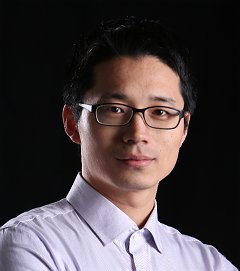
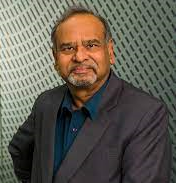
Félix Gómez Mármol is an Assistant Professor at the University of Murcia , where he also serves as Vicedean of Students at the Faculty of Computer Science. A cybersecurity researcher with expertise in protecting ICT systems, he co-founded SCORPION Cybertech in 2025. Education: PhD in Computer Science (University of Murcia, 2010) MSc in Advanced Information and Telematic Technologies (University of Murcia, 2007) Computer Science Engineering (University of Murcia, 2006) His research focuses on cybersecurity, trust management in distributed systems, and privacy mechanisms for wireless/mobile networks. He has contributed to special issues on Industry 4.0 security , mobile communications , and identity protection . He has served as editorial board member for journals including Computers & Electrical Engineering and Journal of Information Security and Applications , and as guest editor for special issues on topics like Security in Parallel/Distributed Computing and Blockchain Security . Scientific awards include the 2021 Knowledge Transfer Award, 2017 Leonardo Grant, 2011 Best PhD Thesis Award, and multiple scholarships from Seneca Foundation and BBVA. As a conference organizer , he has held leadership roles in events like IEEE TrustCom, ACM AsiaCCS, and IEEE Globecom, focusing on cybersecurity trends across IoT , smart grids , and cyber-physical systems .
Professor Naomi Sakr is Professor of Media Policy at the University of Westminster's Westminster School of Media and Communications, and former Director of the CAMRI Arab Media Centre (2007-2015). With extensive consulting experience for UNESCO, the European Parliament, UNDP, and the UK House of Lords, she has shaped media policy discourse across the Arab world. Her career spans journalism at the Economist Intelligence Unit (1985-1997), academic leadership since 2004, and international advisory roles including Bonnier Guest Professor at Stockholm University (2012). Educational background includes: MA, School of Oriental and African Studies (1974) MA, Institute of Education, University of London (1994) PhD, University of Westminster (1999) Her research pioneers critical analysis of Arab media systems, focusing on political economy, children's screen content, public service media, and journalism under authoritarianism. Key contributions examine Saudi television transformation, Egyptian media evolution, and pan-Arab production cultures. Her work bridges academic rigor with policy impact, notably through UNESCO-commissioned media landscape analyses in Jordan. Recent publications reveal evolving emphasis from satellite television studies to contemporary challenges in children's media during forced migration, Saudi media reforms, and media governance frameworks. This trajectory demonstrates consistent engagement with shifting Arab media landscapes while maintaining critical political economy perspectives. Scientific recognition includes: British Middle Eastern Studies Book Prize (2003) for Satellite Realms: Transnational Television, Globalization and the Middle East Major research leadership includes: Principal Investigator, AHRC-funded Orientations in the Development of Screen Content for Arabic-Speaking Children (2013-2016) Co-Investigator, AHRC Children's Screen Content in an Era of Forced Migration (2017-2018) International Expert for UNESCO/IMS Media Landscape Analysis in Jordan (2015) Research Team Member, ANR-funded Mediamigraterra project (2009-2012) Her CAMRI Arab Media Centre (2007-2015) secured funding from Arts and Humanities Research Council, Open Society Institute, and British Academy, establishing a hub for critical Arab media scholarship while mentoring Egyptian and Tunisian academics through Media Diversity Institute programs.
Yuan Zhang is a Professor in the School of Computer Science at Fudan University, where he co-directs the System Software and Security Laboratory. He is also the co-founder and coach of Fudan University's CTF team, Whitzard, which has participated in numerous international competitions. His academic journey includes earning a Ph.D. from Fudan University (2009-2014) and a B.Eng. from Nanjing University (2005-2009), progressing from Assistant Professor to Associate Professor and finally to Professor at Fudan University. Dr. Zhang's research focuses on system security for widely-deployed critical targets, with current emphasis on open-source software, kernels, Android/Web platforms, firmware, LLM-based agents, and autonomous driving systems. His work spans vulnerability discovery/exploitation/mitigation, malware/attack detection, and privacy protection, utilizing interdisciplinary techniques such as Program Analysis, LLMs, and Machine/Deep Learning. His research demonstrates a consistent trajectory from traditional software security toward emerging AI-driven security challenges. His recent publications (2024-2025) reveal a strong focus on novel security challenges in emerging technologies, particularly LLM-based systems and autonomous driving security, while maintaining expertise in traditional software security domains like Android, web applications, and firmware. His work combines practical vulnerability discovery with innovative detection methodologies, often achieving recognition through distinguished paper awards. Honorable Mention Award at USENIX Security 2025 Distinguished Paper Award at IEEE S&P 2025 ACM SIGSOFT Distinguished Paper Award Dr. Zhang actively contributes to the academic community through teaching courses including Principles of Reverse Engineering, System Security: Attacks & Defenses, and Emerging Attack & Defense Techniques. He serves on editorial boards for ACM Transactions on Security and Privacy and Cybersecurity, and participates in numerous top security conference program committees including USENIX Security, IEEE S&P, and ACM CCS. His laboratory, the System Software and Security Laboratory at Fudan University, focuses on practical security research with real-world impact, particularly in the rapidly evolving landscape of AI security.
Eliane Bucher is a Professor at the School of Communication and Culture at BI Norwegian Business School, specializing in digital labor practices and platform governance. Her research centers on algorithmic management, gig economy dynamics, and digital media literacy within contemporary work environments. Previously, she completed her doctorate at the University of St. Gallen and conducted research at Harvard University's Berkman Center and Stanford's SCANCOR. Her research interests focus on digital labor practices , algorithmic management , digital platform governance , and online community dynamics . She investigates how workers navigate algorithmic control systems, construct identity in gig work environments, and develop voice mechanisms within digital platforms. Her work often examines the psychological and social implications of platform-mediated work, including worker alienation, emotional labor, and mattering perceptions in digital contexts. Bucher's publication record reveals a clear trajectory exploring the intersection of technology and labor relations. Her recent work (2023-2025) increasingly focuses on multimodal identity construction , algorithmic paranoia , and digital voice formation in platform ecosystems. She employs mixed-method approaches including visual methods, qualitative interviews, and large-scale text analysis of community forums to examine worker experiences across platforms like Upwork, Fiverr, and Airbnb. Her research consistently highlights worker agency within constrained algorithmic systems and the emergent social structures within digital labor markets. Bucher actively investigates worker responses to algorithmic management, including anticipatory compliance behaviors and identity work strategies that help workers navigate platform constraints. Her findings contribute to understanding how digital labor platforms reshape traditional employment relationships and worker organizing possibilities.
Ronald Petrlic serves as Research Professor at Nuremberg University of Applied Sciences (TH Nuremberg) since winter semester 2023, holding the position of Professor for Information Security since January 2020. Previously, he led the Department for Technical and Organisational Data Protection at Baden-Württemberg's Data Protection Authority (2015-2019) and conducted research at Saarland University, UC Irvine, and Paderborn University. His research centers on integrating data protection by design across technological systems, with core expertise in Information Security, Technical Data Protection, Self-Sovereign Identity, and Technology-Law interfaces. He advocates that privacy frameworks should enable rather than obstruct innovation, emphasizing practical implementation in real-world systems. Recent publications reveal strong trends in GDPR technical compliance, self-sovereign identity architectures, and privacy-enhancing technologies for email systems, smart infrastructure, and health data. His work consistently bridges regulatory requirements with cryptographic solutions, particularly focusing on decentralized identity models and legacy system modernization. Key recognitions include: Authoring the seminal German textbook on technical data protection (2nd edition) Overseeing Germany's first GDPR enforcement fine Founding the ACM Symposium's 'Privacy by Design in Practice' track (2018-present) Serving as European Commission rapporteur for C-ITS initiatives Throughout his career, Petrlic has directed significant projects including Wincor Nixdorf's ATM integrity patent (2009-2010), the 'Securing the Financial Cloud' BMBF initiative (2014-2015), and Baden-Württemberg's eAkte, Smart City, and e-prescription implementations (2015-2019). His current 2022 'Email Security in Practice' project continues this applied research tradition, translating academic insights into operational security frameworks for diverse sectors.
Richard Henneman serves as Professor of the Practice and Director of the Master’s Program in Human-Computer Interaction (MS-HCI) at Georgia Tech’s School of Interactive Computing. With a Ph.D. in Industrial and Systems Engineering from Georgia Tech and degrees from the University of Illinois at Urbana-Champaign, his career spans academia and industry leadership roles. He has held positions at NCR, IBM/Internet Security Systems, marchFIRST, and AT&T, focusing on user-centered design, usability, and interface management. His research emphasizes HCI education, usability engineering, and the intersection of human factors with large-scale systems. Education: - Ph.D. in Industrial and Systems Engineering, Georgia Institute of Technology - M.S. in Industrial Engineering, University of Illinois at Urbana-Champaign - B.S. in Industrial Engineering, University of Illinois at Urbana-Champaign Research interests center on human-computer interaction, user research methodologies, and the application of design principles in complex systems. His work explores usability challenges in security, large-scale system monitoring, and interdisciplinary education programs. Over his career, he has contributed to shaping industry standards for user experience and UX-driven product development. His publications reflect a focus on balancing usability with security, optimizing large-scale system management, and advancing HCI pedagogy. Notable themes include the evolution of user interfaces in enterprise software, cognitive models for problem-solving, and the economic justification of human factors investments. While no specific awards are listed, his contributions to both academic and corporate HCI practices are well-regarded. Advising and grants: No specific student advising or grant details are provided in the text. His administrative roles include managing interdisciplinary programs and overseeing corporate partnerships. Labs/Teams: Affiliated with the MS-HCI program’s research initiatives, focusing on applied HCI and design education.
Carlos Ribeiro is an Associate Professor at the University of Lisbon (Instituto Superior Técnico), affiliated with the Distributed Systems Group. His work focuses on computer security, trusted computing, e-voting systems, sensor networks, and operating systems architecture. He teaches courses such as Concurrent Programming, Information Security Research Seminars, and Communications Security. Key research interests include intrusion detection systems (e.g., ARGAN-IDS), privacy-preserving identity management (e.g., STORK), and secure voting protocols (EVIV). His work also addresses challenges in wireless networks, such as mitigating Evil Twin attacks via WiFiHop and enforcing location privacy through the Jano framework. Collaborations span topics like robust address assignment in sensor networks and worm containment in peer-to-peer overlays. Recent publications (2024) explore industrial video systems for remote operations and adversarial-resistant cybersecurity solutions. Earlier work includes frameworks for eID federations, mobile payment systems (MobiPag), and policy-based security specifications. Education: PhD in Computer Science (unspecified), with extensive academic contributions since 1990. Labs/Teams: Distributed Systems Group, Jano Privacy Project, EVIV Voting System Team. Grants/Funding: Not explicitly listed in provided materials.
Professor Nathan Clarke is a Professor of Cyber Security and Digital Forensics at the University of Plymouth and an adjunct Professor at Edith Cowan University, Western Australia. His research focuses on information security, biometrics, digital forensics, intrusion detection, and human factors in cybersecurity. He has contributed over 250 publications across journals, conferences, books, and patents. Clarke serves as a chartered engineer, BCS Fellow, CIIS Fellow, and IEEE Senior Member. He has led pioneering studies in gait authentication, eHealth security, and AI-driven cybersecurity tools. His leadership roles include past Chair of IFIP TC11.12 (Human Aspects of Information Security) and co-chair of the HAISA symposium series. Clarke’s work emphasizes interdisciplinary approaches, blending technical solutions with human-centric design to address evolving cyber threats. Key Research Themes: Biometric authentication systems, digital evidence analysis, explainable AI in forensics, and insider threat mitigation. Awards: Fellowships from BCS, CIIS, and IEEE recognition. Labs/Groups: Director of the Centre for Cyber Security, Communications and Network Research (CSCAN) at Plymouth. Grants & Collaborations: Extensive industry and academic partnerships, including work on GDPR compliance frameworks and smart device security. Clarke’s recent publications highlight advancements in XAI for forensic image analysis, unified digital evidence systems, and AI-driven cybersecurity training. His work bridges technical innovation with user behavior insights to enhance real-world security applications.
Wayne Burleson is a Professor in the Department of Electrical and Computer Engineering at the University of Massachusetts Amherst, affiliated with the Manning College of Information and Computer Sciences. His research focuses on embedded security, hardware security, VLSI circuit design, and VLSI architectures for digital signal processing (DSP), cryptography, and graphics. He has pioneered work on physically unclonable functions (PUFs), remote power attacks on FPGAs, and thermal management strategies in chip multiprocessors. He holds a B.S. and M.S. from MIT (1983) and a Ph.D. from the University of Colorado (1989). His honors include the 2011 IEEE Fellow distinction and the 1999 Ben Dasher Award for Best Paper. He is actively involved in IEEE, ACM, ASEE, and Sigma Xi societies. Burleson’s recent work addresses grand challenges in embedded security, including IoT device vulnerabilities, medical device cybersecurity, and mitigation of hardware Trojans. His lab explores novel approaches in reconfigurable hardware security, energy-efficient asynchronous interconnects, and adaptive systems-on-chip.
Dr. Kwang-Cheng Chen is a Professor in the Department of Electrical Engineering at the University of South Florida. His research focuses on wireless communications, machine learning applications in networks, robotics, and smart manufacturing systems. He holds a PhD from the University of Maryland (1989) and has affiliations with institutions like National Taiwan University and National Tsing Hua University. Dr. Chen has contributed extensively to IEEE journals and conferences, with over 400 publications since 1992. His work bridges theoretical advancements and practical applications in areas such as 5G/6G networks, edge computing, and multi-agent systems. He has collaborated with global researchers and industry partners, addressing challenges in network slicing, UAV-assisted communications, and resilient production systems. Research interests include: Machine Learning for Network Optimization Smart Factory Automation Ultra-Reliable Low-Latency Communications (URLLC) Edge and Fog Computing Multi-Agent Systems and Robotics Network Slicing and Virtualization Recent articles emphasize leveraging AI and reinforcement learning to solve complex problems in wireless networks (e.g., RIS-aided interference suppression) and robotic systems (e.g., multi-robot task allocation). His work often integrates theoretical models with real-world deployments, such as blockchain-enhanced UAV communication and federated learning in open RAN systems. Grants and collaborations involve government and industry projects on 6G architectures, IoT security, and smart city infrastructure. He leads interdisciplinary teams focusing on future communication systems and industrial automation.
Dr. Omar Alani is a Senior Lecturer and Head of the Networking and Mathematics Group at the School of Science, Engineering & Environment, University of Salford, UK. He holds a PhD in Telecommunication Engineering from De Montfort University and has held academic and research roles at Swansea University, the University of Leeds, and De Montfort University. His expertise spans Mobile Communications, 5G/6G systems, IoT, and Green ICT. Education: PhD (Telecommunication Engineering, De Montfort University, 2005), MSc (Advanced Control Systems), BEng (Electrical Engineering) Affiliations: Informatics Research Centre, University of Salford Research Interests: Alani focuses on advancing communication systems through projects in next-generation networks, including 6G/5G innovations, cognitive radio, and energy-efficient telecommunication solutions. His work intersects with renewable energy monitoring via ICT and smart grid technologies. He has authored over 90 publications and supervised multiple theses in these areas. Teaching: He teaches courses on Mobile Communication Networks, IoT, and Control Systems Engineering, emphasizing practical applications in postgraduate project management. Labs/Teams: Leads the Networking and Mathematics Group, collaborating on projects related to routing protocols, antenna design, and network security.
Prof. Marc Rennhard is Director of the Department of Information Technology, Electrical Engineering and Mechatronics at ZHAW School of Engineering. He holds a PhD in anonymous internet communication from ETH Zurich (2004) and has over 20 years of experience in information security. His roles include Head of the Institute of Applied Information Technology (InIT) until 2023 and Head of the Information Security Research Group since 2005. He collaborates with ETH Zurich's Zurich Information Security Center (ZISC). Education: Dr. sc. techn. ETH (2004), Dipl. El.-Ing. ETH (2004), Certified CISSP (2004). Leadership includes projects like FASTscan, OptiPhish, and dokspot. Research focuses on software security, web application vulnerabilities, and automated security testing. Active in networks such as Information Security Society Switzerland (ISSS) and the Digital Society Initiative (DSI) Cybersecurity Advisory Board. Research interests span dynamic security analysis of Android systems, access control vulnerabilities, and machine learning for security. Over 30 publications include work on vulnerability detection, secure data storage (SecureSafe), and telematics security. Leading 15+ industry-funded projects with emphasis on applied cybersecurity solutions.
Sarah Scheffler is an Assistant Professor at Carnegie Mellon University, jointly appointed between the School of Computer Science and the College of Engineering. She holds roles in the departments of Software and Societal Systems and Engineering and Public Policy, focusing on applied cryptography and its intersections with policy, law, and societal impact. Her research explores end-to-end encryption, privacy-preserving technologies, and their regulatory challenges, including content moderation, compelled decryption, and autonomous systems. Scheffler earned her Ph.D. in 2021 from Boston University under Mayank Varia, with postdoctoral roles at MIT and Princeton. She advises students in EPP and S3 programs and actively engages in interdisciplinary projects addressing privacy and cybersecurity. Her work emphasizes cryptographic protocols tailored to real-world use cases, such as zero-knowledge proofs, multi-party computation, and privacy engineering. Scheffler frequently contributes to policy discussions on encryption, data protection, and the societal implications of technology. She is a core member of CyLab, CMU's Security and Privacy Institute. Publications highlight advancements in secure computation, privacy-preserving algorithms, and legal-technical analyses. Current research includes privacy in age verification systems and scalable content moderation under encryption. She advocates for robust encryption standards despite regulatory pressures, as seen in her CNN commentary on Apple's UK data protection policies.
Professor Madhu Chetty is a distinguished academic in Information Technology at Federation University Australia's Institute of Innovation, Science and Sustainability (IISS). He also serves as the Director of AI and ML Stream within the Health Innovation and Transformation Centre (HITC). With over 35 years of tertiary teaching, research, and leadership experience in Australia and overseas, Professor Chetty has held academic positions at the University of Melbourne, Monash University, and the National Institute of Technology, India. His notable visiting appointments include Indian Institute of Technology Bombay, University of Warwick, Jawaharlal Nehru University, and Delft University of Technology. Amity University, India conferred on him a 'Citation and Lifetime Professorship'. Professor Chetty's research focuses on applying Artificial Intelligence (AI), Machine Learning (ML), Large Language Models, and Blockchain to problems in bioinformatics, health, and energy trading. His interdisciplinary work contributes to FedUni's strategic research centers in Health and IT. Key research areas include modeling genetic networks for cardiovascular and eye disease research, mental health applications using AI techniques for analyzing biopsychosocial data, drug repurposing with IBM collaboration, and blockchain algorithms for energy trading funded by the Qatar government. His publication record shows a consistent focus on computational approaches to biological problems, with recent work emphasizing genetic network modeling, mental health applications of AI, and blockchain technology. The research demonstrates a progression from foundational work in protein structure prediction to current applications of AI in healthcare and energy systems, with a strong emphasis on translating computational methods to real-world problems. 2021 Overall Award for Excellence in Graduate Research Supervision 2024 Dean's award for excellence in PhD thesis (awarded to one of his students) 2021 Vice Chancellor's Certificate of Commendation for Excellence in Community Engagement and Impact Professor Chetty has supervised over 22 PhD students to completion and currently supervises 5 PhD students across diverse topics including dementia prediction, drug repurposing, cancer classification, and mental health. His leadership extends to editorial roles for journals, conference organization, and development of publicly available software tools like GRAMP and GlobalMIT for genetic network analysis. He has secured substantial research funding totaling over $1.1 million as lead investigator, including projects funded by NHMRC, Qatar Research, Development and Innovation, and industry partners. As an academic leader, he has served as Deputy Head of School, member of the School Leadership Team, and HDR Coordinator. His professional service includes roles as General Chair of IEEE International Conference and Vice Chair of the IEEE Victorian/Tasmanian Section, demonstrating significant contribution to the broader academic community.
Georgios K. Polyzos is a Professor at the Department of Informatics, School of Information Sciences and Technology, Athens University of Economics and Business (AUEB), where he has been a faculty member since 1999. He directs the Mobile Multimedia Laboratory (MMlab) and teaches undergraduate and graduate courses in Wireless Networks, Mobile Communications, and Multimedia Technology. Previously, he was a Professor at the University of California, San Diego (UCSD), where he co-directed the Computer Systems Laboratory and was a Senior Fellow at the San Diego Supercomputer Center. Affiliation: Athens University of Economics and Business (AUEB) School: School of Information Sciences and Technology Department: Department of Informatics Employment: Part-time (2025–2026) Education: Diploma in Electrical Engineering, National Technical University of Athens (NTUA) M.A.Sc. in Electrical Engineering, University of Toronto Ph.D. in Computer Science, University of Toronto His research focuses on Internet architecture , Information-Centric Networking (ICN) , IoT , security and privacy , wireless networks , and performance evaluation . He has pioneered work in publish-subscribe internetworking and ICN architectures. His recent publications emphasize decentralized identity, verifiable credentials, blockchain for IoT, and privacy-preserving systems. The trend in his recent articles shows a strong shift toward decentralized security , privacy-enhancing technologies , and federated IoT systems , combining cryptographic protocols with distributed ledger technologies. His work bridges theoretical networking with practical implementations in smart grids and mobile systems. Scientific Awards: Future Internet Award (2013) – FP7 PURSUIT project Best Paper Award (2022) – IEEE Workshop on the Internet of Safe Things Advising and Grants: He has supervised over 16 Ph.D. students across UCSD and AUEB. He has led numerous research projects funded by the European Commission (FP7, H2020), US NSF, ESA, Microsoft Research, Hitachi, and Greek national agencies. Under his leadership, MMlab contributed to major EU projects like PSIRP, PURSUIT, POINT, and SOFIE, focusing on future Internet architectures and secure IoT federation. Labs and Teams: He leads the Mobile Multimedia Laboratory (MMlab) at AUEB, a leading research group in networking and distributed systems. The lab has been central to EU-funded initiatives in Information-Centric Networking and participates in H2020 SOFIE, advancing open interoperability for IoT platforms.