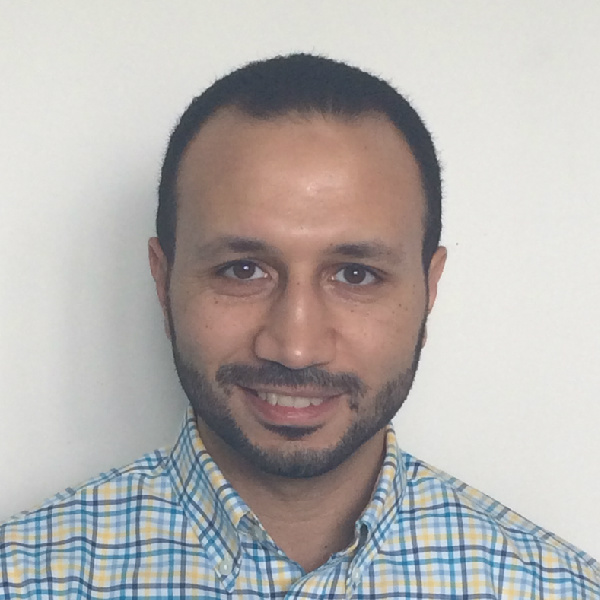
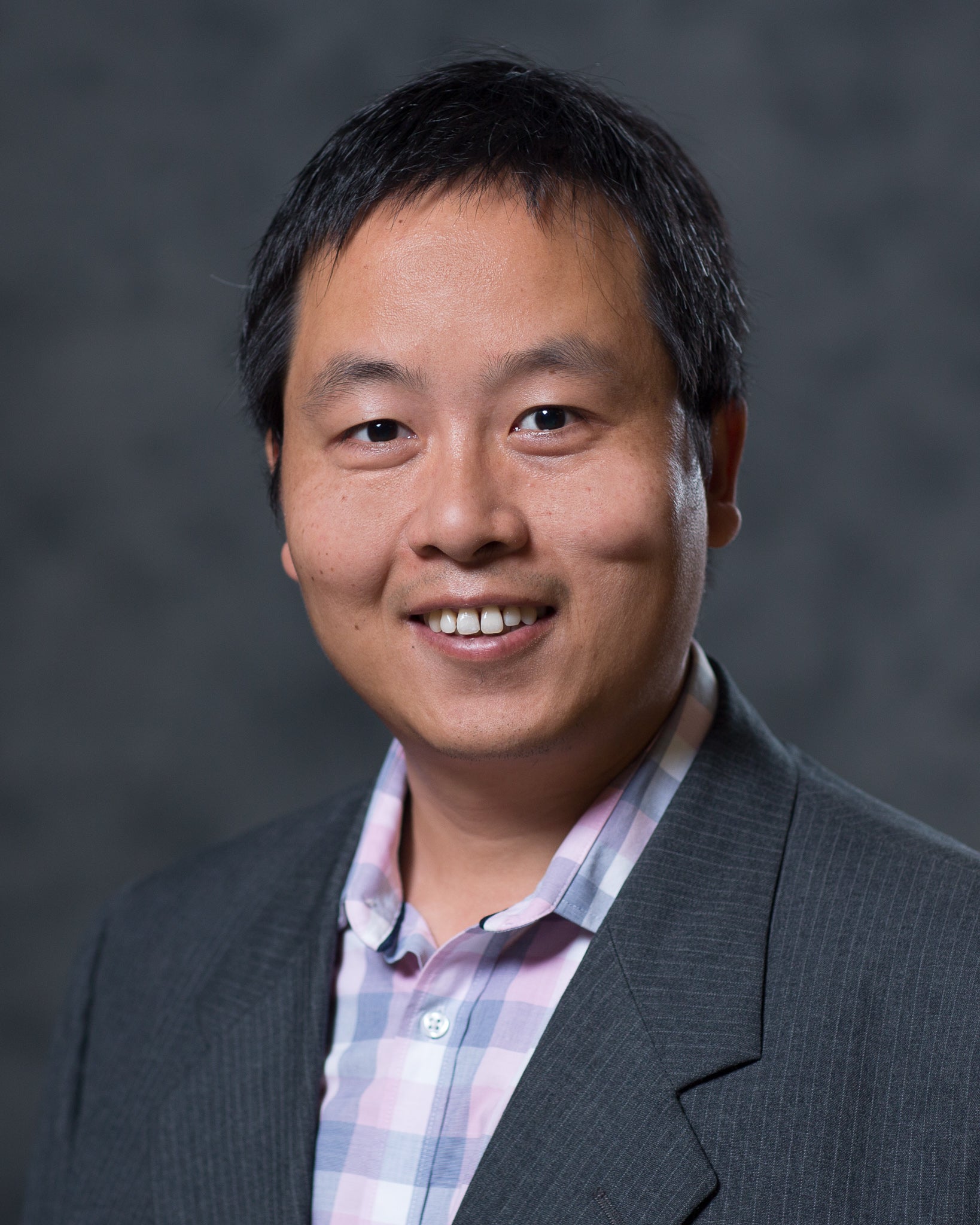
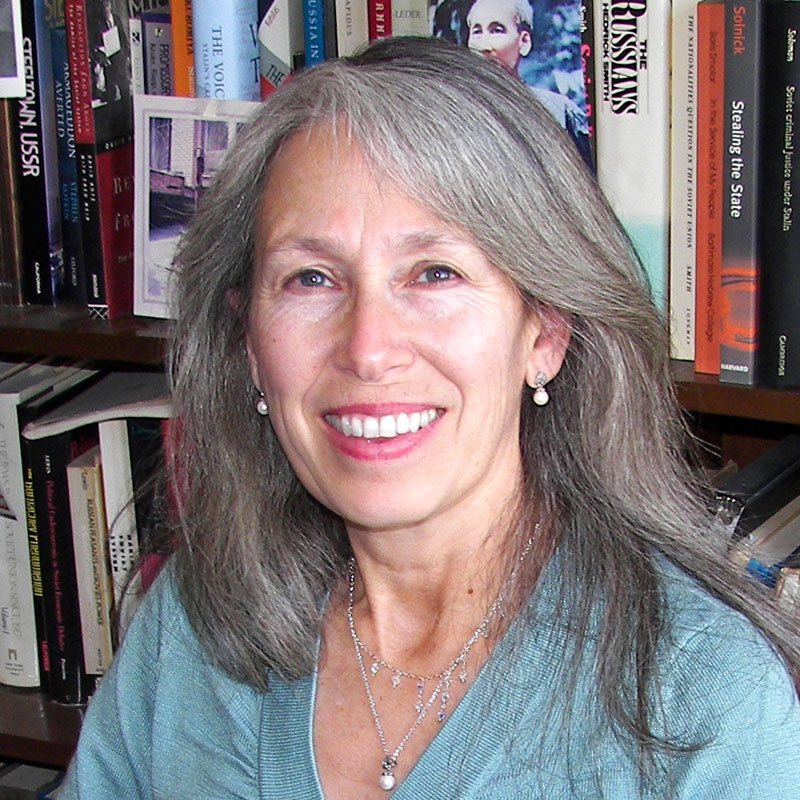
Dr. Ali Arya is an Associate Professor at the School of Information Technology , Carleton University, Canada. His work bridges Human-Computer Interaction , Educational Technologies , and Virtual/Augmented Reality systems. Funded by NSERC, SSHRC, and OCE, he has designed graduate programs in Digital Media and organized the Global Game Jam since 2009. Education: B.Eng. Electrical Engineering, Tehran Polytechnic Ph.D. Computer Engineering, University of British Columbia Research Interests: Immersive VR/AR for education and health Affective and social computing Personalized learning systems Wearable interaction technologies Game design and development 3D virtual environments Research Trends: Recent publications focus on inclusive VR design, educational applications of immersive environments, anxiety-reduction technologies, and culturally responsive systems. His work combines machine learning, multimodal interaction, and pedagogical innovation across STEM and social contexts. Scientific Awards: OCUFA Teaching Award (2023) Carleton Provost's Fellowship (2020) Faculty Teaching Excellence Award (2019) Graduate Mentorship Award (2019) Professional Service: Associate Dean (2018-2022), Program Chair FDG (2021), IEEE/ACM conference committees. He maintains the Interactive Media Group (iMG) research lab and contributes to open-access educational resources including his "Anyone Can Code" book series.
Amanda Watson is an Assistant Professor in Electrical and Computer Engineering at the University of Virginia, with joint appointments in Computer Science. She leads the Watson Research Lab within the UVA Link Lab, a multidisciplinary center for Cyber-Physical Systems (CPS) and Internet of Medical Things (IoMT) research. Her work bridges wearable technology with healthcare and athletic performance applications, focusing on noninvasive monitoring, physiological signal analysis, and safety-critical medical devices. She is also the cofounder and CEO of Luminosity Wearables, commercializing a noninvasive continuous glucose monitor. Education: PhD in Computer Science (2020) - College of William & Mary MSc in Computer Science (2016) - College of William & Mary Bachelors in Computer Science and Mathematics (2014) - Drury University Her research spans multiple domains including: Wearable spectroscopy for nutrition and skin health Machine learning for drug overdose and fall risk detection Biomechanical monitoring in sports medicine Wearable support for visual and neurological impairments IoMT device integration and analytics Recent publications (2024-2025) show strong emphasis on calibration-free physiological monitoring systems, with technical contributions in spectral analysis , multi-wavelength sensing , and rapid prototyping for healthcare wearables. Applications range from maternal health to gerontological social isolation detection. Lab and Team: The Watson Research Lab at UVA develops wearable solutions for clinical and athletic contexts, with ongoing collaborations in the PRECISE Center at University of Pennsylvania and LENS lab at William & Mary alumni network. She works with multidisciplinary teams including engineers, clinicians, and data scientists.
Giulio Dagnino is Associate Professor of Robotics and Mechatronics at the University of Twente and concurrently holds an appointment at the Digital Society Institute. His research integrates medical robotics, real-time perception and haptics to create MR-compatible platforms for endovascular surgery, earning an h-index of 17 and 971+ citations. Education & Career: PhD (details not specified in source) leading to faculty appointment at University of Twente. Promoted to Associate Professor with cross-appointments in Robotics & Mechatronics and Digital Society Institute. Research Interests: Prof. Dagnino’s core interest is medical robotic systems that can operate safely inside an MRI scanner. His work spans haptic guidance, real-time computer vision, soft robotic actuation, synthetic data generation and surgical simulation. By combining ferrofluid actuation, electromagnetic tracking and deep-learning-based scene understanding, he aims to reduce ionizing radiation exposure, enhance navigation accuracy and shorten procedure times for minimally invasive endovascular interventions. Publications Trend: Across 44 outputs (2010-2025) the portfolio reveals a clear evolution from early vision-based microsurgery and fracture-robot systems (2010-2016) toward holistic endovascular platforms integrating MR guidance, haptics and autonomy. Recent 2024-25 papers cluster around (i) synthetic data & scene understanding for surgical AI, (ii) MR-safe robot design and tracking, and (iii) translational studies bringing CathBot and related platforms closer to clinical use. Scientific Awards: Best Design Award – Hamlyn Symposium 2019 (with team) Best Innovation Award – ICRA 2018 Best Paper Award – CURAC 2019 IEEE ICRA Best Paper Award in Medical Robotics – 2016 Grants & Projects: Although explicit grant numbers are not listed, the continuous outputs, patents, multi-institutional collaborations (UK, Germany, Estonia, Canada) and press releases imply sustained funding from EU, Dutch and UK research councils as well as industrial partnerships. Labs & Teams: He leads activities within the Robotics and Mechatronics group at University of Twente, collaborates closely with the Digital Society Institute, and maintains international partnerships visible in co-authored papers with Imperial College London, University of Leeds, and several European hospitals.
Tracy Hall is Professor in Software Engineering at Lancaster University's School of Computing and Communications, where she holds a Chair in Software Engineering Research and serves as Director of Post Graduate Teaching. Previously, she was Professor and Head of Computer Science at Brunel University London, and has held visiting positions at University College London and adjunct roles at the University of Oslo. With over 20 years of empirical software engineering research experience, she maintains extensive industrial collaborations. Her research focuses on: Software defect prediction and automatic repair Code analysis methodologies Software testing frameworks Human factors in software development Empirical studies of developer behavior Tool development for software engineers She leads research in automated defect repair techniques and vulnerability prediction, with recent work exploring AI-driven approaches to software quality improvement. Her publication portfolio (100+ papers) shows consistent focus on software quality enhancement, with recent emphasis on explainable AI for vulnerability prediction (2025), developer-centric testing tools (2024), and human factors in bug resolution (2022). Research frequently involves large-scale empirical studies and industry partnerships. Awards include multiple best paper awards for her contributions to software engineering research. As Principal Investigator, she secured significant funding including: EPSRC Fixie project: £400,000 for defect prediction/repair (2018-2020) EPSRC Fault Analysis grant: £128,578 (2016-2019) Current PhD supervisees include Gaz Bennett, Jesse Phillips, and Miles Walker working on software engineering challenges. She contributes to the Cyber Security Research Centre , Security Lancaster , and DSI-Foundations research groups. Teaches courses on IT Architecture and Software Studio.
Juan Wachs is the James H. and Barbara H. Greene Professor at the Edwardson School of Industrial Engineering, Purdue University. He holds a courtesy appointment in Biomedical Engineering and is an Adjunct Professor of Surgery at the IU School of Medicine. His research focuses on the intersection of robotics, human-AI interaction, and healthcare systems, with a particular emphasis on surgical robotics, assistive technologies, and telemedicine. Education: PhD in Industrial Engineering (Intelligent Systems), Ben-Gurion University of the Negev MSc in Industrial Engineering (Information Systems), Ben-Gurion University of the Negev BEdTech in Electrical Education, ORT Academic College in Jerusalem Research interests include surgical telementoring via augmented reality, gesture-based interfaces for sterile environments, and semi-autonomous robotic systems for healthcare. His ISAT Lab develops solutions like the STAR telementoring system and robotic assistants like Gesturenurse and FIST-D for explosive ordnance disposal. Recent work emphasizes AI-driven medical decision support (Trauma THOMPSON), burn wound characterization, and robotic ultrasound automation. Key contributions include over 100 publications in robotics, medical AI, and human factors. Scientific Awards: James H. and Barbara H. Greene Professorship Purdue University Faculty Scholar Advising & Labs: Guides over 10 PhD/Master’s students in robotics and healthcare tech ISAT Lab fosters interdisciplinary projects in surgical robotics, human-robot interaction, and accessibility
Kyle B. Reed serves as an Associate Professor in the Department of Mechanical Engineering at the University of South Florida's College of Engineering. His academic career at USF has progressed from Assistant Professor (2009-2016) to his current position as Associate Professor (2016-present), following postdoctoral research at Johns Hopkins University. He teaches specialized courses including Haptics (EML 4593/6594), Mechanical Controls, and Advanced Engineering Mathematics. Dr. Reed earned his Ph.D. (2007) and M.S. (2004) in Mechanical Engineering from Northwestern University, and his B.S. in Mechanical Engineering from the University of Tennessee-Knoxville (2001). Prior to his faculty position, he completed postdoctoral research at Johns Hopkins University's Laboratory for Computational Sensing and Robotics (2007-2009) and worked as a researcher at Los Alamos National Laboratory (1998-2001). His research focuses on rehabilitation engineering, haptics, human-robot interaction, and medical robotics, with applications in medical devices and rehabilitation technologies. The REED Lab (Rehabilitation Engineering and Electromechanical Design Lab), which he directs, develops innovative solutions for human motion analysis and assistive technologies. His work bridges fundamental engineering principles with clinical applications, particularly in stroke rehabilitation and assistive device development. Analysis of his publication record shows consistent contributions to haptics research, human-robot interaction, and rehabilitation engineering. His work spans theoretical investigations of human motor control to practical applications in medical devices, with publications appearing in venues like IEEE Transactions on Haptics, EMBC, and Haptics Symposium. Recent work emphasizes wearable haptic devices, rehabilitation robotics, and human factors in medical technology. Developed the Gait Enhancing Mobile Shoe (GEMS) prototype during postdoctoral work Created minimally invasive steerable needle system for biopsies at Johns Hopkins Established REED Lab focusing on rehabilitation engineering and haptic technologies Developed innovative haptic devices for communication, rehabilitation, and education Dr. Reed actively mentors students through the REED Lab, supervising both graduate and undergraduate researchers. His teaching philosophy emphasizes building intuition while providing frameworks for logical problem-solving. He incorporates substantial project components into his courses, with students regularly developing haptic devices and robotics applications that sometimes lead to publications. The lab maintains strong outreach connections, working with K-12 students to promote engineering education. The REED Lab, located in the Interdisciplinary Research Building Room 114 on USF's Tampa campus, serves as the hub for his research activities. Current projects include wearable haptic devices for communication, diagnostic tools for Parkinson's disease, and rehabilitation technologies for gait analysis. The lab maintains strong connections with both clinical partners and industry, facilitating translational research from concept to application.
Hina Tabassum is an Associate Professor at the Lassonde School of Engineering , York University, Canada, specializing in 5G/6G wireless communications and sensing applications. She was awarded the York Research Chair in 2023 for her work in 5G/6G-enabled mobility and sensing. Areas of Expertise: THz communications, WiFi sensing, and multi-band wireless systems Editorial Roles: Area Editor for IEEE OJCOMS and Associate Editor for multiple IEEE journals Research Focus : Ultra-reliable low-latency communication Reconfigurable intelligent surfaces (STAR-RIS) Machine-type communications Energy-efficient network design Scientific Recognition : Stanford's Top 2% World Researchers (2021-2024) Lassonde Innovation Early-Career Researcher Award (2023) N2Women Rising Stars (2022) Multiple IEEE Exemplary Editor/Reviewer Awards
Dr. Ahmed S. Ibrahim is an Associate Professor in the Department of Electrical & Computer Engineering at Florida International University (FIU), leading the Wireless Innovation Lab (WIL). He holds a Ph.D. from the University of Maryland and M.S./B.S. degrees from Cairo University. His research focuses on wireless communications, vehicular networks, millimeter wave systems, and geometric machine learning applications in network optimization. Education: Ph.D., Electrical Engineering, University of Maryland, College Park (2009) M.S., Electronics and Electrical Communications, Cairo University (2004) B.S., Electronics and Electrical Communications, Cairo University (2002) Research Interests: Dr. Ibrahim specializes in advanced wireless communication systems, including drone-assisted aerial networks, vehicular communications, and millimeter wave technologies. His work integrates Riemannian geometry and machine learning to address challenges in network optimization, security, and resource allocation. Recent projects include applying geometric frameworks to link scheduling, beamforming, and interference management. Key Contributions: His NSF CAREER-funded research ( CNS-2144297 ) explores Riemannian-geometric tools for low-latency wireless networks. Notable outputs include frameworks for RIS-assisted ISAC systems, massive MIMO resource allocation, and satellite network scheduling. Awards: NSF CAREER Award (2022-2027) Rising Star Award, Florida Academy of Science (2022) Advising & Grants: He mentors Ph.D. students in geometric machine learning and wireless systems. Current projects include Riemannian-geometry-based scheduling and NSF-funded studies on mmWave vehicular communications. His lab collaborates with industry and academic institutions on 5G/6G network solutions. Labs & Teams: Director of the Wireless Innovation Lab (WIL), focusing on 6G research, network testbeds, and interdisciplinary projects combining signal processing, AI, and communications.
Jianxi Gao is an Associate Professor in the Department of Computer Science at Rensselaer Polytechnic Institute (RPI). His research focuses on network science, particularly network resilience, robustness, and control, integrating network theory, control theory, statistical physics, and operations research. He also explores the intersection of network science and AI, including applications of AI to network analysis and vice versa. His work aims to understand, predict, and control the resilience of complex systems against cascading failures. Key research areas include network resilience in transportation systems, quantum networks, and biological systems, with applications to pandemic response and infrastructure optimization. Gao's contributions span theoretical frameworks and computational tools, such as the NuRsE MATLAB package for network resilience analysis. His GitHub repositories (e.g., NuRsE and NON) showcase his open-source contributions to network science and computational methods. His recent publications address topics like AI-driven network analysis, quantum network percolation, and pandemic-induced healthcare system stress. He actively collaborates on interdisciplinary projects, emphasizing real-world applications of network science principles.
M. Tariq Iqbal is a Professor in the Department of Electrical and Computer Engineering at Memorial University of Newfoundland. He holds a B.Sc. from UET Lahore, M.Sc. from QAU Islamabad, and PhD from Imperial College London. His research develops renewable energy solutions including hybrid power systems, solar applications, and IoT-based monitoring. Projects focus on off-grid communities, industrial applications, and energy-efficient electronics. Specific interests include microgrid design, solar water pumping, and power consumption analysis. Recent publications emphasize techno-economic modeling of microgrids, IoT-enabled SCADA systems, and energy efficiency in computing. Work demonstrates increasing focus on practical implementations in remote locations. No scientific awards are documented. Iqbal advises graduate students on projects across 20+ countries. Current research includes solar-powered oil pumps, electric vehicle charging, and community microgrids. He directs multiple projects through the faculty's engineering design initiative.
Dr. Carmen Gill is a Professor in the Department of Sociology at the University of New Brunswick (UNB), specializing in domestic violence research. She joined UNB full-time in 2014 after a decade as Director of the Muriel McQueen Fergusson Centre for Family Violence Research. Her work focuses on police intervention in intimate partner violence (IPV), domestic homicide, and systemic justice responses to victims and perpetrators. She leads a national project on coercive control and police protocols with the Canadian Association of Chiefs of Police. Previously, she directed a 10-year observatory analyzing justice system responses to IPV. Her research employs mixed methods, including surveys, judicial file analysis, interviews, and focus groups with survivors and police. Key areas include IPV risk assessment, domestic homicide trends in New Brunswick (1999–2018), and police cultural barriers to effective intervention. She collaborates with community organizations and law enforcement agencies to inform policy and practice reforms. Her publications span policing strategies, risk assessment tools, and systemic reforms, with a focus on gendered violence dynamics. Current projects emphasize coercive control frameworks and improving criminal justice system responses. She advises students in criminology, gender relations, and family violence studies. Dr. Gill’s work has directly influenced national police training protocols and policy frameworks through her leadership in developing the Canadian IPV risk assessment framework and collaborative police action guidelines.
Mauro Caselli is Associate Professor in the Department of Economics and Management at the University of Trento's School of International Studies. His expertise spans economic growth, development economics, globalization, microeconomics, international organizations, and European studies. Research examines labor market dynamics, including technological impacts on employment, immigration economics, minimum wage policies, and pandemic-related economic behaviors. Recent publications analyze robotization effects on local employment (2025), COVID-19 workplace contagion risks (2021), and electoral biases in low-density voting (2022). Italian labor markets feature prominently in his empirical work. Teaching covers International Economics, Introduction to Economics, Quantitative Methods, and Global Scenarios.
Jason Stearns is an Associate Professor in the Department of International Studies at Simon Fraser University's School for International Studies. He specializes in African political dynamics, with a focus on the Democratic Republic of Congo (DRC), civil war, human rights, and international relations. His research examines conflict drivers, UN peacekeeping efficacy, and humanitarian intervention impacts. Education: Ph.D. in Political Science, Yale University (2016) M.A. in International Relations, Yale University (2011) B.A. in Political Science, Amherst College (2001) Research Interests: Stearns explores the interplay between social, economic, and political trends in Africa's conflict landscapes. His work analyzes how urbanization, state privatization, Chinese influence, and fluctuating foreign aid reshape contentious politics (both peaceful and violent). He emphasizes the role of ideology and cultural narratives in shaping visions of societal justice post-Cold War. Key Projects: He founded the Congo Research Group (CRG) in 2014, based at NYU, which investigates DRC conflicts, amplifies Congolese voices, and promotes policy accountability. CRG has produced reports on Beni massacres, Kasai region violence, presidential family asset investigations, and the Kivu Security Tracker with Human Rights Watch. Grants & Advising: No specific grants are highlighted in the text, but his work with CRG and institutions like the UN Group of Experts demonstrates extensive field and policy engagement. No formal advisees are listed. Labs/Teams: Leads the Congo Research Group, collaborating with Human Rights Watch and international think tanks to document violence and inform policy.
Wendy Z. Goldman serves as Paul Mellon Distinguished Professor of History in the Department of History at Carnegie Mellon University's Dietrich College of Humanities and Social Sciences, where she has been a core faculty member since 1988. Her scholarship establishes her as a leading authority on Russian and Soviet social history, with particular focus on gender dynamics, state repression, and wartime societal transformations. Her academic foundation includes a Ph.D. from the University of Pennsylvania (1987). Ph.D.: University of Pennsylvania, 1987 Goldman's research traverses critical junctures in Soviet history, examining how revolutionary policies reshaped family structures, industrial labor, and daily survival under Stalinism. Her groundbreaking work on women's emancipation during industrialization revealed the contradictions between state promises and lived realities, while her studies of denunciation practices exposed the grassroots mechanics of terror. Recent scholarship pioneers comprehensive analysis of the Soviet home front during World War II, documenting civilian mobilization, food crises, and industrial adaptation that sustained the war effort. Her comparative turn includes co-editing The Ghetto in Global History , examining spatial segregation across civilizations. Her publication trajectory demonstrates deepening engagement with socialist political economies and their human consequences, evolving from gender-focused analyses of early Soviet policy to systemic studies of wartime resilience and repression mechanisms. This work consistently bridges microhistorical detail with macrohistorical significance, emphasizing ordinary citizens' experiences within totalitarian systems. Goldman's contributions have earned significant recognition: Berkshire Conference Book Award for Women, the State and Revolution Reginald Zelnik Book Prize Honorable Mention for Inventing the Enemy Society for Military History Prize for Fortress Dark and Stern Her research program has been sustained by major grants from the Guggenheim Foundation, National Endowment for the Humanities, American Council of Learned Societies, Social Science Research Council, and National Council for Eurasian and East European Research. Beyond individual scholarship, she actively cultivates academic communities through directing CMU's faculty and graduate exchange with Russian State University for the Humanities, leading the Socialist Studies Seminar on socialist/post-socialist movements, and spearheading the CMU Prison Education Project which provides college instruction to incarcerated individuals. These initiatives reflect her commitment to transnational scholarly dialogue and expanding educational access, complementing her classroom instruction in specialized seminars on revolutionary movements, Stalinism, and comparative labor history.
Carole Browner is a Research Professor in the UCLA Department of Anthropology, Department of Gender Studies, and the David Geffen School of Medicine's Center for Social Medicine. She previously served as Chair of Anthropology (2010–2013). Her work focuses on gender, reproduction, health, and the social impact of biomedical advancements like genetic testing. Her research spans Colombia, Mexico, and the U.S., addressing topics like abortion access, prenatal care medicalization, and neurogenetic diagnoses. Education: B.A. Social Sciences (New School, 1969); M.A. & Ph.D. Anthropology (UC Berkeley, 1974/1976); M.P.H. Health Administration (UC Berkeley, 1977). Key research interests include: reproductive politics, Latin American health systems, genetic medicine ethics, and healthcare equity. She has conducted long-term fieldwork with Mexican indigenous communities and advised on U.S.-Mexico border health policies. Her recent work explores Mexico’s healthcare reforms under AMLO and the legacy of Lázaro Cárdenas’ policies. She co-authored Neurogenetic Diagnoses (2011) and edited Reproduction, Globalization, and the State (2012), which won a prize for best edited volume in medical anthropology. Awards : Society for Medical Anthropology’s MASA Mentoring Award (2009), Russell Sage Foundation Fellowship (1998–99), and leadership roles in professional organizations. Grants : Funded by NIH, NSF, CDC, and private foundations for projects on genetic testing, reproductive health disparities, and cross-border health equity. Current research includes collaborative work on Mexican health policy reforms and ethnographic studies of rural Mexican healthcare access.