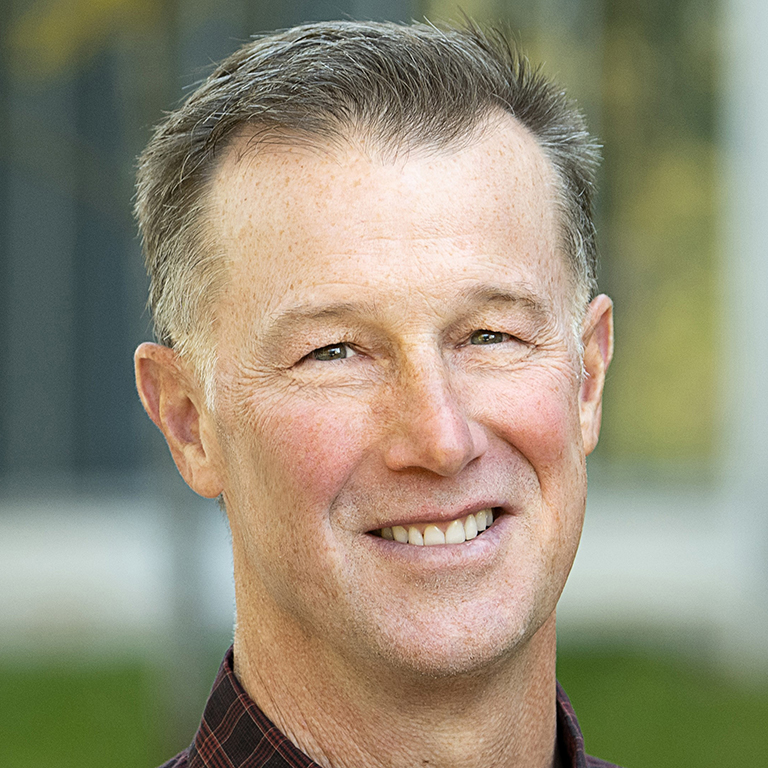
Andrew Lynch serves as Professor and Associate Dean for Program Development in the Department of Modern Languages & Literatures within the College of Arts and Sciences at the University of Miami. His academic leadership extends beyond teaching responsibilities to include significant administrative contributions to program development across the institution. Lynch's research interests center on sociolinguistics with particular focus on Spanish language dynamics in Miami, heritage language socialization, bilingualism, and language ideology. His work examines how language functions within specific social contexts, especially in workplace environments where Spanish heritage speakers navigate linguistic demands. He investigates the complex interplay between language, identity, and social structures in postmodern urban settings, with special attention to the Cuban diaspora experience in South Florida. His publication record reveals consistent scholarly engagement with heritage language education, Spanish language variation, and the sociolinguistic landscape of global cities. Lynch's research demonstrates how language practices in Miami reflect broader patterns of linguistic adaptation and resistance within diasporic communities. His work often addresses the tension between linguistic heritage and social integration, examining how language ideologies shape educational practices and community identity. Lynch's scholarly contributions span multiple formats, including single-authored books, co-authored publications, handbook chapters, and journal articles in both English and Spanish. His work frequently appears in high-impact sociolinguistics and language education journals, reflecting his interdisciplinary approach that bridges theoretical linguistics with practical educational implications.
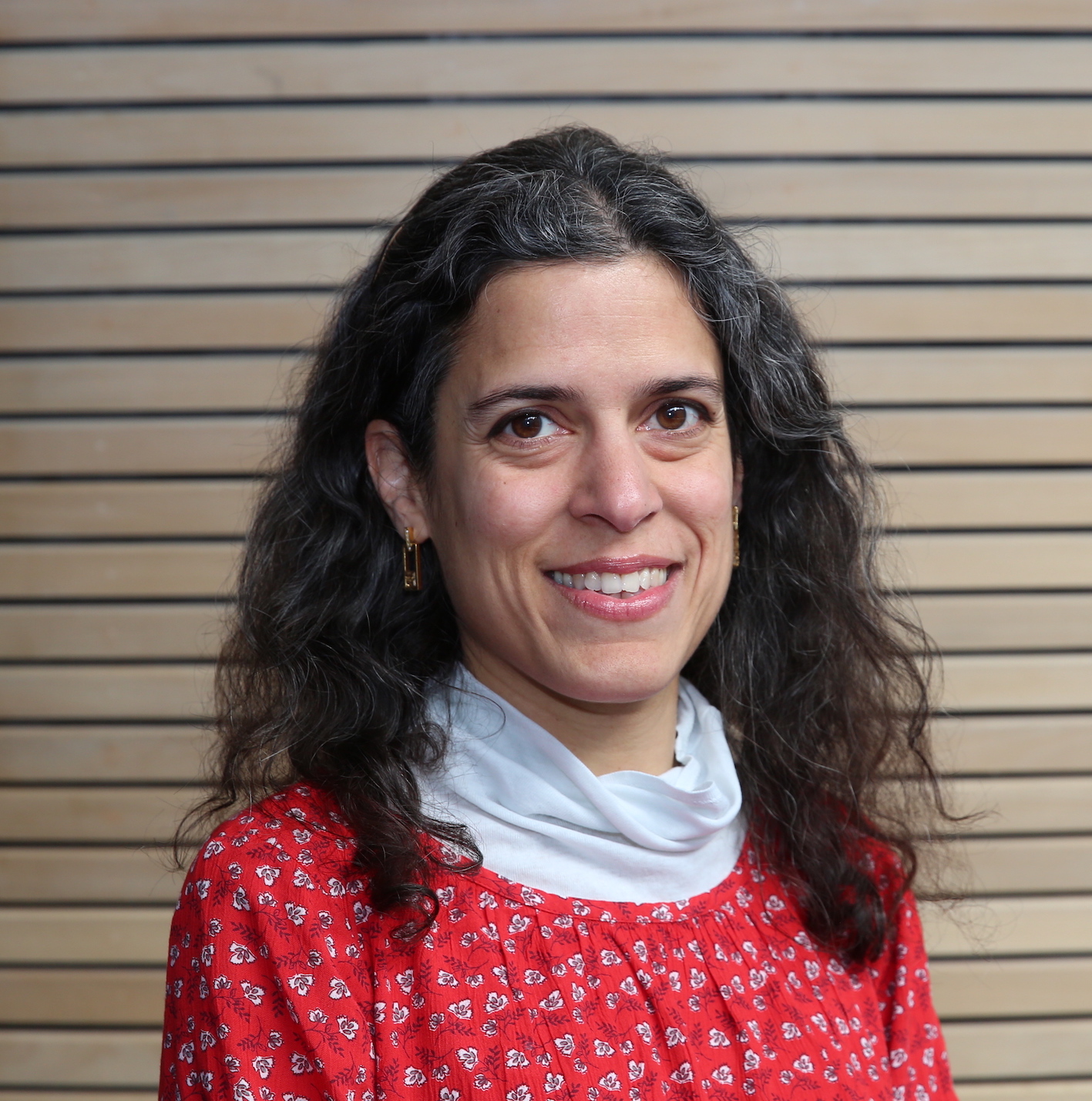
Laurel MacKenzie is an Associate Professor in the Department of Linguistics at New York University (NYU), affiliated with the Faculty of Arts and Science. She specializes in variationist sociolinguistics, dialectology, and language change, with a focus on English and French varieties. Her work integrates quantitative analysis of speech data to explore intra-speaker variation and language evolution. She co-directs the NYU Sociolinguistics Lab and leads the NSF-funded NYC Individual Differences Corpus project, alongside the Our Dialects initiative, an online atlas of British English dialects. Education: PhD in Linguistics, University of Pennsylvania (2012) BA in Linguistics and French, University of California, Berkeley (2006) Research Interests: Morphological and syntactic variation Regional dialects of English and French Linguistic pedagogy and public engagement Recent Projects: Recent work includes publications on participle leveling in English, sociolinguistic replication studies, and grammatical variation analysis. She has also collaborated on dialect mapping tools and consulted for media projects on language change and accents. Awards: No awards explicitly listed in provided texts. Labs/Teams: NYU Sociolinguistics Lab (Co-Director) Our Dialects Project (Academic Lead)
Satoshi Tomioka is a Professor in the Department of Linguistics and Cognitive Science at the University of Delaware, affiliated with the College of Arts & Sciences. He holds a B.A. from International Christian University (Tokyo) and a Ph.D. from the University of Massachusetts Amherst. His expertise spans semantics, pragmatics, syntax, and prosody, with a focus on Japanese and comparative East Asian linguistics. Education: B.A. in Liberal Arts (1987), International Christian University; Ph.D. in Linguistics (1997), University of Massachusetts Amherst. Research interests include ellipsis, anaphora, wh-interrogatives, distributivity, and contrastiveness. He investigates how prosody interacts with syntax and semantics in Japanese, exploring topics like focus marking, intervention effects, and scalar implicatures. Recent work examines associative plurals and pragmatic disambiguation in embedded questions. Publications analyze theoretical and empirical questions in linguistic interfaces, such as Bare quotatives as embedded speech acts (2024) and Focus without pitch boost (2022). His work bridges formal semantics and experimental approaches, addressing challenges in cross-linguistic typology and cognitive aspects of language processing.
Bistra Andreeva is a full Professor of Phonetics and Phonology at Saarland University, Department of Language Science and Technology. She is also a principal investigator of the DFG-funded project “Judeo-Spanish in Bulgaria: a contact language between archaism and innovation” (2022-2025) and leads or co-leads several other externally funded projects on prosody, information structure, and language contact. She teaches and has taught at Saarland University, Sofia University “St. Kliment Ohridski”, and other European universities. Education & Academic Background Habilitation (kumulative Habilitationsschrift): “Contrastive Prosody: Bulgarian vs. German”, Saarland University, 2016. PhD (Dr. phil.): “Zur Phonetik und Phonologie der Intonation der Sofioter-Varietät des Bulgarischen”, Saarland University, 2007. Research Interests Andreeva’s research focuses on the phonetics and phonology of intonation and rhythm, cross-language and individual differences in the production and perception of syllabic prominence, the relation between intonation and information structure, minority languages (especially Judeo-Spanish in Bulgaria), and the interaction between information density and prosodic structure. Her methodological expertise includes experimental phonetics, corpus-based studies, and acoustic analysis. Major Projects SFB 1102 C1: “Information Density and the Predictability of Phonetic Structure” (DFG, 2014-2026) JuSpa: “Judeo-Spanish in Bulgaria: a contact language between archaism and innovation” (DFG, 2022-2025) Prosodic aspects of Bulgarian compared to other languages with lexical stress (Bulgarian National Science Fund, 2019-2024) Prosodic manifestations of focus in French and English from a Bulgarian point of view (DAAD & Sofia University, 2021-2023) Scientific Awards & Recognition While no major named prizes are listed, Andreeva’s work has been continuously supported by competitive grants from the German Research Foundation (DFG), DAAD, and Bulgarian National Science Fund. Her publications appear in top-tier journals and conference proceedings (Journal of the Acoustical Society of America, Interspeech, Speech Prosody, International Congress of Phonetic Sciences). Teaching & Supervision She offers a broad spectrum of courses including Experimental Phonetics, Prosody, Phonetics & Phonology of Slavic Languages, Introduction to Instrumental Phonetics, and seminars on language contact. She has supervised numerous BA, MA, and PhD theses and regularly teaches at the PhD School of Sofia University. Labs & Teams She is affiliated with the Phonetics Laboratory at Saarland University and collaborates closely with the Institute for Bulgarian Language (Bulgarian Academy of Sciences), working in interdisciplinary teams involving phoneticians, computational linguists, and field linguists.
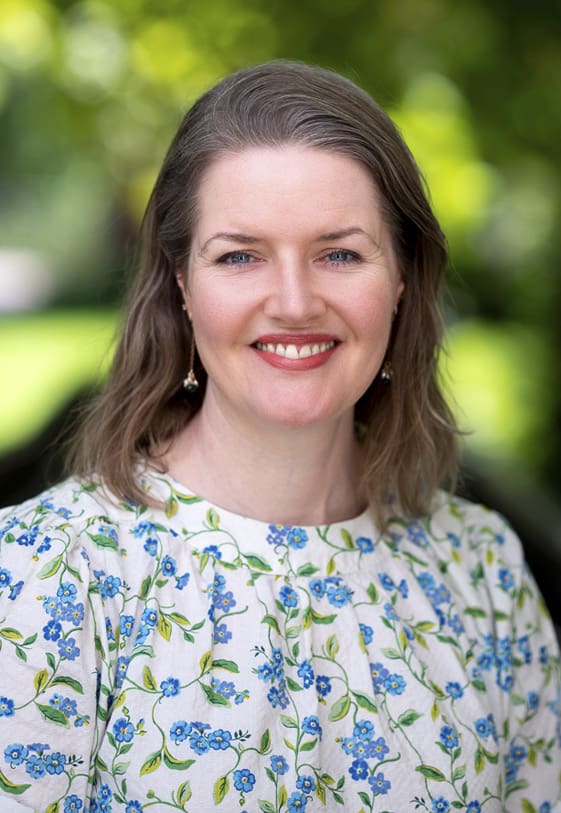
Georgia Zellou is an Associate Professor in the Department of Linguistics at the University of California, Davis, where she co-directs the Phonetics Lab and conducts award-winning research at the intersection of phonetics, speech perception, and human-AI interaction. Her work investigates how phonetic detail is cognitively represented through variations in speech production, with significant contributions to understanding speech alignment with voice assistants, face-masked speech intelligibility, and cross-linguistic perception of synthetic voices. Her academic credentials include a Ph.D. in Linguistics from the University of Colorado at Boulder (2012), an M.A. in Linguistics from Stony Brook University (2007), and a B.A. in Linguistics & Anthropology from the University of Florida (2005, Cum Laude, Phi Beta Kappa). Ph.D., Linguistics, University of Colorado at Boulder (2012) M.A., Linguistics, Stony Brook University (2007) B.A., Linguistics & Anthropology, University of Florida (2005) Professor Zellou's research program centers on laboratory phonology approaches to real-world communication challenges, examining how acoustic-phonetic details influence speech perception across contexts. Her studies span speech alignment with voice-AI systems (e.g., Amazon Alexa), sociophonetic variation in bilingual speech, and the cognitive mechanisms underlying perceptual compensation for coarticulation. She employs experimental methods including eye-tracking, acoustic analysis, and perceptual testing to uncover how phonetic variation functions pragmatically in human communication and human-machine interaction. Analysis of her 15 most recent publications (2023-2025) reveals three dominant research trajectories: (1) human-AI voice interaction dynamics, including prosodic alignment and social evaluation of TTS voices; (2) intelligibility optimization in challenging contexts (face masks, clear speech for diverse listeners); and (3) cross-linguistic phonetic variation in vowelless words and consonant clusters. These works consistently bridge theoretical phonology with applied speech technology, demonstrating how fine-grained phonetic detail influences communication effectiveness in both human-human and human-machine contexts. Her scientific recognition includes: Fulbright Scholar (2022) for research in France Chancellor’s Award for Excellence in Undergraduate Mentoring (2019) Fellow of the Linguistic Society of America (2020) Amazon Faculty Research Award (2019) for Alexa-related speech studies Dean’s Fellow designation at UC Davis (2020-2023) Professor Zellou maintains an active mentoring practice recognized with the Chancellor’s Award, supervising undergraduate researchers in the Phonetics Lab while teaching core linguistics courses from introductory to advanced graduate levels. Her research program is supported by competitive grants including NSF funding, Amazon Research Awards, and UC Davis internal grants (Hellman Foundation, ISS Junior Faculty Grant), reflecting the translational value of her work for speech technology development. She has co-directed major initiatives including the 2019 LSA Linguistic Institute. The Phonetics Lab she co-leads serves as a hub for experimental phonetics research, focusing on speech production-perception relationships through projects investigating vocal accommodation to voice assistants, nasal coarticulation dynamics, and cross-linguistic prosody. Current collaborations with industry partners aim to implement human speech adaptation principles into voice assistant design to enhance naturalness and engagement.
Berrak Sisman is an Assistant Professor in the Department of Electrical and Computer Engineering at Johns Hopkins University, affiliated with the Data Science and AI Institute and the Center for Language and Speech Processing (CLSP). She leads the Speech & Machine Learning Lab (SmILe Lab), focusing on AI-driven speech technologies. She received her PhD from the National University of Singapore in 2020 and was previously a tenure-track faculty member at the University of Texas at Dallas (2022–2024). Research Interests: Her work spans artificial intelligence, speech synthesis, voice conversion, emotion analysis in speech, medical speech applications, and secure speech technology. She develops neural models for expressive and adaptive speech processing. Publications: Her recent articles (2024–2025) emphasize speech emotion recognition, zero-shot prosody control, accent conversion, and disentangled representations in TTS, reflecting a focus on cross-modal learning, robustness, and real-world applications. Awards & Grants: NSF CAREER Award (2024) Amazon Faculty Research Award (2022) Singapore Ministry of Education Award (2021) A*STAR Singapore International Graduate Award (2016–2020) Leadership: She directs the SmILe Lab, recruiting PhD/Master’s students for projects in neural speech modeling. Her grants include NSF and Amazon funding for voice conversion and emotion synthesis research.
Shannon Barrios is an Associate Professor in the Department of Linguistics at the University of Utah, where she has served since 2022. She co-directs the Speech Acquisition Lab and specializes in second language acquisition, phonetics/phonology, and psycholinguistics. Her research explores how adult learners develop perceptual and lexical representations of novel phonological contrasts, with a focus on cross-language speech perception, orthographic effects, and social factors in input processing. BA, Spanish (SUNY Geneseo, 2004) MA, Linguistics (Syracuse University, 2007) PhD, Linguistics (University of Maryland, 2013) Her research interests span adult second language acquisition , phonolexical development , and accent bias . She investigates how learners process phonological contrasts, the role of orthography in speech perception, and the influence of social roles (e.g., teachers vs. peers) on language learning. Her work combines behavioral experiments, ERP/MEG neuroimaging, and computational modeling. Barrios’ recent publications (2024–2020) focus on representational fuzziness , talker variability , and lexical contrast mechanisms . Her 2024 Languages paper proposes a factorial typology for evaluating auditory word recognition scenarios, while her 2024 JASA Express study highlights individual listener variation in cross-language speech perception. Earlier works examine allophone acquisition, orthographic input effects, and neural correlates of phonological mapping. She has received two teaching awards from the University of Maryland (2013). Her teaching portfolio includes undergraduate and graduate courses in phonetics , psycholinguistics , and second language acquisition theory . She also leads workshops on research ethics, mentee development, and academic literacies.
Nicholas Henriksen is an Arthur F. Thurnau Professor and Professor of Spanish & Linguistics at the University of Michigan, where he has held faculty positions since 2012. His research focuses on laboratory phonology, experimental phonetics, sociophonetics, and intonational grammar in Spanish and other Romance languages. Notable projects include studies on sound change in Andalusian and Patagonian Spanish, bilingualism (Afrikaans-Spanish), and second language speech learning. He directs the Michigan Speech Production Lab and co-leads initiatives integrating gender-diverse language into Romance curricula. Henriksen earned a PhD in Linguistics from Indiana University (2010), MA in Hispanic Linguistics (2006), and BA in Spanish/Mathematics from Rutgers (2003). His teaching spans undergraduate and graduate courses in Spanish linguistics, sociolinguistics, and phonetics, emphasizing applied research and pedagogical innovation. He has received prestigious awards, including the LSA Early Career Award (2021) and the Class of 1923 Teaching Award (2018). His research has been funded by grants from the University of Michigan ADVANCE Program and the Humanities Collaboratory, supporting projects like From Africa to Patagonia: Voices of Displacement . Collaborations include work with scholars in Argentina, South Africa, and Spain, examining language contact, heritage language maintenance, and sociolinguistic identity. Publications span over 30 peer-reviewed articles and book chapters, with a focus on phonetic variation, intonation, and bilingualism. He mentors graduate students in experimental phonetics and sociolinguistics, with advisees contributing to studies on Andalusian Spanish, heritage language acquisition, and voice quality.
Erik W. Willis is an Associate Professor in the Department of Spanish and Portuguese at Indiana University Bloomington, where he also serves as Director of Graduate Studies and Director of the Hispanic Linguistics Program. His work focuses on Spanish phonetics, phonology, and dialectal variation, particularly in Caribbean and Mexican Spanish varieties. He employs acoustic analysis and laboratory methods to study rhotic contrasts, intonational patterns, and sociolinguistic phenomena. Ph.D., University of Illinois at Urbana-Champaign (2003) M.A., Brigham Young University (1997) B.A., Brigham Young University (1994) His research spans multiple subfields including: Acoustic characterization of Spanish rhotics Intonational system analysis using Sp_ToBI Second language phonology acquisition Web-based language assessment tools Vowel system variations in Spanish dialects Contextual phonetic realizations in Caribbean Spanish Recent publications demonstrate systematic variation in coda liquids, tap-trill contrasts, and intonational patterns across Dominican, Puerto Rican, and Mexican Spanish. His work combines empirical acoustic analysis with sociolinguistic frameworks to document both phonetic realizations and their pragmatic functions in spoken language.
Professor Devyani Sharma is a Professor of Linguistics at Queen Mary University of London, affiliated with the Department of Linguistics within the School of Languages, Linguistics and Film. She holds a PhD from Stanford University. Her research focuses on sociolinguistics, style variation, migration, bilingualism, new varieties of English, syntax, typology, and accent bias. She has conducted extensive studies on diasporic communities, particularly Punjabi Londoners, examining dialect development and social change through projects like 'Generations of London English' and 'Accent Bias in Britain.' Her work integrates quantitative and qualitative methods, including sociolinguistic interviews, acoustic analysis, and discourse analysis. Notable contributions include studies on the role of social networks in language variation, the concept of 'lectal focusing,' and the impact of accent biases in professional contexts. She has authored/co-authored books such as From Deficit to Dialect: The Evolution of English in India and Singapore (2023) and edited volumes including English in the Indian Diaspora (2014). Professor Sharma collaborates on public engagement initiatives like Teach Real English! and Multilingual Capital , aiming to improve linguistic education and address accent bias in society. Her research has been funded by grants from the ESRC and other UK organizations, totaling over £412,000 for major projects. She serves as Associate Editor for the Journal of Sociolinguistics and contributes to international conferences and workshops.
Felicitas Kleber is Professor of Speech Science in the Department of Language Science and Technology at Saarland University (Universität des Saarlandes). Her research profile demonstrates extensive expertise in experimental phonetics and laboratory phonology with a particular focus on German dialects and sound change phenomena. She maintains active research collaborations, most notably with J. Harrington and Ulrich Reubold, resulting in numerous high-impact publications in leading linguistics and phonetics journals. Her research interests span experimental phonetics and laboratory phonology with specific expertise in speech production and perception , sound change processes, German dialectology , phonological acquisition , and prosody and intonation analysis. Her work frequently examines the acoustic, perceptual, and articulatory dimensions of speech, particularly focusing on vowel and consonant quantity phenomena in German varieties. Analysis of her publication record reveals consistent methodological rigor with emphasis on acoustic analysis, perception experiments, and longitudinal studies. Her research often investigates sound changes in progress, particularly examining vowel fronting phenomena in both German and English varieties, and the relationship between speech production and perception mechanisms. Much of her work employs apparent-time analyses to track diachronic changes through synchronic variation across age groups. Professor Kleber serves as an Associate editor for the Journal of the Acoustical Society of America, reflecting her standing in the field. She has secured significant research funding including the DFG-funded project "Typology of vowel and consonant quantity in South German varieties: acoustic, auditory, and articulatory analyses of adult and child speakers" (2016-2024) and the DAAD-supported "Form and function of prosodic structure in Hungarian and German" (2015-2016). Her research methodology typically combines acoustic analysis with perception experiments and sometimes articulatory measurements to provide comprehensive insights into phonetic phenomena.
Jose Ignacio Hualde is a Professor at the University of Illinois, holding joint appointments in Spanish and Portuguese, Linguistics, French and Italian, the European Union Center, and the Center for Latin American and Caribbean Studies. His research focuses on synchronic and diachronic phonology, sound change, prosody, and Romance and Basque linguistics. He is affiliated with the Department of Spanish, Italian, and Portuguese and maintains an office in the Foreign Languages Building. Research Interests: Phonological structure and historical evolution Basque linguistic typology and dialectology Prosodic systems in Romance languages Phonetic-phonological interfaces Recent Research Trends: His 2023-2025 publications emphasize Basque dialect analysis, Romance allophonic processes, and prosodic salience. Works combine experimental methods with diachronic reconstruction to address core questions in phonological theory. Professional Activities: Has delivered over 30 invited lectures (e.g., 1992-1996) and served on editorial boards like Folia Linguistica. Active in international scholarly networks with collaboration evidence across multiple countries. Labs/Teams: Engaged in interdisciplinary linguistic research through the Department's language programs and affiliated centers.
Margaret E. L. Renwick serves as Associate Research Professor and Director of Undergraduate Studies in the Department of Cognitive Science at Johns Hopkins University's Krieger School of Arts and Sciences. Previously holding a tenured position in Linguistics at the University of Georgia, she brings extensive expertise in speech variation and phonological systems to her current role. Her academic journey includes affiliation with the Phonetics Laboratory at the University of Oxford. Dr. Renwick's research focuses on sociophonetics and laboratory phonology, examining how speakers manipulate phonetic detail in patterned ways while listeners extract linguistic and social meaning from speech. Her work investigates phonological contrast, regional accents of US English (particularly Southern accents), and linguistic change across generations. A significant portion of her research explores African American vowel systems in Georgia and Italian mid-vowel systems, bridging theoretical linguistics with empirical acoustic analysis. Analysis of her recent publications reveals a strong trend toward computational approaches in phonetics, with increasing use of machine learning techniques like the Phonet library for vowel variation analysis. Her work consistently bridges theoretical phonology with empirical acoustic data, showing particular strength in regional variation studies across multiple language systems including English and Romance languages. Dr. Renwick actively mentors students through the Renwick Lab, welcoming advisees at all levels including PhD and MA candidates in Cognitive Science at JHU. Her teaching portfolio includes courses in Acoustic Phonetics, Sociophonetics, and her First-Year Seminar 'Who Has an Accent?' examines sociolinguistic perceptions of speech variation. The Renwick Lab functions as a comprehensive research environment focused on spoken language analysis, providing resources for phonetic research including tools for IPA transcription, acoustic analysis with Praat, and computational approaches to speech data. The lab supports both theoretical investigations of phonological systems and practical applications of speech technology.
Susanne Schötz is an Associate Professor of Phonetics at Lund University's Centre for Languages and Literature and a Researcher at the Lund University Humanities Lab. She is also the project manager for Cat-human communication research and a member of the LU Profile Area: Natural and Artificial Cognition. Her research focuses on phonetic variation in three main areas: dialectal variation in Swedish and other languages, paralinguistic variation related to age, emotion, attitude and health condition, and phonetic variation in human-animal communication, particularly cat-human communication. She has led several research projects including Melody in human–cat communication (Meowsic), Cat–Human Communication, and studies on Estonian Swedish and Swedish vowel articulation using articulography. Dr. Schötz teaches courses at the speech and language pathology and audiology programs at Lund University. Her work with cats has gained significant attention, including winning the Ig Nobel Prize in Biology in 2021 for research on cat-human communication. Her research output demonstrates strong trends in animal communication, particularly focusing on the acoustic properties of cat vocalizations and how humans perceive and interpret these sounds. She combines traditional phonetic analysis with innovative approaches to study cross-species communication, making significant contributions to both linguistics and animal behavior studies. Scientific Awards: The Ig Nobel Prize in Biology (2021) Årets Mäster (Master of the Year) (2020) Vetenskapssocieteten Lunds universitet (2016) Vetenskapssocieteten i Lund: Stipendium för betydande insats inom humanistisk forskning (2007) Dr. Schötz has supervised research projects and students in phonetics and human-animal communication. Her work has been supported by various research funds including MAW, SKK och Agrias forskningsfond, and the Pufendorf IAS. She is in charge of the articulographs in the Humanities Lab, which are essential for her research on speech production and articulation. She is actively involved in the Lund University Humanities Lab, contributing to its mission of interdisciplinary research in the humanities through her expertise in phonetics and communication studies.
Drew Weatherhead is an Assistant Professor (part-time) in the Department of Psychology and Neuroscience at Dalhousie University, affiliated with the Faculty of Science. His research focuses on early language acquisition, sociolinguistic development, and how infants and children process accented speech and speaker characteristics such as race. Education : COGS-P-BCH, Queen’s University PhD, University of Waterloo Postdoctoral Fellow (PDF), University of British Columbia Research Interests : Dr. Weatherhead investigates mechanisms of language acquisition in infants and young children, using methods like eye-tracking and fNIRS. His lab explores how social factors (e.g., race, accent) influence linguistic perception and learning. Key areas include sociolinguistic variation, race-based expectations in word learning, and bilingualism. Publications : His work emphasizes the intersection of social cognition and language development, with recent studies on accent processing, speaker race, and contextual influences on word generalization. Outputs span journals like Developmental Science , Cognition , and Journal of Experimental Psychology . Advising & Labs : Dr. Weatherhead is currently not accepting new Clinical PhD, Honours, or Directed Research students (2026-2027). He leads the Cognition and Language Learning Research Group, focusing on experimental methods to decode early language mechanisms.