Vassilis Nitsiakos is a Professor of Social Folklore at the University of Ioannina, Department of History and Archaeology. He also serves as Director of the International Konitsa Summer School in Anthropology, Ethnography, and Comparative Folklore of the Balkans. His academic career spans teaching, research, and leadership in interdisciplinary projects across Europe. PhD in Social Anthropology, University of Cambridge Director of multiple EU-funded research initiatives Research Interests include: Migration, borders, and national identities Cultural ecology and environmental perception Economic/social/cultural transformations in Greece and the Balkans The intersection of myth, ritual, and modernity Orality, literacy, and cultural memory Demographic issues and rural labor dynamics Scientific Activity demonstrates a focus on fieldwork-based projects, including the Analyses Localisees de Changement Social (1986-1989) and ARCHAEOMEDES II (1996-1999). His publications span monographs, edited volumes, and multilingual articles (Greek, English, Italian, Albanian, Bulgarian), emphasizing Balkan borderlands and cultural sustainability. Teaching includes courses on: Introduction to Folklore Nations and ethnic identities in the Balkans Cultural construction of space/time Methodological issues in social sciences Networks include founding the Border Crossings academic network, organizing annual student conferences (since 2004), and the Konitsa Summer School (since 2006). He has contributed extensively to interregional cooperation and postgraduate methodology seminars.
Ivana Rota is an Associate Professor in the Department of Foreign Languages, Literatures and Cultures at the University of Bergamo, Italy. She holds a degree in Foreign Languages and Literatures (1991, summa cum laude ) and a PhD in Iberian Studies (1997) from Bologna/Pisa. Her academic career spans from University Researcher (2007-2020) to Associate Professor since 2020. Researcher in Spanish Literature (SSD L-LIN/05) Teaches 'Romantic Theatre' and 'Novela del siglo XXI' (10 credits) Lecturer in 'Spanish Literature: Modernity and Postmodernity I' (9 credits) Her research focuses on Spanish literature of the early 20th century, particularly historical avant-garde movements and Ultraism. She investigates: Halma Angélico's multidisciplinary production Women's periodicals between dictatorships GENDER-BASED VIOLENCE representation LITERARY MAGAZINES of the Edad de Plata NEO-RURAL NOVELS and historical memory 'RARAS U OLVIDADAS' female authors Her publications span 2006-2025 across three dimensions: Avant-Garde Studies : 1920s Spanish intellectual networks Gender Analysis : Medical advice to women in 1930s Madrid Literary Periodicals : Women's magazines as cultural platforms Current teaching includes: Contemporary Spanish literature analysis Transatlantic translation practices Interdisciplinary workshops on literary translation 20th-century Spanish drama studies
Erika Lalíková is an Associate Professor at the Department of Philosophy and History of Philosophy , Faculty of Arts, Comenius University in Bratislava. Her academic career spans over three decades, including roles as assistant (1988–1998), Assistant Professor (1998–2011), and Associate Professor since 2012. Education: Graduated from Banská Štiavnica grammar school (1983) and Comenius University's Department of Philosophy (1988), earning her PhD in 1999. Her research focuses on history of modern philosophy , Slovak and Czech philosophical traditions , and intersections between literature and philosophy . She has published extensively on naturalism , existentialism , and national identity in Central European contexts. Key publication trends include: 1) Czechoslovak Enlightenment thought (Kant, Voltaire, Štúr), 2) 20th-century Slovak philosophy (Vámoš, Tatarka, Masaryk), 3) memory and identity in interdisciplinary frameworks, and 4) naturalism vs. constructivism debates. She contributes to editorial boards of Philosophical Journal (Prague) and Studia Philosophica (Brno). Current research involves international collaboration through grants like VEGA 2/0166/24 (Concepts of culture/nation in Slovak thought) and APVV-22-0397 (Naturalism vs. Constructivism). Previous projects include studies on rationality-emotionality (VEGA 1/0429/15) and Polish-Slovak philosophical dialogue (APVV 2010–2011).
Dr. Gianamar Giovannetti-Singh (he/him) is an Assistant Professor in Colonial Environmental History and Decolonial Futures at the University of Amsterdam. His research focuses on global histories of science, science and empire, colonial history, and environmental history. University of Amsterdam Faculty of Humanities Department of History Leverhulme Trust Early Career Fellowship (2023-26) His research investigates how early modern Europeans integrated East Asian knowledge systems at the Cape of Good Hope, creating hybrid scientific practices through Asian-African-European interactions. He specializes in Jesuit China missions, Eurasian knowledge exchange, and the history of intercultural encounters. Key publications include studies on astronomical chronology, racial capitalism in Voltaire's work, and Jesuit adaptations of Chinese medical practices. Current research examines knowledge production during colonial encounters and seeks to provincialize European scientific narratives. Award highlights: 8th Dissertation Prize (DHST, IUHPST) Coventry-Emsley Prize Lisa Jardine Award Freer Prize Fellowship Shortlisted for BBC New Generation Thinker Award He holds a PhD from the Department of History and Philosophy of Science at the University of Cambridge (2023), with affiliations including the Royal Historical Society, History of Science Society, and British Society for the History of Science.
Maria Rentetzi is a Full Professor at the Faculty of Humanities, Social Sciences, and Theology at Friedrich-Alexander-Universität Erlangen-Nürnberg (FAU), holding the Chair of Science, Technology and Gender Studies . She earned her PhD in Science and Technology Studies from Virginia Tech and has held prestigious positions including Lise Meitner Fellow of the Austrian Science Fund and Silverman Professor at Tel Aviv University. Her work has been recognized with the Gutenberg-e Prize and an ERC Consolidator Grant (770548) . Education PhD in Science and Technology Studies, Virginia Tech, USA MA in History of Science and Technology, National Technical University of Athens Undergraduate in Physics, Aristotle University of Thessaloniki Her research focuses on the history of radioactivity , gender and science , science diplomacy , and the cultural history of tobacco . Recent publications explore topics such as nuclear standardization, radiation safety, and gendered material culture. She serves as an ERC Ambassador and edits the Science Diplomacy book series. Scientific Awards Gutenberg-e Prize, American Historical Association ERC Consolidator Grant (HRP-IAEA, 770548) Lise Meitner Fellow, Austrian Science Fund She is actively involved in international science diplomacy initiatives and will spend 2025–26 as a science diplomacy fellow at Aarhus Institute for Advanced Studies. Her work bridges historical analysis with contemporary policy implications, particularly in nuclear safety and gender equity in STEM.
George Vlahakis is an Associate Professor of History of Science and Philosophy at the School of Humanities, Hellenic Open University. He serves as Director of the M.Sc. Program "Science Communication" and investigates the interplay between science and politics in Greece from the 18th century to post-WWII, with a focus on left-wing scientists and the military junta era. He leads the Commission for Science and Literature (DHST/IUHPST), is Secretary of the European Physical Society's History of Physics Group, and a correspondent member of the International Academy of the History of Sciences. Research Interests : History of Science in Greece, Science-Politics intersections, Science and Religion, Science in the Public Sphere, Science and Literature. Key Contributions : Extensive work on physicist Achilles Papapetrou, the Queen Frederica-Werner Heisenberg relationship, and edited volumes like "Imperialism and Science" (2006). His publications span topics from scientific family networks to Cold War-era Greek physics, with recent work on Ottoman-era Greek educational institutions (2019). He has participated in international conferences and collaborations, emphasizing cross-cultural and interdisciplinary perspectives.
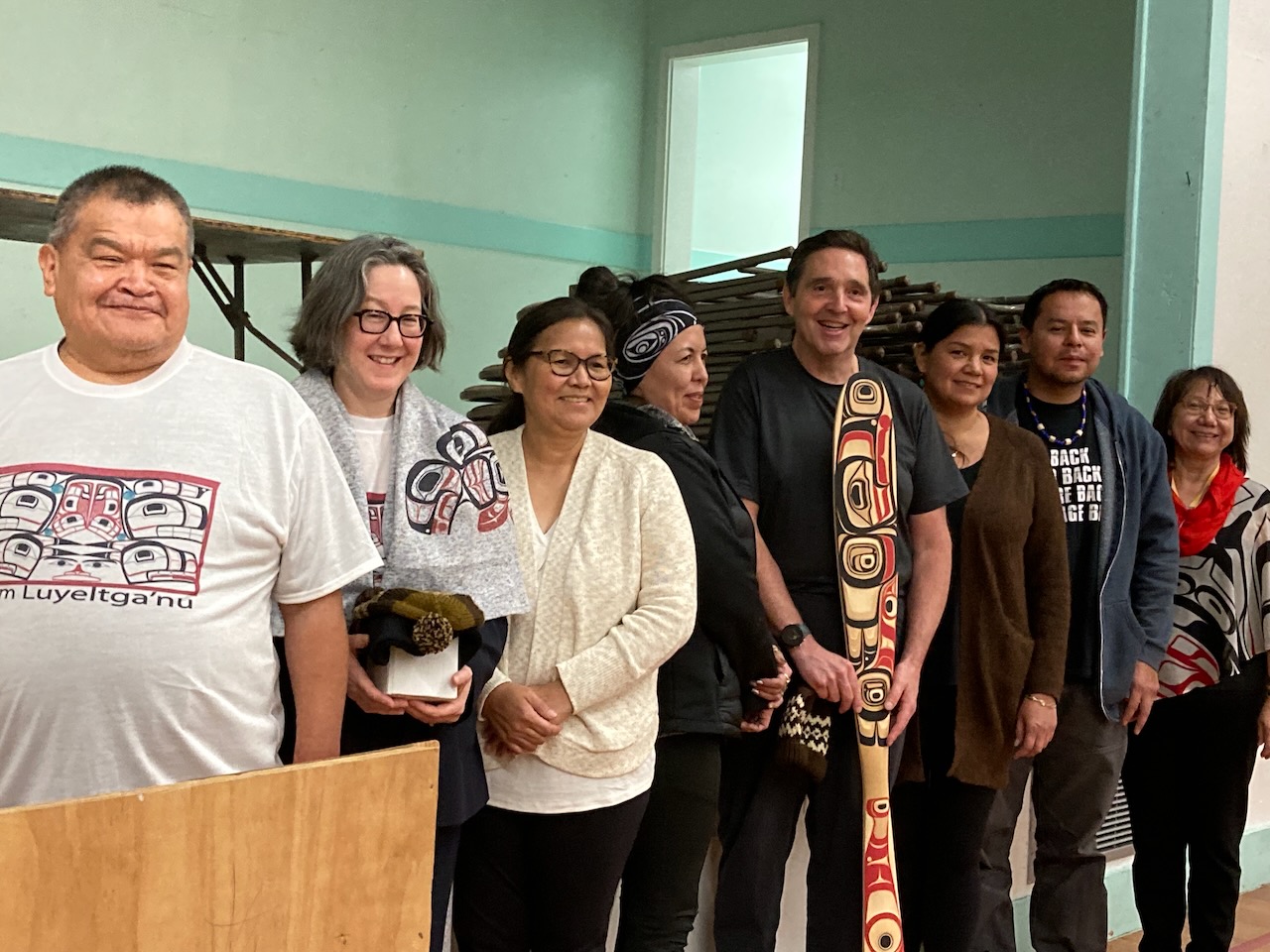
Charles Menzies (hagwil hayetsk), a member of Gitxaała Nation and enrolled member of the Tlingit and Haida Tribes of Alaska, is a Professor in the Department of Anthropology within the Faculty of Arts at the University of British Columbia. He serves as Director of the Ethnographic Film Unit at UBC and coordinates the ecological anthropology research group Forests and Oceans for the Future. Menzies is also an elected joint-faculties senator on the UBC-V Senate (2020-2026) and previously served on the UBC Board of Governors (2017-2020, 2023-2026). He completed his undergraduate degree in anthropology and sociology at Simon Fraser University (1988), followed by an MA in Social Anthropology at York University (1988) and a PhD in Cultural Anthropology from the City University of New York (1998). Menzies' research focuses on Indigenous knowledge systems, natural resource management (particularly fisheries), political economy, contemporary First Nations' issues, maritime anthropology, and the archaeology of north coast BC. His work bridges socio-cultural anthropology with archaeological methods, particularly through the Laxyuup Gitxaaɫa project which documents the traditional territory of Gitxaaɫa Nation. He has conducted field research in north coastal BC, Canada; Brittany, France; and Donegal, Ireland, with a particular emphasis on Indigenous-led approaches to research and knowledge production. His scholarly output demonstrates consistent engagement with issues of Indigenous sovereignty, collaborative research methodologies, and critiques of colonial power structures. Recent work shows increasing focus on visual anthropology through ethnographic film, Indigenous futurisms, and decolonizing academic research practices. Menzies frequently publishes on the intersection of Indigenous knowledge and environmental management, particularly regarding salmon ecosystems and maritime communities. Menzies has supervised numerous graduate students whose work focuses on natural resource management, municipal politics, local development projects, climate change, and food security. His students now work in NGOs, government agencies, and academic institutions. He founded and directs the Ethnographic Film Unit at UBC and established the online journal New Proposals. His current research projects include Laxyuup Gitxaaɫa, which combines archaeological and socio-cultural anthropology to document Gitxaała Nation's traditional territory.
Christine Helmer is the Peter B. Ritzma Professor of the Humanities at Northwestern University, where she serves as Professor of German with a courtesy appointment in the Department of Religious Studies. She holds significant academic appointments across multiple departments within the Weinberg College of Arts and Sciences and serves as Associate Chair of Willard Residential College. Northwestern University, Weinberg College of Arts and Sciences Department of German (primary appointment) Department of Religious Studies (courtesy appointment) Willard Residential College (Associate Chair) Professor Helmer specializes in Christian theology from historical, systematic, and constructive perspectives, with particular focus on German intellectual history. Her research centers on the theology of Martin Luther, the philosophy and theology of Friedrich Schleiermacher, and the Luther Renaissance movement of early twentieth-century Germany. She has pioneered research on the medieval philosophical underpinnings of Luther's theology, challenging previous scholarly assumptions about Luther's relationship to medieval thought. Her work also explores theology's relationship to the modern study of religion, the humanities, and contemporary cultural challenges including political polarization and human rights. Her scholarship reveals a consistent trajectory from historical analysis to constructive theology, with recent work addressing urgent contemporary issues through theological frameworks. Professor Helmer has significantly shaped the field through her concept of the 'Luther Renaissance' and her argument about how early twentieth-century German theologians constructed the myth of Luther as a modern figure. Her 2019 book How Luther Became the Reformer demonstrates how this myth construction was anti-Catholic and anti-Jewish while containing proto-fascist elements. Honorary doctorate from University of Helsinki (2017) Marie Curie EURIAS Fellowship (2012-2013) Visiting Corcoran Chair at Boston College (2017-2018) Research Fellow in Philosophy and Theology of Humility Project (2014-2015) Professor Helmer has secured significant research funding from the German Academic Exchange Service (DAAD) and the Humboldt Foundation. She founded the 'Lutheran Scholars of Religion' group to address cultural, religious, climatological, and political challenges through theological perspectives. Her teaching includes undergraduate courses on religious thinkers in Western thought, religion and sports, and her popular 'Why College?' class, plus a free Coursera MOOC on 'Luther and the West.' She actively mentors graduate students through Northwestern's Department of German.
Benedicte Christiansen serves as Associate Professor at the Danish National Academy of Music (DKDM), where she has taught Italian for singers since 1997 and conducts writing courses for all BA students. Her academic career is deeply intertwined with professional practice in opera, journalism, and cultural policy. Christiansen graduated as a singer from the Danish Academy of Music in 1995, with further education in Italian at the University of Copenhagen and classical philology at Aarhus University. She also trained as a journalist at the Danish School of Journalism. Her international experience includes living and working in Rome and Trieste, where she studied Italian repertoire with Prof. Marta Lantieri, former head of the Opern Studio at the Vienna State Opera. Her research and professional interests span opera studies, cultural policy, music education, and the intersection of music with democratic society. Christiansen has conducted Italian courses for prestigious institutions including the Danish National Radio choir, the Royal Danish Opera, and the Jutland Opera. She has been instrumental in developing music education initiatives, particularly as the initiator and project manager of OrkesterMester, a nationwide program connecting music schools with school orchestras. Her publications reveal consistent engagement with the economic and social value of opera and symphonic music, cultural diplomacy, and the relationship between arts participation and democratic citizenship. Christiansen approaches these topics through both academic analysis and practical experience, often highlighting international perspectives from Europe and Asia. Speaker at DKDM's music education conference on OrkesterMester (2019) Conference participation at Opera Europe, Antwerp (2019) Co-organizer of Nordic Music and Culture School Union's conferences (Oslo 2017, Finland 2016, Aalborg 2015) Nordic Children's Culture Conference in Nuuk (2014) 2018: Scholarship to the Danish Institute in Rome for research on 'La pronunzia ecclesiastica' Christiansen has held leadership positions including head of the secretariat for music schools' trade association (2013-2018), head of administration for the Jutland Opera (2019), and head of Bornholm's Cultural School (from 2021). She has been elected to the Study Board and Conservatory Council at DKDM for multiple election periods and serves on the sector board for leaders in the Danish Association of Masters since 2019.
Assoc. Prof. PhD Anna Marinova Ivanova is a faculty member at the Faculty of Philosophy within the University of Veliko Tarnovo . She specializes in Epistemology , Philosophy of Science , and Ethics , with a focus on epistemic justification , scientific objectivity , and intercultural philosophical discourse . ORCID: 0000-0002-1312-5684 University email: anna.ivanova@ts.uni-vt.bg Ivanova's research explores the intersection of epistemic norms and linguistic frameworks , as seen in her work on testimony theory , teleological concepts in biology , and critical thinking in multicultural contexts . Her recent publications analyze scientific skepticism , metaphilosophical status of knowledge theories , and axiological dimensions of scientific trustworthiness . Key project involvements include: Laboratory for Applied Academic Ethics (2023-2025): Modernizing facilities for research ethics , academic integrity , and interdisciplinary studies . International Scientific Networks (2021-2025): Collaborative research on epistemological trends , philosophy of education , and global philosophical dialogues . History of Bulgarian Humanitarian Thought (2021-2024): Critical examination of Bulgarian philosophical traditions , science-philosophy intersections , and epistemological methodologies . She contributes to academic community building through: Co-organizing international conferences like "30 Years of Philosophy Specialization" (2022) and "Philosophy, Science, Values" (2024) Coordinating the International Student Philosophical Essay Contest (2025) to bridge high school and university education Advancing WoS-indexed publications and international research networks with Serbian, Polish, and Romanian institutions
Richard J. Ross is the David C. Baum Professor of Law and Professor of History at the University of Illinois at Urbana-Champaign, where he holds a joint appointment in the College of Law and History Department. He serves as co-director of the Illinois Program in Legal History and founder/director of the Symposium on Comparative Early Modern Legal History. His academic career spans multiple institutions, having previously held positions at the University of Wisconsin-Madison and visiting appointments at Harvard, NYU, University of Pennsylvania, Hebrew University, and Tel Aviv University. Dr. Ross earned his BA (1984), JD (1989), and PhD in History (1998) from Yale University, where he served as symposium editor and senior editor of the Yale Law Journal. His interdisciplinary training bridges legal and historical scholarship, providing a unique perspective on the development of law in historical context. Professor Ross's research focuses on three primary areas: the development of early American law in comparative context, the political and intellectual history of legal communications, and the intertwined influence of law and religion on governance. His comparative approach examines American law through the lenses of Spanish New World empire and British Ireland, revealing how America came to see itself as a law-centered society. He has made significant contributions to our understanding of legal pluralism, particularly in colonial contexts where settler law interacted with indigenous legal traditions. His work on legal communications explores how law was transmitted and understood across imperial boundaries, while his research on law and religion investigates how theological concepts shaped legal thought in early modern England and America. Professor Ross's scholarly output demonstrates consistent engagement with comparative legal history, particularly focusing on the early modern period (c. 1492-1815). His publications reveal a sophisticated understanding of how legal systems developed differently yet interconnectedly across the British and Spanish empires. A recurring theme in his work is the concept of legal intelligibility - how different legal cultures understood and negotiated with each other's legal principles. His recent work increasingly emphasizes the role of indigenous peoples in shaping colonial legal systems, challenging traditional narratives of imperial legal dominance. Honorable mention for the 1999 Sutherland Prize from the American Society for Legal History 2013 Carroll P. Hurd Award for Excellence in Faculty Scholarship from the University of Illinois College of Law As director of the Illinois Legal History Program and founder of the Symposium on Comparative Early Modern Legal History, Professor Ross has created important platforms for scholarly exchange. The biennial Symposium brings together law professors, historians, and social scientists to explore comparative legal history topics, traditionally meeting at the Newberry Library in Chicago. His leadership in these initiatives has fostered interdisciplinary collaboration and advanced the field of legal history. Professor Ross has also received research fellowships from Yale Law School, Yale's Institute for Social and Policy Studies, the American Historical Association, the Institute for Research in the Humanities at the University of Wisconsin, and the Spencer Foundation. Professor Ross directs the Illinois Legal History Program and the Symposium on Comparative Early Modern Legal History, creating collaborative spaces for scholars examining law in historical context. His work bridges multiple academic communities, connecting legal scholars with historians and bringing together specialists in British, Spanish, and indigenous legal traditions.
Peter Brown serves as an Honorary Senior Lecturer at the School of Mathematics and Statistics, University of New South Wales (UNSW), Sydney. His academic role centers on undergraduate education as a casual tutor across first and second-year pure mathematics courses, while maintaining active research contributions in theoretical and historical mathematics. His research program bridges Number Theory and History of Mathematics, with significant work in Diophantine equations, arithmetic functions, and elliptic curves alongside cultural studies of Chinese mathematics and ancient Greek texts. This dual focus manifests in publications spanning rigorous theoretical proofs and contextual historical analysis, demonstrating consistent scholarly output from 1997-2015. Publication trends reveal evolving expertise: early work concentrated on classical number theory problems (Pell equations, Möbius functions), while later research incorporated historical dimensions (Chinese mathematics, cultural revolutions) and educational monitoring. The interdisciplinary nature connects abstract mathematical structures with socio-historical frameworks. Scientific Recognition Vice Chancellor's Teaching Award (2009) Science Faculty Lecturer of the Year (2016) Brown's teaching excellence has been formally acknowledged through university-wide awards, highlighting his effectiveness in foundational mathematics instruction. While specific grant funding and doctoral advising aren't documented, his sustained publication record and educational monitoring work indicate ongoing scholarly activity. The absence of laboratory facilities aligns with his theoretical research profile in pure mathematics.
Dr. John Tofik Karam is a Professor at the University of Illinois at Urbana-Champaign, holding appointments in Spanish and Portuguese, Asian American Studies, and serving as Acting Director of the Lemann Center for Brazilian Studies. His work bridges the Middle East and Latin America through transnational Arab diaspora studies. Education: PhD in Anthropology, Syracuse University (2004) MA in Anthropology, Syracuse University (2000) BA in Anthropology, University of Rochester (1996) Karam's research focuses on the intersections of Arab diasporas with South American geopolitics, neoliberalism, and U.S. exceptionalism. Notable works include his award-winning book Another Arabesque and co-edited volume Crescent over Another Horizon , examining Islamic presence in the Americas. Recent projects explore Arab-Brazilian lobbying under Bolsonaro and Muslim philanthropy in border regions. His publications span journals like Journal of American Ethnic History and Brasiliana: Journal for Brazilian Studies , analyzing themes from 20th-century Arab migration to post-9/11 surveillance. Awards include the LASA Brazil Section Prize and Fulbright in 2019-20.
David Cooper is Professor and Head of Slavic Languages and Literatures at the University of Illinois Urbana-Champaign, with concurrent appointments in the School of Literatures, Cultures and Linguistics, Program in Medieval Studies, European Union Center, Russian, East European and Eurasian Center, and National Center for Supercomputing Applications (NCSA). His institutional leadership spans multiple interdisciplinary centers focused on global Slavic studies. Cooper's research centers on Czech and Russian literary traditions with specialized focus on forgery/mystification, translation history, and literary nationalism. His scholarship examines how 19th-century manuscript forgeries shaped national identities, particularly through analysis of the Kralovedvorsky and Zelenohorsky manuscripts. Teaching portfolio includes Slavic Folklore (SLAV 525), History of Translation (SLAV 430), and Post-communist Fiction (SLAV 477), reflecting his dual expertise in historical and contemporary Slavic cultural production. Recent publications demonstrate consistent engagement with textual authenticity and national myth-making, evolving from early work on Russian criticism (2007-2008) to comprehensive studies of Czech manuscript forgeries (2018-2023). His research trajectory reveals increasing methodological sophistication in connecting translation theory with nationalist discourse across Central and Eastern European contexts. Scientific recognition includes: Faculty Fellow, National Center for Supercomputing Applications (2020) Title VIII National Research Competition Grant, National Council for Eurasian and East European Research As department head, Cooper oversees academic programming while maintaining active research collaborations through NCSA and area studies centers. His grant portfolio indicates sustained funding for Eurasian scholarship, though specific student mentorship details aren't documented in source materials. Institutional affiliations demonstrate deep integration within UIUC's global studies infrastructure.
Prof. Dr. Paul Nolte is a distinguished academic at the Free University of Berlin , where he holds the chair in Modern European History with a focus on contemporary international entanglements at the Friedrich Meinecke Institute . From October 2024 to September 2025, he serves as the Gerda-Henkel Visiting Professor at the London School of Economics and Political Science while on leave from Freie Universität. Education : M.A. in History from Johns Hopkins University (1988); Habilitation in Modern History (University of Bielefeld, 1999) His research spans the history and theory of democracy from the 18th to 21st centuries, intellectual history of the 20th century, urban and globalization history , and transatlantic comparisons . Recent work examines coronavirus policy responses , constitutional continuity , and neoliberalism's contested manifestations . Key scientific contributions appear in Geschichte und Gesellschaft (where he co-edits), addressing topics like urbanization , emotional economies , and leadership psychology . His 2023 co-edited special issue on revisiting emotional history demonstrates cross-disciplinary synthesis. Major Awards : Richard von Weizsäcker Fellowship (Oxford), Gerda Henkel Lecturer (DHI Washington), German Kennedy Memorial Fellow (Harvard) As Academic Coordinator of the Berlin Program for Advanced German Studies and Trustee of the Konrad-Adenauer-Stiftung , he shapes scholarly networks. The 2024/25 Gerda-Henkel guest professorship reflects his transnational research agenda.