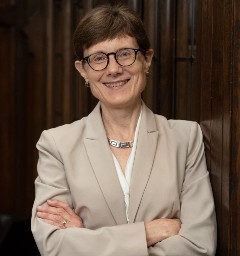
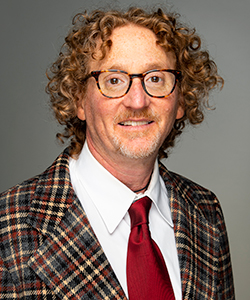
Courtney McKinney serves as a Research Assistant Professor in the Behavioral Health department within the College of Health Sciences and Technology at Rochester Institute of Technology. She currently teaches BHNS-411: Researching the Criminal Mind, focusing on clinical research applications for forensic populations including symptom analysis, violent behavior prediction, and treatment outcomes among offenders. Her research centers on evidence-based science in criminal justice settings, with emphasis on risk assessment methodologies and therapeutic interventions for offender populations. Key areas include behavioral symptomatology in criminal contexts, longitudinal treatment efficacy studies, and forensic case documentation standards. Professor McKinney's scholarly work integrates manuscript development and small-scale grant proposal writing for forensic mental health applications, contributing to academic-practitioner knowledge transfer in criminal behavior analysis.
Janine Butler serves as an Associate Professor in the Department of Liberal Studies at the National Technical Institute for the Deaf (NTID), Rochester Institute of Technology. Her teaching portfolio includes Writing Seminar, Leadership and Accessible Technology, and Science, Technology, and Values, where she emphasizes critical thinking, rhetorical strategies, and accessible communication practices for diverse learners. Dr. Butler's academic credentials span foundational and advanced studies in rhetoric and writing: BA in English (Language, Writing, and Rhetoric; minor in Philosophy), University of Maryland MA in English (Writing Studies), Montclair State University PhD in Rhetoric, Writing, and Professional Communication, East Carolina University Her research centers on captions as critical accessibility infrastructure, examining multimodal communication and embodiment through rhetorical, pedagogical, and experiential lenses. She investigates how caption design impacts Deaf and hard-of-hearing audiences across digital media, live performances, and educational contexts, advocating for socially just communication practices that center accessibility as an ongoing communal process. Analysis of her 2017-2024 publications reveals a cohesive scholarly trajectory focused on captioning's rhetorical dimensions. Her work systematically explores caption integration in video composition, live performance, and television while addressing broader implications for digital equity, multilingual accessibility, and embodied learning. This research bridges composition studies, deaf studies, and media theory, establishing captions as dynamic sites for rhetorical invention and social change. Scientific awards were not documented in the provided materials. Dr. Butler's mentorship philosophy emphasizes reciprocal learning between educator and students, reflected in her course designs that cultivate leadership through accessible technologies. While specific grant funding and advisee details remain unspecified, her Leadership and Accessible Technology course demonstrates active engagement with real-world accessibility advocacy, including legal frameworks and emerging technologies like CART services.
David Chioni Moore is Professor of International Studies, English, African Studies and Critical Theory at Macalester College in Saint Paul, Minnesota. His work focuses on literary and cultural interactions across the African and Afro-diasporic worlds, with particular attention to long-distance connections and the African American poet Langston Hughes. Moore's educational background includes: Ph.D. in Literature from Duke University (1996) Studies at Université de Dakar, Senegal (1986-87) B.A. magna cum laude from Brown University (1986) with triple major in Comparative Literature/Literary Translation, Semiotics, and Applied Mathematics Moore's research spans postcolonial theory, post-Soviet studies, literary translation, and Black Atlantic studies. He examines how literary and cultural interactions shape global understanding, with particular focus on Africa, the Caribbean, and African America. His work often addresses the intersections of race, empire, and globalization, challenging traditional academic frameworks to develop more inclusive global perspectives. His extensive publication record demonstrates a consistent engagement with transnational literary connections, particularly between Africa and its diasporas. Moore has made significant contributions to understanding Langston Hughes's global travels and writings, as well as comparative analyses of postcolonial and post-Soviet contexts. His work frequently explores how translation shapes literary reception across linguistic and cultural boundaries, with special attention to Ferdinand Oyono's Une vie de boy and its fourteen-language translations. Throughout his career, Moore has held leadership positions including Chair of the International Studies Department (2006-2012 and Fall 2022), Director of the Critical Theory Program (2021-2023), and Director of the African Studies Program (2005-2007 and 2015-2019). His teaching encompasses courses on postcolonial theory, Langston Hughes, global food studies, and world literature, reflecting his commitment to interdisciplinary and global approaches to literary and cultural studies.
Dr. Mike Ryder is a Lecturer in Marketing at Lancaster University's Management School, specializing in interdisciplinary research bridging literature, philosophy, technology studies, and marketing. He teaches modules such as Digital Marketing, Social Media, and serves as Programme Director for the MSc Digital and Social Media Marketing. His research explores the intersection of new technologies with ethics, biopolitics, and science fiction. He holds a PhD ('Citizen Robots: Biopolitics, the Computer and the Vietnam Period') and is a Senior Fellow of Advance HE. Education: PhD in Literature/Technology, MA English (Distinction), BA (Hons) English with Creative Writing (First Class). Prior to academia, he worked in video games, healthcare ghostwriting, and digital communications. He directs Mental Capacity Ltd, a healthcare training firm. Awards include the Pilkington Award for Teaching. Research interests include AI ethics, digital marketing pedagogy, and science fiction's role in conceptualizing societal futures. He participates in interdisciplinary groups like the Lancaster Intelligent, Robotic and Autonomous Systems Centre and Centre for Consumption Insights. Supervision focuses on digital marketing, AI ethics, and interdisciplinary projects combining philosophy and technology.
Dr. Dashiell Moore is a Discovery Early Career Researcher Award (DECRA) Fellow in English and Writing at the University of Sydney, affiliated with the Discipline of English and Writing within the Faculty of Arts and Social Sciences. His research focuses on literary and historical connections between island carceral sites, including plantations, reserves, and detention centres, with a particular emphasis on Australian, Pacific, and Caribbean writing. He holds a BA (Honours) and PhD (University of Sydney), and is a Fellow of the Higher Education Academy (Advance HE). Moore’s academic work spans world literature, postcolonial theory, Indigenous studies, and environmental humanities. His current DECRA project challenges Australia’s insular identity by analyzing carceral narratives in literature. He co-edited Lionel Fogarty in Poetry and Politics (Palgrave Macmillan, 2025) and authored The Literary Mirroring of Aboriginal Australia and the Caribbean (Oxford UP, 2024). His research has appeared in top journals like Textual Practice , Small Axe , and Australian Literary Studies . Awards: DECRA Fellowship, Roderick Visiting Fellowship, Vice Chancellor's Teaching Award, Educational Innovation Award. Grants: ARC Discovery Early Career Researcher Award for "Archipelagic Connections in Australian and Pacific Literature" (2024). Labs/Teams: Leading the DECRA-funded project on island narratives and co-editing initiatives on Lionel Fogarty’s poetry.
Dr Averil Grieve is a Senior Lecturer at Monash University’s Communication in Health Professions Education Unit (COHPE) within the Faculty of Medicine, Nursing and Health Sciences. She specializes in transcultural teaching practices, second language acquisition, and supporting international students in clinical and academic placements. She holds a PhD in Applied Linguistics (Melbourne University) and a Master’s in Cross-Cultural Communication (University of Sydney). Her research focuses on language acquisition in health professions education, scaffolded communication skills, and embedding industry-linked communication into curricula. Key projects include analyzing training needs for clinical field educators of international students and exploring ethical use of AI in academic writing. She is Associate Editor of Journal of Academic Language and Learning and TESOL in Context . Education: PhD in Applied Linguistics (Melbourne University), Master’s in Cross-Cultural Communication (University of Sydney) External Roles: Bilingual Education Consultant at Deutsche Schule Melbourne Inc. since 2013 Grants: Led projects like the AWSG Advancing Women's Success Grant (2022–2023) and the Monash University Teaching Grant (2019) Consulting: Provides training on intercultural communication, transcultural methodologies, and bilingual education strategies Publications: Over 38 articles focusing on AI ethics in academia, clinical communication, and international student support, including high-impact journals like BMC Medical Education and American Journal of Pharmaceutical Education Her work bridges language education and healthcare, emphasizing equity and translanguaging approaches in multicultural settings.
Steffen Bo Jensen is a Professor at the Department of Politics and Society, Aalborg University, affiliated with the Faculty of Social Sciences and Humanities. He leads the Global Refugee Studies (GRS) Centre, MIX – Center for Displacement, Migration and Integration, and the Center for the Study of Coercion and Accountability. His research focuses on human rights, urban violence, gangs, radicalization, policing, and development policy. He advocates for a shift in criminal justice away from punitive approaches and emphasizes understanding everyday violence in urban contexts as significant in itself. Key projects include RUV: Rethinking Urban Violence (2025–2028) funded by the European Research Council (ERC), which explores mechanisms of confinement, marginalization, and migration. Jensen’s work combines ethnographic methods with global comparative research, examining cases in South Africa, Nicaragua, France, Uganda, and Tunisia. He has secured €2.3 million in ERC funding for a project analyzing intersections of urban marginality, displacement, and incarceration. Jensen’s media engagements include commentaries on police violence in the Philippines, gang dynamics in Marseille, and the implications of urban policies. His research has been featured in Current Anthropology , European Journal of Sociology , and The Conversation . He actively participates in policy dialogues and academic networks, emphasizing interdisciplinary collaboration to address systemic violence and inequality.
Sharon Dean is a Professor at the University of Cincinnati specializing in American ethnic literature, women's literature, film studies, and composition pedagogy. She previously served as Acting Associate Director at the Center for Women's Studies, where she developed courses on American women writers and Black women in film. Her research focuses on African American literary traditions, cinematic representation, and pedagogical strategies. Education: Doctor of Arts from the University of Illinois (1971). Research interests span African American literature (particularly Harlem Renaissance women writers), film aesthetics in independent Black cinema, storytelling strategies in composition classes, racial impersonation in slave narratives, and comparative analysis of minstrelsy and cinematic cross-dressing. Her work frequently examines intersectional identities and cultural negotiations through literature and film. Awards include: Provost’s Award for Senior Faculty Mentor (2003) University of Cincinnati College of Evening and Continuing Education Fellowship (1997-1999) Grant leadership includes major projects like the NEH-funded 'Negative to Positive: Strategies for Using Black Film' ($150,000), FIPSE-supported Center for Women's Studies initiatives ($140,000), and curriculum development grants for first-year composition programs. Her scholarship frequently integrates community engagement with academic research.
Shari Trewin is a prominent researcher in accessibility and human-computer interaction at IBM Research with over 25 years of scholarly contributions. Her work focuses on making digital technologies accessible to people with disabilities, particularly in web and mobile contexts. She has published extensively in top-tier venues including ACM SIGACCESS conferences (ASSETS, W4A) and journals, CHI, and other leading HCI publications. Dr. Trewin's research interests span web accessibility, mobile accessibility for users with physical and cognitive disabilities, inclusive design methodologies, and the application of artificial intelligence to improve accessibility. Her work addresses both theoretical foundations and practical implementations of accessible technologies, with particular emphasis on user-centered design approaches and evaluation methodologies. She has made significant contributions to understanding how people with disabilities interact with digital interfaces and how to design systems that accommodate diverse user needs. Her publication record shows a clear progression from foundational work on input devices and keyboard accessibility in the 1990s to contemporary research on AI fairness for people with disabilities. Recent publications demonstrate her leadership in addressing emerging challenges at the intersection of AI and accessibility, particularly around algorithmic fairness and inclusive design practices for AI systems. Among her notable contributions are editorial work for ACM Transactions on Accessible Computing and co-editing conference proceedings for the ASSETS conference. She has collaborated extensively with leading researchers in the field including Vicki L. Hanson, Gregg Vanderheiden, and Calvin Swart. Dr. Trewin has advised junior researchers including Jessica J. Tran, and her work has influenced both academic research and industry practices in accessibility. Her research has practical implications for web developers, designers, and policy makers working to create more inclusive digital experiences.
Professor Simona Cristea, PhD, is a distinguished academic at the University of Bucharest’s Faculty of Law, holding a tenured position in the Public Law Department. She serves as a core faculty member contributing to academic leadership through her involvement in the Faculty’s governance bodies and research centers. Her email is simona.cristea@drept.unibuc.ro. Her research focuses on public law, environmental law, urban legal frameworks, and general legal theory. She has authored foundational texts on legal theory and jurisprudence, while also engaging with contemporary issues like sustainable development and urban planning regulations. Her work frequently bridges Romanian legal practice with comparative legal studies, particularly in European and international contexts. Professor Cristea’s recent publications highlight thematic trends in urban law jurisprudence, environmental protection mechanisms, and doctrinal analysis of legal systems. She has written extensively on administrative law procedures related to construction permits and urban development, reflecting her expertise in regulatory governance. While no scientific awards are explicitly listed, her prolific publication record and academic contributions indicate significant scholarly recognition. She is actively involved in educational initiatives such as the British Law Center and the Bucharest Pre-Moot program, fostering legal education and international collaboration. Her advisory role extends to academic programs and research centers like the Centre for Studies in Competition Law and the Human Rights Centre. She collaborates with international networks such as the Rotterdam Law Network and ELPIS, enhancing interdisciplinary legal research. Professor Cristea’s academic activities include leading seminars and workshops, as evidenced by her seminar manuals on legal doctrine and jurisprudence. She maintains strong ties with the legal profession through her participation in moot court competitions and judicial training programs.
Cristina Traina is Professor of Theology at Fordham University, specializing in Christian feminist ethics with a focus on Catholic tradition. Holding a Ph.D. from the University of Chicago Divinity School, she previously taught at Northwestern University for nearly three decades. Her research examines moral agency, sexuality, childhood ethics, bioethics, and social justice through intersectional frameworks. Her scholarly publications demonstrate consistent focus on reforming theological ethics through feminist perspectives. Recent works explore moral agency in children, vulnerability studies, and inclusive ecclesiology. Article trends show engagement with LGBTQ+ inclusion, environmental ethics, reproductive justice, and structural evil. Active in professional societies, she has served as President of the Society of Christian Ethics and contributes to the Catholic Theological Society of America and American Academy of Religion. She advises New Ways Ministry and writes for their Bondings 2.0 blog on Catholic LGBTQ+ issues.
Dr. Peter Cole is a Professor of History at Western Illinois University (WIU), affiliated with the College of Arts & Science. He holds the title of Distinguished University Professor and serves as a Research Associate at the University of the Witwatersrand’s Society, Work and Development Institute (SWOP) in South Africa. His research focuses on social movements, labor history, and racial dynamics in the U.S. and South Africa, with notable work on dockworkers and anti-apartheid activism. Cole co-directs the Chicago Race Riot of 1919 Commemoration Project (CRR19), which uses public art to memorialize racial violence in Chicago. He has authored several award-winning books, including Ben Fletcher: The Life & Writings of a Black Wobbly and Dockworker Power , and contributes to both academic and popular media. Education: B.A. from Columbia University; Ph.D. from Georgetown University. Research interests emphasize comparative labor history, deindustrialization, and historical memory. His work bridges academia and public engagement, including bike tours, media interviews, and partnerships with art studios for commemorative projects. Awards include the Philip Taft Labor History Book Award and multiple teaching excellence recognitions at WIU. Grants and fellowships include NEH support and international collaborations like the Germany Residency in American History program. Labs/Teams: CRR19 Project and SWOP Institute. Leisure activities include trail running, rock climbing, and vegan cooking.
John Horgan is a Teaching Assistant Professor in the School of Humanities, Arts and Social Sciences at Stevens Institute of Technology, where he also serves as Director and Chair of the Stevens Center for Science Writings. He teaches courses in science writing, freshman communication, and the relationship between science and war, while maintaining an active career as a science writer and commentator. His educational background includes a BA in English and an MS in Journalism, both from Columbia University. These foundations have shaped his interdisciplinary approach to analyzing science, technology, and their societal implications. Horgan's research and writing focus on the limits of scientific knowledge, consciousness, the philosophy of mind, science and spirituality, and the roots of war and peace. He critically examines whether science can answer all fundamental questions, especially regarding subjective experience and existential meaning. His work bridges journalism, philosophy, and cognitive science, often challenging mainstream assumptions in neuroscience, physics, and artificial intelligence. His recent publications reflect a consistent thematic thread: the boundaries of rationality and empiricism. From quantum mechanics to mysticism, from war to mortality, Horgan explores topics where data meets doubt. His books and articles reveal a deep skepticism toward scientism while affirming the value of inquiry, narrative, and ethical reflection. Included in Best American Science Writing (2009) Included in The Best American Science and Nature Writing (2007, 2006, 2005) Templeton-Cambridge Journalism Fellowship in Science and Religion (2005) American Psychiatric Association Certificate of Commendation (1997) American Association for the Advancement of Science Journalism Award (2007, 1992) National Association of Science Writers Science-in-Society Award (1993) Forbes Media Guide 'Excellent' rating (1994) National Magazine Award (1986) Society of National Association Publications Award (1985) Horgan has mentored students through senior theses and seminars in science writing, and has played a key role in shaping Stevens’ academic initiatives, including serving on faculty search committees and developing a new undergraduate course in quantum technology. He continues to direct the Center for Science Writings, hosting public lectures by prominent science authors. His influence extends beyond the classroom through his widely read columns and books, which have reached millions of readers globally. The Stevens Center for Science Writings, under Horgan’s leadership, functions as a hub for dialogue between science, humanities, and public audiences. It organizes lectures, supports student writers, and fosters interdisciplinary engagement with science communication. Horgan’s own website, johnhorgan.org, serves as a platform for independent commentary, further amplifying his role as a public intellectual.
Lucy Collins is an Associate Professor in the School of English, Drama and Film at University College Dublin (UCD), where she has been a faculty member since 2008. She previously taught at Trinity College Dublin and the University of Cumbria. Her academic affiliations include the UCD College of Arts and Humanities, where she served as Associate Dean for Graduate Studies from 2020 to 2023. BA (Mod), Trinity College Dublin MRes, History of the Book, University of London PhD, Trinity College Dublin Prof Dip, University Teaching & Learning, University College Dublin Fulbright Postdoctoral Fellow, Harvard University Her research focuses on poetry and poetics, with particular emphasis on Irish, British, and American poetry since 1900. Key areas include ecocriticism, gender studies, the history of the book, and genetic criticism. She has published major works such as Contemporary Irish Women Poets: Memory and Estrangement (2015), Poetry by Women in Ireland 1870–1970 (2012), and The Irish Poet and the Natural World (2014). She is a co-founder of the Irish Poetry Reading Archive and academic lead on the Poetry as Commemoration project. Her recent scholarly output reflects a sustained engagement with environmental themes in poetry, archival practices, and intersections between literature, fashion, and identity. Articles such as 'Poet, Editor, Anarchist: Lola Ridge’s New York Networks' (2023) and 'Hidden Collections: The Value of Irish Literary Archives' (2020) demonstrate her interdisciplinary reach across literary history, cultural studies, and digital humanities. Fulbright Postdoctoral Scholarship MARBL Travelling Fellowship SMC Teaching Fellowship Trinity Award Wake Forest University Archives Travelling Fellowship Lucy Collins has supervised numerous graduate students and coordinated key modules including Dissertation, Irish Literature in English, and Reading Contemporary Poetry. She has received external funding and led research projects related to poetry, commemoration, and archival access. Her professional service includes editorial roles for Irish University Review and Canadian Journal of Irish Studies , and committee membership in IASIL, ASLE-UKI, and the International Yeats Society. She has also served as an external examiner for MA programs at several UK institutions.
Matthew Gabriele is a Professor in the Department of Religion and Culture at Virginia Tech's College of Liberal Arts and Human Sciences, where he has taught since 2018. His position encompasses both academic research and public engagement, with a focus on making medieval history accessible to broader audiences through traditional scholarship, media appearances, and public writing. Dr. Gabriele received his academic training at prestigious institutions: a Bachelor's degree in History from the University of Delaware (1997), followed by a Master's degree and Ph.D. in Medieval History from the University of California, Berkeley (2005). His educational background established the foundation for his expertise in medieval European history, particularly the Carolingian period and religious dimensions of medieval political life. Professor Gabriele's research centers on the intersections of religion, violence, nostalgia, and apocalypse across both medieval and contemporary contexts. His work examines historical phenomena such as the Crusades and the 'Terrors of the Year 1000,' while also investigating how medieval history is appropriated in modern discourse, including by white supremacist movements and popular culture phenomena like Game of Thrones and Dragon Age . He approaches medieval history as a lens for understanding contemporary issues of political fragmentation, religious conflict, and cultural memory. Analysis of his recent scholarly output reveals a clear trajectory focusing on Carolingian history, particularly the civil wars that led to the empire's collapse and the formation of medieval Europe. His publications increasingly bridge academic scholarship with public discourse, addressing how medieval history informs contemporary debates about political legitimacy, religious violence, and cultural appropriation. This dual focus on specialized academic research and public engagement represents a distinctive approach to medieval studies in the 21st century. Southeastern Medieval Association's Best First Book (2013) for 'An Empire of Memory: The Legend of Charlemagne, the Franks, and Jerusalem before the First Crusade' Bonnie Wheeler Teaching Prize for Medieval Studies (May 2024) Medieval Academy of America Centennial Grant (October 2024) Donald J. Bullough Fellow in Mediaeval History at the University of St. Andrews, UK (2023-24) Professor Gabriele maintains an active scholarly profile with numerous national and international speaking engagements at institutions including Harvard, Princeton, Georgetown, and the University of California-Berkeley. His public scholarship extends to regular contributions to major media outlets such as The Washington Post , The Guardian , Forbes , and Smithsonian Magazine . He has developed innovative academic programming including the Pathways Minor in Religion & Journalism and regularly organizes workshops on public medievalism, most recently a national workshop supported by the Medieval Academy of America. His collaborative work with David M. Perry, including the books The Bright Ages: A New History of Medieval Europe (2021) and Oathbreakers: The War of Brothers That Shattered an Empire and Made Medieval Europe (2024), represents a significant contribution to public-facing medieval scholarship.