Freek Verbeek is an Assistant Professor at Virginia Polytechnic Institute and State University in the College of Engineering. He is affiliated with the Systems Software Research Group and the Open University of the Netherlands, with a research focus on formal verification and reverse engineering of binaries. His work bridges theoretical rigor with practical applications in networks-on-chips (NoC), cache coherence protocols, and x86-64 binary analysis. Research interests include formal verification of low-level systems, deadlock prevention in communication networks, and automated theorem proving using tools like Isabelle/HOL and ACL2. He has developed verification tools such as DCI2 and WickedXmas for deadlock detection in hardware designs and is actively working on bottom-up verification of assembly code and decompilation techniques. His publications span topics like binary decompilation, memory safety, and deadlock analysis in networks, with a notable best-paper award at SEFM 2020. His recent work explores cross-layer verification of cache coherence and communication fabrics, formal semantics of assembly code, and refinement relations between binaries and abstract models. Scientific awards include: Best-paper award at SEFM 2020 He is currently hiring PhD students and postdocs for projects on formal methods and reverse engineering of binaries, emphasizing decompilation with formally verified soundness and collaboration between Dutch and U.S. institutions.
Tamara Rezk is a Researcher at INRIA, France's premier national research institute for computer science and applied mathematics, based at the Sophia Antipolis center. Her work bridges formal methods and practical security, with significant contributions to secure compilation and program analysis for mitigating hardware-level vulnerabilities. Her research focuses on Security, Programming Languages, and Verification, specifically tackling Spectre-era side-channel attacks through constant-time programming foundations and abstract interpretation. She develops formal verification techniques for cryptographic implementations and explores type systems for relaxed noninterference policies, combining theoretical rigor with real-world security applications. Analysis of her publications reveals a consistent trajectory toward hardware-aware secure compilation, where programming language techniques address microarchitectural threats. Her work emphasizes formal guarantees for constant-time execution and symbolic execution frameworks applicable to security-critical systems, influencing both academic research and industrial security practices. Rezk actively contributes to the academic community as a program committee member for PLDI, POPL, and PriSC conferences, and organizes mentoring initiatives like PLMW (Programming Languages Mentoring Workshop), demonstrating commitment to community building and next-generation researcher development.
Bernabe Gomez Moreno serves as a Part-time Lecturer in the Department of Art at Miguel Hernández University, affiliated with the Arts Research Center and Art unit in Altea, Alicante. His teaching spans the Bachelor's in Fine Arts and Master's in Art Projects and Research programs, covering courses like Painting Composition Techniques, Syntax of the Pictorial Image, and Multimedia Fundamentals. His research centers on painting, photography, and multimedia art with emphasis on conceptual boundaries, epigenetic landscapes, and digital-analog hybridization. He investigates pictorial syntax and composition techniques while exploring urban spaces, landscape transformations, and medial interferences through experimental visual practices. Exhibition trends reveal consistent exploration of digital manipulation and conceptual photography, particularly through his "Fuzzy Boundaries" series and "Nowhere" installation. His work demonstrates recurring themes of urban exploration, landscape deconstruction, and bio-artistic interpretations across contemporary visual media. Notable accolades include: Runner-up prize in the Sant Joan photography competition First Prize for Signage from the University of Alicante (2015) UMH Award for Professional Competence (2014) Gomez Moreno supervises Final Degree Projects for both Fine Arts and Visual Design bachelor's programs while maintaining active artistic production. His professional competence award reflects integration of creative practice with pedagogical excellence in visual arts education. He actively participates in the Artistic Laboratory Interferences and Medial research group, driving experimental projects that bridge traditional painting techniques with digital media and audiovisual resources.
Nozha Boujemaa is a Research Director at Inria and Director of DATAIA Institute, leading projects in Data Sciences, Algorithmic Transparency, and Societal Impact. She co-founded the Digital Society Institute (ISN) and serves as a Senior Scientific Advisor for AI initiatives. Expert in Large Scale Multimedia Content Search, Pattern Recognition, and Machine Learning Developed methods for visual content enrichment, interactive retrieval, and satellite image analysis Scientific leader of Pl@ntNet (plant identification), CHORUS (multimedia search engines), VITALAS, MUSCLE, and TRENDS projects Her research spans Multimedia Retrieval , Big Data Applications , and Algorithmic Transparency , with over 150 publications. She has supervised 25+ PhD/Master's students and organized conferences like ACM Multimedia 2013 and European Big Data Value Forum 2017. Key scientific awards include: Knight of the National Order of Merit (France) She has contributed to international projects (NSF, European Commission), served on editorial boards for Multimedia Tools and Applications , and co-chaired workshops on visual digital libraries and AI ethics. Her work impacts web search, cybersecurity, biodiversity, and earth observation.
Cora-Lisa Sütő is a Dutch language lecturer at the Faculty of Humanities and Social Sciences, Károli Gáspár Reformed University. A Hungarian-Dutch bilingual academic, she specializes in literary translation and Dutch language pedagogy. Her work bridges Hungarian literature and Dutch-speaking audiences through extensive translation projects. MA in Hungarian Linguistics and Literature (2007, University of Groningen) Literary Translation Program (2008, Balassi Institute) Diploma in Painting (1994, Minerva Art Academy) Research focuses on literary translation methodologies, Dutch language teaching strategies, and cross-cultural reception studies. She contributes to the CODL research group analyzing W. Elsschot's work reception. Her 2015-2024 translations showcase Hungarian literature through Dutch publications, with emphasis on contemporary fiction, philosophical dialogues, and Holocaust poetry. Key themes include traumatic memory, cultural identity, and modernist aesthetics. Active in academic events like the 2016 Balassi Institute anniversary conference and 2024 Dutch Study Day discussions on Miklós Radnóti's translations, she maintains dual careers in academia and freelance translation.
Mandee Schroer serves as an Adjunct Professor of Art at Portland State University's Schnitzer School of Art + Art History + Design and Clackamas Community College, teaching drawing, painting, and mixed-media courses since 2007. Her international educational leadership includes directing PSU's Education Abroad Printmaking & Mixed-Media program in Guanajuato, Mexico since 2013 and Macerata, Italy in 2012. Education: MFA in Contemporary Art Practices, Portland State University (2007) BFA in Drawing & Painting, University of New Mexico (2000) Schroer's artistic practice centers on painting, printmaking, and mixed-media with emphasis on international cultural exchange and technical experimentation . Her work explores abstract expressionism through residencies at Caldera (Oregon), Arquetopia (Mexico), and Proyecto Ace (Argentina), integrating textile techniques and traditional printmaking with contemporary concepts. Current projects investigate cross-cultural artistic dialogues and environmental narratives through layered mixed-media compositions. Analysis of her featured publications reveals consistent focus on regional art ecosystems (particularly Portland's contemporary scene) and international collaborative projects . The articles demonstrate growing recognition of her work in conceptual printmaking and public art installations , with increasing coverage of her international residencies and educational initiatives since 2007. Scientific Awards: Golden Spot Award from Caldera Arts (2015) Schroer actively mentors students through PSU's Education Abroad program and community college courses, having led over 10 international workshops since 2011. Her committee work includes PSUFA Labor-Management (2013-2015) and MFA Alumni Art Auction (2013-2016), demonstrating commitment to academic labor and alumni engagement. While specific grant funding isn't detailed, her sustained workshop programs indicate successful institutional and participant-funded support. She co-directs the Guanajuato Printmaking Workshop with Hugo Anaya at Alma del Sol B&B, operating an open-air studio in UNESCO World Heritage city. This initiative functions as both educational program and cultural exchange platform, connecting Portland artists with Mexican printmaking traditions while maintaining active exhibition partnerships with galleries like Alexander Gallery and Curb Gallery.
Christian Fahl is a Professor and Chair Holder of Criminal Law, Criminal Procedure Law and Legal Philosophy at the University of Greifswald's Faculty of Law and Economics. He has held this position since 2013, following his tenure as Chair at the University of Rostock from 2005-2013. His academic career spans over three decades with extensive contributions to German criminal law scholarship. University of Passau (1988-1993): Studied law with specialized foreign language training in English, French, and Spanish 1995: Doctorate 2002: Habilitation 2005-2013: Chair of Criminal Law at University of Rostock Since 2013: Chair of Criminal Law at University of Greifswald Professor Fahl's research focuses on the intersection of criminal law doctrine, criminal procedure, and legal philosophy. His work demonstrates particular expertise in the theoretical foundations of criminal liability, the philosophy behind criminal sanctions, and the practical application of criminal law principles in contemporary legal cases. He has made significant contributions to understanding the boundaries of criminal responsibility, particularly in areas involving consent, mistake of law, and procedural justice. His scholarship often bridges theoretical legal philosophy with practical criminal justice concerns, examining how abstract legal concepts translate into courtroom practice and judicial decision-making. His extensive publication record reveals consistent engagement with evolving criminal justice challenges, from traditional doctrinal issues to contemporary problems like pandemic-related offenses, climate activism, and digital-era crimes. The articles demonstrate his ability to connect historical legal principles with modern societal challenges, maintaining a strong philosophical foundation while addressing current legal controversies. His work shows particular attention to the relationship between criminal law theory and practical courtroom application. Professor Fahl maintains active teaching responsibilities, with documented course planning for the winter semester 2025/26 including oral examinations scheduled for September 2025. His teaching appears to emphasize practical application of criminal law principles through case studies and examination preparation, consistent with German legal education traditions. As Chair Holder, Professor Fahl oversees departmental operations from Room 1.01 at Ernst-Lohmeyer-Platz 1 in Greifswald, working with Secretary Susanne Fischer and student assistants. His office coordinates various academic activities including examination scheduling, course offerings, and research initiatives within the criminal law domain.
Prof. Dr. Ingo Runkel is a Professor in the Department of Mathematics at the University of Hamburg's Faculty of Mathematics, Informatics and Natural Sciences (MIN). He has held this position since 2009, having previously served as a Lecturer at King's College London and postdoctoral researcher at institutions including the Max Planck Institute and Humboldt University. His research focuses on quantum field theories and mathematical physics, with expertise in: Conformal and topological quantum field theories Algebraic structures in quantum models Lattice systems and defect classifications Mathematical foundations of gravitational waves and Higgs physics Recent publications (2024-2025) demonstrate a strong emphasis on orbifold constructions, topological defects in field theories, and applications of tensor categories to quantum lattice models. His work consistently bridges abstract mathematical frameworks with physical interpretations in condensed matter and quantum gravity. He maintains an active teaching portfolio including advanced courses in Functional Analysis, Topology, Algebra, and foundational mathematics. As Principal Investigator in Hamburg's Quantum Universe research cluster, he contributes to interdisciplinary studies of fundamental physics.
Marina Milner-Bolotin is a Professor at the University of British Columbia (UBC) Faculty of Education , specifically within the Department of Curriculum & Pedagogy . She has held faculty positions at UBC since 2009, previously serving at Ryerson University (2007-2009) and UBC Faculty of Science (2004-2007). Her research spans STEM education , educational technologies , physics pedagogy , and teacher professional development , with a focus on inquiry-based and technology-enhanced learning. Her work integrates science outreach through initiatives like the UBC Physics Olympics (20+ years) and the Family Math and Science Day (since 2010). She explores artificial intelligence in education, cross-cultural teacher development (e.g., Bangladesh, Nepal), and digital tools such as Phyphox and PhET simulations. Recent studies include analyzing adolescent wellbeing using PISA data and collaborative problem-solving metrics. She leads online graduate programs for science teachers and has presented at international venues like the Beijing Science Festival . Her research trends emphasize creative pedagogy , technology integration , and global partnerships to address equity in STEM. Despite no formal awards listed, her outreach and publications highlight her impact on teacher education and public science engagement.
Dubravka Papa serves as Assistant Professor at the Department of Foreign Languages and Sociology, Faculty of Law, Josip Juraj Strossmayer University of Osijek. Employed since 2006, she teaches German, English, English for Social Workers, International Legal English Certificate, and Translation of Legal Texts courses. She concurrently works as a permanent court interpreter for English and German at Osijek County Court since 1994. Her academic credentials include: Graduation in English and German language/literature from Faculty of Education Osijek (1988) Advanced studies in German, English, and phonetics at Albertus Magnus University Cologne (1993-1994) PhD in humanities/philology from Faculty of Philosophy Osijek University (2017) Her research centers on sociolinguistics, legal linguistics, and translation within law/economics, with significant contributions to applied linguistics, language policy, multilingualism, and minority languages. She has co-authored a scientific monograph and published numerous papers focusing on legal English/German terminology and cross-cultural communication in judicial contexts, particularly through her involvement in EU-funded projects examining language-law intersections. No specific scientific awards or fellowships are documented in available sources. She has mentored undergraduate and graduate theses at the Faculty of Law while leading major research initiatives: Tempus project "Foreign Languages in the Field of Law" (2007-2009) for language teacher training Jean Monnet LEULEX project (2020-2023) on EU legal terminology IP-PRAVOS-20 project (2020-2025) examining German linguistic heritage in Osijek She chaired the Department of Foreign Languages for two terms (2013-2015, 2019-2021), presented at 15+ international conferences across Europe, and serves as abstract reviewer for Pravni vjesnik journal while evaluating teaching manuals for higher education language programs.
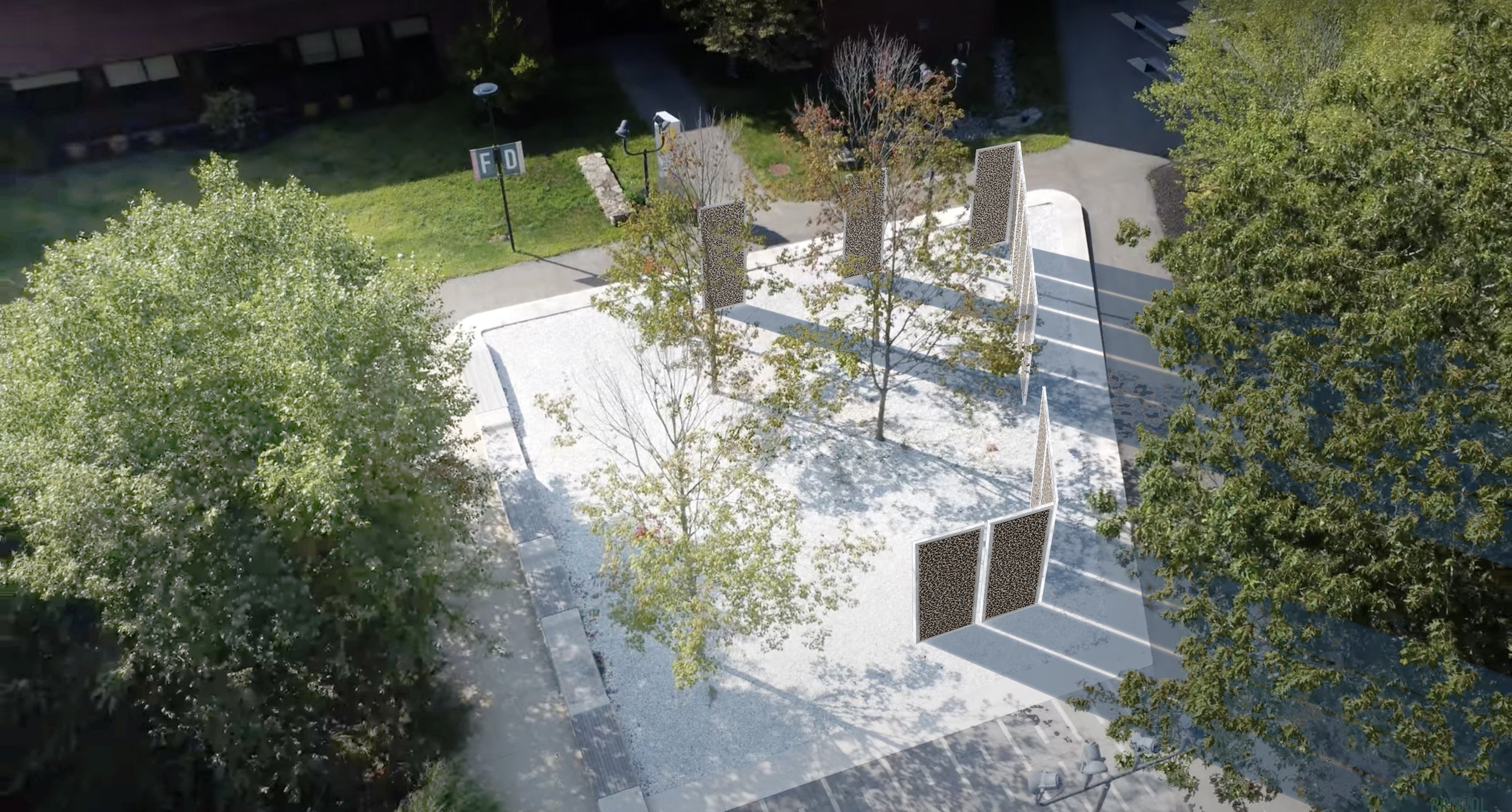
Zachary Horn is a Senior Lecturer in the Art Department at the University of Massachusetts Boston, where he has taught since 2012, and also serves as a Lecturer at Boston University since 2015. His interdisciplinary practice spans painting, drawing, animation, and social practice, with a particular focus on labor movement representation and contemporary political commentary. Horn's work has been exhibited internationally in museums, galleries, and academic institutions across the United States, Finland, South Korea, and beyond. Horn received his MFA in Painting from Boston University in 2011 and his BA in Fine Arts from the University of Pennsylvania in 2004, graduating Magna cum Laude. His educational background informs his teaching approach, which encompasses Drawing, Painting, Animation, Graphic Design, Foundations, Digital Media, and Writing-About-Art. Horn's research interests center on the intersection of art and social justice, particularly through his 'artivism' focused on labor unions. His work often employs divergent methodologies to explore contemporary working conditions, memorialization practices, and political commentary. He uses painting, drawing, and animation to create works that are both assertively political and intimately heartfelt, frequently incorporating community engagement and social practice elements. Horn's recent exhibition history demonstrates a consistent focus on labor movement representation, memorialization, and contemporary political commentary. His works range from large-scale installations like 'The Button Project' (2026) addressing Holocaust memorialization to video installations like 'Modern Times' (2024) commenting on contemporary working conditions. His practice shows a sophisticated integration of traditional media with digital techniques, creating multi-layered works that engage with both historical and contemporary social issues. The Awesome Foundation: Boston (2023) Massachusetts Cultural Council Finalist in Drawing & Printmaking (2020) Best in Show: Kent State University (2020) Juror's Choice Award: Eastern Kentucky University (2018) Blanche E. Colman Trust (2017) Visual Arts Scholar and Dean's Scholar at Boston University (2010) As Faculty Advisor for the Undergraduate Art Club at UMass Boston, Horn mentors emerging artists while maintaining an active exhibition schedule. His work has received significant press coverage, including features in the Boston Globe, Art New England, and international publications. Horn has secured research funding through the Labor Resource Center at UMass Boston and has been recognized with multiple foundation grants supporting his artistic practice. His upcoming 'Button Project' represents a major commission addressing Holocaust memorialization through quantitative representation. Horn maintains an active studio practice alongside his teaching responsibilities, producing works that integrate traditional media with digital techniques. His recent projects demonstrate a commitment to engaging with social issues through artistic practice, particularly focusing on labor rights and memorialization practices. The artist lives in Boston, Massachusetts with his wife and three sons, and his personal connection to Jewish heritage informs his approach to memorial projects like 'The Button Project.'
Gordon Teskey serves as the Francis Lee Higginson Professor of English Literature at Harvard University within the Faculty of Arts and Sciences and Department of English. Currently on leave for Spring 2026, he maintains an active scholarly profile with regular office hours conducted via Zoom. His academic credentials include: B.A. from Trent University (1976) M.A. from University of Toronto (1977) Ph.D. from University of Toronto (1981) Teskey's research explores Renaissance English Poetry through deep engagement with Milton, Spenser, Shakespeare, and Metaphysical poets. His work innovatively bridges literary analysis with philosophical inquiry, particularly examining allegory as a dynamic language system and investigating consciousness in poetic structures. This interdisciplinary approach reveals how Renaissance literature negotiates complex relationships between textual form, historical context, and philosophical concepts. His recent publications (2019-2023) demonstrate sustained focus on Spenserian poetics, Miltonic consciousness, and allegorical theory. Key trajectories include Wittgensteinian frameworks for interpreting Spenser, river metaphors as consciousness indicators in Marvell, and abstraction mechanisms in 17th-century verse—showcasing his ability to connect Renaissance literary techniques with contemporary philosophical discourse. His scholarly impact was recognized with the Christian Gauss Prize for The Poetry of John Milton (2015). No specific information about graduate students or research grants appears in the source materials, though his Creative Writing Workshop on Poetry indicates active teaching engagement. The text provides no details regarding research laboratories, collaborative teams, or current experimental projects.
Celia Scott is an Associate Professor of Education at Texas Wesleyan University's School of Education in Fort Worth, TX. She specializes in educational research methods, statistics, and curriculum design, with a focus on dissertation processes and instrument development. Prior to her current role, she coordinated the Center for Interdisciplinary Research and Analysis at the University of North Texas. Ph.D. in Educational Research, University of North Texas (2010) M.Ed. in Early Childhood Education, University of Southern Mississippi (1999) B.S. in Elementary Education, University of Southern Mississippi (1997) Her methodological expertise centers on applied general linear model statistics and reliability-based adjustments for effect sizes. Substantively, she investigates educational research education best practices, including rubric validation for Ed.D. dissertations and measurement of abstract constructs. Recent research trends highlight her commitment to degree completion challenges, especially in Ed.D. programs, and the validation of educational instruments like the Interpersonal and Social Empathy Index (ISEI). She has also explored cultural influences on Indigenous students' academic outcomes and comparative analyses of reading assessments.
Magdalena Hanysz-Stefańska is a faculty member at the Academy of Fine Arts in Gdańsk, working in the Faculty of Graphic Arts within the Department of Artistic Graphics. She holds the academic rank of Associate Professor and serves as Head of the Department of Artistic Graphics. Her work primarily focuses on color linocut and collage techniques, blending fragmented reality with optimistic commentary through visual art. Education: Diploma in Painting (1994), Academy of Fine Arts in Gdańsk Her research and artistic practice centers on linocut techniques, graphic arts, and visual storytelling. Themes include nature, surrealism, and cultural symbolism, often executed through innovative collage methods. Recent trends in her work highlight abstract interpretations of natural forms, anatomical motifs (e.g., Eustachian tube ), and narrative-driven compositions, with a consistent emphasis on color linocut across diverse sub-fields. Scientific Awards: Honorable mention in a prestigious competition in Taiwan Equal Prize in the Józef Gielniak Graphics Competition (Jelenia Góra) She actively leads the Fundamentals of Artistic Graphics Studio, mentors students in printmaking, and participates in international exhibitions and competitions.
Vera Danilova is a Postdoctoral Research Fellow at Uppsala University's Department of History of Science and Ideas, specializing in computational approaches to historical text analysis. Her work bridges digital humanities and natural language processing, with a focus on extracting meaningful patterns from historical periodicals and archives. Her primary research interests include: Genre classification in historical magazines (1875-1990) Post-OCR correction using large language models Cross-genre transfer learning in dependency parsing Topic modeling for medical history periodicals Development of multilingual NLP resources Recent publications reveal a strong trajectory in applying machine learning to historical document analysis, particularly in genre identification and text restoration for German and Russian periodicals. Her work frequently addresses challenges in historical OCR output and develops specialized tools like UD-MULTIGENRE for linguistic annotation. No scientific awards were documented in the provided sources. Information regarding academic advising, grant funding, or laboratory affiliations was not present in the available materials.