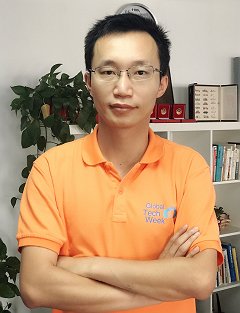
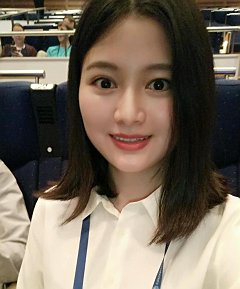
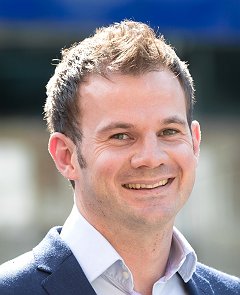
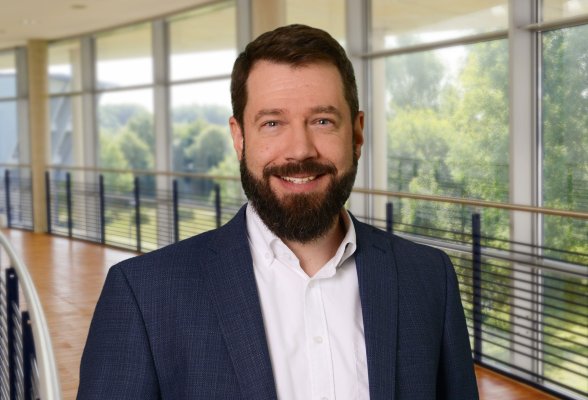
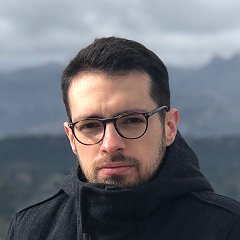
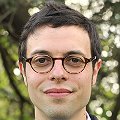
Zhenchang Xing is a Research Professor at CSIRO's Data61 and holds a Hans Fischer Senior Fellowship at TUM-IAS. With a Ph.D. in Computer Science from the University of Alberta (2008), he previously served as Associate Professor at Australian National University and Assistant Professor at Nanyang Technological University. His research focuses on software engineering for AI systems and human-centered computing. Current projects include: Automated Software-Hardware Co-Design for AI Systems Software Supply Chain Security frameworks Data Bill of Materials (DataBOM) for verifiable data ecosystems Software Testing Knowledge Graph development Professor Xing has received 10 Distinguished Paper Awards from ACM and IEEE, including the 2005 Most Influential Paper Award for UMLDiff. His work combines software engineering with responsible AI development.
Gabriele Bavota is an Associate Professor at the Software Institute of Università della Svizzera Italiana (USI) in Lugano, Switzerland. He leads the SEART (Software Engineering Advanced Research Team) group and serves as Principal Investigator for the DEVINTA ERC starting grant focused on developer intelligence through mining software artifacts. Dr. Bavota's research spans Software Quality, Empirical Software Engineering, and Mining Software Repositories. His work has evolved from foundational studies on code smells and technical debt to cutting-edge research at the intersection of artificial intelligence and software development. He has made significant contributions to understanding API usage patterns, software quality metrics, and developer behavior through empirical studies of large software repositories. His recent publications reveal a strong focus on AI-assisted software development, with extensive research examining code generation, code summarization, and code review automation using large language models. He has also expanded his research to include quality assurance in game development (detecting game stuttering and low engagement events) and voice user interface testing. His work consistently bridges theoretical insights with practical applications for software developers. ACM SIGSOFT Distinguished Paper Award for API compatibility research (MSR 2019) ACM SIGSOFT Distinguished Paper Award for Hugging Face model documentation study (ICPC 2024) ACM SIGSOFT Distinguished Artifact Award for deep learning fault taxonomy (ICSE 2020) As an active member of the software engineering research community, Dr. Bavota serves on program committees for major conferences including ICSE, ASE, FSE, and MSR. He has held leadership roles such as Program Co-Chair for ICSME 2023 and Vision/Reflection Track Co-Chair for ICSE. His SEART research group develops practical tools like the SEART Data Hub that streamline large-scale source code mining and preprocessing for empirical software engineering research.
Dr. Ying Wang is an Associate Professor and doctoral supervisor at the Software College of Northeastern University (China), where she has been working since February 2019. She serves as Assistant Dean at the School of Software and is an active member of several CCF committees including the System Software Committee, Software Engineering Committee, Open Source Development Committee, and Women's Committee. Dr. Wang received her Ph.D. in Software Engineering from Northeastern University in January 2019 under the supervision of Professor Zhiliang Zhu. She completed postdoctoral research at the Hong Kong University of Science and Technology (HKUST) from 2022 to 2023 under Professor Shing-Chi Cheung and was a visiting scholar at Microsoft Research Asia through the StarTrack Program in 2021. Her research focuses on intelligent software development technologies, large AI models, open source software big data analysis, and software supply chain security. She has made significant contributions to the governance of open source software ecosystems across multiple programming languages including Java, C#, Python, Go, JavaScript, Android, and Rust. Her work has led to the development of practical tools like 'League of Legends' for monitoring dependency defects in open source ecosystems, with several technologies commercialized by Huawei and Microsoft. Dr. Wang's recent publications demonstrate her expertise in cross-language dependencies, software component analysis, software refactoring, and the application of large language models in software engineering. Her work spans both theoretical foundations and practical applications, with a strong emphasis on real-world impact through industry collaboration. Among her notable achievements are the ACM SIGSOFT Distinguished Paper Awards at ICSE 2021 and ESEC/FSE 2023, making her the first researcher from Northeastern University to receive this honor. She has also received multiple awards for her doctoral dissertation and prototype implementations. Dr. Wang actively contributes to the academic community as an Associate Editor for IEEE Transactions on Software Engineering and serves on program committees for top conferences including ASE, ICSE, and ESEC/FSE. She mentors a large group of doctoral and master's students, with many alumni securing positions at major technology companies including Huawei, Microsoft, Alibaba, and Tencent.
Yi Li is an Associate Professor at the College of Computing and Data Science, Nanyang Technological University (NTU), Singapore. He leads the Software Reliability and Security Lab (SRSLab@NTU) which focuses on program analysis and automated reasoning techniques for software engineering and security applications. Dr. Li received his BComp degree in Computer Science from the National University of Singapore in 2011, followed by MSc (2013) and PhD (2018) degrees in Computer Science from the University of Toronto. His educational background has positioned him at the forefront of software reliability research. His research interests span software engineering, program analysis, automated reasoning, and formal methods, with particular focus on software reliability, security, and smart contract analysis. Dr. Li's work develops practical solutions for constructing high-quality software systems that are both reliable and sustainable. His research has identified critical issues in API documentation, smart contract security, program termination, and library compatibility across multiple programming ecosystems. Dr. Li's publications demonstrate consistent contributions to software engineering research over the past five years, with recent work focusing on smart contract analysis, API documentation verification, and program termination detection. His research methodology often combines static and dynamic analysis techniques with machine learning approaches to address challenging problems in software reliability and security. Five ACM Distinguished Paper Awards at top conferences Two Best Artifact Awards recognizing research reproducibility Publications at premier venues including ASE, ISSTA, FSE, and ICSE Dr. Li actively contributes to the software engineering community through service on program committees of flagship conferences (ICSE, FSE, ASE, ISSTA) and co-chairing program committees for ICFEM'23, ICECCS'20, SEAIS'22, and ICFEM'19 Doctoral Symposium. His lab, SRSLab@NTU, has developed multiple influential tools including InvCon, DocCon, and EndWatch, while fostering research in software reliability and security for emerging technologies.
Nane Kratzke is a Professor at Lübeck University of Applied Sciences, specializing in cloud computing and cloud-native applications. His research addresses practical challenges in container orchestration, cloud security, and vendor lock-in for small and medium enterprises. He holds a Diplom in Computer Science and a Doctorate in Natural Sciences, though specific institutions are not documented in available sources. Research interests include cloud-native architecture design, Kubernetes orchestration, moving target defenses for cloud security, and cost modeling of cloud services. His work bridges academic research and industry needs, particularly for SMEs seeking cloud portability through multi-cloud strategies and runtime transferability. Analysis of recent publications (2022-2024) reveals a strategic shift toward AI-driven cloud management techniques like prompt engineering, building on foundational contributions in cloud observability, security mechanisms, and transferability frameworks established between 2016-2021. Key recurring themes include mitigating vendor lock-in and enabling seamless application migration across cloud environments. No scientific awards are documented in the provided information sources. Details regarding graduate student advising, research grants, and laboratory facilities are not specified in current datasets, though his publications on programming assessment tools indicate engagement with computer science education.
Zhenyu Chen is a Full Professor and Director of the iSE Laboratory at Nanjing University, specializing in AI-driven software testing methodologies. His research bridges artificial intelligence and software engineering with dual focus areas: leveraging AI to enhance testing processes ( AI for Testing ) and validating AI/ML systems ( Testing for AI ). His research interests center on deep learning framework testing , crowdsourced testing optimization , and Large Language Model applications in verification . Recent work demonstrates innovative approaches to metamorphic testing of neural networks, LLM-based test report analysis, and security hardening of code models against backdoors. Key contributions include the development of mooctest.com and frameworks like DevMuT for mutation testing of deep learning APIs. His publication trajectory reveals evolving focus from crowdsourced testing (2018-2020) to deep learning system validation (2021-2023) and current emphasis on LLM-powered testing solutions. Major venues include ASE, ICSE, and ISSTA where he serves regularly on program committees.
Lingling Fan is an Associate Professor (100 Young Academic Leaders of Nankai University) at Nankai University, China. Her research focuses on software security analysis, software testing and analysis, and big data-driven analysis, with significant contributions to mobile application security, particularly in Android security and accessibility. Her research interests include: Software Security Analysis, with emphasis on mobile application security and vulnerability detection Software Testing and Analysis, particularly for Android applications and accessibility issues Big Data-driven Analysis for security and quality assessment of software systems Dr. Fan's publication record shows strong trends in automated security testing, vulnerability detection in open-source ecosystems, and accessibility analysis for mobile applications. Her work spans multiple disciplines including software engineering, security, and human-computer interaction, with a particular focus on practical applications for Android ecosystem and measurable real-world impact. Her notable scientific awards include: ACM SIGSOFT Distinguished Paper Award (ASE 2022) ACM SIGSOFT Distinguished Paper Award (ICSE 2021) ACM SIGSOFT Distinguished Paper Award (ICSE 2018) Research Tool Award at NASAC 2018 National Scholarship from The Ministry of Education, China (2018) ACM SIGSOFT CAPS Award (ASE 2018) Dr. Fan has served in various academic service roles including as a program committee member for major conferences such as ASE, ICSE, FSE, and ISSRE. She has also been a reviewer for prestigious journals including IEEE Transactions on Information Forensics and Security (TIFS), IEEE Transactions on Dependable and Secure Computing (TDSC), IEEE Transactions on Software Engineering (TSE), and ACM Transactions on Software Engineering and Methodology (TOSEM).
Alastair F. Donaldson is a Professor in the Department of Computing at Imperial College London, where he leads the Multicore Programming Group. His primary affiliation is with Imperial College London's Department of Computing within the broader Faculty of Engineering structure. He serves as a Program Committee Member for major conferences including ASE, PLDI, and POPL. His research spans Programming Languages , Compilers , Verification , Testing , and Multicore Programming , with significant contributions to randomized testing techniques. He pioneered GraphicsFuzz (acquired by Google in 2018) and developed innovative approaches like grammar mutation for parser testing, metamorphic fuzzing for C++ libraries, and specialized tools for GPU API validation. His work bridges theoretical foundations with industrial impact, particularly in compiler correctness and GPU computing. Analysis of his recent publications reveals a strong trend toward fuzzing infrastructure development (40%), GPU/compiler testing (30%), and formal methods integration (30%). His research increasingly focuses on large-scale automated testing for complex systems including WebGPU, Dafny, and Rust, while maintaining rigorous theoretical grounding in concurrency models and memory semantics. Donaldson has held significant leadership roles including General Chair for PLDI 2020 and Program Chair for ECOOP. His research has been supported through conference organizational roles and industrial collaborations, notably the GraphicsFuzz spinout. He actively contributes to the PL community through mentoring initiatives like PLMW and community-building efforts such as The PLDI Song. He leads the Multicore Programming Group at Imperial College London, focusing on practical tools for compiler and GPU driver validation. The group's work combines theoretical program analysis with real-world testing frameworks, maintaining strong industry connections through projects adopted by Google and other technology companies.
Anders Møller is a Professor at the Department of Computer Science , Aarhus University , Denmark. His career spans roles as an author , committee member , and session chair in conferences like SPLASH, OOPSLA, ECOOP, ISSTA, ICSE, and PLDI. Affiliation: Aarhus University Co-founder: Coana Research Focus : Specializing in static and dynamic program analysis for JavaScript, TypeScript, Java, and Node.js applications, his work addresses: Pointer analysis precision in Java Race condition detection in Node.js Library evolution and semantic patching Soundness improvements in static analyzers Type safety in modern languages Concolic execution for web testing Publication Trends : Recent work (2021–2024) emphasizes security-critical static analysis (taint specifications, Node.js security), soundness optimization (approximate interpretation), and program verification (channel-based communication). Earlier work (2013–2018) includes foundational contributions to JavaScript refactoring , Dart type safety , and AJAX race detection . Scientific Recognition : ISSTA 2019 Distinguished Paper Award Leadership Roles : Active in steering committees for SPLASH, ECOOP, and SIGPLAN, with chairs in OOPSLA, ECOOP, and PLDI program committees.
Niklas Klein is a Professor at the Department of Information and Communication at Flensburg University of Applied Sciences. He also serves as Vice President for Studies and Teaching on the Executive Board. His academic background includes a PhD from the University of Kassel (2011) and earlier degrees from the University of Paderborn. His research focuses on context-aware systems, ubiquitous computing, and smart grid technologies. He has contributed to projects like the Future Internet Smart Grid Application (2013), activity recognition using inertial sensors (2011), and XML/XQuery transformation frameworks (2005–2011). His work emphasizes time synchronization in sensor networks and user-centric service creation. Notable publications include studies on context prediction stability, energy management in smart grids, and DAG-based context reasoning architectures. He has advised over 20 Master's and Bachelor's students in areas like distributed systems and communication technologies. Klein has secured funding for projects such as the KLIMASCHUTZ-PLANER (2013–2014) and IT2Green Pinta (2012–2014). He organizes workshops like AwareCast and serves on technical program committees for CAPS 2012 and Context 2011. Additional service includes managing the alumni network for Kassel University's Communication Technologies chair and supporting international student recruitment.
Rocco Oliveto is a prominent researcher in software engineering with extensive contributions across multiple domains including code quality assessment, smart contracts, Docker configuration analysis, and healthcare applications of AI. His collaborative work spans numerous institutions, with frequent co-authorship with researchers such as Simone Scalabrino, Gabriele Bavota, and Emanuela Guglielmi. Dr. Oliveto's research interests focus on practical software engineering challenges with emphasis on code readability, API compatibility, bug prediction, and smart contract maintenance. His work bridges theoretical research with practical applications, particularly evident in recent projects applying machine learning to healthcare diagnostics and video game quality analysis. His research demonstrates a consistent trajectory toward addressing real-world software engineering problems with innovative methodological approaches. Analysis of his recent publications reveals a strong trend toward interdisciplinary research, particularly at the intersection of software engineering and healthcare applications. His work shows increasing focus on practical applications of AI in medical diagnostics, rehabilitation technology, and patient monitoring systems, while maintaining strong contributions to core software engineering topics like code quality and developer productivity. The diversity of publication venues—from top software engineering journals like Empirical Software Engineering and ACM TOSEM to healthcare conferences like BIOSTEC—demonstrates the breadth of his research impact. Dr. Oliveto has demonstrated significant research leadership through numerous collaborative projects, particularly evident in his participation in the QualAI project focused on continuous quality improvement of AI-based systems. His work shows consistent funding support through collaborative research initiatives that bridge academic and practical software engineering concerns.
Benoit Baudry is a Professor in Software Technology at Université de Montréal, Canada, with previous affiliation at KTH Royal Institute of Technology in Sweden. His research focuses on automated software engineering with emphasis on practical execution-based approaches. Baudry's core research interests include: Software testing : Automated test generation, mocking, and improvement techniques Software diversity : Runtime protection through variant execution and WebAssembly transformations Randomization : Fuzzing and chaos engineering for robustness validation DevOps : Supply chain analysis and dependency management in Maven ecosystems Analysis of his 15 most recent publications (2022-2025) reveals strong emphasis on: Software supply chain security and dependency management (6 publications) Test automation and mock generation techniques (4 publications) WebAssembly compilation and security (3 publications) Software-art interdisciplinary research (2 publications) His work consistently combines empirical analysis with tool development across Java and WebAssembly ecosystems. Baudry actively contributes to the academic community through program committees (ASE, ESEC/FSE, ICSE, ICST) and keynote presentations. He leads research in software diversity through his Software Diversity Lab .
Alberto Martin-Lopez is a postdoctoral fellow in the SEART research group at the Software Institute of Università della Svizzera Italiana (USI) in Lugano, Switzerland. His academic journey includes a PhD from the SCORE Unit of Excellence at the University of Seville (Spain), where he also earned a Bachelor's degree in Telecommunications Engineering and a Master's degree in Software Engineering and Technology. He has held positions as a Fulbright fellow at the University of California, Berkeley and as an external lecturer at Kristiania University College in Oslo, Norway. His research focuses on software testing, service-oriented computing, and neuro-symbolic AI applications to software engineering problems. Martin-Lopez has made significant contributions to automated testing of web services, particularly RESTful APIs, developing tools and techniques for test oracle generation, test input generation, and metamorphic testing. His work bridges traditional software engineering methods with modern AI techniques to address longstanding challenges in software verification. His publications in top-tier venues like ESEC/FSE, ISSTA, and TSE demonstrate consistent impact in the software engineering community. Analysis of his recent work shows a clear trajectory toward integrating neuro-symbolic AI approaches with traditional testing methodologies, particularly for solving the oracle problem in API testing and enhancing code generation systems. His scientific achievements have been recognized with prestigious awards: First Prize of the ACM Student Research Competition at ICSE'20 ACM SIGSOFT Distinguished Paper Award at ESEC/FSE'22 2023 Early Career Researcher Award by the Spanish Society of Computer Science and Fundación BBVA Martin-Lopez actively contributes to the software engineering community through service on program committees for major conferences including ASE, ESEC/FSE, ICSE, and ISSTA. His collaborative work spans institutions across Spain, Switzerland, the United States, and Norway, reflecting a strong international research network. At USI, he works within the SEART research group, focusing on advancing the state of the art in automated software testing through innovative combinations of traditional software engineering techniques and artificial intelligence.
Stefan Zellmann is an Associate Professor and Principal Investigator of the DFG Project 'VTV-AMR' at the Institute of Computer Science , University of Cologne. His research focuses on the intersection of large-scale scientific visualization and high-performance computing, particularly in developing real-time rendering algorithms for adaptive mesh refinement (AMR) data. He leads projects such as ExaBrick (AMR rendering framework) and Visionaray (cross-platform ray tracing library). Education & Roles: Completed his PhD in 2014 on 'Interactive High-Performance Volume Rendering'. Currently teaches courses on graphics processor architectures and programming, including Practical Computer Science: Architecture and Programming of Graphics and Coprocessors . Research Interests: Direct volume rendering, physically based rendering, AMR visualization, GPGPU computing, and FPGA programming. His work emphasizes low-latency interaction and efficient algorithms for supercomputers/multi-GPU systems. Awards: Honorable Mention @EGPGV 2020, Best Paper Awards @EGPGV 2018 (for Rapid k-d Tree Construction ), @VDA 2017 (for Ray Clipping ), and @PDCS 2012 (for Distributed Volume Rendering Architecture ). Key Projects: ExaBrick (AMR rendering), Visionaray (ray tracing), Virvo (volume rendering library), and HPSC TerrSys (high-performance computing in terrestrial systems). Grants & Services: Co-Chair of IEEE LDAV 2022 Posters, Program Committee member for IEEE VIS and EGPGV. Regular reviewer for journals/conferences like TVCG and IEEE VR. Labs/Teams: Part of the Center for Data and Simulation Science (CDS), focusing on visualization algorithms for exascale computing and large-scale scientific data.
Jean-Rémy Falleri is a Full Professor of Computer Science at Enseirb-Matmeca (Bordeaux INP) and a researcher at LaBRI laboratory in Bordeaux, France. He serves as head of the Computer Science department at Enseirb-Matmeca and co-head of the Systems and Data department at LaBRI. From 2020 to 2025, he was appointed as a junior member (later honorary member) of the prestigious Institut Universitaire de France. His educational background includes a habilitation from Université de Bordeaux (2015), a PhD from Université Montpellier 2, and a Master's degree from IMT Mines Alès (formerly École des Mines d'Alès). He also completed post-doctoral research at INRIA Lille in the RMoD group. Falleri's research focuses on software engineering, particularly software evolution and the development of practical tools to analyze and understand code changes. His work bridges theoretical research with practical applications, resulting in tools like GumTree for visualizing code differences and Roseau for detecting breaking changes in libraries. His research interests span source code differencing, API analysis, breaking change detection, and software maintenance techniques. His publication record shows consistent contributions to top software engineering conferences including ICSE, ASE, ICSME, and FSE, with research themes evolving from code clone detection and developer expertise extraction to modern challenges in API evolution and Docker configuration analysis. Junior Member of Institut Universitaire de France (2020-2025) Honorary Member of Institut Universitaire de France (2020-2025) Falleri has supervised numerous Master's students, PhD candidates, and post-doctoral researchers throughout his career. He has held significant service roles including Head of LaBRI's Systems and Data department (since 2021), Head of LaBRI's Software Engineering group (2015-2021), and member of various conference program committees. His work has practical impact through actively maintained tools that address real challenges in software development and evolution.