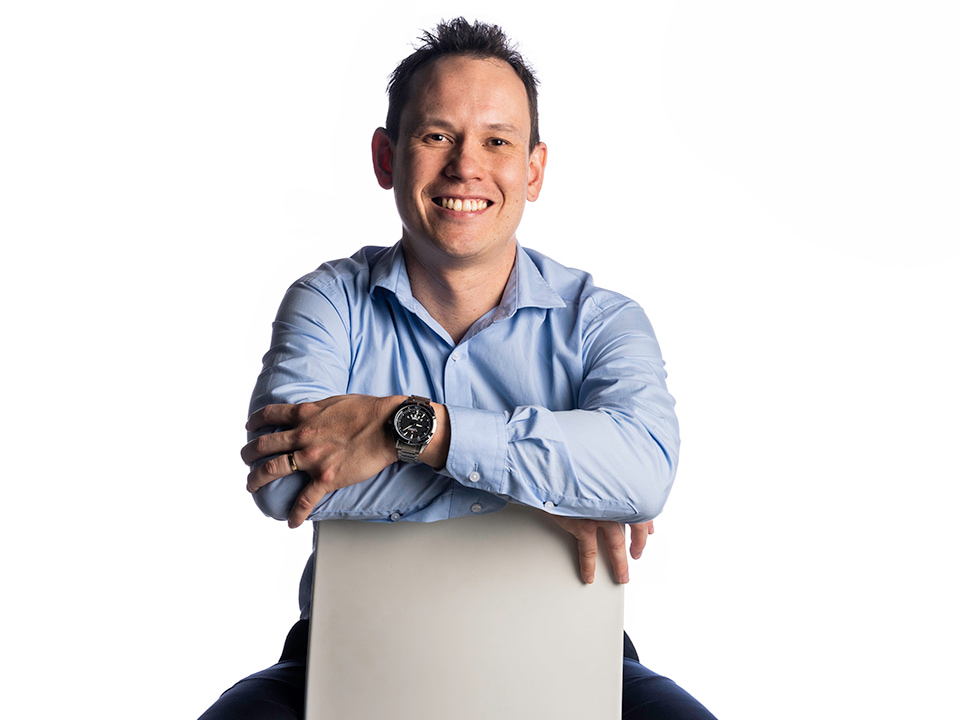
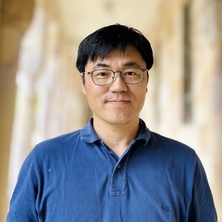
Professor Simon Buckingham Shum is a leading academic in Learning Informatics at the University of Technology Sydney (UTS), serving as inaugural Director of the Connected Intelligence Centre since 2014. His work bridges Human-Computer Interaction, Educational Technology, and Learning Analytics to develop AI-driven tools like OnTask that enhance student belonging through personalized feedback. Key research areas: Human-Computer Interaction, Learning Analytics, AI in Education, Collective Intelligence Recent work focuses: LLM-augmented qualitative analysis, Belonging Analytics frameworks, and ethical AI implementation in education CIC received the 2024 Vice-Chancellor’s Student Experience Award for scaling OnTask across multiple faculties. His contributions span over 30 years, including founding roles at The Open University’s Knowledge Media Institute and innovations in Open Educational Resources (OER), SocialLearn, and FutureLearn platforms. Notable awards: 2024 Student Experience Award (OnTask), Fellow of the Royal Society of Arts (RSA), DEFI STRI Researcher at University of Cambridge Education: B.Sc. in Psychology (York), M.Sc. in Ergonomics (UCL), PhD in Human-Computer Interaction (York) He leads multidisciplinary collaborations with teams across Business, Law, and Education faculties, pioneering tools like Theme Explorer and Qreframer bot. His recent focus on the "metacrisis" reframes educational technology’s role in addressing global systemic challenges through transdisciplinary approaches.
Dr. Sirui Li is a Lecturer at Murdoch University's School of Information Technology within the College of Science, Technology, Engineering and Mathematics. Her research focuses on Artificial Intelligence, Natural Language Processing (NLP), Machine Learning, Knowledge Graphs, Data Analysis, Temporal Data, and Multi-modal Models, with applications in medicine, agriculture, and mining. She collaborates with industry partners like BHP and has published in journals such as Food Chemistry and Knowledge and Information Systems , as well as conferences like ICSME and IJCNN. Education: Bachelor of Advanced Computing (Honours) in Computer Science at Australian National University Master of Computing (Specialising in AI) at ANU Ph.D. in Information Technology (AI) at Murdoch University Research interests include interdisciplinary applications of AI, such as clinical coding privacy solutions, disease spread modeling, and drug repurposing for pandemics. Her work emphasizes practical industry integration, demonstrated through awards like the 2024 EMNLP Best Demo Award and the 2023 Iron Ore Circuit Hackathon innovation prize. Professional roles include IEEE Western Australia Section committee membership, conference chair positions, and peer review for top journals. She actively mentors students pursuing Honours, Master's, or PhD projects in her areas of expertise.
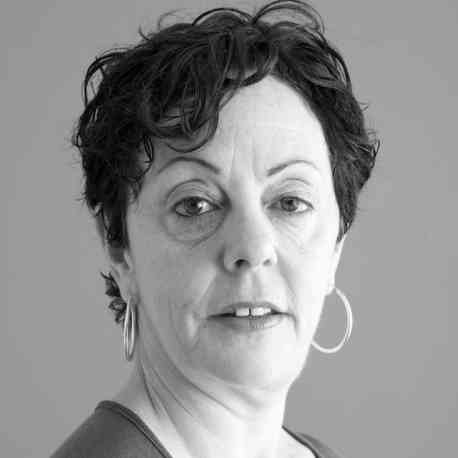
Professor Khin Than Win is a leading academic in health informatics and digital health at the University of Wollongong (UOW), holding appointments as Professor in the School of Computing and Information Technology, Head of Postgraduate Studies, and Deputy Head (Research). She also serves as Academic Program Director for UOW's Master of Health Informatics and Graduate Certificate in Health Analytics programs. Her research focuses on applying information technology to healthcare, particularly in behavior change support systems, persuasive technology, and ethical AI applications. She has supervised over 20 PhD students and holds leadership roles including Deputy Chair of UOW's Health and Medical Research Ethics Committee, and membership in international committees like the Persuasive Technology Steering Committee. Education: MBBS from Rangoon University, Master's and PhD in IT from Assumption University (Bangkok) and UOW (Australia) Research Interests: Health data analytics, AI in healthcare, privacy/security of health systems Leadership: Program/General Chair roles at ACIS and Persuasive Technology conferences Awards: Best Paper Awards (2023, 2018) Her extensive funding portfolio includes ARC grants and NHMRC projects, totaling over 24 funded initiatives. Current research explores blockchain in medical passports, AI ethics, and culturally tailored health interventions.
Professor Amin Abbosh is a faculty member at the School of Electrical Engineering and Computer Science, University of Queensland. His research focuses on Medical Microwave Imaging and Millimeter-wave Engineering, with contributions to advanced imaging systems, antenna design, and communication technologies. He leads projects in electromagnetic medical sensing, including portable brain scanners and wearable diagnostic systems. His work integrates applied electromagnetics with AI-driven algorithms, addressing challenges in stroke detection, liver health monitoring, and deep vein thrombosis diagnosis. With over 16 patents and collaborations across biomedical and engineering domains, his research bridges clinical needs with cutting-edge electromagnetic techniques. Key projects include the development of low-cost healthcare monitoring systems and reconfigurable antennas for satellite communications. Research interests span medical imaging systems, antenna array design, and signal processing for healthcare applications. His team innovates in areas like phased arrays, dielectric property analysis, and non-invasive diagnostics. Recent advancements include synthetic microwave focusing techniques and self-supervised deep learning models for clutter removal in imaging. Publications highlight contributions in IEEE journals and conferences, emphasizing clinical applications and device prototyping. Collaborations with institutions like the University of Queensland’s medical faculty and industry partners ensure practical implementation of his research.
Dr. Alireza Nili is a Senior Lecturer in Service Science at QUT's School of Information Systems within the Faculty of Science. His expertise spans digitization of customer-centric services, AI/chatbots, IoT/IIoT, and sustainable technologies. He holds a PhD from Victoria University of Wellington and has coordinated large-scale courses like IT Systems Design (IFB103), achieving top teaching scores. Nili's research focuses on service ecosystems, trust in digital services, and public/retail sector innovations. He has secured over $1.4M in industry grants for projects involving Cisco, Amazon, and Services Australia. His awards include the 2023 Educator of the Year and multiple top conference paper recognitions. Nili supervises PhD students at Level 3 mentoring status and contributes to major conferences as track chair/associate editor. Research highlights include frameworks for chatbot governance, IOT in agriculture, and AI ethics. His work appears in IEEE Software , Communications of the ACM , and MIT Sloan Management Review . Current projects address consumer trust in AI technologies and spatial data systems. Nili's interdisciplinary approach combines design science with empirical methodologies to bridge theory and practice in digital service innovation.
Professor Michael Milford is a robotics and computer vision expert at Queensland University of Technology (QUT), serving as Joint Director of QUT's Centre for Robotics. His research bridges robotics, neuroscience, and computer vision, focusing on biologically inspired navigation systems for autonomous vehicles and drones. He has pioneered projects like SeqSLAM and RatSLAM, emphasizing the synergy between biological intelligence and robotic systems. Research Interests: Milford explores navigation algorithms inspired by animal behavior, energy-efficient neural networks, and autonomous systems. His work aims to create robots capable of operating in dynamic environments through interdisciplinary collaboration with institutions like MIT, Harvard, and NASA's Jet Propulsion Laboratory. Awards & Recognition: Awarded the 2019 Batterham Medal and a $2.7M Australian Laureate Fellowship for his project on GPS-independent positioning systems. His work has produced highly cited papers in robotics and computer vision, including breakthroughs in visual SLAM and place recognition under varying conditions. Teaching & Collaboration: Milford mentors students in robotics and AI, launching initiatives like the STEM Storybook to inspire youth. He collaborates globally, emphasizing cross-disciplinary research to bridge gaps between fundamental and applied sciences. Labs & Projects: Leads QUT's Centre for Robotics, advancing technologies for autonomous systems. His projects explore neuromorphic computing, SLAM systems, and bio-inspired navigation, with applications in defense, transport, and environmental monitoring.
Dr. Amir Ghanbaripour is a Discipline Lead in Planning, Property, and Project Management at Bond University's Faculty of Society & Design, with a PhD in Construction Project Management (2020). He teaches postgraduate courses and leads the Project Management program. His expertise spans project management methodologies, systems thinking, organizational maturity, and gender equality in projects. He is an active member of the Project Management Institute (PMI) as Associate Director for Academic Outreach. Education: PhD in Construction Project Management (Bond University, 2020), MSc in Civil Engineering (Iran University of Science and Technology, 2012), BSc in Civil Engineering (Amirkabir University of Technology, 2009). Research focuses on project success models, agile methodologies, and technology integration in construction education. He leads research projects on megaprojects, sustainable practices, and gender diversity in the industry. Grants include the 2023 FSD Research Project Grant (focusing on construction project strategies) and the 2023 FSD Deans Award (exploring robotics in manufacturing). He supervises PhD candidates and collaborates with national/international organizations on project management innovation.
Dr. Azadeh Ghari-Neiat is a Senior Lecturer in Software Engineering at the University of Queensland's School of Electrical Engineering and Computer Science. She completed her PhD in Computer Science from RMIT University in 2018. Prior to joining UQ, she held academic positions at Deakin University as a Senior Lecturer and at the University of Sydney as a postdoctoral research fellow. Her research focuses on the intersection of Internet of Things (IoT), Mobile Computing, Crowdsourcing, and Cybersecurity. She develops innovative solutions for enhancing connectivity and security in modern computing environments through crowdsourced approaches. Key areas include service composition in sensor clouds, trust management frameworks, and optimization of drone-as-a-service systems. Her publications demonstrate consistent focus on IoT service ecosystems, with recent work exploring blockchain applications and machine learning techniques for dynamic systems. The research trends show evolution from fundamental service composition to AI-driven optimization in distributed environments. Dr. Ghari-Neiat leads projects involving energy service crowdsourcing and secure architectures for cyber-physical systems. Her work maintains strong emphasis on practical applications in delivery systems, UAV networks, and IoT marketplaces.
Christopher Ferrie is an Associate Professor at the University of Technology Sydney (UTS), where he is affiliated with the Faculty of Engineering and Information Technology and the Centre for Quantum Software and Information (QSI). His academic career spans quantum information science, machine learning, and scientific education, with a strong emphasis on both theoretical research and public engagement through science communication. Full-time faculty member at UTS Active researcher in quantum information science Director of the Centre for Quantum Software and Information Author of numerous scientific publications and popular science books Dr. Ferrie earned his PhD in Applied Mathematics from the Institute for Quantum Computing and University of Waterloo in Canada in 2012. His doctoral work focused on quantum information and laid the foundation for his subsequent research career in quantum computing and related fields. Dr. Ferrie's research interests span several interconnected domains within quantum information science. His primary focus is on quantum estimation and control, with particular emphasis on applying machine learning techniques to solve statistical problems in quantum information science. He investigates how quantum systems can be characterized, controlled, and optimized for practical applications. His work bridges theoretical quantum physics with practical implementations, exploring how quantum phenomena can be harnessed for computational advantage. Recent research directions include quantum machine learning, quantum neural networks, and quantum optimization algorithms, with applications ranging from quantum state tomography to solving combinatorial optimization problems. Analysis of Dr. Ferrie's recent publications reveals a strong focus on practical quantum computing challenges. His work consistently addresses the intersection of quantum information theory and machine learning, with particular emphasis on making quantum algorithms more efficient, interpretable, and robust against noise. A significant portion of his recent research explores variational quantum algorithms and their optimization, reflecting the current priorities in near-term quantum computing. His publications also demonstrate growing interest in quantum machine learning applications and the development of techniques for quantum error mitigation and characterization. Dr. Ferrie has secured multiple research grants supporting his work in quantum computing and related fields. His funded projects span quantum control, quantum probability, quantum machine learning, and statistical decision theory, reflecting the breadth of his research program. While specific major awards aren't detailed in the available information, his sustained funding and publication record indicate significant recognition within the quantum information science community. Dr. Ferrie is actively involved in research supervision and teaching, with current funding supporting multiple PhD students and postdoctoral researchers. His teaching responsibilities include courses on quantum computing, where he introduces students to the fundamentals of quantum information processing. His research group at the Centre for Quantum Software and Information focuses on developing novel quantum algorithms and exploring the practical implementation challenges of quantum computing. The Centre for Quantum Software and Information at UTS serves as the primary research environment for Dr. Ferrie's work. This center brings together researchers working on various aspects of quantum computing, from hardware development to algorithm design and applications. Dr. Ferrie's team within the center focuses specifically on quantum software development, quantum algorithm design, and the application of machine learning techniques to quantum information problems. The collaborative environment enables interdisciplinary research that bridges theoretical quantum physics with practical computing applications.
Professor Anna Marie Munster is a distinguished academic and artist at UNSW Art and Design (College of Fine Arts), where she has held a full-time tenured position since 2001. Her work bridges theoretical scholarship with creative practice, establishing her as a leading figure in digital media art and critical theory. University: University of New South Wales School: College of Fine Arts (UNSW Art and Design) Position: Professor Qualifications: PhD from UNSW (2002), BA (Class 1 Hons with University Medal) from University of Sydney (1984) Professor Munster's research explores the intersections of art, technology, and philosophy, with particular focus on statistical visuality, radical empiricism, the politics and aesthetics of machine learning, and more-than-human perception. Her work integrates process philosophy with contemporary media practices, examining how time, movement, and sonicity shape our experience of digital environments. She approaches these topics through both theoretical scholarship and creative practice, often collaborating with artist Michele Barker on multi-channel audiovisual installations. Her publications reveal a consistent trajectory exploring the relationship between embodiment and digital media, with recent work focusing on AI and machine learning in cultural contexts. Munster's creative output demonstrates sophisticated integration of technical innovation with philosophical inquiry, particularly in how her installations challenge conventional perceptions of time and space. ARC, UNSW Student Council Award for Excellence in Postgraduate Supervision (2017) Dean's Award for Excellence in Postgraduate Supervision (2015) Highly commended for Materializing New Media at Prix Ars Electronica (2008) Winner of National Digital Art Awards 'The Harries' (2006) University Press of New England Publishing Award (2005) Professor Munster has completed over 20 PhD and Masters supervisions at UNSW and been involved in another 10 secondary supervisions. She currently supervises five PhD candidates working on diverse topics including coding materialities, critical bio-textiles, schizophrenia and XR technologies, sound and resonance, and affective drawing. Her ARC-funded research projects demonstrate sustained commitment to interdisciplinary work, particularly at the intersection of art, science, and technology. Her creative practice with Michele Barker has resulted in numerous commissioned installations exploring perception, embodiment, and the relationship between humans and technology.
Professor George Buchanan is a leading researcher in human-computer interaction and digital libraries at RMIT University . His work bridges information science, digital humanities, and health informatics, focusing on usability in sensitive contexts like healthcare and misinformation. Deputy Dean, Research at RMIT University Former Director, University of Melbourne iSchool Research Interests: Digital information interaction Health and aging informatics Disinformation analysis Mobile interface design Digital library systems Key Contributions: Developed mobile web usability benchmarks, spatial hypertext tools, and thermal feedback interfaces. Currently seeking PhD students for 2025 projects on digital browsing and view change dynamics. Awards: Over twenty best paper awards and Honorary Life Fellow of the Royal Society of Arts. Advising: Accepting Masters/PhD supervision in information interaction and digital health domains.
Dr. Thilina Halloluwa is a Teaching Focused Lecturer in the Department of Human-Centred Computing at The University of Queensland (UQ). He holds a PhD in Human-Computer Interaction from Queensland University of Technology (2019) and a Computer Science undergraduate degree from the Sri Lanka Institute of Information Technology. With over 15 years of academic and industry experience, his research emphasizes real-world impact in education technology, financial inclusion, smart agriculture, and HCI. Educational Background: PhD in Human-Computer Interaction, Queensland University of Technology (2019) Bachelor of Computer Science, Sri Lanka Institute of Information Technology Research Interests: Education for All: Leveraging technology to enhance collaborative learning and social experiences in education. Human Money Interaction: Designing ethical AI solutions for financial services, particularly for underserved communities. Smart Agro: Developing AI-driven tools for crop disease detection, yield optimization, and precision agriculture. Software Project Estimation: Improving effort estimation accuracy through explainable AI (Metrix project). Key Contributions: Developed UrbanAgro (tomato disease detection) and BellCrop (bell pepper disease datasets). Pioneered Dhana Labha , a financial management tool for rural Sri Lankan communities. Advanced online exam proctoring systems for low-resource settings. Previous Roles: Lecturer at University of Sydney (2023) Senior Lecturer at University of Colombo (2013–2023) Lab/Team Affiliations: Smart Agro Project: AI-driven agricultural solutions Metrix Initiative: Software project estimation frameworks
Associate Professor Dan Dongseong Kim is Deputy Director of UQ Cybersecurity and an Associate Professor at The University of Queensland (UQ), Australia. Previously, he held permanent academic positions at The University of Canterbury (UC), New Zealand (2011-2018) as a Senior Lecturer and Lecturer. His research focuses on Cybersecurity and Dependability for AI, IoT, Autonomous Vehicles, Cloud Computing, and Moving Target Defenses (MTD). Doctor of Philosophy in Computer Engineering from Korea Aerospace University Postdoctoral Research at Duke University (2008-2011) Visiting Scholar at University of Maryland (2007) Dan's work explores Graphical Security Models , Moving Target Defense for proactive resilience, and AI-Driven Cybersecurity with emphasis on adversarial robustness and interpretable models. His recent publications (2024-2025) span journals like IEEE Transactions on Dependable and Secure Computing and conferences such as DSN , addressing automated defense, evolving attacks, and hardware-aware security frameworks. He has advised 15 Ph.D. graduates, including researchers now at institutions like RMIT University, La Trobe University, and CSIRO's Data61. Current supervision includes projects on Automated Penetration Testing , AI-Based Intrusion Response , and Moving Target Defense . Dan's research is funded by agencies including the Republic of Korea's Agency for Defence Development and US Army Research Lab . His professional roles include Associate Editor for IEEE Communications Surveys and Tutorials and Steering Committee Chair for IEEE PRDC .
Mihye Won is an Associate Professor at Monash University’s Faculty of Education, specializing in innovative science education strategies. Her research integrates dialogic teaching, student-generated diagrams, immersive Virtual Reality (VR), and generative AI to enhance scientific understanding and creativity. She has secured Australian Research Council (ARC) funding for projects like Using Immersive Virtual Reality to Enhance Science Visualisation (2019–2025) and Drawing Science Diagrams to Enhance Scientific Creativity (2018–2025). Her work supports students, teachers, and early-career researchers, aligning with the UN Sustainable Development Goal for Education. PhD, University of Illinois at Urbana-Champaign: Inquiry-based science education via Dewey’s theory of inquiry Her research focuses on: Dialogic teaching to foster student reasoning Student-generated diagrams for conceptual understanding VR for visualizing complex science topics Generative AI in science learning Creative and critical thinking in science education Recent articles span VR applications, AI in physics education, collaborative drawing techniques, and curriculum-aligned creative pedagogy. Awards include the Most Valuable Paper Award 2024 for her work on enzyme-substrate interactions in VR. She serves on the advisory board for Chemistry Education Research and Practice and the editorial board of the International Journal of Science Education .
Dr Emily Hewson is a Cancer Institute NSW Early Career Fellow and member of the Sydney School of Health Sciences at the University of Sydney's Faculty of Medicine and Health. Her research focuses on advancing real-time radiation therapy techniques, particularly in managing intrafraction motion for prostate and other cancers. She leads projects involving multileaf collimator (MLC) tracking, dose optimization, and deep learning integration in radiation oncology. Research interests include adaptive radiotherapy systems, kilovoltage intrafraction monitoring (KIM), and clinical trial implementation (e.g., TROG 15.01 SPARK trial). Her work emphasizes improving treatment accuracy through real-time dose-guided approaches and multitarget tracking for tumors with complex motion patterns. Developed experimental validations for MRI-linac integration and MLC tracking systems Authored a textbook chapter on Adaptive Radiation Therapy (ART) Recipient of Cancer Institute NSW Early Career Fellowship (2023) Recent grants include an AI platform for targeted radiotherapy (2024) and national critical infrastructure funding for lung cancer applications (2023). Her lab collaborates on real-time dose calculation algorithms and clinical trial implementation across multiple institutions.