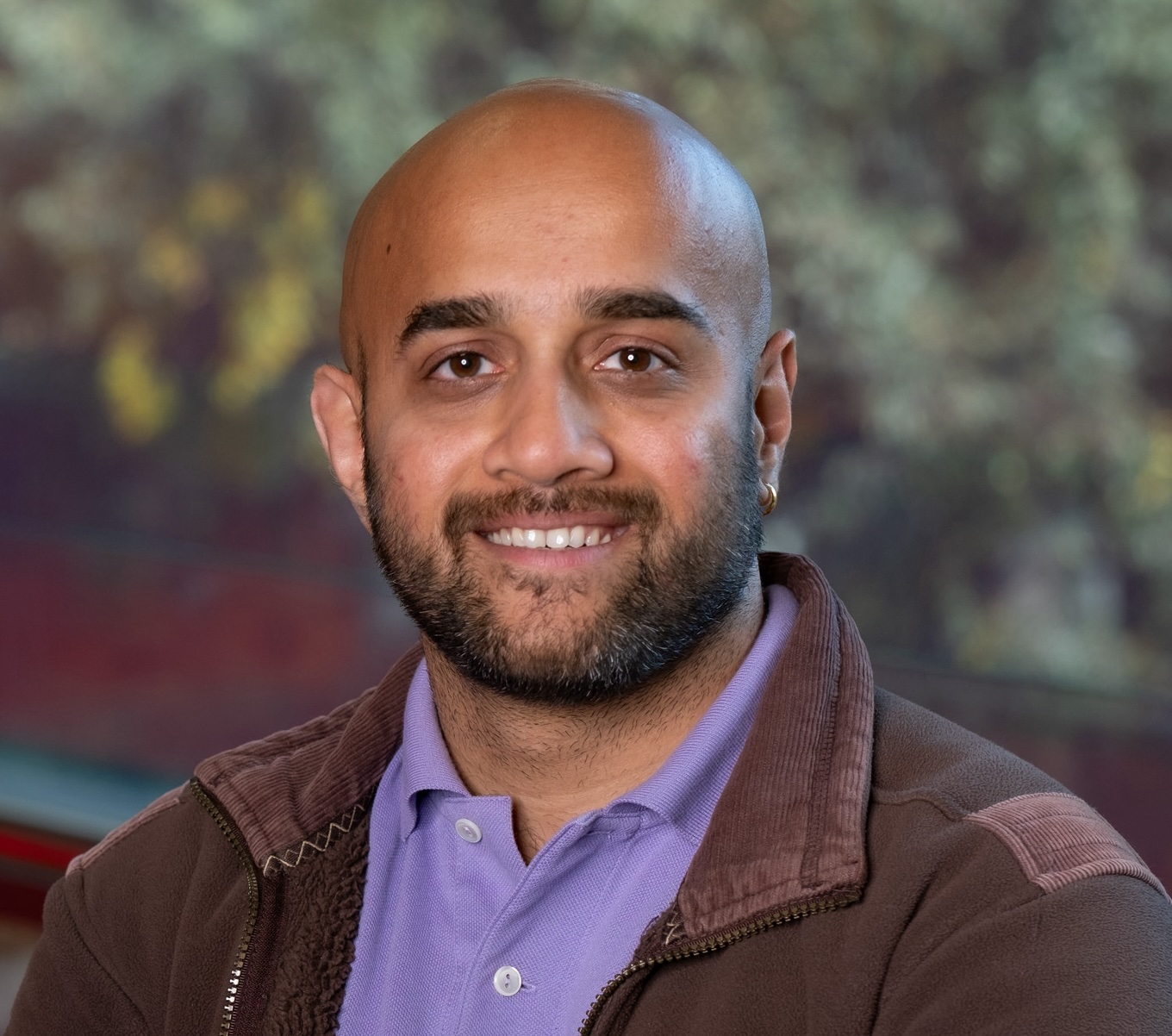
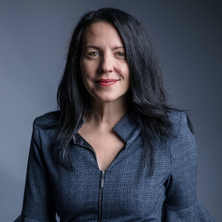
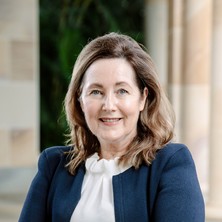
Andrew Mitchell is a Professor at the Faculty of Law, Monash University, and a member of the WTO Dispute Settlement Panelists Indicative List. He has extensive legal practice experience with Allens Arthur Robinson and consults for governments, international organizations, and the private sector. Mitchell has taught law in Australia, Canada, Indonesia, Singapore, and the US. He holds law degrees from the University of Melbourne, Harvard Law School, and a PhD from the University of Cambridge. His research focuses on international economic law, public international law, and digital trade governance, with a particular emphasis on the intersection of trade law and public health. Mitchell has secured six major grants, including an Australian Research Council Future Fellowship, and has authored over 170 books and articles. He serves as an editor for Edward Elgar’s International Economic Law Series and multiple journal editorial boards. Recent projects include 'Safeguarding Health in International Investment Agreements' (2022–2025) 'Maritime Cooperation for a Sustainable Indo-Pacific' (2021–2022) 'Global E-Commerce and Cottage Industries in India' (2020–2021) He has contributed to policy submissions on bilateral investment treaties and delivered lectures on data sovereignty and digital trade. His awards include editorial leadership roles at journals like the Journal of World Investment and Trade and Asia Pacific Law Review .
Deborah Fox is Associate Professor in Midwifery at the University of Technology Sydney (UTS), Faculty of Health, and a core member of the Centre for Midwifery, Child and Family Health. She serves as Co-lead of the Maridulu Budyari Gumal SPHERE Maternal and Women's Clinical Theme and Chair of the National Publicly Funded Homebirth Consortium. In 2024, she received the Faculty of Health Dean's Academic Excellence Award for Research (Mid Career Researcher), following her 2021 award as Highest Performing Early Career Researcher from the School of Nursing and Midwifery. Her research focuses on optimizing physiological processes and positive experiences for women with complex pregnancies, with particular emphasis on the mediation of technology in midwifery practice. Current projects include evaluation of non-invasive fetal ECG beltless and wireless fetal monitoring in labor and birth, and examining the social, economic and environmental impacts of telemonitoring and telehealth in pregnancy and postpartum care. Dr. Fox's scholarly work demonstrates consistent focus on technology's role in maternity care, women's experiences of monitoring during labor, and innovative approaches to midwifery practice. Her recent publications show increasing emphasis on digital health solutions, AI applications in women's health, and pandemic impacts on maternal care systems globally. Faculty of Health Dean's Academic Excellence Award for Research (Mid Career Researcher) 2024 Highest Performing Early Career Researcher award from School of Nursing and Midwifery 2021 Editorial Board Member, Women and Birth journal Dr. Fox is actively involved in higher degree research supervision and has developed innovative teaching resources, including an Objective Structured Clinical Examination for perinatal mental healthcare. She is scheduled to spend three months as a Visiting Scholar at the University of Oxford in 2025.
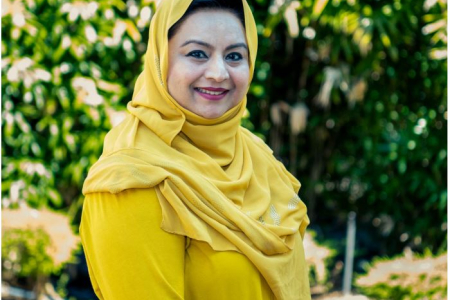
Professor Marilyn Pittard is a leading academic in the Faculty of Law at Monash University, currently serving as Associate Dean Engagement. She has held numerous leadership roles including Interim Dean, LLM Director, and Associate Dean (Research), with a career spanning over two decades in academic administration and legal scholarship. Her research focuses on Labour Law, Employment Rights, and Human Rights, with significant contributions to understanding workplace relations, vulnerable workers, and the intersection of criminal records with employment access. She has secured grants from the Australian Research Council and other institutions for projects like The Other Side of Security and Living Down the Past . Recent publications highlight trends in employment law, including anti-slavery practices, redundancy frameworks, and digital-era workplace challenges. She chairs the Victorian Legal Admissions Board’s Academic Course Appraisal Committee and contributes to the Australian Labour Law Journal and Employment Law Bulletin .
Massimo Piccardi is a Professor of Natural Language Processing (NLP), Computer Vision, and Machine Learning at the University of Technology Sydney (UTS) , where he has been since 2002. He currently serves as the Head of the School of Electrical and Data Engineering and leads the Big Data Analytics program at the Global Big Data Technologies Centre. His research focuses on advancing NLP, machine learning applications in healthcare, and cybersecurity in IoT systems. He has authored over 200 journal papers and conference proceedings, secured significant ARC and CRC grants, and holds the IEEE Computer Society Distinguished Contributor Award (2022). Education & Professional Roles: Joined UTS in 2002, progressing from Associate Professor (2002–2007) to Professor (2008–present). Serves as Associate Editor for IEEE Transactions on Big Data and Editor for Artificial Intelligence in Medicine. Active in professional societies including IEEE, ACL, and ALTA (President, 2023–2024). Research Interests: Core areas include NLP (translation, summarization, adversarial attacks), healthcare informatics (clinical NLP, health service analysis), and cybersecurity (IoT security, privacy-preserving systems). Cross-cutting themes include generative models, cross-lingual systems, and ethical AI. Grants & Projects: Principal Investigator on ARC Discovery/Linkage projects and CRC grants. Recent projects include controllable machine translation (Amazon), privacy-preserving digital agriculture, and STEM innovation (ASTRID project with NBN Co). Labs & Collaborations: Leads the UTS Global Big Data Technologies Centre, collaborating on projects like adversarial NLP attacks, medical machine translation, and secure IoT frameworks.
Dr. Ly Fie Sugianto is an Associate Professor in the Department of Accounting at Monash Business School, Monash University. Her research focuses on the integration of data analytics, artificial intelligence, and machine learning in accounting and business systems, with applications in the energy sector and organizational behavior. Monash Business School, Monash University Department of Accounting Specialization: Accounting Information Systems, Data Analytics, AI Her research interests span Accounting Information Systems , Agent-Based Simulation , Decision Support Systems , and Technology Adoption . She applies computational methods to study competitive dynamics in deregulated electricity markets and the impact of digital tools on employee well-being and organizational resilience. The recent publications reflect a strong trend in using AI and simulation to analyze complex socio-technical systems, particularly in energy markets and leadership dynamics. Keywords across her work include agent-based modeling , data analytics , servant leadership , and enterprise social media , indicating interdisciplinary research at the intersection of information systems, management, and public policy. Her scientific awards include competitive grants from the ARC (SPIRT/Linkage) , the Australia Indonesia Governance Research Partnership (AIGRP) , and the Sumitomo Foundation . ARC Grant: Dispatch Optimisation in the Australian National Electricity Market Sumitomo Foundation: Technology Use and Employee Well-Being AIGRP: Governance and MSME Resilience during Pandemic Dr. Sugianto has advised research projects and collaborated with industry partners such as Western Power , Ecogen Energy , and AEMO . She is currently accepting PhD students and leads externally funded research initiatives. Her work contributes to UN Sustainable Development Goals related to industry innovation and responsible consumption. She is affiliated with research teams focusing on intelligent decision support systems and digital transformation in business , with active collaborations in Australia and Indonesia.
Prof Christina Lim is a Professor at the Department of Electrical and Electronic Engineering, University of Melbourne, Australia. She serves as the Associate Dean of Research for the Faculty of Engineering and Information Technology (FEIT) and manages the Tucker Lab. Previously, she held roles as Research Group Leader of the Electronics and Photonics System group and Deputy Head of Department (Teaching and Operations) Education: PhD and Bachelors from University of Melbourne Research Interests: Radio-over-Fibre, Optical Wireless Communications, Microwave Photonics, Augmented Reality Displays, Reservoir Computing, Optical Crosshaul Networks Recent publications demonstrate expertise in optical waveguide design for AR, underwater optical wireless communications, photonic switching, and network optimization. Her projects focus on next-generation wireless infrastructure, including Photonics Computing Enabled Ultra-Broadband Wireless Communications (2024-2027, $598k ARC grant) and Additive Manufacturing of Optical Elements (2025). She has secured significant funding, including ARC Discovery Projects and Future Fellowships. Scientific Honors IEEE Fellow (2022) Optica Fellow (2018) ARC Future Fellow (2009-2013) ARC Australian Research Fellow (2004-2008) Professional Service Vice-President of Conferences, IEEE Photonics Society Deputy Editor, IEEE/Optica Journal of Lightwave Technology ARC College of Experts (2014-2016)
Dr. Chandranath Adak is an Assistant Professor at the Department of Computer Science and Engineering, Indian Institute of Technology Patna (IIT Patna), and concurrently serves as a Visiting Fellow at the School of Computer Science, University of Technology Sydney (UTS), Australia. He holds a Ph.D. in Analytics from UTS (2019) and previously served as an Assistant Professor at Indian Institute of Information Technology Lucknow (IIITL) and the Centre for Data Science at JIS Institute of Advanced Studies, Kolkata. Education: Ph.D. (Analytics), University of Technology Sydney (2019) M.Tech., Computer Science and Engineering, University of Kalyani (2014) B.Tech., Computer Science and Engineering, West Bengal University of Technology (2012) Research Interests: His work spans Computer Vision, Deep Learning, Reinforcement Learning, Document Image Analysis, and AI-driven solutions for healthcare, forensics, and industrial automation. He has pioneered methods in biomarker detection using electrochemical sensors combined with ML models, handwriting analysis for educational and forensic applications, and anomaly detection in industrial systems. His research bridges theoretical advances with real-world applications, such as medical diagnostics and quality control systems. Publications: His recent work includes innovations in biosensor-based medical diagnostics, handwriting evaluation systems, and transformer networks for historical document analysis. These contributions reflect a focus on interdisciplinary applications of AI across healthcare, cultural heritage preservation, and industrial automation. Awards: Start-up Research Grant, SERB, India (2022) Dr. Kalam Doctoral Scholarship, UTS (2018) IEEE CIS Graduate Student Research Grant (2017) Senior Member, IEEE (2024) Teaching & Supervision: Taught courses at UTS including 'Introduction to Data Analytics' and supervised research in machine learning and computer vision. His mentorship emphasizes hands-on experience with AI tools and real-world problem-solving. Labs & Teams: Engaged in collaborative projects at UTS's CIBCI Centre and Griffith University's IIIS, focusing on computational intelligence and sensor-driven AI systems.
Dr. Aditya Joshi is a Senior Lecturer in the School of Computer Science & Engineering at the University of New South Wales (UNSW). He specializes in Natural Language Processing (NLP), with a focus on sarcasm detection, dialectal NLP, and ethical AI applications in public health and cybersecurity. He joined UNSW in 2023 following industry roles at SEEK, Notiv, and Fractal Analytics, where he developed NLP systems for recommendation engines and meeting analytics. His research has garnered over 3,000 citations (h-index 26) and secured $3.1M in grants, including Defence Trailblazer and Google exploreCSR awards. Education: Joint PhD (2018) from IIT Bombay (India) and Monash University (Australia); MTech in CSE (2011) from IIT Bombay. Research Interests: Making NLP models robust for non-native English speakers and the LGBTI+ community, algorithmic enhancements to transformers, and applications in public health, cybersecurity, and societal issues. His work spans epidemic intelligence (collaborations with EPIWATCH and IFCYBER), cybersecurity tools like AuditNet, and inclusive AI initiatives such as queer-inclusive workshops funded by Google. He designed UNSW's new NLP course (COMP6713) and co-authored a Wiley textbook on NLP. Notable grants include the A$1.4M 'Comprehensive Defence Data Platform' (Lead CI) and A$92K Google exploreCSR grant for benchmarking dialectal sentiment. His awards include the Best PhD Thesis from IITB-Monash and Best Paper accolades at FAccT 2023 and MoMM 2020. He supervises projects on kernel-based attention reformulation, prompt-based sarcasm detection, and multilingual small-scale LLMs. His service roles include Executive Committee Member at ALTA and arXiv moderator for computational linguistics.
Dr. Farha Sattar is a Lecturer in Education (Mathematics) at the Faculty of Arts and Society, Charles Darwin University. With over thirty years of teaching experience in Mathematics, Science education, GIS, Remote Sensing, and e-Learning technologies at undergraduate and postgraduate levels, Dr. Sattar brings extensive expertise to her academic role. She holds a PhD in Geospatial Science from Charles Darwin University, focusing on Spatial Mathematical Modelling for 3D Gully Mapping and Erosion Quantification. Her educational background includes: PhD in Geospatial Science (Three Dimensional Gully Mapping and Erosion Quantification within a Geoinformatics Framework), Charles Darwin University (2012) Prior academic experience at several Asian and European universities Dr. Sattar's research spans multiple interdisciplinary fields with a strong focus on the intersection of education and technology. Her primary research interests include Mathematics Education, STEM Education, Geoscience Education, Spatial Mathematical Modelling, Drone Technology, Remote Sensing, Geographic Information Systems, and Innovative Pedagogies such as experiential learning and inquiry-based approaches. She has developed expertise in cognitive development, particularly in fostering critical and creative thinking skills through iSTEM approaches. An analysis of Dr. Sattar's recent publications reveals a consistent trajectory toward integrating emerging technologies like drones, augmented reality, and geospatial artificial intelligence into educational contexts. Her work demonstrates a progression from foundational geospatial research on erosion mapping to innovative applications in STEM education. Recent publications increasingly focus on drone technology for educational purposes, spatial data infrastructure for policy development, and computational thinking development through technology-enhanced learning. Dr. Sattar has received numerous accolades for her contributions to education and research: NT Science Week Awards – Inspired NT STEM Hero of the Year award (2021) Long Service Recognition Award (2023) Finalist, CDU Alumni Award (2023) Multiple Best Presentation Awards (2008, 2010, 2017) Australian College of Educators - 2021 College Medal Nominee As a supervisor, Dr. Sattar mentors postgraduate research students including Ayesha Farhan, who is working on "A Framework for Cognitive Development: Fostering Critical and Creative Thinking Skills, Using iSTEM Approach." She actively secures research funding through various projects such as "DBELaSTEM: Drone-Based Experiential Learning and STEM Education," "STEM_D & VR: Youth STEM Learning and Empowerment with Drones and VR," and "CodProg Drone Lab." Her research is supported by grants from NT Government projects and other external funding sources. Dr. Sattar leads the CodProg Drone Lab, an innovative research space exploring drone technology applications in education. She is a certified drone pilot and aeronautical radio operator, which enables her to bridge theoretical knowledge with practical applications. Her work with the "Flying Forward: Drones, STEM Equity, and Indigenous Empowerment" initiative demonstrates her commitment to community engagement and addressing educational disparities through technology.
Associate Professor Nicole Hartley serves as MBA Director at UQ Business School and Future of Health Research Hub Lead at The University of Queensland. With 19 years of academic experience across institutions in Sydney and Queensland, she holds appointments across multiple faculties including Business, Economics and Law; Health, Medicine and Behavioural Sciences; and Engineering, Architecture and Information Technology. Her academic affiliations span the Centre for the Business and Economics of Health, Centre for Enterprise AI, and Queensland Digital Health Centre. Dr. Hartley is an internationally recognized research academic specializing in services marketing and digital technology. Her research interests encompass service technology, virtualized services, customer preference and adoption, new media, service innovation, and corporate digital responsibility. She particularly focuses on customer perceptions in response to technological disruption in service delivery, with special emphasis on healthcare services. Her work bridges business, technology, and healthcare domains, examining how digital transformation affects consumer behavior and service experiences. Her extensive publication record demonstrates consistent research output across multiple disciplines, with recent work concentrating on telehealth implementation, corporate digital responsibility, consumer trust in digital environments, and healthcare service innovation. The interdisciplinary nature of her research connects marketing theory with practical healthcare applications, particularly in the context of digital transformation and service delivery. Dr. Hartley has successfully supervised numerous PhD candidates to completion and currently mentors several doctoral students working on topics ranging from sustainable consumption to healthcare innovation and digital service experiences. Her research has been supported by significant funding from Queensland Health, NHMRC, and other organizations, focusing on telehealth, digital service transformation, and healthcare innovation. As Director of MBA and Executive Education at UQ Business School, Dr. Hartley combines her academic expertise with practical industry experience, having previously worked as Marketing Manager/Director in tourism, education, and communication industries in Australia and the UK. She is an award-winning educator with expertise in marketing strategy, digital media, consumer behavior, and experiential industry-based projects.
Dr. Zara Ersozlu is a Senior Lecturer in Mathematics Education within the School of Education at the University of Newcastle, Australia. With a distinguished international career spanning multiple continents, she has held academic positions at prestigious institutions including North Carolina State University (USA), Gazi and Gaziosmanpasa Universities (Turkey), National Taiwan Normal University (Taiwan), The University of Western Australia, Murdoch University, and Deakin University. Her academic journey includes tenured positions as an Associate Professor and leadership roles as Department Head and Chair in teacher education disciplines. Currently, she teaches undergraduate and postgraduate courses in mathematics education, including Effective Pedagogies in Primary Mathematics, K-6 Mathematics, K-6 Numeracy, and Digitally Supported Learning. Dr. Ersozlu earned her Doctor of Philosophy from Firat University in Turkey and her Master of Art from Sakarya University. Her extensive academic preparation is complemented by five years of practical teaching experience in public schools prior to entering academia. This blend of theoretical knowledge and practical classroom experience informs her approach to teacher education and educational research. At the broadest level, Dr. Ersozlu's research investigates solutions to real-life problems impacting people's well-being, success, and capacity to achieve. Her scholarly work spans primary and secondary mathematics education, the psychology of mathematics (including metacognition, self-regulation, and anxiety), cross-cultural educational studies, teacher education, virtual simulated learning environments, and educational assessment. She has increasingly focused on the transformative potential of AI and machine learning in education, exploring how these technologies alter teaching, learning, and research processes. Her methodological expertise encompasses both quantitative and qualitative approaches, allowing her to effectively analyze both small and large educational datasets. Analysis of Dr. Ersozlu's recent publications reveals a strong emphasis on mathematics anxiety, teacher education, and the integration of technology in learning environments. Her work demonstrates a consistent focus on practical applications of educational research to address real-world challenges in mathematics education. The interdisciplinary nature of her research connects educational psychology, technology integration, and cross-cultural perspectives, with particular attention to how these elements intersect in teacher preparation and student learning outcomes. 2023 ATEA Research Recognition Award from the Australian Teacher Education Association 2021 Fellow of the Higher Education Academy (Advance HE, UK) 2010 Fellowship Program for Postdoctoral Researchers from the Council of Higher Education of Turkey Dr. Ersozlu is deeply committed to mentoring the next generation of scholars, currently supervising four PhD students and having successfully guided ten students to completion. Her grant portfolio includes significant funding for projects such as Best Practice Guidelines for RPL in Initial Teacher Education Programs ($60,000), Exploring the Reciprocal Relationship Between Mathematics Anxiety and Mathematical Resilience ($2,599), and multiple conference travel awards. She serves as an Associate Editor for several prominent journals including the International Electronic Journal of Mathematics Education and as Editor for Interdisciplinary STEM Education. Her editorial work reflects her standing as a respected voice in mathematics education research. Dr. Ersozlu's academic leadership extends to her role in developing innovative teaching approaches that integrate virtual simulation technology and learning analytics. Her work with TeachLivE™, a mixed-reality classroom simulation platform, demonstrates her commitment to creating authentic learning experiences for teacher education students. Through these initiatives, she bridges the gap between educational theory and classroom practice, preparing future educators to effectively implement evidence-based teaching strategies in diverse learning environments.
Professor Janet McColl-Kennedy is a leading figure in marketing and service science at The University of Queensland's Business School. She serves as Program Lead for Innovation Pathways (FaBA) and co-founded the Service Innovation Alliance (SIA) research hub, focusing on customer experience, AI, digital transformation, and sustainability. With Fellow status in the Academy of the Social Sciences in Australia and the Australian and New Zealand Marketing Academy, she holds international recognition including Research.com's World's Best Business Scientists ranking and the Christopher Lovelock Career Contributions to the Services Discipline Award (2025). University of Queensland Business School Honorary Visiting Professor, Cambridge Service Alliance Research Collaborator, University of Cambridge Her research spans customer experience management, service ecosystems, digital transformation, and healthcare services. She has pioneered frameworks for customer value co-creation and service recovery strategies, integrating AI and behavioral science. Her 2019 paper on customer experience insights was implemented by a major B2B organization, while her work on value co-creation improved outcomes at Lutheran Community Care. Recent publications focus on AI impacts in food and beverage services, sustainable service ecosystems, and digital health interventions. She has secured over $89 million in competitive grants, including multiple ARC Linkage and Discovery Projects, and leads cross-disciplinary teams with institutions like Cambridge University and Arizona State University. 2024 - ARC College of Experts appointment 2023 - Bo Edvardsson Industry Impact in Services Award 2022 - Elected Fellow of Academy of the Social Sciences in Australia 2021 - Clarivate Highly Cited Researcher 2018 - Ranked most influential marketing academic in Australia With over 220 publications and a Google Scholar H-index of 62, she has mentored 15 PhD students and examined theses at multiple universities. Her teaching spans 30+ years across undergraduate, postgraduate, and executive programs in Australia, USA, Italy, China, and Korea, with awards for blended learning and corporate education.
Dr. Alicia Kulczynski is an Associate Professor of Marketing and Head of the Marketing, Tourism & Business Analytics Discipline at the University of Newcastle. She holds a PhD in Management (Marketing) and undergraduate degrees in Forensic Science and Communication Studies. Her research focuses on consumer behavior, branding, and advertising, with emphasis on spokesperson characteristics, psycholinguistics in branding, and music concert attendance. She has published in top-tier journals like the Journal of Marketing and European Journal of Marketing, and was recognized as Associate Editor of the Year (2024) for the Journal of Consumer Behaviour. Her work bridges academia and industry through collaborations with organizations such as the NSW Ombudsman and Ultra Music Festival. Education - PhD in Management (Marketing), University of Newcastle (2014) - Bachelor of Science (Forensic), University of Newcastle - Bachelor of Arts (Communication Studies), University of Newcastle Research Interests - Consumer behavior and decision-making - Branding and brand communication - Advertising strategies and spokesperson effectiveness - Psycholinguistics in brand naming and consumer priming - Music concert attendee behavior and motivations - Cause-related marketing and social impact initiatives Awards - Associate Editor of the Year (2024) - Multiple Best Paper Awards at ANZMAC (2015–2024) - Teaching Excellence Awards (2016–2024) - Industry Collaboration Recognition (e.g., Ultra Music Festival) Grants & Industry Work - Partnered with NSW Ombudsman to develop AI tools for complaint assistance. - Established an Industry Consultative Committee with Pacific Smiles, Newcastle Airport, and HMRI. - Collaborated on diabetes management system market research with a Swedish SME. Teaching & Mentorship - Teaches marketing research courses with industry-linked projects. - Supervised PhD students on topics like AI-driven pricing, post-purchase dissonance, and omnichannel consumer experiences. - Guided students to publish in top journals such as the Journal of Consumer Behaviour and European Journal of Marketing. Labs & Teams - Leads the Marketing, Tourism & Business Analytics Discipline. - Co-founded the Social Marketing Research Team for Youth (SMRTY) initiative.
Dr. Alireza Nili is a Senior Lecturer in Service Science at QUT's School of Information Systems within the Faculty of Science. His expertise spans digitization of customer-centric services, AI/chatbots, IoT/IIoT, and sustainable technologies. He holds a PhD from Victoria University of Wellington and has coordinated large-scale courses like IT Systems Design (IFB103), achieving top teaching scores. Nili's research focuses on service ecosystems, trust in digital services, and public/retail sector innovations. He has secured over $1.4M in industry grants for projects involving Cisco, Amazon, and Services Australia. His awards include the 2023 Educator of the Year and multiple top conference paper recognitions. Nili supervises PhD students at Level 3 mentoring status and contributes to major conferences as track chair/associate editor. Research highlights include frameworks for chatbot governance, IOT in agriculture, and AI ethics. His work appears in IEEE Software , Communications of the ACM , and MIT Sloan Management Review . Current projects address consumer trust in AI technologies and spatial data systems. Nili's interdisciplinary approach combines design science with empirical methodologies to bridge theory and practice in digital service innovation.
Dr. Omkar Prabhakar Dastane is a Senior Lecturer and Director of Postgraduate Studies at the Malaysia School of Business, Monash University Malaysia. He holds a PhD in Business from Curtin University and certifications including Certified Management and Business Educator (CMBE) from CABS, UK, and HRDF-approved trainer status in Malaysia. His research focuses on technological impacts on businesses, digital consumer behavior, and customer value perception, with publications in A-ranked journals like the Journal of Retailing and Consumer Services and Asia Pacific Journal of Marketing & Logistics . He has secured MYR 157,549 in research grants and received notable awards like the Best Paper Awards (2017/2018) and Emerald Literati Award (2024). Dr. Dastane has held leadership roles including Head of MBA Programs and Head of Postgraduate Studies at top-tier institutions. He actively contributes to editorial roles for journals like Arab Gulf Journal of Scientific Research and reviews for SSCI/SCIE-indexed publications. His teaching emphasizes strategic branding and services marketing, integrating AR/VR tools for immersive learning. He has also led educational visits across ASEAN countries. His research interests span metaverse applications in business, immersive technologies, and contemporary consumer behavior trends. Recent work explores AI-driven services, live-stream commerce, and digital transformation's role in achieving UN SDGs. He has advised on over 200 research projects and secured multiple teaching grants including the 2025 Learning & Teaching Grant.