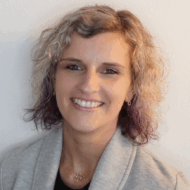
Brian C. O'Neill is an Associate Professor of Computer Science and Associate Dean at Quinnipiac University's School of Computing and Engineering. He holds a PhD and MS in Computer Science from Georgia Institute of Technology and previously served as Department Chair at Western New England University before joining Quinnipiac in 2023. Education: BS, Saint Joseph's University MS, Georgia Institute of Technology PhD, Georgia Institute of Technology Dr. O'Neill's research focuses on Artificial Intelligence and its intersection with Computational Creativity , particularly in storytelling and board games. He has developed a multidisciplinary AI minor at Quinnipiac and investigates AI's role in enhancing human creative processes through emotion-driven narrative generation and collaborative improvisation systems. His recent publications span AI accessibility, game theory, and computing education. While no specific scientific awards are listed, he contributes to computing education as co-Editor-in-Chief of EngageCSEdu, an ACM open-education resource platform.
Prof. Dr. Martin Wrobel serves as Professor of General Business Administration, especially Company Start-ups at Brandenburg University of Technology (TH Brandenburg) since 2019. He additionally holds positions as Guest Professor for Entrepreneurship at TecnoCampus | Universitat Pompeu Fabra in Barcelona and is an Associated Researcher at the Alexander von Humboldt Institute for Internet and Society (HIIG) in the Innovation, Entrepreneurship & Society research group. His professional affiliations also include membership on the DAAD selection committee for master's scholarships and the jury of the Innovation Program for Business Models and Pioneer Solutions of the Federal Ministry for Economic Affairs and Energy. Dr. Wrobel's research interests focus on entrepreneurship and start-up management, with particular emphasis on technology-oriented startups (especially Internet, AI, and impact startups), corporate-startup collaborations, digitalization, innovation, and marketing & sales for startups. His work bridges academic theory with practical application, frequently examining lean startup methodologies, minimum viable products, and customer acquisition strategies for early-stage ventures. His research demonstrates a strong commitment to understanding how startups navigate the complex landscape of business development and market validation. His publication record reveals a consistent focus on practical entrepreneurship with increasing emphasis on AI-driven startups, international expansion strategies, and the evolving dynamics of corporate-startup partnerships. Recent work shows deeper exploration of branding for startups, customer acquisition challenges, and the application of lean methodologies in real-world startup environments. His research maintains strong connections to both German and international startup ecosystems. As an educator, Prof. Wrobel actively supervises bachelor's and master's theses in entrepreneurship, startup management, marketing, sales, innovation, and digitalization. He has developed a structured process for thesis supervision with specific requirements for research proposals and methodology. He also hosts the 'Marketing From Zero To One' podcast featuring interviews with startup founders and industry experts, and organizes numerous guest lectures with entrepreneurs through his 'THB Startup Stories' series. Prof. Wrobel maintains active engagement with the startup community through conference presentations, workshops, and advisory roles. His practical experience includes previous roles as Managing Director at Meltwater Group, consultant at Freshworks, and researcher at HIIG. His international perspective is enhanced by visiting scholar positions at MIT Media Lab and Parsons' School of Art, Media, and Technology.
Laurent Matthey is a Professor at the University of Geneva since 2014, who became attached to the CRESSON Research Team in 2023. His institutional affiliations span multiple organizations through the Joint Research Unit (UMR) connecting CNRS, Université Grenoble Alpes (UGA), École Nationale Supérieure d'Architecture de Nantes, École Nationale Supérieure d'Architecture de Grenoble, and Centrale Nantes. Professor Matthey's research lies at the intersection of ethnography and literary studies, focusing on the political issues of storytelling in urban fabric. His work examines sensitive registers and attentional regimes that shape urban environments, developing narrative approaches to understanding and practicing urban planning. Recent research explores how generative AI affects spatial imagination and the challenges of creating urban planning that accommodates diversity and difference. His publication record from 2021-2025 reveals a consistent focus on narrative methodologies in urban research, with significant contributions including the 2025 book 'Narrative Matters. Designing the City through Storytelling' and numerous articles in journals such as GeoHumanities and Journal of Urban Cultural Studies. His work often examines the relationship between political vision and narrative construction in planning processes, as well as the challenges of participatory urban planning. Professor Matthey's research methodology bridges humanities and planning disciplines through innovative approaches that use storytelling itself as a research tool. His work on failed projects provides critical insights into planning processes, while his exploration of 'metropolitan narratives in transition' addresses how cities navigate change through evolving stories and imaginaries. His research is conducted within the CRESSON Research Team framework, which appears to be part of the broader AAU Laboratory (Architectural, Urban and Landscape Research) with connections to the International Ambiances Network. This institutional context supports his interdisciplinary approach that connects literary studies, ethnography, and urban planning practice.
Monique Meuschke serves as a Privatdozent (equivalent to Associate Professor) at the Institute of Simulation and Graphics, Otto-von-Guericke University Magdeburg, where she leads pioneering research at the intersection of medical visualization and narrative storytelling. Her work transforms complex clinical data—particularly hemodynamic patterns in cerebral aneurysms—into accessible visual narratives for diverse audiences ranging from neurosurgeons to patients and the general public. Her research program centers on three interconnected pillars: Medical Visualization Fundamentals : Developing novel techniques for blood flow analysis, aneurysm characterization, and vascular structure representation through systems like Aneulysis and COMFIS Narrative Storytelling Frameworks : Creating structured methodologies for 'disease stories' that communicate pathological processes through visual narratives, including AI-generated characters and virtual reality experiences Public Health Translation : Bridging clinical data with community health literacy through projects like Raccoon for risk communicators and visual disease stories for epidemiological data Meuschke's publication trajectory reveals accelerating impact since 2020, with 18 first-author/co-author papers in 2024-2025 alone spanning top venues including IEEE Transactions on Visualization and Computer Graphics, Medical Image Analysis, and Eurographics workshops. Her work demonstrates consistent focus on making medical data both scientifically rigorous and humanly comprehensible, with recent innovations in AI-assisted narrative generation and real-world validation through platforms like YouTube comment analysis. She maintains active collaboration within Otto-von-Guericke University's visualization ecosystem while extending impact through clinical partnerships and public health initiatives. Her research directly addresses critical gaps in medical communication—from surgical planning support to population-level health literacy—through technically sophisticated yet accessible visual solutions.