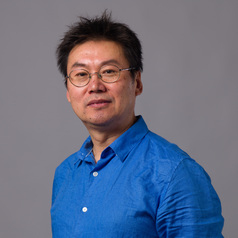
Abhraneel Sarma is a PhD candidate in Computer Science at Northwestern University, advised by Professors Matthew Kay and Jessica Hullman. His research focuses on addressing uncertainty in data analysis through tools like multiverse (an R package for sensitivity analysis) and Milliways (a visualization system for multiverse analysis validation). Uncertainty visualization Multiverse analysis Bayesian inference Reproducibility in research His work combines empirical studies and system development to improve data-driven decision-making. Publications include best paper awards at CHI 2019 and honorable mentions at CHI 2024, CHI 2023, and VIS 2022. 2025 : CHI 2024 : CHI (Best Paper Honorable Mention) 2023 : CHI (Best Paper Honorable Mention) 2022 : VIS (Best Paper Honorable Mention) 2019 : CHI (Best Paper Award) Email: abhraneel@u.northwestern.edu
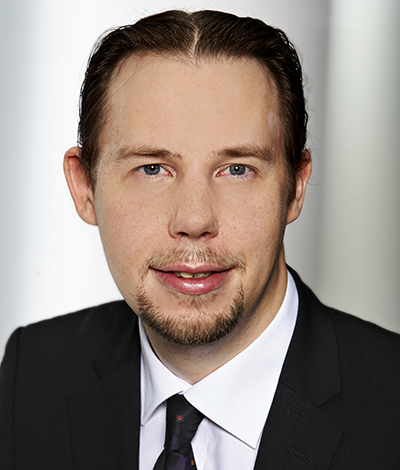
Dr. Yuzhu Li is a Professor at the Department of Decision & Information Sciences , Charlton College of Business , University of Massachusetts Dartmouth . Her expertise spans Digital Transformation , Blockchain , Information Systems Development , and Project Management . She teaches courses in Customer Analytics , Business Analytics , and Agile Development , emphasizing CRM strategies , Data Mining , and Information Visualization . PhD in Business Administration, University of Central Florida (2008) Master of Technology Management , Washington State University (2002) BA in Information Systems , Nankai University (1999) Her research focuses on Emerging Technologies like blockchain and AI, Behavioral Project Management , and E-commerce frameworks. Key themes include Team Resilience , Control Systems in Interorganizational Teams , and Digital System Security , with recent articles analyzing Bitcoin vulnerabilities and collaborative project governance. Dr. Li serves as Treasurer of the New England Association of Information Systems Chapter, an Editorial Review Board Member of the Project Management Journal, and Associate Editor of the Nankai Business Review International. She actively contributes to the academic community through roles in international conferences and editorial committees.
Professor Gui-Ohk Lee is a full-time faculty member at Sejong University's Department of Media and Communication since 2003. Holding a Ph.D. in Communication from the University of Tennessee (2002), he combines academic leadership with practical expertise through roles like Chair of Korea's Public Service Advertising Council (2019-present) and former Director of Sejong University's Office of Public Relations (2012-2014). Ph.D., University of Tennessee, USA (2002) M.S., University of Tennessee, USA (1998) M.A., Hanyang University (1989) B.A., Hanyang University (1987) His research focuses on advertising and gender issues , health communication , and IMC message strategies . Current work examines digital divides among older adults, pandemic-driven behavior changes, and AI/robotics in elderly care. Recent publications analyze COVID-19 communication patterns (2022-2023), smartphone adoption by seniors (2024), and social media's mental health impacts (2012-2022). His 2025 study on companion robots marks ongoing innovation in aging society research. Professional background includes 1989-1994 advertising copywriting experience and leadership roles in academic associations like Korea Health Communication Association (2010-2012 president).
Kun Gao is an Assistant Professor at the Department of Architecture and Civil Engineering at Chalmers University, leading the Urban Mobility Systems research group. His work bridges transportation engineering and data science to develop sustainable mobility solutions through electrification, shared systems, and connected infrastructure. Research Focus: Electric vehicle integration, charging infrastructure optimization, multimodal mobility systems Funding: Supported by JPI Urban Europe, FORMAS, Swedish Innovation Agency, Swedish Energy Agency, and Chalmers AoA Transport/Energy Methods: Machine learning, big data analytics, system optimization His recent publications emphasize autonomous vehicle safety , renewable energy integration , and equity in mobility systems . Current work explores AI-driven infrastructure planning and coupled transportation-energy systems.
Colin Porlezza is Associate Professor of Digital Journalism and Director of the Institute of Media and Journalism (IMeG) at the Università della Svizzera italiana (USI), Faculty of Communication, Culture and Society. He also leads the European Journalism Observatory (EJO) and holds an Honorary Senior Research Fellow position at City, University of London. Previously, he was a Research Fellow at Columbia University’s Tow Center for Digital Journalism. PhD in Communication Sciences – Università della Svizzera italiana Licentiate (BA/MA) in Communication Sciences – USI, specialization in Mass Communication and New Media Work experience at University of Zurich and University of Neuchâtel His research centers on digital journalism, with emphasis on automated journalism, artificial intelligence, datafication, disinformation, and journalistic ethics. He investigates how digital technologies reshape journalistic roles, norms, and practices, particularly in public service and hybrid news environments. His work bridges technical innovation with ethical and societal implications. The 15 most recent articles highlight a consistent trajectory in AI and journalism, focusing on automation, accountability, verification tools, and innovation. Keywords span communication, AI, ethics, and media policy, while subfields include algorithmic transparency, hybrid workflows, fact-checking, and value-sensitive design—reflecting a strong interdisciplinary focus on responsible technological integration in newsrooms. Knight News Innovation Fellowship Prof. Porlezza has secured major research grants from the Swiss National Science Foundation, Horizon 2020, Google Digital News Initiative, and OFCOM. He leads the JoIn-DemoS and Diacomet projects and previously directed Designing Hybrid Journalism and DMINR. He advises PhD students as Director of the PhD Program and collaborates with media organizations like SRG SSR and Tamedia. His advisory roles include the Austrian National Journalists' Study and Innovamedia network. He leads the Institute of Media and Journalism (IMeG) and the European Journalism Observatory (EJO), fostering collaborative research across Europe. These units serve as hubs for innovation, policy dialogue, and knowledge transfer between academia and professional journalism.
Bin Chen is a Lecturer at the School of Computing and Information Systems, University of Melbourne, where he conducts research at the intersection of computer graphics, computational imaging, and human perception. He was previously a postdoctoral researcher at the Max-Planck-Institut für Informatik and a visiting scholar at the University of Cambridge. Research Interests: His work spans Computational Display , focusing on glass-free 3D and VR/AR systems; Perception , studying how humans perceive virtual materials and gloss; and Computational Imaging , developing AI-driven methods for HDR, deblurring, and depth synthesis. He uses both optical hardware and software rendering to enhance visual fidelity. Recent Research Trends: His recent publications emphasize deep learning for image restoration (e.g., deblurring, tone mapping), neural representations for image stacks, and perceptual validation of material rendering. The integration of light field displays and self-supervised learning is a key theme across his recent work. Scientific Awards: CVPR Best Paper Award Finalist (Top 0.4%) – 2022 Service and Mentoring: Bin Chen has served on the Technical Paper Committees for SIGGRAPH, SIGGRAPH Asia, CVPR, and AAAI. He actively mentors PhD students and invites self-motivated candidates to join his research group. He has advised students such as Tao Huang, Lingyan Ruan, Chao Wang, and Jizhou Li. Laboratory and Teams: While no formal lab name is specified, his research group at the University of Melbourne focuses on visual computing, with strong collaborations extending from City University of Hong Kong to Max-Planck-Institut and the University of Cambridge.
Prof. Dr. Andreas Bulling is Full Professor of Computer Science at the University of Stuttgart , leading the Collaborative Artificial Intelligence research group at the Institute for Visualization and Interactive Systems. He is also a founding director of the Stuttgart ELLIS Unit and serves on multiple prestigious boards including IEEE Transactions on Visualization and Computer Graphics . Education: MSc in Computer Science (KIT), PhD in Information Technology (ETH Zurich) Research Interests: Human-Computer Interaction, Eye Tracking, Wearable Computing, Computer Vision, and Privacy-Preserving AI Scientific Leadership: UbiComp Steering Committee member, ACM ETRA General Chair (2020), and extensive editorial/guest editor roles Key Awards: ERC Starting Grant (2018), Henriette Herz Scout (2024), and multiple best paper awards at CHI, ETRA, and UIST Technical Contributions: Developed datasets (LPW, VisRecall++), created novel methods for gaze estimation, mental face reconstruction, and saliency prediction in visualizations His work bridges AI and Human-Computer Interaction with applications in immersive systems and healthcare technologies.
Cindy York is an Associate Professor in the Department of Educational Technology, Research and Assessment at Northern Illinois University’s College of Education. Her work bridges educational technology, instructional design, and teacher education, with a strong focus on online and active learning environments. Her research interests include expert/novice differences in instructional design , online teaching and learning , technology integration in K-12 education , teacher education , and mathematics education . She is particularly known for her development and research on TACTivities —tactile, hands-on learning activities that enhance engagement, communication, and collaboration in both face-to-face and online settings. Her recent publications span topics such as virtual reality in library education , adaptive assessments in mathematics , mobile-assisted language learning , and AI in teacher education . These works reflect a consistent commitment to inclusive, active, and technology-enhanced pedagogies, often grounded in qualitative and mixed-methods research. She has received recognition through publications in high-impact journals such as Computers & Education , Language Learning & Technology , and Performance Improvement Quarterly . Cindy York advises doctoral students and teaches a range of graduate courses including Doctoral Research , Seminars in Instructional Technology , and Instructional Design I . She has also co-authored the third edition of Planning for Interactive Distance Education and contributed to multiple book chapters on online learning and teacher education. Her collaborative work often involves partnerships with scholars in mathematics education and instructional technology. She is actively involved in research outreach, including projects related to distance education, user experience, and learning analytics. Her lab and team focus on designing and evaluating innovative learning technologies and pedagogical strategies that support diverse learners.
James O'Brien is a Professor of Computer Science at the University of California, Berkeley , affiliated with the College of Engineering . His research spans computer graphics, physical simulation, human perception, and image forensics , with applications in film, gaming, and virtual reality. He serves as Chief Scientist/co-founder at Get Klothed and technical advisor to Juice Labs. Education : Ph.D. (2000), M.S. (1997) in Computer Science from Georgia Institute of Technology; B.S. (1992) in Computer Science from Florida International University. O'Brien's research focuses on destruction modeling , facial deformations , and VR motion data analysis , including forensic techniques for detecting image manipulation and adaptive cloth simulation. His work has been commercialized in over 200 feature films and games. Scientific Awards : Academy Award for Technical Achievement (2015) ACM Distinguished Scientist Award (2009) Sloan Research Fellow (2003) Okawa Research Grant (2000) O'Brien has directed ACM SIGGRAPH (2010–2016) and received recognition for teaching and innovation from MIT Technology Review and Georgia Tech.
Dr. Elizabeth Cook is a Senior Lecturer at the Violence and Society Centre, City, University of London, joining in January 2020. She holds a PhD in Criminology from the University of Manchester and has held postdoctoral positions at the University of Oxford, University of Sheffield, and Monash University. Her research intersects criminology, sociology, and gender studies, focusing on homicide, family advocacy in post-violence contexts, and statutory fatality review systems. UKRI-funded Prevention Research Partnership Consortium Co-Investigator British Academy Small Grant awardee for femicide research Member of AHRC Peer Review College and Sociology Editorial Board Her research explores pathways between gender inequality and homicide , family activism in justice systems , and improving institutional responses to fatal violence . Publications emphasize victim-centered approaches, policy reform, and cross-sector data integration. Articles span Lancet Psychiatry , Current Sociology , and Criminology & Criminal Justice , reflecting interdisciplinary engagement with public health, legal studies, and trauma analysis. Recent articles highlight femicide prevention , digital data collection , and multi-agency violence interventions . She co-edited a special issue in Current Sociology redefining femicide metrics and authored a Routledge monograph on Family Activism After Fatal Violence . Her work informs policy through the Prevention Research Partnership Consortium, collaborating with governmental and third-sector bodies. Scientific Awards: ESRC +3 Studentship Presidential Doctoral Scholarship (University of Manchester) UKRI Prevention Research Partnership Consortium Award British Academy Small Grant She has contributed to studies on traumatic bereavement , media portrayals of violence , and political economy of prevention strategies . Her role involves theory development for violence-health-society intersections and advocating for systemic reforms in fatality review processes.
Dr. Song Shi is an Associate Professor of Property Economics at the University of Technology Sydney's School of Built Environment, where he serves as a leading researcher and educator in housing markets, price forecasting, and sustainable urban development. His interdisciplinary research bridges academic theory with practical industry applications, focusing on the intersection of real estate economics, environmental risk, and social sustainability. With over 120 research contributions, including numerous publications in A* and A-ranked journals, he has established himself as a prominent voice in property economics in Australia. Dr. Shi earned his PhD from Massey University in 2009, following his Master of Business Studies (2006) and Bachelor of Business Studies (Honours) (2004), also from Massey University. His earlier academic foundation includes a Bachelor of Engineering from Southeast University in Nanjing, China (1991). Dr. Shi's research interests span housing market analysis, environmental risk assessment, sustainable urban development, and Chinese investment patterns in Australian real estate. He has pioneered work on flood risk perception in property valuation, demonstrating cognitive limits in how buyers assess low-probability, high-severity flood events. His research on Chinese investment in Sydney housing markets challenged common perceptions about foreign capital's impact on affordability. Currently, he is developing AI-driven housing market forecasting tools to provide real-time insights for investors, homeowners, and policymakers across Australian capital cities. His publication portfolio reveals a clear evolution from traditional property economics toward interdisciplinary research connecting environmental risk, social sustainability, and technological innovation in housing markets. Recent work increasingly focuses on climate change adaptation, flood risk assessment, and the social dimensions of urban development, reflecting both personal research interests and broader academic priorities in sustainable cities. DAB Faculty Award for Highest Impact Research Project or Achievement (2023) UTS Australia-China Relations Institute Research Grants (2020, 2022) UrbanGrowth NSW University Roundtable Research Grant ($127,954) (2019) Third Class Award (2025) Dr. Shi actively supervises Masters and PhD students, with a focus on housing market analysis, forecasting, sustainable urban development, and climate change impacts. His supervision excellence is evidenced by his PhD student Chunyan Yang winning the UTS Chancellor's List in 2023. He has secured significant research funding, including the UrbanGrowth NSW grant for predictive housing price modeling (2018-2020). As a passionate educator, he teaches in the Bachelor of Property Economics program and coordinates postgraduate subjects in the Master of Real Estate Investment program, emphasizing critical thinking and analytical skills for real-world property investment challenges. Dr. Shi maintains strong industry connections through regular media commentary on SBS Mandarin Radio and contributions to The Conversation, where his articles on flood risk and Chinese investment in housing have garnered tens of thousands of reads. His work bridges academic research with practical policy implications, particularly regarding housing affordability, environmental risk management, and sustainable urban development.
Gerd Bruder is an Associate Professor in the Department of Computer Science at the University of Central Florida and a Research Associate Professor at the Institute for Simulation and Training. His work bridges computer science, human factors, and immersive technologies, with a focus on Extended Reality (XR) systems. Education: Habilitation, Computer Science, University of Hamburg, Germany (2017) Ph.D., Computer Science, University of Münster, Germany (2011) M.Sc., Computer Science with minor in Mathematics, University of Münster, Germany (2009) Dr. Bruder’s research centers on human-computer interaction in virtual and augmented environments. His interests include perception, 3D user interfaces, display technologies, and digital twins, with applications in healthcare, military training, architecture, and smart environments. He investigates how users perceive and interact with immersive systems, leveraging illusions and redirection techniques to enhance experience and usability. His recent publications reveal a strong trend in trust, cognitive load, and social interaction in XR. Themes include user transitions between realities, robot reliability perception, multisensory feedback, and AI integration. His work often explores how visual and spatial cues affect user behavior and decision-making in complex environments. Scientific Awards: Best Paper Award, ACM VRST 2023 2021 Innovation Award, TechConnect World Multiple Best Paper, Demo, and Poster Awards from ACM and IEEE conferences (2008–2021) Dr. Bruder leads an active research group, mentoring students and collaborating on grants and patents related to AR/VR systems. His work is supported by interdisciplinary teams and institutions, including UCF’s Institute for Simulation and Training. He has co-authored numerous patents in AR magnification, audiovisual detection, and virtual human simulation. His lab focuses on immersive environments, digital twins, and human factors in XR. Projects involve collaborative mixed reality, perceptual illusions, and real-world applications in training and healthcare.
Karl Stampfer is a Professor of Forest Engineering at the Institute of Forest Engineering within the Department of Ecosystem Management, Climate and Biodiversity at the University of Natural Resources and Life Sciences, Vienna (BOKU). Appointed in 2012, he leads research on digital transformation in forestry operations with emphasis on work safety, steep-terrain harvesting, and climate-resilient infrastructure. His work bridges engineering practice and academic innovation through the Forest Demonstration Centre. His academic credentials include a Diploma (1991), Doctoral degree (1996), and Habilitation (2002), all from BOKU. Career progression shows continuous engagement: University assistant at the Institute of Forest Engineering from 1993, culminating in his full professorship. Stampfer's research focuses on Forest Engineering with three core pillars: (1) Timber harvesting system optimization for steep terrain using winch-assisted and cable yarding technologies, (2) Work safety through UWB sensors and causal accident modeling, and (3) Digitalization via laser scanning (TLS/ALS) for forest inventory, road monitoring, and digital twin development. His work integrates sustainable resource management with practical industry applications. Analysis of his 78 publications reveals a strong 2022-2024 trend: digital tools dominate 65% of outputs, particularly LiDAR for danger zone monitoring and climate adaptation. Safety research comprises 25%, with accident counterfactuals and ergonomic analysis. The remaining 10% addresses biomass logistics and road engineering, reflecting his multidisciplinary approach to European mountain forestry challenges. Scientific recognition includes: Promotion Award of the Foundation '120 Years of University of Natural Resources and Life Sciences, Vienna' (2002) Schrödinger Fellowship at ETH Zurich's Professorship for Forest Engineering (1997) Promotion Award of the Austrian Society for Occupational Medicine (1996) He has supervised numerous theses with no publicly listed advisees. Grant activity centers on externally funded research reports (e.g., SafeForests, LaDiWaldi) despite zero ongoing projects shown. Collaborations with AUVA, Land Kärnten, and international consortia like IUFRO drive his practical knowledge transfer to forest associations and policymakers. Stampfer operates within BOKU's Forest Demonstration Centre and co-leads the HCAI-Lab with Andreas Holzinger. His team specializes in field validation of digital tools, including the Seilgerätesimulator (VR training) and UWB danger zone monitors. Current work targets autonomous harvesting systems and AI explainability for accident prevention, as evidenced by 2025 presentations at FORMEC and Woodmaster events.
Sandeep R. CHANDUKALA is a Full-time Associate Professor of Marketing and Lee Kong Chian Fellow at the Lee Kong Chian School of Business, Singapore Management University. His research focuses on new technologies in marketing, retail analytics, Bayesian applications, and quantitative models for advertising and new product development. He holds a Ph.D. in Marketing from The Ohio State University (2008), an MBA from the University of Texas, Dallas (2002), and engineering degrees from the University of Minnesota and Osmania University. Education: Ph.D. Marketing (Ohio State), MBA (UT Dallas), M.S. Computer Engineering (Minnesota), B.E. Instrumentation (Osmania) His research explores immersive retailing, AR applications in retail, and data-driven marketing strategies. He has published in top journals like Journal of Marketing and Journal of Retailing , receiving the 2022 AMA/MSI/H. Paul Root Award for impactful marketing practice contributions. His work bridges academic insights with real-world retail challenges, emphasizing consumer behavior in digital and physical spaces. Teaching excellence awards include the 2020 MiM Excellent Teaching Award and multiple Dean's Honours recognitions. His research funding includes the 3M Junior Faculty Grant and Lee Kong Chian Fellowship. He has contributed case studies on generative AI in advertising, omni-channel strategies, and influencer analytics. His interdisciplinary expertise spans digital transformation, AI-driven decision-making, and competitive brand strategies.
Matej Guid serves as an Assistant Professor at the University of Ljubljana's Faculty of Computer and Information Science and conducts research at the Laboratory of Algorithmics. His teaching portfolio includes Topics in Computer and Information Science and specialized Chess instruction. His research spans heuristic search, intelligent tutoring systems, computer game-playing (particularly chess), and argument-based machine learning. He has secured significant funding from the Slovenian Research Agency for projects like 'Artificial intelligence and intelligent systems' (2015-2020) and 'Machine learning for building intelligent tutoring systems' (2011-2014), demonstrating sustained contributions to AI applications in education and gaming. Analysis of his 2012-2016 publications reveals three dominant research trajectories: computational modeling of chess problem difficulty, development of AI-driven educational tools (especially automated chess tutors), and medical knowledge elicitation using argument-based machine learning. His work consistently bridges theoretical AI with practical implementations in game analysis and educational technology. Guid actively participates in research grant initiatives through the Slovenian Research Agency, with current involvement in the 'Artificial intelligence and intelligent systems' program. His laboratory work centers on algorithm development within the Laboratory of Algorithmics, where he collaborates on knowledge refinement systems and adaptive learning tools.

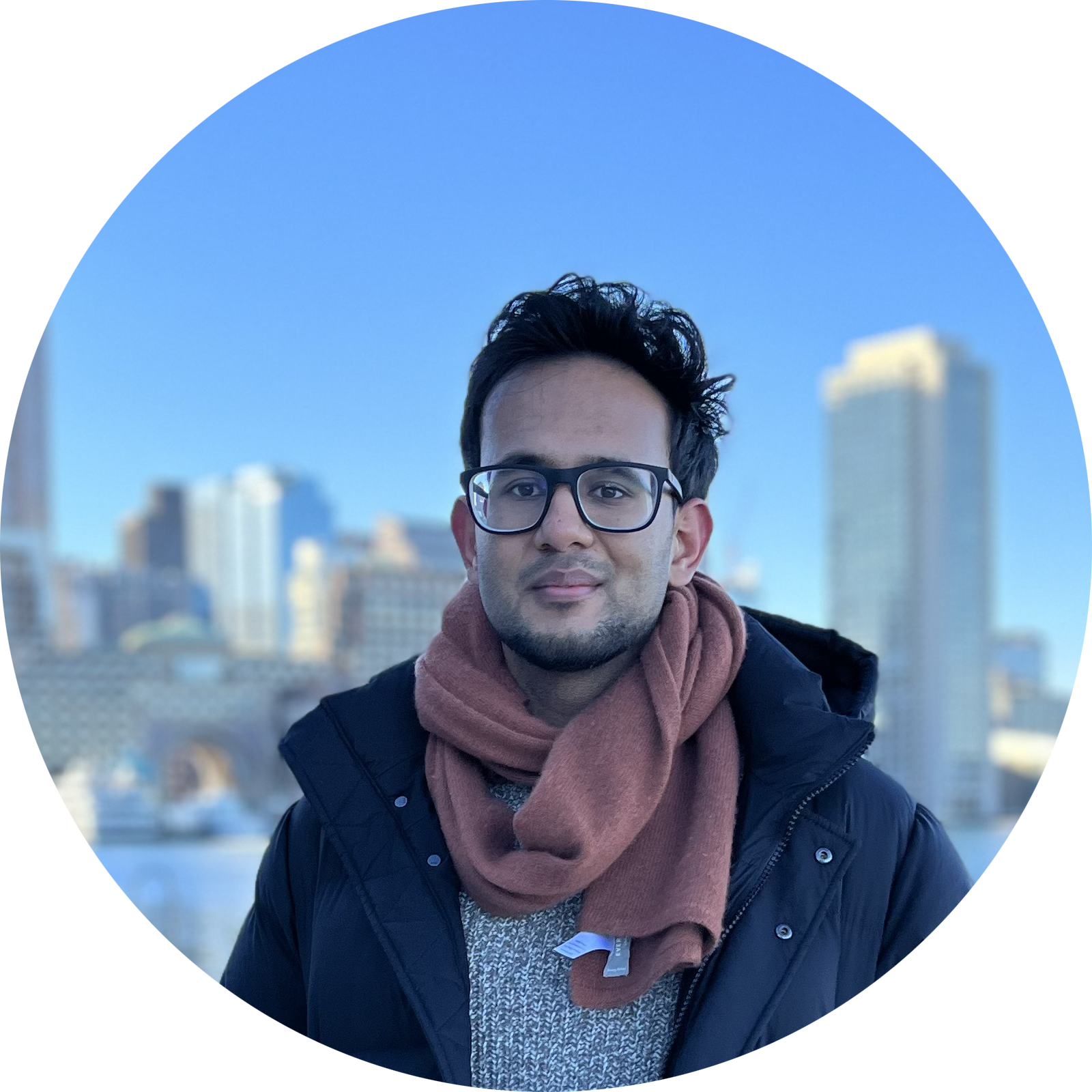
/prod01/production-cdn-pxl/media/umassdartmouth/profiles/charlton/Yuzhu-Li.jpg)