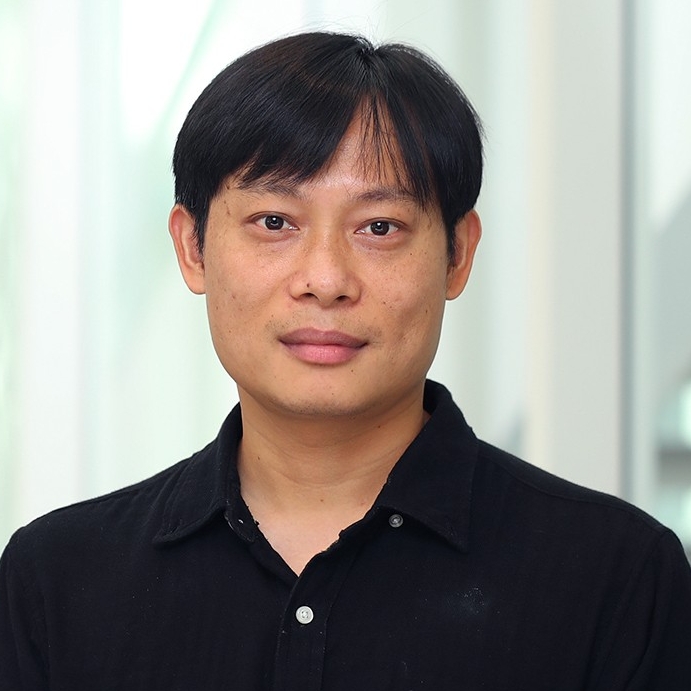
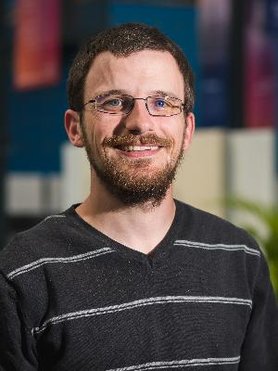
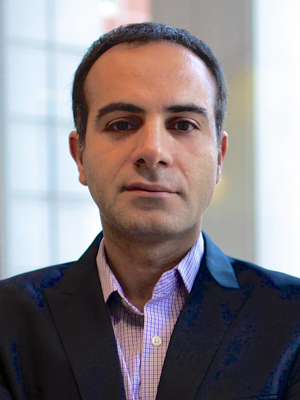
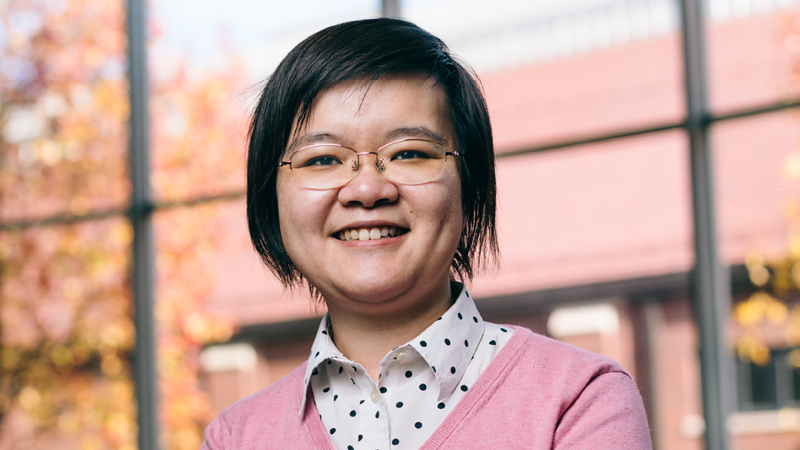
Sebastian Riedel is a Professor at University College London (UCL) and a Researcher at DeepMind, leading the UCL NLP Lab. His work focuses on teaching machines to read, reason, and write, integrating Natural Language Processing (NLP) with Machine Learning. He holds an Allen Distinguished Investigator award and has held roles at FAIR, UMass Amherst, Tokyo University, and the University of Edinburgh. Education: PhD in Computer Science from the University of Edinburgh (advisor: Ewan Klein), postdoctoral research at UMass Amherst (advisor: Andrew McCallum), and research at Tokyo University (advisor: Tsujii Junichi). Research Interests: NLP, machine learning, information extraction, and multimodal models like Gemini. He develops tools such as UCLEED (BioNLP event extractor), frontlets (Scala map wrappers), and thebibbrag (BibTeX to HTML converter). Awards: Allen Distinguished Investigator. Software contributions include GitHub repositories for NLP, machine learning, and data tools. Contact: s.riedel@ucl.ac.uk | Office: 1st Floor, 90 High Holborn, London WC1V 6LJ | Office Hours: Mondays 11 AM–12 PM.
Peter Seele is a Full Professor at the Faculty of Communication, Culture and Society at Università della Svizzera italiana (USI). He is affiliated with the Center for Climate Finance and Sustainability (CCFS), Ethics and Communication Law Center (ECLC), and the Luxury Observatory Lugano (LOLugano). His research focuses on Corporate Social Responsibility (CSR), Business Ethics, Digital Ethics, Greenwashing, and Machinewashing. Dr. Seele holds dual PhDs in Economics (University of Witten/Herdecke, Germany) and Philosophy (University of Düsseldorf, Germany). He previously served as an Assistant Professor at the University of Basel and conducted post-doctoral research at the Institute for Advanced Studies in the Humanities (KWI) in Essen. His educational background includes studies at the University of Oldenburg and Delhi School of Economics, followed by two years as a business consultant in Frankfurt. His research explores ethical challenges in digitalization, sustainability, and technology. Notable themes include AI ethics governance, ethicswashing in corporate communication, and the interplay between blockchain and business ethics. Recent work addresses greenwashing trends, the ethical implications of algorithmic systems, and sustainable practices in luxury industries. Publications highlight critical analyses of digital ethics frameworks, sustainability backlashes, and the societal impact of emerging technologies. His interdisciplinary approach bridges philosophy, business studies, and environmental science, with a focus on practical solutions for ethical dilemmas in modern organizations. Peter Seele collaborates across academic and industrial sectors, emphasizing real-world applications of ethical theories. He advises on CSR strategies, digital transparency, and regulatory frameworks for sustainable business practices.
Yi Fang is an Associate Professor of Computer Engineering and an affiliated Associate Professor of Computer Science at New York University Abu Dhabi (NYUAD), and a Global Network Associate Professor at NYU Tandon. He is a core faculty member in the Division of Engineering, specializing in Electrical and Computer Engineering. His research is centered at the intersection of Embodied AI, Robotics, and AI-driven assistive technologies, with strong support from agencies such as the US NSF, UAE ADEK, and ASPIRE. PhD, Purdue University Yi Fang's research interests span 3D Computer Vision, Multimedia Processing, Machine Learning, Deep Learning, and Embodied AI . He focuses on AI-driven perception, learning, and real-world applications, particularly in engineering, medicine, and accessibility. His lab, the Embodied AI and Robotics (AIR) Lab, develops intelligent robotic systems that integrate perception, learning, and decision-making to solve complex societal challenges. His work emphasizes large-scale visual computing, deep visual learning, and cross-domain/multimodal foundation models , with recent innovations in assistive AI for the Deaf and Hard-of-Hearing community. The 15 most recent publications reflect a consistent focus on 3D vision, sketch-based 3D retrieval, point cloud learning, and assistive computer vision . His work leverages deep learning, adversarial training, metric learning, and generative models to bridge modalities such as sketches, depth images, and 3D models. There is a clear trend toward cross-modal understanding, unsupervised representation learning, and real-world assistive applications , especially for visually impaired individuals. Yi Fang actively contributes to the academic community as an Area Chair for top-tier conferences including CVPR, ECCV, ICCV, IJCAI, and IROS. He also serves in peer review and mentoring roles, shaping the future of AI and robotics research. As a dedicated educator, he teaches foundational and advanced courses such as Computer Vision, Applied Machine Learning, Data Structures, and Capstone Design . He mentors students through research seminars and honors projects, fostering innovation and technical excellence. His research is supported by major grants from US NSF, UAE ADEK, and ASPIRE, enabling high-impact interdisciplinary collaborations. He founded and directs the Embodied AI and Robotics (AIR) Lab at NYU Abu Dhabi, a dedicated research space for developing intelligent systems that seamlessly integrate perception, learning, and decision-making. The lab promotes interdisciplinary collaboration across engineering, medicine, and social sciences, advancing the frontiers of Embodied AI.
Arvind Karunakaran is an Assistant Professor at Stanford University in the Department of Management Science and Engineering. He holds affiliations with the Center for Work, Technology, and Organization (WTO) , Stanford Technology Ventures Program (STVP) , Stanford Institute for Human-centered Artificial Intelligence (HAI) , and the Digital Economy Lab (DEL) . His research focuses on authority and accountability in the workplace , particularly under technological change and human-AI augmentation. Education: Ph.D. from MIT Sloan School of Management (2018) His work employs ethnographic and field-based methods to study empirical puzzles in workplace dynamics, complemented by comparative-historical analysis and quantitative/textual data analysis . Key research areas include social/algorithmic evaluation of workers , human-AI reskilling , and conflicts in symmetrical relations . Recent publications analyze AI's impact on workplace inequality , platform governance , and crowd-based accountability . His findings are published in top journals like Administrative Science Quarterly and Organization Science . Scientific Awards & Recognitions: Best Published Paper Award (ASA, 2025) Gerard J. Tellis Best Junior Faculty Paper Award (AIM Conference, 2025) W. Richard Scott Article Award (ASA, 2024) Responsible Research in Management Award (RRBM, 2024) Future of Organizations Fellowship (2024) Professor Karunakaran advises doctoral and master's students in areas related to technology and organizations , and teaches courses on organizational behavior , organizational theory , and innovation management .
Jacky Bourgeois is an Assistant Professor of Data-Centric Design at Delft University of Technology's Faculty of Industrial Design Engineering (IDE), leading the Data-Centric Delft Design Lab. His work bridges Human-Computer Interaction, Data Science, and Participatory Design, focusing on methods like data donation to empower collaborative data exploration. He holds a computer science background, previously researching ubiquitous technologies for domestic energy practices of 'energy farmers' (solar households). Key projects include the PROMISE study on patient-led oncological care and the Data Donation initiative promoting ethical data practices. Education: Background in Computer Science; academic focus on sustainable design engineering and IoT. Teaching includes courses like 'Data-Centric Design for...' (2024) and 'Digital Product Development' (2023). Research Interests: Data as subjective inquiry material, data intimacy, data commons, and human-data interaction in home contexts. Notable contributions include PAIRcolator for collaborative data reflection and Tangi for 360° video insights. Awards include Best Paper at CHI 2025 and DIS '24 Best Paper. Grants & Collaborations: NWO-funded research on hospital sounds (2024), IoT Rapid Proto Labs for industry-academia partnerships, and ancillary role as a scientific employee at The Open University (2025–2027). Labs & Teams: Director of the Data-Centric Delft Design Lab; collaborates with the HCI Data & Design SIG. Current projects address ethical frameworks for data donation and patient-centered healthcare systems.
Jeannette Bohg is an Assistant Professor of Computer Science at Stanford University, directing the Interactive Perception and Robot Learning Lab. Previously, she was a group leader at the Autonomous Motion Department (AMD) of the MPI for Intelligent Systems (2012-2017). She holds a PhD from KTH Royal Institute of Technology (Stockholm) and degrees from Chalmers University and TU Dresden. Her research focuses on perception, learning, and real-time multi-modal methods for autonomous robotic manipulation and grasping, aiming to bridge principles of human sensorimotor coordination with robotic implementation. Education: PhD in Robotics (KTH), MSc in Art & Technology (Chalmers), Diploma in Computer Science (TU Dresden) Research interests include developing goal-directed, real-time robotic systems capable of meaningful feedback for execution and learning. Key areas are dexterous manipulation, imitation learning, and cross-embodiment policy transfer. Notable contributions include the TidyBot platform and work on force-aware surgical robotics. Awards include the 2019 IEEE ICRA Best Paper Award, 2019 IEEE RA Early Career Award, and 2020 RSS Early Career Award. Her lab explores intersections of robotics, ML, and computer vision. Advising: Actively mentoring students/postdocs in manipulation, perception, and learning. Grants and collaborations span NSF, Stanford AI Lab, and industry partnerships. Future work emphasizes robust real-world deployment and human-robot collaboration. Labs/Teams: Leads the Interactive Perception and Robot Learning Lab, contributing to Stanford’s AI ecosystem. Previously managed the MPI AMD group, fostering interdisciplinary research in autonomous systems.
Nima Mesgarani is an Associate Professor of Electrical Engineering at Columbia Engineering, Columbia University, affiliated with the Sense, Collect and Move Data Committee. His research bridges engineering and neuroscience through reverse-engineering neural signal processing mechanisms, leading to advancements in brain-machine interfaces, neural prosthetics, and speech processing algorithms. He received his PhD in Electrical Engineering from the University of Maryland and completed postdoctoral training at Johns Hopkins University's Center for Language and Speech Processing and UC San Francisco's Neurosurgery Department. Research Focus Professor Mesgarani's lab integrates computational neuroscience and engineering to study acoustic signal processing. Key areas include: Neural decoding of speech and auditory attention in multi-talker environments Development of brain-controlled hearing technologies Novel speech separation and synthesis algorithms inspired by cortical processing Cross-modal learning between auditory and visual systems Applications of large language models in neural signal interpretation Publication Trends Analysis of his 15 most recent articles (2025) reveals dominant themes: neural decoding techniques using intracranial EEG, brain-inspired speech separation models (e.g., Mamba architectures), applications of large language models in auditory neuroscience, cross-modal distillation methods, and clinical translation of audio processing algorithms. A strong emphasis emerges on real-time brain-computer interfaces and noise-robust speech processing. Laboratory and Collaborations Mesgarani directs an interdisciplinary lab developing neurotechnology for hearing restoration. His team collaborates with neurosurgery departments and speech processing centers, focusing on translating theoretical models into clinical brain-machine interfaces. The lab's work has yielded patents for brain-informed speech separation systems and attention-decoding frameworks.
Gordon Wetzstein is an Associate Professor of Electrical Engineering and, by courtesy, Computer Science at Stanford University. He leads the Stanford Computational Imaging Lab and co-directs the Stanford Center for Image Systems Engineering (SCIEN). His research focuses on computational imaging, wearable computing, and neural rendering, blending computer graphics, vision, AI, and optics. Education: Ph.D., Computer Science, University of British Columbia (2011) Diploma, Media Systems Science, Bauhaus University (2006) Research Interests: His work spans computational displays , holography , non-line-of-sight imaging , and AI-driven optical systems . Key projects include Autofocals (gaze-contingent eyeglasses) and neural holography systems. He explores applications in AR/VR, medical imaging, and scientific visualization. Publications: Recent work includes advances in 3D holography, gaze-tracking systems, and AI-optics integration. His papers address challenges in display efficiency, light-field processing, and real-time imaging. Awards: Fellow of Optica NSF CAREER Award (2016) PECASE (2019) ACM SIGGRAPH Significant New Researcher Award (2018) Advising & Grants: He advises over 20 doctoral and postdoctoral students. His lab collaborates with industry (e.g., Raxium, Google) and has secured grants from NSF, DARPA, and private foundations. Labs & Teams: His lab develops cutting-edge systems like neural holography and non-line-of-sight imaging. The SCIEN center fosters interdisciplinary image systems research.
Prof. Mark Heitmann is a Professor of Marketing & Customer Insight at the University of Hamburg Business School. He holds a visiting appointment at Nova School of Business and Economics. His research focuses on AI-driven marketing strategies, social media analytics, brand equity, and consumer decision-making. He has held academic roles at institutions including the University of St. Gallen and Christian-Albrechts-University in Kiel before joining Hamburg in 2011. Academic Career: Holds a PhD (2004) and post-doctoral Habilitation (2007) from the University of St. Gallen. Visiting researcher at Columbia University and the Max Planck Institute for Human Development. Research Interests: Applications of artificial intelligence in marketing Social media and digital transformation Ethical consumer behavior Brand self-expression and visual design Marketing technology (MarTech) innovations Key Achievements: Over 20 peer-reviewed publications in top journals like Journal of Marketing Research and Harvard Business Review . Award-winning research includes the MSI/H. Paul Root Award and IJRM-EMAC Best Article Award. Active in translating research into scalable commercial solutions through software-as-a-service ventures. Team & Collaborations: Leads a research team including M.Sc. candidates Sammar Rath, Julia Rosada, Maximilian Witte, Tijmen Jansen, Claus Hegmann-Napp, and Magdalena Heynicke. Engages in interdisciplinary projects with industry partners.
Professor Helen Kennedy is a leading scholar in digital society at the School of Sociological Studies, Politics and International Relations , University of Sheffield . She holds the title of Professor of Digital Society and is Director of the £4 million ESRC Digital Good Network. A Fellow of the British Academy (FBA) and the Academy of Social Sciences (FacSS), her work bridges academia and public policy through collaborations with the BBC, DWP, and international media organizations. Her educational background includes a BA in English and American Studies from the University of Birmingham, an MA in Cultural Studies from the Birmingham Centre for Contemporary Cultural Studies (CCCS), and a PhD from the University of East London (2002) on digital identity and multimedia. Helen's research centers on digital inequality, datafication, algorithmic culture, data ethics, and public engagement with data . She investigates how non-expert publics experience and interpret data, visualizations, and AI, with a focus on fairness, transparency, and resistance. Her work also examines data visualization in society , particularly in news media, and the emotional and cultural dimensions of data engagement. Her recent publications reveal a consistent trend in exploring public perceptions of data practices , the politics of data visualization , and ethical dimensions of data use across journalism, public services, and digital platforms. Themes include trust, fairness, emotion, and the socio-political shaping of data systems. Fellow of the British Academy (FBA) Fellow of the Academy of Social Sciences (FacSS) Helen has led numerous major grants from the ESRC, AHRC, Nuffield Foundation, and EPSRC , including projects like Living With Data , Generic Visuals in the News , and Seeing Data . She supervises PhD students on topics ranging from algorithmic bias to digital self-tracking and has completed 13 PhD supervisions. She actively collaborates with policy makers (DWP, BBC, DCMS) , media organizations (Financial Times, Reach PLC) , and NGOs to translate research into impact, particularly in web accessibility and data governance. She leads the Living With Data research programme and is involved in the Everyday Life and Critical Diversities and Science, Technology and Medicine in Society research groups. Her work with the ESRC Digital Good Network brings together academics, practitioners, and civil society to envision equitable digital futures.
Rafael Grohmann is an Assistant Professor of Media Studies at the University of Toronto Scarborough (UTSC), with a graduate cross-appointment at the Faculty of Information (iSchool). He leads the DigiLabour Initiative and is a researcher with Fairwork, focusing on Critical Platform and Data Studies. His research emphasizes platform labour, the platformization of work, and resistance strategies among workers in Latin America. Grohmann holds a PhD in Communication from the University of São Paulo and has held prior academic positions at institutions in Brazil, including Unisinos University. His research interests span platform cooperativism, public policies for technology and labor, AI's impact on work, and data-driven labour practices. He is an editorial board member for Big Data & Society and Work, Employment and Society , and contributes to UCLA’s Center for Critical Internet Inquiry (C2i2). His work examines intersections of technology, labour precarity, and solidarity economies, with a focus on global South contexts. Recent publications analyze click farm labour in Brazil, gender dynamics in platform cooperatives, and global-local trends in platform worker organizing. Grohmann’s work bridges critical theory with action research, advocating for fair work standards in digital economies. He participates in initiatives like the Platform Cooperativism Consortium and the Labor Tech Research Network.
Professor Ana Mijic is a leading academic in water systems integration at Imperial College London's Department of Civil and Environmental Engineering (Faculty of Engineering). Her work focuses on developing systems tools to balance economic growth with sustainable water use, flood management, and water quality under future uncertainties. She leads high-profile projects like the EPSRC VENTURA initiative and the NERC CAMELLIA impact programme, emphasizing adaptive planning and grey/green infrastructure integration in urban systems. Education: BEng (First Class) in Civil Engineering from the University of Belgrade (Serbia), MSc (Distinction) in Hydrology for Environmental Management, and PhD in Earth Science & Engineering from Imperial College London (2013). Previously served as a teaching assistant in Fluid Mechanics and Hydrometry at Belgrade University. Research interests include whole-water system modelling, socio-hydrological interactions, and nature-based solutions for resilient urban water systems. Her work bridges academia and practice through partnerships with regulators like the UK Environment Agency and global initiatives like the IAHS HELPING programme. Awards include the Satish Dhawan Visiting Chair Professorship (2022) and the 2019 Imperial President’s Award for Excellence in Research (as part of her Hydrology team). She co-leads Imperial’s Transition to Zero Pollution (TZP) Urban Ecosystems theme and serves on editorial boards for journals like Water Security . Her contributions span over 50 peer-reviewed articles (2020–2025), focusing on integrated water management frameworks, AI-driven monitoring, and systemic approaches to urban resilience. She advocates for participatory decision-making and policy coherence in water governance.
Ming Yin is an Associate Professor in the Department of Computer Science at Purdue University. Her research bridges human-computer interaction, applied artificial intelligence, computational social science, and behavioral sciences. She focuses on leveraging human behavior data to design intelligent systems that balance machine efficiency with human understanding, trust, and engagement. Education : PhD in Computer Science (Harvard University, 2017), B.E. in Computer Software (Tsinghua University, 2011) Previous Roles : Postdoctoral researcher at Microsoft Research New York City (2017–2018) Teaching : Courses on AI, Human-AI Interaction, Data Mining, and Human-Centered Computing Research Interests center on social computing, crowdsourcing, human-AI interaction, and ethical AI. She employs experimental and computational methods to study how human behavior can improve AI systems' design, fairness, and user trust. Her work has significant implications for gig economy platforms, decision support systems, and algorithmic accountability. Scientific Contributions include over 15 recent articles in top venues like CHI, IJCAI, and ACL. These works explore topics such as LLM-driven trust calibration, adversarial social influence, and ethical AI design. Her research has been recognized with the NSF CAREER Award Siebel Scholar (Class of 2017) Multiple Best Paper and Honorable Mention Awards at CHI, CSCW, and HCOMP Teaching Expertise spans courses like Introduction to Artificial Intelligence (CS 471), Human-AI Interaction (CS 592-HAI), and Data Mining (CS 573). She emphasizes project-based learning and designing systems for real-world problems, such as "learning in a new era" in her 2025 HCI course.
Prof. dr. Nico Van de Weghe is a full Professor of GIScience at the University of Ghent (UGent), affiliated with the CartoGIS research unit. His work bridges computer science, social science, and natural science through geospatial information studies, focusing on enabling machines to reason spatially (GeoAI). Since 2004, he has specialized in knowledge-based AI, particularly spatiotemporal reasoning and moving object analysis, with applications in animal behavior, criminology, healthcare, mobility, and sports. Van de Weghe's research emphasizes hybrid GeoAI systems combining knowledge-driven and data-driven approaches. Keywords include GeoAI, GIScience, Spatiotemporal Analysis, Moving Objects, and Data Mining. Recent publications highlight urban road network analysis, hybrid trajectory modeling, BIM semantic enrichment, and cycling safety studies using virtual reality.
Dr. George Stamou is a Professor at the School of Electrical and Computer Engineering of the National Technical University of Athens (NTUA), serving as Director of the Artificial Intelligence and Learning Systems Laboratory (AILS). His expertise spans knowledge representation, machine learning, neural networks, and semantic technologies. He leads interdisciplinary initiatives such as the postgraduate program 'Data Science and Machine Learning' (2018–2022). Research Interests: Focuses on knowledge graphs, interpretable AI, semantic web applications, and multimodal learning. His work integrates formal logic systems (e.g., description logics) with modern deep learning techniques, addressing challenges in explainability, bias detection, and ethical AI applications. Publications: Over 150 articles in AI journals/conferences with an h-index of 34 (Google Scholar). Notable contributions include datasets like CHORDONOMICON (music analysis), GOSt-MT (gender bias in MT), and methodologies for counterfactual explanations in machine learning. Awards & Committees: Active in W3C and RuleML standardization bodies. Co-organized major AI conferences. Recognized for contributions to semantic interoperability and knowledge-based systems. Labs & Teams: Directs AILS-NTUA lab and collaborates with CISRI (Computer & Information Systems Research Institute). Engages in EU projects like CultureLabs (cultural heritage digitalization) andsmarty4covid (health data analysis).