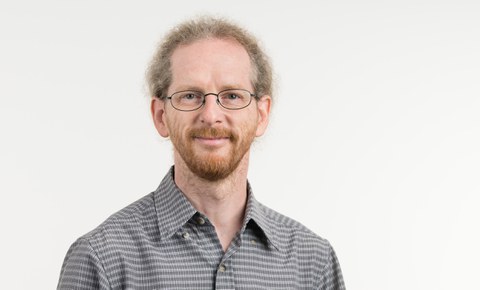
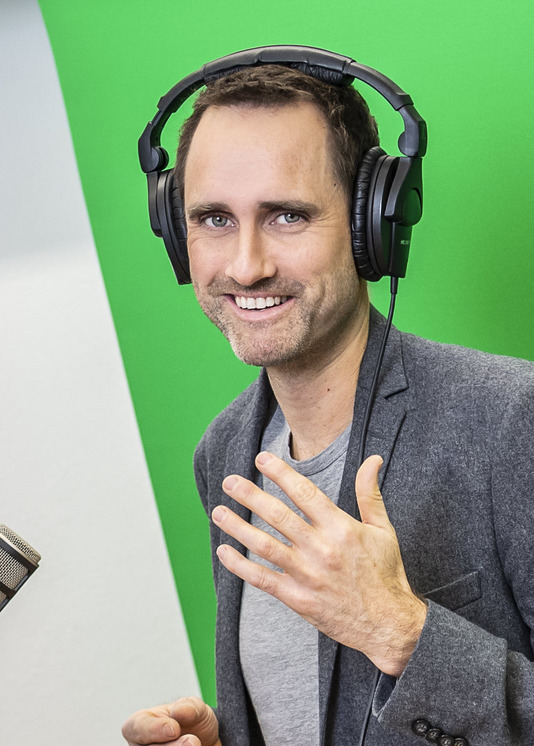
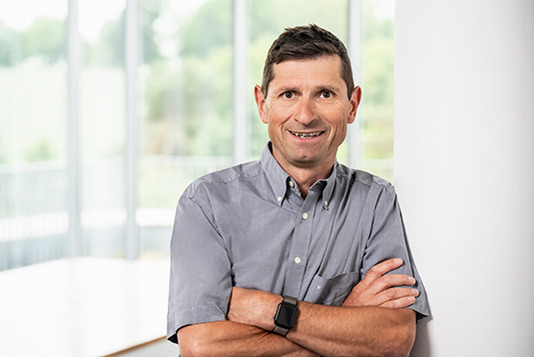
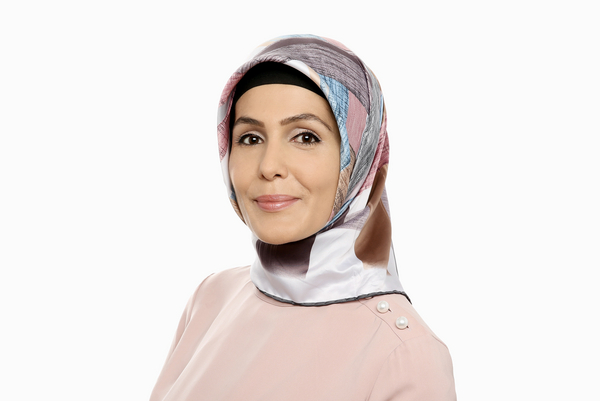
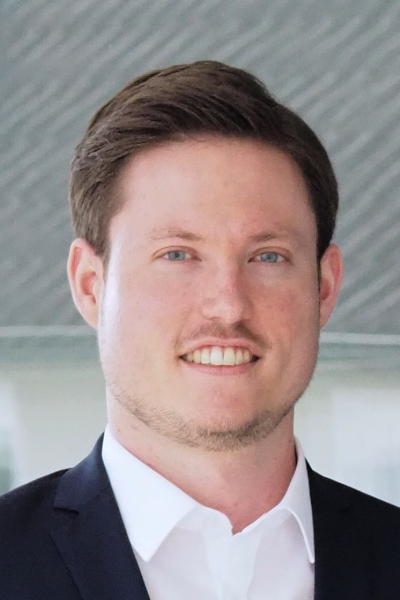
Ralph Müller-Pfefferkorn is Head of the Department of Distributed and Data Intensive Computing at the Center for Information Services and High Performance Computing, Technische Universität Dresden. His work focuses on data management, metadata systems, and high-performance computing infrastructure. He holds a PhD in Physics from TU Dresden (2001) and has extensive experience in research data infrastructure development, spanning roles from 1996 to present across physics and computational science domains. Education: 2001: Dr. rer. nat., Physics, TU Dresden (Thesis on BABAR detector calibration) 1996: Diploma in Physics, TU Dresden 1992–1996: Studies in Physics at TU Dresden 1990–1992: Studies at TU Chemnitz Research interests emphasize distributed data management, long-term archiving, and FAIR data principles. He contributes to initiatives like the Research Data Alliance (IG Co-Chair) and UNICORE Forum board. His publications address challenges in big data workflows, metadata standards, and interdisciplinary infrastructure integration. Labs/Teams: Leads the Distributed and Data Intensive Computing team within TU Dresden's HPC center, collaborating on projects like MoSGrid and MASi repository systems.
Sebastian Junges is an Assistant Professor in the Software Science Group at Radboud University, Nijmegen, since 2021. He holds a PhD in Computer Science from RWTH Aachen University (2020), and previously worked as a PostDoc at UC Berkeley (2020-2021) and a Research Assistant at RWTH Aachen (2015-2020). His research focuses on formal methods for analyzing safety-critical systems, particularly using extensions of Markov decision processes (MDPs) to ensure dependability in automated systems like network protocols, hardware architectures, and robotics. Education: PhD in Computer Science, RWTH Aachen University, 2020 M.Sc. in Computer Science, RWTH Aachen University, 2015 B.Sc. in Computer Science, RWTH Aachen University, 2012 His research interests include probabilistic verification, policy synthesis for MDPs, and the intersection of formal methods with artificial intelligence. He has contributed to tools like the Storm probabilistic model checker and led projects on scalable analysis of probabilistic models. His work addresses challenges like ensuring safe decision-making in autonomous systems and certifying compliance with safety standards through rigorous algorithmic approaches. Publications focus on advancing MDP analysis, POMDPs, and robust policy synthesis. Recent trends include integrating uncertainty management, decision-tree-based approaches, and compositional verification techniques. He actively contributes to conferences like CAV, AAAI, and TACAS, and serves on program committees and steering groups for formal methods and AI.
Niklas Kühl is a Full Professor and Chair for Information Systems and Human-Centric Artificial Intelligence at the University of Bayreuth. He holds leadership roles at the WI institute of Fraunhofer FIT, is a member of the core competence center for finance and information management, and serves as a senior expert in artificial intelligence at IBM. His interdisciplinary research bridges technical machine learning methods with human-centered design, focusing on socio-technical systems, human-AI collaboration, fairness in AI decision-making, and sustainability applications. Affiliations: University of Bayreuth (2023–present) Karlsruhe Institute of Technology (2017–2023) IBM (2020–2023) Education: PhD (summa cum laude) in Information Systems, KIT (2017) Diplom (MSc) in Industrial Engineering, KIT Research Interests include: Human-AI collaboration dynamics Fairness and trust in algorithmic systems Privacy-preserving AI Scalable AI product development AI for sustainability His recent publications analyze fairness perception alignment, data marketplace optimization, and explainable AI applications across domains like healthcare and energy. Scientific Contributions Over 100 peer-reviewed articles Best Paper Awards at top AI conferences Leadership in Applied AI in Services Lab (2017–2023) Community Engagement Co-founder of Education for Refugees e.V. (2015–2022) Active in ACM, AIS, and German Data Science Society
Prof. Dr. Mahsa Fischer is a Research Professor in Human-Centered Software Development and Human-AI Interaction at Heilbronn University's Business Informatics department. She leads the InduKo research project on innovation through collaboration and manages a cancer counseling app development initiative. Her work bridges academia and industry, emphasizing user-centric design and AI ethics. Fischer mentors women in IT and promotes digital transformation through workshops and conferences. She actively reviews for top HCI conferences like CHI and IUI. Key research areas include generative AI applications, UX frameworks, and collaborative innovation ecosystems. Education and career highlights include contributions to gamification, e-learning systems, and healthcare technology. She collaborates internationally, with projects in Germany and Finland focusing on software reusability and project portfolio platforms like IdeaLize . Fischer's mentorship programs support student and early-career researchers in web and mobile systems development. Her publications explore themes such as AI-assisted software engineering, emotion recognition in oncology care, and trust-building in conversational AI. Fischer advocates for strategic diversity in tech through initiatives like WINit , a mentoring network for female students in business informatics.
Prof. Carsten Lanquillon is a Research Professor at Heilbronn University, specializing in Language Technologies and Cognitive Assistance Systems within the Department of Business Informatics. He leads the Center for Industrial AI (iAI), a Carl Zeiss Foundation-funded initiative addressing AI implementation challenges for medium-sized enterprises. His expertise spans Business Intelligence, Data Science, Machine Learning, and Conversational AI with a focus on applying AI in industrial production processes. Key research areas include cognitive assistance systems, anomaly detection, and ethical AI frameworks. His work bridges academia and industry through collaborative projects like the iAI Center, which promotes sustainable AI adoption in regional manufacturing. Research emphasizes practical solutions for AI integration, including secure large language model adaptation, generative AI applications, and hybrid intelligence systems combining human and machine capabilities. Recent efforts explore explainable AI, digital twin integration, and user transparency in industrial contexts. Lanquillon's contributions include process models for data science projects and frameworks for knowledge-grounded NLP systems. He actively publishes on topics ranging from energy-efficient deep learning to interactive quality analysis tools in automotive industries. His research often combines technical innovation with user-centric design principles to ensure practical applicability.
Prof. Dr. Nicolas Meseth is a full-time professor at the Faculty of Agricultural Sciences and Landscape Architecture of Osnabrück University of Applied Sciences , specializing in Business Informatics . His research focuses on integrating Artificial Intelligence and Machine Learning into agricultural and food technology contexts. Email : n.meseth@hs-osnabrueck.de Office Hours : Online consultation via Zoom during lecture periods (Fridays 9:30–11:00 a.m.) His recent work explores domain-specific chatbots using Retrieval-Augmented Generation (RAG) to enhance AI responses with structured knowledge bases. Projects include collaborations with the Food Future Lab , funded by the Aloys & Brigitte Coppenrath and Dieter Fuchs Foundations. Current research trends involve generative AI models for food packaging design and modular AI components for agricultural applications. He supervises Fabian Stöppel 's project on specialized chatbot development.
Prof. Dr. Karsten Morisse is a Professor of Media Informatics at Osnabrück University of Applied Sciences, where he has been teaching since 2000. Starting in March 2025, he will serve as Dean of the Faculty of Engineering and Computer Science. His academic career spans over three decades with significant contributions to computer science education, particularly in the development and implementation of the Inverted Classroom Model (ICM). Morisse has established himself as a leading figure in educational innovation, blending traditional computer science instruction with modern pedagogical approaches. Professor of Media Informatics (since 2000) Dean of Faculty of Engineering and Computer Science (from March 2025) Program Coordinator for Computer Science - Media Informatics (2019-2025) Head of eLearning Competence Center (2009-2021) Prof. Morisse's research spans several interconnected domains with a strong emphasis on educational technology and human-computer interaction. His work focuses on developing innovative teaching methodologies, particularly the Inverted Classroom Model, which he has refined over more than a decade of implementation. Recent research has expanded into clinical movement analysis for musicians, creating diagnostic tools that bridge computer science with healthcare applications. His publications reveal a consistent thread connecting educational innovation with practical applications in healthcare, agriculture, and multimedia systems. Morisse has successfully secured numerous third-party funded projects, demonstrating the practical relevance and impact of his research. Analysis of Prof. Morisse's recent publications (2022-2025) shows a clear evolution from pure educational technology toward interdisciplinary applications. While maintaining his strong foundation in computer science education methodologies, he has increasingly focused on applying these approaches to healthcare contexts, particularly in physiotherapy and movement analysis for musicians. His work demonstrates a sophisticated integration of agile development methods with educational theory, creating novel learning frameworks that prepare students for real-world software development challenges. The publications also reveal growing interest in AI applications for agricultural technology and clinical decision support systems. Scientific Awards Deutsch-Österreichischer Software-Preis (1993) for the MuPAD computer algebra system Europäischer Software-Preis (1994) for the MuPAD computer algebra system Wissenschaftspreis des Landes Niedersachsen (2009) for collaborative work with Prof. O. Vornberger Campusemerge Award (2011) for innovative use of multimedia elements in higher education teaching Throughout his career, Prof. Morisse has supervised numerous student theses and developed innovative teaching approaches that emphasize active learning. His current research projects demonstrate significant external funding success, with major grants from DFG, BMBF, and other organizations. The PA.H|Lifetime.ai project (DFG, 2024-2029) represents his most substantial current funding, focusing on AI applications in healthcare education. His leadership extends beyond research, as evidenced by his upcoming role as Dean and his previous service on multiple university committees focused on IT infrastructure and educational innovation. The Media Laboratory at Osnabrück University of Applied Sciences serves as the primary research environment for his team's work on educational technology and movement analysis applications.
Prof. Dr.-Ing. Clemens Westerkamp is a full-time professor in the Faculty of Engineering and Computer Science at Osnabrück University of Applied Sciences . With a Ph.D. in Electrical Engineering from Leibniz University Hannover (1996), his career spans academia and industry, including roles as R&D VP at Algovision Systems GmbH and development leader at Controlware GmbH. Research Focus: Applied research in intelligent distributed systems , Industry 4.0 , and IoT , particularly in agricultural contexts. Key projects include PACE (Ambient Communication Systems) and collaborations with Airbus, Stanford University, and agritech firms. Selected Scientific Contributions: Co-author of DIN SPEC 16593 for Industry 4.0 service architectures EU reviewer for Aeronautics and Innovative Training Networks Key member of Industrial Informatics (INDIN) research network Recent Publications analyze satellite networks for agriculture, friction modeling for autonomous systems, and energy-aware embedded software. His work bridges theoretical models with practical implementations in smart farming and remote engineering.
Professor Dr. Johannes Schobel is a Research Professor in Digital Medicine and Care at Neu-Ulm University of Applied Sciences, where he also serves as Academic Advisor and Head of the Health Informatics (B.Sc.) degree programme. His work focuses on mobile health (mHealth) applications, AI-driven medical imaging, and digital solutions for clinical challenges such as tinnitus, pediatric behavioral analysis, and cancer therapy. He leads projects integrating machine learning with clinical workflows, including tumor segmentation algorithms and telemedicine platforms. His research spans mHealth app development, medical device regulation, and interdisciplinary approaches to healthcare innovation. Notable projects include the ProVIA trial for pediatric behavioral analysis via smartphones, the Corona Health platform for pandemic monitoring, and AI-based tools for histopathological analysis of glioblastoma. He emphasizes user-centric design in healthcare technology, addressing gaps between clinical needs and digital solutions. Recent work explores ecological momentary assessment for chronic conditions, such as tinnitus variability tracking and stress management. He collaborates with industry through the Technology Transfer Center (TTZ) Günzburg to translate research into practical tools, exemplified by AI-supported web applications for game developers and geriatric care systems. His academic contributions include over 50 peer-reviewed publications, focusing on mHealth app evaluation frameworks, machine learning in pathology, and digital twin technologies for healthcare systems. He advises on ethical medical device regulation and has pioneered gamification strategies for orofacial therapy adherence in children.
Dr. Mihail Bogojeski is a postdoctoral researcher at the Technical University of Berlin , affiliated with the Machine Learning Group and the Berlin Institute for the Foundations of Learning and Data (BIFOLD) . His research focuses on advancing machine learning techniques for applications in the physical sciences and medical sciences , particularly in quantum chemistry , computational biology , brain-computer interfaces , and sequential data analysis . B.Sc. in Software and Information Engineering (2014), Vienna University of Technology M.Sc. in Computer Science (2017), TU Berlin Ph.D. in Computer Science (2023), TU Berlin His research integrates geometric deep learning with quantum chemistry to develop models for predicting electronic structure of molecular systems and electron densities . Recent work includes equivariant neural networks for molecular wavefunction prediction, generative time-series models for industrial aging processes, and explainable AI frameworks for catalyst discovery. Publications highlight his expertise in machine learning , quantum chemical accuracy , and multimodal data augmentation . His 15 most recent articles focus on machine learning applications in chemistry , neuroscience , and industrial process modeling , with subfields such as generative models , equivariant networks , density functional theory , and neural signal processing .
Prof. Monique Janneck is a Full Professor of Software Ergonomics and Human-Machine Interaction at TH Lübeck. She concurrently serves as Scientific Director of the Institute for Interactive Systems (ISy), Deputy Head of the Competence Center CoSA, and Vice Dean for Research and Internationalization. Her academic journey includes a PhD in Computer Science (2006) from the University of Hamburg, followed by roles as Junior Professor for Human-Computer Interaction (2007–2011) and Research Assistant in Computer Science (2001–2007). Research Focus : Specializes in digital health solutions, usability engineering, and adaptive user interfaces. Her work spans gamification in education, online learning platforms, workplace ergonomics, and AI-driven systems. Recent projects include interventions for nursing staff mental health, recovery coaching apps, and career guidance platforms. Key Contributions : Developed tools like STUDYCoach for student engagement and Holidaily for post-vacation recovery behavior. Active in designing blended health coaching systems and digital platforms for small business entrepreneurs. Leading research on user-centered design methodologies and the impact of device choice on survey results. Leadership Roles : Oversee ISy's research initiatives and coordinate digital teaching strategies as former Presidential Representative for Digital Teaching (2018–2022). Involved in curriculum development for interactive systems and digital health management programs.
Prof. Dr. Johann Graf Lambsdorff is a Professor of Economics with a focus on Economic Theory at the University of Passau's School of Business, Economics and Information Systems. He leads the Chair of Economic Theory, where his research emphasizes experimental and behavioral economics, particularly in the context of corruption and institutional frameworks. His work combines theoretical analysis with practical applications, such as developing the classEx platform for interactive classroom experiments. He has authored numerous publications on corruption measurement, behavioral public policy, and experimental macroeconomics. Research Interests: Behavioral and experimental economics Economics of corruption and institutional design Macroeconomic theory and policy Educational technology in economics Key Projects: classEx : An online tool for conducting real-time experiments in economics education. Internet Center for Corruption Research : A hub for global corruption studies and policy insights. Teaching: Prof. Lambsdorff oversees courses in macroeconomics, institutional economics, and behavioral game theory. His team actively supervises bachelor's and master's theses, emphasizing empirical and theoretical rigor.
Prof. Selcan Ipek-Ugay is a Professor at Berlin University of Applied Sciences (BHT), affiliated with the Department VI – Information Technology and Media. She specializes in Computer Science and Data Science, teaching courses such as Advanced Software Engineering, Programming I/II, and Medical Informatics. Her research focuses on AI-driven healthcare solutions, gamification systems for collaborative therapy, curriculum digitization, and modern software framework migration. Teaching Responsibilities: Data Science (M.Sc.) – Advanced Software Engineering Media Informatics Online (M.Sc.) – Advanced Software Engineering Media Informatics (B.Sc.) – Programming I/II Medical Informatics (M.Sc.) Research Interests: Development of AI-based monitoring systems for patient groups AI-supported gamification for collaborative therapy Excel-based curriculum planning system digitization Framework migration from Vue/Vue2 to React Contact: Office D112 (Building D), Luxemburger Str. 10, Berlin. Available Tuesdays 9-10 AM during lecture periods.
Goran Glavaš is a Professor at the University of Würzburg, holding the Chair for Natural Language Processing (Informatik XII) within the Faculty of Mathematics & Computer Science, and a member of the Center for Artificial Intelligence and Data Science (CAIDAS). His research focuses on computational semantics, multilingual/low-resource representation learning, and NLP applications in social sciences/humanities. He previously held roles as Assistant Professor at the University of Mannheim and Interim Associate Professor at LMU Munich. Glavaš earned his doctorate in 2014 from the University of Zagreb under Jan Šnajder. Research Interests: Glavaš explores fair and sustainable NLP, multilingual system development, and cross-lingual adaptation. His work emphasizes resource-poor language support, ethical AI practices, and bridging NLP with humanities/social sciences. Recent studies include multilingual hallucination detection, geographic LLM adaptation, and news recommendation systems. Recent Trends in Publications: His 2024 work spans multilingual models (e.g., NLLB-LLM2Vec), cross-lingual news recommendation (MANNeR), and code analysis (IRCoder, which won ACL’s Outstanding Paper Award). Earlier 2023 contributions include multilingual dialogue systems (Multi2WOZ) and simplified neural encoders for news recommendation. Awards: 2024 ACL Outstanding Paper (IRCoder), 2024 EACL Outstanding Paper (Kardeş-NLU) Advising & Labs: Leads the WüNLP research group at CAIDAS. His lab focuses on democratizing NLP through open-source tools and cross-disciplinary collaborations. No current advisee list is provided, but past roles suggest active mentorship in multilingual NLP domains.
Dr. Tobias Drey was a Research Associate and PhD Candidate at Ulm University’s Institute of Media Informatics, focusing on Mixed Reality applications in education. His research emphasized AR/VR learning systems and in-situ authoring tools. He defended his dissertation "Towards Mixed Reality in Education" in 2023, earning summa cum laude. Prior to academia, he worked as a Software Engineer at Airbus (2013–2019). He holds an M.Sc. in Computer Science (Ulm, 2017) and a B.Eng. in Information Technology (Baden-Wuerttemberg Cooperative State University, 2013). Since 2015, he has been an external lecturer for courses on mobile networks and sensors. His research is funded by BMBF projects AuCity 2 and 3. Key contributions include frameworks like TriDactIX, SpARklingPaper for handwriting training, and VRSketchIn for 3D modeling. His work bridges HCI, education theory, and practical design challenges in Mixed Reality. Awards & Grants : Dissertation summa cum laude (2023) BMBF-funded research (AuCity projects) Advising & Teaching : Supervised multiple theses as an external lecturer. His grants and collaborations reflect a focus on interdisciplinary innovation. Labs/Teams : Core member of the HCI Group at Ulm University, contributing to projects like SpARklingPaper and VRSketchIn.