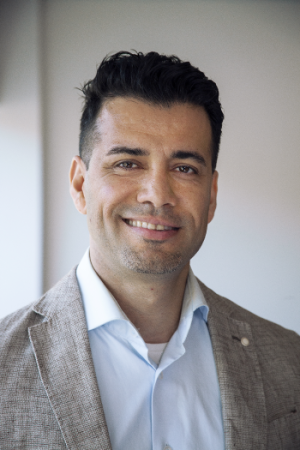
Thomas Åkesson Lindow is an affiliated researcher and postdoc at Lund University, specializing in Respiratory Medicine, Allergology, and Palliative Medicine. His work focuses on breathlessness, chronic respiratory failure, and the application of machine learning in cardiac diagnostics. He has contributed to 47 research outputs and is involved in two active projects funded by the Swedish Society of Medicine. Research interests include exercise physiology, cardiovascular disease prognosis, and AI-driven healthcare solutions. His recent work explores systolic blood pressure patterns during exercise, electrocardiography-based heart age estimation, and the predictive value of exertional breathlessness on mortality. He collaborates internationally and has published in journals like JAMA Network Open and European Heart Journal - Digital Health . As an assistant supervisor in two ongoing projects, he guides research on primary care heart health and blood pressure improvement strategies. No scientific awards are explicitly mentioned, but his work aligns with UN Sustainable Development Goals related to health and well-being.
Guy De Tré is an Associate Professor at the Department of Telecommunications and Information Processing within Ghent University's Faculty of Engineering and Architecture. He leads the Database, Document and Content Management (DDCM) research group and focuses on computational intelligence in information systems, with expertise in bi-polarity handling, uncertainty modeling, and multi-valued logic systems. Primary Affiliation: Ghent University Research Focus: Data quality, fuzzy querying, spatio-temporal modeling Key Contributions: Foundational work in possibilistic databases and explainable AI His research combines theoretical and applied approaches to information management systems. Theoretical work includes: Bipolarity and uncertainty handling in databases Multi-valued logic frameworks Interval B-tree indexing for possibilistic data Applied research spans: NoSQL database optimization Decision support systems Contextualized machine learning 3D/4D modeling for geological resources Recent publications show increasing focus on explainable AI, with multiple works on contextualized support vector machine classification and orthographic similarity measures for graph-based data representations. His work bridges database theory with practical applications in data quality assessment, medical informatics, and cultural heritage projects like the Byzantine Book Epigrams database. Research Group: Leads the DDCM group at Ghent University, specializing in: Database management innovation Content modeling techniques Fuzzy logic implementations Temporal data indexing Intelligent information systems
Sascha Julian Oks is a Postdoctoral Researcher at the School of Business, Economics and Society and the Chair of Information Systems I, Innovation and Value Creation at Friedrich-Alexander University Erlangen-Nürnberg (FAU). He is also a Postdoc at HHL Leipzig Graduate School of Management and serves as CEO of the FAU spin-off QuartRevo , which focuses on innovative business models for SMEs using cyber-physical systems. Additionally, he holds the rank of Kapitänleutnant (OF-2) at the German Naval Academy Marineschule Mürwik, where he instructs leadership courses. His academic journey includes a Ph.D. in Business Information Systems (Wirtschaftsinformatik) from FAU (2023), a Master of Science in Business Administration from Stellenbosch University (South Africa, 2012), and prior degrees from Universität Bayreuth (2009–2011). His research interests center on the digital transformation’s impact on industrial value creation, particularly in cyber-physical systems (CPS), Industry 4.0 implementation, and open innovation in medical technology. He has developed web-tools like the PID4CPS demonstrator and co-authored several books and articles on CPS integration, stakeholder-oriented system design, and digital transformation strategies. His work bridges academic research with practical applications, emphasizing systematic digitization strategies and the alignment of organizational processes with technological advancements. He has presented his findings at major conferences such as EURAM, IEEE INDIN, and the International Symposium on Open Collaboration. His contributions include exploring blockchain-based traceability systems for industrial IoT, modular service bundles for maintenance efficiency, and the role of CPS in redefining personnel roles and services in manufacturing. His interdisciplinary approach also extends to military education, focusing on leadership development and translating qualifications between civilian and military contexts.
Lucy Bolton is an Assistant Professor at Heriot-Watt University's School of Social Sciences, serving as Global Director of Studies for PG Business Psychology Programmes and Programme Director for MSc Business Psychology and MSc Business Psychology with Coaching (Dubai). Her research focuses on organizational change, generational differences in the workplace, work values, coaching psychology, and socio-technical systems. Global Director of Studies - PG Business Psychology Programmes Programme Director - MSc Business Psychology (Dubai) Research interests include examining how digital transformation impacts business psychology, analyzing leadership dynamics across cultures, understanding work values in modern contexts, and developing coaching frameworks for intercultural settings. Her work often intersects with organizational behavior and socio-technical systems design. Recent publications explore the UAE workforce's attitudes toward disability, cross-cultural leadership, and the psychological implications of robotics/AI implementation. These works demonstrate her focus on bridging psychological research with practical business applications. Her research activity spans from 2013 to 2023, with a notable emphasis on workplace dynamics, coaching methodologies, and socio-technical systems. Current collaborations include international research efforts in business psychology and intercultural coaching.
Gregory A Smith serves as Director of the Ehrhorn Law Library at Liberty University's School of Law. With over 25 years of professional experience, he has established himself as a thought leader at the intersection of faith and librarianship, organizational leadership, and academic library administration. His dual focus on integrating Christian principles with library science and advancing assessment methodologies in academic libraries has shaped his extensive scholarly contributions. Smith's research interests center on two major themes: the integration of Christian faith and librarianship, and planning, assessment, and administration in academic libraries. He explores how biblical principles inform library leadership and service, particularly examining servant leadership models derived from scriptural texts. His work in library assessment emphasizes practical frameworks for evaluating library services through multiple dimensions, providing academic libraries with robust tools for strategic planning and continuous improvement. Smith also investigates how libraries, particularly Christian institutions, can adapt to technological changes while maintaining their core mission and values. His recent publications reveal a clear trajectory toward addressing contemporary challenges in library science, with increasing attention to pandemic impacts on service delivery, AI integration in library contexts, and the evolving role of academic libraries in digital environments. Smith's scholarly work consistently bridges theoretical frameworks with practical applications, demonstrating how libraries can maintain relevance while navigating rapid technological and societal changes. His research shows particular strength in connecting leadership theory with library practice, especially through a Christian worldview lens. Smith's professional activities extend beyond traditional library administration into broader organizational leadership contexts. His publications address strategic planning, change management, and leadership development applicable across educational and nonprofit sectors. While his primary institutional affiliation is with a law library, his scholarship addresses challenges relevant to academic libraries of all types, with particular attention to faith-based institutions.
Dr. Sam Solaimani is an Associate Professor at Nyenrode Business University's Center for Marketing and Supply Chain Management, with an adjunct role in Technology & Operations Management at the American University of Bulgaria. He holds senior positions at Accenture Netherlands focusing on data-led transformation and maintains visiting scholar affiliations with institutions including UC Berkeley, Delft University of Technology, and Aalto University. His educational background includes: PhD in Business Model Innovation from Delft University of Technology MSc (Cum Laude) in Business Information Systems from University of Amsterdam BSc in Information Science from Utrecht University Professional certifications: Lean Master Trainer (McKinsey), Lean Black Belt, Scaled Agile Framework (SPC) Solaimani's research integrates operations management with emerging technologies, emphasizing: End-to-end process optimization across supply chains Synergistic application of Lean principles to innovation ecosystems Sustainability metrics in manufacturing and construction AI adoption frameworks for organizational transformation Cross-sector business model innovation in networked enterprises His scholarly output demonstrates consistent focus on operational excellence, with recent works exploring: AI implementation roadmaps in financial services and manufacturing Sustainable construction through waste-reduction methodologies Digital transformation enablers for data-driven business models Integration of lean startup principles in traditional industries
Martin Lackner is an Associate Professor in the Databases and Artificial Intelligence department at the Faculty of Informatics, Vienna University of Technology. His research focuses on computational social choice, voting theory, and algorithmic decision making, with particular expertise in multi-winner elections, approval-based voting systems, and participatory budgeting. He maintains an active research program with continuous publications in top AI and theoretical computer science venues. Lackner's research interests center on the theoretical foundations and practical implementations of fair decision-making systems. His work bridges theoretical computer science with practical applications in democratic processes, examining how computational methods can enhance fairness, representation, and efficiency in collective decision making. He has made significant contributions to understanding the computational complexity of voting rules, developing new algorithms for preference aggregation, and establishing axiomatic properties for multiwinner election methods. His recent publications demonstrate a consistent focus on fairness in long-term decision processes, with particular attention to perpetual voting systems, participatory budgeting mechanisms, and approval-based multiwinner rules. The research shows strong theoretical grounding combined with practical implementation considerations, as evidenced by his development of the abcvoting Python package for implementing approval-based voting rules. Lackner has received continuous funding for his research through multiple projects: SuDeMa (2019–2025): Algorithms for Sustainable Group Decision Making (Austrian Science Fund) FAIR (2013–2018): Fixed-Parameter Tractability in Artificial Intelligence and Reasoning (Austrian Science Fund) HINT (2012–2017): Heterogenous Information Integration (Austrian Science Fund) SEE (2012–2016): SPARQL Evaluation and Extensions (Vienna Science and Technology Fund) As an academic advisor, Lackner has supervised doctoral and master's students including J. Maly (2020) on ranking sets of objects and B. Krenn (2019) on algorithms for implicit delegation to predict preferences. His work appears in premier venues including AAAI, IJCAI, AAMAS, and the Journal of Artificial Intelligence Research, demonstrating both theoretical depth and practical relevance to democratic processes and collective decision making.
Miriam Judge is a Lecturer in the School of Communications at Dublin City University (DCU), affiliated with the Faculty of Humanities and Social Sciences. She previously served as Programme Chair (2010–2013) and School Research Convenor (2006–2011). Her research focuses on technology in education, e-learning, qualitative methodologies, and instructional design. **Education**: PhD in ICT in Education from DCU. Professional background includes roles as a Corporate Video Producer/Director and instructional designer in the tech industry. **Research Interests**: Explores ICT integration in schools, digital assessment tools (e.g., DALDIS project), cross-cultural learning models, and the societal impact of technology. Recent work emphasizes pandemic-driven digital adaptation and AI implications for education policy. **Publications**: Over 30 peer-reviewed articles and book chapters, including work on tablet integration (MICOOL Project), AI in education, and interactive whiteboard studies. Awards : ICS Fellow (2018), DCU Career Start Fellowship (2006) Current Projects**: Principal Investigator for DALDIS (2019–2022) and MICOOL (2015–2017). Teaching**: Coordinates courses like E-Learning Design and Advanced Video Production. **Grants**: Secured funding for projects on sustainability curriculum infusion (EU Tempus) and tablet-based learning (Erasmus+).
Roope Nyqvist is a Doctoral Researcher at the Department of Civil Engineering, School of Engineering, focusing on construction management and digital transformation. His work intersects artificial intelligence, risk management, and network modeling in infrastructure projects. Education: M.Sc. in Construction and Real Estate Management (HTW Berlin, 2018), B.Sc. in Construction Management (Metropolia UAS, 2015) Research interests include: Digital transformation of construction processes AI-driven risk management systems Network modeling for uncertainty analysis Situational awareness in infrastructure projects Decision-making under complexity Recent publications examine generative AI's potential in construction risk management, situational awareness frameworks, and uncertainty modeling. His work aligns with SDG 9 (Industry Innovation) and SDG 11 (Sustainable Cities). Projects include AIXCon (2022–2024), a data-driven construction transformation initiative funded by the EU Recovery and Resilience Facility. Collaborators span academia and industry, with external partnerships in digital construction and AI applications.
Dr. Will McNeill is a Lecturer in Philosophy at the University of Southampton since 2016, affiliated with the Philosophy of Language, Philosophy of Mind and Epistemology Research Group. He holds a PhD from University College London (2009) and has taught at King's College London, the University of York, and Cardiff University. His research focuses on the epistemology of perception, social cognition, and inferential knowledge, with recent emphasis on the epistemological implications of artificial neural networks and AI ethics. He collaborates on the AI3SD Network+ project and the Web Science Institute. His teaching spans philosophy of mind, epistemology, philosophy of science, and AI ethics, and he supervises PhD students in these areas. Key contributions include exploring non-inferential perceptual knowledge of other minds and analyzing opacity in AI systems. Education: PhD in Philosophy, University College London (2009). Research Themes: Philosophy of Mind, Epistemology of Perception, AI Ethics, Non-Inferential Knowledge, Social Cognition, and Machine Learning Interpretability. Advising & Grants: Supervises three PhD students and collaborates on EPSRC-funded AI3SD research. Active in interdisciplinary projects linking AI ethics and environmental wellbeing. Teams & Labs: Member of the Southampton Ethics Centre and advisory panel for AI3SD Network+ and Web Science Institute.
Associate Professor Joona Keränen holds a dual role as an Associate Professor at RMIT University's Graduate School of Business and Law and a Visiting Associate Professor at LUT University's School of Business & Management (Finland). His primary affiliation is with RMIT's Management Department, where he also serves as a Vice Chancellor's Senior Research Fellow. His research focuses on value-based selling strategies, B2B marketing dynamics, and stakeholder value creation in sectors like circular economy, cleantech, and healthcare. Dr. Keränen has extensive industry collaboration experience, leading large-scale international projects and advising B2B firms. His work bridges academia and practice, emphasizing digital transformation in sales processes and multi-stakeholder value frameworks. Notable accolades include the 2021 RADMA Best Paper Award (Digital Transformation Track) and multiple Research Excellence Awards from RMIT. His teaching and supervision span value-based procurement, shared value creation, and social impact in B2B markets. He actively mentors junior scholars and supervises PhD candidates across global networks. Key platforms include the Global Business Innovation Enabling Capability Platform and the Business and Human Rights Centre (BHRIGHT). Research trends in his publications address digital sales technologies, open innovation ecosystems, and circular economy platforms. Articles often analyze tensions arising from technology adoption, ethical considerations in B2B relationships, and cross-cultural sales dynamics. His work consistently emphasizes actionable insights for firms navigating complex stakeholder environments. Awards: 2021 RADMA Best Paper (Digital Transformation), 2020 RMIT Research Excellence (College & Graduate School), 2018 ANZMAC Best Paper (B2B Marketing) Industry Roles: Senior Advisor to B2B firms, Keynote Speaker at Industry Events Collaborations: LUT University, Global Business Innovation Platform, BHRIGHT Centre
Prof. Hassane Alami is an Assistant Professor in the Department of Health Management, Evaluation and Policy at Université de Montréal's School of Public Health. His research examines health system transformations driven by disruptive innovations (gene therapies, AI, digital health), crisis management (COVID-19, antimicrobial resistance), and sustainability challenges. He specializes in strategic evaluation of complex innovations including governance, institutionalization, stakeholder dynamics, financing, adoption conditions, and scaling strategies. Research focuses on organizational capabilities for adopting eco-innovations, governance models for AI in healthcare, and pandemic preparedness assessment. Recent work investigates the integration of environmental sustainability into digital health technology assessment and the dynamics of intellectual property in health AI partnerships. He leads projects on sustainable health services, AI governance frameworks, and health workforce mobilization strategies. Research employs qualitative and mixed methods to understand implementation challenges in complex healthcare environments.
Dr. James George Marshall is a Senior Lecturer at Swinburne University of Technology's School of Design and Architecture, with over 30 years of commercial design experience. He specializes in emotion design, integrating artificial intelligence and neuroscience to create human-technology interaction systems, while developing educational products through his company Education Network Group including Whizkid Games for autism support and Science Island for STEM education. His academic contributions include an ALTC Citation for Student Learning and multiple Vice Chancellor's awards for teaching excellence. Emotion Design Inclusive Technology Human-Computer Interaction STEM Education Digital Media Research interests span emotion-aware systems, evidenced by grants like Inclusive AI for Dyslexic Learners and Leveraging AI for Inclusive Learning . His 2018 Grimshaw Architects collaboration on Melbourne Knowledge Week demonstrates urban digital storytelling expertise. Publications focus on multisensory design applications, with recent work on autism support systems and immunology communication. Awards include the 2010 Victorian Premier's Overall Best Commercial Design and multiple teaching accolades. 2025: Inclusive AI for Dyslexic Learners grant 2024: Leveraging AI for Inclusive Learning grant 2018: Melbourne Knowledge Week collaboration 2017: Media art as urban storytelling grant As principal developer of the Principle-led Design Toolkit for Wonderful Design, Marshall bridges theoretical frameworks with practical implementation across educational levels. His supervision availability for Doctorate (PhD) candidates supports continued innovation in emotion-centric design methodologies.
Professor Jie Wu holds the Chair in Strategy and Entrepreneurship at the University of Aberdeen's Business School. His research spans strategy , international business , digital innovation , and cultural dynamics , with over 80 publications in top journals like Strategic Management Journal and Journal of International Business Studies . Key research areas: corporate governance , female entrepreneurship , renewable energy , and AI . Editorial roles: Area Editor for Technovation , Regional Editor for Asia Pacific Business Review , and Associate Editor for Asian Business & Management . His work has earned recognition in Stanford University's top 1% of global scientists (2021–2024). He supervises PhDs in areas like gender inequality , institutional complexity , and dynamic capabilities , and co-directs the Africa-Asia Centre for Sustainability Research .
Verena Stingl is an Assistant Professor at the Department of Materials and Production, Aalborg University, affiliated with The Faculty of Engineering and Science and the Production Center for Industrial Production. Her research focuses on how engineering organizations manage uncertainty in projects and programs, combining cognitive psychology and social science theories. Key areas include risk/opportunity identification, crisis coordination, and digital/circular economy transitions. She leads the CYCLES project on circular plastics uncertainty and collaborates on SME digital transformation studies. Education: PhD in Management Engineering (2015-2019) MSc Environmental Risk Management (2007-2012) Technical Chemistry (2000-2006) Research Interests: Organizational behavior in uncertain environments, project cognition, sustainability transitions, and decision-making heuristics. Active in UN SDG contributions through circular economy and green transition studies. Teaching: Leads courses in Operations and Innovation Management, Global Business Engineering, and executive education. Taught modules on project risk management, supply chain resilience, and digital transformation across multiple institutions. Awards: Excellence in Design Science Award (2023) Reviewers' Favourite (2023) Reviewer Award (2018) Grants & Projects: Principal Investigator on CYCLES (2022-2025) and active on AAU Circular Plastics (2023-). Engaged in collaborative initiatives addressing plastics value chain and SME digital adaptation. Labs/Teams: Part of the Production Center for Industrial Production, focusing on applied research in industrial transformation challenges.