Jens-Christian Stoetzer is a Researcher at the University of Bayreuth and a member of the FIM Research Institute for Information Management. He holds a Master's degree in Business Administration from the University of Bayreuth (2016–2022). His research focuses on managing emerging digital technologies such as blockchain and artificial intelligence, with particular emphasis on decentralized finance, tokenization, and the machine economy. He has presented work at leading conferences like ICIS and ECIS. Education: Bachelor's in Business Administration, University of Bayreuth (2016–2020) Master's in Business Administration, University of Bayreuth (2020–2022) Research interests span blockchain applications, AI-driven learning systems, and digital identity frameworks. He explores practical challenges in tokenization for bond markets, the implications of self-sovereign identity systems, and the economic impacts of automation in industries. Publications reflect a focus on technology adoption in finance, healthcare, and crisis management. Collaborations include projects funded by consortium research and industry partnerships. Labs/Teams: Active within the FIM Research Institute, contributing to interdisciplinary projects on digital innovation and strategic IT management.
Dr. Mifrah Ahmad is a Senior Lecturer at Torrens University in the Department of Design and Creative Technology. She specializes in educational game design, blending software engineering principles with experiential and transformative learning theories. Her research focuses on bridging game design and education through qualitative and participatory approaches, including co-design methodologies between teachers and game designers. Dr. Ahmad holds a Ph.D. in Educational Game Design from Deakin University (2023), a Master’s in Computer Science from Universiti Teknologi Petronas (2015), and a BSc in Information and Communication Technology with a software engineering focus (2013). She has taught across disciplines at institutions in Malaysia and Australia since 2013, emphasizing adaptive and interdisciplinary education. Her research interests span gamification in education, teachers’ use of games in classrooms, VR/AI integration in learning, and design thinking. She explores how game elements scaffold student learning and examines educators’ practices through participatory design frameworks. Recent publications analyze game designers’ experiences, software perspectives in educational games, and teacher-student interactions in digital environments. She actively seeks to standardize educational game design processes and co-design models with multidisciplinary teams. Dr. Ahmad is currently accepting PhD students for projects on games in education, VR/AI applications, and participatory research methods.
Angela Carida is an Associate Professor of Economics and Business Management at the University of Calabria (Università della Calabria), affiliated with the Department of Law, Economics and Sociology (DiGES). Her research focuses on innovation management, digital transformation, service ecosystems, and sustainable business models. She teaches courses such as Business Economics and Management, Management and Business Strategy, and Innovation Management, emphasizing practical applications in both private and public sectors. Her work explores topics like value co-creation in healthcare and public services, the strategic role of SMEs in B2B markets, and the integration of technology for social inclusion. Dr. Carida’s research bridges theoretical frameworks with real-world challenges, addressing issues such as gender diversity in corporate governance and the ethical implications of AI in societal transformation. She actively contributes to academic discourse through publications in high-impact journals and engages in educational initiatives to enhance student learning experiences through innovative teaching methods.
Daniel Estrada is a University Lecturer in the Department of Humanities & Social Sciences at New Jersey Institute of Technology (NJIT). He holds a Ph.D. in Philosophy from the University of Illinois at Urbana-Champaign, complemented by dual undergraduate degrees in Philosophy and Computer Science from the University of California, Riverside. Education: Ph.D. in Philosophy, University of Illinois at Urbana-Champaign (2014) M.A. in Philosophy, University of Illinois at Urbana-Champaign (2005) B.A./B.S. in Philosophy and Computer Science, University of California-Riverside (2003) His research focuses on AI ethics, engineering ethics, and the philosophical implications of technology. Key areas include ethical frameworks for artificial intelligence, posthuman ethics, and the intersection of cognitive science with machine consciousness. Recent work examines value alignment in robotics and societal risks associated with posthumanism. Estrada teaches courses such as Engineering Ethics , AI Ethics Seminars , and Minds and Machines , integrating technical and philosophical perspectives. His publications span topics from decentralized social networks to the ethics of attention economies, reflecting his interdisciplinary approach to technology studies. While no formal awards are listed, his academic contributions emphasize applied ethics in emerging technologies. He has advised no students in listed records but actively engages NJIT students through course instruction and research mentorship.
Bogdan Negoita is an Associate Professor in the Department of Information Technology at HEC Montréal, affiliated with the Information Systems Research Group (GReSI). He holds the Professorship of Research in Development and Use of Information Technologies. His academic journey includes a Ph.D. in Management (McGill University), an MBA in Information Systems (McGill University), and a B.Sc. Honours in Computing and Computer Electronics (Wilfrid Laurier University). His research focuses on collective and individual IT use patterns, distributed IT promotion strategies, free software development processes, and legitimation of technology services. Recent studies explore topics like IT addiction recovery mechanisms, distributed IT championing theories, and entrepreneurial dynamics in FOSS ecosystems. Over the past five years, he has advised 39 students on master’s theses and supervised projects, covering data warehousing, risk management tools, and organizational IT implementations. Teaching responsibilities include courses on Business Intelligence, AI fundamentals, and IT acceptance theories. His publications span top journals like Information Systems Research and Journal of Information Technology, with a focus on digital privacy perceptions, technology adoption processes, and community governance structures.
Oganes Ashikyan, M.D., is an Associate Professor of Radiology at UT Southwestern Medical Center, where he is part of the Musculoskeletal Radiology Division. He previously held academic roles including Assistant Professor at the University of Oklahoma Health Sciences Center and Visiting Assistant Professor at the University of Texas Medical Branch in Galveston. His career includes leadership roles such as Chief of Musculoskeletal Imaging and Medical Director of MRI safety, alongside clinical experience in private practice and the Veterans Affairs Medical Center. Dr. Ashikyan holds a bachelor's degree in nursing from California State University, Northridge, and earned his medical degree from the University of California–Irvine. He completed radiology residency at UC Irvine and fellowships in musculoskeletal imaging (UCLA) and neuroradiology (UTMB Galveston). His research focuses on MRI applications in musculoskeletal conditions, particularly inflammatory arthritis and osteomyelitis, with emphasis on AI-driven imaging solutions and diagnostic standardization. Recent work explores AI accuracy in extremity measurements, MRI-based reporting systems (e.g., MSKI-RADS), and diffusion-weighted imaging advancements. Professional memberships include the European Society of Radiology, Society of Skeletal Radiology, and American Society of Neuroradiology. He serves as a reviewer for Skeletal Radiology and Radiology Case Reports . His contributions span clinical practice, education, and innovation in imaging protocols, with over 60 peer-reviewed articles reflecting his dedication to advancing diagnostic accuracy and healthcare efficiency.
Valérie Lejeune is a Lecturer at UCO BN, co-directing the Master of Innovation in Business and Society. She holds a dual doctorate in Process Engineering (Grenoble INP, 1994) and a Executive DBA from Paris School of Business (1993). Her career spans 15 years in R&D and Innovation Management at ArjoWiggins, followed by academic roles and consulting. She co-heads the Master's program and leads research on Strategic Management of Creative Capacities, developing the ACTING creativity method. She directs the Ad Valorem book series at L'Harmattan. Education: Doctorate in Process Engineering, Grenoble INP (1994) Executive DBA, Paris School of Business (1993) Research Interests: Focuses on organizational creativity, strategic innovation management, and responsible governance. Her ACTING method emphasizes leveraging emotions, imagination, and language to enhance creative performance. Explores board diversity, mid-sized enterprise governance, and value creation trends across economic, social, and cultural dimensions. Publications: Key works include 'The World and the Governance of Mid-Sized Companies' (2019) and contributions to AI ethics in HR. Her research bridges creativity methodologies with strategic organizational challenges. Grants/Advising: Leads the PALIER research program on perceptions and affects in organizational contexts. Active in the ANRT SME-ETI Innovation & Territories Club. Labs/Teams: Member of the EGEI research team, focusing on innovation and management strategies.
Professor Sukanlaya Sawang serves as Research Professor of Innovation and Entrepreneurship, Director of the Centre for Business Innovations and Sustainable Solutions (CBISS), and Head of the Management Group at Edinburgh Napier University Business School. She holds adjunct professorships at Queensland University of Technology (Australia) and Chulalongkorn University (Thailand), and has previously held leadership positions including Associate Dean and Director of Research at universities across the UK and Australia. Professor Sawang earned her BSc in I/O Psychology from Chiang Mai University, MA in Experimental Psychology from the University of Central Oklahoma, PhD in Innovation Management from Queensland University of Technology, and Graduate Certificate in Higher Education from QUT. She also completed a Summer Program in Innovation at Harvard University and a Certificate in Asian Studies from Nanzan University. Her research integrates psychological theory with management and innovation frameworks, advancing understanding of entrepreneurial behavior, business sustainability, and human factors in technological adoption. With over 4,400 citations and an h-index of 35, she has published extensively in leading journals on topics including entrepreneurial archetypes, digital transformation, sustainable consumption, and SME performance. Her recent publications demonstrate a clear evolution toward interdisciplinary research connecting psychology, technology, and sustainability. The most recent works focus on digital transformation's impact on profit growth, AI's role in family businesses, cultural influences on sustainable consumption, and the intersection of e-commerce technology with entrepreneurial marketing. Professor Sawang has secured and led over £1.5 million in research funding from prestigious bodies including UKRI, the British Academy, the Royal Society of Edinburgh, and the Australian Research Council. She serves as Director of the Centre for Business Innovations and Sustainable Solutions, which addresses global challenges related to sustainability, digital transformation, and business resilience aligned with UN Sustainable Development Goals. She is actively supervising PhD students including Victoria Bekibele-Fred (Optimal IPO Timing) and Sarinporn Seangtian (AI-Driven Marketing Enhancement in Thailand). Her current research projects include 'Bridging AI Gaps: A Comparative Study on Developing a Robust AI Maturity Framework for the UK and Japan' (£60,005 from Department for Science, Innovation & Technology), 'Advancing Innovation and Sustainability Research' (£29,431 from British Academy), and 'Exploring AI-Enabled Opportunities for Wellbeing Tourism' (£1,850 from Royal Society of Edinburgh).
Dr. Nicolas Scelles is a Lecturer at the Manchester Metropolitan University Business School, Department of Finance and Economics. He is an expert in sports economics and management, with a focus on competitive balance, competitive intensity, and fan demand in professional sports. External examiner for multiple PhDs in sports economics (France, Netherlands, Spain) Editorial board member for journals including European Sport Management Quarterly and Sport, Business and Management: An International Journal Recipient of the 2020 Emerald Literati Outstanding Reviewer Award His research spans soccer, esports, road cycling, and rugby, with a particular emphasis on the economics of outcomes uncertainty and its impact on spectator behavior. He has contributed to debates on sports governance, media rights valuation, and gender equity in sports. Recent publications examine: 2025: Social justice movements in sports 2025: Esports business ecosystem lifecycle in China 2025: FA Women's Super League attendance determinants 2024: UEFA Nations League competitive dynamics 2024: VAR technology in football 2024: Economic forecasting for Paris 2024 Olympic medals His work aligns with MMU's 'Tackling Inequalities' mission, exploring: Gender disparities in European football Social return on investment in inclusion programs Predatory journal classification challenges Dr. Scelles has supervised 13 PhD students across topics including: Chinese youth football reforms Football social enterprises in D.R. Congo Esports commercial value Esports town business models Sport event legacy development
Jaeki Song is the Jerry S. Rawls Endowed Professor of ISQS at Texas Tech University’s Rawls College of Business. He holds roles as Associate Dean of Graduate Programs and Research, and has served in academic leadership since 2001. His research focuses on the economic and social impacts of IT, including digital responsibility, corporate strategy, and healthcare IT solutions. Education: PhD in Management Information Systems (University of Wisconsin-Milwaukee), MS in Economics (Yonsei University). Research Interests: Digital inequality, corporate digital responsibility, IT strategic alignment, and the social consequences of technology. Over 50 publications in top journals like Management Science and Journal of Management Information Systems . Key Awards: 1st Place in Defense Data Grand Prix (2023), Best ERF Paper (2021), and recognition as an Integrate Scholar (2018). Advising & Grants: Advised over 10 doctoral students and secured funding from Best Buy and TTU’s Vice President for Research. Active in curriculum development and diversity initiatives within the college. Labs/Teams: Leads research teams in digital responsibility and data-driven decision-making, collaborating with industry partners on IT value creation models.
Laurie Wu is an Associate Professor at Temple University's School of Sport, Tourism and Hospitality Management within the Fox School of Business and Management. She holds a PhD from Pennsylvania State University, specializing in Services Marketing, and has taught at both Temple and Penn State. Her research focuses on experiential consumption, online marketing, and technology innovation in service industries, with over 50 peer-reviewed publications. She has received awards including the 2011 Best Paper Award and the 2013-14 Harold F. Martin Teaching Award. Education: PhD and Master’s in Hotel, Restaurant & Institutional Management (Services Marketing), Pennsylvania State University Bachelor’s in Tourism Management, Fudan University (China’s Outstanding Graduate of the Year) Research Interests: Dr. Wu explores sensory marketing, digital service innovation, and consumer behavior in hospitality and tourism contexts. Her work emphasizes the intersection of technology and experiential value, addressing topics like AI in service management, sustainable practices, and transformative tourism experiences. Awards & Contributions: Recipient of prestigious academic awards recognizing her research and teaching excellence Reviewer for top-tier hospitality and tourism journals/conferences Focus on bridging theoretical frameworks with industry applications Labs/Teams: While no specific lab is mentioned, her research collaborates with industry partners to advance service innovation and consumer-centric strategies.
Mujahid Mohiuddin Babu is an Assistant Professor (Research) at Coventry University's Research Centre for Business in Society. He holds a PhD from Alliance Manchester Business School (The University of Manchester), supported by the prestigious Commonwealth Scholarship, and an MBA in Marketing from the Institute of Business Administration, University of Dhaka. His research focuses on technology adoption, marketing innovation, dynamic capabilities, and sustainable outcomes, with contributions to journals like Journal of Strategic Marketing and Technological Forecasting and Social Change . Key research areas include the implications of Industry 5.0 (AI, IoT, Big Data) on marketing and service innovation, digital vulnerability, and sustainable development goals. He has advised doctoral candidates in technology adoption, service innovation, and policy reformulation. Babu has extensive academic experience across institutions like the University of Manchester and the University of Chester, and has collaborated with organizations such as Swisscontact, the British Council, and IFC. His work emphasizes mixed-method research and contributes to UN SDGs, particularly education, sustainable cities, and responsible consumption. Notable achievements include a featured article in TIME Magazine (2024) on AI-driven climate action in industrial markets. He is a Fellow of the Higher Education Academy (FHEA) and holds memberships in the Chartered Institute of Marketing and American Marketing Association.
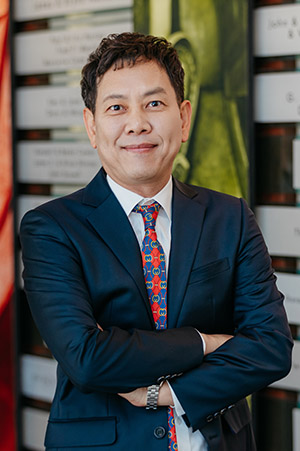
Guo Yike is the Provost of The Hong Kong University of Science and Technology (HKUST) and concurrently a Chair Professor in the Department of Computer Science and Engineering. He holds a PhD in Computational Logic from Imperial College London (1994) and a first-class honours degree in Computing Science from Tsinghua University (1985). His academic leadership roles include Director of the Data Science Institute at Imperial College London (2014–2020), Honorary Dean of Shanghai University's School of Computer Science (since 2020), and Vice President (Research and Development) at Hong Kong Baptist University (2020–2022). Research interests focus on machine learning, data mining, and large-scale applications in healthcare, finance, and environmental science. He pioneered informatics systems for biology, geophysics, and social media, emphasizing ethical AI and multimodal reasoning. Notable awards include Royal Academy of Engineering Fellowship (2018), ACM SIGMM Best Open Source Software Award (2017), and recognition as one of China's Top 10 Data Scientists (2016). Industry collaborations include leading startups like InforSense and TranSMART, working with GSK, Huawei, and BBC. Editorial roles include editor-in-chief of Annual Reviews of Data Sciences and deputy editor-in-chief of Machine Intelligence Research . His work bridges academia and industry, driving innovation in AI ethics, cloud computing, and interdisciplinary science.
Dr. Avijit Ghosh is an Applied Policy Researcher at Hugging Face and Associate Researcher at the University of Connecticut's RIET Lab. His work intersects machine learning, ethics, and policy, focusing on implementing fair algorithms and responsible AI practices. His research addresses critical issues including AI agent autonomy, accent bias in synthetic voices, and sociotechnical alignment frameworks. Policy engagement includes contributions to AI regulation discussions in multiple countries.
Timo Heroth is a Lecturer at the Lucerne School of Business , affiliated with the Controlling Department at the Institute of Financial Services Zug (IFZ) . He serves as co-head of the ESG Reporting Specialized Course and co-founder of Equintel GmbH, specializing in data-driven ESG intelligence. Education : Ph.D. Programme in Management (University of St. Gallen, 2020–2024), Certificate European Financial Analyst (2018), Master of Arts in Chinese Studies (Free University Berlin, 2012–2015), and Diploma in Business Administration and Chinese Studies (University of Applied Sciences Konstanz, 2004–2008). His research focuses on Corporate Social Responsibility (CSR) , ESG Reporting , Big Data Analytics , and Corporate Finance , with projects spanning topics like AI-powered ESG platforms, carbon capture technology analysis, and digitalization in raw materials. His publications highlight applications of Natural Language Processing in corporate culture assessment and pandemic-era media analysis. Recent publications include studies on data-driven ESG analysis , digital transformation in finance , and AI in sustainability reporting . Articles frequently intersect computational text analysis , stakeholder communication , and strategic sustainability . Professional competencies include Double-Materiality Assessments , Sustainability Strategy , Corporate Finance , and Valuation .