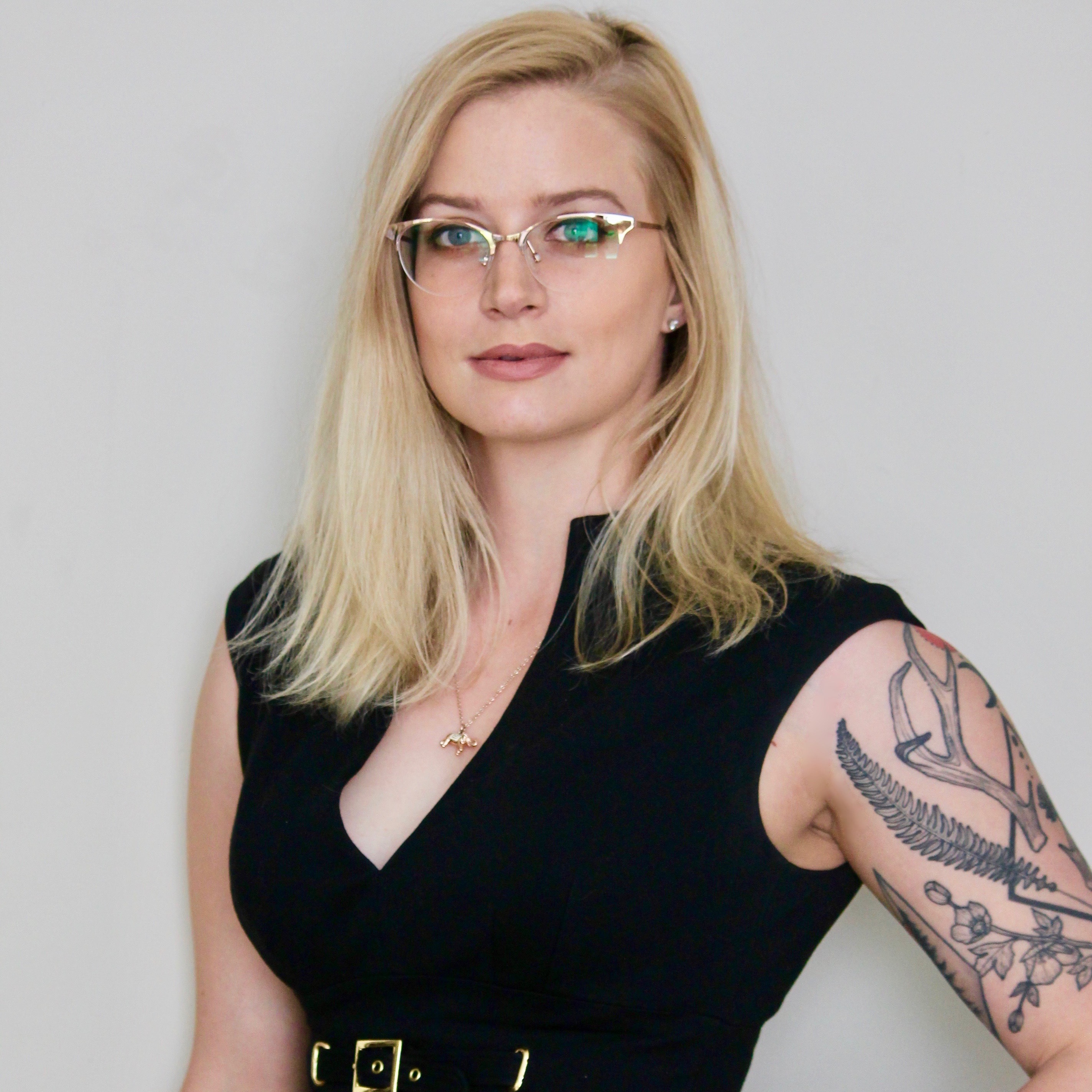
Florian Kerschbaum is a Professor and NSERC/RBC Industrial Research Chair in Data Security at the Cheriton School of Computer Science, University of Waterloo. His research focuses on data security and privacy, applied cryptography, and confidentiality in data science. Research interests span data collection/preparation management, secure multi-party computation, homomorphic encryption, differential privacy, and machine learning robustness/privacy. His work develops cryptographic solutions for practical data management challenges in distributed systems.
Peter Seele is a Full Professor at the Faculty of Communication, Culture and Society at Università della Svizzera italiana (USI). He is affiliated with the Center for Climate Finance and Sustainability (CCFS), Ethics and Communication Law Center (ECLC), and the Luxury Observatory Lugano (LOLugano). His research focuses on Corporate Social Responsibility (CSR), Business Ethics, Digital Ethics, Greenwashing, and Machinewashing. Dr. Seele holds dual PhDs in Economics (University of Witten/Herdecke, Germany) and Philosophy (University of Düsseldorf, Germany). He previously served as an Assistant Professor at the University of Basel and conducted post-doctoral research at the Institute for Advanced Studies in the Humanities (KWI) in Essen. His educational background includes studies at the University of Oldenburg and Delhi School of Economics, followed by two years as a business consultant in Frankfurt. His research explores ethical challenges in digitalization, sustainability, and technology. Notable themes include AI ethics governance, ethicswashing in corporate communication, and the interplay between blockchain and business ethics. Recent work addresses greenwashing trends, the ethical implications of algorithmic systems, and sustainable practices in luxury industries. Publications highlight critical analyses of digital ethics frameworks, sustainability backlashes, and the societal impact of emerging technologies. His interdisciplinary approach bridges philosophy, business studies, and environmental science, with a focus on practical solutions for ethical dilemmas in modern organizations. Peter Seele collaborates across academic and industrial sectors, emphasizing real-world applications of ethical theories. He advises on CSR strategies, digital transparency, and regulatory frameworks for sustainable business practices.
Bernhard J. Berger is a Lecturer in the Department of Computer Engineering at the Institute of Embedded Systems, Hamburg University of Technology (TUHH). His research focuses on software security, static code analysis, machine learning, optimization, and research data management. He has held significant roles such as Program Committee member for ICPC 2025 and MSR 2025, and has received awards including the Best Reviewer Award (ICPC 2023) and Best Engineering Paper Award (SCAM 2019). His work spans interdisciplinary applications including maritime systems security, GPU-accelerated AI, and evolutionary algorithms. Recent studies emphasize AI-driven security tools (e.g., ML-SAST) and domain-specific language approaches to optimization (EvoAl). He has contributed to over 30 peer-reviewed publications, with notable work in IEEE Transactions on Software Engineering and Science of Computer Programming. Berger collaborates closely with industry through DAAD review committees and serves on artifact evaluation boards for ISSTA and ARES conferences. Education: Doctoral Thesis (2022), Diploma in Computer Science (2007) Key Projects: ArchSec tool suite, Threat Modeling Frameworks, Bauhaus static analysis methodology Lab Affiliation: Embedded Systems Design Group His advisory roles include Deputy of TUHH's Election Verification Committee and Session Chair at IEEE Congress on Evolutionary Computation 2023. Current research trends integrate machine learning with static analysis for automated vulnerability detection, while also exploring explainable AI techniques for neural network optimization.
Vicente Ordóñez-Román is an Associate Professor in the Department of Computer Science at Rice University, part of the George R. Brown School of Engineering. His research focuses on the intersection of computer vision, natural language processing, and machine learning, with an emphasis on fair, transparent, and interpretable AI. He leads the Vision, Language, and Learning Lab and contributes to the Ken Kennedy Institute's Closed-loop Computer Vision research cluster. Education: PhD in Computer Science (UNC Chapel Hill, 2015), MS in Computer Science (Stony Brook University), and Engineering (Escuela Superior Politécnica del Litoral, Ecuador). Prior roles include Assistant Professor at the University of Virginia (2016-2021) and visiting positions at Adobe Research, the Allen Institute for AI, and Amazon. Research Interests : Developing multimodal AI systems that integrate visual and textual data, mitigating biases in AI, and advancing generative models. His work emphasizes ethical AI and societal impact, as seen in his contributions to the whitepaper advocating for federal regulation of facial recognition technologies. Awards & Recognition : NSF CAREER Award (2021), Marr Prize (ICCV 2013), Best Paper at EMNLP 2017, and multiple industry grants from Google, Amazon, and Facebook. His research has been featured in media outlets like WIRED, The New York Times, and Bloomberg News. Advising & Grants : Supervises a diverse research group spanning PhD, MS, and undergraduate students. Secured over $1.8 million in external funding, including NSF grants, Amazon FAI awards, and Google Cloud credits. Leads initiatives on bias mitigation, AI ethics, and multimodal learning. Labs & Collaborations : Directs the Vision, Language, and Learning Lab (vislang.ai), collaborating with industry partners like Adobe, Amazon, and SAP. Engages in interdisciplinary projects at the Ken Kennedy Institute, focusing on closed-loop computer vision systems.
Jacky Bourgeois is an Assistant Professor of Data-Centric Design at Delft University of Technology's Faculty of Industrial Design Engineering (IDE), leading the Data-Centric Delft Design Lab. His work bridges Human-Computer Interaction, Data Science, and Participatory Design, focusing on methods like data donation to empower collaborative data exploration. He holds a computer science background, previously researching ubiquitous technologies for domestic energy practices of 'energy farmers' (solar households). Key projects include the PROMISE study on patient-led oncological care and the Data Donation initiative promoting ethical data practices. Education: Background in Computer Science; academic focus on sustainable design engineering and IoT. Teaching includes courses like 'Data-Centric Design for...' (2024) and 'Digital Product Development' (2023). Research Interests: Data as subjective inquiry material, data intimacy, data commons, and human-data interaction in home contexts. Notable contributions include PAIRcolator for collaborative data reflection and Tangi for 360° video insights. Awards include Best Paper at CHI 2025 and DIS '24 Best Paper. Grants & Collaborations: NWO-funded research on hospital sounds (2024), IoT Rapid Proto Labs for industry-academia partnerships, and ancillary role as a scientific employee at The Open University (2025–2027). Labs & Teams: Director of the Data-Centric Delft Design Lab; collaborates with the HCI Data & Design SIG. Current projects address ethical frameworks for data donation and patient-centered healthcare systems.
Fabian Suchanek is a full professor at Institut Polytechnique de Paris, specifically affiliated with Télécom Paris. He leads research in the Data, Intelligence, and Graphs (DIG) team within the Computer Science department. His academic career focuses on bridging artificial intelligence with structured knowledge representations. Suchanek's research interests span artificial intelligence, knowledge bases, and natural language processing, with particular emphasis on knowledge graph construction , rule mining , knowledge-based language models , and explainable AI . His work demonstrates how structured knowledge can enhance machine learning systems, particularly large language models, by providing factual grounding and interpretability. The research group he leads develops practical systems that address real-world knowledge management challenges. His recent publications showcase a strong trajectory in knowledge-intensive AI, with notable contributions to knowledge graph completion, rule mining techniques, and neural approaches to knowledge base validation. The research demonstrates increasing integration between symbolic and neural approaches to AI. Best Student Paper Award at KR 2024 for work on contextual reasoning Best Demo Award of IJCAI 2024 for rule mining in knowledge graphs French Open Research Award for the YAGO project Best Paper Award of ESWC 2021 for Neural Knowledge Base Repairs Suchanek has secured significant research funding, evidenced by his active recruitment of PhD students for knowledge-based language model research. He has held visiting positions, including at Nanyang Technological University (June-September 2023), and is recognized internationally through keynote invitations such as the Singapore ACM SIGKDD Symposium 2023. He has deliberately stepped back from administrative duties at Institut Polytechnique de Paris to focus on research. His laboratory maintains strong industry connections through open-source software projects including the YAGO knowledge base, AMIE for rule mining, STACI for explainable AI, and several other tools that have become standard in knowledge representation research.
Olga Russakovsky is an Associate Professor in the Computer Science Department at Princeton University, with additional affiliations at the Center for Statistics and Machine Learning and the Center for Information Technology Policy. She serves as Associate Director of the Princeton AI Lab and chairs the Board of Directors for AI4ALL, the nonprofit she co-founded in 2017. Her research integrates computer vision with machine learning, human-computer interaction, and fairness/transparency in AI systems. She leads the Visual AI Lab, focusing on developing intelligent systems that understand the visual world while addressing societal impacts of technology. Dr. Russakovsky is a prominent advocate for diversity in AI. She co-founded multiple educational initiatives including: Stanford AI4ALL (originally SAILORS, 2015) for high school girls Princeton AI4ALL (2018) for underrepresented racial/ethnic groups AI4ALL nonprofit (2017) to cultivate diverse AI leadership AI4ALL Open Learning (free K-12 AI curriculum) College Pathways program for undergraduate inclusion She has influenced policy through congressional engagement and media outreach, with featured coverage in MIT Technology Review, TheAtlantic, Wired, and EdWeek addressing AI's diversity crisis.
Mark Yatskar is an Assistant Professor in the Department of Computer and Information Science at the University of Pennsylvania. His research focuses on the intersection of natural language processing, computer vision, and fairness in machine learning. He earned his PhD from the University of Washington under advisors Luke Zettlemoyer and Ali Farhadi, and previously worked as a Young Investigator at the Allen Institute for Artificial Intelligence. Education: PhD in Computer Science, University of Washington (Advisor: Luke Zettlemoyer & Ali Farhadi) Research Interests: Yatskar's work explores how language can structure visual perception and mitigate human biases in machine learning systems. Key themes include: Natural language as a scaffold for visual intelligence Bias characterization and control in machine learning systems His lab currently investigates projects like language-guided bottlenecks, annotator cognitive heuristics, and gender bias amplification. Teaching: CIS 5300: Computational Linguistics (2021-2024) CIS 7000: Language and Vision (2020) CIS 6300: Efficient NLP (2023, 2025) Awards: Best Paper Award at EMNLP (Gender Bias Amplification Research) Advising & Grants: Yatskar advises a team of PhD/Master's students and actively seeks motivated researchers. His group has explored funding in areas like interpretable AI, multimodal reasoning, and dataset bias mitigation. Labs/Teams: Leads the Penn NLP & Vision Lab, focusing on projects like MolMo/PixMo open models, ViUniT visual unit tests, and bias mitigation frameworks.
Sanjay Purushotham is an Assistant Professor in the Department of Information Systems at the University of Maryland Baltimore County (UMBC), with a PhD in Electrical Engineering from the University of Southern California (USC) and a postdoctoral background in Computer Science at USC's Integrated Media Systems Center (IMSC). His research focuses on machine learning, data mining, and their applications in biomedical informatics, social network analysis, and multimedia data mining. Key contributions include survival analysis models using pseudo values and federated learning frameworks for healthcare data. He has received awards including the Best Paper Award at SIGSPATIAL 2014 and a Best Poster Runnerup at SCMLS 2016. Education: PhD in Electrical Engineering (USC), Postdoc in Computer Science (USC) His work spans interdisciplinary areas such as domain adaptation for remote sensing, thermal face translation, and interpretable neural networks for medical applications. Recent projects include federated survival analysis models and climate-informatics frameworks for cloud property retrieval. He teaches courses in artificial intelligence, healthcare informatics, and statistical learning at UMBC. Research highlights include developing MedFuseNet for multimodal medical question answering and VDAM for multi-sensor cloud data analysis. His work on fair survival analysis models addresses algorithmic bias in healthcare predictions. Current grants include a NSF CAREER award for trustworthy federated learning in computational healthcare.
Hoda Heidari is the K&L Gates Career Development Assistant Professor in Ethics and Computational Technologies at Carnegie Mellon University (CMU), with joint appointments in the Machine Learning Department and the Institute for Software, Systems, and Society. She is affiliated with the Human-Computer Interaction Institute and the Heinz College of Information Systems and Public Policy, and co-leads the university-wide Responsible AI Initiative and K&L Gates Initiative for Ethics and Computational Technologies. Education: PhD in Computer and Information Science (University of Pennsylvania), MSc in Statistics (Wharton School) Her research focuses on the Ethical, Societal, and Policy Implications of AI , particularly fairness and accountability in high-stakes domains. Her work includes evaluating risks/benefits of general-purpose AI, human-AI decision-making systems, and AI governance frameworks. She has received multiple awards, including best paper honors at AIES, FAccT, and SAT-ML. Her research is supported by the NSF Program on Fairness in AI, PwC, CyLab, Meta, and J. P. Morgan. Recent Publications examine generative AI safety, fairness measurement, AI incident documentation, and ethical governance. Her teaching includes courses on Responsible AI, ML Ethics, and Societal Decision-Making, with a focus on preparing students to critically analyze AI's societal impact. Scientific Awards: Best Paper (AIES 2024, FAccT 2021, SAT-ML 2023), Exemplary Track Award (EC 2021) Grants: NSF, PwC, CyLab, Meta, J. P. Morgan She advises doctoral students and postdocs across CMU departments and collaborates with interdisciplinary teams. Her service includes organizing AI safety workshops and advising on NIST guidelines for AI red-teaming.
Professor Helen Kennedy is a leading scholar in digital society at the School of Sociological Studies, Politics and International Relations , University of Sheffield . She holds the title of Professor of Digital Society and is Director of the £4 million ESRC Digital Good Network. A Fellow of the British Academy (FBA) and the Academy of Social Sciences (FacSS), her work bridges academia and public policy through collaborations with the BBC, DWP, and international media organizations. Her educational background includes a BA in English and American Studies from the University of Birmingham, an MA in Cultural Studies from the Birmingham Centre for Contemporary Cultural Studies (CCCS), and a PhD from the University of East London (2002) on digital identity and multimedia. Helen's research centers on digital inequality, datafication, algorithmic culture, data ethics, and public engagement with data . She investigates how non-expert publics experience and interpret data, visualizations, and AI, with a focus on fairness, transparency, and resistance. Her work also examines data visualization in society , particularly in news media, and the emotional and cultural dimensions of data engagement. Her recent publications reveal a consistent trend in exploring public perceptions of data practices , the politics of data visualization , and ethical dimensions of data use across journalism, public services, and digital platforms. Themes include trust, fairness, emotion, and the socio-political shaping of data systems. Fellow of the British Academy (FBA) Fellow of the Academy of Social Sciences (FacSS) Helen has led numerous major grants from the ESRC, AHRC, Nuffield Foundation, and EPSRC , including projects like Living With Data , Generic Visuals in the News , and Seeing Data . She supervises PhD students on topics ranging from algorithmic bias to digital self-tracking and has completed 13 PhD supervisions. She actively collaborates with policy makers (DWP, BBC, DCMS) , media organizations (Financial Times, Reach PLC) , and NGOs to translate research into impact, particularly in web accessibility and data governance. She leads the Living With Data research programme and is involved in the Everyday Life and Critical Diversities and Science, Technology and Medicine in Society research groups. Her work with the ESRC Digital Good Network brings together academics, practitioners, and civil society to envision equitable digital futures.
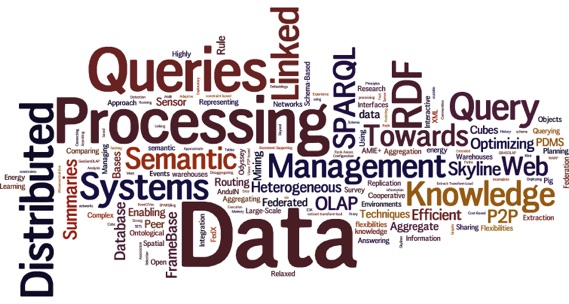
Katja Hose is a Full Professor of Data Management at TU Wien's DBAI research unit, heading the Data Management and Knowledge-Driven AI Lab. She previously held a Poul Due Jensen Foundation Professorship at Aalborg University. Her research focuses on data and knowledge engineering, including graph databases, knowledge graphs, querying, analytics, and machine learning, with interdisciplinary applications in bioscience, healthcare, and environmental assessment. Education: PhD in Computer Science (Ilmenau University of Technology, 2009), Postdoc at Max Planck Institute for Informatics (2009–2012). Academic roles include Program Co-Chair for ISWC 2024 and EDBT 2023, and editorial board membership at VLDBJ and TGDK. She leads projects like TARGET (health virtual twins) and ARMADA (data management). Research Interests: Knowledge Graphs, Semantic Web, Big Data, Machine Learning, Data Integration, and Provenance Systems. Key contributions include SHACL shape extraction, conversational data analytics, and environmental knowledge graphs. Awards include the 2025 Distinguished Meta-Reviewer Award and 2024 Manfred Paul Award. Advising and Grants: Supervised students including E. Pürmayr (Diploma Thesis 2025). Active in EU projects (TARGET, ARMADA) and grant coordination. Labs/Teams: DMKI Lab at TU Wien, collaborating with interdisciplinary teams in healthcare and environmental science.
Dr. Emily Wall is an Assistant Professor in the Department of Computer Science at Emory University, leading the CAV Lab (Cognition and Visualization). She earned her Ph.D. in Computer Science from Georgia Tech (2020) and completed a postdoctoral fellowship at Northwestern University before joining Emory. Ph.D., Computer Science, Georgia Tech (2020) Postdoctoral Researcher, Northwestern University Current: Assistant Professor, Emory University Her research focuses on enhancing human decision-making through data visualization and visual analytics by addressing cognitive limitations and biases. Key areas include metacognition promotion, computational strategies for bias mitigation, and human-AI collaboration in data analysis. She combines cognitive psychology principles with technical implementation using tools like D3.js and Tableau. Recent publications highlight her work on LLM applications in visual analytics, cognitive bias interventions, and trust calibration in AI systems. Current students like Mengyu Chen, Shiyao Li, and Zhongzheng Xu are presenting at top conferences such as CHI and IEEE VIS. She also explores educational applications through interactive visualization pedagogy and innovative assessment methods. Dr. Wall actively engages in academic service through graduate mentorship, conference judging, and diversity initiatives. Her lab emphasizes both technical proficiency and social justice implications in visualization design, reflected in course projects that merge artistic expression with data-driven storytelling.
Sascha van Schendel is an Assistant Professor in Data Protection & Cybersecurity at the Department of Law & Markets, Erasmus School of Law, Erasmus University Rotterdam. She is affiliated with the Erasmus Centre of Law and Digitalization and contributes to the Sectorplan SSH-Breed research initiative on the influence of digitalization on work, prosperity, and entrepreneurship. Her research lies at the intersection of law, technology, and fundamental rights, with a focus on data protection, privacy, algorithmic governance, and the regulation of emerging technologies in public and environmental domains. She has published widely on topics including GDPR compliance, privacy by design, smart energy systems, AI in criminal justice, and the legal implications of predictive policing. The recent publications reflect a strong trend toward the regulation of data in public infrastructure (e.g., energy grids), algorithmic accountability in law enforcement, and the integration of legal and technical perspectives in privacy-preserving systems. Her work spans environmental law, criminal procedure, and digital constitutionalism, demonstrating interdisciplinary reach. Scientific Awards: No awards explicitly mentioned in the provided text. Advising and Grants: While no formal PhD or Master’s students are listed, Dr. van Schendel has been involved in significant research projects such as the NWO-funded Megamind project on smart energy grids, indicating experience with competitive grant funding. She actively collaborates with legal scholars and contributes to public policy debates, including responses to national legislation like the Dutch Cybersecurity Bill. Labs and Teams: She is a core member of the Erasmus Centre of Law and Digitalization, a research hub focusing on the legal challenges of digital transformation. Her work is embedded in interdisciplinary collaborations involving law, technology, and public policy experts.
Dr. Jeewanie Jayasinghe Arachchige is a Lecturer in the Department of Computer Science at Vrije Universiteit Amsterdam, Faculty of Science. She teaches undergraduate courses including Bachelor Project Computer Science, Professional Development, and Software Engineering Processes for the academic year 2024–2025. Her research focuses on process mining , healthcare informatics , and data security . She applies process mining to analyze healthcare pathways and subpopulation treatment variations, develops explainable AI frameworks for predictive analytics, and examines data governance in emerging architectures like Data Lakehouses. Her work intersects legal informatics, particularly formalizing Sri Lankan civil court processes using ontology engineering. Recent publications highlight trends in balancing simplicity and complexity in process modeling, Industry 4.0 healthcare applications, and cybersecurity in model-driven web development. She has contributed to over 20 peer-reviewed articles since 2006, spanning topics from service-oriented architectures to value network analysis. Her teaching and research emphasize practical applications of IT in healthcare, legal systems, and enterprise environments. No ancillary activities are currently recorded.