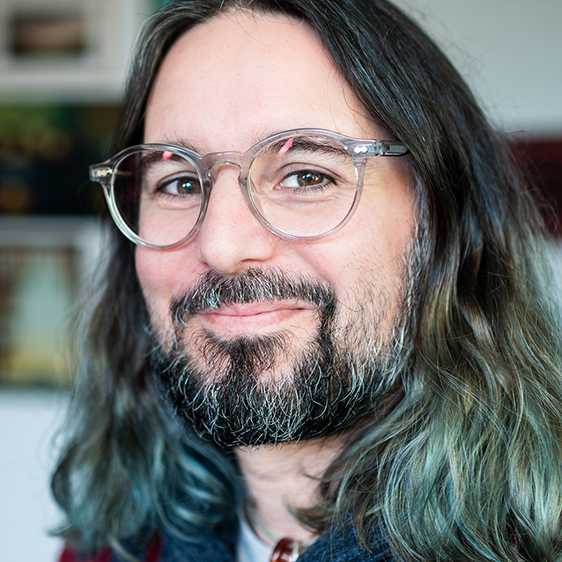
Daksitha Withanage Don is a Researcher at the Chair for Human-Centered Artificial Intelligence, affiliated with the University of Augsburg's Faculty of Applied Computer Science and Institute of Computer Science. His work focuses on developing socially interactive agents, affective computing, and generative AI applications. He holds an M.Sc. and actively contributes to projects like DEEP (Emotion Processing for Social Agents) and MITHOS (mixed reality teacher training). His research interests include self-supervised learning, multimodal analysis, and human behavior modeling. He advises students on topics such as GUI design for social agent frameworks, behavioral synchrony analysis using foundation models, and real-time listener behavior generation in Unreal Engine. Key Projects: MITHOS, FORSocialRobots, TherapAI, ReNeLiB Labs/Teams: Human-Centered Artificial Intelligence Team Supervised Theses (2024): Automated ICEP-R Annotation, Long-Term Memory Integration in LLMs, Mediapipe 3D Blendshapes for Behavior Modeling Publications include work on generative AI for HCI, automated behavioral annotation, and real-time interactive systems. Contact via email or visit his GitHub for open-source contributions.
Simon Krohmenn, M.Sc., is a research associate at the Chair of Information Infrastructures at Technical University of Munich. He is also a doctoral researcher in the Helmholtz Information and Data Science School for Health (HIDSS4Health), focusing on gamification and AI training data annotation, particularly in medical image annotation systems.
A. Murat Eren is a Professor of Ecosystem Data Science at the Helmholtz Institute for Functional Marine Biodiversity at the University of Oldenburg. Previously, he served as Assistant Professor at the University of Chicago (2015-2022) and researcher at the Marine Biological Laboratory (2011-2015). His work bridges computational biology with microbial ecology, focusing on integrated 'omics approaches to study microbial lifestyles and responses to environmental change. Education : PhD in Biological Sciences, University of New Orleans (2011) Research interests include marine microbial ecology , computational discovery , and environmental genomics . He leads projects on GlobDB (microbial genome dereplication), anvi'o (open-source bioinformatics), and LucaProt (AI-driven viral discovery). Recent work spans metagenome assembly errors, microbiome interaction networks, and plasmid dynamics in polar regions. His lab trains postdoctoral researchers like Iva Veseli (C-CoMP fellow) and Florian Trigodet (metagenomic validation). He mentors Sarah Tucker (Simons fellow) and collaborates with institutions including Marine Biological Laboratory , MARUM , and AWI . The group emphasizes open science practices, community education, and the development of tools for studying microbial dark matter.
Seid Muhie Yimam is a postdoctoral researcher and Technical Lead at the University of Hamburg's Department of Informatics under the Faculty of Mathematics, Informatics and Natural Sciences. He has been a Research Associate at the Language Technology (LT) lab since 2012, contributing to NLP tools like Par4Sem, WebAnno, and Network of the Day. He also assists in teaching and student supervision. Ph.D. in Natural Language Processing, University of Hamburg (2019) M.Sc. in Human Language Technology and Interfaces, University of Trento (2011) B.Sc. and M.Sc. in Computer Science, Addis Ababa University (2004, 2009) His research focuses on NLP technologies for social applications and low-resource languages, particularly Ethiopian languages like Amharic. He explores hate speech detection, sentiment analysis, machine translation, and semantic writing aids. The 15 most recent publications highlight his work across NLP domains: low-resource language processing, hate speech detection, sentiment analysis, and multilingual tools. Subfields include biomedical annotation, cultural emotion analysis, and interactive annotation frameworks. Seid has developed critical NLP tools such as GermaNER (German NER) and WebAnno (annotation platform). He has supervised master projects and practical NLP classes at the University of Hamburg.
Achim Rettinger is a full professor at Trier University, leading the research group krAil (Knowledge Representation Learning). He specializes in machine learning, natural language understanding, and human-centered AI. His work focuses on expressive knowledge representations and their applications in semantic technologies. Education: Studied Computer Science at Universität Koblenz (Germany), University of Georgia (USA), and University of Alberta (Canada). PhD in machine learning at TU Munich/Siemens AG, followed by habilitation at KIT (2016). Served as interim professor at Karlsruhe Institute of Technology (2018/19). Research interests include knowledge graphs, cross-lingual semantic annotation, and data-driven analysis in political and medical domains. Notable contributions include the X-LiSA framework and work on semantic web technologies. Awards include best paper and challenge awards at ISWC and ESWC conferences. Leadership roles include senior PC member at ISWC, track chair at ESWC, and membership in AI for Good Foundation. Active in EU projects, DFG grants, and large-scale collaborative initiatives. Key projects: BreXearch (cross-lingual Brexit analysis), xLiMe System (semantic search), and medical decision support systems for liver surgery. Collaborates with interdisciplinary teams on cognition-guided surgery and data integration. Publications span top venues like ISWC, NeurIPS, ICLR, and CVPR, with a focus on semantic web, machine learning, and applied AI solutions.
Manuel Brack is an Applied Research Scientist at Adobe Firefly in San Jose, USA, with an adjunct research affiliation at hessian.AI in Darmstadt, Germany. His academic foundation includes a Ph.D. from TU Darmstadt's Machine Learning Lab where he specialized in generative AI systems. He co-founded the Occiglot research collective focused on open-source LLM development. Brack's research centers on large-scale generative models at the intersection of natural language processing and computer vision. His work addresses critical challenges in monosemanticity measurement , multilingual data curation , AI safety frameworks , and text-to-image generation ethics . He has pioneered techniques for bias mitigation in multilingual systems and developed novel architectures for memory-efficient language modeling. His publications reveal significant trends toward neuro-symbolic integration (DeiSAM), privacy-preserving mechanisms (CLIP identity attacks), and community-driven open science (Occiglot/Community OSCAR). The research consistently bridges theoretical innovation with practical deployment considerations for generative systems. Best Runner-Up Paper Award RBFM Workshop at NeurIPS 2024 (LlavaGuard) Best Paper Award at DPFM 2024 (Homoglyphs research) Brack actively contributes to open-source initiatives including Community OSCAR (345+ TiB multilingual dataset) and Occiglot (open LLM development). His work emphasizes ethical deployment through frameworks like Fair Diffusion for bias attenuation and Safe Latent Diffusion for content moderation, demonstrating commitment to responsible AI advancement.
Marzan Tasnim Oyshi is a Research Associate at the Leibniz Institute of Ecological Urban and Regional Development (IOER) and a Doctoral Candidate at the Chair of Computer Graphics and Visualization, Technische Universität Dresden, Germany. Her research focuses on immersive visualization, virtual reality, and data-driven decision-making for sustainability and environmental challenges. Education: Master of Science in Computer Science & Engineering, Daffodil International University, Bangladesh (2017–2019) Bachelor of Science in Computer Science & Engineering, Daffodil International University, Bangladesh (2013–2016) Erasmus Mundus Undergraduate Mobility Exchange, Information Technology, Lodz University of Technology, Poland (2015–2016) Her research interests include immersive visualization, virtual reality, IoT, machine learning, and environmental data analytics . She develops tools that support decision-making in climate resilience, flood risk, and urban sustainability using VR-based visual analytics. Her work bridges computer science with real-world environmental and societal challenges. The recent publications demonstrate a strong trend in immersive data visualization for environmental science and machine learning support . Oyshi’s work applies VR to visualize extreme weather, flood projections, and biological datasets, while also contributing to IoT-based monitoring and gamified education. The interdisciplinary nature of her research spans computer vision, sustainability, and human-computer interaction. Scientific Awards and Scholarships: 300 Army Scholarship (2017) Erasmus Mundus UG Mobility Scholarship (2015) Government District-Level Scholarship (2010) Best Debater, Transparency International Bangladesh (2010) Multiple Government Academic Scholarships (2005, 2008) Oyshi has actively contributed to academic advising, having supervised 2 Master’s theses, 2 Bachelor’s theses, 3 team projects (15 students), and 9 Hauptseminar students . She has also served as a reviewer for prestigious conferences including CHI, IEEEVIS, and ICAITA. Her research is supported by institutional affiliations with IOER and ScaDs.AI, focusing on systemic sustainability and data science. She is a key member of the Leibniz-Lab 'Systemic Sustainability' , where she contributes to developing dashboards that communicate science-society challenges related to climate change, biodiversity loss, and food security. Her projects like ExtremeWeatherVis, FloodVis, and VRCellLabeler exemplify her commitment to creating immersive, interactive tools for complex data understanding.
Armin Lechler , holding the title of Dr.-Ing. , is a Senior Researcher at the Institute for Control Engineering of Machine Tools and Manufacturing Units (ISW) at the University of Stuttgart. He is also a key member of the Cluster of Excellence IntCDC (Integrative Computational Design and Construction for Architecture). His work focuses on control engineering, automation technology, and robotics, with a particular emphasis on data-driven manufacturing systems and cyber-physical platforms.
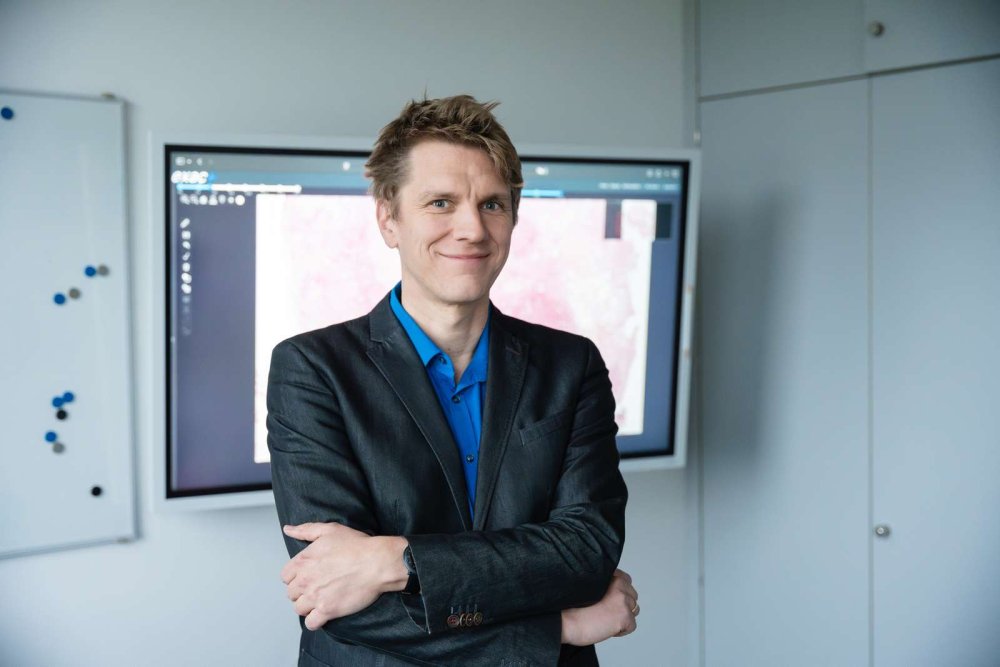
Professor Marc Aubreville is a Professor of Applied Computer Science with a specialization in Visual Computing at Flensburg University of Applied Sciences. Appointed in September 2024, he leads the FLAIR (Flensburg Artificial Intelligence Research Visual Computing) research group and serves as spokesperson for the STEM research team of the Schleswig-Holstein Promotional College (PKSH), representing 45 professors from six universities across the state. Aubreville's research centers on digital pathology and AI-assisted medical diagnostics, developing systems that help pathologists identify malignant tumor regions through abnormal cell division patterns. His DFG-funded "Digital Pathology" project is particularly notable as only approximately 1% of DFG funding goes to universities of applied sciences. His work began with veterinary applications using canine tumor samples before transitioning to human medicine, demonstrating the translational potential of AI in healthcare. His publication record from 2024-2025 reveals significant contributions across computational pathology, human-AI collaboration dynamics, and veterinary medical imaging. Key research themes include confirmation bias in AI-assisted diagnosis, automation bias under time pressure, and the development of comprehensive datasets for training AI in histopathology. His work bridges computer science, medicine, and veterinary science with practical applications for improving diagnostic accuracy. Key Research Contributions: AI systems to assist pathologists in identifying malignant areas in tissue samples Creation of standardized reporting guidelines for AI-based image analysis Development of datasets for mitosis detection in breast cancer Investigation of human factors in AI-assisted medical decision-making Professional Engagement: Spokesperson for PKSH STEM research team since March 2025 Collaboration with institutions in Berlin and Vienna for data collection Active participation in establishing methodological standards for AI in pathology
Uwe Gruenefeld is an active researcher at the University of Duisburg-Essen, Germany, with a strong affiliation with OFFIS - Institute for Information Technology in Oldenburg. His primary research focuses on Human-Computer Interaction, particularly in the domains of Augmented Reality, Virtual Reality, and Mixed Reality systems. As a key contributor to the field, he has published extensively in top-tier venues including CHI, UIST, and IEEE Transactions. Dr. Gruenefeld's research primarily investigates visual and haptic techniques for improving user interaction in immersive environments. His work spans across multiple application domains including health technology, educational systems, and robotics. He has made significant contributions to understanding how users interact with cross-reality systems, developing novel interaction techniques for AR/VR, and exploring behavioral biometrics for continuous authentication in immersive environments. His recent publications demonstrate a strong trend toward practical applications of AR/VR technology, with emphasis on user identification through movement patterns, improving physical activity engagement, and developing more intuitive interaction methods for complex tasks. The research consistently shows a human-centered approach with practical implementations that address real-world challenges in immersive computing. Dr. Gruenefeld actively collaborates with numerous researchers and appears to mentor several PhD and Master's students, evidenced by his frequent co-authorship with junior researchers on significant publications. His work is characterized by strong empirical validation through user studies and technical innovation in interaction techniques.
Chen Lin is affiliated with Xiamen University, School of Informatics , China. Their research spans Computer Science , Artificial Intelligence , and Bioinformatics , with a focus on Recommender Systems , Machine Learning , and Natural Language Processing . Chen Lin has published extensively on topics such as language models , index advisors , and adversarial attacks . Their work includes optimizing multi-modal recommendation systems , knowledge graphs , and drug-target interaction prediction . Recent publications in 2024 explore hypergraph pre-training , robustness in index advisors , and anonymized LLM annotation techniques . Key collaborations include researchers like Yeyun Gong , Zhenghao Lin , and Guoliang Li . While no formal awards are listed, their contributions to deep learning , data mining , and security are evident through their high-impact publications in venues such as NeurIPS , ICML , and KDD .
Pedro C. Neto is a researcher affiliated with the Department of Computer Science at the School of Engineering, University of Coimbra, Portugal. His work focuses on fairness in artificial intelligence, biometrics, and synthetic data applications in facial recognition systems. Research Interests: Fairness in AI, Face Recognition, Knowledge Distillation, Synthetic Data Evaluation, Biometrics His recent publications (2024–2025) highlight trends in mitigating demographic bias through continuous labeling, synthetic data challenges, and model compression techniques. He has contributed to advancements in morphing attack detection, occluded face recognition, and interpretable biometric systems. Pedro actively participates in academic competitions like the FRCSyn Challenge and MFR 2021, collaborating with international teams. His work intersects computer science, artificial intelligence, and ethical considerations in biometric technologies.
Hassan Hussein is a PhD student at Leibniz University Hannover and a Researcher in the Data Science & Digital Libraries group at TIB (Leibniz Information Centre for Science and Technology). His academic journey includes a Master's in Human-Computer Interaction from Siegen University, a Fulbright Scholarship for computer science studies in the U.S., and specialized training in web development from an IBM-managed program funded by the Egyptian government. His research integrates Semantic Web Technologies, Human-Computer Interaction, and Augmented Reality , with emphasis on accessibility and user-centered design. Key domains include natural user interfaces, UX engineering, and the application of knowledge graphs in scholarly communication. Recent publications focus on advancing the Open Research Knowledge Graph (ORKG) , addressing reproducibility, FAIR data principles, and AI-augmented research workflows. Earlier work explores augmented reality for civic engagement in urban planning. Awards: Fulbright Scholarship Egyptian Ministry of Communications Scholarship He contributes to TIB's research infrastructure and collaborates on projects involving semantic technologies, though no specific labs, teams, or grants are detailed in the source.
Claudia Steinberg is a Professor at the German Sport University Cologne , leading the Institute of Dance and Movement Culture . Her work bridges dance education , digitization in arts , and empirical research methods in movement studies. PhD in Sport Science (German Sport University Cologne, 2012) Habilitation in aesthetic-cultural education and digitization (Johannes Gutenberg University Mainz) Research Interests : Empirical dance education frameworks, domain-specific research instruments, classroom dynamics, and the digitization of physical education . Her interdisciplinary collaborations span communication design , computer science , and kinesiology . Publications (155+) focus on: Digital tools in dance pedagogy Avatar-based movement analysis Mental health in professional breakers AI integration in university dance training Awards : Young Scientist Award (2012) Teaching Award (2010, 2018) Posterpreis (2024) Wissenschaftspreis (2024) Grants from BMBF , Crespo Foundation , and Cultural Education Council support her work.
Michael Heinzinger is a researcher at the Chair for Bioinformatics within the School of Informatics at Technische Universität München. His work focuses on protein language models, machine learning applications in structural biology, and sequence-structure-function relationships. He contributes to projects like ProtTrans and participates in teaching activities including Data Mining and Problem-Based Learning (PBL) modules. Research Focus: Heinzinger's research explores Protein language modeling and representation learning Structure prediction using deep learning Functional annotation through sequence embeddings Evolutionary insights via domain analysis Transmembrane protein visualization tools Publication Trends: Recent work emphasizes protein language models (ProtTrans, HiFi-NN), structure prediction without alignments, binding residue analysis in disordered regions, and evolutionary studies of venom/toxin genes. Techniques include embeddings, contrastive learning, and attention mechanisms applied to protein space visualization and functional prediction. Contact: Email: ga32bav@mytum.de