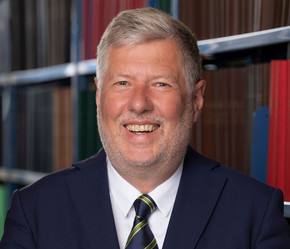
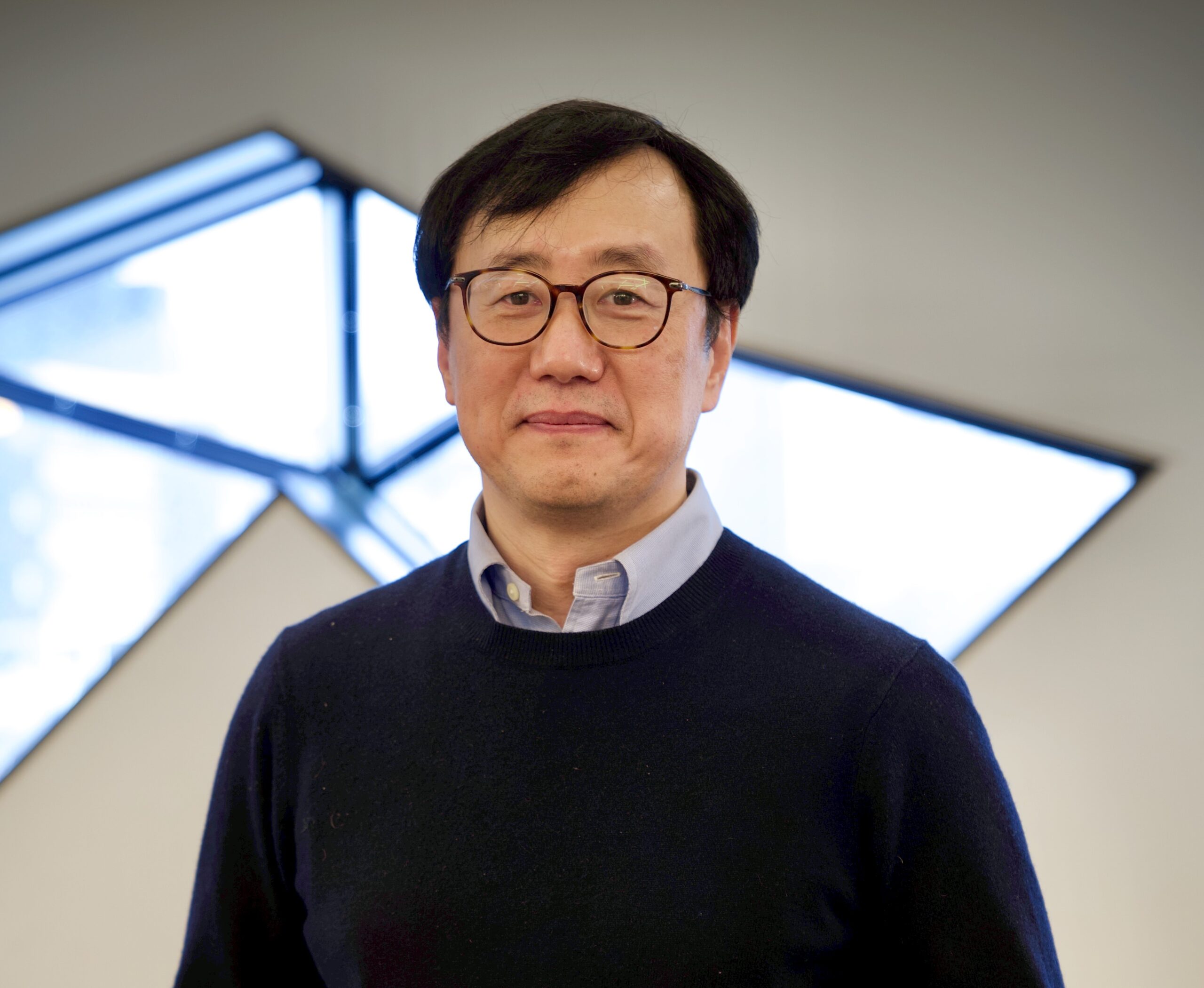
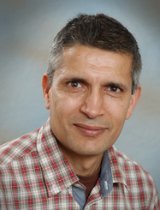
Daniel Hardt serves as Associate Professor in the Department of Management, Society and Communication at Copenhagen Business School. His interdisciplinary research bridges computational linguistics, artificial intelligence, and social analysis, with particular focus on natural language processing applications and theoretical linguistic phenomena. His primary research domains include Computational Linguistics (specializing in ellipsis resolution and sluicing phenomena), Natural Language Processing (developing methods for psychographic classification and sentiment analysis), and Artificial Intelligence (examining large language model capabilities and limitations). Recent work analyzes travel behavior during crises, gender effects in evaluations, and GDPR policy comprehension through NLP techniques. His publications span top venues including Linguistic Inquiry , Tourism Management , and ACL proceedings. Hardt actively engages with practical business applications through 27 media contributions discussing AI implementation, ChatGPT transparency, and data-driven leadership strategies. His academic service includes organizing events like the 2019 "Fake News" conference at CBS and presenting at international venues including JSAI 2024. With 28 supervised academic works documented, he maintains substantial mentoring activity while contributing to public discourse on digital transformation challenges.
Prof. Dr. Robert Risse is an esteemed academic and practitioner in tax law, currently serving at the Institute for Austrian and International Tax Law at Vienna University of Economics and Business since 2020. Previously, he held the position of Corporate Vice President Tax & Trade at Henkel AG & Co KGaA from 2000 to 2020, where he was globally responsible for taxation and customs. He also holds the title of Honorary Professor for Tax Compliance and Applied Tax Planning at the Institute for Business Taxation, University of Leipzig. His extensive career bridges academic excellence with practical corporate tax leadership. Education 2017: Chairman of the Board of Directors for the Transfer Pricing Center of the Institute for International and Austrian Tax Law, Vienna University of Economics and Business 2014: Doctoral Thesis "Tax Compliance und Tax Risk Management: Eine rechtsvergleichende Analyse und Umsetzung in einem internationalen Konzern" at University of Freiburg 1986-1989: Second State Examination in Law, University of Bonn 1983-1986: First State Examination in Law, University of Bonn 1979-1982: Diplom Finanzwirt FH in Financial Sciences, University of Applied Sciences for Finances North Rhine-Westphalia Research Interests Prof. Risse's research focuses on the intersection of tax compliance, digitalization, and international tax systems. His work explores how digital technologies can transform tax compliance processes, particularly in multinational corporations. He has pioneered research on Tax Compliance Systems, Transfer Pricing in the digital age, and the integration of tax risk management with corporate governance frameworks. His expertise spans international tax law, corporate taxation, and the practical implementation of tax strategies in global business environments. His recent work emphasizes the practical implementation of digital tax systems, with particular attention to blockchain applications, AI in tax compliance, and the integration of tax processes with broader business systems. He has developed frameworks for assessing tax risk in multinational corporations and has contributed significantly to the understanding of transfer pricing in the context of digital business models. Publication Trends Prof. Risse's recent publications reveal a strong focus on digital transformation in tax systems, with increasing attention to practical implementation challenges. His work consistently bridges theoretical tax principles with real-world corporate applications, particularly in multinational contexts. The emergence of topics like AI in tax administration, blockchain applications, and digital compliance systems reflects his forward-looking approach. His research shows a clear trajectory from traditional tax compliance toward integrated digital tax ecosystems that address both regulatory requirements and business efficiency needs. Professional Engagement President of Gesprächskreis Rhein-Ruhr, Internationales Steuerecht e.V./International Fiscal Association (IFA) West Member of DIHK Finanz- und Steuerausschuss, Berlin Member of Düsseldorfer Vereinigung für Steuerrecht e.V Member of Fachinstitut der Steuerberater e.V., Düsseldorf Member of Institut Finanzen und Steuern, Berlin Teaching and Advisory Roles Prof. Risse has extensive teaching experience across multiple institutions including University of Leipzig, Vienna University of Economics and Business, University of Freiburg, University of Cologne, and WHU – Otto Beisheim School of Management. He has supervised doctoral students through the "Doktorandenseminar zur Betriebswirtschaftlichen Steuerlehre" at University of Leipzig. His teaching focuses on international taxation, corporate tax law, and the practical application of tax planning in multinational corporations.
Axel Polleres is a full professor at the Institute for Data, Process and Knowledge Management in Vienna University of Economics and Business (WU Wien). He leads the department of Information Systems and Operations Management while maintaining active research in knowledge graphs, semantic web technologies, and ontology engineering. PhD and Habilitation from Vienna University of Technology Former positions at University of Innsbruck, Universidad Rey Juan Carlos, DERI Ireland, and Siemens AG Co-chair of W3C SPARQL working group Editorial board member for Semantic Web Journal and IJSWIS His research focuses on: Querying and reasoning over ontologies Graph schema languages (SHACL, SPARQL) Wikidata constraint formalization Ontology reuse in collaborative platforms Crisis management knowledge graphs FAIR data principles implementation Recent publications analyze knowledge graph evolution, constraint validation methodologies, and semantic web standardization efforts. Key topics include: OWL/RDF interoperability solutions Unit conversion systems for Wikidata Partition-based query processing frameworks Network resilience analysis for urban planning Open data platform discovery tools Temporal analysis of collaborative knowledge graphs He has co-organized major conferences like ISWC2023 and ESWC workshops while maintaining active roles in European research projects. Current work involves spatiotemporal knowledge graphs for city resilience and semantic web infrastructure development.
Prof. Thomas H. Kolbe serves as Chair of Geoinformatics at the Technical University of Munich (TUM), where he leads research in spatial, temporal, and semantic modeling of urban environments. His work focuses on developing foundational frameworks for 3D/4D city models, digital twins, and smart city applications through international standardization efforts including CityGML and IndoorGML. His research spans virtual city modeling, urban system simulation, and GIS integration with emerging technologies. Current projects emphasize AI-driven urban scenario generation, semantic streetspace modeling, and IoT integration in digital twin ecosystems. Recent publications demonstrate strong interdisciplinary connections between computer vision, urban planning, and geospatial data science, with particular emphasis on practical implementations of 3D city models for sustainability challenges. Prof. Kolbe actively contributes to professional organizations including the Round Table GIS eV (as Chairman since 2013) and the Munich Data Science Institute (as core member since 2021). His leadership extends to the Leonhard Obermeyer Center for digital methods in the built environment and the Hans Eisenmann Forum for agricultural sciences. His work bridges theoretical geoinformatics with practical urban applications through numerous collaborative projects with municipal governments and industry partners.
Bogdan Iancu is a University Lecturer in the Department of Information Technology at the Faculty of Science and Engineering, Åbo Akademi University. He holds a PhD and Docent qualification in Computer Science, with extensive expertise in artificial intelligence and computer vision applications, particularly in the maritime domain. His academic career spans numerous research projects and publications that bridge theoretical AI concepts with practical industry applications. Dr. Iancu's research focuses on AI applications in maritime technology, with special emphasis on object detection systems, security challenges in AI models, and sustainable technological solutions. He has developed benchmark datasets like ABOships and ABOships-PLUS that have become valuable resources for researchers in maritime computer vision. His work addresses critical challenges including adversarial attacks on object detection systems, as evidenced by his 2025 publication on TOG Adversarial Attacks in YOLO Models. The analysis of his recent publications reveals a clear progression from foundational dataset creation to advanced security analysis and neurosymbolic approaches that combine neural networks with symbolic reasoning. His research shows increasing sophistication in addressing real-world challenges in maritime AI systems, with particular attention to robustness, security, and practical implementation. Dr. Iancu actively participates in numerous research projects including EDISS (Engineering of Data-intensive Intelligent Software Systems), SMARTER (Sea4Value Smart Terminals), and DECATRIP (Decarbonizing Transport Corridors). These projects involve collaboration with industry partners across Finland and Europe, focusing on applying AI to solve real-world challenges in maritime transport, digitalization, and sustainability. He has contributed to the academic community through teaching courses in Artificial Intelligence, Data Science, and Graph Algorithms, and through active participation in the Finnish Artificial Intelligence Society. His work aligns with UN Sustainable Development Goals, particularly those related to industry innovation, infrastructure, and climate action through projects like DECATRIP that focus on decarbonizing transport corridors.
Leila Rafi is an adjunct professor at Toronto Metropolitan University’s Alexander Lincoln School of Law, where she teaches an introductory securities regulations course. She previously taught at Queen’s University Faculty of Law and the University of Windsor and Western Ontario law schools. Adjunct Professor, Toronto Metropolitan University (current) Former adjunct faculty, Queen’s University, University of Windsor, University of Western Ontario Her research and professional focus includes securities law, corporate governance, investment funds, and psychedelics industry regulation. She has advised on major M&A transactions, regulatory compliance, and legislative modernization projects. Recent publications and speaking engagements highlight her expertise in capital market trends, regulatory technology, and ESG reporting. She has received numerous awards, including recognition in Best Lawyers in Canada (2022–2025), Lexpert directories, and Canadian Lawyer’s Top 25 Most Influential Lawyers (2022). 2025: Recognized in Lexpert Special Edition on Finance and M&A Guide 2024: Lexpert “Consistently Recommended Lawyer” 2023: Lexpert “Leading Finance and M&A Lawyer” 2022: Canadian Lawyer’s Top 25 Most Influential Lawyers Leila mentors through the University of Toronto Women’s Association and serves on the Board of Directors for VersaFi (formerly Women in Capital Markets) and GEM (Girls E-Mentorship). She was called to the Ontario bar in 2006 and holds a JD from the University of Western Ontario (2005) and a BA from the University of British Columbia (2001).
Kristin Braa is a Professor at the Department of Informatics, University of Oslo, and serves as Director of the HISP Center. Her career includes an 8-year tenure as Research Director at Telenor, where she established a Research and Innovation Center in Malaysia. Academic Roles: Vice Head of Department of Informatics, head of Information Systems (IS) research group Research Focus: Mobile extensions of open-source DHIS2 software for low-resource settings, action research methods, sustainable health information systems Research Themes: She investigates innovative approaches to support rural healthcare workers and underserved populations, emphasizing long-term engagement in national health systems. Her projects include MobiHealth (2010–2014) and NORAD-funded initiatives (2010–2014) for health information systems in developing countries. Scientific Awards: 2023 AIS Impact Award (with Jørn Braa) 2020 Roux Prize (with Jørn Braa) 2013 University of Oslo Innovation Prize 2013 Researcher of the Year (Faculty of Mathematics and Natural Sciences, UiO) 2011 ICT and Energy Researcher of the Year 2011 Rosing Prize Finalist for rural Bangladesh health initiative Collaborations: Active in the IS research group and Climate Health Network. She advocates for sustainable, community-empowering information systems through participatory design and sociotechnical approaches.
Julian Müller holds the Professorship for Digital Industries at Friedrich-Alexander University Erlangen-Nuremberg (FAU), funded by Bosch Rexroth AG through the Stifterverband. He is part of the School of Business, Economics, and Social Sciences, specializing in digital transformation research within industrial contexts. His work bridges academic rigor with practical industry applications, particularly through his collaboration with Bosch Rexroth. Müller's research interests focus on three interconnected pillars: digital transformation in industry (Industry 4.0), sustainability and circular economy integration, and technology and innovation management. He examines how digital technologies reshape production, logistics, and industrial ecosystems while addressing ecological and social requirements. His work particularly emphasizes the integration of AI and digital platforms into business models across different company sizes. Analysis of Müller's recent publications reveals a strong focus on the intersection of digital technologies with sustainability and supply chain management. His work consistently addresses Industry 4.0 implementation challenges, particularly for SMEs, and explores how digital transformation can enhance resilience, sustainability, and business model innovation across global value chains. Scientific Recognition: 8th place in the 2024 Wirtschaftswoche ranking of most research-intensive business economists under 40 17th place in the overall ranking of most research-intensive business administration professors in DA-CH countries Board member of the European Operations Management Association (EurOMA) Müller's academic trajectory shows strong industry-academia connections, with his current professorship funded by Bosch Rexroth. His research demonstrates significant grant acquisition capabilities, particularly in the domain of digital industrial transformation. While specific students aren't listed in the provided materials, his position suggests active mentorship of junior researchers in digital business transformation. As part of FAU's 'Digitalization and Innovation' research focus, Müller collaborates with the Fraunhofer Institute for Information Systems and various German industrial companies. His work contributes to FAU's strong research profile in business administration, which ranks among Germany's top 20 faculties in business administration according to the Handelsblatt ranking.
Danushka Bollegala is a Professor in the Department of Computer Science at the University of Liverpool, where he leads both the Machine Learning and Natural Language Processing research groups. He previously held a lectureship at the University of Tokyo (2010-2013) and currently serves as an Amazon Scholar for Amazon Search. His research bridges fundamental AI with applications in healthcare, law, and social sciences. Research Focus: Professor Bollegala specializes in developing core NLP methodologies including word embedding techniques, semantic similarity measurement, and domain adaptation. His machine learning research explores privacy-preserving AI, unsupervised parsing, and bias mitigation. Recent applications include clinical decision support for polypharmacy management and legal document analysis. His publications demonstrate strong emphasis on: 1) Advancing evaluation methodologies for generative NLP systems, 2) Developing privacy-aware embedding techniques, and 3) Creating cross-domain NLP applications for healthcare and social good. Research consistently addresses real-world implementation challenges. Research Leadership: Principal Investigator for £6M+ grants including DynAIRx (NIHR: £4.2M) for AI in multi-morbidity management KTP grant with Fletchers Solicitors for legal AI systems EU-funded WEB-RADR project for pharmacovigilance Leads 30+ member research group spanning NLP, machine learning, and healthcare AI. Teaches graduate course COMP 527: Data Mining and Visualisation.
Dr Declan Humphreys is a Lecturer in Cyber Security at the School of Science, Technology and Engineering at the University of the Sunshine Coast. He coordinates courses on ethics in cyber security, covering topics such as surveillance, disinformation, ethical design, and corporate responsibility. His research explores the intersection of artificial intelligence, ethics, and societal impact, with a focus on epistemic harms, AI replicas of deceased individuals, and algorithmic market risks. Research Focus: Ethics in AI development and deployment Cyber security risks of generative AI Philosophical implications of digital afterlife technologies Ethical challenges in reinforcement learning and sycophantic AI Critical analysis of pricing algorithms Scientific Awards: Associate Fellow of the Higher Education Academy (AFHEA) Professional Memberships: Australasian Association of Philosophy (AAP) Teaching Areas: Ethics in Cyber Security Artificial Intelligence Technological Ethics Program Coordination for Bachelor of Information and Communications Technology Research Projects: He supervises HDR and Honours students in projects related to ethics in AI, societal risks of disinformation, AI modeling for moral decisions, and cyber security protection for NGOs. Labs & Teams: Dr Humphreys contributes to the Healthy Ageing Research Cluster and participates in the MindSET-do project, which engages young students in technology and programming education.
Dr. Rafid Al-Khannak is an Associate Professor in Computing at Buckinghamshire New University. He holds a PhD in Engineering and IT from the University of Bolton, completed in collaboration with Siemens AG. His research focuses on engineering and IT operational development, particularly in cloud computing, distributed systems, cybersecurity, and infrastructure automation. Al-Khannak maintains industry collaborations with Amazon and Siemens on cloud implementation and security projects. Key research areas include: Secure cloud migration frameworks using AWS hybrid models Infrastructure automation through CI/CD pipelines Penetration testing methodologies for cloud applications AI-enhanced education system transformation Healthcare application development for specialized needs
Dr. Latifur Khan is a Professor in the Department of Computer Science at the University of Texas at Dallas' Erik Jonsson School of Engineering and Computer Science. He directs the Database and Data Mining Laboratory and conducts research in data mining, cybersecurity, and semantic web technologies. Research domains include: Large language models for threat detection Fairness in machine learning Vulnerability analysis in software systems Graph-based information retrieval Recent publications focus on AI security applications in transportation systems, political conflict analysis using NLP, and federated learning for IoT security. His work consistently bridges theoretical algorithms with practical cybersecurity implementations. Research grants include funding from NSF, NASA, Raytheon, Nokia, and SUN Microsystems. Teaching includes courses in Plant Breeding (PBG 450/550) and Breeding Clonal Crops (PBG 551).
Gunho Sohn is an Associate Professor and Department Chair in the Earth and Space Science and Engineering (ESSE) Department at York University's Lassonde School of Engineering. His research focuses on advanced geomatics engineering applications, including 3D urban modeling, photogrammetric computer vision, and geospatial data integration. He specializes in developing innovative solutions for navigation systems, energy optimization, and autonomous robotics through interdisciplinary approaches. Dr. Sohn's work emphasizes practical implementations of remote sensing technologies, with notable contributions to LiDAR data processing, SLAM systems, and BIM-GIS integration. His research has addressed real-world challenges such as improving air quality models using industrial plume observations and creating inclusive pedestrian navigation tools using open geospatial datasets. Recent trends in his publications highlight advancements in deep learning for geospatial tasks, including semantic segmentation of aerial LiDAR data, noise reduction in sensor networks, and UAV positioning systems. His work also explores digital twin applications for simulating urban environments and optimizing building energy consumption through BIM data analysis. While no specific awards or grants are listed, his extensive publication record reflects significant contributions to the fields of geomatics and computer vision. His research group collaborates on large-scale datasets like YUTO MMS and Yuto Semantic, advancing mobile mapping and semantic understanding of urban infrastructure.
Dr. Lei Fan is an Assistant Professor in the Department of Engineering Technology at the University of Houston, with a joint appointment in the Electrical and Computer Engineering (ECE) Department. His research focuses on power system operations, optimization algorithms, quantum computing, and energy storage systems. He holds a Ph.D. from the University of Florida and a B.S. from Hefei University of Technology. Education: Ph.D., University of Florida B.S., Hefei University of Technology Research Interests: Dr. Fan’s work bridges theoretical optimization and practical energy systems, including quantum algorithms for power grid management, battery storage planning, and distributed quantum computing architectures. His LORE (Learning & Operations Research & Energy) lab explores cutting-edge applications in teleoperation, satellite networks, and environmental monitoring. Publications: Recent work emphasizes quantum computing’s role in solving complex optimization problems, such as entanglement routing in satellite networks and distributed hydrogen-power systems. His research also integrates machine learning for methane plume detection and hyperspectral imaging. Labs/Teams: He leads the LORE lab, advancing interdisciplinary research in energy systems and quantum technologies.
Pawan Budhwar is the 50th Anniversary Professor of International HRM at Aston Business School, Aston University. He holds senior administrative roles including Associate Deputy Vice Chancellor International and Head of School. His research focuses on Strategic Human Resource Management, Expatriation, Employee-Employer Relations in Emerging Markets, and Cross-Cultural Management. Budhwar has extensive editorial leadership roles, including Co-Editor-in-Chief of the Human Resource Management Journal and former Co-Editor of the British Journal of Management . Education: PhD in Comparative Human Resource Management (Manchester Business School, 1998) MPhil in Industrial Sociology (M.D. University, 1990) MBA and BA (M.D. University, 1986-1984) Research Interests: Integration of AI and HRM practices Ethical implications of algorithmic management Global talent management in emerging markets Sustainability and circular economy in organizational contexts Awards & Affiliations: Fellowships: Academy of Social Sciences, Higher Education Academy Membership: Academy of International Business, Academy of Management (USA), British Academy of Management Editorial boards: Human Resource Management Journal , British Journal of Management Grants & Collaboration: Leadership in global research networks Over 300 publications including 150+ peer-reviewed articles Supervised 21 doctoral candidates Labs/Teams: Active in Aston India Centre for Applied Research and cross-border collaboration initiatives.