Professor Marguerite Nyhan is a Full Professor of Engineering for Sustainability at University College Cork (UCC), leading the Nyhan Sustainable Futures Research Group. Her work focuses on leveraging digital technologies to advance sustainable urban development, including emissions modelling, air quality analysis, and environmental justice. She directs UCC's Sustainable Futures Lab and chairs the Sustainable Futures Forum, while coordinating interdisciplinary sustainability education programs funded by over €7 million in grants. Education: BEng in Civil & Environmental Engineering (UCC) Fulbright Scholarship at MIT PhD in Environmental Engineering (Trinity College Dublin) Research Interests: Sustainable cities, urban environmental engineering, data analytics for urban sustainability, environmental epidemiology, and ICT-enabled tools for equitable urban development. Recent projects include emissions modeling for Cork City's Climate Action Plan and evaluating creative climate initiatives. Key Grants: SFI Frontiers for the Future: €611k CREATIVE C-CHANGE Phase II: €398k Sustainable Futures Programme: €3.9M Awards: Includes the IUSA Emerging Leader Award, Royal Irish Academy appointments, and multiple grants recognizing her work in climate action and sustainability education. Teaching Roles: Director of the MSc in Sustainability in Enterprise and HDip in Sustainability & Climate Action. Teaches modules like Systems Thinking for Sustainability and Climate Change Policy. Lab/Teams: Nyhan Sustainable Futures Research Group develops tools like Airscapes and collaborates with MIT, Harvard, and UN agencies.
Jean Philippe Thivierge is a Professor in the Department of Psychology at the University of Ottawa, Faculty of Social Sciences. His research integrates experimental and computational approaches to study the dynamics of neuronal networks underlying memory and cognition. Research Interests: Dr. Thivierge's work centers on neural dynamics , neurosciences , and systems biology . He investigates how large-scale neuronal populations encode and maintain memories by combining multielectrode recordings with biologically realistic simulations. His lab explores principles of network organization across spatial and temporal scales, focusing on phenomena like neuronal avalanches, attractor dynamics, and functional connectivity. The analysis of his recent publications reveals a strong emphasis on computational modeling , statistical analysis of neural data , and network-level neuroscience . His work bridges experimental findings with theoretical frameworks, particularly in understanding scale-free dynamics, criticality, and information processing in cortical and hippocampal circuits. Scientific Contributions: While specific awards are not listed, his publication record in high-impact journals such as Neuron , PLoS Computational Biology , and Journal of Neurophysiology reflects significant contributions to computational and systems neuroscience. Advising and Research: Dr. Thivierge mentors several trainees, including graduate students and postdoctoral fellows, many of whom are co-authors on his publications. His lab employs multielectrode array technology and large-scale neural simulations to probe the mechanisms of memory formation and network stability. Although grant details are not provided, his sustained research output suggests active funding support. Laboratory Focus: The Thivierge Lab operates at the intersection of experimental neurophysiology and computational modeling, utilizing both in vitro recordings and in silico simulations to test hypotheses about brain network function. The lab's approach enables rigorous testing of biophysical mechanisms linking synaptic properties to emergent network behaviors.
Frédéric Cazals is a Senior Scientist at Inria Sophia Antipolis and a Chairholder at the 3IA Côte d’Azur Institute, where he leads research in Artificial Intelligence for Molecular Studies (AIMS). He is affiliated with the ABS research team at Inria, focusing on the integration of computational geometry, topology, and machine learning in structural biology and biophysics. His research interests lie at the intersection of computer science and molecular biology. He develops algorithmic methods to analyze and model large biomolecular systems, with a focus on extracting biologically meaningful features from proteins and their complexes. His work enables insights into biological function at the atomic level, supporting applications in protein engineering and drug design. The overarching theme of his recent work involves leveraging AI and geometric modeling to simulate molecular systems over biologically relevant time scales. This includes developing scalable algorithms grounded in computational topology and geometry, adapted for high-dimensional biological data. Senior Scientist, Inria Sophia Antipolis Chairholder, 3IA Côte d’Azur Institute – AI for Computational Biology and Bio-inspired AI Lead, AIMS (Artificial Intelligence for Molecular Studies) Frédéric Cazals mentors doctoral and postdoctoral researchers through the 3IA program and contributes to interdisciplinary research initiatives. He is actively involved in advancing computational methods in biology through his leadership in the ABS team at Inria. His work is supported by institutional research funding and collaborative grants within the 3IA framework, though specific grants and advising details are not listed in the source text. He is associated with key research infrastructures including the ABS laboratory at Inria and participates in the 3IA Doctoral and Postdoctoral Seminar series, contributing to the training of next-generation researchers in AI and computational biology.
Dr. Jonathan Kantor is an Adjunct Assistant Professor of Dermatology at the Perelman School of Medicine, University of Pennsylvania. He is based in both the United Kingdom and the United States and is a leading figure in global dermatology, telemedicine, and AI-driven medical education. His work emphasizes equitable access to skin and cancer care through technological innovation and international collaboration. His research interests span a broad and impactful range, including telemedicine , artificial intelligence in dermatology , global health education , digital pathology , and surgical outcome measurement . He has developed validated tools such as the SCAR scale for scar assessment and the Oxford Pandemic Attitude Scale, demonstrating his expertise in psychometric instrument development. His focus on low-cost, high-technology solutions enables scalable implementation in resource-limited settings. The recent publications reflect a strong trend toward digital health innovation , global health equity , and pandemic response . His work integrates clinical dermatology with public health, technology, and education, often leveraging international datasets and collaborations. Themes include the use of 3D imaging, wireless transmission in pathology, AI applications, and scalable educational models. Scientific Contributions: Editor-in-Chief, Journal of the American Academy of Dermatology International Author of over 100 peer-reviewed manuscripts, book chapters, and abstracts Author/editor of four textbooks published by McGraw-Hill Founding editor of a major dermatology journal Dr. Kantor is deeply engaged in global health mentorship and education, particularly through the University of Pennsylvania’s Center for Global Health. He advises on international trainee programs and promotes year-out global health experiences. Though specific grant details are not listed, his projects suggest support for digital health innovation, telemedicine infrastructure, and global scale validation studies. His international research spans the UK, USA, and multiple low-resource regions. He leads initiatives in digital dermatology innovation, including telemedicine platforms, 3D imaging systems, and AI-integrated diagnostic tools. His team focuses on developing feasible, valid, and reliable methods for global application, such as multilingual translation and validation of clinical scales. These efforts are coordinated through academic and global health networks, emphasizing cross-border collaboration.
Oliver Krancher is Lecturer at the Institute of Business Information Systems, University of Bern, and concurrently Associate Professor at the IT University of Copenhagen. Holding a diploma in Business Informatics (University of Regensburg & Università Cattolica del Sacro Cuore) and a doctorate from the University of Bern, he investigates knowledge processes surrounding the development, use and governance of information technology. His research interests revolve around: Knowledge transfer and governance in IT outsourcing – examining how clients and vendors exchange and integrate knowledge across multisourcing and offshoring arrangements. Social media and collaboration platforms – exploring how short-message feeds and awareness mechanisms influence team learning and performance. Platform-as-a-Service (PaaS) – analysing the affordances of cloud platforms that enable self-organisation and continuous feedback in software development. Organisational routines under malleable IT – studying how flexible information systems reshape routines and momentum for change. Across more than thirty peer-reviewed publications since 2011, his work consistently bridges behavioural and economic perspectives on IT governance, knowledge management, and software sourcing. Recent articles in Journal of the Association for Information Systems and European Journal of Information Systems highlight empirical insights into multisourcing governance and complementor dedication in platform ecosystems. Scientific awards and honours Best Associate Editor Award, International Conference on Information Systems (ICIS) 2017 AIS Award for Innovation in Teaching 2015 for the master-level course “Enterprise Software-as-a-Service Lab” McKinsey Business Technology Award 2013 (1st prize) Teaching and grants narrative At the University of Bern he teaches Bachelor-level “Business Process Management” and Master-level “Enterprise Software as a Service Lab”. While specific research grants are not detailed in the provided text, his sustained publication record and visiting appointments (e.g., Georgia Institute of Technology) indicate ongoing funded research activity in the areas outlined above. Laboratories and teams He is affiliated with the Institute of Business Information Systems (Dept. Information Engineering) at the University of Bern and the IT University of Copenhagen, both of which host interdisciplinary research environments in information systems, outsourcing and digital innovation.
Julia K. Kaltenegger is a doctoral candidate at Eindhoven University of Technology within the College of Built Environment and Information Systems in the Built Environment department. Her research focuses on integrating symbolic and subsymbolic AI to enrich Digital Twins with material performance data.
Pinar Yildirim is Associate Professor of Marketing (with tenure) at the Wharton School and Associate Professor of Economics (secondary) at the Department of Economics of the University of Pennsylvania. She is also a Faculty Fellow at the National Bureau of Economic Research, affiliated faculty at the Applied Mathematics and Computer Science program at Penn, Senior Fellow at the Center for Technology and Innovation at the University of Pennsylvania Law School, and a Senior Fellow at the Leonard Davis Institute. Her academic appointments reflect her interdisciplinary research spanning marketing, economics, and technology. Professor Yildirim's research focuses on media, technology, and information economics, with particular emphasis on applied theory and applied economics of online platforms, effects of technology and AI, social and economic networks, media bias, and political economy. Her work integrates economic modeling with empirical analysis to understand how digital platforms, emerging technologies, and information networks shape consumer behavior, market competition, and political processes. Yildirim's research portfolio reveals strong thematic consistency across publications, with recurring examination of how digital platforms and technologies create new market dynamics. Her work demonstrates expertise in both theoretical modeling and empirical analysis, often combining these approaches to provide comprehensive insights. Key recurring themes include the economic implications of AI adoption, strategic positioning in digital markets, the interplay between political and charitable giving, and the economics of content moderation on social platforms. Her scientific achievements have been recognized through numerous prestigious awards: Erin Anderson Award for Emerging Mentor and Scholar Seenu Srinivasan Young Scholar Award in Quantitative Methodology Marketing Science Institute Scholar Award (2023) Best Paper Award from ZEW Meritorious Service Award from Management Science (2023) Dean's Teaching Excellence Award from the Wharton School Professor Yildirim is deeply committed to mentoring, having trained over a dozen doctoral students who have secured respected academic and industry positions. Her research has received substantial funding from organizations including the Mack Institute, Meta, Marketing Science Institute, and the NET Institute. She serves on the editorial boards of Marketing Science and Journal of Marketing Research, two leading academic journals in marketing, and is an area editor at IJRM. Her interdisciplinary approach is reflected in her affiliations with multiple centers and initiatives at Penn, including the Wharton Public Policy Initiative, Wharton Entrepreneurship Initiative, and Wharton Social Impact Initiative, demonstrating her commitment to research with both theoretical rigor and practical relevance.
Professor Xiaohui Liu is a distinguished Professor of Computing at Brunel University London, serving within the Computer Science department of the College of Engineering, Design and Physical Sciences. He maintains his office in the Wilfred Brown Building (Room 218) and has established himself as a leading figure in intelligent data analysis and artificial intelligence research. With over 20 years of academic leadership, Professor Liu has held significant visiting appointments including Honorary Pascal Professor at Leiden University (2004), Visiting Scientist at Harvard Medical School (2005), and Visiting Professor at the Chinese Academy of Sciences (2010). Professor Liu's research spans intelligent data analysis, deep learning, dynamical systems, human factors, innovative AI applications, optimisation, statistical pattern recognition, and trustworthy decision making. His work bridges theoretical advances with practical implementations across various industries, demonstrating exceptional translational impact. He has pioneered approaches that integrate artificial intelligence with data science to enable effective data interpretation and trustworthy decision-making systems, with applications spanning healthcare, manufacturing, and business domains. Analysis of Professor Liu's recent publications reveals a strong focus on transformer architectures, transfer learning, and optimization techniques applied to real-world problems. His work demonstrates consistent innovation in neural network architectures, particularly for anomaly detection, fault diagnosis, and recommendation systems. The publications show interdisciplinary applications spanning manufacturing, healthcare, digital marketing, and network science, reflecting his commitment to solving practical challenges through advanced computational methods. Clarivate Highly Cited Researcher for 11 consecutive years (2014-2024) World's top 2% of scientists by Stanford University (2020-2024) ScholarGPS Highly Ranked Scholar – Lifetime: Neural Network (2022-2024) Daniel Berg Award (2023) Research.com United Kingdom Leader Award in Computer Science (2023-2025) IDA Founders Award (2025) Professor Liu has secured substantial research funding from diverse sources including the European Commission, Innovate UK, Royal Society, and EPSRC. His current projects include AI-assisted tax assessment, intelligent data-driven pipelines for manufacturing certified metal parts, and maintenance models for zero-unexpected-breakdowns. He leads collaborative efforts through knowledge transfer partnerships with industry partners like Veritas Advisory Limited and has directed multiple European Commission-funded initiatives focused on IoT platforms, water resource management, and predictive maintenance systems. His research group actively mentors PhD students and collaborates with international partners across multiple continents. Professor Liu leads research activities within the IEHS and CSSB research groups at Brunel University, fostering interdisciplinary collaboration between computer scientists, engineers, and domain experts. His teams integrate expertise in neural networks, optimization algorithms, and statistical pattern recognition to develop innovative solutions for complex real-world problems. The research environment emphasizes both theoretical rigor and practical application, with strong industry partnerships ensuring that research outputs deliver tangible societal and economic impact.
Wenting Zheng is an Assistant Professor in the Computer Science Department at Carnegie Mellon University (CMU), with a courtesy appointment in the Electrical and Computer Engineering Department. She co-founded Opaque Systems and serves as a core faculty member at CyLab Security and Privacy Institute. Ph.D. in Electrical Engineering and Computer Science (EECS) from UC Berkeley M.Eng. and Bachelor’s degrees from MIT under Barbara Liskov Her research focuses on system security and applied cryptography , particularly systems enabling “sharing without showing.” Key areas include secure cloud computation, collaborative privacy-preserving analytics, and practical cryptographic frameworks for machine learning. Recent work emphasizes encrypted AI (e.g., Cinnamon), secure multi-party computation (e.g., Silph), and private information retrieval (e.g., PIANO). Notable scientific honors include the Berkeley Fellowship (2014-2016) , IBM Research Fellowship (2017-2018) , and the USENIX Security 2021 Distinguished Paper Award . She has advised numerous Ph.D. and Master’s students, including collaborators at CMU and UC Berkeley. Teaching: Distributed Systems, Secure Computer Systems, Cryptosystems: Theory and Practice Research grants from NSF, AWS, Cisco, Google, Samsung, and CMU CyLab Co-founder of DARE, a diversity-focused research mentorship program
Konstantinos Krampis is an Associate Professor in the Department of Biological Sciences at Hunter College, City University of New York (CUNY). He holds joint appointments as Faculty in CUNY's Computer Science and Biology Ph.D. programs, Director of Bioinformatics and Biostatistics Core at the Cancer Health Disparity Partnership (Hunter-Temple/FCCC), and Adjunct Faculty at Weill Cornell Medical College's Institute of Computational Biomedicine. Education: PhD in Bioinformatics, Virginia Tech MSc/BSc in Molecular Biology, University of Athens Research Focus: Dr. Krampis leads research at the intersection of artificial intelligence and genomics. His work centers on developing scalable bioinformatics solutions using cloud computing and high-performance clusters, with applications in personal genomics, cancer research, and health disparities. Current projects involve Large Language Models (LLMs), AI interpretability, and machine learning for genomic data science. He has established CUNY's Next-Generation Sequencing facility and bioinformatics computing infrastructure. Funding & Impact: Principal Investigator on multiple NIH and NSF grants focused on bioinformatics tool development. Research enables portable, scalable genomic analysis across computing platforms. Teaching: Regularly teaches courses including Computational Molecular Biology (BIO 42500), Machine Learning for Bioinformatics (BIO 47106), Python for Bioinformatics (BIO 47105), and mentors PhD students through CUNY's capstone program.
Samuel J. Asirvatham, M.D. is a distinguished Professor of Medicine, Pediatrics, and Anatomy at Mayo Clinic College of Medicine and Science. He serves as a consultant in cardiac electrophysiology within the Division of Heart Rhythm Services, Department of Cardiovascular Medicine, as well as the Division of Pediatric Cardiology in the Department of Pediatric and Adolescent Medicine. Dr. Asirvatham also holds appointments in the Department of Physiology & Biomedical Engineering and the Department of Anatomy. Dr. Asirvatham's research interests focus on innovative approaches to treat cardiac arrhythmias and related conditions. His work spans multiple areas including ablation techniques for atrial fibrillation, treatment of neurocardiogenic syncope through renal nerve stimulation, development of novel circuits to prevent clot formation during ablation procedures, and pioneering methods for mapping and ablation through the central nervous system veins to treat seizures. He is particularly known for his work at the intersection of electrophysiology and artificial intelligence, with numerous publications on AI applications in electrocardiogram analysis. Analysis of Dr. Asirvatham's extensive publication record (over 784 research outputs) reveals a strong focus on cardiac electrophysiology, particularly in ablation techniques, atrial fibrillation management, ventricular arrhythmias, and the application of artificial intelligence to cardiac diagnostics. His recent work shows increasing emphasis on AI-enabled electrocardiogram analysis for early detection of various cardiac conditions. His significant contributions to the field have been recognized through numerous awards including: Innovation Accelerator Award (2023) Team Science Award for Artificial Intelligence Electrocardiogram team (2023) James M. and Lee S. Vann Professor of Cardiovascular Diseases (2021) National Academy of Inventors membership (2021) Multiple teaching awards throughout his career Dr. Asirvatham actively mentors through his role as Program Director of the Clinical Cardiac Electrophysiology Fellowship since 2006 and serves in leadership positions including Director of Strategic Collaboration for the Center for Innovation (2014-present). His research has been supported by various grants focused on innovation in cardiac electrophysiology procedures and technology development. He leads multiple research initiatives including the development of epicardial electroporation for arrhythmia treatment, renal nerve stimulation systems, and novel tools for electrophysiology mapping through the central nervous system veins.
Carmen Biel serves as Deputy Head of the Knowledge Transfer Department at the German Institute for Adult Education (DIE) and holds a lecturer position at Eberhard Karls University of Tübingen. With a career at DIE since 2022, she leads knowledge transfer initiatives while conducting research on digital learning technologies for adult educators. Her work bridges academic research and practical applications in the field of continuing education, focusing on how technology can enhance professional development for teaching staff. Dr. Biel completed her educational science degree (Diplom-Pädagogin) with a specialization in adult education, studying at the University of Bremen for foundational coursework and the University of Hamburg for advanced studies. Her academic background has shaped her research trajectory centered on self-organized learning environments and digital transformation in adult education contexts. Her primary research interests focus on digitally supported professional development of teaching staff, with particular expertise in AI applications for adult education. She investigates how metadata standards, adaptive learning systems, and open educational resources can create more effective learning experiences for educators. Her work consistently addresses the challenges of implementing digital tools in practical educational settings, with an emphasis on user-centered design and practical applicability in adult learning environments. Analysis of her recent publications reveals a clear trajectory toward increasingly sophisticated AI applications in adult education, particularly recommendation systems that enable personalized learning pathways for educators. She has extensively examined national education platforms, digital transformation in teacher professionalization, and innovative assessment methods. Her research demonstrates how technology can facilitate self-organized learning while addressing practical implementation challenges in real-world educational contexts. Member of the Steering Committee for Digital Formats Workshop at QUA-LiS NRW (since 2019) Member of the e-ASEM network focusing on ICT skills and e-learning in lifelong learning (since 2020) Project lead for TrainSpot2, KUPPEL (connecting learning platforms), and EULE (learning offering for adult education teachers) At the Leibniz Institute for Knowledge Media in Tübingen, Dr. Biel contributes to the Knowledge Exchange working group, developing digital tools like wb-web that support professional development for adult educators. Her current research focuses on how AI can enhance learning experiences in continuing education contexts, particularly through cross-platform recommendation systems that adapt to individual learning needs while maintaining user privacy and trust.
Luciano Prono serves as a Fixed-term Assistant Professor at the Department of Electronics and Telecommunications (DET) at Politecnico di Torino, where he is also a member of the Interdepartmental Center SmartData@PoliTO - Big Data and Data Science Laboratory. His academic appointment falls under Scientific Disciplinary Sector IINF-01/A - Electronics within Area 0009 - Industrial and Information Engineering. Dr. Prono's research spans multiple cutting-edge domains in AI and signal processing, with particular expertise in neuromorphic computing, edge AI implementation, biomedical signal processing, and IoT systems. His work bridges theoretical AI concepts with practical hardware implementations, focusing on efficient neural network architectures that can operate effectively on resource-constrained devices. His publication record demonstrates a strong trajectory in developing novel neural network paradigms, particularly centered around Multiply-And-Max/Min (MAM) neurons that enable aggressive pruning while maintaining performance. These publications span top-tier venues including IEEE Transactions on Pattern Analysis and Machine Intelligence, IEEE Transactions on Neural Networks and Learning Systems, and major IEEE conferences like ISCAS and CVPRW. The research shows a clear progression from theoretical foundations of novel neural architectures to practical implementations in robotics, biomedical applications, and edge computing scenarios. Dr. Prono actively supervises PhD research, currently guiding Lorenzo Nikiforos and Elisabetta Spinazzola in the 40th cycle of the Electrical, Electronics and Communications Engineering PhD program. His teaching responsibilities include Cloud Computing and Data Center Design Lab for the Communications Engineering Master's program and Applied Electronics for the Engineering Physics Bachelor's program. His research aligns with multiple ERC sectors including artificial intelligence systems (PE6_7), machine learning applications (PE6_11), communication networks (PE7_8), and signal processing (PE7_7), demonstrating the interdisciplinary nature of his work that bridges computer science, electrical engineering, and biomedical applications.
Ehsan Aryafar is an Associate Professor of Computer Science in the Maseeh College of Engineering & Computer Science at Portland State University (PSU), with a courtesy appointment in the Electrical and Computer Engineering Department. Previously, he served as a Research Scientist at Intel Labs (2013-2017) and as a Postdoctoral Research Associate at Princeton University (2011-2013). His educational background includes a Ph.D. and M.S. in Electrical and Computer Engineering from Rice University (2011, 2007) and a B.S. in Electrical Engineering from Sharif University of Technology (2005). His research spans wireless networks and networked systems, with focus areas in mmWave communications, full-duplex wireless, virtual reality support over wireless, and distributed machine learning at the network edge. He leads the Networks and Wireless Systems (NeWS) Lab at PSU, which maintains equipment including WARP WiFi FPGAs, NVIDIA Jetsons, mmWave radios, and VR gear. His publications reveal a strong emphasis on practical implementation alongside theoretical modeling, with recent work focusing on VR streaming over mmWave, deep learning for blockage mitigation, and EBG-based antenna designs for full-duplex systems. The research trajectory shows evolution from foundational work in wireless mesh networks to cutting-edge explorations of 6G-enabling technologies. Award highlights include the 2020 NSF CAREER award, 2023-2025 David E. Wedge Vision Professorship, and the 2025 IEEE AIIoT Best Paper award. He has authored over 30 patents in mobile and wireless systems and serves on editorial boards including IEEE Transactions on Mobile Computing. As an educator, he teaches advanced courses in Wireless Networks, Virtual Reality, and Machine Learning, emphasizing hands-on implementation with Unity and Python. His mentorship spans 29 students including 5 Ph.D. graduates, with recent advisees founding startups like CacheWave based on their research.
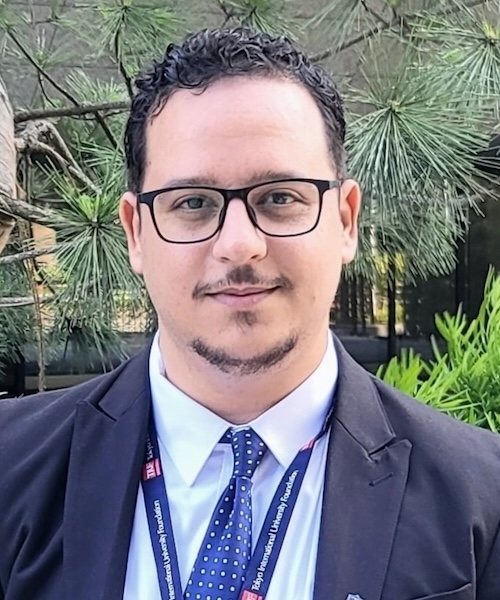
Rafik Hamza is an Associate Professor in Information Management & Cybersecurity at Tokyo International University , with prior roles at National Institute of Information and Communications Technology (NICT, Tokyo), Guangzhou University, and SONATRACH (Algeria). His work spans Cryptography , Privacy-Preserving Machine Learning , and Blockchain-Enabled IoT Security . Ph.D. (2017) in Cryptography and Security from University of Batna M.Sc. (2014) in Cryptography and Security from University of Batna B.Sc. (2011) in Applied Mathematics from University of Batna His research interests focus on securing big data ecosystems through advanced cryptographic methods, including post-quantum algorithms and homomorphic encryption. He actively explores blockchain integration for IoT authentication and privacy-preserving deep learning architectures. Recent publication trends highlight his contributions to hybrid chaotic image encryption, IP protection in distributed systems, and secure ML frameworks. Collaborations with researchers like Alzubair Hassan and Minh-Son Dao demonstrate cross-disciplinary applications. 2021-2022 : Funded by Najran University's Institutional Funding Committee (Project NU/IFC/ENT/01/013) for AI/ML in emerging technologies Associate Editor at Cureus Journal of Computer Sciences (2024–present) Conference Chair for AMLDS 2025