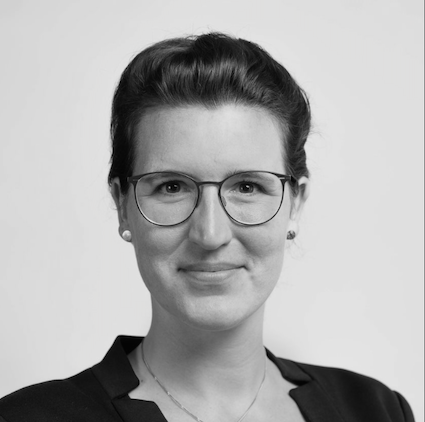
Chita R. Das is a Professor at Pennsylvania State University, known for extensive contributions in computer architecture, machine learning, and high-performance computing. Their research focuses on optimizing hardware-software co-design for edge computing, cloud infrastructure, and energy-efficient systems. Key areas include FPGA acceleration, GPU optimization, and serverless computing frameworks. Das collaborates frequently with institutions like AMD and Intel, addressing challenges in parallel computing and distributed systems. Their work bridges theoretical advancements with practical applications in recommendation systems, bioinformatics, and real-time video processing. Research interests span across hardware acceleration techniques, cloud resource management, and sustainable computing. Notable projects include adaptive training frameworks for intermittent power environments and neural-augmented game streaming for mobile platforms. Das's publications often address performance bottlenecks in modern architectures and propose novel solutions for latency and energy efficiency. Recent articles highlight innovations in serverless computing cost optimization, low-bandwidth VR streaming, and FPGA-based bioinformatics tools. Their contributions are characterized by interdisciplinary approaches combining computer architecture with machine learning and embedded systems.
Marc Erich Latoschik is a Professor in the Department of Human-Computer Interaction at the University of Würzburg, Germany. He previously held roles at Bayreuth University, Bielefeld University, and FHTW Berlin. His research focuses on virtual and augmented reality, embodiment, human-computer interaction, and applications in health, education, and social systems. Education: Completed his PhD in 2001 at Bielefeld University with a thesis on multimodal interaction in virtual reality. Research Interests: Embodied interaction, virtual embodiment, presence and plausibility in VR/AR, avatar design, social virtual reality, health applications (e.g., VR therapy for body image issues), and XR security/privacy. Active in developing frameworks like Reality Stack I/O and MAIL for VR/AR research. Key Projects: ViTraS study on body image exercises in VR, avatars for mass use via smartphone reconstruction, and motion-based biometrics in XR. Collaborates with medical teams on cybersickness detection and emergency training simulations. Labs/Teams: Leads research groups on immersive technologies and social VR applications. Involved in interdisciplinary projects combining HCI, AI, and healthcare.
Prof. Martin Boeker is a Professor of Medical Informatics at the Technical University of Munich (TUM), affiliated with the TUM School of Medicine and Health. His work focuses on advancing healthcare through AI-driven solutions, interoperability frameworks, and precision medicine initiatives. Key projects include the German Medical Text Corpus (GeMTeX) and the MIRACUM DIFUTURE Alignment Hub. Expertise: Medical Informatics, AI in Healthcare, Federated Learning, Health Data Integration Key Contributions: FHIR-based systems, clinical decision support, patient-centered outcomes research Leadership: Director of the Institute for AI and Informatics in Medicine at TUM Hospital Right of the Isar Research emphasizes bridging clinical practice and data science through projects like modular health crawlers, automated guideline adherence monitoring, and cross-institutional medical NLP solutions. His work spans oncology informatics, rare disease management, and pandemic response data ecosystems. Recent articles highlight innovations in digital twins for precision oncology, federated analysis in oncology, and German-language medical NLP challenges. He collaborates internationally on EHR standardization and healthcare interoperability, contributing to the Medical Informatics Initiative (MII) and pandemic evidence ecosystems. Grants and collaborations involve the German Federal Ministry of Education and Research, European initiatives, and industry partnerships. Educational efforts focus on training future medical informatics professionals through MII competency programs.
Gerd Bruder is an Associate Professor at the University of Central Florida , affiliated with the Department of Computer Science . He previously held positions as a Research Associate Professor at UCF's Institute for Simulation and Training (2016-2022), Post-Doc at University of Hamburg (2014-2016), and Post-Doc at University of Würzburg (2011-2014). Habilitation : Computer Science, University of Hamburg (2017) Ph.D. : Computer Science, University of Münster (2011) M.Sc. : Computer Science (minor in Mathematics), University of Münster (2009) Research Interests : Gerd Bruder's work focuses on Extended Reality (XR) systems, spanning Virtual Reality (VR) , Augmented Reality (AR) , and Mixed Reality (MR) . Key areas include human factors , digital twins , 3D user interfaces , and perceptual modeling , with applications in healthcare, military operations, architecture, and smart environments. Recent Publications highlight innovations in XR locomotion , trust calibration with autonomous agents, spatial cognition , and haptic-visual integration . His 2025 articles address task-switching efficiency in XR and collaborative mixed reality design. Scientific Awards : Best Paper at ACM VRST 2023 2021 TechConnect Innovation Award Best Demo at ACM SUI 2021 Multiple Best Paper Awards (2016-2023) Best Poster & Demo Awards (2015-2020) Patents include systems for medical simulation , smart environment interruption management , and adaptive AR interfaces . His work bridges academic research and practical applications across VR, AR, and MR domains.
Tianmin Shu is an Assistant Professor in the Department of Computer Science at Johns Hopkins University , with a joint appointment in the Department of Cognitive Science . He is the founding director of the Social Cognitive AI (SCAI) Lab and was previously a Research Scientist at MIT, working with Josh Tenenbaum and Antonio Torralba. His research goal is to advance human-centered AI by engineering machine social intelligence —building systems that understand, reason about, and interact with humans in real-world settings. His work is inherently interdisciplinary, integrating machine learning, computer vision, robotics, and social cognition. Research Interests: Theory of Mind Reasoning: Developing models that infer human mental states from multimodal behavioral data. Embodied Assistance: Creating agents capable of assisting humans in physical environments through verbal and non-verbal collaboration. Learning from Human Feedback: Extracting reward-relevant preferences from rich human input to guide agent behavior. Social Scene Understanding: Recognizing and reasoning about group activities and social roles from visual and physical cues. Computational Social Cognition: Modeling how humans perceive and interpret social and physical interactions. Scientific Awards: Outstanding Paper Award at ACL 2024 for "MMToM-QA: Multimodal Theory of Mind Question Answering" Grants & Collaborations: Tianmin Shu has led or co-organized several high-impact workshops and tutorials, including the NeurIPS 2023 Tutorial on "Language Models Meet World Models" and the RSS 2024 Workshop on "Social Intelligence in Humans and Robots". His lab has also developed open-source platforms like VirtualHome-Social and SimWorld for multi-agent interaction research. Lab & Team: As director of the Social Cognitive AI (SCAI) Lab at Johns Hopkins University, Tianmin Shu leads a multidisciplinary team focused on building socially intelligent systems. His lab is located in Malone Hall 213 and collaborates closely with the Departments of Computer Science and Cognitive Science.
Elena Simperl is a Professor of Computer Science and Deputy Head of Department for Enterprise and Engagement at King's College London's Department of Informatics. She co-directs the King's Institute for Artificial Intelligence and serves as Director of Research for the Open Data Institute. As a Hans Fischer Senior Fellow at the Technical University of Munich's Institute for Advanced Study, she leads the Trustworthy Knowledge Graphs focus group and contributes to advancing human-centric AI research across European institutions. Professor Simperl obtained her doctoral degree in Computer Science from the Free University of Berlin and her diploma from the Technical University of Munich. Prior to joining King's, she held academic positions in Germany, Austria, and at the University of Southampton, and was a Turing Fellow. Her career trajectory demonstrates consistent leadership in bridging academic research with practical applications in data ecosystems. Her research sits at the critical intersection of AI and social computing, focusing on human-centric approaches to building sociotechnical systems that integrate data, algorithms, and human capabilities. She investigates how to make knowledge engineering more accessible, how to leverage collective intelligence for data quality improvement, and how to design participatory AI systems that address societal challenges like misinformation. Her work spans knowledge graphs, semantic technologies, crowdsourcing, and open data, with particular emphasis on the social dimensions of data-intensive systems and the governance frameworks needed for trustworthy AI deployment. Analysis of her recent publications reveals a strong evolution toward integrating large language models with traditional knowledge engineering practices while maintaining human oversight. There's a clear trajectory from foundational work on knowledge representation toward increasingly applied research addressing real-world challenges in media ecosystems, citizen science, and data governance, with growing attention to policy implications of AI technologies. Fellow of the British Computer Society Fellow of the Royal Society of Arts Hans Fischer Senior Fellow at TUM-IAS (2023) Ranked among top 100 most influential scholars in knowledge engineering of the last decade Included in Women in AI 2000 ranking Professor Simperl has led 14 major European and national research projects totaling millions in funding, including MediaFutures (a Horizon 2020 program tackling online misinformation), QROWD, ODINE, Data Pitch, and ACTION. She currently co-chairs the Croissant working group in ML Commons developing data standards for AI, and serves as president of the Semantic Web Science Association. Her research has directly influenced the development of data ecosystems supporting startups and citizen science initiatives across Europe, demonstrating exceptional ability to translate theoretical advances into practical impact. As Director of Research at the Open Data Institute, she oversees initiatives connecting data entrepreneurs with artists and civic organizations. Her leadership in the MediaFutures project established a data-driven innovation hub that supported 51 startups/SMEs and 43 artists through three open calls, creating a sustainable model for arts-technology collaborations addressing media challenges. Her work with the ODINE project helped create a European ecosystem for data-driven startups, demonstrating her commitment to building practical applications of open data principles.
Prof. Dr. Michael Gröschel is a Professor of Business Informatics at the Faculty of Computer Science, Mannheim University of Technology. His expertise spans Business Process Management (BPMN, Process Mining), Digital Transformation, and innovative Business Models. He teaches courses on BPM, project management, and e-business, often collaborating with industry clients through student projects. As a consultant, he specializes in BPMN training and IT-driven business strategy. His work emphasizes practical applications of IT tools like RPA and low-code platforms. Recent publications focus on RPA bot performance evaluation, AI in automotive trade, and business model-IT alignment. Prof. Gröschel’s research bridges academic insights with real-world challenges, particularly in leveraging technology for business innovation. He has authored books and articles on business intelligence tools, mobile business strategies, and digital customer care. His consulting services include executive coaching for academic career advancement and enterprise IT management best practices. Office: Building A, Room 007c | Phone: +49 621 292-6764 | Professional website available for further engagement opportunities.
Leo Schwinn is a Lecturer at the Technical University of Munich (TUM) within the Department of Computer Science (I26), working in the Data Analytics and Machine Learning group supervised by Prof. Stephan Günnemann at the TUM School of Computation, Information and Technology. His research focuses on robust machine learning with particular emphasis on data-efficient learning and robustness vulnerabilities of Large Language Models (LLMs). Dr. Schwinn's research interests span multiple critical areas in contemporary machine learning including: Robustness against adversarial attacks in LLMs Embedding space vulnerabilities and defenses Model unlearning and privacy preservation Efficient training methodologies for large models Time-series forecasting with probabilistic frameworks Graph-based machine learning approaches His work bridges theoretical understanding with practical security implications of modern AI systems. Analysis of his recent publications (2023-2025) reveals a strong focus on LLM security, with multiple papers accepted at premier conferences including ICML, CVPR, ICLR, and NeurIPS. His research demonstrates consistent innovation in identifying novel attack vectors while developing practical defense mechanisms, particularly through embedding space manipulation techniques. The work shows increasing sophistication in handling both theoretical aspects of model robustness and practical deployment concerns. His notable scientific achievements include: Receiving the ATE dissertation price for his PhD work at FAU Securing an oral presentation at ICLR 2025 Organizing the ICLR BlogPost Track Becoming a member of ELLIS (European Laboratory for Learning and Intelligent Systems) Dr. Schwinn has served as review process chair for the 2024 Conference on Lifelong Learning Agents (CoLLAs) and actively collaborates with researchers at Mila Quebec AI Institute. His research group at TUM focuses on addressing fundamental challenges in machine learning robustness, particularly as they apply to real-world deployment scenarios where security and reliability are paramount. He maintains active GitHub repositories related to LLM security research, including circuit-breakers-eval and LLM_Embedding_Attack, demonstrating his commitment to open science and reproducible research in the field of AI security.
Steffi Haag is a Professor of Digital Innovation and Entrepreneurship at the Institute of Computer Science , Heinrich Heine University Düsseldorf (HHU) . She bridges the Faculty of Mathematics and Natural Sciences and Faculty of Business Administration and Economics , collaborating with the Center for Entrepreneurship Düsseldorf (CEDUS) to inspire tech startups. Her research focuses on sustainable information systems, digital experiences, and business models. Steffi Haag’s research integrates Shadow IT , Usable Cybersecurity , and Digital Idea Management . Her work emphasizes theoretical , quantitative , qualitative , and mixed-methods research , including experimental and survey methodologies. Steffi Haag’s publications (2018–2024) span Information Systems , Cybersecurity , Digital Twins , and Sustainable Design . Common themes include Shadow IT dynamics , user behavior in security , and innovation management . Hermann Gutmann Award for special scientific achievements (2023) Schöller Fellow (2020) HMD Best Paper Award (2018) Research Award in Data Protection and Data Security (2017) Dissertation Prize (2017) Steffi Haag has secured grants such as the TU Darmstadt Postdoctoral Fellowship for Female Researchers (2016–2018) and Deloitte Foundation Fellowship (2009–2011). She actively moderates conferences and serves as Associate Editor of Business & Information Systems Engineering .
Dr. Hilde Kuehne is a Professor at the University of Tuebingen and a key researcher at the Tuebingen AI Center. She holds affiliations with MIT-IBM Watson AI Lab and Goethe University Frankfurt, with a focus on computer vision, multimodal learning, and explainable AI. Her work bridges vision-language models, audio-visual alignment, and self-supervised methods. Co-organizer of the New Frontiers in Associative Memories workshop @ ICLR 2025 Member of the Scientific Advisory Board of the Carl-Zeiss-Foundation Contributor to CVPR 2025's UTD dataset for unbiased video benchmarks Her research addresses critical challenges in: Explainability for Vision Transformers (LeGrad) Fine-grained audio-visual alignment (CAV-MAE Sync) Zero-shot visual recognition automation (Meta-Prompting) Spatio-temporal grounding without annotations Recent collaborative work spans 15+ publications across CVPR, NeurIPS, ICCV, and ICLR, with emphasis on multimodal foundation models, dataset bias mitigation, and differentiable logic networks. She actively contributes to workshop organization and peer review as evidenced by her involvement in CVPR 2025 and ICLR 2025 program committees.
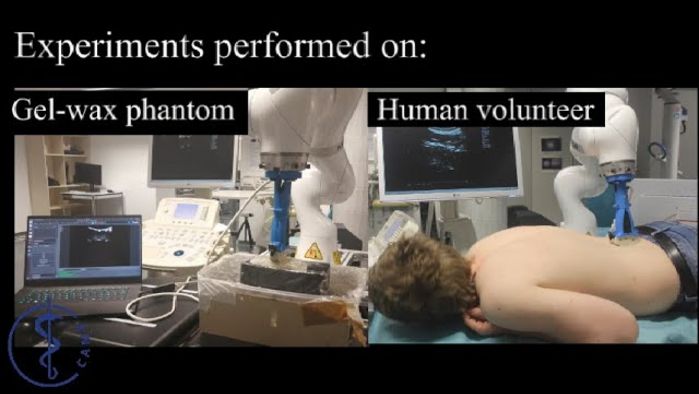
Dr. Zhongliang Jiang is a senior research scientist and leader of the Robotics and Ultrasound team (RobUSt) at the Chair of Computer Aided Medical Procedures (CAMP) at Technische Universität München. He holds a Ph.D. in computer sciences (summa cum laude) and has authored/co-authored over 40 top-tier publications in robotics and medical imaging. His research focuses on robotic ultrasound systems, medical image processing, and robotic learning. Education: Ph.D. in Computer Sciences, TUM (2022, summa cum laude) M.Eng. in Harbin Institute of Technology (2017) Research Assistant at SIAT (2017-2018) Research Interests: Medical Robotics: autonomous robotic ultrasound systems Image Processing: RGB-D/ultrasound segmentation, registration Robotic Learning: reinforcement/imitation learning Robotic Control: MPC, shared control, human-robot interaction Professional Contributions: Associate Editor for ICRA 2024/2025 Guest Editor for IEEE TRO special issue on Robot-Assisted Medical Imaging Main organizer of RAMI workshops at ICRA (2023-2025) Awards: MICCAI 2023 Best Paper Runner-up Gold Medal for Master's Thesis (2017) Lab & Teaching: Leading the RobUSt team developing advanced robotic ultrasound solutions Teaching courses like Computer Aided Medical Procedures and Medical Augmented Reality Supervised over 15 Master/PhD projects in robotic ultrasound and medical imaging
Prof. Dr. Fabian Gieseke is a Professor and Chair of Machine Learning and Data Engineering at the University of Münster. He holds a PhD in Computer Science from Carl von Ossietzky University of Oldenburg and a dual degree in Mathematics and Computer Science from the University of Münster. His research focuses on Machine Learning, High-Performance Computing, and their applications in Geosciences, Smart Cities, and Astrophysics. Education: PhD in Computer Science (2012), Carl von Ossietzky University of Oldenburg University studies in Mathematics and Computer Science (2006–2011), University of Münster Research Interests: Data Mining and Machine Learning High-Performance Computing & Distributed Systems Deep Learning Applications in Environmental Science and Astrophysics Geospatial Data Analysis using Satellite Imagery Publications Trends: His recent work emphasizes large-scale environmental monitoring via deep learning, including canopy height estimation, forest biomass prediction, and national-scale tree counting. He also explores interactive systems for geospatial data retrieval and optimization of machine learning models for resource-constrained environments. Advising & Grants: Supervised over 30 theses on topics like satellite image analysis, deep learning on microcontrollers, and data marketplaces for smart grids. Active in securing grants for interdisciplinary projects combining AI with Earth observation. Labs/Teams: Leads the Machine Learning and Data Engineering group at the University of Münster, focusing on scalable AI solutions for real-world challenges in science and industry.
Prof. Dr. Gitta Kutyniok is a Professor at the Ludwig Maximilian University of Munich (LMU), holding the Chair for Mathematical Foundations of Artificial Intelligence within the Mathematical Institute. She leads a research group focused on integrating mathematical frameworks with artificial intelligence and data science. Contact details: Room 516, Akademiestraße 7, Munich, Germany. Email: kutyniok@math.lmu.de . Office hours: Thursdays 12:30pm - 1:30pm (excluding July 10). Her research interests revolve around the rigorous mathematical underpinnings of artificial intelligence, emphasizing areas like machine learning, deep learning, and neural networks. This work bridges theoretical mathematics with practical advancements in AI and data science. The chair’s vision, highlighted in press articles such as “Understanding how machines learn,” aligns with her focus on advancing AI through mathematical rigor. She also held the Francqui Chair, with lecture series available in video format.
Dr. Benjamin Busam is a Senior Research Scientist at the Technical University of Munich , affiliated with the Chair for Computer Science Applications in Medicine under Prof. Nassir Navab. Starting September 2025, he will hold the Professorship for Photogrammetry and Remote Sensing at TUM. His career includes leadership roles at FRAMOS Imaging Systems and Huawei Research in London. Education: Mathematics (TUM), Mathematics and Physics (ParisTech, University of Melbourne), PhD in Mathematics (TUM, 2014) His research focuses on 3D computer vision , multi-modal sensor fusion , and their applications in collaborative robotics and augmented reality . He specializes in projective geometry , 6D pose estimation , and neural radiance fields , with a particular emphasis on photometrically challenging environments. Recent publications highlight advancements in 3D scene understanding , neural rendering , and medical imaging , often leveraging machine learning and vision-language models . His work has been recognized through awards like the EMVA Young Professional Award (2015) and Innovation Pioneer of the Year (2019) , along with multiple Outstanding Reviewer distinctions at leading conferences. Dr. Busam has supervised numerous PhD and MSc students on topics including 6D pose estimation , medical augmented reality , and robotic ultrasound , collaborating with institutions like MIT , École Polytechnique , and University of Padova .
Anna Maria Oberländer is Assistant Professor for Information Systems and Digital Transformation at the University of Bayreuth's Faculty of Law and Economics. She also serves as Deputy Academic Director of the Research Center Finance & Information Management and holds a leading position at Fraunhofer FIT's Branch Business & Information Systems Engineering, where she co-heads a research group and manages the Digital Innovation Lab as one of its co-founders. Dr. Oberländer earned her Master of Science with honors from the Elite Graduate Program Finance & Information Management at the University of Technology Munich and the University of Augsburg in 2015, including a research visit at Queensland University of Technology. She was accepted into the 16th class of the Bavarian EliteAcademy, receiving leadership training across Germany, Belgium, China, and Vietnam. Prior to academia, she worked as a strategy consultant at McKinsey & Company from 2015 to 2018, supporting clients in Advanced Industries and Financial Services with digital transformations. She completed her dissertation at the University of Bayreuth's Law and Economics Faculty in 2020. Her research focuses on understanding and designing digital transformation and innovation from established companies' perspectives. She examines digital transformation processes and patterns, the relationship between organizational digital transformation and digital ecosystems, organizational ambidexterity, resource-based digital opportunities for incumbents, and the socio-technical and economic impacts of IoT and AI technologies. Her work spans theoretical frameworks like the OCO (Orientation, Cooperation, Orchestration) Theory for understanding digital ecosystems' influence on transformation. Dr. Oberländer's recent publications reveal a strong trend toward integrated digital-sustainability research (twin transformation), AI strategy and implementation, digital ecosystem dynamics, and industry-specific digital innovation. Her work bridges theoretical frameworks with practical applications across diverse sectors including public administration, manufacturing, and smart cities. She has developed capability maturity models for twin transformation and explored semantic search adoption in SMEs. Science Award 2020 from Universitätsverein Bayreuth e.V. With extensive industry experience at Siemens, Siemens Financial Services, Allianz, and McKinsey & Company, Dr. Oberländer brings practical insights to her academic work. Her Fraunhofer FIT role connects her research to real-world applications through the Digital Innovation Lab. She has led collaborative research projects across multiple industries, including the print industry's sustainability potential with AI, dairy industry digital innovation, and public administration digitalization. Dr. Oberländer co-heads a research group at Fraunhofer FIT and manages the Digital Innovation Lab, which serves as a hub for collaborative research between academia and industry. Her work with the Research Center Finance & Information Management facilitates interdisciplinary collaboration across finance and information systems domains.