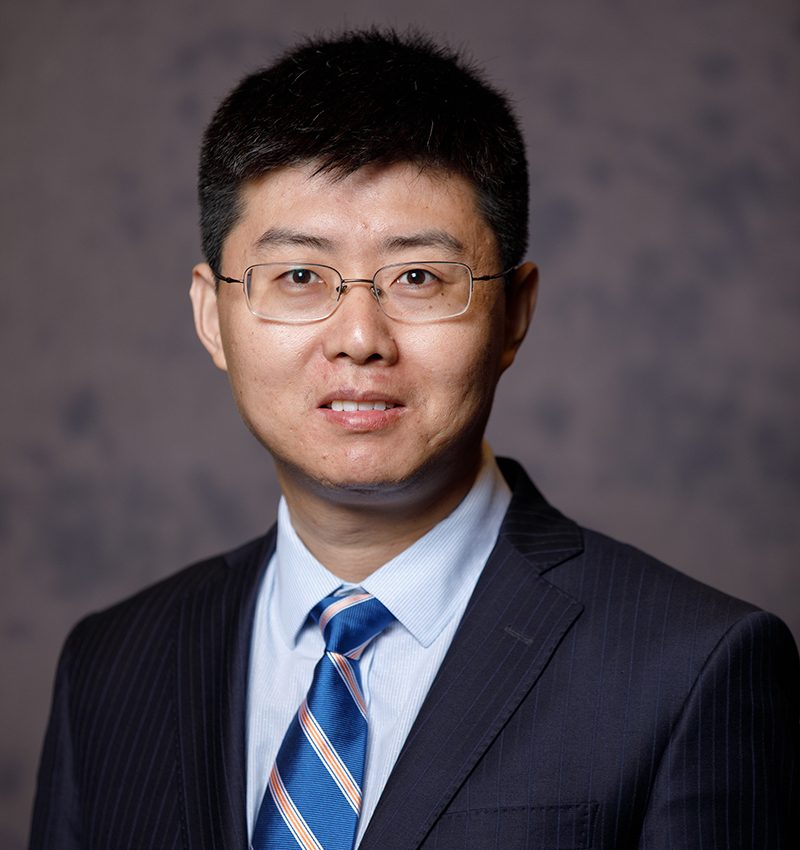
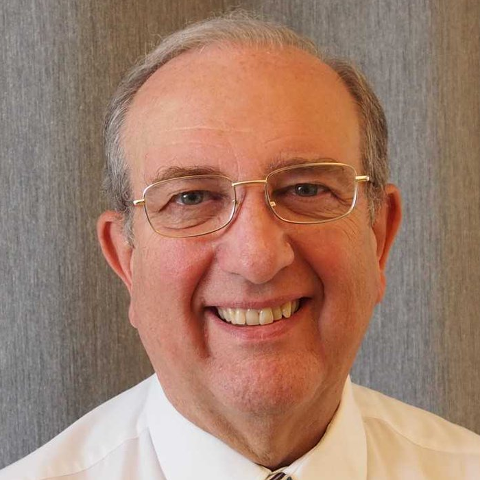
Professor Mohammad FARD is a faculty member at RMIT University's School of Engineering, specializing in Mechanical Engineering and Intelligent Systems. He leads research in autonomous vehicles, crash safety, and driver monitoring using AI. His industry experience includes six years at Nissan Technical Centre, focusing on vehicle body design. He holds a PhD from Tohoku University and has collaborated across Engineering, Health, and Science disciplines, achieving international media coverage for work on driver drowsiness and road safety. Research Interests: Autonomous Vehicles Advanced Crash Safety Driver State Monitoring AI in Noise/Vibration Human Factors/Ergonomics Teaching & Projects: Teaches Advanced CAE, Vehicle NVH, and research supervision in areas like crash simulation and vibration control. Current projects include Formula One safety barriers and driver education for autonomous vehicles. Awards & Labs: No awards listed. Active in cross-disciplinary teams and labs addressing automotive innovation and safety.
Dr. Alex Black is an Associate Professor in the School of Optometry & Vision Science at Queensland University of Technology (QUT), Faculty of Health. He serves as Course Coordinator for the Master of Optometry program and leads the Vision and Everyday Function research group within QUT's Centre for Vision and Eye Research. His expertise spans vision science, ageing-related vision decline, falls prevention, and driving safety. Dr. Black holds dual qualifications: a PhD in Vision Science (QUT, 2010) and a Masters of Public Health (University of Queensland, 2012). Teaching roles: Coordinates OP85 Master of Optometry program Research focus: Vision impairment impacts on mobility, driving safety, and academic performance Awards: FAAO (Fellow of American Academy of Optometry), FHEA (Fellow of Higher Education Academy) Research highlights include AUD $3.2 million in grants, over 100 publications, and contributions to international journals like Clinical & Experimental Optometry . His work bridges clinical practice and research, addressing real-world issues through innovative studies such as night-time pedestrian safety clothing design and advanced driver assistance system (ADAS) usability for older adults. Key collaborations include NHMRC-funded projects on injury prevention and Vision and Driving research laboratory studies. Dr. Black also serves editorial roles for Clinical & Experimental Optometry and peer review activities.
Dr. Siyuan Ji is a Reader in Model-based Systems Engineering (MBSE) at Loughborough University, serving as Deputy Head of the Manufacturing, Systems & Management Academic Community and Deputy Director of the Doctoral Training Centre in MBSE. He previously held a Senior Lecturer position in Systems Engineering at the University of York, where he led the MSc Programme in Safety-Critical Systems Engineering. His academic journey includes a PhD and MSc in Physics from the University of Nottingham, followed by research roles in model-based systems engineering at Loughborough University. His research focuses on advancing model-based techniques for systems engineering, particularly in safety-critical systems, formal methods, and complex system design. He has contributed to areas such as hazard management (e.g., BSafeML framework), response time analysis in real-time systems, and model synchronization for requirements engineering. His work bridges theoretical foundations with practical applications in automotive systems, embedded software, and educational technology. Dr. Ji holds the title of Fellow of the Higher Education Academy and has published extensively on topics ranging from quantum technology reporting to conversational tutoring systems. His research emphasizes interdisciplinary collaboration, evident in projects like the EPSRC-funded analysis of vehicles as complex systems. He actively contributes to both academic and industrial advancements in systems engineering methodologies and education innovation. His professional roles include managing doctoral training programs, overseeing academic communities, and advancing systems engineering education. Collaborations span industry partnerships and international academic networks, reflecting his commitment to impactful research and training the next generation of systems engineers.
Professor Chris Lee is a faculty member in the Department of Transportation Science and Engineering at the University of Windsor's Faculty of Engineering. His research focuses on advancing transportation safety through the analysis of driver behavior, traffic flow dynamics, and the integration of emerging technologies like autonomous vehicles and machine learning. Key areas include collision risk prediction, driver vigilance assessment, and the development of advanced car-following models. He has contributed to initiatives such as the Transportation Science and Engineering scholarship program, supporting student research in innovative technologies like driving simulators for lane change behavior studies. His work bridges engineering and human factors, addressing challenges such as driver response to autonomous systems, heavy vehicle traffic management, and cross-cultural automotive design. Lee's interdisciplinary approach leverages data analytics, physiological signals, and machine learning to solve real-world transportation problems. His research has implications for policy-making, infrastructure design, and vehicle safety standards. Lee has collaborated extensively on projects analyzing crash precursors, variable speed limits, and the impact of ITS (Intelligent Transportation Systems) on safety. His publications span over two decades, demonstrating a commitment to both academic rigor and practical applications in transportation engineering. Notable contributions include refining car-following models, studying driver aggression, and evaluating the effectiveness of traffic management strategies.
Dr. Saidi Siuhi serves as an Associate Professor of Civil Engineering at South Carolina State University, where he teaches undergraduate and graduate courses while conducting research and providing institutional service across departmental and university levels. His academic credentials include: Ph.D. in Civil Engineering from the University of Nevada, Las Vegas (2009) M.Sc. in Civil Engineering from Florida State University (2006) B.Sc. in Civil Engineering from the University of Dar-es-Salaam (2003) Specializing in transportation engineering, Dr. Siuhi's research focuses on traffic safety, transportation planning, and microscopic traffic simulation. His work addresses critical transportation challenges including distracted driving/walking behaviors, traffic management during special events (notably the 2017 solar eclipse), and the application of advanced computational methods to transportation networks. He integrates emerging technologies like virtual reality, machine learning, and deep learning to develop innovative safety solutions for complex transportation systems. Analysis of his recent publications (2021-2025) reveals a strong trajectory toward computational transportation safety, with increasing emphasis on AI-driven solutions for pedestrian safety, driver behavior analysis, and infrastructure monitoring. His work consistently bridges theoretical transportation models with practical safety applications, particularly in distracted behavior analysis and event-based traffic management. Dr. Siuhi actively mentors students through senior design projects (CE 459/460) and graduate coursework, though specific advisee names aren't documented. His service contributions span departmental, college, and university committees, supporting academic operations and strategic initiatives within the engineering program.
Dr. Shunqiao Sun is an Assistant Professor in the Department of Electrical and Computer Engineering at The University of Alabama, College of Engineering. He joined the faculty in August 2019 as a tenure-track professor after working at Aptiv’s radar core team in Malibu, California. His research focuses on advanced signal processing, machine learning, and optimization for automotive and MIMO radar systems in autonomous vehicles. Ph.D. : Electrical and Computer Engineering, Rutgers University, 2016 M.S. : Electrical Engineering, Fudan University, 2011 B.S. : Electrical Engineering, Southern Yangtze University, 2004 Dr. Sun's research lies at the intersection of statistical and sparse signal processing , mathematical optimization , and machine learning , with applications in automotive radar , MIMO radar , and autonomous driving . His work emphasizes sparsity-oriented frameworks, AI-powered radar perception, and high-resolution 4D sensing. He leads a dynamic research group focused on next-generation radar technologies for intelligent transportation systems. His recent publications demonstrate a strong trend in deep learning for radar signal recovery , collaborative radar imaging , direction-of-arrival estimation with sparse arrays , and integrated sensing and communication . Several of his papers are among the most downloaded and cited in IEEE journals, including top articles in IEEE Signal Processing Magazine and IEEE Journal of Selected Topics in Signal Processing. Scientific Awards and Honors: NSF CAREER Award (2024) NSF CRII Award (2022) IEEE AESS Robert T. Hill Best Dissertation Award (2016) Best Student Paper Award at IEEE SAM Workshop (2020) Rutgers ECE Academic Achievement Award (2015–2016) University of Alabama Hewson Engineering Faculty Fellow (2025) Dr. Sun is actively involved in academic service and leadership. He is an Associate Editor for IEEE Signal Processing Letters and IEEE Open Journal of Signal Processing . He serves as Vice Chair of the IEEE Signal Processing Society’s Autonomous Systems Initiative and is an elected member of the IEEE Sensor Array and Multichannel (SAM) Technical Committee and the Integrated Sensing and Communication (ISAC) Technical Working Group. He has co-organized numerous workshops and special sessions at ICASSP, EUSIPCO, and IEEE Radar Conference. His lab has secured significant research funding from the National Science Foundation , NXP Semiconductors , MathWorks , and NOAA . He mentors multiple Ph.D. students, several of whom have interned at leading industry labs such as NXP and GM Cruise. He has co-organized the Workshop on Signal Processing for Autonomous Systems (SPAS) at ICASSP and EUSIPCO and delivered invited seminars at institutions including TU Delft, UC Davis, and Lehigh University.
Dr. Wayne Giang is an Assistant Professor in the Department of Industrial & Systems Engineering at the University of Florida. His research bridges human systems and health systems, focusing on interface design and decision-support tools for healthcare providers. Ph.D., University of Toronto (2018) M.S., University of Waterloo (Systems Design Engineering) B.S., University of Waterloo (Systems Design Engineering) His work explores human-automation interaction , particularly in automated driving systems , health insurance decision aids , and smart device distractions . He applies cognitive engineering principles to enhance safety and usability in complex systems. Recent publications highlight trends in automated vehicle training , accessibility for cognitively impaired users , and distraction analysis in transportation and healthcare contexts. His studies often involve experimental design and user-centered methodologies. Dr. Giang teaches courses in cognitive engineering , human information processing , and statistical analysis , emphasizing practical applications of human factors research.
Tobias Meuser is a Researcher at the Multimedia Communications Lab of Technische Universität Darmstadt, leading the "Adaptive Communication Systems" group since 2020. He holds a PhD (2019) focused on vehicular network data management and has been a central figure in the third phase of the Collaborative Research Center (CRC) MAKI as a principal investigator in subproject B1. His work emphasizes resilient 5G networks, edge AI, and distributed systems. Education: B.Sc. Business Informatics (Fernuniversität Hagen) M.Sc. Informatics (TU Darmstadt) Research Interests: Resilience in 5G and beyond Edge AI and distributed machine learning Information assessment in vehicular networks Collaborative perception systems Hardware acceleration for network functions Key Projects: Principal Investigator in CRC MAKI's B1 (Monitoring and Analysis) Collaborations with Opel (cooperative maneuvering) and Deutsche Bahn (5G resilience) Labs/Teams: Head of Adaptive Communication Systems group at Multimedia Communications Lab Member of Distributed Sensing Systems group (2016–2020)
Dr. Dong Zhang is a permanent Lecturer in Automotive Design at Brunel University London, affiliated with the Department of Mechanical and Aerospace Engineering within the College of Engineering, Design and Physical Sciences. He holds a PhD in Vehicle Dynamic Control from the University of Lincoln (2019) and has prior experience as a Research Fellow at Nanyang Technological University (2019–2020) and as a Senior Research Project Manager in industry collaborations. Education : PhD in Vehicle Dynamic Control (University of Lincoln, 2019). Dr. Zhang's research focuses on human-centered automotive control systems, including intelligent vehicle/transportation control, game theory-based driver-vehicle shared control, vehicle active safety systems, and cybersecurity for intelligent vehicles. He also develops AI-based autonomous driving solutions and anti-cyber-attack control systems. His recent publications highlight advancements in vehicle platooning via game theory, cybersecurity for autonomous driving, and human-machine interaction in intelligent vehicles. Dr. Zhang has contributed over 30 peer-reviewed papers and 10 patents related to vehicle dynamic control and connected systems. Teaching : ME2618 Vehicle Design and Performance, ME3628 Technologies for Future Transport. Research Leadership : Founder of the Brunel Racing Formula Student AI group; Co-PI for projects on full-wheel independent driving systems and big-data governance in vehicle performance evaluation. Dr. Zhang emphasizes industry collaboration for developing human-centered control systems and ADAS technologies.
Sandro Bartolini serves as Associate Professor in the Department of Information Engineering and Mathematical Sciences at the University of Siena, Italy, where he teaches advanced courses in computer architecture and parallel programming while leading cutting-edge research in high-performance computing systems. His academic journey began with a cum laude Laurea in Computer Engineering followed by a PhD in Computer Science and Engineering from Università di Pisa. Education: PhD in Computer Science and Engineering, Università di Pisa Laurea in Computer Engineering (cum laude), Università di Pisa Research Focus: His work centers on photonic interconnects for chip multiprocessors , energy-efficient software optimization for multi-core/GPU architectures, and performance-portable parallel programming models . Current investigations span cryptographic acceleration, blockchain algorithms, and hardware/software co-design for emerging computing paradigms, with strong emphasis on practical implementations bridging theoretical advances and real-world applications. Publication Trends: Recent publications (2019-2023) reveal three dominant threads: (1) Photonic network innovations addressing energy bottlenecks in chip multiprocessors, (2) The PHAST library ecosystem enabling seamless CPU/GPU programming across domains from autonomous vehicles to UAV navigation, and (3) Hardware accelerator designs for convolutional networks and cryptographic workloads. These works consistently target performance-portability challenges in heterogeneous computing environments. Grants and Collaborations: As principal investigator for the Italian Ministry-funded PHOTONICA project, he established international research partnerships with Murcia University, Columbia University, and Hong Kong University of Science and Technology, while securing industry collaborations with STMicroelectronics, Intel Munich, IBM, and IMEC. He has also managed complex IT system deployments for Siemens Italy, RAI (Italian public broadcasting), and SpaceDys. Academic Leadership: Bartolini serves as Associate Editor for the Eurasip Journal of Embedded Computing and actively contributes to the European HiPEAC network. His research group at Siena maintains strong industry ties for technology transfer, particularly in photonic interconnect validation and parallel programming frameworks for next-generation computing systems.
John Tsotsos is Distinguished Research Professor of Vision Science at York University, holding the NSERC Tier I Canada Research Chair in Computational Vision. He is affiliated with the Lassonde School of Engineering, Department of Electrical Engineering and Computer Science, and serves as Adjunct Professor in Ophthalmology and Vision Sciences at the Temerty Faculty of Medicine, University of Toronto. His research focuses span computer vision, visual attention, active vision systems, human vision, and visually guided robotics. Post-Doctoral Fellow – Ontario Heart Foundation, Toronto General Hospital (1979-81) Ph.D. in Computer Science, University of Toronto (1980) M.Sc. in Computer Science, University of Toronto (1976) B.A.Sc. (Honours) in Engineering Science (Computer Science Option), University of Toronto (1974) His research integrates computer vision with robotics and human perception, emphasizing active vision and computational models of attention. Notable contributions include the Selective Tuning theory of visual attention, formal theorems on visual complexity, and implementations in autonomous robotic systems. Recent publications highlight advancements in task-driven gaze prediction, saliency mapping, domain adaptation, stereo vision tracking, and gait analysis. These works bridge computer science, neuroscience, and biomedical engineering. Fellow, Canadian Academy of Engineering (2024) Fellow, Asia-Pacific Artificial Intelligence Association (2022) CS-Can|Info-Can Lifetime Achievement in Computer Science (2020) IEEE Life Fellow (2024) Sir John William Dawson Medal, Royal Society of Canada (2015) Geoffrey J. Burton Memorial Lecture (2011) NSERC Tier I Canada Research Chair in Computational Vision (2003-2024) Royal Society of Canada Fellow (2010) With 200+ trainees and a long-standing directorship at York University’s Centre for Vision Research, Tsotsos has mentored numerous researchers who have become influential in academia and industry. His leadership extends to the Centre for Innovation in Computing @ Lassonde and collaborations with institutions including MIT, University of Toronto, and University of Pittsburgh. He pioneered the Laboratory for Active and Attentive Vision, contributing to fields like medical image analysis, autonomous robotics, and cognitive architectures. His work includes patents in touch-sensitive displays and face recognition systems.
Brendan Jackman is a Lecturer in the Department of Computing and Mathematics at South East Technological University (SETU), where he contributes to the Automotive Control Group. His work bridges computer science and automotive engineering, focusing on embedded and real-time systems for intelligent vehicles. His research interests include: Automotive control systems and embedded software In-vehicle networks (CAN, FlexRay, OSEK) Model-driven architecture and UML for automotive software Advanced Driver Assistance Systems (ADAS) Fuzzy logic and intelligent control systems Automotive diagnostics and ODX standards His publications from 2005 to 2018 reveal a strong focus on real-time automotive software, network integration, and intelligent diagnostics. Key themes include timing modeling, migration from CAN to FlexRay, and model-based development using UML and MDA. His work often appears in SAE Technical Papers and IEEE conferences, indicating strong industry and academic engagement. Brendan Jackman has supervised at least five research projects, reflecting his role in mentoring students in automotive software and control systems. His research has practical applications in adaptive cruise control, power steering, and diagnostic gateways. He has contributed to software integration frameworks that improve vehicle software quality and interoperability across OEMs. He is actively involved in teaching and research, with no indication of retirement or part-time status. His ORCID profile and institutional page confirm ongoing academic activity.
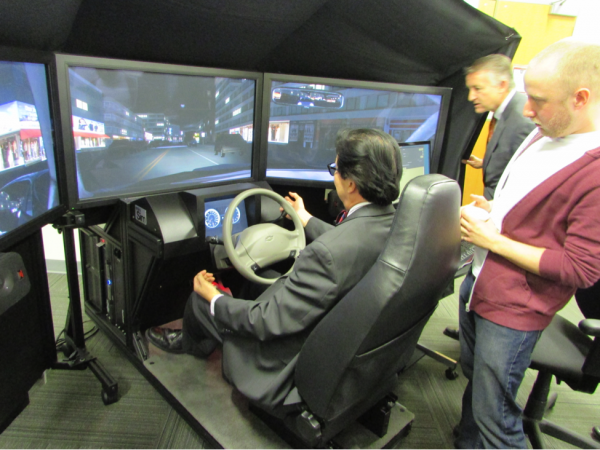
John Gaspar serves as Director of Human Factors Research at the University of Iowa's Driving Safety Research Institute within the College of Engineering. His work bridges the Department of Industrial and Systems Engineering and the National Advanced Driving Simulator (NADS), where he leads critical research on driver-vehicle interactions. With a PhD in Psychology from the University of Illinois Urbana-Champaign, his academic foundation supports interdisciplinary work spanning engineering, cognitive science, and transportation safety. Gaspar's research focuses on human factors in vehicle automation systems, drowsy driving countermeasures, and driver monitoring technologies. He employs multimodal methodologies including high-fidelity simulation, naturalistic driving studies, and physiological monitoring to examine driver behavior in automated vehicles. His work specifically investigates mental model development around ADAS technologies, transition of control in conditional automation, and fatigue management strategies during long-haul driving. Analysis of his recent publications reveals dominant research themes in drowsy driving countermeasures (25% of recent work), ADAS mental model development (20%), driver monitoring system validation (15%), and rural automated vehicle deployment challenges (10%). His methodological approach consistently integrates simulation with real-world validation, particularly through NHTSA-funded projects examining human-automation interaction. As principal investigator on three active NHTSA projects, Gaspar leads research on automated vehicle HMIs, drowsiness countermeasures, and driver state detection systems. His work directly informs transportation safety policy through collaborations with the Transportation Research Board, Human Factors and Ergonomics Society, and Society of Automotive Engineers. The Driving Safety Research Institute under his direction operates multiple high-fidelity simulators including NADS-1 and NADS-2, supporting both fundamental human factors research and applied vehicle safety development. Gaspar's laboratory infrastructure includes the National Advanced Driving Simulator complex with motion-base platforms, instrumented on-road vehicles, and rural driving scenario capabilities. His team specializes in multimodal data collection combining eye-tracking, physiological monitoring, vehicle dynamics, and behavioral coding to create comprehensive driver state models. Current projects emphasize real-world applicability of laboratory findings, particularly for vulnerable populations including older drivers and those operating in rural environments.
Angela Carboni is an Assistant Professor in Transportation Engineering at the Department of Environmental, Land, and Infrastructure Engineering (DIATI) of Politecnico di Torino since 2022. Holding a PhD in Energetics and a Master's in Civil Engineering - Transport Infrastructure and Systems , her work focuses on climate change impacts on transport systems , intelligent transport systems (ITS) , and gender equality in mobility . Her research spans traffic simulation (micro/macro), road safety , and freight transport optimization . With over 30 publications and participation in international conferences like TIS Roma and TRA, she explores EV charging infrastructure , transport resilience , and ADAS adoption . She contributes to journals as Guest Editor for Transportation Research Procedia and Sustainability. Carboni actively engages in educational innovation through programs like Challenge@Polito, mentoring students on sustainable mobility. Her recent L2T Certification (2023-2024) demonstrates teaching excellence. She collaborates on courses including GIS applications, climate change mitigation, and automotive logistics across Civil Engineering and Engineering and Management programs.
Abdel Ra'ouf Mayyas is an Associate Professor at The Polytechnic School of Arizona State University (ASU), specializing in Automotive Engineering. He is affiliated with the Human Systems Engineering (HSE) PhD program as a graduate faculty member and served as the lead faculty advisor for the ASU-Advanced Vehicle Technology Competitions (EcoCAR 3) from 2014-2018. Education: Ph.D. in Automotive Engineering (2010), Clemson University M.S. in Computer Engineering (Embedded Systems) (2006), Yarmouk University B.S. in Mechanical Engineering (Automotive) (1996), Mu’ta University His research focuses on autonomous driving, advanced driver assistance systems (ADAS), model predictive control (MPC) for energy management in urban autonomous fleets, V2V/V2I applications for smart cities, human-centric vehicle safety systems, and thermal modeling of connected powertrains. He has contributed to vehicle hardware-in-the-loop (VHiL) testing and energy optimization of automated vehicles. Mayyas has led funded projects by the U.S. Army Automotive Research Center, Toyota Motor Corp, and Salt River Project (SRP) for battery performance evaluation in hot climates. His work appears in journals like Energy Research , Applied Energy , and Journal of Power Sources . Labs: Autonomous Collaborative Research Laboratory Connected Powertrains Laboratory Vehicle Hardware In-the-Loop (VHiL) Laboratory Advanced Vehicle Technology Competitions (AVTCs) Laboratory