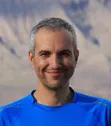
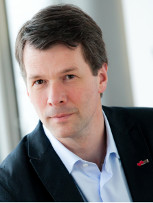
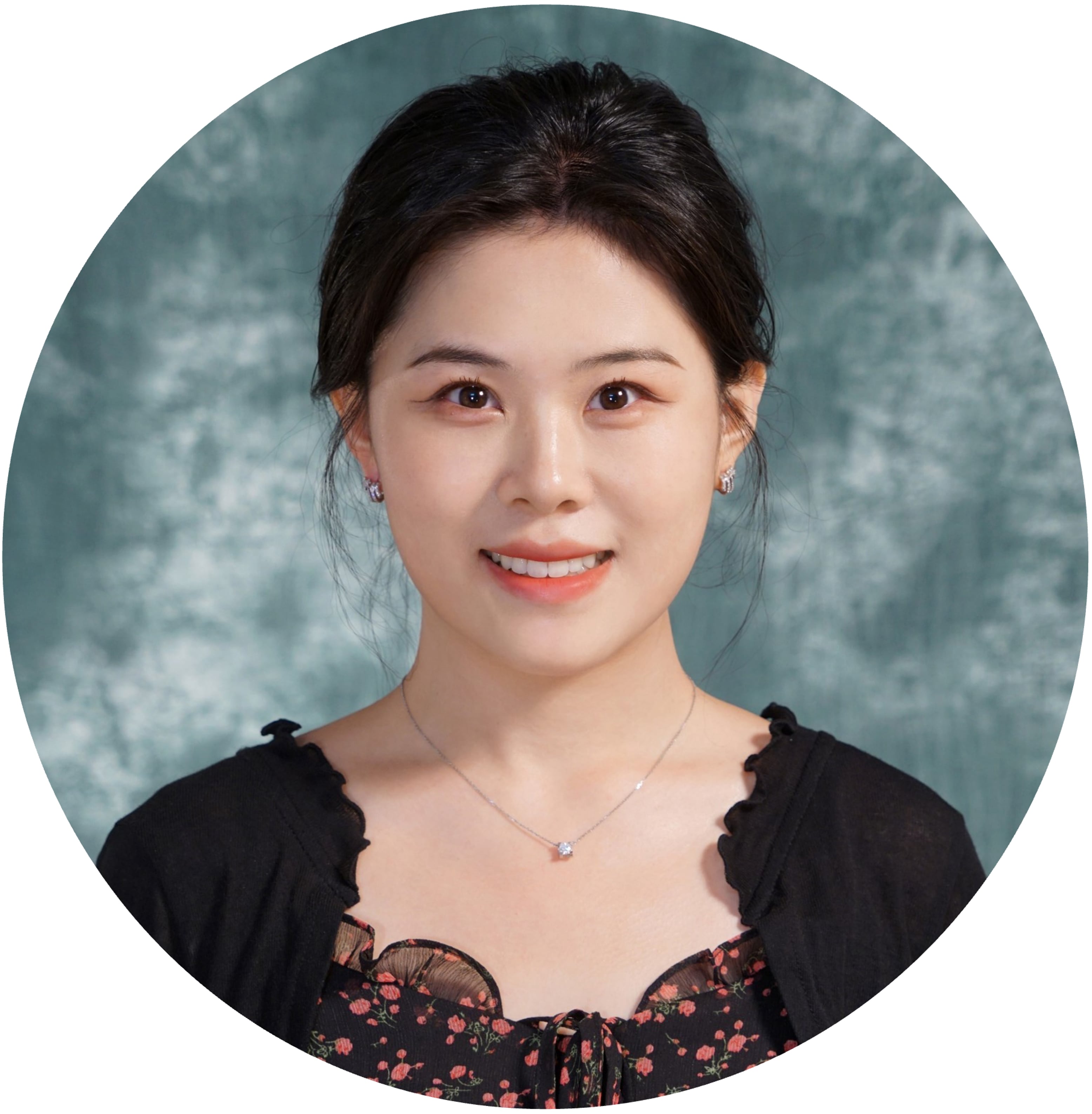
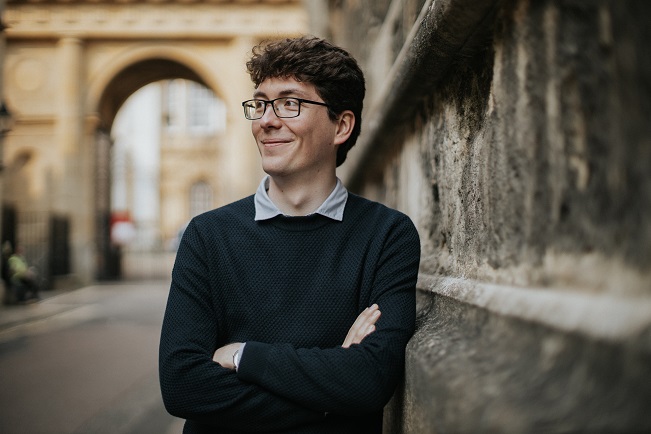
PD Dr. Slobodan Ilic is a Senior Key Expert Research Scientist at Siemens AG (since 2014) and an Adjunct Professor at the Chair of Computer Science Applications in Medicine , Technical University of Munich (TUM). His work bridges 3D computer vision and medical imaging , with a focus on real-time object detection, deformable surface modeling, and depth data analysis. Current Roles: Adjunct Professor at TUM, Senior Key Expert at Siemens Research Themes: 6D pose estimation, non-rigid 3D reconstruction, RGB-D data processing Labs: CAMP Chair (TUM), Siemens AG Research Division His recent work explores LLM-driven control systems , semantic-aware 3D generation , and cross-modal medical imaging . Articles highlight advancements in point cloud registration , rotation-invariant descriptors , and hyperspectral calibration . While no specific awards are documented in the provided text, his team at Siemens/TUM advises PhD candidates in 3D vision for robotics and medical applications .
Li Kunyi is a researcher at the Chair of Computer Science Applications in Medicine at the Technical University of Munich . Their work bridges computer science and medical imaging, focusing on advanced 3D reconstruction and scene understanding techniques. Research Interests: Computer Vision 3D Reconstruction Medical Imaging SLAM (Simultaneous Localization and Mapping) Deep Learning for Graphics Optical Engineering Article Trends: Recent publications emphasize Gaussian splatting for open-vocabulary 3D modeling, 4D SLAM for dynamic environments, and implicit surface reconstruction using monocular cues. Applications span both robotics and medical imaging, with a focus on real-time systems and semantic scene understanding.
Hiroshi Watanabe is a Professor at Waseda University 's Department of Communications and Computer Engineering , School of Fundamental Science and Engineering. With a Doctor of Engineering from Hokkaido University (1985), his career spans NTT Human Interface Laboratories (1985-2000) and academic leadership at Waseda since 2000, including chairing ISO/IEC JTC 1/SC 29 (1999-2006). A Fellow of IEEE , IEICE , and other institutions, he focuses on image/video coding , machine vision , and multimedia distribution . Education: BE, ME, Ph.D. in Electronic Engineering (Hokkaido University) Professional Affiliations: IEEE, IEICE, IPSJ, ITE, IIEEJ His research bridges image/video processing with deep learning , emphasizing machine-centric coding , real-time detection , and multimodal analysis . Key recent work includes: Novel image coding frameworks combining edge learning and diffusion models Super-resolution techniques for QR codes and medical imaging Advanced object detection using non-local modules and attention networks 3D pose estimation and point cloud analysis for robotics and healthcare He has received prestigious awards including the 2005 Information Processing Society of Japan Standardization Contribution Award and multiple earlier honors. His recent publications (2024-2025) demonstrate leadership in machine vision coding , real-time medical detection , and multimodal signal processing , often integrating stable diffusion , feature fusion , and parameter-efficient models .
Dr Hao Cheng is an Assistant Professor (from 1 Oct 2024) in the Department of Earth Observation Science, ITC Faculty, University of Twente, the Netherlands. He currently holds a Marie Skłodowska-Curie European Postdoctoral Fellowship focused on vehicle-vulnerable road user interactions for safer intelligent transportation and autonomous driving systems. Education: Ph.D. (with distinction) in Civil Engineering & Geodetic Science, Leibniz Universität Hannover, Germany, 2021 M.Sc. (with distinction) in Internet Technologies & Information Systems, joint programme of TU Braunschweig, Leibniz Universität Hannover, TU Clausthal & University of Göttingen, Germany, 2017 Research interests lie at the intersection of Artificial Intelligence and Geo-Information Science , with principal themes: Deep learning & computer vision for road-user behaviour modelling Trajectory prediction and motion forecasting for autonomous driving Interaction & safety analysis between vehicles and vulnerable road users (pedestrians, cyclists) Ethical, explainable and accessible AI for geospatial applications Graph neural networks, diffusion models and transformer architectures applied to dynamic scene understanding His recent publication portfolio (2018-2025) demonstrates a strong methodological core in deep learning and computer vision deployed across transportation safety , 3D mapping , remote sensing and human-machine interaction . A notable trend is the migration from early LSTM-based traffic modelling toward contemporary transformer, graph and diffusion frameworks that deliver diverse, controllable and interpretable predictions for real-world autonomous-driving scenes. Scientific recognition: Marie Skłodowska-Curie Actions European Postdoctoral Fellowship (MSCA) – VeVuSafety project Grants & projects: Cheng is principal investigator of the MSCA-funded VeVuSafety project (Grant 101062870) which develops learning-based models of vehicle-VRU interactions to enable safer intelligent transport systems. Labs & teams: From October 2024 he will lead research activities within the Department of Earth Observation Science at ITC, University of Twente, collaborating with the broader ITC AI-for-Geo groups and transportation-safety institutes across Europe.
Anis KACEM is a Researcher at the Interdisciplinary Centre for Security, Reliability and Trust (SnT) within the University of Luxembourg, part of the Signal Processing and Satellite Communications (SIGCOM) research group. His work focuses on Computer Vision and Pattern Recognition, particularly in Human Behavior Understanding from visual data. He received his PhD in Computer Science from the University of Lille (France) in 2018. Research interests include advanced topics such as Earth Observation via multi-modal autoencoders, domain adaptation for image classification, vulnerability-aware deepfake detection, and CAD system reverse engineering. His contributions span neural network pruning, 3D shape analysis, and generative models for medical imaging. Publications highlight innovations in spatio-temporal learning for deepfake detection, hybrid attention mechanisms for pedestrian detection, and tool-augmented CAD task solvers. His work bridges theoretical advances with practical applications in autonomous systems and space technology. Notably, he has contributed to challenges like the SHARP 2023 Challenge on CAD history recovery and developed frameworks like Picasso for CAD sketch inference using self-supervised learning.
Frederic Cordier is an Associate Professor (HDR) at the University of Haute-Alsace, affiliated with the LMIA department within the Faculty of Science and Technology (FST). His research focuses on computer graphics, 3D modeling, and geometric algorithms. He holds a PhD in Computer Science from the University of Geneva (2004) and advanced degrees from the University of Lyon. His work spans sketch-based interfaces, cloth simulation, medical modeling, and texture mapping. Key projects include inferring mirror symmetry from sketches, compressing 3D mesh sequences, and reconstructing organ models from medical data. His contributions to real-time cloth simulation and dressed virtual humans have been influential in interactive systems and virtual garment design. Publications emphasize geometric algorithms for shape reconstruction, symmetry detection, and medical applications. He has held visiting roles at KAIST (South Korea) and conducted postdoctoral research in computational geometry. Teaching includes graduate-level computer science courses in Geneva and Haute-Alsace.
Professor Xiaowei Huang serves as Professor of Computer Science at the University of Liverpool within the School of Electrical Engineering, Electronics and Computer Science. He leads the Trustworthy Autonomous Cyber Physical System Lab, focusing on critical research at the intersection of machine learning, formal methods, and robotics. His work addresses fundamental challenges in autonomous systems that learn, adapt, and make decisions independently. Dr. Huang's research interests center on trustworthy AI with specific expertise in verification, explainable AI, and AI safety and security. His group investigates autonomous systems' properties including safety, robustness, trustworthiness, and security to determine their applicability in safety-critical environments. This encompasses neural network verification, practical analysis techniques for machine learning, deep learning interpretation, and logic-based approaches for multi-agent autonomous systems. His recent publications reveal strong trends in autonomous driving safety verification, robust computer vision systems, and neural-symbolic integration. The research spans multiple application domains including self-driving cars, underwater vehicles, robotics, and healthcare systems where safety and interpretability are paramount. His work demonstrates consistent focus on practical verification frameworks and robustness assessment methodologies. As Principal Investigator or Liverpool PI, Dr. Huang has secured over £1.86M in research funding from prestigious sources including Dstl, EPSRC, and the European Commission, with additional co-investigator roles totaling over £15M. Current projects include Safety Assurance for Autonomous Underwater Vehicles and Test Coverage Metrics for AI. He directs the Autonomous Cyber Physical Systems Laboratory, soon to be relocated to the new Digital Innovation Facility Building. Dr. Huang serves as Module Co-ordinator for Advanced Artificial Intelligence (COMP219) and supervises numerous PhD students working on topics including uncertainty analysis in data, autonomous vehicle perception, graph neural networks, and reliable deep learning models. His laboratory provides a research environment focused on bridging theoretical foundations with practical safety-critical applications.
Prof. Dr. Eng. Plamen Maldzhanski is a Professor in the Department of Photogrammetry and Cartography at the Faculty of Geodesy, University of Architecture, Civil Engineering and Geodesy (UACEG) in Sofia, Bulgaria. He maintains office P228 and holds reception hours on Wednesday from 12-13. His academic career spans several decades, with significant contributions to photogrammetry, digital image processing, and geospatial technologies. Education Engineer in Geodesy, Photogrammetry and Cartography (1985), UACEG-Sofia Computer Engineering (1993), Technical University of Sofia Doctor of Photogrammetry and Remote Sensing Methods (1998), UACEG-Sofia Professor of Photogrammetry and Remote Sensing Methods (2012), UACEG-Sofia Research Interests Prof. Maldzhanski's research spans multiple areas within photogrammetry and geospatial technologies. His primary focus is on developing advanced methods for image processing and 3D modeling. He has made significant contributions to both theoretical frameworks and practical applications of photogrammetric technologies, particularly in architectural documentation and cultural heritage preservation. His expertise encompasses: Analytical and digital photogrammetry Close-range photogrammetry and laser scanning 3D modeling of surfaces and architectural structures Digital image processing and analysis Integration of photogrammetric data with GIS systems Development of specialized software for geodetic applications Publication Trends Prof. Maldzhanski's publication record demonstrates a clear evolution from traditional photogrammetric methods toward digital and computational approaches. His recent work (2017-2023) focuses heavily on photorealistic modeling, close-range photogrammetry applications for cultural heritage documentation, and integration of modern technologies like Google Maps API with geospatial data. His publications reveal a strong emphasis on practical applications in architectural documentation, precision measurement, and digital preservation of cultural sites. Awards and Professional Recognition Member of the Union of Geodesists and Land Surveyors Licensed professional for cadastral work (License No. 157) Full design capability license from KIIP Academic Leadership and Grants Prof. Maldzhanski has held significant administrative positions including Vice-Dean for Academic Affairs at the Geodesy Faculty and Vice-Rector for International Cooperation and Postgraduate Qualification. He has participated in multiple research projects funded by academic and government institutions, focusing on satellite imagery applications, architectural photogrammetry for cultural heritage documentation, and development of spatial data infrastructure. His grant activities include: "Използване на космически снимки за целите на регионалното и териториално планиране" (2007) "Възможности за създаване и обновяване на навигационни карти" (2008) "Използване на архитектурната фотограметрия при документиране паметници на културата" (2009) "Академичен център 'Дистанционни изследвания и мобилна инфраструктура на пространствени данни'" (2009) Software Development and Technical Contributions Prof. Maldzhanski has developed several significant software packages that bridge theoretical photogrammetry with practical applications: "PHOTO" software package for analytical photo processing and digital mapping "Geodesy" software for geodetic tasks, network adjustment, and terrain modeling "TEST_RGO" program for testing geodetic measurements according to Regulation 19 of the Cadastre Agency
Horst Bischof is a Professor at the Institute for Computer Graphics and Vision at Graz University of Technology, Austria, and serves as Vice Rector for Research. He holds an M.S. and Ph.D. from Vienna University of Technology and a Habilitation (venia docendi) in applied computer science. His research focuses on computer vision, medical image processing, and robot vision, with over 750 peer-reviewed publications. He has organized major conferences like CVPR 2015 and ECCV 2018, and serves on editorial boards of prestigious journals. Key awards include the Most Influential Paper over the Decade Award (MVA 2019), Jan Konderink Award (ECCV 2018), and the 29th Pattern Recognition Award (2002). His work spans object recognition, medical computer vision, and visual learning. He leads research teams in robot vision and collaborates with industry partners like Infineon Technologies. Current projects include LiDAR-based sensing systems, autonomous vehicle technologies, and medical imaging solutions like MedEyeTrack for eye tumor treatment. His research emphasizes practical applications in robotics, automotive, and healthcare sectors.
Yuze He is a Research Fellow in the Computer Science Department at Carnegie Mellon University, specializing in infrastructure-supported autonomous driving systems. His research integrates LiDAR technology, real-time mapping, and edge computing to enhance perception and localization for autonomous vehicles. Recent work focuses on high-resolution panoramic LiDAR systems, roadside infrastructure coordination, and efficient 3D mapping solutions. He develops federated learning frameworks for distributed edge platforms and contributes benchmark datasets for traffic analysis.
David Chua Kim Huat is a Senior Tutor at the National University of Singapore (NUS) . With a career spanning over three decades, he has contributed to research in lean construction, risk management, train track vibration analysis, and BIM applications . His work bridges theoretical advancements with practical industry solutions. PhD (1989, UC Berkeley) MSc (1986, UC Berkeley) MEng (1986, NUS) BEng (1st class) (1980, University of Adelaide) Prof. Chua's research focuses on information technology in civil engineering , construction simulation , and project management . Recent publications highlight innovations in digital twins, UAV-based inspections, and robotics for construction monitoring . His work integrates BIM, AI, and sensor technologies to address industry challenges. Scientific accolades include Best Paper Award at EPPM 2010 3rd Prize in ABB Cup Thesis Contest (2011) National Day Honours 2007 (Singapore) Teaching Excellence Commendation (1997-1998) He has actively collaborated with institutions like Shanghai Jiao Tong University as a Visiting Professor and contributed to international standards committees. His consulting work with Singapore's MRT Corporation and other entities demonstrates strong industry engagement.
Stephany Berrio Perez is a Research Fellow at the Australian Centre for Robotics, University of Sydney. Her research focuses on perception and mapping for autonomous vehicles, with expertise in sensor fusion, SLAM, and V2X cooperative perception. She holds a PhD from the University of Sydney (2021) and a Master's from Universidad del Valle (Colombia). Her work addresses challenges in real-time data alignment, bandwidth-efficient V2X communication, and domain adaptation for autonomous systems. Research Interests: Stephany's research spans autonomous vehicle perception, multi-sensor fusion (LiDAR, cameras), and cooperative V2X systems. She has developed frameworks for robust map maintenance, edge case testing, and safety protocols for autonomous navigation. Her international collaborations include projects with France's LS2N laboratory and Cornell University's Co-Sense initiative. Key Research Themes: 3D object detection and domain adaptation Latency-resilient V2X data fusion Human-robot interaction in urban environments Autonomous vehicle safety validation Student Supervision: Stephany advises research students on topics including human-machine interfaces, 3D occupancy prediction, and rural autonomous navigation. Lab Affiliation: Australian Centre for Robotics (ACFR), where her team focuses on real-world deployment of perception systems in complex urban scenarios.
Yin Zhang is a Professor at Zhejiang University's College of Computer Science and Technology, specializing in computer vision, remote sensing, and machine learning. With over 300 publications spanning from 1992 to 2025, their research has evolved from foundational work to cutting-edge applications in multimodal analysis and AI-driven imaging systems. Research interests focus on computer vision with particular expertise in object detection, image fusion, and remote sensing applications. Their work bridges theoretical advancements with practical implementations across medical imaging, autonomous systems, and geospatial analysis. Recent publications demonstrate innovative approaches to multimodal data integration, including diffusion models and knowledge distillation techniques for enhanced image understanding. Publication trends show increasing specialization in remote sensing applications since 2019, with significant contributions to vehicle detection, land use classification, and maritime surveillance. The research portfolio demonstrates consistent methodological innovation while addressing real-world challenges in areas ranging from agricultural monitoring to conflict analysis. As a research supervisor, Yin Zhang has mentored numerous students including Zian Ning, Xiaoyu Zhang, and Shiyu Zhao, with collaborative projects frequently appearing in top-tier venues like IEEE Transactions and CVPR. Their work demonstrates strong interdisciplinary connections between computer science, electrical engineering, and domain-specific applications.
Christian Rupprecht is an alumnus of the Technical University of Munich (TUM), where he held the position of Scientific Researcher in the Chair for Computer Aided Medical Procedures & Augmented Reality. He later joined the University of Oxford as a postdoctoral researcher. His research focuses on computer vision, medical augmented reality, and machine learning applications in medical imaging, with specialties in ambiguity handling in predictions, 3D reconstruction, and surgical workflow optimization. He has supervised numerous students and contributed to advancements in segmentation, reconstruction, and robotic grasping algorithms. Research Interests: Medical Computer Vision Deep Learning for Medical Imaging 3D Scene Understanding Human-Robot Interaction Ambiguity Representation in Predictive Models Articles Trends: His work emphasizes addressing uncertainty in computer vision tasks, with notable contributions to multiple hypothesis prediction frameworks (MHP) and interactive deep network guidance. Recent articles explore scene graph-based image manipulation and ambiguity-aware object detection for robotics. Scientific Awards: No awards explicitly listed, but his work has been accepted at top-tier conferences like CVPR, ICCV, and MICCAI. Advising & Grants: Supervised over 15 students in projects ranging from adversarial learning to surgical instrument tracking. Grants include BaCaTeC-funded projects on 3D reconstruction and webly-supervised activity recognition. Labs & Teams: Core member of TUM's CAMP group, collaborating on medical augmented reality systems and robotic vision solutions.
James Hays is an Associate Professor in the School of Interactive Computing at the Georgia Institute of Technology. His research focuses on computer vision, robotics, and machine learning, with contributions to 3D object detection, geotagged imagery analysis, and datasets like Argoverse. He previously held the Manning Assistant Professorship at Brown University, completed a postdoc at MIT with Antonio Torralba, and earned his Ph.D. from Carnegie Mellon University under Alexei Efros. Awards include the Alfred P. Sloan Fellowship and NSF CAREER Award. He has advised numerous Ph.D. students and collaborates with Overland AI on autonomous systems. His courses include CS 6476-A (Computer Vision) and advanced computer vision topics. Education: B.S. (Georgia Tech), Ph.D. (Carnegie Mellon University) Affiliations: GVU Center, College of Computing Research interests span autonomous systems, sensor data fusion, and generative models. His work often involves creating novel datasets and exploring real-world applications in robotics and self-driving vehicles. Key projects include the Argoverse dataset for autonomous perception and Shelf-Supervised learning frameworks. Recent awards include the PAMI Mark Everingham Prize and ECCV Koenderink Prize. Grants funded by NSF, Sandia National Labs, and industry partnerships (e.g., Ford, Meta, Argo AI). Collaborations with Overland AI focus on off-road autonomous navigation. His lab emphasizes interdisciplinary approaches, blending theory with practical systems.