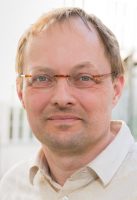
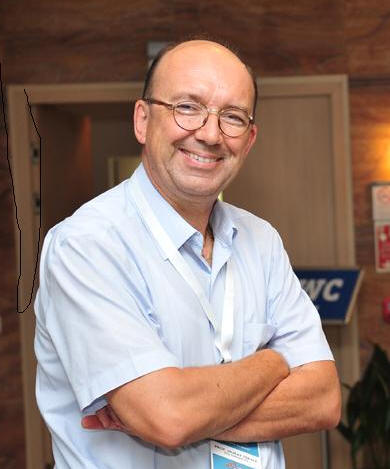
Dominik Schörkhuber is a PreDoc Researcher at the Vienna University of Technology (TU Wien) in the Computer Vision department. With a background in Informatics (BSc, Dipl.-Ing.), he focuses on computer vision applications for autonomous driving, robotics, and human-machine interaction. His work spans driver action recognition, pedestrian prediction, and adaptive lighting systems. Current projects: Empathic Vehicle (2024–2026), SyntheticCabin (2021–2025), SmartProtect (2020–2025) Research themes: Video transformers, synthetic data transfer learning, multi-task learning, and sensor-lighting integration Specializes in 3D sensing, nighttime driving analysis, and mobile video creation tools
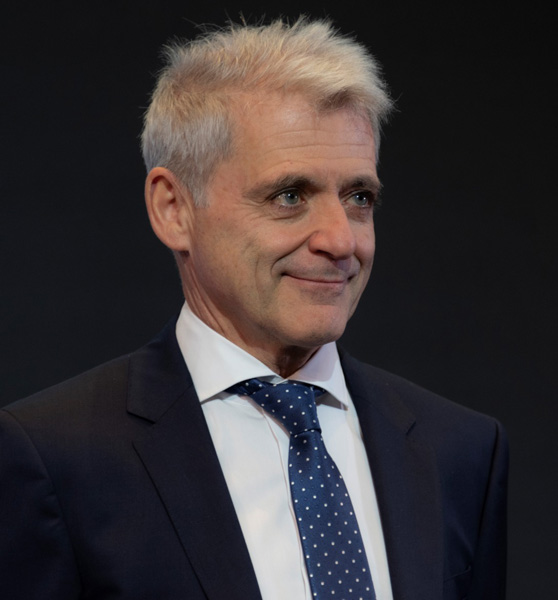
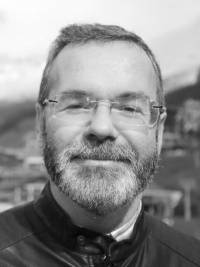
Alan Bovik is the Cockrell Family Regents Endowed Chair Professor in the Department of Electrical and Computer Engineering at The University of Texas at Austin's Cockrell School of Engineering. He also holds positions at The Institute for Neurosciences and serves as Director of the Laboratory for Image and Video Engineering (LIVE). With a career spanning over three decades at UT Austin, he has progressed from Assistant Professor (1984-1988) to Associate Professor (1988-1994) to his current position as Full Professor (1994-present). Dr. Bovik received his Ph.D. in Electrical and Computer Engineering in 1984 from the University of Illinois, Urbana-Champaign. Professor Bovik's research focuses on image and video quality assessment, visual perception, and digital media processing. He is renowned for developing groundbreaking algorithms including the Structural Similarity (SSIM) index, Visual Information Fidelity (VIF), and various blind quality assessment models like BRISQUE and NIQE. His work bridges engineering and neuroscience, creating perception-based models that optimize visual media delivery while reducing bandwidth consumption. These innovations have had profound industry impact, with his algorithms processing a significant proportion of global internet video traffic. His recent publications demonstrate continued leadership in perceptual quality assessment, with increasing focus on AI-generated content, high dynamic range (HDR) video, and novel applications in medical imaging. The research shows a clear trajectory toward more sophisticated, neural network-based quality metrics that better align with human visual perception across diverse content types. Professor Bovik has received numerous prestigious awards recognizing his contributions to the field: John Fritz Medal (2024) IEEE Edison Medal (2022) IAMB BaM Award (2022) Elected to the United States National Academy of Engineering (2022) Technology and Engineering Emmy Award (2021) IEEE Fourier Award for Signal Processing (2019) Progress Medal from The Royal Photographic Society (2019) Named Honorary Fellow of The Royal Photographic Society (2019) Primetime Emmy Award (2015) Edwin H. Land Medal from The Optical Society (2017) As Director of the Laboratory for Image and Video Engineering (LIVE), Professor Bovik has secured substantial research funding from organizations including the National Science Foundation and the National Institute for Standards and Technologies. His lab has produced numerous influential datasets including the LIVE Image and Video Quality Databases. He has mentored many successful students who have gone on to make significant contributions in academia and industry, though specific student names are not provided in the source materials. The Laboratory for Image and Video Engineering (LIVE) under Professor Bovik's direction has become a world-renowned center for research in perceptual image and video quality. The lab maintains close collaborations with major technology companies including Netflix, Amazon, and YouTube, ensuring that research has direct practical applications. LIVE has developed numerous influential tools and databases that are widely used in both academic research and industrial applications worldwide.
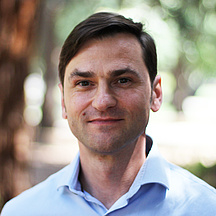
Markus Vincze is an Associate Professor at the Institute of Automation and Control Engineering (ACIN) at Vienna University of Technology (TU Wien). He founded the Vision for Robotics (V4R) group in 1996 to advance robotic perception, particularly in real-world environments and homes. His work focuses on cognitive computer vision techniques for robotics. Education: Diplom in Mechanical Engineering (1988) and PhD (1993) from TU Wien; M.Sc. (1990) from Rensselaer Polytechnic Institute. V4R coordinates EU projects like ActIPret, robots@home, HOBBIT, and national initiatives like vision@home. Markus has edited a book on Robust Vision with Gregory Hager and authored 62 peer-reviewed journal articles and over 400 reviewed publications. His recent research explores zero-shot 6D pose estimation, sim-to-real transfer, and transparent object detection. Markus has served as program chair for ICRA 2013 and organized HRI 2017 in Vienna. He has advised numerous students and secured grants from the Austrian Academy of Sciences for work at HelpMate Robotics and Yale's Vision Laboratory. The V4R group leads innovations in robotic vision, including frameworks for synthetic data generation (Unrealgensyn), depth completion (CAGT), and educational robotics applications for sustainability. Their work spans household robotics (RH3), agricultural robotics (EdgeSoil), and human-robot collaboration.
Dr. Alexander Plopski is an Assistant Professor at the Institute of Visual Computing, Technische Universität Graz. His research focuses on advancing augmented reality (AR) technologies, human-computer interaction (HCI), and optical display systems. He holds a PhD, M.Sc., and BSc in relevant fields. His work emphasizes perceptual optimization in AR displays, eye tracking integration, and accessibility solutions for color vision deficiencies. Key research areas include gaze-contingent AR interfaces, light field manipulation for extended reality, and multimodal interaction techniques. Notable contributions include the development of the 'guitARhero' interactive AR guitar tutorial system and studies on focal distance effects in optical see-through displays. His publications span topics from AR display calibration to gesture recognition using radar sensing. He has explored applications in industrial training, medical AR, and robotic telemanipulation. His work often bridges theoretical perceptual studies with practical system implementations, aiming to enhance user experience and accessibility in AR/VR environments.
Jean Ponce is a Professor of Computer Science at Ecole Normale Superieure (ENS) in Paris and a Part-Time Global Distinguished Professor at New York University's Courant Institute of Mathematical Sciences and Center for Data Science (CDS). He previously served as Director of the ENS Computer Science Department (2011-2017) and held positions at Inria (2017-2022), University of Illinois at Urbana-Champaign (1998-2006), MIT, Stanford, and Inria (1982-1985). Academic Leadership: Scientific Director of PRAIRIE Interdisciplinary AI Research Institute in Paris Startup Involvement: Co-founder and CEO of Enhance Lab (2022) Editorial Roles: Senior Editor-in-Chief of International Journal of Computer Vision (2019-2022) Conference Leadership: Chair of IEEE CVPR (1997,2000), ECCV (2008), and upcoming ICCV (2023) Research Focus: Computer vision, machine learning, robotics, and AI with applications in exoplanet imaging, 3D reconstruction, and image quality assessment. His work bridges statistical learning and deep learning approaches. Awards: IEEE Fellow (2003) ELLIS Fellow (2019) ERC Advanced Grant (2011) IEEE CVPR Longuet-Higgins Prizes (2016,2020) ICML Test-of-Time Award (2019) Patents & Publications: Co-author of influential textbook Computer Vision: A Modern Approach (translated into Chinese, Japanese, Russian). Holds two US patents and one pending French patent. Google Scholar h-index of 78 with over 55,000 citations.
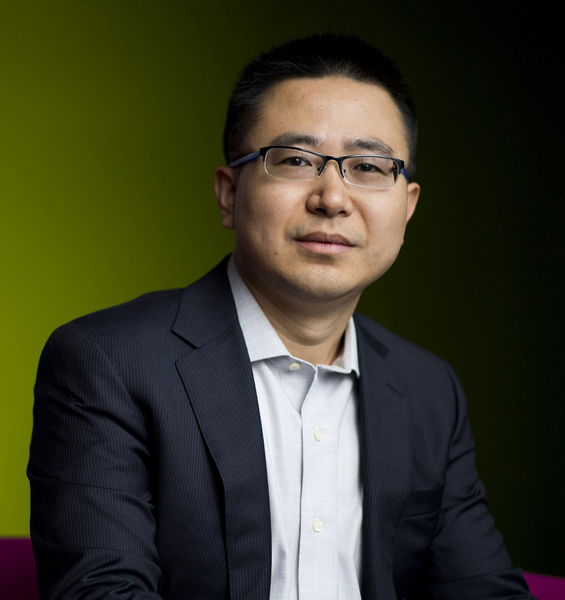
Yun Fu is a Distinguished Professor at Northeastern University, affiliated with the College of Engineering and Khoury College of Computer Science. He holds tenure in Electrical and Computer Engineering (ECE). His roles include Professor, Senior Vice President at Shiseido Americas, founder of Giaran (acquired by Shiseido), and co-founder of TVision Insights. He earned his Ph.D. from the University of Illinois at Urbana-Champaign. His research focuses on artificial intelligence, computer vision, machine learning, and data mining. Key achievements include over 500 publications, 50+ patents, and prestigious awards like IEEE Fellow, OSA Fellow, and AAIA Fellow. He leads the SMILE Lab, exploring AI applications in vision, robotics, and healthcare. Notable entrepreneurship includes AI-driven ventures in cosmetics and media analytics. Research interests emphasize AI-driven solutions for computer vision challenges, including anomaly detection, trajectory prediction, and multimodal learning. His work bridges academia and industry, with impactful contributions to both fields.
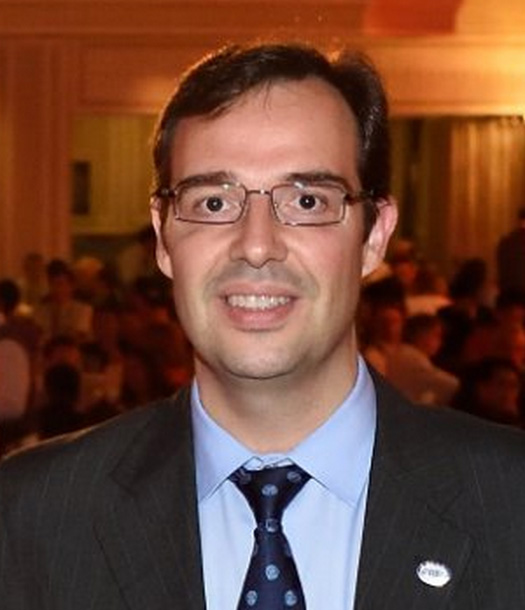
Antonio Plaza is a Full Professor at the University of Extremadura, Spain, and Head of the Hyperspectral Computing Laboratory. With over 600 publications, he is a leading expert in hyperspectral data processing and parallel computing of remote sensing data. He serves as IEEE Fellow and has received numerous accolades, including the 2019 Excellent Teaching Award and multiple Highly Cited Researcher recognitions. Research Interests : His work bridges Hyperspectral Image Analysis , Medical Imaging , and High-Performance Computing . Recent projects focus on 3D anatomical modeling, AI-driven surgical tools, and deep learning applications for aortic dissection segmentation. Scientific Awards : 2019 Highly Cited Researcher (Geosciences) 2015 IEEE Fellow 2019 Excellent Teaching Award 2018 Highly Cited Researcher (Cross-Field) 2002 Best PhD Dissertation, University of Extremadura Editorial Leadership : Served as Editor-in-Chief of IEEE Transactions on Geoscience and Remote Sensing (2013–2017) and held multiple committee roles in IEEE GRSS. His articles reflect a shift from remote sensing to medical imaging, with a focus on Aortic Dissection Segmentation , Skull Reconstruction , and AI-driven Medical Tools .
Ahmet Tekalp is a Professor in the Department of Electrical and Computer Engineering at Koc University's College of Engineering since 2001. He holds dual citizenship in Turkey and the USA, with prior academic roles at the University of Rochester (1986-2005) and research positions at Eastman Kodak (1984-1987) and Rensselaer Polytechnic Institute (1981-1984). He chairs the Electronics and Informatics Group at TUBITAK since 2004 as a part-time position. B.S. (1980) in Electrical Engineering & Mathematics, Bogaziçi University M.S. (1982) and Ph.D. (1984) in Electrical, Computer, and Systems Engineering, Rensselaer Polytechnic Institute His research focuses on digital image and video processing, including video compression, motion-compensated filtering for high-resolution applications, video segmentation, object tracking, content-based video analysis, multi-camera surveillance processing, and digital content protection. He has led numerous European and U.S. grants, including FP7 STREP projects and NSF awards, emphasizing applications in sensor networks, visual databases, and medical imaging. His scholarly work spans diverse areas such as superresolution reconstruction, head gesture animation, 3DTV streaming, and reversible data hiding. He has played pivotal roles in editorial boards, including serving as Editor-in-Chief of Signal Processing: Image Communication, and has contributed to major standards bodies like ISO MPEG and ANSI NCITS. Member, Turkish Academy of Sciences (TUBA) Fellow, IEEE Fulbright Senior Scholarship (1999) TUBITAK Science Award (2004) IEEE Signal Processing Society Distinguished Lecturer (1998) He has led multiple international research collaborations and projects, including European FP6/FP7 networks and NATO programs, with substantial grant funding from NSF, NYSTAR, and industry partners like Eastman Kodak, Xerox, and Siemens.
Prof. Wilfried Kubinger serves as the Head of the Department of Electronic Engineering at the University of Applied Sciences Technikum Wien, Austria. He holds a PhD in Technical Sciences from the Technical University of Vienna (1999) and has extensive experience in research and industry. His academic roles include leading the 'Automation & Sensor Technology' competence field and managing the 'Automation & Robotics' research area. **Research Focus:** His work centers on embedded systems, machine vision, autonomous robotics, and real-time control systems. Notable projects include obstacle detection for autonomous vehicles, stereo vision algorithms, and agricultural robotics applications. He actively contributes to IEEE and OVE engineering associations. **Professional Journey:** Prior to academia, he worked at Siemens Austria (2000–2003) as a software developer and project manager, and at AIT Austrian Institute of Technology (2003–2010) managing research projects in autonomous systems. He participated in DARPA Grand Challenge/Urban Challenge as a principal scientist for vision-based obstacle detection. **Publications:** His research spans embedded vision systems, FPGA implementations, and autonomous vehicle technologies. Recent work emphasizes agricultural robotics and Industry 4.0 applications. He also leads R&D project acquisition and implementation for Technikum Wien.
Prof. Dongheui Lee is a Full Professor at TU Wien's Institute of Computer Technology, Faculty of Electrical Engineering and Information Technology, and leads the Human-centered Assistive Robotics Group at the German Aerospace Center (DLR). She holds a PhD from the University of Tokyo (2007) and has held academic roles at Technical University of Munich (TUM), the University of Tokyo, and KIST. Her research focuses on human-robot interaction, assistive robotics, and machine learning applications in robotics. Education: PhD, Information Science and Technology, University of Tokyo, 2007 MS, Kyung Hee University, 2003 Research Interests: Her work spans human motion understanding, assistive robotics, human-robot collaboration, and control systems. Key areas include robotic balance assistance, motion imitation, and safety-aware robotics. She has pioneered methods for light touch support in human-robot interaction and developed frameworks for dynamic task execution. Recent Trends in Publications: Recent work emphasizes variable stiffness control, motion retargeting, and multimodal anomaly detection. Publications highlight advancements in assistive robotics, human motion prediction, and reinforcement learning for locomotion. Articles often integrate robotics with machine learning to improve safety and adaptability in human-robot systems. Awards: Carl von Linde Fellowship (TUM Institute for Advanced Study, 2011) Helmholtz professorship prize (2015) Best Intelligence Paper Award (2024) Projects & Grants: Leads projects like LunarAssembly (robotic assembly on the Moon) and INVERSE (interactive robots through reasoning). Funded initiatives include EU Horizon, BMBF, and industry collaborations. Coordinates teams for projects like PERSEO (service-oriented robotics) and SOLAR (body representation studies). Labs/Teams: Directs the Human-centered Assistive Robotics Group at DLR and collaborates with TU Wien's Autonomous Systems unit. Her teams focus on real-world applications in healthcare, manufacturing, and human-centered robotics.
Stefan Nastic is an Assistant Professor at the Technische Universität Wien (TU Wien), affiliated with the Faculty of Informatics and the Distributed Systems department. He serves as Curriculum Coordinator for the Master’s program in Distributed and Next Generation Computing, and is a Substitute Member of the Curriculum Commission for Informatics. His research focuses on distributed systems, edge computing, serverless computing, IoT, and smart cities. He holds a PhD in IoT cloud systems (2016) and a BSc (not explicitly stated). Key research contributions include frameworks for serverless edge-cloud continuum (e.g., HyperDrive, GoldFish), federated learning applications (e.g., adaptive human activity recognition), and IoT infrastructure governance (e.g., Polaris Scheduler). He leads projects like RapidREC (2023–2025) on supply chain optimization and participates in initiatives like TEADAL (2022–2025) for edge-cloud workflows. Publications span 30+ peer-reviewed articles in top venues like IEEE IoT, ACM, and IEEE Cloud. He supervises graduate students on stateful serverless functions, federated learning, and edge-cloud scheduling. His work addresses challenges in resource management, latency reduction, and scalable distributed systems.
Yun Fu is a tenured Professor in the Department of Electrical and Computer Engineering at Northeastern University, with a joint appointment in the Khoury College of Computer Science. He has established himself as a leading researcher in Artificial Intelligence, with over 500 publications in top-tier venues including IEEE/ACM transactions and major AI conferences. His work spans both theoretical foundations and practical applications, with significant impact in computer vision and machine learning. Professor Fu earned his Ph.D. in Electrical and Computer Engineering from the University of Illinois at Urbana-Champaign. His academic career progressed from Assistant Professor at SUNY Buffalo to his current position as tenured Professor at Northeastern University, where he has held appointments since 2012. His educational background includes a Beckman Graduate Fellowship at UIUC (2007-2008). His research focuses on advancing Artificial Intelligence with particular emphasis on Computer Vision, Pattern Recognition, and Machine Learning. His seminal work includes the "Residual Dense Network for Image Super-Resolution" presented at CVPR 2018, which was ranked among the Top 10 Most Influential CVPR papers. His research interests span image processing, anomaly detection, multimodal learning, and trajectory prediction, with applications ranging from healthcare to consumer technology. Analysis of his recent publications reveals a strong trend toward developing efficient and robust AI systems that bridge computer vision with language understanding. His work increasingly focuses on multimodal learning, trajectory prediction for multi-agent systems, anomaly detection in complex environments, and model validation techniques for black-box systems, while maintaining practical applications in real-world scenarios. Professor Fu's extensive recognition includes: Fellow of IEEE (2018), OSA (2019), SPIE (2018), IAPR (2016), AAIA (2021), and AAAI (2025) Member of Academia Europaea (2022) and European Academy of Sciences and Arts (2023) Fellow of National Academy of Inventors (2023) Multiple Young Investigator Awards from NAE, ONR, ARO, IEEE, ACM, and INNS 12 Best Paper Awards from major conferences Industrial Research Awards from Google, Amazon, Samsung, JPMorgan, and others Professor Fu has successfully mentored numerous Ph.D. students who now hold prominent positions in academia and industry at institutions including Amazon, Microsoft, Meta, Adobe, and major universities. His entrepreneurial ventures include founding Giaran (acquired by Shiseido in 2017) and co-founding TVision Insights, demonstrating his commitment to translating research into real-world impact. He has secured significant research funding from both government agencies and industry partners. As the PI and Founding Director of the SmiLe Lab at Northeastern University, Professor Fu leads a dynamic research group focused on advancing the state-of-the-art in AI and Computer Vision. The lab fosters interdisciplinary collaboration across computer science, electrical engineering, and applied mathematics, with ongoing projects in efficient deep learning, multimodal understanding, and practical AI applications.
Antonio Rodríguez-Sánchez is an Associate Professor in the Intelligent and Interactive Systems group at the Department of Computer Science, Universität Innsbruck (since 2019). He holds a PhD from York University (2010) and has held academic roles in Austria, Canada, and Spain. His research focuses on Explainable AI, computational neuroscience, deep learning, computer vision, robotics, and medical imaging. Education: PhD in Computer Science, York University (Canada), 2010 M.Sc. in Computer Science, Universidade da Coruña (Spain), 1998 B.Sc. in Computer Science, Universidad de Córdoba (Spain), 1996 3-year Bachelor in Biology, Autonomous University of Madrid (Spain), 1998–2001 Research Interests: His work bridges AI and neuroscience, emphasizing explainable systems, medical imaging analysis, robotics, and deep learning applications. Recent trends in publications highlight advancements in healthcare AI (REM sleep disorder prediction), robotic recycling, and computer vision for environmental monitoring. Teaching & Advising: Teaches courses like Deep Learning, Computer Vision, and Algorithms. Supervises PhD/MSc students (e.g., Safoura Rezapour-Lakani, Sebastian Stabinger). Active in EU-funded projects like PaCMan (FP7-ICT) and IntellAct. Labs & Projects: Leads research in the Intelligent and Interactive Systems group, focusing on interdisciplinary AI applications. Projects include automated avalanche detection and robotic recycling systems.
Dr. Denis Kalkofen serves as an Associate Professor at the Institute of Computer Graphics and Vision (ICG) at Graz University of Technology, Austria. His academic journey began with a Dipl.-Ing. (2004) from the University of Magdeburg, followed by a Dr. techn. (2009) from Graz University of Technology. University of Magdeburg - Dipl.-Ing. (2004) Graz University of Technology - Dr. techn. (2009) University of Michigan, Ann Arbor - Virtual Reality Laboratory member Stanford University - Visiting Assistant Professor at Computational Imaging Laboratory (2019) University of South Australia - Visiting Researcher at Wearable Computer Laboratory (2019) Dr. Kalkofen's research centers on developing visualization, interaction, authoring, and display technologies for Virtual and Mixed Reality environments, with particular emphasis on combining computer graphics and computer vision techniques to create comprehensible and accessible VR/MR experiences. His work spans situated visualization (addressing label placement and X-ray visualization), photometric rendering (recovering lighting properties for realistic AR), and content creation automation (leveraging existing data sources for AR content). His publication trends over the past 15+ years demonstrate consistent leadership in AR/MR research, evolving from foundational work on visualization techniques to current cutting-edge research in neural rendering, neuroadaptive systems, and industrial AR applications. Recent work shows increased focus on practical industrial implementations, error management in AR assembly, and multimodal learning applications. Best paper award for 'enRoute: Dynamic path extraction from biological pathway maps' (2012) Best short paper for 'TutAR: Augmented Reality Tutorials for Hands-only Procedures' (2018) Best paper for 'Tools for Teaching Mining Students in Virtual Reality' (2020) Honorable Mention for Best Paper for 'Adaptive User-Perspective Rendering' (2017) Dr. Kalkofen leads Team Kalkofen at ICG, supervising researchers including Peter Mohr, Shohei Mori, David Mandl, and Ana Stanescu. His team has secured significant funding for projects related to AR/VR content creation, visualization techniques, and industrial applications. They maintain strong collaborations with institutions including Stanford University, University of South Australia, and University of Michigan. Team Kalkofen operates within the Institute of Computer Graphics and Vision at TU Graz, focusing on three main research thrusts: situated visualization for AR, photometric rendering for realistic MR, and automated content creation for professional AR applications. The team maintains active partnerships with industry and academic institutions worldwide, contributing to the advancement of practical AR/MR technologies.
Christiane Helling is Full Professor in Weltraumwissenschaften (Space Sciences) at Graz University of Technology and Director of the Institute for Space Research Graz (IWF) at the Austrian Academy of Sciences. She previously held leadership roles at the University of St Andrews, including Director of the Centre for Exoplanet Science, and has been a Senior Scientist at the Netherlands Institute for Space Research. Habilitation in Astrophysics (TU Berlin) PhD in Astrophysics (TU Berlin, with distinction) Diploma in Physics (TU Berlin) Her research focuses on exoplanet and brown dwarf atmospheres, cloud microphysics, charge processes, and atmospheric chemistry. She integrates hydrodynamic simulations with space observations from missions like CHEOPS, JWST, and PLATO to map cloud distributions and study planetary climate. Her recent publications emphasize time-dependent cloud formation, thermodynamic disequilibrium in planetary disks, and exoplanet atmospheric characterization using space telescopes. Key collaborations include the CHAMELEON project (virtual laboratories for exoplanet atmospheres) and the MSG model for cloudy sub-stellar atmospheres. ERC Starting Grant (LEAP Project: Lightning, Electrical and Atmospheric Processes on exoplanets) Marie-Curie Innovative Training Network (CHAMELEON)