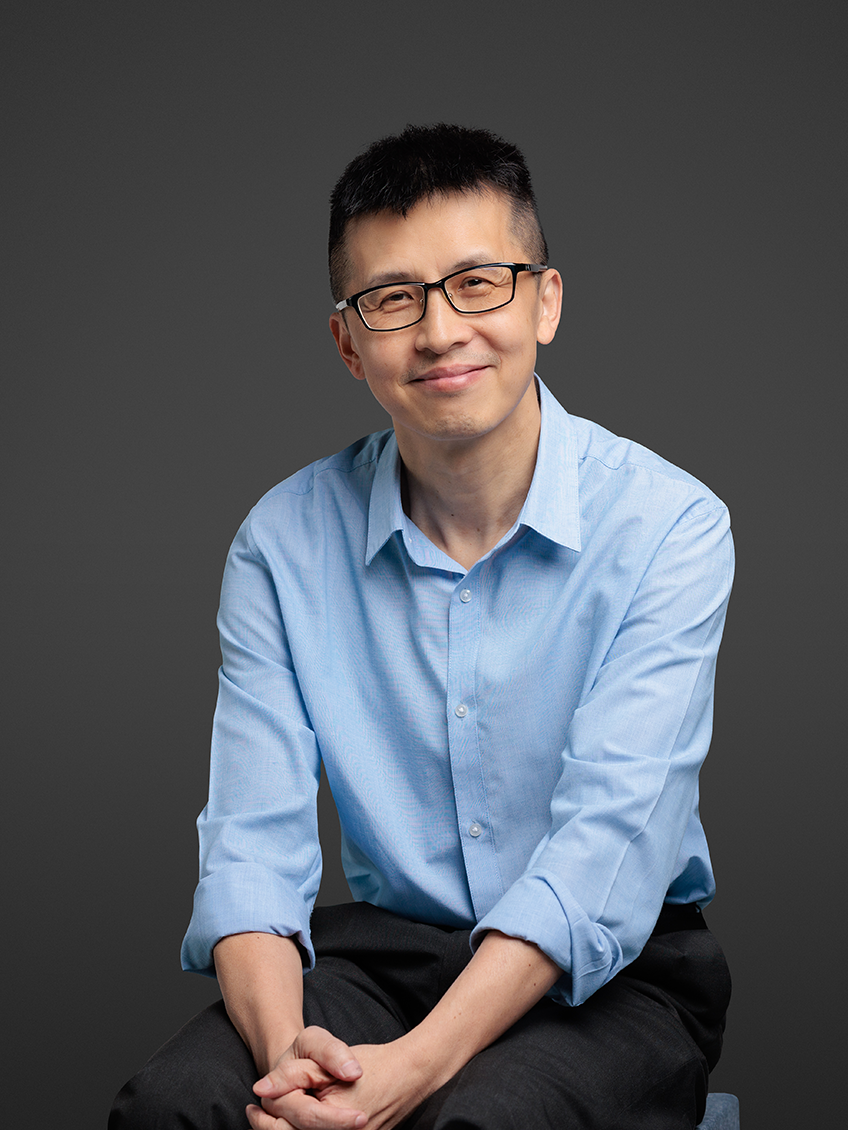
Mehrdad Salehi is a researcher at the Chair of Computer Science Applications in Medicine at the Technical University of Munich (TUM) . His work focuses on the intersection of computer science and medical imaging, with expertise in ultrasound technology, deep learning, and surgical navigation systems. Key research areas include sonification of medical data, 3D ultrasound reconstruction, and machine learning-based segmentation. He has contributed to innovative projects like PRO-TIP calibration phantoms and ColibriDoc autonomous docking systems. His publications highlight trends in acoustic feedback mechanisms, neural radiance fields for medical imaging, and real-time image analysis. He can be reached at mehrdad.salehi@tum.de .
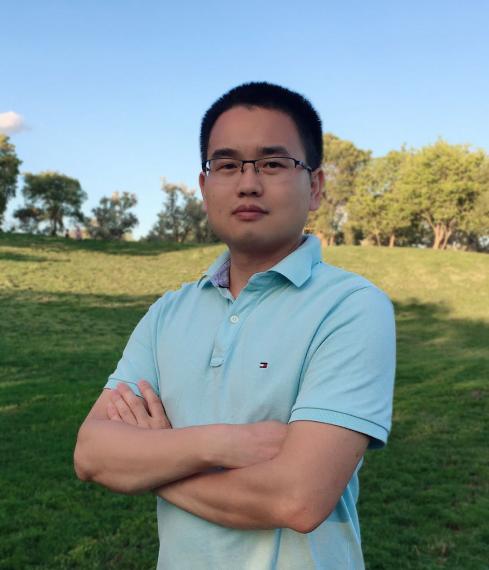
Yu Xia is a Post Doc at the Department of Chemistry, Stockholm University, Sweden. He is affiliated with the Tom Willhammar Research Group, focusing on advanced electron microscopy and diffraction techniques for structural characterization of materials. PhD (2019–2023) from a joint program between the University of Birmingham (UK) and the Southern University of Science and Technology (China). Research emphasizes fabrication of metallic nanoparticles with non-equilibrium structures and shapes using gas-phase condensation and thermal shock methods. Specializes in scanning transmission electron microscopy (STEM), in-situ heating experiments, and electron energy loss spectroscopy (EELS) for nanoparticle analysis. Current work prioritizes 4DSTEM imaging for electron beam-sensitive materials and Python-based post-processing of electron microscopy datasets. Yu Xia's research spans Materials Science , Nanotechnology , and Electrocatalysis , with applications in photocatalytic hydrogen evolution , graphene composites , and advanced electron microscopy techniques . His work often integrates computational image processing with structural characterization to optimize material properties. Publications highlight innovations in heterostructure engineering , metallic alloy catalysts , and electron beam-sensitive material imaging . No scientific awards are explicitly mentioned in the provided text. Yu Xia's technical expertise includes Python scripting for image analysis, in-situ electron microscopy , and multifunctional graphene-based materials .
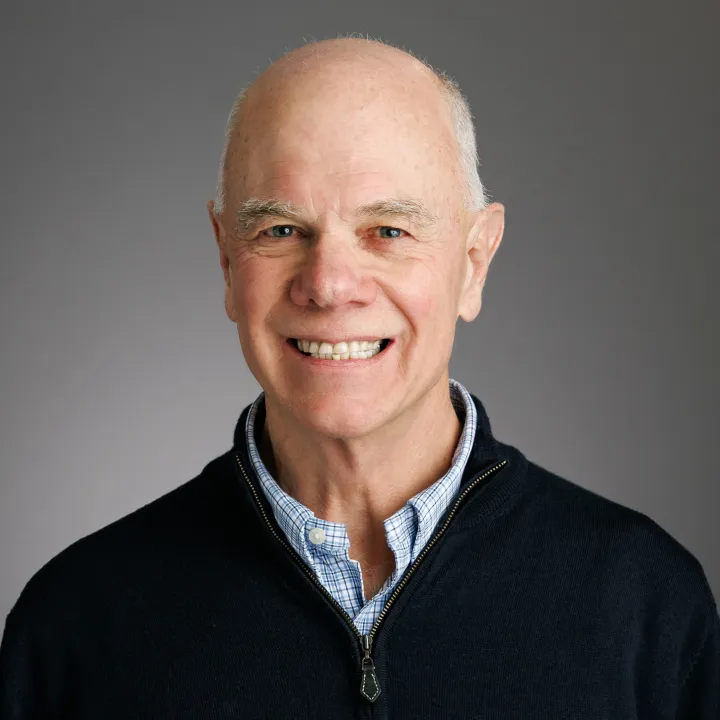
Matthias Schlottbom is an Associate Professor specializing in Mathematics of Computational Science, with a focus on numerical methods and their applications in physics, biology, and engineering. His research integrates advanced computational techniques with interdisciplinary problems, including radiative transfer, photonic crystals, and chemotaxis modeling. Research Interests: Schlottbom’s work spans numerical analysis, finite element methods, and machine learning. He develops high-order discretization schemes, iterative solvers for anisotropic transport, and mathematical frameworks for biological network formation. Publications: Recent articles highlight his contributions to accelerating radiative transfer simulations, extending component mode synthesis for Helmholtz equations, and analyzing diffusion limits in kinetic models. His work often bridges computational mathematics with practical applications in photonics and multiscale systems. Collaborations: He actively collaborates on datasets for optical simulations, radiative transfer algorithms, and photonic crystal modeling, contributing to open-access repositories like 4TU.Centre and Zenodo. Activities: Schlottbom has organized workshops such as the Kinetic Theory Workshop in the Netherlands and delivered keynotes on residual minimization and data-driven methods for transport equations. Scientific Awards: No specific awards or fellowships are mentioned in the provided materials. Advising & Grants: Details about students, advising roles, or grant funding are not included in the available data.
Xieyuanli Chen is an Associate Professor at the National University of Defense Technology (NUDT), China. He holds a Dr.-Ing. (summa cum laude) from the University of Bonn (2022), a Master's in Robotics from NUDT (2017), and a Bachelor's in Electrical Engineering from Hunan University (2015). His research focuses on robot learning, perception, and navigation, with an emphasis on LiDAR-based SLAM, autonomous systems, and semantic perception. Education: PhD: University of Bonn, 2018-2022 (supervised by Prof. Cyrill Stachniss) Master's: NUDT, 2015-2017 Bachelor's: Hunan University, 2011-2015 Research interests include robotics, autonomous systems, computer vision, and LiDAR perception. He has authored over 90 papers in top venues like TRO, RSS, ICRA, and CVPR. He serves as an Associate Editor for IEEE RA-L, ICRA, and IROS, and is a member of the RoboCup Rescue Robot League Technical Committee. Awards include the RSS Pioneer Award (2021), Best-in-Class RoboCup awards, and recognition as a World’s Top 2% Scientist (2024). His work spans LiDAR localization, moving object segmentation, and efficient semantic mapping. He advises students in robotics and autonomous systems. Labs/Teams: Active in the PRBonn group (University of Bonn) and leads research at NUDT on LiDAR-based perception systems.
Silas Alben is a Professor in the Department of Mathematics at the University of Michigan, affiliated with the College of Literature, Science, and the Arts. His research focuses on applied mathematics and mathematical biology, particularly fluid-structure interactions in biological systems. He employs computational simulations and laboratory experiments to study fundamental physics of flexible bodies in fluids. Research interests include biomechanics of swimming organisms, vortex dynamics in fluid-structure interactions, and thermal transport optimization. His work bridges mathematical modeling with experimental validation to understand complex physical phenomena. Publications demonstrate strong focus on fluid dynamics applications, including vortex-enhanced heat transfer, membrane flutter dynamics, and bio-inspired locomotion. Recurring themes include optimization of fluid-structure systems, vortex wake interactions, and computational methods for aeroelastic problems.
Mohamed Shaat is an Assistant Professor of Mechanical Engineering in the Engineering Department at St. Mary's University, San Antonio, Texas. Holding a Ph.D. from New Mexico State University (2017), he previously served as Assistant Professor at Abu Dhabi University (2019-2021) and held postdoctoral positions at Southern Methodist University (2022-2024) and Boston University (2021-2022). His research bridges energy storage systems, active matter physics, and advanced materials engineering. His educational foundation includes: Ph.D. in Mechanical Engineering, New Mexico State University, 2017 M.Sc. in Mechanical Engineering, New Mexico State University, 2016 M.Sc., Zagazig University (Egypt), 2012 B.Sc., Zagazig University (Egypt), 2007 Dr. Shaat's research program focuses on interdisciplinary innovation in energy storage (SOFCs & ASSBs), mechanics of active matter, nano-confined fluids, chiral metamaterials, and topological/non-Hermitian mechanics. He integrates machine learning with continuum mechanics to optimize electrochemical systems and additive manufacturing, exploring nontraditional phenomena in complex materials for next-generation engineering applications. Analysis of his 60+ journal articles reveals a dominant trajectory in nonlocal elasticity theory and topological mechanics, with increasing integration of machine learning (2020-2024). His work spans nanostructure mechanics, metamaterial design, and energy storage optimization, demonstrating consistent innovation in theoretical frameworks for complex material systems. His scholarly recognition includes: World's Top 2% Scientist (Stanford University, Mechanical Engineering & Transports, since 2019) Outstanding Graduate Award, New Mexico State University (2017) Merit-Based Enhancement Fellowship, New Mexico State University (2017) Best Master's Thesis Award, Zagazig University (2013) Committed to academic service, Dr. Shaat serves on the editorial board of Scientific Reports and as Specialty Associate Editor for Frontiers in Mechanical Engineering. His extensive peer review for Nature, Nature Communications, and Applied Physics Letters reflects his field authority. While specific grant details aren't disclosed, his postdoctoral appointments and publication volume indicate successful research funding. His teaching includes Materials Engineering and Materials Laboratory courses, emphasizing hands-on student mentorship. Though laboratory infrastructure isn't explicitly detailed, his research scope suggests computational modeling expertise and likely collaboration with experimental teams for materials characterization in energy storage and metamaterials development.
Marc De Graef is the John and Claire Bertucci Distinguished Professor of Materials Science and Engineering at Carnegie Mellon University (CMU). He leads the J. Earle and Mary Roberts Materials Characterization Laboratory and is affiliated with the Materials Science and Engineering Department within the College of Engineering. De Graef holds dual roles as a faculty director and researcher, specializing in advanced materials characterization techniques, particularly electron microscopy and microstructural analysis. Education: Ph.D. in Physics, Catholic University of Leuven (1989) M.S. and B.S. in Physics, University of Antwerp (1983) Research Interests: De Graef's work focuses on 3D microstructure analysis, materials informatics, magnetic materials, and advanced characterization methods like Lorentz microscopy. His research emphasizes quantitative electron microscopy techniques, including electron backscatter diffraction (EBSD), and their application to study complex materials systems. He has pioneered software tools for materials characterization, such as orientation mapping algorithms and dictionary-based indexing methods. Key Achievements: Recipient of the 2025 Microscopy Society of America Distinguished Scientist Award Author/co-author of over 350 publications and two textbooks: Introduction to Conventional Transmission Electron Microscopy and Structure of Materials Principal investigator on grants including a $7.5M Air Force-funded Center of Excellence in data-driven materials research Lab & Collaborations: Directs the Materials Characterization Facility at CMU, advancing capabilities in X-ray and electron microscopy. His team collaborates on projects involving additive manufacturing, magnetic domain analysis, and topological magnetic structures. Recent work includes studies on skyrmions in thin films and phase stability in novel alloys.
Overview Prof. Harris Kyriakou is an Associate Professor and Chair Holder of the Media & Digital Chair at ESSEC Business School. His research focuses on leveraging artificial and collective intelligence to enhance organizational value creation, digital strategy, and data-driven decision-making. He has advised multinational firms like Airbnb, Facebook, and Yelp, and his work is supported by grants from NSF and the Spanish government. Education Ph.D. in Management Sciences (Stevens Institute of Technology, 2016) M.S. in Engineering & Technology Innovation Management (Carnegie Mellon University, 2010) B.Sc. in Digital Systems (University of Piraeus, 2007) Research Focus His research explores intersections between AI/collective intelligence, blockchain, sharing economy regulations, and platform governance. Key themes include data network effects, algorithmic regulation, and digital transformation. Recent work on ChatGPT vs. Google examines AI-driven competitive dynamics in search markets. Recognition Awarded the 2024 Case Centre Triple Award, 2022 Early Career Award (AIS), and multiple best paper awards (AoM, INFORMS). Recognized as a 40-Under-40 MBA Professor by Poets & Quants. Teaching & Leadership Co-leads the 'Algorithmic Governance in Platform Economy' thesis Teaches courses on AI, digital strategy, and IT management at ESSEC and IESE Former Assistant Professor at IESE Business School (2016–2021) Professional Contributions Serves as a European Commission advisor on digitalization, reviewer for top journals (MIS Quarterly, Academy of Management Review), and mentor for doctoral candidates.
Cheung Ngai-Man is an Associate Professor and Associate Head of Pillar (Education) at Singapore University of Technology and Design (SUTD), part of the Information Systems Technology and Design (ISTD) pillar. He holds a Ph.D. in Electrical Engineering from the University of Southern California (2008) and has held research positions at Stanford University, Texas Instruments, IBM, and others. His research focuses on image and signal processing, computer vision, machine learning, and artificial intelligence. Education: Ph.D., Electrical Engineering, University of Southern California (2008); Postdoctoral research at Stanford University (2009–2011). Research Interests: Develops algorithms for multimedia data processing, explores interdisciplinary applications of signal processing and AI, and addresses challenges in computer vision and generative models. Recent work includes fairness in generative models, few-shot image generation, and adversarial robustness. Publications: Over 100+ peer-reviewed papers in top venues (CVPR, NeurIPS, IEEE TIP, TPAMI) focusing on computer vision, generative models, and AI security. Notable 2023 work includes studies on label-only model inversion attacks and fairness metrics in generative systems. Awards: Best Paper Finalist (CVPR 2019), SAIL Award Finalist (WAIC 2019), Outstanding Associate Editor (IEEE T-MM), Croucher Foundation Fellowship. Students: Supervised postdocs (Hossein Nejati, Fang Lu), research assistants (Mohammad Rostami), and visiting students (Ma Rui). Labs/Teams: Leads research groups in AI, computer vision, and multimedia systems at SUTD. Has spun off AI initiatives for wound care and contributed to Singapore’s National AI Strategy.
Andrea Stevenson Won is a researcher at Cornell University in the Department of Communication , focusing on virtual reality (VR), human-computer interaction, and social dynamics in immersive environments. Her work explores avatar embodiment , nonverbal behavior , and accessibility in VR for users with disabilities. Research Themes : Virtual embodiment and its psychological effects Accessibility solutions for blind and low-vision users in social VR Nonverbal communication analysis in immersive environments Pro-social behavior through VR interventions Collaborative VR systems and AI integration Recent Article Trends : 2024: Investigated avatar behavior transformation in mixed reality ( MRTransformer ), AI-guided accessibility tools, and nonverbal cue adaptations 2023-2022: Focused on educational VR applications, 360° video narratives, and longitudinal team dynamics 2021-2014: Pioneered avatar embodiment studies, anxiety detection via movement tracking, and homuncular flexibility in VR
Dr. Sheng Yang is an Assistant Professor in the School of Engineering at the University of Guelph. He leads the Design Innovation and Intelligent Manufacturing (DIIM) lab, focusing on advancing additive manufacturing, generative design, and smart manufacturing technologies. His research integrates IoT, big data analytics, and bio-inspired design to address challenges in aerospace, green energy, and healthcare. Key areas include computational design for additive manufacturing, data-driven mass customization, and digital twin-based optimization. Education: Ph.D. in Mechanical Engineering from McGill University (2019), followed by a Postdoctoral Fellowship at McGill (2019–2020). Joined University of Guelph in 2020. Research interests span energy efficiency, complex system optimization, and personalized healthcare products. Recent work emphasizes digital twin synchronization in robotics, machine learning for quality prediction, and sustainable additive manufacturing processes. Notable awards include the 2019 Association of Commonwealth Universities Blue Charter Fellowship and 2018 ASME Best Paper Award. His lab actively seeks partnerships in personalized healthcare, product design, and smart manufacturing. Grants and collaborations focus on advancing manufacturing technologies and sustainability. No formal advisees listed, but active in graduate training through lab projects. The DIIM lab explores cutting-edge solutions for industrial and societal challenges through interdisciplinary approaches.
Hassan Foroosh is a Professor in the Department of Electrical Engineering and Computer Science at the University of Central Florida (UCF), directing the Computational Imaging Laboratory (CIL). He holds a Ph.D. in Computer Science from INRIA-UNSA, France (1996). Prior to UCF, he worked as a Senior Research Scientist at UC Berkeley (2000–2002) and an Assistant Research Professor at the University of Maryland, College Park (1997–2000). Research Interests: His work focuses on Computer Vision, Image Processing, Machine Learning, and Signal Processing. Notable contributions include LiDAR-based perception, adversarial attacks on detectors, medical imaging analysis, and dataset design for action recognition. His research is supported by NASA, NSF, ONR, and industry partners. Publications & Impact: Over 130 peer-reviewed papers, including influential work on super-resolution techniques, transformer networks for 3D object detection, and adversarial machine learning. His recent work explores analytical reasoning in LLMs and multimodal fusion in sports analytics. Awards: Pierro Zamperoni Award (2004), Best ICPR Paper (2004), Sun Microsystems Academic Excellence Award (2004). Labs/Teams: Director of the Computational Imaging Lab (CIL), UCF. Grants: Active funding from NASA, NSF, and industry collaborators.
Ulrich Tallarek serves as Professor of Analytical Chemistry in the Faculty of Chemistry at Philipps University of Marburg, where he has held a W3 professorship since 2011. He also serves on the Board of Directors for the Materials Science Center at the university, a position he has held since 2007. His research group focuses on the fundamental understanding of transport phenomena in porous media with applications spanning chromatography, battery technology, and microfluidic systems. The group maintains strong collaborations with institutions worldwide and secures substantial research funding for advanced computational and experimental work. Professor Tallarek's research interests center on functional porous solids, with specific focus on morphology-transport-performance relationships. His work bridges multiple scales from molecular dynamics simulations of solute behavior in nanopores to macroscopic transport in chromatographic columns and battery electrodes. Key research areas include diffusion in hierarchical porous media, electrokinetic phenomena in microfluidic systems, molecular simulation of chromatographic processes, and advanced characterization of porous materials using tomography and other techniques. His group has pioneered multiscale simulation approaches that connect molecular-level surface chemistry to macroscopic transport properties. The research output demonstrates consistent focus on understanding fundamental transport mechanisms in porous systems, with recent publications emphasizing multiscale simulation techniques, molecular dynamics studies of solvent effects in chromatography, advanced characterization of mesoporous structures, and applications to separation science and energy storage. The work shows strong integration of computational modeling with experimental validation across multiple length scales. 2003: Desty Memorial Prize for Innovation in Separation Science, The Royal Institution of Great Britain, London 2006: Young Scientist Award from DECHEMA e.V. 2011: Named Discussion Leader at the 2011 Gordon Research Conference on Physics & Chemistry of Microfluidics 2011–2012: Chairman of the German Chemical Society (GDCh), Marburg 2013: Finalist, World Technology Awards, for category Environment 2013: Named as one of the 100 most influential analytical scientists in the world (The Analytical Scientist Power List) 2017: Recipient of the Silver Jubilee Medal 2017, The Chromatographic Society, UK Professor Tallarek's research has been supported by numerous grants enabling high-performance computing resources, advanced instrumentation, and international collaborations. His group maintains strong ties with industry partners in separation science and analytical instrumentation. The Tallarek Research Group includes postdoctoral researchers, PhD students, and technical staff working across experimental and computational domains. Current projects focus on molecular simulation of chromatographic processes, advanced characterization of porous battery electrodes, and development of novel separation methodologies. The Tallarek Research Group operates state-of-the-art facilities for computational modeling, including access to high-performance computing resources at Forschungszentrum Jülich. The group also maintains experimental capabilities for chromatographic analysis, materials characterization, and microfluidic device development. Their work on physically reconstructed porous media has established new standards for connecting microstructure to transport properties in complex materials systems.
James S. Duncan is the Ebenezer K. Hunt Professor of Biomedical Engineering at Yale University, with additional appointments in Electrical & Computer Engineering and Radiology & Biomedical Imaging. His research focuses on biomedical image processing, quantitative image analysis using geometrical models, and applications in cardiac function and neuro-structure analysis. He has pioneered image-guided interventions and developed computational frameworks for medical imaging challenges. He holds a Ph.D. from the University of Southern California. His work integrates AI, deep learning, and statistical decision-making to advance medical imaging technologies. Notable contributions include advancements in 3D image segmentation, deformable models, and MRI-based tumor response assessment. Dr. Duncan has received prestigious awards, including IEEE Fellow (2001) and induction into the American Institute for Medical and Biological Engineering (2000). His recent research spans AI-driven hemodynamics modeling, trustworthy healthcare AI guidelines, and molecular MRI innovations in immunotherapy monitoring. He collaborates across disciplines to address challenges in cardiovascular, neuroimaging, and oncological applications.
Taskin Padir is a Professor in the Department of Electrical and Computer Engineering at Northeastern University and concurrently serves as an Amazon Scholar. He holds a PhD and MS from Purdue University and a BS from Middle East Technical University. His research focuses on experiential robotics, human-robot teaming, and embodied AI, with leadership roles in the Robotics and Intelligent Vehicles Research Laboratory (RIVeR Lab) and the Institute for Experiential Robotics. Padir has led projects for DARPA, NASA, and industry partners, advancing autonomous systems for extreme environments and human-robot collaboration. Education: PhD, Electrical and Computer Engineering, Purdue University (2004) MS, Electrical and Computer Engineering, Purdue University (1997) BS, Electrical and Electronic Engineering, Middle East Technical University (1993) Research Interests: Shared autonomy and human-in-the-loop robotics Embodied artificial intelligence Human-robot teaming in extreme environments (e.g., space, disaster zones) Collaborative robotics for industrial applications His work bridges robotics, AI, and real-world challenges, with recent projects addressing seafood processing automation, robotic navigation in unstructured terrains, and spectroscopy-based environmental monitoring. Awards: Recipient of the 2024 Faculty Research Team Award, 2023 Impact Award, and 2022 Amazon Scholar distinction. His research has been funded by NSF, DARPA, NASA, and industry collaborators like Amazon Robotics and Intel. Labs: Director of the RIVeR Lab and Institute for Experiential Robotics, fostering interdisciplinary research in autonomous systems and intelligent vehicles. Current projects include CRISP (Co-worker Robots for Seafood Processing) and PROSPECT (robotic spectroscopy tools).