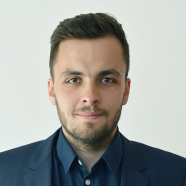
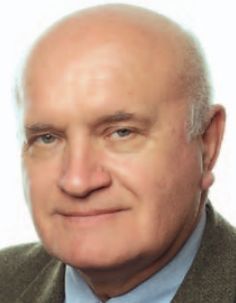
Maciej Zięba is an academic researcher affiliated with the Faculty of Information and Communication Technology at Wrocław University of Science and Technology, specifically within the Department of Artificial Intelligence . His work spans machine learning, deep learning, and computer vision, with a focus on hyperspectral imaging, autonomous systems, and 3D modeling. Recent research includes uncertainty-aware sensor deployment for autonomous vehicles, low-light image enhancement algorithms, and probabilistic regression frameworks for tabular data. He has co-authored publications on flow-based models, hypernetworks, and neural radiance fields (NeRF) applied to 3D face rendering. Contact: maciej.zieba@pwr.edu.pl
Jan Cudzik is an Assistant professor at the Gdańsk University of Technology's Department of Urban Architecture and Waterscapes, Faculty of Architecture. He leads the Digital Technology Laboratory and focuses on integrating computational methods with architectural design and conservation. His research spans parametric design, generative systems, artificial intelligence, and sustainable construction practices. Education details are not explicitly provided in the texts, but his academic roles indicate advanced training in architecture and engineering. Research interests include: AI-driven design processes Generative design using swarm intelligence 3D printing in construction Energy-efficient building lifecycle assessment Traditional-conservation/digital-fabrication hybrids Key publication trends emphasize: Public space sustainability (lighting, greenery) Machine learning applications in architecture Historical structure preservation He contributes to projects like ENACT 15mC, focusing on urban community development. His work bridges digital innovation with ecological and cultural heritage concerns. Labs/Teams: Director of the Digital Technology Laboratory, active in architectural education reform using AI tools.
Adam Woźniak is a Professor and Vice-Rector for Development at Warsaw University of Technology (WUT), holding positions at the Faculty of Mechatronics and the Institute of Metrology and Biomedical Engineering. He earned a PhD in 2002, D.Sc. (habilitation) in 2011, and was promoted to full professor in 2017. His research focuses on advanced geometrical measurement techniques, coordinate metrology, quality engineering, and reliability of mechatronic systems. He has authored 2 books and over 130 scientific publications, including work on probing accuracy, X-ray CT applications, and dynamic error analysis in manufacturing systems. Notably, he served as Director of the Institute of Metrology and Biomedical Engineering (2012–2020) and later as Dean of the Faculty of Mechatronics (2020). He received the Polish Prime Minister’s Prize for Scientific Achievements (2012) and multiple scholarships from the Foundation for Polish Science. Education: PhD (2002), D.Sc. (2011), Warsaw University of Technology; Visiting Professor at École Polytechnique de Montréal (2005–2006). Research interests include coordinate measuring machine (CMM) performance, probing system accuracy, and industrial CT applications. His work addresses dynamic error identification, probe error compensation, and precision measurement techniques. Recent projects involve high-density point cloud correction, scanning probe validation, and pediatric growth measurement systems. His articles analyze topics like probe reliability, CNC machine tool errors, and X-ray CT threshold optimization. Awards also include recognition for leadership in standardization bodies, including roles in Poland’s Council for Metrology and Standardization. He has supervised 6 PhD students and numerous master’s candidates, contributing to over a dozen funded research projects. His lab, the Virtual Manufacturing Research Laboratory, integrates metrology, mechatronics, and biomedical engineering for advanced measurement solutions.
Igor Wojnicki is a Professor at AGH University of Science and Technology's Faculty of Electrical Engineering, Automatics, Computer Science and Biomedical Engineering, where he serves as Vice-Dean of the Faculty of Cooperation and Education. His primary affiliation is with the Department of Applied Informatics, where he maintains an active research laboratory focused on knowledge engineering and smart systems. His research spans multiple domains with evolving focus: Early career: Deductive databases and rule-based inference engines (PhD thesis on "A Rule-based Inference Engine Extending Knowledge Processing Capabilities of Relational Database Management Systems") Mid-career: Graph-based knowledge representation and Tabular Trees (XTT predecessor) Current focus: Smart city applications, particularly energy-efficient lighting control systems and graph-based urban data integration His recent publications demonstrate a clear trajectory toward applied urban computing, with over 15 significant papers in the last five years addressing smart city infrastructure optimization. Key themes include dynamic street lighting control, graph-based computational methods for urban environments, and energy conservation in public infrastructure. Wojnicki actively contributes to academic-practical collaboration through initiatives like the Green AGH Campus Project and IBM academic partnerships. His technical leadership includes development of the ReDaReS system for relational database knowledge processing and the Jelly View technology for advanced database queries. His laboratory maintains strong industry connections, particularly with IBM through student internship programs and technology transfer initiatives. The team produces both theoretical frameworks and practical implementations, with notable outputs including the Osiris GUI system and Magellan GPS software for Poland.
Robert Sitnik is a Professor and Dean of the Faculty of Mechatronics at Warsaw University of Technology, where he is affiliated with The Institute of Micromechanics and Photonics. He earned his Doctorate in 2002 and has established himself as a leading researcher in 3D optical measurement techniques and applications. His research focuses on 3D light measurement, optical shape analysis, structured light techniques, and 3D data processing with applications spanning cultural heritage documentation and medical imaging. As the leader of the 3D/4D Optical Surface Measurement Team, he has pioneered innovative approaches to surface measurement and documentation. His work demonstrates strong interdisciplinary connections between mechanical engineering, computer vision, and practical applications in both cultural preservation and healthcare. His research has led to significant advancements in 3D scanning technologies, particularly for human body analysis and cultural heritage conservation. His publications reveal a consistent research trajectory focused on improving accuracy, efficiency, and applicability of 3D measurement systems. His scientific impact is evidenced by 159 publications, an h-index of 18 in Scopus and 17 in Web of Science, and 103 promoted theses. His research has been supported by 22 projects, resulting in 1 patent and substantial contributions to both academic knowledge and practical applications. As an academic leader, he has supervised numerous students and researchers, contributing significantly to the development of expertise in optical measurement technologies. His work bridges theoretical research with real-world applications in medical diagnostics, cultural heritage preservation, and industrial measurement systems.
Mateusz Zawadzki is an Assistant Professor at the Department of Geomatics and Cartography, Faculty of Earth Sciences and Spatial Management, Maria Curie-Skłodowska University (UMCS). He holds a Ph.D. in Geography (2019, UMCS) and an MA in History (2011, KUL). His career spans roles at UMCS (2017–present), GIS-Expert Sp. z.o.o. (2012–2017), and leadership in the "GIS across the border" research team (2013–2014). Education: Ph.D. in Geography (UMCS, 2019), MA in History (KUL, 2011) Employment: Assistant Professor (UMCS, 2021–present), Research Associate (UMCS, 2017–2021) His research focuses on Historical GIS (HGIS), Spatial Humanities, and reconstruction of Old-Polish communication networks using Web-GIS tools. He has contributed to digital repositories like Polegli1939.pl , analyzed 19th-century Polish military cartography, and explored WWII impacts on Białowieża Forest through interdisciplinary lenses. Recent publications address methodological challenges in multi-sheet historical map georeferencing and metadata frameworks for post-Paris Peace Conference boundary studies. He teaches GIS procedures, Web-GIS applications, and coordinates geoinformatics studies at UMCS. As a consultant for the "GIS in history" Dialog project (2018–2020) and coordinator of the DARIAH-PL digital infrastructure initiative (2021–2024), he bridges geospatial technology with humanities research. Collaborative works include Roman artifact mapping in Krajna region and 3D archaeological site modeling.
Prof. Kazimierz Bęcek is affiliated with the Wrocław University of Science and Technology as a faculty member in the Faculty of Geoengineering, Mining and Geology , specifically within the Department of Geodesy and Geoinformatics . His research spans multiple domains including geodesy, remote sensing, and geomatics, with a strong focus on elevation data analysis and environmental monitoring. Ecology Photogrammetry Remote Sensing Geodesy Geomatics Prof. Bęcek's work primarily investigates geospatial data accuracy, environmental dynamics, and geodetic methodologies. He has contributed significantly to elevation model validation, land subsidence detection, and vegetation collapse analysis through advanced remote sensing techniques. Recent publications highlight his expertise in Digital Elevation Model evaluation , LiDAR data processing , and environmental monitoring using satellite observations. His research extends to climate-ocean interactions and real-time geospatial mapping challenges. Contact: kazimierz.becek@pwr.edu.pl Physical address: ul. Na Grobli 15, 50-421 Wrocław, building L-1 (Geocentrum), room 366
Szymon Płotka is a Researcher in the Medical Imaging and Robotics department at the University of Amsterdam's Informatics Institute. His work focuses on advancing prenatal care through deep learning, particularly in fetal ultrasound analysis and AI-driven medical solutions. He holds a PhD in Computer Science from the University of Amsterdam (2024), with a thesis on enhancing prenatal care via machine learning. Research Interests : Integration of deep learning techniques for medical image analysis Development of AI tools for diagnostic accuracy and clinical workflow optimization Multimodal data fusion in healthcare Real-time surgical imaging applications Recent work emphasizes fetal biometry measurements, endoscopic synthetic datasets, and real-time placental vessel segmentation. His research bridges cutting-edge AI with clinical practice, aiming to improve accessibility and efficiency in medical imaging. Key Contributions : Advances in fetal ultrasound video analysis matching human expert accuracy Pioneering synthetic endoscopic dataset generation with diffusion models Development of BabyNet++ for birth weight prediction No formal students listed, but his projects likely involve collaborations with academic teams. Active in organizing and participating in medical imaging challenges (e.g., FeTA, FetReg).
Jacob Fish holds the Rosalind and John J. Redfern Jr. Chair in Engineering at Columbia University's Department of Civil Engineering and Engineering Mechanics within the Fu Foundation School of Engineering and Applied Science. His research program focuses on computational mechanics and multiscale modeling with applications across material science and structural engineering. His research interests center on developing advanced computational frameworks for multiscale analysis of heterogeneous materials. Key areas include computational continua, atomistic-to-continuum coupling, fracture mechanics of composites, and thermomechanical modeling of advanced materials. His work bridges theoretical developments with practical engineering applications through reduced-order modeling and data-physics integration. His recent publications demonstrate strong trends in multiscale computational engineering, particularly in homogenization techniques, phase-field fracture modeling, and data-driven approaches for material behavior prediction. The research spans from atomistic simulations to structural-scale analysis with emphasis on computational efficiency and physical fidelity. Fellow, U.S. Association for Computational Mechanics (USACM) Computational Structural Mechanics Award, 2005 Fellow, International Association for Computational Mechanics (IACM), 2002 National Science Foundation Presidential Young Investigator Award, 1992 Walter P. Murphy Fellowship, Northwestern University, 1986 Fish serves as Editor-in-Chief of the International Journal for Multiscale Computational Engineering and has secured numerous research grants focused on multiscale modeling of advanced materials. His collaborative network spans multiple institutions and disciplines, particularly in computational mechanics and material science. His laboratory develops computational frameworks for multiscale analysis with applications in structural engineering, material science, and biomechanics, focusing on efficient algorithms for complex material behavior prediction.
Szymon Cygan, PhD, is an Assistant Professor and Deputy Dean for Students Affairs and Promotion at the Institute of Metrology and Biomedical Engineering , part of the Faculty of Mechatronics at Warsaw University of Technology. His work focuses on strain imaging methods for echocardiography, ultrasonic imaging, and biomedical engineering applications. Education: M.Sc. (2003) in Automatics and Robotics with Biocybernetics and Biomedical Engineering specialization; Ph.D. (2011) on displacements and strain estimation for ultrasonic strain imaging. Research: Specializes in speckle tracking echocardiography, left ventricular phantom modeling, finite element simulations, and validation of strain estimation algorithms using synthetic and physical models. Awards: No specific scientific awards explicitly mentioned. Projects: Involved in 2 projects, including development of low-cost gait analysis systems and synthetic cardiac phantom validation. Labs: Part of Krzysztof Kaluzynski's Lab, focusing on biomedical engineering and cardiac imaging.
Wioleta Elżbieta Błaszczak-Bąk is a Professor at the Department of Geodesy under the Institute of Geodesy and Construction, affiliated with the Faculty of Geoengineering at the University of Warmia and Mazury. Her research focuses on advanced geodetic technologies, including LiDAR, laser scanning, and GNSS, with applications in 3D modeling, digital terrain analysis, and spatial data processing. Key Research Areas: Civil engineering, geodesy, LiDAR, spatial data analysis, GNSS, 3D modeling, digital terrain models, environmental engineering With 74 publications and a WoS h-index of 12, her work contributes to precision geodetic measurements and environmental monitoring. She has supervised 19 promoted theses and leads projects in geospatial technology.
dr hab. inż. Piotr Cyplik is a senior researcher at the Institute of Logistics , Faculty of Engineering Management, Poznań University of Technology. He has been actively involved in research related to supply chain management, logistics optimization, and Industry 4.0 applications since at least 2003, with a focus on sustainable development and digital transformation. Fields of Interest : Supply Chain Management, Logistics, Industrial Engineering, Sustainable Development, Operations Research, Simulation Modeling, Fuzzy Systems Research Trends : His recent work explores eco-driving technologies, circular supply chains, warehouse automation, blockchain applications in logistics, and Industry 4.0 transformations. Supervision : He has supervised multiple doctoral dissertations, including studies on organizational resilience, operational excellence, and business decision-making in logistics. Publications : Author of over 50 scientific articles, with key contributions to sustainability in transportation, logistics process modeling, and supply chain digitalization. His 2024 work on sensor-based eco-driving systems and circular supply chain stimulators demonstrates ongoing leadership in these domains.
Krzysztof Walczak is a Professor at the Department of Information Technology, University of Economics in Poznan. His work bridges Information and Communication Technology (75%) with Management and Quality Studies (25%). 2020–Present: Professor 2010–2020: Assistant Professor 2001: Doctorate Research focuses on Virtual & Augmented Reality applications in education, industry, and cultural heritage. Key themes include semantic modeling for adaptive XR interfaces, 3D content creation for marketing, and AI integration in immersive environments. Recent work explores: Generative AI ethics in education Industry 4.0 VR training systems Financial data visualization in AR Green digital transition policies As a scientific leader, he has published 70+ works and supervised 110+ research activities. His Hirsch index (approx. 25) reflects significant impact in semantic XR systems and 3D web technologies.
Grzegorz Kozieł is a Senior Lecturer at Lublin University of Technology, affiliated with the Faculty of Electrical Engineering and Computer Science and the Department of Computer Science. His research focuses on Information Security, Digital Signal Processing, and Cybersecurity, with additional interests in steganography, database systems, and network security. He has been involved in numerous projects, including the Integrated Development Programme of Lublin University of Technology and initiatives like Moodle ANMC and JCSI Resources. His academic contributions span over 50 publications, emphasizing comparative analyses of technologies such as smart home systems, programming languages, and database frameworks. Notable recent work includes studies on cybersecurity awareness among young learners, watermarking techniques for 3D models, and the application of Fourier transforms in sensor data analysis. Current projects include advancements in digital twin models for visually impaired individuals and participation in LubGame Conference 2025. Dr. Kozieł has received recognition through awards such as the Merit Medal for the City of Lublin (though explicitly awarded to departmental professors, it reflects his collaborative contributions). His teaching and research emphasize practical applications, including WordPress-based student projects and assessments of foreign language learning portals. He actively contributes to the development of IT education curricula, focusing on bridging academic training with industry needs.
Jakub Kuna is an Assistant Professor at the Department of Geomatics and Cartography, Faculty of Earth Sciences and Spatial Management, Maria Curie-Skłodowska University (UMCS) since 2015. He earned his PhD in Earth Sciences (Geography) in 2017. His work bridges cartography, geomatics, and historical GIS. Key Roles: Researcher, Lecturer, Project Coordinator for NPRH grants Projects: Atlas historyczny miast polskich, DARIAH-PL, NCN Miniatura 4.0 Research Focus: He specializes in cartographic mathematics, spatial-temporal analysis, 3D/4D modeling, and geostatistical methods in R programming. His work advances Historical GIS for reconstructing urban landscapes and processing archival aerial imagery. Key Publications: His 2025 Scientific Reports paper on loess gully sustainability and 2024 ISPRS Journal methodology for multi-sheet historical map georeferencing highlight his technical contributions. Recent monographs include Zamość’s digital reconstruction in the Atlas historyczny miast polskich series. Scientific Awards: NPRH Grant (2023-2027): Leadership role in historical city atlas project European Funds (2021-2024): DARIAH-PL digital infrastructure NCN Miniatura Grant (2020-2021): Pioneering 1944 Lublin orthophotomap Academic Leadership: He supervises 18 MA/BA theses on topics like Lublin’s WWII urbanism and Shtetl Routes tourism. As Deputy Chair of the Polish Cartographic Association (2024) and ICA member (2021-), he shapes national cartographic standards.