Andrea Vedaldi is Professor of Computer Vision and Machine Learning at the University of Oxford, where he co-leads the internationally renowned Visual Geometry Group. Concurrently, he serves as Research Scientist and Technical Lead at Meta, focusing on 3D computer vision and generative AI research. His research spans fundamental and applied aspects of computer vision and machine learning, with specializations in 3D reconstruction and generative models. He has made influential contributions recognized through major awards and leadership roles, including chairing the European Conference on Computer Vision. Awards & Honors: Royal Society Faraday Discovery Fellowship IEEE Thomas Huang Memorial Prize IEEE Mark Everingham Prize Two Best Paper Awards (CVPR) ACM Test of Time Award FREng (Fellow of Royal Academy of Engineering) ELLIS Fellow
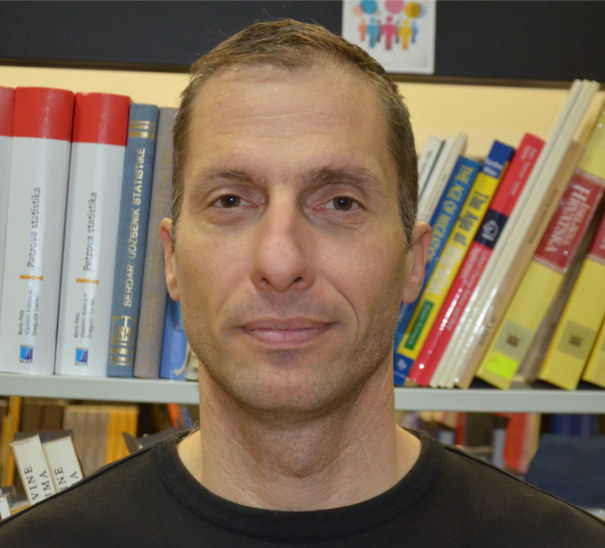
Goran Oreški is an Associate Professor and Head of the Laboratory at the Faculty of Informatics in Pula (University Jurja Dobrile, Croatia), where he has been employed since 2019. He teaches courses on databases, object-oriented programming, data warehousing, and artificial intelligence at both undergraduate and graduate levels. Education: Ph.D. in Informatics (2016), Faculty of Organization and Informatics Industry Experience: 9 years as software architect and programmer in banking sector Research Focus: Artificial Intelligence systems, classical machine learning algorithms, and deep learning architectures. His work bridges theoretical advancements with practical applications in autonomous vehicles, traffic monitoring, and financial risk assessment. Recent Publication Trends: 2023-2025 works emphasize generative AI for synthetic credit data, traffic object segmentation with monocular cameras, and context-aware detection models (YOLO*C). Earlier works focus on genetic algorithms and ensemble learning for imbalanced datasets. Awards: Google RFP Award for autonomous vehicle research Highly Cited Paper (Web of Science, top 1%) Best Paper at CECIIS conference Leadership: Director of FIPU Laboratory since 2022, leading projects like ai.Shuttle (autonomous mini-bus) and CenAI (industry collaboration with Cenosco).
Prof. Dr. Igor S. Pandžić is a Full Professor at the Department of Telecommunications , Faculty of Electrical Engineering and Computing (FER) , University of Zagreb . He is also affiliated with the Center of Excellence for Computer Vision , actively contributing to research in computer graphics, virtual humans, and interactive systems. Education: While specific degrees are not listed in the provided text, his title "prof. dr. sc." (Croatian for Full Professor with a Doctor of Science degree) indicates he has completed doctoral studies and achieved the highest academic rank. Research Interests: Virtual Humans & Avatars: Creation, animation, and behavioral modeling of lifelike virtual characters for interactive applications. Facial Animation & Biometrics: Real-time speech-driven facial animation, facial expression recognition, age/gender estimation, and biometric data filtering. 3D Graphics & Virtual Environments: Real-time rendering, networked collaborative virtual environments (e.g., VLNET), and 3D visualization on mobile/web platforms. Human-Computer Interaction: Multimodal interfaces combining speech, gesture, and facial cues for embodied conversational agents (ECAs). Computer Vision: Face alignment, landmark detection, pattern recognition with decision trees, and efficient algorithms for mobile deployment. Research Trends from Publications: His recent work (2022-2023) emphasizes efficiency in computer vision (e.g., fast face alignment, memory-efficient models), unsupervised learning for biometric data quality improvement, and real-time applications on mobile devices. Earlier foundational work spans MPEG-4 facial animation standards, networked virtual environments, and virtual human frameworks. Scientific Awards: No specific awards are mentioned in the provided text. Advising & Grants: While individual students are not named, his extensive publication record and leadership in research centers imply active supervision of PhD and Master's students. Grant details are not specified. Labs & Teams: He leads or heavily contributes to the Center of Excellence for Computer Vision at FER, fostering interdisciplinary collaboration in visual computing and AI.
Zdenko Kovačić is a Research Associate at the Department of Control and Computer Engineering, Faculty of Electrical Engineering and Computing (FER), University of Zagreb. He founded the Laboratory for Robotics and Intelligent Control Systems (LARICS) , focusing on advanced robotics and control systems research. Robotics in viticulture and mariculture Autonomous mobile manipulators and UAVs Human-robot interaction for therapy and diagnostics SLAM and 3D data processing for navigation Fuzzy and adaptive control algorithms
Dr. Tomislav Petković is an Associate Professor at the Department of Electronic Systems and Information Processing within the Faculty of Electrical Engineering and Computing (University of Zagreb). His research focuses on Computer Vision , 3D Imaging , and Signal Processing , particularly in applications like Structured Light Profilometry , Human Pose Estimation , and Medical Imaging . He has contributed extensively to 3D reconstruction techniques, including underwater calibration, smartphone-based scanning, and anomaly detection in solar plant data. His work spans Deep Learning , Regression Models , and Optical Flow for tasks such as Guidewire Reconstruction in X-ray imaging and Stabilized Battery Design for robotic systems. A recurring theme in his publications is the development of Self-Equalizing De Bruijn Sequences and Multi-Projector Systems for improved 3D imaging. He also explores Keypoint Detection , GAN Architectures , and Visual Quality Inspection in discrete manufacturing.
Assoc. Prof. Dr. Sc. Goran Đambić is an Associate Professor at Algebra University in Croatia, focusing on information sciences , computer science , and digital technologies applied to education and social/economic challenges. His work bridges software engineering , machine learning , and cybersecurity with pedagogical innovation in higher education. MSc in 2007, Faculty of Electrical Engineering and Computing, Zagreb His research emphasizes machine learning and automated assessment in education (via systems like AcpSQL), cybersecurity (honeypots), and IoT applications for environmental monitoring. He has published over 25 scientific papers and contributed to advancements in Kubernetes orchestration , ARM/RISC-V architectures , and LPWAN networks . Recent publications highlight trends in AI-driven education , smart public transport , and secure business systems . His work spans SQL query evaluation , containerization , and blockchain applications in communication systems. As a lecturer and researcher, he has held roles at Algebra University since 2007, advancing from lecturer to assistant professor and scientific associate . While no specific scientific awards are listed, his career reflects continuous engagement in digital transformation and pedagogical innovation .
Pero Raos is a Full Professor at the Josip Juraj Strossmayer University of Osijek's Faculty of Mechanical Engineering, Department of Production Engineering, where he has held a permanent position since 2006. His academic career spans over three decades, progressing from Research Assistant at the University of Zagreb to his current professorship. He serves as Editor-in-Chief of the scientific journal Tehnički vjesnik and holds significant leadership roles including membership in the Scientific Council for Technological Development of the Croatian Academy of Sciences and Arts. Doctor of Technical Sciences, University of Zagreb (1991) Bachelor of Mechanical Engineering, University of Zagreb (1983) Professor Raos' research spans polymer engineering, additive manufacturing, and biomedical applications. His work focuses on polymer processing, rapid prototyping, and the application of finite element methods in material design. Recent research emphasizes medical applications including orthosis production using additive technologies and CO2 emissions analysis in industrial processes. His expertise bridges traditional mechanical engineering with cutting-edge biomedical applications, particularly in personalized medical device manufacturing. Analysis of his recent publications reveals three dominant research trajectories: 1) Medical device innovation through additive manufacturing (particularly orthoses), 2) Environmental impact assessment of industrial processes with focus on CO2 emissions, and 3) Advanced polymer composite development. These areas demonstrate his ability to connect fundamental material science with practical engineering solutions for healthcare and sustainability challenges. State Award for Science of Croatia (2012) 7th Secretary of Serbian Society of Journalists Award (1987) Faculty of Mechanical Engineering Medal (1984) Professor Raos has secured substantial research funding including leadership of the University of Slavonski Brod's scientific project 'New Production Technologies' and directorship of the IPA IIIc project 'Innovative flexible system for the production of individual spinal orthoses – OrtoFlex' (2013-2015). He has mentored numerous students through the CROSBI mentoring system and serves on multiple national scientific councils including the Regional Scientific Council for Technical Sciences where he is Deputy Chairman since 2008. His international collaborations include Humboldt Foundation research at Aachen University and work with the University of Liège. He leads the interdisciplinary research program 'Rapid Production – from Idea to Reality' and maintains active laboratory work in polymer processing, additive manufacturing, and medical device development through the Department of Production Engineering's facilities.
Dr. Kristian Sabo is a Full Professor at the School of Applied Mathematics and Informatics , Josip Juraj Strossmayer University of Osijek, Croatia. His research focuses on Applied and Numerical Mathematics with applications in Agriculture , Medicine , and Seismology . He has developed innovative clustering algorithms like adaptive Mahalanobis fuzzy clustering and hybrid RANSAC-DBSCAN methods. PhD (2007) and MSc (2003) in Mathematics, University of Zagreb BSc (1999) in Mathematics and Computer Science, University of Osijek Research Highlights : Created Minimal Distance Index for optimal cluster validation in complex datasets Developed DIRECT algorithm adaptations for global optimization in multi-dimensional partitions Applied clustering methods to earthquake analysis and medical imaging Software Development : Co-developed LeArEst R package for noisy image analysis Created Mathematica modules for pandemic forecasting models
Assistant Professor Ante Panjkota holds a Ph.D. and is affiliated with the Department of Information Sciences and Technologies at the University of Zagreb. His office is located in Office 45, and he can be reached at apanjkot@unizd.hr. Regular consultations are held every Friday from 9:30 to 11:30 AM via prior email notification. His academic background includes teaching courses such as Basics of Information Technology, Programming Basics, Introduction to Network Systems, Advanced Programming, Data Mining, and Information Search and Retrieval. His research interests span programming, algorithms, machine learning theory, data mining, signal processing, and business intelligence with notable contributions to e-government frameworks and motion analysis systems. Key research activities include the TRIPLE project focusing on interdisciplinary research practices. His publications reflect expertise in data-driven methodologies, including neural networks for financial forecasting, e-government maturity models, and innovative motion-tracking systems. He has also explored applications of inductive logic programming in robotic vision and developed frameworks for analyzing human motion in sports contexts. While no scientific awards are explicitly listed, his work demonstrates sustained engagement with cross-disciplinary challenges in information sciences and technology. His teaching and research activities are further detailed in his CV available in Croatian and English formats.
Željka Car is a Professor at the Faculty of Electrical Engineering and Computing (FER) , University of Zagreb, Croatia. She serves as Head of the Department of Telecommunications and focuses on research in telecommunications, software engineering, and human-computer interaction. Research Interests : Accessibility in digital systems, augmented reality, assistive technology, serious games for education, machine learning applications, network reliability, and project management. Teaching : Leads courses in project management and software development methodologies. Projects : Involved in developing ICT-AAC applications for children with developmental disabilities, VR/AR tools for military and educational use, and software process improvement frameworks. Publications highlight trends in accessible software design, gesture-based interfaces, and integration of emerging technologies with augmentative and alternative communication (AAC) systems.
Sun Yacheng is a Professor at the School of Economics and Management, Tsinghua University, where he actively contributes to research on digital transformation in the manufacturing sector. His expertise bridges economic theory and practical industrial applications. Professor Sun's research focuses on how intelligent sensing technology can drive digital transformation in manufacturing. His work particularly emphasizes the application of IoT, computer vision, and RFID technologies to create closed-loop systems of 'perception-analysis-decision-execution.' He investigates how high-precision 3D spatial reconstruction, end-to-end customer flow tracking, and multi-source data fusion can provide businesses with comprehensive market understanding and process optimization capabilities. His research shows how AI and machine learning can advance analytics from descriptive to predictive and prescriptive models, enhancing business decision-making. As part of Tsinghua School of Economics and Management's 'Two Sessions Through a Financial Perspective' series, Professor Sun provided expert analysis of the Government Work Report's call to accelerate digital transformation in manufacturing. He highlighted the strategic importance of cultivating service providers who understand both industry processes and digital technologies, with particular attention to the challenges facing small and medium enterprises in digital adoption.
Professor Quoc Chi Nguyen serves as Vice Dean of the Faculty of Mechanical Engineering at Ho Chi Minh City University of Technology, Vietnam. He also holds the position of Head of the Department of Mechatronics since 2018. With a strong academic background including a Ph.D. from Pusan National University, Korea, and a Marie Curie FP7 postdoctoral fellowship at Tel Aviv University, Professor Nguyen has established himself as a leading researcher in control engineering and robotics. Professor Nguyen's educational journey began with a B.S. in Mechanical Engineering from Ho Chi Minh City University of Technology in 2002, followed by an M.S. in Cybernetics from the same institution in 2006. He completed his Ph.D. in Mechanical Engineering at Pusan National University, Korea, in 2012, and then pursued postdoctoral research at Tel Aviv University from 2013-2014. His research expertise spans Robotics , Crane Control , Vibration Control , Nonlinear Analysis , Dynamic Analysis , and Advanced Control Theory . Professor Nguyen's work focuses on developing innovative control algorithms for flexible structures, industrial automation systems, and mechatronic applications. His recent publications demonstrate a strong emphasis on practical industrial applications of control theory, including robotics integration, computer vision systems, and energy-efficient pneumatic systems. With 58 publications that have accumulated 32,041 reads and 782 citations, Professor Nguyen has established a significant research impact. His publication trend shows consistent productivity with recent work extending to projected 2025 publications, indicating an active and ongoing research program. The breadth of his work spans from fundamental control theory to practical industrial applications across multiple sectors including manufacturing, agriculture, and logistics. Marie Curie FP7 Postdoctoral Fellowship Professor Nguyen currently leads research activities through his lab at Ho Chi Minh City University of Technology. His leadership roles as Vice Dean and Department Head provide substantial resources and opportunities for research collaboration. With numerous co-authors and international connections, particularly stemming from his time at Tel Aviv University, he maintains an active global research network that benefits his students and colleagues.