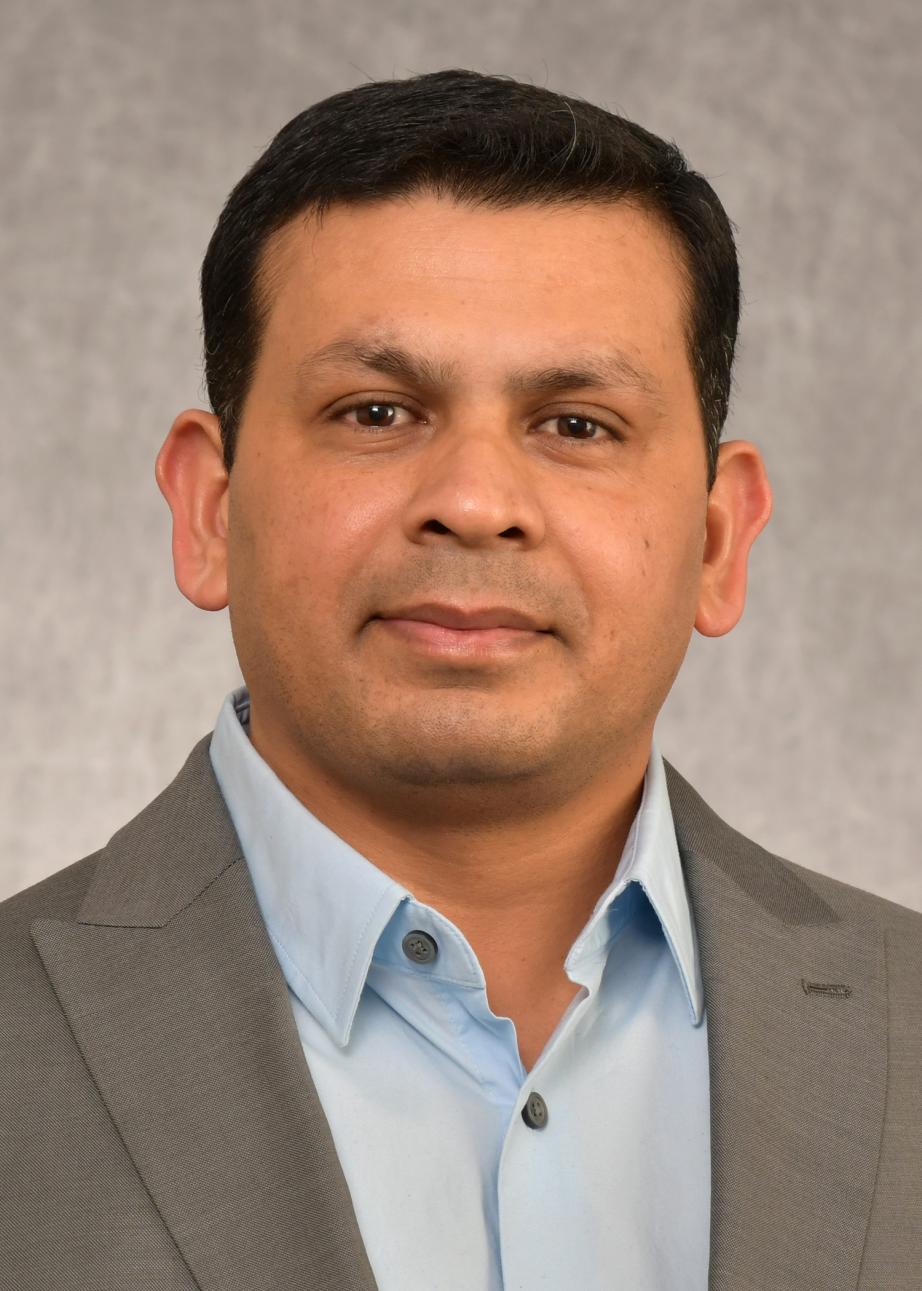
Joseph J. LaViola Jr. is a Professor at the University of Central Florida , specializing in Human-Computer Interaction , Virtual Reality , and 3D User Interface Design . With over two decades of research, his work bridges computer graphics and immersive technologies for applications in gaming, education, and engineering.
Maks Ovsjanikov is Professor of Computer Science at École Polytechnique and Visiting Research Scientist at Google DeepMind. Leading the GeomeriX team, his ERC-funded research develops deep learning methods for 3D shape analysis with applications in protein modeling and computer vision. Recent breakthroughs include CrAI for antibody detection in cryo-EM data and surface-based protein representations. His group pioneers neural approaches for non-rigid shape matching and geometric deep learning fundamentals. Collaborations span structural biology, with work featured at top venues including SIGGRAPH, CVPR, and Nature journals.
Aristidou Andreas is an Associate Professor at the Department of Informatics, University of Cyprus. His academic journey includes a BSc from National and Kapodistrian University of Athens (2005), MSc from King's College London (2006), and a PhD from the University of Cambridge (2011). He has held postdoctoral positions at multiple institutions and served as a visiting professor at the University of Nicosia. His research focuses on human motion analysis, computer graphics, cultural heritage digitization, and geometric algebra applications. He is a senior member of IEEE, ACM, and Eurographics, and serves on editorial boards for journals like The Visual Computer. Research highlights include the FABRIK algorithm (widely used in game engines) and motion capture innovations for cultural heritage preservation. Awards include the DIDAKTOR scholarship, Erasmus Mundus Grant, and NVIDIA GPU grant. He leads projects funded by EU initiatives (e.g., ITN-DCH, SCHEDAR) and collaborates internationally on digital twins, virtual museums, and AI-driven motion synthesis. Key contributions span 3D motion analysis, motion reconstruction from sparse data, and emotion recognition in theater performances. His work bridges computational methods with cultural preservation, biomedical applications, and interactive VR systems.
Onur Mutlu is a Full Professor of Computer Science at ETH Zurich (since 2015), with adjunct professor positions at Carnegie Mellon University (since 2016) and Bilkent University (since 2015). His academic career spans prestigious institutions including Carnegie Mellon University where he served as Assistant Professor (2009-2013) and Strecker Early Career Endowed Professor (2013-2016). His research focuses on computer architecture, particularly memory systems, with expertise in: Computer memory systems and DRAM architecture Multi-core processor design Fault tolerance and reliability Hardware/software interactions Systems security related to hardware Emerging memory technologies Dr. Mutlu's work has significantly impacted both academic research and industry practices. His discovery of the RowHammer problem created a new field at the intersection of hardware reliability and systems security. His research on memory controllers, flash memory reliability, and emerging memory technologies has been adopted by major technology companies including Samsung, Intel, IBM, and Microsoft. His numerous scientific awards include the IEEE Computer Society Harry H. Goode Memorial Award (2025), IFIP Jean-Claude Laprie Award (2024), Huawei OlympusMons Award (2023), IEEE Computer Society Edward J. McCluskey Technical Achievement Award (2020), and ACM SIGARCH Maurice Wilkes Award (2019). He is an IEEE Fellow (2018), ACM Fellow (2017), and member of Academia Europaea (2018). Dr. Mutlu has received significant industry recognition with Faculty Awards from Google, Facebook, HP, Huawei, IBM, Intel, Microsoft, NSF, and VMware. His work has earned over 20 Best Paper awards and 12 papers selected for IEEE Micro's Top Picks as some of the most influential papers in computer architecture. He maintains strong industry connections, having worked at Microsoft Research (2006-2009), Intel (multiple summers), AMD (multiple summers), VMware (2016), and Google (2016), enabling direct technology transfer of his research ideas into commercial products.
John V. Tucker is a Professor of Computer Science at Swansea University since 1989. He served as Head of the Department of Computer Science (1994-2007) and Head of the School of Physical Sciences (2007-2011). His research spans theoretical computer science, history of computing, and computational foundations of physics. Education: MSc in Mathematical Logic and Foundations of Mathematics and Computer Science (1974) and PhD in Mathematical Logic (1977) from the University of Bristol. His research interests include the theory of synchronous algorithms, physical foundations of computation, algebraic specification, and algorithmic models of nonlinear systems. He pioneered equational specification methods for microprocessors, 3D graphics, and whole-heart modeling. Scientific awards include: Founding Fellow of the Learned Society of Wales (2010) Elected Fellow of British Computer Society (1998) He has supervised 16 PhD students directly and contributed to supervision in Uppsala, served on EU project evaluation panels, chaired appointments, and led editorial roles in journals and book series.
Lonni Besançon is an Assistant Professor of Visualization at Linköping University, Sweden, serving as a 2023 ASAPBio Fellow, Scientific Node Coordinator for the Swedish National Visualization Infrastructure InfraVis, and co-editor-in-chief of the Journal of Visualization and Interaction (JoVI). Education includes: PhD in HCI from Université Paris Saclay (2014-2017) Master of Research in HCI from Université Paris Sud (2013-2014) Exchange studies at University of Hong Kong (2013-2014) Master of Engineering from Polytech Paris Sud (2011-2014) Classe Préparatoire at Polytech Paris Sud (2009-2011) Research focuses on developing novel interaction techniques for volumetric data visualization and enhancing statistical interpretation through innovative visualizations. His work emphasizes methodological improvements in research practices, including detecting questionable research practices and enhancing transparency, robustness, and reusability of scientific outputs. Additional interests include augmented reality interfaces, collaborative visualization systems, and open science advocacy. Publications demonstrate consistent focus on augmented reality interfaces, collaborative visualization, research transparency, and statistical interpretation methods. Recent works showcase increasing emphasis on open science practices and methodological critiques, with notable contributions to understanding peer review systems and pandemic-related research evaluation. Awards and honors: ASAPBio Fellow (2023) GRD IG-RV Honorable Mention (2018) Advising and supervision includes mentorship of graduate students Xiyao Wang, Marie Cheng, and Mickael Francisco Sereno. Teaching experience encompasses courses in Interactive Information Visualization, Algorithms, Graph Theory, and Computer Security at Université Paris Saclay and Polytech Paris Sud. Leads research initiatives at Linköping Visualization Center and collaborates internationally through InfraVis. Serves on program committees for ACM IHM and IEEE EuroVis, while contributing to numerous conferences including CHI, IEEE VIS, and ISMAR.
Md Liakat Ali is an Associate Professor in the Department of Computer Science and Physics at Rider University, New Jersey. He holds a Ph.D. in Computer Science from Pace University and multiple Master's degrees from Blekinge Institute of Technology and International Islamic University Chittagong. His academic career includes roles at Rider University since 2018, prior positions at Caldwell University, Rowan University, and adjunct roles at several institutions. His research focuses on Machine Learning, Artificial Intelligence, Behavioral Biometrics, Cybersecurity, and Data Science. Notable contributions include studies on keystroke dynamics for authentication, phishing detection, and cybersecurity threats. He has received grants including an NSF award (Co-PI) for STEM education and multiple Best Paper Awards at IEEE conferences (2022, 2021, 2018, 2017). Ali has authored/co-authored over 40 publications, including a book on wireless security and journals in Electronics , IEEE Transactions , and conference proceedings. His work spans fraud detection, healthcare analytics, and blockchain security. He has led presentations on topics like biometrics, neural networks, and cybersecurity at international venues such as CVCI, IVSP, and IEEE conferences. Education: Ph.D., Computer Science, Pace University, New York M.S., Electrical Engineering, Blekinge Institute of Technology, Sweden B.S., Computer Science & Engineering, International Islamic University Chittagong His grants include NSF funding for STEM education initiatives and a Rider University grant for online course development. He has collaborated on projects like CUE-T to broaden computing participation and enhance active learning strategies. Ali’s lab focuses on cybersecurity, biometric systems, and machine learning applications. His research teams address challenges in fraud detection, medical diagnosis, and secure software development, reflecting his interdisciplinary approach to technological innovation.
Si Qiao is a Senior Teaching Fellow at the School of Film, Media and Creative Technologies, Faculty of Creative & Cultural Industries, University of Portsmouth. She serves as Deputy Course Leader for BSc Computer Animation and Visual Effects and is an active postgraduate research supervisor. Her work bridges digital art and technology, focusing on character animation and virtual human interaction. Research Interests: Her research centers on character development, 2D concept art, digital sculpture, and 3D human cephalic animation. She investigates visual realism, audience perception, and emotional response to computer-generated human behaviors. Her work integrates principles from animation, cognitive science, and human-computer interaction to enhance the believability of virtual characters. The recent articles show a consistent focus on the realism and behavioral accuracy of virtual avatars, particularly in human-computer interaction contexts. Themes include audience judgment of facial expressions, fidelity in virtual environments, and emotional engagement with digital humans. These works contribute to both artistic animation practices and technical developments in virtual reality and AI-driven characters. Scientific Awards: Guest Professor (2021) Si Qiao actively supervises PhD students and leads research projects such as 'Reproduction the Original Appearance' and 'Immersive Student Support Project - Virtual Tutors'. She has secured funding for initiatives involving virtual reality and audience interaction studies. Her collaborations span academic and industry partners, enhancing applied research outcomes. She is involved in projects exploring virtual tutors and the impact of facial expressions on decision-making, indicating a strong focus on applied immersive technologies. Her affiliations with external organizations like iDreamSky and the National Museum of the Royal Navy reflect her engagement in knowledge exchange and real-world applications of her research.
Dr Jiacheng Tan is a Senior Lecturer in the School of Computing at the University of Portsmouth , where he has been a faculty member since 2002. He is actively involved in research and PhD supervision, with a strong focus on intelligent systems and robotics. Dr Tan earned his BEng in Mechanical Engineering from Jilin University of Technology (1983), an MSc in Mechatronics from Xidian University (1989), and a PhD in Computer Graphics from De Montfort University (2001). Prior to joining Portsmouth, he served as a Visiting Researcher in robotics at the University of Salford (1996–1997) and a Research Fellow in artificial intelligence at the Open University (2000–2002). His research centers on computer vision, intelligent robot control, 3D graphics, and human-robot interaction . He investigates how robots can understand and act upon natural language commands by grounding spatial relations, recognizing objects, and reasoning about tasks in unstructured environments. His work integrates fuzzy logic, knowledge engineering, and machine learning to enable robots to learn from demonstrations and interact meaningfully with humans. The trends in his publications reveal a consistent focus on robotics and intelligent systems , evolving from early work in virtual environments and telerobotics to recent contributions in cloud-based scientific visualization and machine learning applications in astrophysics. His interdisciplinary research spans computer science, control theory, and cognitive systems. Dr Tan has not received any explicitly mentioned scientific awards in the provided text. He serves as a PhD supervisor and has contributed to multiple research projects, including the development of integrated AI frameworks for robotic manipulation. While specific grant details are not listed, his collaborations and publications suggest active involvement in funded research initiatives. He has worked with researchers across institutions on topics ranging from scientific visualization to intelligent interfaces. Dr Tan is affiliated with the Computational Intelligence Research Group at the University of Portsmouth. His lab work involves developing virtual environments, symbolic representations of 3D scenes, and natural language interfaces for robot control, supporting both academic research and practical applications in automation.
Ekaterini Manias is a Professor at the School of Electrical and Computer Engineering, Technical University of Crete . She specializes in perception-based computer graphics, virtual reality, and haptic technologies, leading the SURREAL research group . Education : Ph.D. in Computer Science (University of Bristol, 2001), M.Sc. in Computer Science (University of Bristol, 1996), B.Sc. in Mathematics (University of Crete, 1994). Research Interests span 3D spatial cognition, distributed graphics, human-computer interaction, and gaze-contingent displays. Her work integrates psychophysics, usability engineering, and real-time rendering techniques. Professional Roles : Professor at Technical University of Crete (since Dec 2005) Assistant Professor (tenure 2004) and Lecturer at University of Sussex Researcher at Hewlett Packard Research Laboratories (1996-1998) Coordinator of SURREAL research group Associate Editor for ACM Transactions on Applied Perception and Presence, Teleoperators and Virtual Environments Chair/co-chair roles at ACM Siggraph, Eurographics, and other international conferences
Dr. Dorota Jegorow is an Assistant Professor at the Department of Econometrics and Statistics , Institute of Economics and Finance , within the Faculty of Social Sciences at the John Paul II Catholic University of Lublin , Poland. Specializes in Econometrics , Regional Development , and European Cohesion Policy Active in Entrepreneurship , Public Finance , and Digital Technology Applications in socio-economic contexts Recipient of 2022 National Award for research on cryptocurrency volatility
Arash Mohammadi is an Assistant Professor in the Department of Electrical and Computer Engineering at Concordia University, Montreal, Canada. He holds a PhD from the University of Toronto (2015) and was formerly affiliated with Amirkabir University of Technology, Iran. His research bridges signal processing, artificial intelligence, and biomedical applications. Research Interests: Signal and image processing for healthcare (e.g., lung cancer detection, ECG analysis) Machine learning for smart grids and cyber-physical systems AI in mobile edge computing and 6G networks Transformer and diffusion models for medical and motion data Federated and efficient deep learning for edge devices His recent publications (2021–2025) in top venues like IEEE TSP, ICASSP, and AAAI demonstrate a strong focus on applying cutting-edge AI—especially vision transformers, Mamba architectures, and diffusion models—to critical domains such as medical diagnostics, gesture recognition, and network security. Trends include multimodal fusion, uncertainty quantification, and efficient model design. Scientific Contributions: Developed novel frameworks like NYCTALE and MIXCAPS for lung nodule malignancy prediction Introduced CacheMamba and TEDGE-Caching for edge network optimization Advanced EMG-based gesture recognition using hybrid and transformer models Contributed to cybersecurity in smart grids via attack detection models He actively advises students and collaborates with researchers such as Konstantinos N. Plataniotis and Jamshid Abouei. He has contributed to special issues on neurorehabilitation and AI for COVID-19 diagnosis. His work often involves interdisciplinary teams and real-world applications in healthcare and smart infrastructure.
Kai-En Lin is an AR/VR engineer at Apple's Vision Products Group (VPG), with a PhD in Computer Science and Engineering from the University of California, San Diego. His research focuses on novel view synthesis from dynamic scenes and sparse inputs, supported by a Qualcomm FMA fellowship during his graduate studies. PhD: CSE Department, UC San Diego (advised by Prof. Ravi Ramamoorthi) Undergraduate: EE Department, National Taiwan University (advised by Prof. Homer H. Chen) His work intersects computer graphics , neural rendering , and 3D reconstruction , with key contributions in Deep 3D Mask Volumes, NeRF-based view synthesis, and light-transport modeling for portraits. Collaborations include researchers from Google, Meta, and Adobe. His recent publications apply NeRF , diffusion models , and vision transformers to problems such as dynamic scene synthesis and single-image 3D reconstruction. Notable co-authors include Ravi Ramamoorthi, Tsung-Yi Lin, and Lei Xiao. Scientific Awards: Qualcomm FMA fellowship He has contributed to influential papers in venues like ICML , ECCV , ICCV , and IEEE Transactions on Pattern Analysis and Machine Intelligence (PAMI) . These works emphasize neural view synthesis , dynamic scene modeling , and editable 3D content generation .
Michael Neff is a Professor at the University of California, Davis, affiliated with the Department of Computer Science and Department of Cinema and Digital Media. He directs the Motion Lab, an interdisciplinary research group exploring the intersection of computation and human movement. Education: PhD in Computer Science from the University of Toronto (2005), Certified Laban/Bartenieff Movement Analyst (CLMA, 2009) Research Interests: Focus on character animation tools, gesture and nonverbal communication modeling, physics-based animation, and applying performing arts concepts to virtual character movement. His work bridges art and science through collaborations with robotics, psychology, and dance departments. Recent Research Trends: Over the past five years, his publications demonstrate a focus on speech-driven gesture synthesis, physics-based character control in VR environments, and multimodal analysis of movement perception. Key themes include tension modeling, motion style transfer, and avatar trust dynamics. Awards & Recognition: NSF CAREER Award (2009-14) Isadora Duncan Award for Visual Design (2009) Best Paper Awards at Intelligent Virtual Agents (2007), Motion in Games (2015, 2016) Alain Fournier Memorial Award (2005) IBM PhD Fellowship for advisee Simbarashe Nyatsanga Advising & Collaborations: Has mentored 18 graduate students (PhD/Masters) and numerous undergraduates. Collaborates across disciplines with computer scientists, dancers, and psychologists. Currently chairs the Department of Cinema and Digital Media. Laboratory Facilities: Established a motion capture lab in 2007 featuring a 12-camera optical system in a 750 sq ft studio, supporting interdisciplinary research in movement analysis.
Asmaa Farouk Mohammed is a researcher at Vienna University of Technology's Department of Software Technology and Interactive Systems. Her work focuses on computer vision, stereo matching, and real-time algorithms, with a strong emphasis on cost-volume filtering and adaptive support weight techniques. She holds a PhD in computer science and has contributed significantly to 3D video technology and interactive video segmentation. Key research areas include: Efficient stereo matching algorithms for real-time applications Spatio-temporal filtering for video processing Interactive systems for object segmentation Geodesic-based image processing methodologies Her publications demonstrate a clear trajectory in advancing both theoretical and applied aspects of visual correspondence and 3D reconstruction. Collaborations with researchers like Michael Bleyer and Margrit Gelautz highlight her role in interdisciplinary projects. While no specific grants or awards are listed, her extensive publication record reflects sustained contributions to the field of computer vision since 2009. She is affiliated with the Network Lab at TU Wien, contributing to cutting-edge research in interactive systems and algorithm optimization.