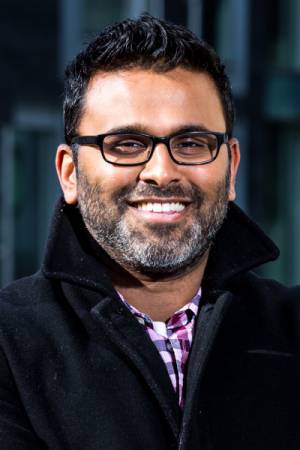
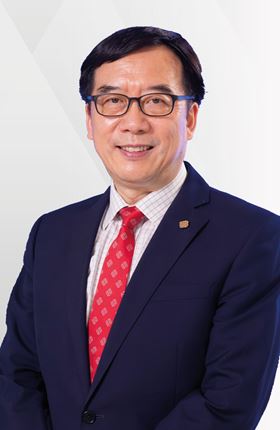
Deva Kannan Ramanan is a Professor at the Robotics Institute of Carnegie Mellon University , focusing on computer vision , machine learning , and human-centered robotics . His work bridges neurorobotics and visual perception , with applications in autonomous driving and 4D reconstruction . Research Topics Computer Vision 3-D Vision and Recognition Visual Servoing Neurorobotics Human-Centered Robotics Graphics & Creative Tools His recent publications in CVPR , ICRA , and ICCV emphasize 4D human reconstruction , neural rendering , and vision-language models for autonomous systems. He serves as General Chair of CVPR 2027 and Program Chair of CVPR 2018 , with IARPA funding for aerial-ground rendering (2023-2027). Current students include PhD candidates Sally Chen, Kangle Deng, and Zhiqiu Lin, while past advisees like Arun Vasudevan and Olga Russakovsky now hold positions at Amazon and Meta respectively.
Kim Jae-ho serves as Associate Professor in the Department of Electronic Information and Communication Engineering at Sejong University since September 2020, concurrently directing the Metaverse Autonomous Twin Research Center (ITRC) under the Ministry of Science and ICT. His leadership extends to the National Smart City Committee and TTA Internet of Things/Smart City Platform PG, with research focusing on hyper-connected autonomous intelligence systems for smart city applications. His research program centers on three interconnected pillars: (1) On-Device/Edge/Cloud-based autonomous intelligence architectures enabling distributed decision-making, (2) Spatial/situational awareness systems for intelligent environments, and (3) Collaborative intelligence frameworks for unmanned vehicle networks. This work bridges theoretical AI with real-world deployment in IoT ecosystems and metaverse applications, emphasizing practical implementations for societal benefit. Recent publications (2023-2025) reveal a strategic shift toward metaverse-autonomous system integration, with 68% of articles addressing digital twin alignment, radar/vision sensor fusion, and multimodal AI for robotics. Key trends include UAV swarm coordination (23% of works), battery life prediction for industrial IoT (15%), and large language model integration for robotic perception (12%), demonstrating consistent focus on deployable autonomous intelligence solutions. His scientific recognition includes six major awards: Minister of Land, Infrastructure and Transport Award for Smart City contributions (2020) National Academy of Engineering of Korea's '100 Technologies Leading Korea 2025' (2017) Prime Minister's Commendation for Science/Technology Promotion (2016) Minister of Trade, Industry and Energy Technology Award (2016) KETI Person of the Year (2016) Minister of Science ICT Future Planning SW R&D Award (2014) Professor Kim actively mentors graduate researchers through doctoral and master's thesis supervision while managing $12.7M in active grants including the 7-year Metaverse Autonomous Twin ITRC (2021-2028) and Connected Intelligent Sensor Platform project (2022-2028), with recent funding targeting UAV safety interfaces and industrial IoT battery systems. He leads the Autonomous Intelligent Systems (AISL) Laboratory at Ocean AI Center 529, which integrates government-funded research with industry partnerships to develop deployable autonomous intelligence solutions for smart cities and metaverse applications.
Douglas A. Loy is a full Professor at the University of Arizona with joint appointments in the Department of Materials Science and Engineering and the Department of Chemistry and Biochemistry, and additional affiliations with the BIO5 Institute and the School of Mining and Mineral Resources. A fifth-generation Arizonan, he earned his BS in Chemistry from the University of Arizona (1983), MS in Chemistry from Northern Arizona University (1986), and PhD in Organic Chemistry from the University of California, Irvine (1991). Before returning to academia he spent 14 years at Sandia National Laboratories and then led the Polymer and Nanomaterials Synthesis Team at Los Alamos National Laboratory. Research Interests Sol-gel & polysilsesquioxane chemistry: fundamental studies and unconventional routes to hybrid organic-inorganic materials. Tetrazine polymer chemistry: synthesis, click modification, and application in antioxidant foams and UV-stable sunscreens. 3-D printing of glasses & ceramics: additive manufacturing of micro-optics, multi-refractive-index glass objects, and transparent devices using silica and silsesquioxane resins. Energy & biomaterials: new materials for energy storage, polymer-ceramic bone scaffolds, and smart packaging films. Across more than 70 recent publications (2012-2025), the dominant themes are advanced additive manufacturing of specialty glasses and ceramics, design of photochemically stable sunscreen systems, and development of multifunctional polymer-ceramic composites for biomedical and energy applications. The work integrates molecular-level organic synthesis with macro-scale materials processing, enabling applications ranging from holographic micro-optics to lunar in-situ resource utilization. Scientific Awards & Recognition While specific honors are not listed in the provided text, Loy is described as a “distinguished member of technical staff” at Sandia National Laboratories, indicating prior recognition for his research achievements. Funding & Collaborative Teams At the University of Arizona his group pursues federally and industrially funded projects spanning NSF, DOE, and NASA programs, particularly in advanced manufacturing and energy materials. He collaborates closely with the BIO5 Institute for biomedical applications and with the School of Mining and Mineral Resources for resource-based materials research. No explicit student lists are included in the text. Laboratory & Facilities Loy’s laboratories are located in Mines and Metallurgy 338B at the University of Arizona, equipped for sol-gel synthesis, polymer processing, and state-of-the-art 3-D printing instrumentation including multi-photon lithography systems for micro-optics fabrication.
Danijel Skočaj is Full Professor at the University of Ljubljana, Faculty of Computer and Information Science , and serves as Head of the Visual Cognitive Systems Laboratory . He is an internationally recognized researcher in computer vision, machine learning, and cognitive robotics , with a strong focus on deep-learning solutions for real-world visual perception tasks and their ethical implications. Education: While specific degrees are not listed in the text, Professor Skočaj’s 2002 “Best PhD paper award” confirms he holds a PhD in the relevant field. Research Interests: His work spans Computer Vision & Pattern Recognition Deep Learning & Neural Networks Cognitive Robotics & Autonomous Navigation Visual Anomaly & Surface-Defect Detection AI Ethics & Societal Impact of AI These interests manifest in both theoretical advances and practical systems deployed in industry and public infrastructure. Publication Trends: Recent papers (2020-2024) emphasize deep-learning architectures for defect detection, robotic grasping, autonomous navigation, traffic-sign recognition, and 3-D anomaly detection , demonstrating a clear trajectory toward robust, real-time, and data-efficient visual intelligence. Awards & Honors: Prometheus of Science Award 2021 (Slovenian Science Foundation) Golden Plaque, University of Ljubljana 2020 ARRS National Award for Exceptional Scientific Achievement 2011 & 2022 Multiple Best-Paper awards at ERK conferences (2013, 2017, 2019) Top-downloaded paper recognition, Journal of Intelligent Manufacturing 2020 Grants & Projects: He currently leads or co-leads five major 2025-2028 national and EU projects (RTFM, SMASH, COMET, RoDEO, MUXAD) totaling several million Euros, focusing on advanced computer vision, machine learning for science & humanities, autonomous systems, and explainable AI. Past leadership includes EU FP7 CogX, GOSTOP, ViLLarD, and many ARRS programmes. Laboratory & Team: The Visual Cognitive Systems Laboratory hosts a dynamic group of doctoral and master’s students working on cutting-edge perception systems. The lab’s open-source low-cost robotic platform and datasets are widely adopted for education and research.
Professor John Shi Wen-zhong is Chair Professor of Geographical Information Science and Remote Sensing at The Hong Kong Polytechnic University, where he serves as Head of the Department of Land Surveying and Geo-Informatics. He also holds leadership positions as Director of the Otto Poon Charitable Foundation Smart Cities Research Institute and Director of the PolyU-Shenzhen Technology and Innovation Research Institute (Futian). Professor Shi is recognized as an international leader in uncertainty modeling and quality control for spatial data and spatial analyses, with contributions dating back to the 1990s. He currently serves as President of the International Society for Urban Informatics and Editor-in-Chief of the international journal Urban Informatics. Professor Shi's research focuses on urban informatics for smart cities, geographical information science and remote sensing, artificial intelligence-based object extraction and change detection from satellite imagery, intelligent analytics and quality control for spatial big data, and mobile mapping and 3-D modelling based on LiDAR and remote sensing imagery. His work has solved fundamental uncertainty issues in spatial data and spatial analyses, making significant contributions to geographical information science. He has authored over 300 research articles in Web of Science-indexed journals and 20 books, and has been granted 44 patents as of July 2023. Professor Shi has received numerous prestigious awards for his groundbreaking work: ESRI Award for Best Scientific Paper by the American Society for Photogrammetry and Remote Sensing (2006) State Natural Science Award (Second Award), China's highest award for fundamental research (2007) Wang Zhizhuo Award by the International Society for Photogrammetry and Remote Sensing (2012) Founder's Award by the International Spatial Accuracy Research Association (2020) CPGIS Distinguished Scholar Award (2021) Gold Medals at both the 2021 and 2023 Geneva Invention Expos Smart 50 Awards (2021) Gold Medal in Asia International Innovative Invention Exhibition (2023) He is also listed among the world's top 2% most cited researchers according to Elsevier BV's standardized citation indicators. Professor Shi has been elected as an Academician of the International Eurasian Academy of Sciences and is a Fellow of the Academy of Social Sciences (UK), the Royal Institution of Chartered Surveyors, and the Hong Kong Institute of Surveyors.
Yaping Zhang is Professor and Director of the Yunnan Provincial Key Laboratory of Modern Information Optics at Kunming University of Science and Technology , China. She served as Associate Dean of the Faculty of Science from 2012 to 2019 and is an academic leader in optics for Yunnan Province as well as a member of the Ministry of Education’s Steering Committee on Opto-Electronic Information Science and Engineering. Education & International Experience: Post-Doctoral Scholar, Zhejiang University & Harvard University (2009–2011) Visiting Scholar, Virginia Tech, USA (2018–2022) Visiting Fellow, Cambridge Digital Humanities, University of Cambridge (Aug 2025–Aug 2026) Research Focus: Zhang’s work centers on digital holography (DH) , optical scanning holography (OSH) , and the use of polymers in 3-D display and 3-D object recognition . She pioneers methods for hologram generation, processing, and display, and actively explores the intersection of holography with the arts, fostering interdisciplinary research that blends technology and creative expression. Editorial & Leadership Roles: Co-Editor, feature issues on “Digital Holography and Three-Dimensional Imaging” for Applied Optics , JOSAA , and Biomedical Optics Express Co-Editor, Special Issues “Holography, 3D Imaging and 3D Display I & II” for Applied Sciences Co-Editor, Research Topic “Digital Holography: Applications and Emerging Technologies” for Frontiers in Photonics General Chair, Optica Topical Meeting on Digital Holography and Three-Dimensional Imaging (DH 2024) Subcommittee Chair, Optica Annual Meeting (FiO 2021, 2022) Books: First author of the textbook Modern Information Optics with MATLAB , co-published by Cambridge University Press and Higher Education Press. Professional Memberships: Senior Member, IEEE Senior Member, Optica
Keiichi Muramatsu is Associate Professor (tenure-track since 2025) at Waseda University’s Global Education Center, Japan. Holding a Doctor of Human Sciences from Waseda, he has successively served as Assistant Professor at Saitama University and as part-time Lecturer at Bunkyo University. He is an active member of the Japan Society of Kansei Engineering, the Japanese Society for Artificial Intelligence and the Color Society of Japan. Education: Doctoral Program, Human Sciences, Waseda University (2009-2014) Master’s Program, Human Sciences, Waseda University (2007-2009) Bachelor, Department of Human Informatics and Cognitive Sciences, Waseda University (2003-2007) Research interests: Muramatsu integrates Kansei informatics and soft computing to quantify human emotional and aesthetic responses. His work spans colour-emotion modelling for lighting and butterfly aesthetics, bio-signal driven emotion recognition using chaotic fingertip plethysmography, and gait classification via deep learning for personalised rehabilitation and stumble prevention. He also develops ontological frameworks to share emotional knowledge across educational and product-service system design domains. Publication trends: Across 62 Scopus papers (h-index 7), Muramatsu’s recent outputs demonstrate a convergence of affective engineering and AI: convolutional networks visualise gait features for training feedback, neural predictors estimate learner states in intelligent tutoring systems, and psychophysiological models link colour, fragrance and 3-D sound to emotional dimensions. Studies consistently combine subjective evaluations with objective indices such as fNIRS, skin conductance and chaotic exponents. Grants & industry links: He has led JSPS KAKENHI grants and internal Waseda special research projects, collaborated with Toyota on driver affective scales, and contributed to exoskeleton development with Saitama medical device firms. His work on LED automotive lighting and mobility-scooter stress evaluation reflects ongoing industry knowledge transfer. Advising & labs: While specific student names are not disclosed, Muramatsu supervises graduate research on gait-assistive devices, emotion recognition wearables, and ITS architectures within the Global Education Center’s interdisciplinary environment.
Dr. Chenyang Zhao is an Assistant Professor in the Department of Computer Science and Engineering at Shanghai Jiao Tong University's School of Electronic Information and Electrical Engineering. His research spans multiple domains at the intersection of computer vision, machine learning, and engineering applications. Dr. Zhao's primary research interests include: Computer Vision and Deep Learning Robotics and Autonomous Systems Medical Imaging and Healthcare Applications Hardware Acceleration for AI Precision Measurement and Instrumentation His recent work demonstrates a strong focus on practical applications of AI across diverse domains, from medical imaging to infrastructure inspection. Dr. Zhao has developed innovative approaches in areas such as sewer inspection systems using evidential deep learning, RGB-D semantic SLAM for robotics, and lightweight computing-in-memory architectures for edge AI applications. His research shows a consistent pattern of addressing real-world engineering challenges with cutting-edge machine learning techniques, particularly emphasizing trustworthiness, uncertainty quantification, and practical implementation constraints. Dr. Zhao's laboratory focuses on developing trustworthy AI systems with applications in: Infrastructure monitoring and maintenance Medical diagnostics and imaging Autonomous robotic systems Energy-efficient AI hardware
Tânia Fernandes is an Assistant Professor at the Faculty of Psychology, University of Lisbon (FP/UL), where she is a member of the Memory & Language (MeL) research team and the Cognition in Context (CO2) research group at the Research Center for Psychological Sciences (CICPSI). She serves on the School Board of FP/UL, the faculty Ethical Committee, and the Mind-Brain College of ULisboa, with 16 years of postdoctoral experience across 3 countries and 4 R&D units. Her research centers on Cognitive Psychology and Experimental Cognitive Psychology, focusing on Visual Word Recognition, Orthographic Processing, and the neurocognitive mechanisms of reading acquisition and developmental dyslexia. She investigates how cultural experiences modulate cognition, particularly the interplay between reading and visual object recognition, and the mediator role of handwriting in letter recognition using behavioral lab-based methods combined with cognitive neuropsychology approaches. Her recent publications (2021-2025) reveal two dominant research streams: cognitive psychology of reading (65% of output) exploring mirror-image processing, handwriting effects, and literacy impacts; and neurodegenerative disease mechanisms (35% of output) examining ER-mitochondria coupling in Alzheimer's disease. This dual focus demonstrates interdisciplinary collaboration while maintaining core contributions to reading science. She has received 11 major awards including: Award at II Word Dyslexia Forum Elsevier Most Read/Cited Paper Prize (2018) for dyslexia screening research Wiley Most Read/Cited Paper Prize (2016) for literacy and mirror invariance studies With extensive mentoring experience (3 postdocs, 1 PhD, 19 MSc students, 23 research assistants/interns), her research is funded by competitive governmental grants: LOVE-Word project (FCT, 2024, €5,000) LeMoN project (FCT, 2021-2024, €158,684) VOrtEx project (FCT & FEDER, 2017-2022, €183,590) As an established member of CICPSI's MeL and CO2 research groups, she employs experimental cognitive methods while collaborating internationally with centers including MPI Nijmegen and ULB Belgium, and actively engages with policymakers through outreach initiatives.
Michael D Ellis is a Professor in the Department of Physical Therapy and Human Movement Sciences at the Feinberg School of Medicine, Northwestern University, where he conducts pioneering research at the intersection of neuroscience, biomechanics, and rehabilitation engineering to advance stroke recovery interventions. His research program focuses on quantifying motor impairments in chronic stroke survivors, particularly flexion synergy and loss of independent joint control in the upper extremity. He employs robotic systems (including the ACT3D platform), shear wave ultrasound elastography , and EMG-based pattern recognition to develop objective assessment tools and targeted therapies. A hallmark of his work is the investigation of progressive abduction loading as a mechanism to overcome gravity-induced discoordination, with significant contributions to understanding the biomechanical basis of elbow contracture and spasticity. Analysis of his 2019-2024 publications reveals three dominant research trajectories: (1) Development of mechatronic evaluation systems for inpatient stroke assessment with established test-retest reliability; (2) Cross-validation of biomechanical measures (e.g., ultrasound elastography as proxy for passive torque); (3) Neuroengineering applications using machine learning to decode movement intent for robotic rehabilitation. His work consistently bridges laboratory findings to clinical practice through quantitative metrics that differentiate impairment subtypes.
Adam Simon Levine is an Associate Professor in the Department of Mathematics at Duke University, where he also serves as the Director of Undergraduate Studies for the mathematics department. His research focuses on the intricate structures of low-dimensional spaces and their applications to fundamental problems in topology. Levine received his A.B. from Harvard University in 2005 and his Ph.D. from Columbia University in 2010. His academic journey has positioned him at the forefront of modern topological research, particularly in the study of 3- and 4-dimensional manifolds. Levine's research interests center on low-dimensional topology, with particular emphasis on Heegaard Floer homology, Khovanov homology, and their applications to knot theory, concordance, and exotic 4-manifolds. His work explores how these powerful homological invariants reveal deep structures within seemingly simple geometric objects, particularly concerning the classification of smooth 4-dimensional manifolds—a problem that has challenged topologists for decades due to the unique complexities of four dimensions. He investigates connections between different invariants of knots in 3-space, especially the relationships between those arising from gauge theory, symplectic geometry, and representation theory. Levine's recent publications demonstrate a consistent focus on advancing our understanding of knot concordance, slice knots, and the intricate relationships between different homology theories. His 2024 paper with Hedden provides a strengthened surgery formula for knot Floer homology, while his 2023 work on rationally slice knots reveals surprising uniformity across different constructions. The 2022 papers with Hom and Lidman, and with Gujral, respectively address fundamental questions about knot concordance in homology cobordisms and the behavior of Khovanov homology under cobordisms between split links. Levine is actively involved in teaching and mentoring at Duke University. He has taught a wide range of courses from undergraduate linear algebra to advanced graduate topics in topology. In Fall 2025, he is scheduled to teach multiple sections of Linear Algebra. He has also led specialized minicourses on Knot Homologies, Link Homologies and Immersed Curves, and Introduction to 4-Manifolds, demonstrating his commitment to sharing cutting-edge research with students. Levine's research is partially supported by an NSF grant titled 'Four-Manifolds and Categorification' (DMS-2203860), running from 2022-2026. His work has gained recognition beyond academia, with news coverage in the Duke Research Blog about his crossword puzzle contributions to the New York Times. In 2021, he was among the newly tenured faculty at Duke University, reflecting the high regard for his scholarly contributions.
Francesca Odone serves as a Full Professor in the Department of Computer Science, Bioengineering, Robotics, and Systems Engineering (DIBRIS) at the University of Genoa, Italy. She holds a position on the Department Board and teaches core courses including Computational Vision , Algorithms and Data Structures , and Fundamentals of Signal and Image Processing across undergraduate and graduate programs in Computer Science and Biomedical Engineering. Her research centers on Computer Vision and Machine Learning with critical applications in Biomedical Engineering . Key focus areas include markerless motion analysis for neurological disorders (particularly multiple sclerosis), video-based assessment of motor functions in spinal cord injury and preterm infants, and deep learning for medical image interpretation . She integrates robotics and signal processing to develop non-invasive clinical diagnostic tools, emphasizing practical healthcare solutions through interdisciplinary collaboration. Analysis of her 15 most recent publications (2024-2025) reveals three dominant trends: (1) Proliferation of markerless video-based clinical assessment tools for gait/motion analysis, (2) Advanced deep learning architectures (diffusion models, disentangled representations) applied to medical imaging challenges, and (3) Cross-cutting work on AI fairness/debiasing techniques. Her research consistently bridges computer vision with neurology, rehabilitation medicine, and neonatology. Professor Odone actively contributes to DIBRIS's research ecosystem through ongoing projects in biomedical computer vision, with strong connections to clinical partners. Her work demonstrates sustained focus on translating computer vision innovations into practical healthcare applications, particularly for neurological and developmental conditions.
Michael Rohs is a full Professor of Human-Computer Interaction at the Leibniz University Hannover , Germany, within the Faculty of Electrical Engineering and Computer Science and the Institute of Practical Computer Science . Since 1 July 2012 he has led the Human-Computer Interaction research group, while also serving in numerous governance roles such as chair of the computer-science examination board, managing director of his research group, and elected representative of professors on the faculty council and study commission. Education & Career Path 1994–2000: Computer-science studies at Technische Universität Darmstadt & University of Colorado at Boulder 2000–2005: PhD candidate and research assistant, ETH Zürich 2005: Doctorate (Dr. sc. ETH Zürich) 2005–2010: Senior Research Scientist, Deutsche Telekom Laboratories (TU Berlin) 2007–2008: Visiting Professor for User Interface Engineering, Bonn-Aachen Int’l Center for IT (B-IT), University of Bonn & Fraunhofer IAIS 2010–2012: Junior Professor for Media Informatics, Ludwig-Maximilians-Universität München since 2012: Professor for Human-Computer Interaction, Leibniz University Hannover Research Focus Michael Rohs’ research lies at the intersection of mobile human-computer interaction , pervasive computing and wearable technologies . He explores novel interaction techniques for mobile and wearable devices , leveraging computer vision , sensor fusion , and haptic feedback to create seamless, context-aware user experiences. A particular emphasis is placed on integrating physical and virtual resources in users’ environments, enabling richer interactions that extend beyond the screen. His recent work delves into on-skin wearables , electrotactile and vibrotactile feedback , smartwatch interaction paradigms , and assistive technologies for visually impaired users . By combining rapid prototyping , electrical muscle stimulation (EMS) , 3D printing , and augmented-reality audio , his group investigates how subtle, always-available interfaces can support daily activities ranging from navigation to knowledge work. Publication Trends Across more than 100 peer-reviewed papers (2008–2024), a clear trend emerges: early work focused on mobile device input techniques (magic lenses, tilt & pressure input, around-device interaction), evolving toward wearable and on-body systems that integrate haptics , computer vision and machine learning . Recent publications emphasize health & well-being applications (proactive voice assistants for knowledge workers, cycling navigation aids), accessibility (tactile navigation aids, AR object recognition), and novel materials & fabrication (gold-plated 3-D printed on-skin devices). Venues include ACM MobileHCI, CHI, UIST, IMWUT, TOCHI, DIS, and specialized workshops on pervasive and ubiquitous computing. Scientific Awards & Honors No specific awards explicitly listed in the provided text. Funding, Labs & Teams Prof. Rohs heads the Human-Computer Interaction group at Leibniz University Hannover. While exact grant details are not reproduced here, the extensive publication record at top-tier venues indicates sustained funding from national (DFG, BMBF) and European sources, as well as industry partnerships (e.g., Deutsche Telekom Laboratories). The group maintains well-equipped labs for rapid prototyping (3-D printing, electronics), haptics & EMS experimentation , and mobile & wearable device evaluation . Regular collaboration with PhD, master’s and bachelor’s students is evident from co-authorship patterns, though individual student names are not itemized in the supplied text.
Derek Hayden Oakley, M.D., Ph.D. , is Assistant Professor of Pathology at Massachusetts General Hospital and Harvard Medical School . Based in the Department of Pathology, his laboratory integrates human iPSC-based neuronal models, quantitative 3-D neuropathology, and machine-learning approaches to dissect mechanisms underlying Alzheimer’s disease and related tauopathies. Education & Training M.D. (Doctor of Medicine) Ph.D. (Doctor of Philosophy) Research Interests Dr Oakley’s work focuses on the molecular and cellular basis of neurodegeneration, particularly the pathobiology of tau protein and amyloid-β in Alzheimer’s disease. By leveraging patient-derived induced pluripotent stem cell (iPSC) neurons, he investigates post-translational modifications of tau and their influence on neuronal toxicity and propagation. His group also pioneers the application of machine-learning algorithms to high-resolution dissection photographs and surface scans, enabling objective, quantitative 3-D neuropathological analyses of human brain tissue. A complementary line of research examines the intersection of innate immune signaling—such as STING activation—with neurodegeneration in ALS and frontotemporal dementia. Overall, his studies bridge fundamental mechanistic work with translational biomarker discovery, aiming to accelerate clinical trial readiness in tauopathies and synucleinopathies. Publication Trends Between 2020 and 2025, Dr Oakley co-authored 48 peer-reviewed papers that collectively map the molecular landscape of tau, amyloid, and innate immunity in neurodegeneration. High-impact contributions include Nature (somatic mutations in Alzheimer neurons), Acta Neuropathologica (cryptic splicing signatures of TDP-43 dysfunction), and Science Translational Medicine (cholesterol homeostasis in the living human brain). These works underscore a trajectory from mechanistic discovery towards biomarker and therapeutic target validation. Scientific Awards & Recognition Specific honors are not detailed in the provided text. Research Funding & Collaborative Networks Dr Oakley is embedded in extensive collaborative networks (>100 co-authors) anchored by Massachusetts General Hospital and the Harvard NeuroDiscovery Center. He co-leads projects with Drs Bradley Hyman and Matthew Frosch, and participates in multi-institutional consortia such as the Pick’s Disease International Consortium. His work is supported by federal and foundation grants, though exact funding details are not listed. Laboratory & Affiliations Laboratory location: Massachusetts General Hospital, Pathology, WRN 245 55 Fruit Street, Boston, MA 02114, USA Phone: +1 617-726-1077
Mihai V. Micea is a Professor and Head of the Department of Computer and Information Technology at the Politehnica University of Timisoara. He also serves as Director of the CCCTI Research Center and Coordinator of the DSPLabs. With a B.Sc., M.Sc., and Ph.D. (Cum Laude) from Politehnica University of Timisoara, he has been a faculty member since 1996. His research focuses on intelligent robotic environments, energy management, embedded systems, and real-time hardware/software systems. He has supervised 4 completed PhD theses and currently oversees multiple doctoral candidates. Micea has authored over 125 publications, 3 patents, and managed over 50 R&D projects worth €1.88M. His awards include the 'Eminent Young Researcher of Timisoara' (2006) and the IEEE Outstanding Reviewer Distinction (2017). Education: B.Sc. in Computer Engineering (Politehnica University of Timisoara, 1995) M.Sc. in Computer Engineering (Politehnica University of Timisoara, 1996) Ph.D. in Computer Engineering (Politehnica University of Timisoara, 2005) Habilitation Degree (2015) Research Interests: His work spans intelligent robotic systems, energy optimization, signal processing, and real-time embedded systems. Key areas include cyber-physical systems, sensor networks, and secure IoT communication protocols. His recent projects include RoNaQCI (Quantum Communication Infrastructure) and TEEFIOS (Time-Efficient Framework for Smart Devices). Grants & Projects: As Principal Investigator/Manager, he has led 29 projects with total funding exceeding €1.88M. Notable projects include CloudPUTing (High-Performance Cloud Platform) and MELISSEVS (Robotic-Sensor Collaboration Models). Awards & Recognition: 2006: Eminent Young Researcher of Timisoara (ANCS) 2017: IEEE T-IM Outstanding Reviewer Labs & Teams: Founder and Coordinator of DSPLabs (Digital Signal Processing Laboratories), focusing on real-time systems and smart sensing. Active in IEEE SSIT Romanian Chapter (2013–2022) and international conference organization (e.g., IEEE ROSE 2014).