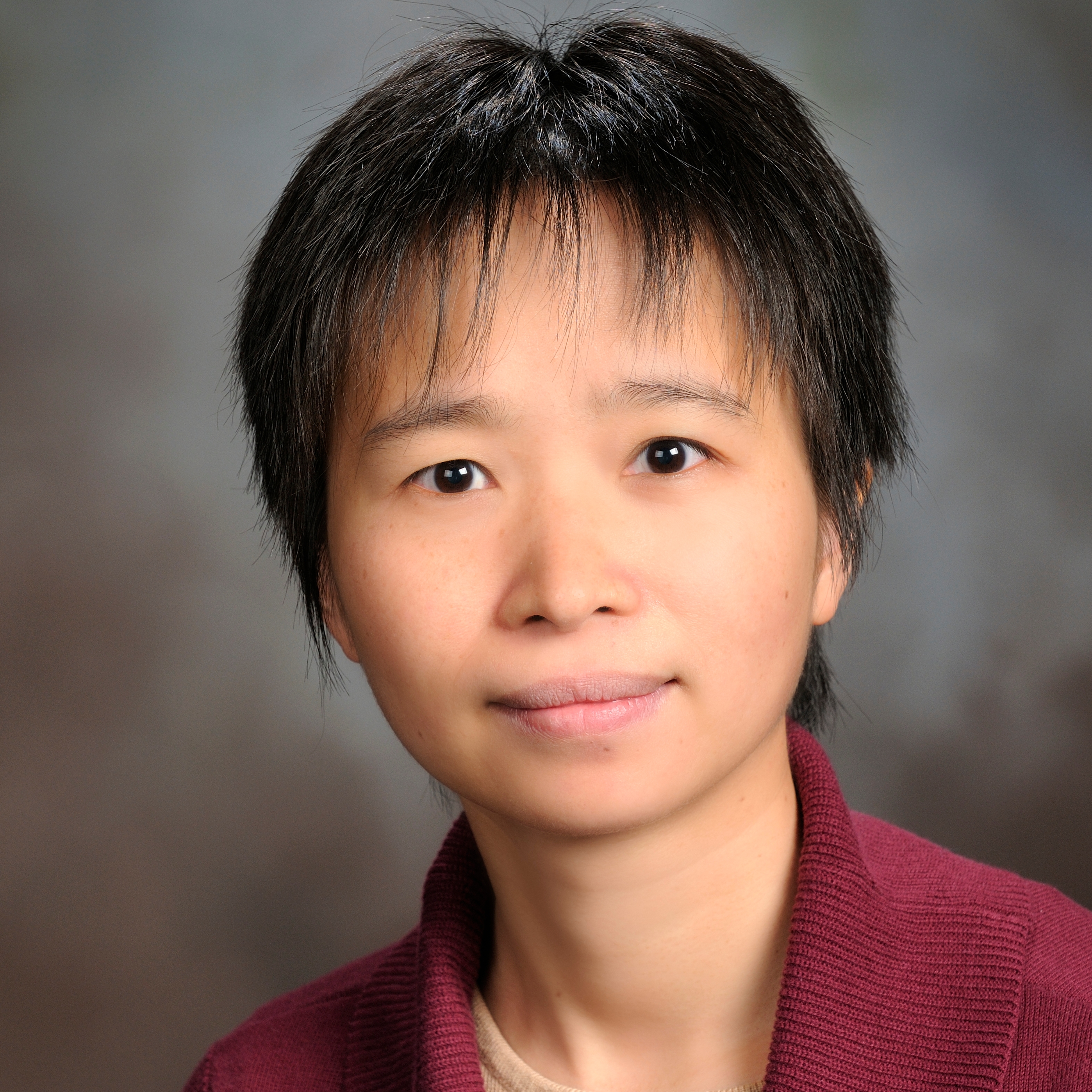
Zhou Ying is an Associate Professor of Geophysics at Virginia Tech's College of Science, Department of Geosciences. Her research focuses on understanding seismic heterogeneities in the Earth's interior through finite-frequency wave propagation theory and diffractional tomography. Ph.D. in Geophysics from Princeton University (2005) Her research interests include: Seismic Wave Propagation in Heterogeneous Media Global and Computational Seismology Finite-Frequency Seismic Tomography 3-D Anelasticity (Q) Structure in the Mantle Seismic Anisotropy in the Upper Mantle and Transition Zone Core-Diffracted Waves and Core-Mantle Boundary Structure Signal Processing and Array Data Analysis Zhou's 15 most recent publications span seismology, geophysics, and unexpected interdisciplinary topics like molecular biology. Most studies focus on mantle discontinuities, finite-frequency tomography, and outer core dynamics, with specific attention to 410-km/660-km discontinuities and surface-wave sensitivity kernels. Current graduate advisee: Zhen Guo (Ph.D. candidate in Geophysics). Former advisees include Youyi Ruan (Ph.D. 2012), Kui Liu (Ph.D. 2014), Kai Deng (MS 2014), and Jing Xue (MS 2014). She teaches undergraduate courses in Physical Geology and Earthquake Seismology, and graduate courses in Theoretical Seismology, Advanced Seismology, and Seismic Data Analysis.
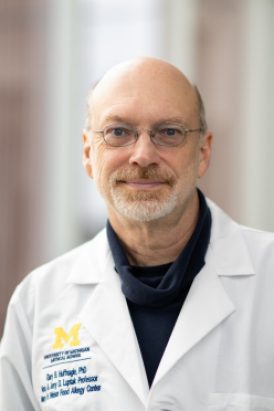
Gary B. Huffnagle is a Professor of Molecular, Cellular, and Developmental Biology at the University of Michigan, with joint appointments in the Medical School's Departments of Internal Medicine and Microbiology & Immunology, and the Mary H. Weiser Food Allergy Center. He holds the Nina and Jerry D Luptak Professorship in Food Allergy. His research focuses on mucosal immunity, microbiome interactions, and their roles in food allergies, respiratory diseases, and infectious processes. Key affiliations include the Huffnagle Lab and collaborative work across multiple interdisciplinary centers. Education: Ph.D., 1990 from University of Texas Southwestern Medical Center. Research emphasizes three core areas: 1) microbiota-driven immunological tolerance mechanisms in food allergies, 2) microbial ecology of Candida albicans and Lactobacillus johnsonii in mucosal surfaces, and 3) non-aeruginosa Pseudomonas species in respiratory inflammation. Recent work highlights microbiome shifts in chronic lung diseases and critical illness. Publications span over 20 years, with recent focus on microbiome contributions to COPD, pulmonary fibrosis, and asthma exacerbations. His work integrates computational biology, microbial genomics, and immunological approaches.
Dr Azhdar Karami is a Senior Lecturer in Strategy and Management at the Bangor Business School, Bangor University. With a PhD in Strategic Management, he has taught at both undergraduate and postgraduate levels since 1991, including roles at the University of Bradford and overseas institutions. Current responsibilities include modules like Principles of Business Management and Contemporary Issues in Management . External examiner for PhD programs at institutions including University of East London, University of Manchester, and Gomal University. Moderator for MBA programs in Singapore and Sri Lanka. Research Interests focus on strategic management, SME innovation, green entrepreneurship, and social media's impact on business performance. Recent studies analyze terrorism's economic effects, green entrepreneurship barriers, and nature-sustainability connections in environmental organizations. Published in journals like Computers in Human Behavior (ABS 3*), International Journal of Forecasting (ABS 3*), and Business Strategy and the Environment (ABS 3*). Professional memberships include the British Academy of Management , Institute for Small Business and Entrepreneurship , and editorial board roles.
Teresa Cristina de Freitas Gonçalves is an Associate Professor at the Department of Informatics, School of Sciences and Technology, University of Évora, where she has been employed since 1999. She serves as an integrated researcher at the ALGORITMI research centre and is the Director of the VISTA Lab (Video, Image, Speech and text Analysis Lab), the unit of the ALGORITMI research centre at University of Évora. Her leadership roles include Director of the Master programme in Informatics Engineering and deputy Director of both the Master programme in Artificial Intelligence and Data Science and the Doctoral program in Computer Science. She earned her PhD in Computer Science from University of Évora and a MSc degree in Informatics Engineering from New University of Lisbon. Her academic journey at University of Évora has included significant leadership positions including Head of the Computer Science Department (2011-2015), Director of the Bachelor programme in Informatics Engineering (2016-2021), and Deputy Director roles for various undergraduate and graduate programs. Dr. Gonçalves' research focuses on intelligent systems, particularly Machine Learning approaches, with substantial contributions in evolutionary algorithms, information extraction and retrieval, and supervised learning across multiple data modalities including tabular data, text (in both Portuguese and English), and images (medical and satellite). Her work bridges theoretical advances with practical applications in healthcare, remote sensing, and natural language processing. She has successfully supervised 6 doctoral theses, 19 master theses, and 3 postdocs, and currently mentors 5 doctoral and 6 master students from diverse international backgrounds including Bangladesh, Cabo Verde, Nepal, Philippines, India, Sri Lanka, China, Mongolia, and Portugal. Her publication record includes over 100 scientific articles indexed by Scopus with 640 citations and an h-index of 12, demonstrating significant international impact with 56% of her work involving international collaboration. Her recent research shows a strong trend toward applying advanced machine learning techniques to healthcare applications, information retrieval systems, and remote sensing analysis, with particular emphasis on transformer networks, learning-to-rank methodologies, and multimodal data analysis. Dr. Gonçalves has made substantial contributions to the academic community through her service as a reviewer for over 50 articles in prestigious international journals and conferences, and as chair for major international conferences including IDEAL 2023, PROPOR 2020, SKIMA 2017 and 2018, and CLEF 2016. She serves on the board of APRP (Associação Portuguesa de reconhecimento de Padrões) and as a jury member for APRP prizes for best MSc and PhD theses. Her current research portfolio includes coordination of the Horizon Europe MSCA Staff Exchange HarmonicAI project and local coordination of WP6 in the NewSpace Portugal mobilising agenda. She is also actively involved in numerous other international research initiatives including Interreg VI-B Sudoe SenforFire, PRR CANTE, La Caixa INCOME, Erasmus+ KA220-HED REDINEST, Interreg POCTEP TID4AGRO, and ATTRACT DIH projects. Previously, she led the FCT AI in the Public Administration SNS24.Scout.IA project and coordinated the FEDER R&D NIIAA project. As Director of the VISTA Lab, Dr. Gonçalves leads a dynamic research team focused on video, image, speech, and text analysis. The lab serves as the Évora hub of the ALGORITMI research centre and has established strong international collaborations. Under her leadership, the VISTA Lab has developed innovative approaches in medical image analysis, natural language processing for Portuguese, and satellite image classification, with applications spanning healthcare, environmental monitoring, and public administration.
Yoann Altmann is Professor in the School of Engineering & Physical Sciences at Heriot-Watt University and a member of the Institute of Sensors, Signals & Systems. Since 2024 he holds the Chair in Electrical, Electronic & Computer Engineering (EECE), directing a research programme that bridges statistical signal processing, computational imaging and quantum & neuromorphic sensing. Education & career: 2010 – Eng. degree (Electrical Engineering), ENSEEIHT, Toulouse, France 2010 – M.Sc. (Signal Processing), National Polytechnic Institute of Toulouse 2013 – Ph.D. (Signal & Communications), IRIT Laboratory, Toulouse 2014-2017 – Post-doctoral Research Fellow, Heriot-Watt University 2017 – Royal Academy of Engineering Research Fellow & Assistant Professor, HWU 2024 – promoted to Professor, School of Engineering & Physical Sciences, HWU Research interests: Prof. Altmann develops mathematical and algorithmic tools for Bayesian inverse problems, with emphasis on single-photon LiDAR, low-illumination imaging, neuromorphic computational sensing, variational inference and sparse reconstruction. His work combines principled statistical modelling with efficient computational schemes to enable imaging in extreme scenarios such as underwater scattering, photon-starved environments, quantum metrology and real-time 3-D scene reconstruction. Publication trends: Across 160 outputs (2011-2025) his recent articles reveal a clear trajectory toward integrating modern machine-learning paradigms—variational autoencoders, diffusion generative models, spiking neural networks—with rigorous physics-based forward models. Applications span quantum parameter estimation, multimode-fiber endoscopy, hyperspectral & Compton imaging, nuclear safeguards and cultural-heritage spectroscopy, demonstrating both methodological breadth and high-impact interdisciplinary deployment. Honours & recognition: Royal Academy of Engineering Research Fellowship – competitively awarded (2017) Grants & datasets: He has generated four open datasets supporting reproducible research in quantum sensing, variational autoencoders, underwater single-photon LiDAR and multispectral fluorescence imaging, reflecting sustained funding and commitment to open science. Continuous peer-review service for IEEE and Elsevier journals since 2013 underlines his standing within the signal-processing community. Labs & teams: He leads the Bayesian Imaging & Sensing Computing (BISC) group ( https://bisc.site.hw.ac.uk ) which hosts post-docs, PhD researchers and international visitors working on statistical machine-learning for imaging, sensing and quantum technologies.
Dimitris Maroulis is a Professor at the Department of Informatics and Telecommunications, University of Athens, leading the Real-Time Systems and Image Analysis Lab (RTS-image). With over 20 years of experience in data acquisition and real-time systems, and 15 years in image/signal analysis, he collaborates extensively with Greek and European hospitals in biomedical informatics. He has led 5 R&D projects and authored 150+ papers with 1400+ citations. University of Athens: Professor (2000–present) Meudon Observatory: Research Fellow (3 years) & Long-term Collaborator (10+ years) Research Interests focus on real-time systems , image/signal processing , and biomedical applications . Key areas include automated segmentation of proteomic images, noise removal methods, and stereo image coding. His 15 most recent publications (2003–2012) span 3D imaging , medical image analysis , and biomedical informatics , with sub-fields like autostereoscopic displays, wavelet-based coding, and computer-aided diagnosis. Awards : Best Paper Award (2012: Integral Image Analysis) Projects include European and national R&D initiatives in image analysis and real-time systems. Labs : RTS-image Lab develops methodologies for biomedical and proteomic applications.
Jose Ramon Bayascas Ramirez is an Associate Professor in the Department of Biochemistry and Molecular Biology at the Universitat Autònoma de Barcelona's Institute of Neuroscience. With a Ph.D. in Biological Sciences from the University of Barcelona (1998), he completed postdoctoral training at the University of Lleida (1998-2002) and University of Dundee, Scotland (2002-2007) before joining UAB in 2007 as a Ramon y Cajal Fellow, becoming a Serra Húnter Associate Professor in 2014. His research focuses on the neurodevelopmental functions of the $$\text{PDK1}$$ signaling network and its implications for neurodegenerative and mental illnesses. His laboratory specializes in the $$\text{PI3K}$$/$$\text{Akt}$$ signaling pathway, utilizing brain-specific conditional knock-in mice with engineered $$\text{PDK1}$$ mutations (K465E and L155E) to study how these affect neuronal development and disease processes. The K465E mutation selectively impairs $$\text{Akt}$$ activation, while the L155E mutation abolishes activation of most $$\text{PDK1}$$ effectors except $$\text{Akt}$$. His work has revealed that reduced $$\text{Akt}$$ activation in $$\text{PDK1}$$ K465E mice protects against neurodegenerative insults, while the exclusive $$\text{Akt}$$ activation in $$\text{PDK1}$$ L155E mice causes severe mental disorders resembling human schizophrenia. His recent publications span molecular insights into $$\text{PDK1}$$ structure, behavioral studies in Alzheimer's models, and investigations into lysine crotonylation and metabolic homeostasis. His research has been recognized with a Ramon y Cajal Fellowship, and he has led multiple research projects including: "Assaig de l'inhibidor d'$$\text{Akt}$$ MK-2206 pel tractament de la Malaltia d'Alzheimer" (2022-2023) "Implicació de la ruta de senyalització $$\text{PI3K}$$/$$\text{PDK1}$$/$$\text{Akt}$$ en la Malaltia d'Alzheimer" (2019-2022) "Participació de $$\text{PDK1}$$ en les respostes a $$\text{PI3K}$$ durant el desenvolupament neuronal" (2015-2018) His group has published 53 research outputs with significant citations, demonstrating impactful contributions to understanding the molecular mechanisms underlying brain pathology and potential therapeutic targets for neurodegenerative and mental disorders.
Jørgen Ellegaard Andersen is a Professor and Center Director at the Department of Mathematics and Computer Science, University of Southern Denmark (SDU), and holds the D-IAS Chair at the Danish Institute for Advanced Study (DIAS). He is also a Distinguished Visiting Professor at the California Institute of Technology since 2013, reflecting his international stature in mathematical sciences. University: University of Southern Denmark School: Faculty of Science Department: Department of Mathematics and Computer Science Position: Professor, Center Director, D-IAS Chair Andersen earned his DPhil in Mathematics from the University of Oxford in 1992, with a thesis on Jones-Witten theory and the Thurston Compactification of Teichmüller space. His research lies at the intersection of quantum theory and geometry, focusing on quantum topology, geometric quantization of moduli spaces, topological quantum field theory, low-dimensional geometry, and applications to RNA and protein folding. His work combines deep mathematical rigor with potential applications in quantum computing and biophysics. The trends in his recent publications show a consistent focus on quantization of moduli spaces, topological recursion, mapping class group representations, and quantum Chern-Simons theory. His work often bridges pure mathematics and theoretical physics, with increasing attention to computational and applied aspects in quantum technologies. ERC Synergy Grant ReNewQuantum (EUR 10m, Principal Investigator) Distinguished Visiting Professor, Caltech Andersen leads major research projects such as ReNewQuantum and TopQC2X, securing significant funding from the EU and Danish agencies. He actively supervises PhD students and collaborates with leading mathematicians worldwide, including Maxim Kontsevich and Bertrand Eynard. His work is frequently highlighted in the media for its potential impact on quantum computing and Danish industry. He is a central figure in the Quantum Mathematics center at SDU and collaborates with institutions like MSRI and the University of Hamburg. His research group is part of international networks focused on geometric and topological methods in quantum theory.
Dr. Jane Cleal is an Associate Professor in Reproductive Cell Biology at the University of Southampton’s Faculty of Medicine. She leads research on placental and maternal tissue mechanisms, focusing on fetal development, lifelong health, and interventions to improve pregnancy outcomes. Her work integrates systems biology with molecular and cellular approaches. Education: PhD in Medicine, University of Southampton (2005) BSc (Hons) Molecular Cell Biology, University of Southampton (2001) Fellow of the Higher Education Academy (2013) Teaching Roles: Deputy Programme Lead for the BM6 widening access to medicine degree Module Lead for MEDI0011 Human Structure & Function 1 Her research interests span placental and endometrial biology, vitamin D regulation, and the impact of maternal exposures on fetal programming. Key areas include fetal growth, obesity, and cardiometabolic health. Recent work explores endometrial gland function in miscarriage risk and climate change effects on developmental health in Caribbean communities. Publications highlight placental transport mechanisms, vitamin D’s role in pregnancy, and computational models of drug diffusion. She has supervised 3 current PhD students and secured grants from Wessex Medical Research, BBSRC, and Wellbeing of Women. Awards: Fellow of the Higher Education Academy (2013) External Roles: Editorial Board Member, British Journal of Nutrition (2012–2018) Council Member, Physiological Society (2009–present) Reviewer for Irish Government research panels (2017–2023) Outreach: Public engagement on reproductive science and healthy lifestyle choices.
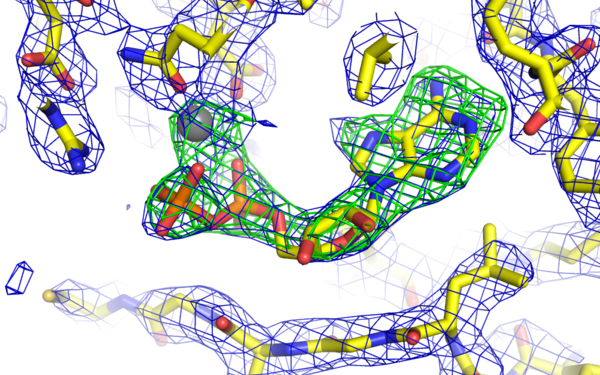
Thomas Leonard is a tenured Professor at the Max Perutz Labs (University of Vienna), where he leads a research group focused on lipid-mediated signal transduction and structural mechanisms of kinase regulation . His lab combines structural biology , biochemistry , and cell biology to dissect how cells integrate spatial and temporal signals. PhD in Structural Biology (MRC Laboratory of Molecular Biology, Cambridge) Postdoctoral work at NIH, Bethesda His research explores how lipid second messengers like PIP3 and PI3P control kinases such as Akt, PDK1, and Sgk3, with implications for cancer , neurodevelopmental disorders , and metabolic diseases . Recent work redefined PHLPP1/2 as pseudophosphatases and revealed novel activation mechanisms in Protein Kinase D (PKD) and DMPK kinases. The lab's publication trends highlight structural phylogenomics , membrane scaffolding , and allosteric regulation . Collaborations with institutions like LMU Munich and FWF-funded projects underscore their interdisciplinary approach. Lab Manager: Ronja Reinhardt PhD Students: Sumire Antonioli, Magdalena Otto, Lucas Piech, Eva Krotenheerdt, Felix Wolkenstein Master Students: Gabriela Ariza, Emese Galgóczi, Stefan Lenz The lab actively recruits at Master, PhD, and Postdoc levels for molecular signaling research.
Simone Ferlin is an Adjunct Senior Lecturer at Karlstad University and a Senior Performance Engineer. She holds a PhD in Computer Science from Simula Research Lab and Universitetet i Oslo (2017), focusing on robustness in multipath transport protocols like MPTCP. Her research spans network performance, security, and congestion control in mobile/5G networks and the Internet. She collaborates actively with academia and industry, co-supervising students in areas such as edge computing, container orchestration, and distributed systems. Affiliations: Department of Informatics, Karlstad University; Red Hat Research; Ericsson R&D. Education: PhD (2017), Simula/UiO; Master’s and Undergraduate studies emphasized networking and electronics. Her work includes projects like AIDA (AI-driven edge networking) and DRIVE (latency-sensitive mobile services). She has published over 50 papers on topics like QUIC, eBPF, and containerized microservices. Awards include the Best Paper at IEEE ICIN 2021 and ANRP 2025 Prize. Teaching responsibilities include Future Internet Design and Service Quality . Advising spans 15+ students across institutions like TU Berlin, KTH, and Unifesp. She chairs conferences (e.g., ACM SIGCOMM 2025) and serves on editorial boards (IEEE Communications Magazine). Key interests: network observability, low-latency protocols, and sustainability in networking.
Thomas D. C. Little is a Professor at Boston University, USA, specializing in Visible Light Communication (VLC), Optical Wireless Communication, and Mobile Ad Hoc Networks. His research focuses on hybrid RF/VLC systems, interference mitigation, and dynamic network optimization under illumination constraints. Recent work includes 3D localization via zone-based positioning Dynamic FOV receiver optimization Multi-tier transmission for 5G Li-Fi Security-aware OFDM modulation Research interests center on integrating optical wireless with traditional RF networks, developing energy-efficient communication protocols, and creating positioning systems for smart spaces. Publications analyze spectral efficiency, channel modeling, and coexistence strategies in dense optical environments. Collaborations span institutions in the USA and Germany, with applications in Industry 4.0 and coastal monitoring systems. His team has contributed to ns-3 simulator extensions for VLC, beam control in FSO systems, and interference analysis in optical networks. Current projects address reconciling SNR models and optimizing handover parameters via Q-learning for heterogeneous deployments.
Clément Delcamp is a CNRS Researcher at the Institut des Hautes Etudes Scientifiques (IHES), focusing on theoretical physics at the intersection of condensed matter and algebraic topology. He was previously a Junior Professor at IHES since 2023, following postdoctoral fellowships at Ghent University, the Max Planck Institute for Quantum Optics (Munich), and the Max Planck Institute for the Physics of Complex Systems (Dresden). His academic journey includes a PhD from the University of Waterloo and the Perimeter Institute for Theoretical Physics, preceded by an MSc in Quantum Fields and Fundamental Forces at Imperial College London (2013–2015). Education: MSc in Quantum Fields and Fundamental Forces (Imperial College London, 2015), PhD (University of Waterloo & Perimeter Institute, 2018) His research explores the algebraic structures underlying quantum lattice systems, emphasizing generalized symmetries, dualities, and topological field theory applications. He has pioneered tensor network methods to study electromagnetic duality in (3+1)d systems and non-abelian Kramers-Wannier dualities in generalized Ising models. His work bridges abstract category theory with concrete physical models, particularly in topological phases and renormalization group techniques. Recent publications highlight his contributions to quantum lattice duality frameworks, defect calculus, and tensor network-based renormalization. His 2024 paper with Lootens and Verstraete demonstrates optimized DMRG simulations for gapped phases via dual models. At IHES, he leads research on non-invertible symmetries and solicits postdocs in theoretical physics. Scientific Awards: Walter Zellidja Scholarship (French Academy), FWO Postdoctoral Fellowship Delcamp's affiliations span leading institutions including the Perimeter Institute, Max Planck Institutes, Ghent University, and IHES. He actively promotes collaboration through seminars and lectures at venues like the Collège de France, Les Houches, and Queen Mary University.
Dominique Bechmann is a **Professor of Computer Science** at the University of Strasbourg, affiliated with the **Department of Computer Science** within the **Sciences Collegium**. He is also a researcher at the **ICube Lab** (UMR 7357 CNRS-University of Strasbourg). His academic career spans over three decades, including roles as Head of the IGG Computer Graphics and Geometry research group (1997–2022) and Head of the National Research Group GdR IG-RV (2014–2021). He holds a Habilitation (1995) and PhD (1989) from the University of Strasbourg, with postdoctoral research at IBM's Thomas Watson Research Center (1989–1990). His research focuses on **Computer Graphics**, **Geometric Modeling**, and **Virtual Reality**, with key contributions in free-form deformation, 3D modeling of anatomical structures, and interaction techniques in immersive environments. He has led projects like the ICT-Asian initiative on Virtual Reality (2004–2007) and organized conferences such as AFRV 2012 and AFIG-EG France 2005. His teaching spans undergraduate and graduate levels in algorithms, computer graphics, and computational geometry. Bechmann has held numerous leadership roles, including Head of the Computer Science Department (1997–2000), Vice-Head of LSIIT Lab (2009–2012), and member of the National Commission of Universities (CNU) section 27 (2007–2011). His work bridges theoretical computer graphics with practical applications in medicine, architecture, and collaborative systems.
Prof. Dr.-Ing. Stefan Lechner has been full Professor of Energy Economics and Energy Systems at the Technical University of Central Hesse (THM) , Giessen, since March 2015. He is affiliated with the Department of Mechanical Engineering and Energy Technology and the Institute THESA – Institute of Thermodynamics, Energy Process Engineering and Systems Analysis . Additionally, he leads the Laboratory for Energy Economics and is a core member of the Competence Center for Energy Technology and Energy Management (etem.THM) . Education & Career Dr.-Ing., Brandenburg University of Technology (BTU) Cottbus, 2012 – Dissertation on steam-fluidized-bed drying of lignite. Dipl.-Ing. (FH) Mechanical Engineering, Georg Agricola University of Applied Sciences Bochum, 2002 – specialising in Future Energies. Supplementary doctoral studies & economics coursework at BTU Cottbus and FernUniversität Hagen. Professional experience at Vattenfall (plant management, power-plant planning & R&D) and Kreisel Umwelttechnik (Head of Development) before entering academia. Research Interests Prof. Lechner’s work centres on the techno-economic analysis and optimisation of energy systems in transition . Core themes include renewable energy integration , thermal energy storage (particularly Carnot batteries using ceramic high-temperature stores), sector coupling between electricity, heat and mobility, and 5th-generation cold district-heating networks (5GDHC). Methodologically, he combines experimental thermal engineering with open-source simulation frameworks , agent-based demand modelling , and electricity-market modelling . Recent activities expand into waste-heat recovery from data centres and transcritical CO₂ heat-pump systems for low-temperature district heating, always targeting cost-effective, grid-friendly and sustainable solutions . Publication Trends Between 2017 and 2024 his output highlights a clear evolution from fundamental studies on pressurized steam fluidized-bed drying and lignite heat-transfer toward system-level analyses of storage-based sector coupling . A dominant cluster addresses Carnot batteries , covering high-temperature storage materials, gas-turbine re-conversion concepts, and demonstration results. Parallel streams examine GIS-based rooftop PV potential , agent-based settlement energy-demand modelling , and regulatory frameworks for cross-sector energy markets. Scientific Awards & Honours No specific awards are mentioned in the provided material. Research Funding & Teams Prof. Lechner has secured and coordinates projects worth > €10 million (THM share ≈ €6.5 million) funded by BMBF, BMWK/BMWi, Hessian ministries (HMWK, HMWEVW), WI-Bank and ERDF : LOEWE 3 DUWä (2025-2027) – transcritical CO₂ dual-use heat pumps for cold district heating. EnEff:Stadt FlexQuartier2 (2023-2027) – hybrid storage optimisation in Giessen’s Philosophenhöhe district. KNW-Plus (2022-2023) – design & online tool for cold local heating networks. Innovative waste-heat use from data centres (2022-2023). FlexQuartier Gießen (2018-2023) – integrated hybrid storage & sector coupling in a new-build district. Kommun:E (2018-2022) – municipal energy-supply transformation under Germany’s Energiewende. High-T-Stor (2017-2019) – cross-sector high-temperature storage for renewable balancing. FES (2019-2021) – Research Center for Energy Storage and Sector Coupling. These projects involve interdisciplinary consortia including municipalities, grid operators, SMEs, and research partners across Germany. Teaching & Academic Leadership He lectures in Energy Economics and Sector Coupling, Energy Markets, Heat Transfer, Renewable Energy Technology and Energy System Analysis . He also serves as Programme Manager for the part-time continuing-education M.Sc. Energy Efficiency Management (StudiumPlus, Wetzlar) and contributes to advanced master’s courses on energy law and thermodynamics.