معرفی
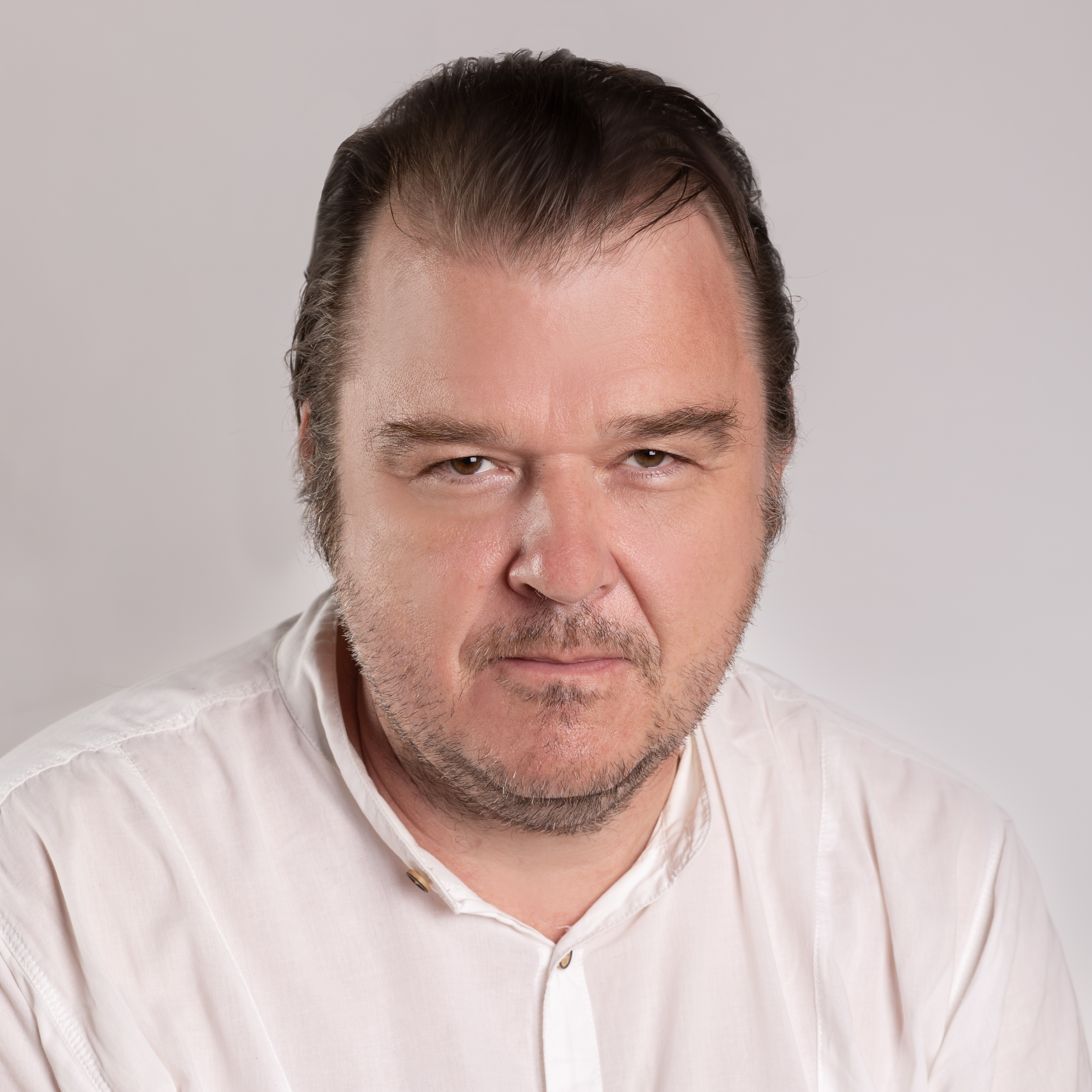
Zoltán Karmó is an Associate Professor in the Department of Sculpture at the Hungarian University of Fine Arts, where he has taught sculpture continuously since 1993. Previously, he served as an art teacher specializing in drawing and sculpture at the Vocational School of Fine and Applied Arts from 1986 to 2001.
His educational background includes:
- 1986: Hungarian Academy of Fine Arts (Sculptor qualification)
Karmó's research centers on the theoretical and practical synthesis of figuralism, abstraction, and conceptualism within contemporary sculpture. His pedagogical framework emphasizes how classical sculptural traditions inform modern practices, arguing that true creative autonomy requires deep engagement with all three paradigms. He rejects stylistic imitation in favor of understanding foundational shifts in sculptural thought from Polyclitus' Canon to contemporary installations, asserting that mastery of form-content balance across these movements enables artists to transcend historical constraints. His curriculum systematically progresses from figurative representation in the second year to abstraction in the third year and conceptual frameworks in the fourth year, culminating in independent diploma projects.
Analysis of Karmó's 15 most recent sculptures (2007-2011) reveals consistent material commitment to iron while exploring geometric precision in series like Tare and one3. His work demonstrates a tension between minimalism and conceptual depth, with later pieces incorporating mixed media (e.g., honey, glass) to engage sensory and temporal dimensions. The recurring organic-geometric duality reflects his teaching philosophy where form and concept dynamically interact rather than exist in opposition.
His major recognitions include:
- Mihály Munkácsy Award (2002)
- Derkovits Scholarship (1990-1992)
As an educator, Karmó implements a progressive pedagogy where teacher-directed instruction gradually yields to student autonomy across eight semesters. His fifth-year diploma supervision focuses exclusively on consultation, fostering independent creative development. He has exhibited extensively through solo shows at Budapest's Óbuda Community Gallery and Vigadó Gallery, alongside international group exhibitions including Sculpture from Here and Beyond at Budapest's Műcsarnok (2001) and Reservoir in Vienna (1992).