معرفی
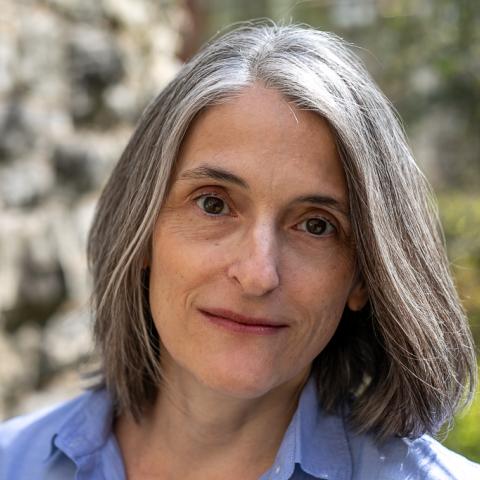
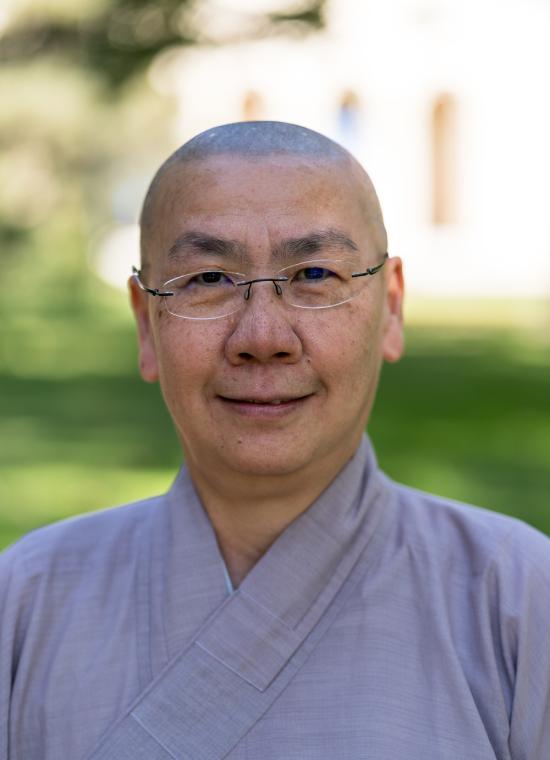
Zhiru Ng is a Professor in the Department of Religious Studies at Pomona College, where she has been a faculty member since 2000. Her research and teaching focus on Chinese Buddhist history, art, and religious practices, particularly the cult of Dizang (Jizo) Bodhisattva and the interplay between texts and images in Buddhist traditions.
Her academic background includes a Ph.D. from the University of Arizona, an M.A. from the University of Michigan, Ann Arbor, and a B.A. from the National University of Singapore.
- Ph.D., University of Arizona
- M.A., University of Michigan, Ann Arbor
- B.A., National University of Singapore
Dr. Ng's research interests span Chinese Buddhist history, Buddhist art, Dizang Bodhisattva, cross-cultural Buddhist interactions, and modern Taiwanese Buddhism. She explores how Buddhist doctrines are materialized in art and ritual, and how religious diversity is navigated in Chinese intellectual history. Her work bridges textual analysis with visual and material culture, offering deep insights into the lived dimensions of East Asian Buddhism.
The trend in her scholarly publications reflects a sustained engagement with medieval Chinese Buddhist cults, scriptural authority, healing practices, and the visual representation of doctrine. Her articles and book chapters examine the evolution of savior bodhisattvas, the integration of Indian Buddhist traditions in China, and the dynamics of religious diversity. She frequently contributes to major academic presses and journals in Buddhist and Asian studies.
Her scientific awards and honors include:
- Outstanding Global Bhikṣunī Award, Taiwan (2016)
- Outstanding Women in Buddhism Award, Bangkok (2010)
- Visiting Research Fellow, University of Heidelberg (2012)
- Senior Fellow, Harvard University Center for the Study of World Religions (2003–04)
- Chiang Ching-kuo Foundation Scholar Grant (2008–09)
- Graves Award for Excellence in Teaching (2004–05)
Dr. Ng has advised various academic projects and secured research grants from foundations such as the Chiang Ching-kuo Foundation and Harvard’s Center for the Study of World Religions. While no formal lab or research team is mentioned, her collaborative work with institutions like the Kuroda Institute and participation in international research projects indicate active scholarly networks. She teaches courses on East Asian religions, the Lotus Sutra, death and afterlife, and the life of the Buddha through art and text.
حوزههای پژوهشی