معرفی
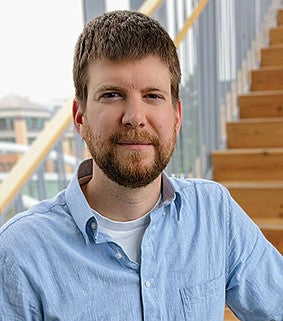
Zac Freedman is an Assistant Professor and the O.N. Allen Professor of Soil Microbiology in the Department of Soil and Environmental Sciences at the University of Wisconsin–Madison, College of Agricultural and Life Sciences. He leads an active research lab focused on environmental microbial ecology, biogeochemistry, and sustainability. His work bridges fundamental microbial processes with applied environmental challenges such as climate change, land degradation, and sustainable agriculture.
His research interests include:
- Environmental microbial ecology and community dynamics
- Soil carbon and nitrogen cycling under global change
- Plant-microbe-soil interactions in agricultural and natural ecosystems
- Development and application of soil sensing technologies (e.g., MIR spectroscopy)
- Microbial responses to nitrogen deposition, land use change, and climate stressors
His recent publications span microbial community assembly in pitcher plants, carbon sequestration in bioenergy crops, nitrogen cycling under deposition, and soil sensing across ecological gradients. These works reflect a strong emphasis on trait-based approaches, cross-system comparisons, and integration of molecular and biogeochemical methods.
Dr. Freedman has received significant recognition, including the O.N. Allen Professorship. His research is funded by the National Science Foundation and the U.S. Department of Agriculture, supporting projects on soil microbiome sustainability, bioproduct agroecosystems, and environmental education.
He actively mentors graduate and postdoctoral researchers, including NSF Graduate Research Fellows, and is involved in interdisciplinary programs such as Soil Science, Agroecology, Microbiology, and the Nelson Institute for Environmental Studies. He also leads the Wisconsin Schoolyard Microbiome Project, promoting K–12 community science engagement.
His lab maintains strong collaborative ties and contributes to large-scale initiatives like the National Ecological Observatory Network (NEON) and Long-Term Ecological Research (LTER) programs.