معرفی
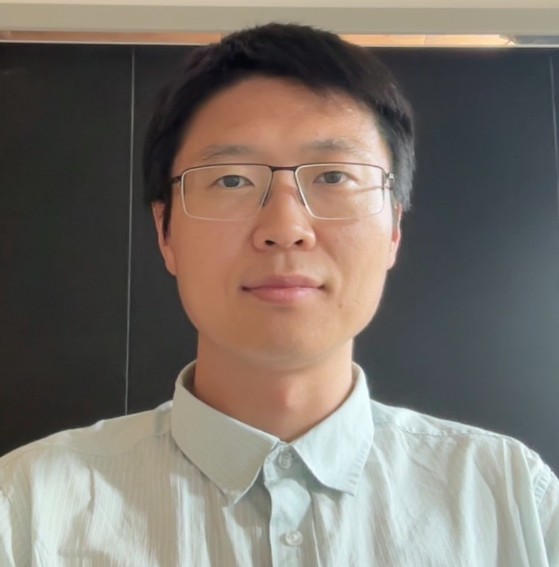
Yuri Kovchegov is a Professor in the Nuclear Theory Group within the Physics Department at The Ohio State University. He specializes in theoretical nuclear and particle physics, focusing on Quantum Chromodynamics (QCD) at high energy and small-x phenomena. His research explores topics such as gluon helicity evolution, spin physics, and the interplay between QCD and heavy-ion collisions.
Education:
- Ph.D. Physics, Columbia University (1998)
- M. Phil. Physics, Columbia University (1996)
- M.A. Physics, Columbia University (1995)
- B.S. Physics, Moscow Institute of Physics and Technology (1993)
Research Interests:
Kovchegov's work delves into the dynamics of QCD at high energies, including parton saturation, proton spin structure, and the application of small-x evolution equations. He is a key contributor to the theoretical framework for the Electron-Ion Collider (EIC), emphasizing studies of nucleon and nuclear structure.
Publications:
His recent work addresses cutting-edge topics like gluon helicity distributions, spin-dependent odderon effects, and the analysis of polarized DIS/SIDIS data. He has pioneered helicity evolution equations and their implications for proton spin physics.
Awards:
- AAAS Fellowship (2020)
- APS Fellowship (2020)
- Sackler Prize in Physics (2021)
Teaching and Service:
Kovchegov has taught advanced courses on quantum field theory, particle physics, and electromagnetic field theory. He actively participates in collaborations like the OSU Relativistic Heavy Ion Group and the EIC User Group.
Labs & Teams:
He is affiliated with the Nuclear Theory Group at OSU and contributes to international efforts in QCD theory, including the development of the Electron-Ion Collider's theoretical framework.