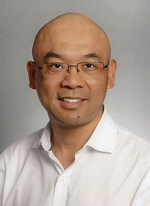
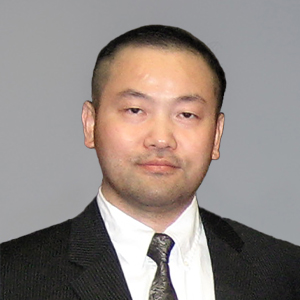
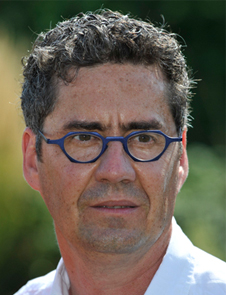
Yuedong Yang
استاد · Protein Structure Prediction
Helmholtz Institute Ulm for Electrochemical Energy Storageمعرفی
Yuedong Yang is a Professor at the School of Data and Computer Science, Sun Yat-sen University since August 2017. His academic journey includes a Research Assistant Professor position at Indiana University (2011-2013) and Research Fellow at Griffith University's Institute for Glycomics (2013-2017), following postdoctoral training at Indiana University School of Medicine (2006-2011).
His primary research focuses on Protein Structure Prediction and Refinement, Protein Interactions with biomolecules and ligands, and Classification of Human Genetic Variations. His work bridges computational biology, machine learning, and structural bioinformatics, with emphasis on developing AI-driven methods for biomolecular analysis. Recent publications demonstrate strong integration of geometric deep learning, language models, and physics-based approaches.
Analysis of his 15 most recent publications (2024-2025) reveals dominant trends in spatial transcriptomics, protein structure-function prediction, foundation models for genomics, and interpretable AI for drug discovery. His work increasingly combines multimodal data integration with causal learning frameworks.
- Over 50 publications in top journals including PNAS, Genome Biology, Nucleic Acids Research, and Bioinformatics
- Active community service as Associate Editor for BMC Bioinformatics
- Extensive peer review activity across 46 publications/grants in 35+ journals
His research is supported by multiple major grants including National Natural Science Foundation of China (61772566), National Health and Medical Research Council (1121629), and Australian Research Council (LP150100137). He has advised numerous researchers through collaborative projects in computational biology and bioinformatics.
Dr. Yang leads research in protein informatics and multi-omics integration, with current projects focusing on geometric deep learning for biomolecular structure prediction and foundation models for single-cell genomics. His lab maintains strong international collaborations between China, USA, and Australia.